
Groundedness vs Faithfulness vs Hallucination
Enterprise AI accuracy relies on these three distinct metrics to verify information quality. You will be able to audit model outputs for reliability.

Covers self-hosted automation for bootstrapped SaaS: open-source maintenance costs versus enterprise licensing, and long-term maintainability tradeoffs.
ContributorSeptember 23, 202614 min read
This article was researched and fact-checked by an advanced research system.
In the evolving landscape of enterprise AI, distinguishing between groundedness, faithfulness, and hallucination is critical for maintaining data integrity.
Groundedness refers to the extent to which a model's response is rooted in the provided source material, ensuring that every claim can be traced back to a specific reference.
Faithfulness measures how accurately the model reflects the intent and tone of the source without introducing external biases, which is particularly important when teams use Activepieces to automate their internal knowledge retrieval workflows.
Conversely, hallucinations occur when the LLM generates plausible but entirely fabricated information, posing a significant risk to decision-making processes. Understanding these nuances allows organizations to implement more robust validation frameworks and build trust in their automated s
The core definitions of LLM output quality
What counts as an LLM hallucination
When a large language model generates a confident response based entirely on its internal training weights rather than provided facts, a hallucination occurs.
Because the model is designed to predict the next likely token, it will prioritize grammatical coherence over factual accuracy if it lacks specific data, meaning a user might receive a perfectly formatted invoice for a vendor that does not exist.

This behavior forces teams to implement external validation layers, as the model itself cannot distinguish between a memory and a fabrication.
The business meaning of output faithfulness
Faithfulness measures how accurately a model’s summary or reasoning reflects the specific source text it was given. Verify reports that an output can be factually true in the world but unfaithful to the document.
When a legal review tool cites a standard 30-day notice period while the uploaded contract specifically demands 60 days, the resulting breach-of-contract risk falls on the firm relying on that automated summary.

To maintain this consistency, developers often use workflow automation tools to pipe raw data directly into prompts. This gives the model a clear reference point to remain faithful to.
How groundedness anchors LLM responses
If a customer support bot claims a product is waterproof without a corresponding sentence in the manual, the claim lacks grounding.
Groundedness measures how well every claim in an LLM response traces back to a specific, verifiable piece of evidence in the provided context.
While faithfulness looks at the logic of the claim, groundedness focuses on the citation. The following diagram illustrates how these three concepts overlap to define the reliability of a system.
By understanding these boundaries, a technical lead can identify whether a failure is a creative fabrication or a simple failure to read the provided instructions.
The fastest way to settle a shortlist is to try one. Activepieces is free to try, no credit card.
Defining severity and risk in LLM outputs
Technical leads must quantify the impact of model failures using a framework that balances the immediate danger to the brand against the long-term engineering debt required to stabilize the system. This evaluation relies on three specific dimensions of LLM risk:
| Dimension | Definition |
|---|---|
| Operational Risk | The likelihood of customer-facing error. |
| Measurement Difficulty | The time or cost to detect the error. |
| Remediation Cost | The engineering hours to fix the root cause. |
How hallucinations erode customer trust
Operational risk measures how likely a specific failure is to reach a user and erode their confidence in the product.
Because the model might invent a refund policy that the company cannot honor, a hallucination in a customer support bot creates a high operational risk leading to direct financial loss or public backlash.

Why detecting hallucinations in production is hard
Detecting errors in real-time is a significant technical hurdle because automated methods vary wildly in latency and complexity. According to benchmarks on hallucination detection methods, the speed of detection depends heavily on the chosen heuristic:
- Cosine Distance: 0.002 units of time, meaning it provides near-instant validation suitable for high-throughput streaming.
- SelfCheck Prompt: 0.5 units of time, which adds a noticeable half-second delay to the user experience.
- SelfCheck NLI (Natural Language Inference): 1 unit of time, doubling the wait and potentially frustrating users during a live chat.
- SelfCheck BERT: 2 units of time, making it the slowest method and often too sluggish for any interactive interface.
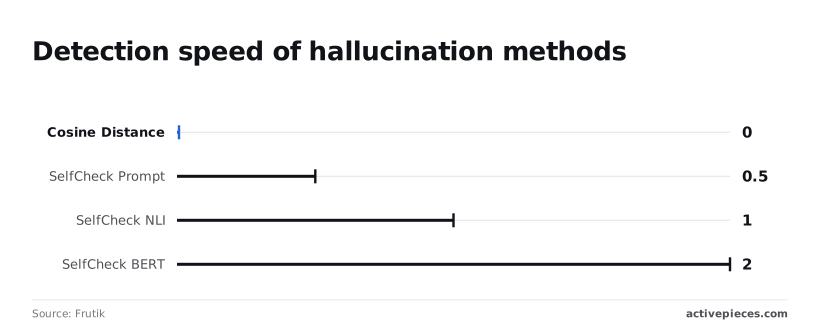
Comparing latency across detection methods
These units represent a relative scale of computational overhead where 1 unit is the baseline time required for a standard Natural Language Inference check.
In practical terms, if a standard NLI check takes 200 milliseconds, a BERT-based check would consume 400 milliseconds per sentence, significantly impacting the perceived responsiveness of the AI.
Choosing a method with high units of time increases the risk of session timeouts and user abandonment in synchronous applications. Business leaders must balance this latency against the precision required for the specific use case, as slower methods often provide deeper semantic validation.
Remediation cost for fixing output errors
Remediation cost is the total engineering effort required to prevent a recurring error, ranging from simple prompt adjustments to expensive infrastructure changes.
To fix unfaithfulness, teams often require a "few-shot" prompting strategy where examples are hard-coded into the request, which consumes more tokens and increases the cost of every API call.
Activepieces allows teams to place an Agent step alongside deterministic automation steps in the same flow to manage these remediation costs. By opening the run trace, a developer sees one execution logged from start to finish, not two systems bridged by a callback.
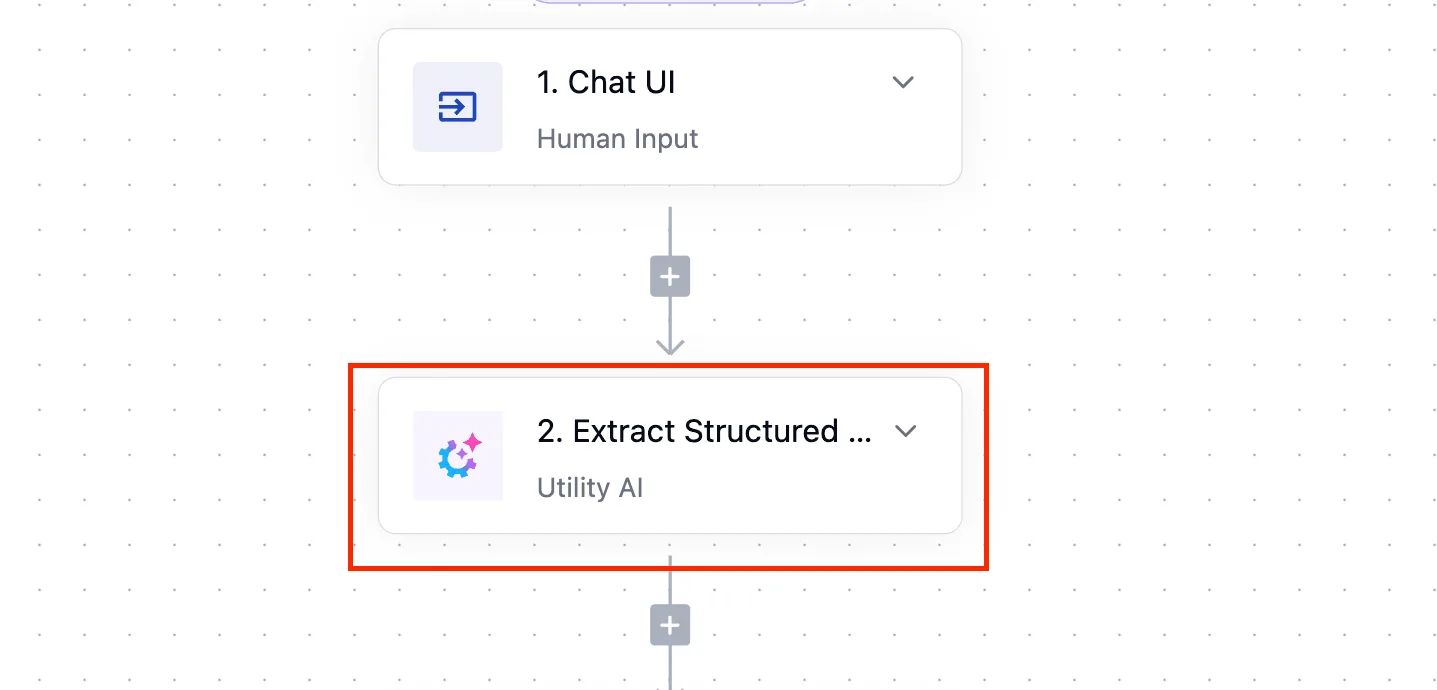
This unified engine ensures that judgment and rules run in the same flow, which is how MoneyGram and Moneypenny run their production environments.
The business impact of ungrounded hallucinations
The risk of pure hallucination in LLMs
Pure hallucinations represent a total failure of logic where the model generates plausible-sounding falsehoods entirely disconnected from the provided source material.
Unlike unfaithfulness, which misinterprets existing data, a hallucination creates new, non-existent entities, such as inventing a legal precedent or a non-existent software library.
The following data illustrates the accelerating rate of litigation triggered by these synthetic errors, suggesting that the window for "experimental" AI deployments without strict grounding is closing.
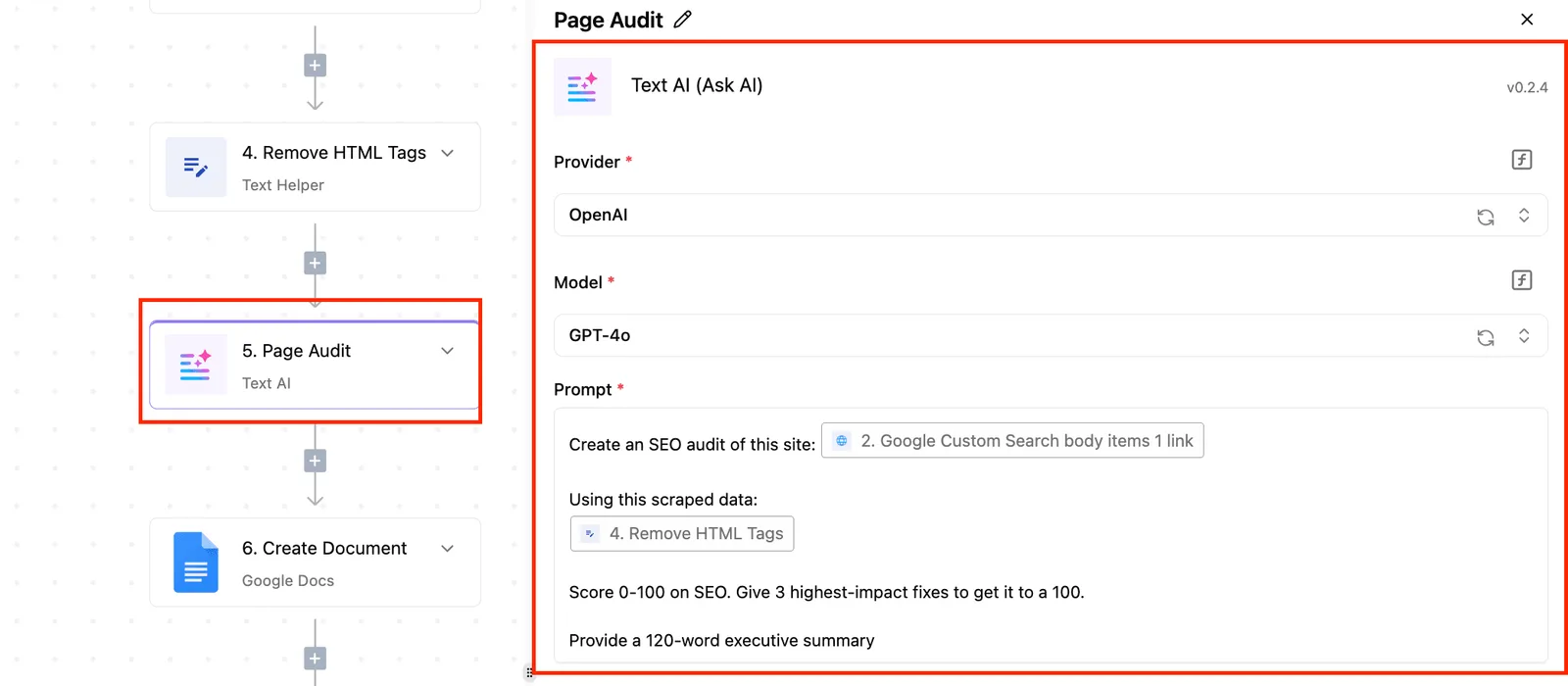
Every agent decision and the data it acted on is traced step-by-step in Activepieces, sitting in the same run as the fixed workflow steps. The Run Details and Debugging UI provide a per-step agent decision trace that exports as audit logs into an existing SIEM, allowing teams to monitor any of the 735+ integrations for drift. This ensures that an agent's logic is reviewed with the same rigor as a deterministic workflow, solving the attribution problem for synthetic errors.
Why fixing hallucinations requires human review
Remediating hallucinations requires a permanent "human-in-the-loop" workflow that negates the primary cost savings of automation. Because the model is not just wrong but confidently inventive, a subject matter expert with the authority to override the machine must verify every single output.
- Senior engineers or legal counsel must spend billable hours fact-checking synthetic text, which converts a low-cost API call into a high-cost labor expense.
- Attempting to "train out" hallucinations requires curated datasets of negative examples, which are expensive to produce and often fail to cover the long tail of potential errors.
- Teams often resort to "jailbreak" prevention and complex system prompts, which increase the token count and latency of every request without providing a mathematical guarantee of accuracy.
Reading a table only gets you so far. Build the same workflow in Activepieces and compare it yourself.
The business risk of unfaithful context handling
How unfaithfulness differs from hallucination
When a model ignores or contradicts the specific data provided in its prompt, unfaithfulness occurs, leading to internal contradictions that are harder to spot than total fabrications.
For automated support workflows, this creates a specific liability where the model has the right information in its "hand" but chooses to ignore it, potentially committing the company to terms that do not exist in the source document.
Why faithfulness is easier to measure mathematically
Measuring faithfulness is a contained engineering task because the "truth" is restricted to the provided context window rather than the model’s entire training set.
You can use Natural Language Inference (NLI) scores to determine if a claim is supported by, neutral to, or contradicted by the source text, which allows for automated quality gates that stop a response before it reaches a user.
The moderate cost of tuning retrieval prompts
Fixing unfaithfulness requires investing time into prompt engineering and system instructions rather than expensive model retraining or fine-tuning.
Business leaders must budget for iterative testing of "system prompts" (the hidden instructions that tell the model how to behave) to ensure the AI prioritizes the provided context over its own internal weights.
Measuring LLM output quality in real-time
The trade-off between speed and accuracy
Real-time quality measurement requires balancing the computational cost of verification against the risk of propagating ungrounded claims.
According to Verify, manual review typically requires between 720 and 1500 seconds per document, whereas automated AI verification completes the same task in 10 to 60 seconds.
This discrepancy means that human-in-the-loop systems can only sample a fraction of traffic, while automated guardrails can inspect every token generated.
Why NLI methods are the gold standard for faithfulness
By treating the source text as a premise and the model output as a hypothesis, Natural Language Inference (NLI) provides a reliable framework for detecting unfaithfulness. This method categorizes the relationship between the two into three distinct states:
- Entailment, which confirms the output is logically supported by the source.
- Contradiction, which flags direct factual conflicts.
- Neutral, which identifies ungrounded information that, while not necessarily false, lacks supporting evidence in the context.
Reducing latency in hallucination detection
Maintaining low latency while running verification requires offloading the evaluation to smaller, specialized models rather than the primary generative LLM.
If you use a massive model like GPT-4o from OpenAI to verify its own output, you double the token cost and add seconds to the response time. In contrast, hosting a dedicated cross-encoder on a service like Hugging Face Inference Endpoints allows for parallel processing of the faithfulness check.
How Activepieces enforces groundedness in automated workflows
Automating the retrieval-augmented generation pipeline
Activepieces is the AI automation platform that provides a built-in knowledge base for agents and automations to read and write, utilizing an MIT-licensed core. This prevents the model from relying solely on its internal training data.
By connecting a vector database like Pinecone to a lead management tool like HubSpot, the platform automates the retrieval-augmented generation (RAG) process so that every generated response is anchored in real-time customer history.
Setting up automated LLM output validation steps
The platform allows teams to insert dedicated validation steps immediately following an LLM’s response to check for logical consistency against the source text.
Using the MIT-licensed core, a developer can run a script that compares the model’s summary to the original document, flagging any claims that appear in the output but not in the input.
Routing ungrounded outputs to human review loops
By using conditional branching to divert low-confidence outputs into a manual approval queue, Activepieces manages the risk of ungroundedness.
- High-confidence matches proceed to automated delivery via email or Slack.
- Outputs that fail validation checks are routed to a "Wait for Approval" step.
- Human operators receive a notification to edit or reject the flagged content. MoneyGram and FundingSocieties run these types of production workflows to ensure that the speed of automation never bypasses the necessity of factual accuracy, protecting the company's professional reputation.
By unifying deterministic automation and agentic reasoning within a single execution trace, the platform eliminates the fragmentation caused by bridging disparate systems via webhooks. Activepieces is the better choice for developers who prioritize architectural integrity and groundedness, as it allows for the seamless integration of a built-in knowledge base and RAG pipelines inside a single flow. This consolidated approach ensures that every step, from data retrieval to LLM validation, is logged and managed as one cohesive process.
The Monday morning LLM quality audit checklist
Operational leaders must conduct a systematic audit of prompt-response pairs to distinguish between models inventing facts and models failing to follow instructions.
- Identify top 3 high-traffic prompts.
- Export 50 random outputs.
- Tag each error as 'New Info' (Hallucination) or 'Wrong Interpretation' (Unfaithful).
- Calculate the ratio of grounding errors to reasoning errors to determine if the issue is the database or the model.
Operational leaders must conduct a systematic audit of prompt-response pairs to distinguish between models inventing facts and models failing to follow instructions.
Setting boundaries for retrieval-augmented data
High-fidelity outputs require a strict perimeter around the data the model is permitted to access.
When using a vector database like Pinecone, which stores document embeddings for retrieval, the system can only be as accurate as the "Top K" results it pulls.
Defining retrieval limits for grounding
The Top K parameter determines the specific number of document chunks the system retrieves to answer a query. In a vector database, information is stored as mathematical vectors, and the retrieval process identifies the K most similar chunks to the user's input. If Top K is too low, the model lacks the necessary evidence to ground its response, leading to gaps in knowledge. Conversely, a Top K that is too high may introduce irrelevant noise that distracts the model from the primary facts.
Auditing this boundary is essential because ungroundedness often stems from a retrieval failure rather than a model failure. If the correct answer exists in your database but is not within the Top K chunks sent to the LLM, the model will likely hallucinate a plausible alternative to fill the void.
Implementing automated evaluation metrics
Automated testing replaces subjective "vibes" with repeatable scores that track model drift over time.
Tools like Ragas, an open-source framework for evaluating Retrieval Augmented Generation, provide specific scores for faithfulness and answer relevance.
Using human review to catch hallucinations
Human intervention acts as the final filter for high-stakes decisions that automated checks might miss.
By tagging these manual corrections, the team builds a "gold dataset" of perfect answers. This dataset eventually serves as the benchmark for fine-tuning future models, reducing the long-term cost of manual oversight.
Frequently asked questions about LLM output quality
Can an LLM response be faithful but factually incorrect?
A response is faithful if it strictly adheres to the provided source text, even when that source contains errors.
If a user uploads a financial report with a transposed digit and asks for a summary, a faithful model will repeat that wrong number because its job is to reflect the context provided rather than to audit the truth.
What is the difference between groundedness and accuracy?
Groundedness measures whether a claim can be traced back to the specific reference documents provided, while accuracy measures whether a claim is true in the real world.
A model might state that a company was founded in 1995; this is accurate if it matches historical fact, but it is ungrounded if the provided knowledge base makes no mention of founding dates.
How do automated guardrails catch hallucinations before customers see them?
Guardrails function as a secondary evaluation layer that intercepts the model’s response to verify it against the original prompt and retrieved data.
- NeMo Guardrails, an open-source toolkit from the hardware manufacturer NVIDIA, uses programmable scripts to check if an output strays into unauthorized topics or violates predefined logic.
- Guardrails AI, a specialized validation framework, applies "rail" files to enforce structural integrity. This ensures that a model supposed to output JSON does not return plain text that would break a downstream application.
- Llama Guard, a model developed by Meta, acts as a classifier to detect toxic or off-policy content in both the user's input and the AI's response.
References
Still comparing
The fastest way to settle it is to build something.
Open source under MIT, so you can self-host the same thing later.
Start free Talk to sales