
Reading AI Model Benchmarks Before Choosing Offline LLMs
Standardized performance metrics provide a baseline for comparing model logic and safety before committing to local infrastructure deployment.

Covers GDPR-driven automation architecture for fintech: data residency rules, cross-border transfer limits, and how they dictate system design.
ContributorSeptember 24, 202614 min read
This article was researched and fact-checked by an advanced research system.
Reading AI model benchmarks is the practice of evaluating standardized performance metrics to narrow down which large language models should be selected for further private, infrastructure-specific testing.
Public benchmarks establish the maximum theoretical capability of a model under ideal conditions. They’re the first filter for compliance officers who must ensure local deployments meet minimum safety and logic requirements.
Use benchmarks to define performance ceilings
Standardized barriers to entry are what these scores act as. If a model can't pass basic reasoning hurdles in a controlled environment, it won't maintain data integrity when subjected to the messy, non-linear inputs of a private corporate network.
The core metrics: MMLU, GSM8K, and HumanEval
When a model’s general knowledge is quantified across 57 subjects, standardized tests like MMLU (Massive Multitask Language Understanding) provide the baseline.
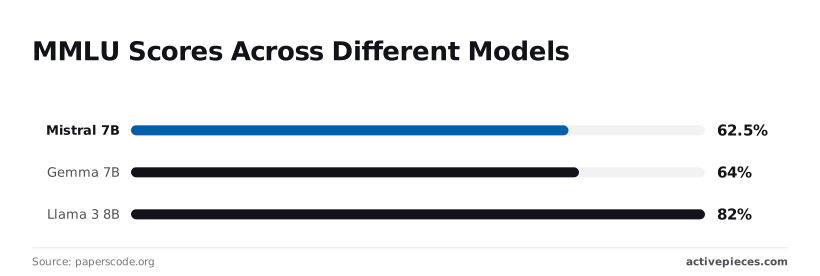
This determines whether a model possesses the latent logic required for complex regulatory processing. According to Papers with Code, the performance variance in the 7B-10B parameter class is significant:
Llama 3 8B scores 82.0%, suggesting it can handle collegiate-level reasoning tasks that cheaper, smaller models would likely hallucinate.
Falcon 3 10B reaches 73.1%, positioning it as a middle-tier option for firms that need more than a basic utility model but lack the hardware for massive clusters.
Gemma 7B lands at 64.0%, which means it may struggle with nuanced linguistic context in highly specialized legal or medical fields.
Mistral 7B v0.3 trails at 62.5%, indicating a higher risk of logic errors if used for autonomous decision-making without heavy supervision, so developers must implement rigorous human-in-the-loop verification.
GSM8K benchmark for mathematical reasoning ability
While MMLU covers general knowledge, GSM8K (Grade School Math 8K) measures a model's ability to perform multi-step mathematical reasoning. It consists of high-quality grade school math word problems that require the model to maintain a logical chain of thought to reach a final numerical answer.
HumanEval serves as the primary yardstick for technical automation by testing a model's ability to write functional code. It presents the model with specific programming tasks and docstrings, verifying that the generated code actually executes correctly to solve the problem.
It doesn't matter how well you prompt it: a model scoring 62.5% will never provide 90% accuracy in production, meaning that architectural upgrades are required to reach higher reliability thresholds.
Why benchmark scores don't reflect real-world AI performance
Raw intelligence in a vacuum is all that synthetic benchmarks measure. A platform that resells you a model has made your AI decision and priced it before you ever opened the product.
Raw intelligence in a vacuum is all that synthetic benchmarks measure.
Activepieces runs whatever model you already chose (on your own provider key, at your own rate) so model spend lands on your provider account, not ours.
Reach it from Claude, ChatGPT, Cursor or any MCP client, because the strategy is yours to set, not ours to sell back to you.
When a model requires 40 seconds to generate a response, a high MMLU score becomes irrelevant. This delay creates a bottleneck that violates internal Service Level Agreements (SLAs).
Furthermore, these scores don't reflect how a model handles "out-of-distribution" data, which is information that doesn't look like the training set.
The gap between base models and instruction-tuned variants
To predict the next token, developers train base models. They refine instruction-tuned variants to follow specific human commands, a distinction that fundamentally changes their risk profile.
While a base model might have a high raw score, it may lack the safety guardrails required by GDPR Article 25 (Data Protection by Design). This leads to unpredictable outputs when asked to redact sensitive PII.
Because instruction tuning often slightly degrades raw reasoning scores in exchange for controllability, engineers often accept a 2% drop in benchmark performance to ensure the model adheres to corporate governance policies.

Everything below works on Activepieces' free plan. Start without code or a credit card.
How data contamination undermines LLM benchmark leaderboards
Public benchmarks lose their predictive value when the training sets for Large Language Models (LLMs) inadvertently include the very questions and answers used to evaluate them. This overlap creates a memorization effect.
The model appears to reason through a problem but is actually retrieving a stored response.
How models 'cheat' by memorizing benchmark questions
The integrity of a benchmark relies on the model encountering the data for the first time during the evaluation phase. This standard is increasingly difficult to maintain as massive training corpora ingest open-source datasets.
The model appears to reason through a problem but is actually retrieving a stored response.
If a snapshot of the internet includes GitHub repositories containing benchmark solutions or educational sites hosting standardized test questions, a model effectively sees the exam before taking it. This results in a performance disparity known as the Contamination Gap.
Comparing model performance on "Clean" versus "Contaminated" data subsets is the best way to visualize this gap. When a model like Llama 3 8B encounters a contaminated set it has previously seen, its accuracy artificially spikes, creating a false impression of its reasoning capabilities.
Why general benchmarks fail industry-specific compliance needs
A model that masters a general benchmark often lacks the specific semantic understanding required to comply with industry-specific regulatory frameworks.
While a model might score highly on the MMLU benchmark, this general proficiency doesn't translate to the high-precision requirements of a Data Protection Officer who needs to distinguish between "pseudonymized" and "anonymized" data under GDPR Article 4.
Because public benchmarks favor broad, common-knowledge datasets, they fail to test for the nuanced logic needed to handle:
- Internal product specifications that use non-standard terminology.
- Regional legal precedents that contradict general common law principles.
- Complex, multi-layered permission structures within a company’s private knowledge base.
Why a high-scoring model can still fail at basic logic
High benchmark scores can mask a model’s inability to perform "out-of-distribution" reasoning. In a corporate setting, a model might correctly answer a standardized logic puzzle from a benchmark but fail to identify a simple conflicting clause in a new vendor contract.
The model can't rely on the statistical patterns it memorized from the public internet to bridge the gap to your specific business logic.
Reasoning density justifies the use of standardized scores
Quantifying the trade-off between parameter count and logic
To measure reasoning density (the ratio of a model's logical output to its physical size) benchmarks serve as the primary diagnostic tool. While a model might memorize patterns during training, standardized tests like MMLU isolate its ability to apply logic across diverse domains, providing a baseline for how much intelligence is packed into every billion parameters.
This metric is critical for infrastructure planning. It allows engineers to identify models that punch above their weight class rather than simply deploying the largest available weights.
Predicting hardware costs through benchmark performance
Standardized scores provide the only reliable method for calculating the hardware ROI of a specific architecture before it enters a private environment. Because VRAM (Video Random Access Memory) is a finite and expensive resource, understanding the relationship between a model’s reasoning capabilities and its memory footprint is essential for maintaining budgetary compliance.
Understanding memory compression through quantization
Quantization is the process of reducing the precision of a model's numerical weights to lower the total VRAM required for local execution. By converting 16-bit floating-point numbers to 4-bit integers (Q4), engineers can run sophisticated models on consumer-grade hardware without losing significant reasoning logic.

This compression allows a firm to deploy a 27B parameter model on a single high-end GPU, though it introduces a slight performance penalty compared to the full-precision original.
Accuracy loss in compressed weights
When interpreting benchmark tables, a reader must account for the degradation caused by these lower bit-depths. A model at Q4 precision typically loses between 1% and 3% of its MMLU score compared to its uncompressed state.
This means a "High" score in a Q4 table is a relative measure of the model's remaining intelligence after the mathematical rounding errors of quantization have been introduced.
The trade-off is a deliberate choice between raw logic and operational feasibility. While a 4-bit model is less precise than an 8-bit or 16-bit version, it often retains enough reasoning density to outperform smaller models that fit in the same memory space.
For example, a quantized 70B model often scores higher on benchmarks than a full-precision 7B model, even though the 70B model has had its weights significantly compressed.
| Model | MMLU Score | Parameter Count | Min. VRAM (Q4 Quantization) |
|---|---|---|---|
| Llama 3 8B (Meta) | High | 8 Billion | ~5.5 GB |
| Falcon 3 10B (TII) | High | 10 Billion | ~7.0 GB |
| Ternary Bonsai 27B (Ternary) | Very High | 27 Billion | ~17.1 GB |
Benchmarks as a filter for architectural viability
Public benchmarks are a necessary gatekeeper that prevents organizations from wasting resources on private testing for models that are architecturally incapable of meeting performance SLAs.
Under data protection frameworks like the GDPR, specifically Article 25 regarding Data Protection by Design, engineers must justify the necessity of the data processing tools they implement.
Before it ever touches sensitive internal data, a model is disqualified if its public benchmark performance fails to meet a minimum threshold for the intended task.
Easier to see it running than to read about it: set it up free, no card.
Selection framework for offline AI models
Selecting a model requires a tiered evaluation strategy that balances broad capabilities against specific operational constraints. This process ensures that the high costs of infrastructure provisioning are only committed to models that have already demonstrated relevance to a firm's specific data privacy requirements.
Step 1: Using LMSYS Chatbot Arena for human preference data
Because it provides Elo ratings based on blind human comparisons, the LMSYS Chatbot Arena is the initial filter. Relying on these scores allows a team to bypass marketing benchmarks that are often contaminated by training data.
The selection process begins with models that have proven they can satisfy human intent in a conversational context.
Step 2: Building a 'Golden Dataset' of internal queries
A "Golden Dataset" consists of a curated collection of five to ten complex, domain-specific prompts that represent the highest-risk or highest-value tasks the model will perform.
Conducting these vibe checks manually ensures that the model’s linguistic style and reasoning logic align with internal compliance standards before any automated testing begins.
Step 3: Measuring inference speed vs. accuracy on local hardware
The final stage involves running automated evaluations using the internal dataset on the actual hardware intended for production. This stage determines the real-world trade-off between how quickly a model generates a response and how often that response is factually correct.
First, the process filters by public MMLU and HumanEval scores. It then conducts vibe checks with 5-10 manual prompts. Finally, the team runs automated domain-specific evaluations on private data.
Standardizing model evaluation through Activepieces
Automating the 'Golden Dataset' test across multiple models
Retries, memory, state, tool-calls, that is what an agent actually is, and in Activepieces that logic sits in the open, MIT-licensed core. Every tool call an agent makes in a run appears in the run trace, and the code that produced that decision sits in the same public repository. A competitor can ship a feature to match us. They can't ship a licence, the engine running today stays MIT, in the open, for anyone to read.
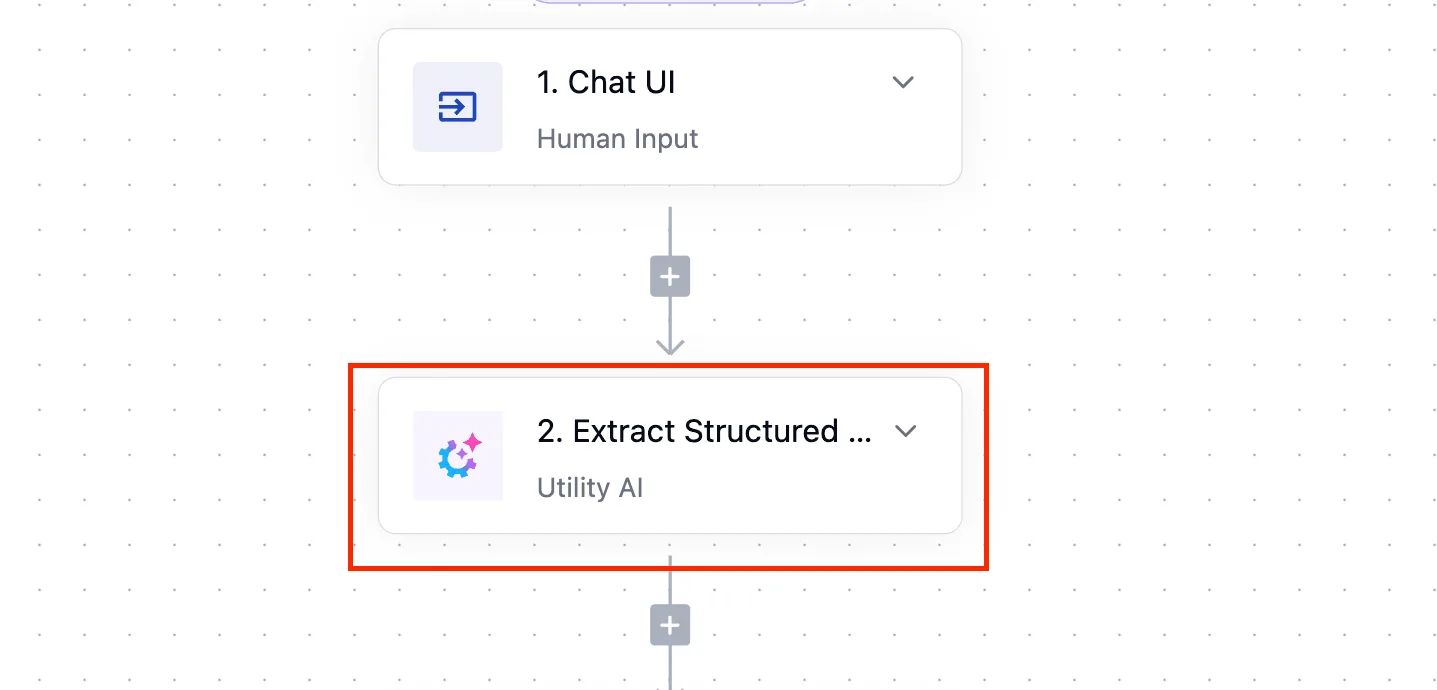
By using the Activepieces flow builder, an engineer can trigger a single test cycle. This cycle broadcasts the same data to various local inference tools, such as the Ollama model runner or the LocalAI API.
This automated distribution eliminates the risk of prompt drift and provides a repeatable audit trail for model selection.
Comparing local inference latency at scale
By logging the time elapsed between an API request and the final token delivery, the platform allows teams to measure the real-world performance of models within their specific network constraints.
MoneyGram, Moneypenny, Alan and FundingSocieties run Activepieces in production, where the platform reaches every model provider a company uses and pushes the combined performance and spend data into the sheets finance already reads. This data is critical for compliance with internal Service Level Agreements (SLAs).
Integrating benchmark monitoring into the AI lifecycle
Activepieces maintains the integrity of the model selection process by offering 735+ integrations that turn one-off benchmarks into continuous monitoring loops that alert teams when a model’s performance degrades after a version update.
By scheduling these flows to run at regular intervals, a business ensures that a model which met GDPR-mandated accuracy thresholds at deployment continues to do so as the underlying data distribution shifts. Performance metrics are automatically written back to a system of record (such as Microsoft Excel 365).
The Monday morning plan for model selection
Transitioning from public leaderboards to internal validation requires a shift from viewing models as specialized subprocessors under GDPR Article 28 requirements. While public benchmarks provide a baseline, they can't simulate the specific data processing agreements or the unique linguistic nuances of your firm’s proprietary datasets.
To move beyond the speculative performance metrics found on sites like the Hugging Face Open LLM Leaderboard, teams must establish a controlled environment.
The following sequence establishes a reproducible baseline for comparing how different models handle your specific data categories:
- Export 50 real-world prompt/response pairs from your existing logs to ensure the test reflects actual user behavior rather than idealized scenarios.
- Set up a local instance of Ollama, an open-source framework for running LLMs locally, so that sensitive business logic never leaves your managed infrastructure during the evaluation phase.
- Run the 50 prompts through three candidate models to identify which architecture most consistently adheres to your specific formatting and safety constraints.
- Score results 1-5 on accuracy and policy alignment to create a quantitative justification for the final model selection.
Frequently asked questions
Do high benchmark scores guarantee fewer hallucinations?
High scores on public benchmarks indicate a model’s general linguistic competency but provide no assurance against fabrications within your specific domain.
Because these tests often rely on multiple-choice formats or common-knowledge datasets, a model can achieve top-tier rankings while still failing to ground its answers in your proprietary documentation.
How much does it cost to run a custom evaluation?
The depth of human expert review required to validate the model's outputs against your internal compliance standards determines the total cost of a custom evaluation.
While the technical API fees for processing test prompts are often negligible, the primary expense lies in the hourly rate of specialized personnel, such as legal counsel or senior engineers, who must audit the responses for accuracy.
Are small models catching up to GPT-4 in reasoning?
Small, specialized models are narrowing the gap for specific, narrow tasks but still lack the broad reasoning capabilities required for complex, multi-step logical chains.
A smaller model might match the performance of a larger frontier model on a structured data extraction task, allowing you to reduce latency and compute costs for that specific workflow.
How often should we re-evaluate our offline model?
Whenever the underlying data distribution of your business environment undergoes a significant shift, you must re-evaluate your offline model. If your organization adopts new regulatory frameworks or enters a different geographic market, the frozen model’s internal logic won't align with your current legal obligations.