Hootsuite Pricing 2026: Plans and Per-User Costs

Nov 2, 202614 min read
According to Postiv, Hootsuite sells four plans, and the three with public prices start at $99, $199 and $399 per user per month for Standard, Professional and Advanced, a ladder that teams already stitching their tools together with Activepieces will want to weigh carefully.
Hootsuite pricing is the tiered, per-user subscription structure under which the social media management platform charges for its plans, with the final cost set by the number of seats, connected social accounts and paid add-ons rather than by the listed monthly rate alone.
Each seat adds the same amount again, so your invoice tracks headcount more than ambition. Enterprise carries no listed price.
Hootsuite plans and prices compared in one table
The table below sets out every plan, with a cell reading "not published" wherever the source gives no figure.
| Plan | Price per user, per month | Users | Social accounts | Scheduling | Analytics | Inbox | Support | Trial |
|---|---|---|---|---|---|---|---|---|
| Standard | $99 | not published | not published | not published | not published | not published | not published | not published |
| Professional | $199 | not published | not published | not published | not published | not published | not published | not published |
| Advanced | $399 | not published | not published | not published | not published | not published | not published | not published |
| Enterprise | not published | not published | not published | not published | not published | not published | not published | not published |
How Hootsuite bills: annual versus monthly, and per user
Seat maths on Standard, Professional and Advanced
Because billing is per user, the maths is simple. Postiv's data shows Standard costs $99 for one seat, $495 for five and $990 for ten, which means there's no bulk discount.
Five people on Standard is $495 a month before you add anything, according to Blotato, and ten is $990.
At the same seat counts, Professional runs $199, $995 and $1,990, per Postiv, meaning a ten-person team spends nearly $2,000 monthly.
Advanced runs $399, $1,995 and $3,990. A ten-person team on Advanced pays about four times what the same team pays on Standard, so the upgrade decision is a budget decision.
Agency seats and Enterprise
For an agency, the seat is what matters. A contractor who logs in twice a week still takes a full seat, and if the retainer doesn't cover it, your other clients quietly subsidize it.

You can't budget for Enterprise from the page, because it is the only plan with no listed price. Expect a sales conversation.
Quote your client only after you have a written figure. Until then, treat the Advanced rate of $399 per user as the visible ceiling, not the real one.
What Hootsuite really costs with usage limits
Multiply the per-user rate by your headcount and the real cost shows up fast. A single Standard seat costs $1,188 a year, while five Advanced seats cost $23,940, a gap that comes from seat count as well as plan before you count any add-on.

Moving from one seat to five multiplies every tier by exactly five, so adding people costs about as much as moving up a plan.
Solo creator with three accounts
$1,188 a year is what a solo creator pays on Standard, per Blotato's breakdown of Hootsuite pricing. The figure is $99 a month on annual billing, so the annual price point excludes solo creators operating on minimal tool budgets.
That's the floor, and it only holds while the creator stays inside the plan's account allowance.
Professional at $2,388 a year doubles the bill for one person, so it only makes sense if you need what it unlocks, not just room for one more profile.
Five-person marketing team
Put five seats on Standard and the bill is $5,940 a year, on Professional $11,940, and on Advanced $23,940, all from the same Blotato figures.
For a team, the gap between Standard and Professional is $6,000 a year, so ask whether two or three people need the higher tier or whether everyone does.
Agency managing many client accounts
Two meters run at once for an agency, seats and client accounts, and the headline rate covers neither. Five Advanced seats at $23,940 is the visible number, and it says nothing about how many client profiles those seats can reach.

Once headcount and profile count both outgrow the published tiers, the next step is a quote rather than a price.
Add-ons, seat charges and caps not in the headline price
The sticker price leaves out every extra: extra seats, extra social accounts and paid add-ons each raise the total above the figures in the chart.
Once headcount and profile count both outgrow the published tiers, the next step is a quote rather than a price.
Caps matter most: a limit on accounts or scheduled posts turns a flat annual fee into a forced upgrade the moment you cross it.
Price your real seat count and account list against each tier, then add every extra you expect to need. The result, not the monthly rate, is the number to compare with rivals.
If you are running this arithmetic for your own team, see what the same workload costs on Activepieces.
Comparing Hootsuite with Buffer, Sprout Social and Later
Priced as a five-seat annual total, Hootsuite starts at $5,940 a year and is the dearest of the four once you count seats.

Four tools sit side by side in the table below. Read the cost and accounts columns, because they tell you which tools get dearer as you add people and which as you add accounts.
| Entry price | Cost at 5 users | Accounts included | Scheduling limits | Analytics depth | Unified inbox | Free plan or trial | |
|---|---|---|---|---|---|---|---|
| Hootsuite | Paid plans only | $5,940 to $23,940 a year | Rises with plan | Rises with plan | Deepest on Advanced | Yes | Trial, no free plan |
| Buffer | Lowest of the four | Grows with each channel | Priced per channel | Capped on free | Lighter | Basic engagement tools | Free plan |
| Sprout Social | Paid plans only | Grows with each seat | Set by plan | Generous | Deep | Yes | Trial |
| Later | Low | Grows with each social set | Set by plan | Capped on lower plans | Moderate | Limited | Free plan |
Take away the pricing logic: Buffer charges for channels, Sprout Social for seats, and Hootsuite for both. That's why a shared login is tempting, and why it quietly makes one client pay for another's workload.
Buffer and Later both offer a free plan; Hootsuite has none. That makes them the cheaper place to start, and the right place to test whether you need a scheduler at all.
Cost for a five-person team
At the median deal, five Hootsuite seats cost $5,940 a year on Standard, $11,940 on Professional and $23,940 on Advanced, according to Vendr. Professional is double Standard, so you need a feature that earns back $6,000 a year.
Advanced is four times Standard, so it only makes sense if reporting or governance is something you bill clients for. If you can't point to that line on an invoice, the upgrade is a cost you absorb.
Where Hootsuite is worth the premium
When several people publish across many accounts and need one inbox, approvals and reporting in the same place, Hootsuite earns its price.
For a small team posting to a few channels, Buffer or Later covers the scheduling at a fraction of the cost. Sprout Social is the closest rival for inbox and analytics. Quote both against the same five seats before you decide.
Automating repetitive social work around Hootsuite with Activepieces
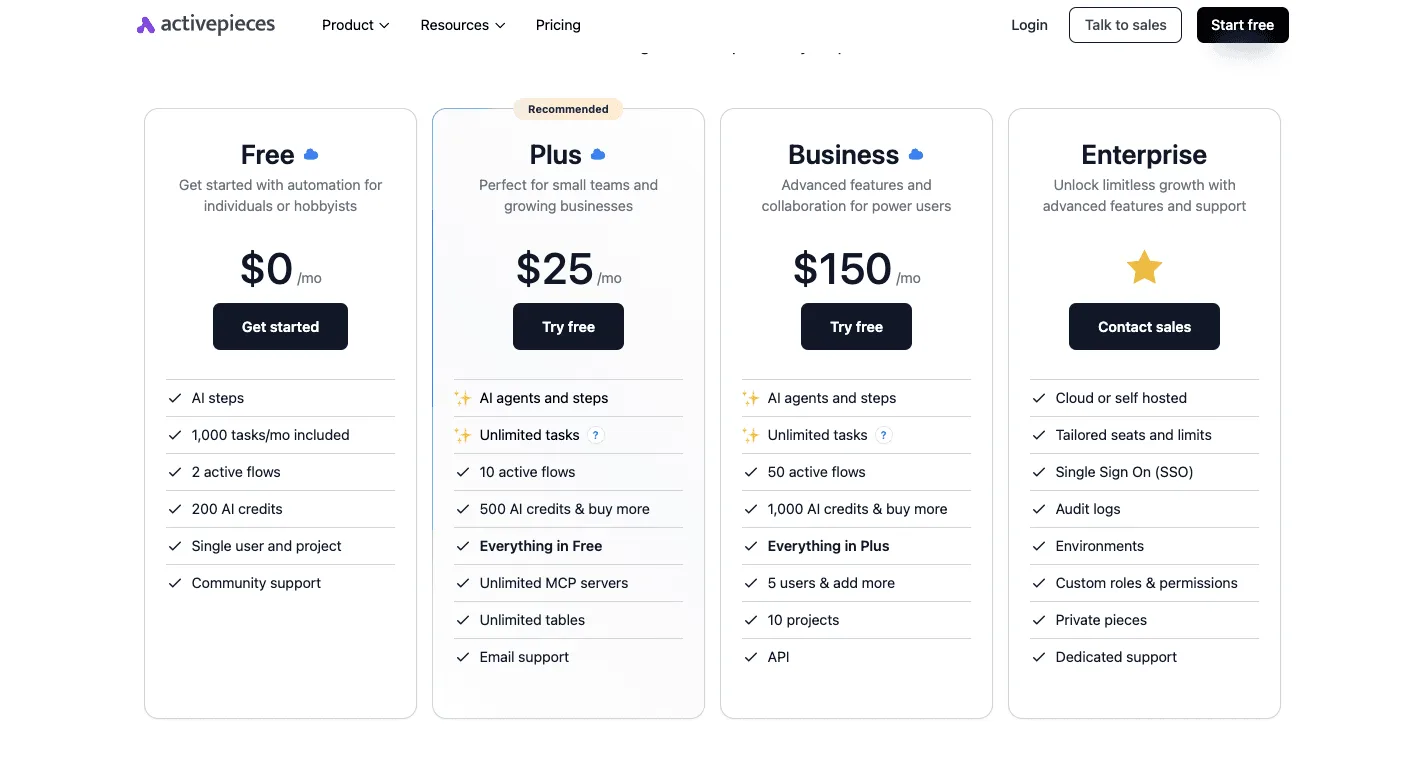
Some of the chores around Hootsuite can go to Activepieces, a separate workflow tool whose free plan costs $0 and allows unlimited flows.
It doesn't change what Hootsuite charges, so it earns a place only after you've priced your seats, accounts and add-ons against the plan and against Sprout Social.
Any hours it saves are a labor saving, not a discount on the invoice.
Check Hootsuite's own integrations first, because a connection that ships with the plan costs you nothing extra to set up.
When a workflow tool helps and when it does not
Where a person is copying something from one place to another and adding no judgment, a workflow tool fits. The same work done by hand is also where an agency quietly absorbs cost.
The client never sees it. Agencies rarely bill the hour spent pasting approved copy into drafts, so the retainer carries it.
Chores a separate workflow tool could take:
- Copy approved posts from a content calendar into a draft
- Send weekly metrics to Slack
- Log published links to a sheet
Those three are the pattern: each starts from a trigger, moves a defined piece of data, and ends in a place someone already looks.
When the task needs a decision, a workflow tool helps less. Moderating a reply in the inbox, choosing which post to boost, or judging a crisis comment should stay with a person inside Hootsuite.
If a connection breaks and nobody notices, posts stall or reports go missing, and that failure lands on you rather than the client.
Adding a workflow tool means a second system to maintain. If Hootsuite already does the job natively, a separate tool is one more thing to own for no gain.
An example: content calendar row to scheduled draft
Say you mark a row approved in the content calendar once the client signs off.
In Activepieces you'd build a flow that watches for that status change and reads the copy, date and account from the row, and each run of it is 1 credit however many steps it has, out of the 1,000 credits a month the free plan includes.
The flow then creates a draft in Hootsuite for a person to check and schedule.
Where Hootsuite's connection doesn't cover a step, you'd need to confirm what its API allows before you tell the client that step runs automatically.
The draft is the point. A person still reviews it, so the flow removes the retyping without removing the check.
Nobody on the agency side has to be a builder to get that flow. Describe the calendar-to-draft chore in Activepieces' built-in chat and it builds and publishes a real workflow you can read, version and approve.
Custom RBAC and audit logs come with Ultimate and Enterprise, not the free plan. Every run leaves a trace anyone on the team can read, so you can see exactly what it did to a client's draft.
MoneyGram, Moneypenny, Alan and FundingSocieties already run Activepieces in production.
Worth checking against a plan that does not meter every step: one credit covers a whole run on Activepieces.
Checking your Hootsuite quote before you pay
Check a Hootsuite quote by pricing your own seats, accounts and add-ons against it, line by line. That shows which client is quietly being carried by the shared plan.
The checklist below runs in the order that keeps you from paying for guesses, and the last step gives you a price to compare against.
- Count the people who'll log in and the social accounts they'll publish to.
- List the features you can't work without, separate from the ones that'd be nice.
- Write down the date you read the pricing page, since plans and limits change.
- Start a trial if one is offered, and run a real client's week through it.
- Ask sales about add-ons, the ones your must-have list depends on.
- Ask how renewal is priced.
- Ask what cancellation requires.
- Price one rival at the same usage.
Count seats and accounts first
Before you read a plan name, count seats and connected accounts, because they are the two meters the bill runs on.
Include the contractor who only schedules posts and the client who only approves them, because a person who needs a login is a seat whether or not they touch the dashboard daily.
Then count every account separately, per client and per network. A client with several profiles uses several accounts, and if one plan covers everyone, the heavier client is being subsidized by the lighter ones unless you bill them for the difference.
Questions to put to Hootsuite sales
Get the quote in writing, itemized by seat, account and add-on. Then ask which of your must-have features sit outside the base plan, what happens when you add an account mid-term, and whether extra seats are priced at the same rate as the first ones.
Compare Hootsuite's answers with the date you noted from the pricing page. If the quote differs from the page, ask why, and keep the reply. An unexplained gap is a cost you'll end up either absorbing or explaining to a client.
Setting a Hootsuite renewal reminder before auto-renewal
Well ahead of the cutoff for cancelling, not on the renewal date itself, is when the renewal date belongs in your calendar. Auto-renewal at whatever the then-current price is can undo all the careful counting you did at signup.
Ask whether the renewal price is fixed or can change. Note who must be told, and how, if you decide to leave.
Frequently asked questions
Does Hootsuite still have a free plan?
Not as a standing plan you can run a client account on; Hootsuite now leads with a free trial of its paid tiers.
That means the trial's your only no-cost test, so load it with your real seats and accounts before the trial ends, because a trial run on a toy setup tells you nothing about the invoice you'll actually get.
Is Hootsuite cheaper if I pay annually?
Generally yes, since the pricing page presents annual billing at a lower effective monthly rate than paying month to month. The catch is commitment. You're paying for every seat and account you sign up for across the whole term.
If a contractor rolls off in spring, you're still funding that seat until renewal, so annual billing only makes sense for headcount you're confident will stay.
Can I add more users or social accounts later?
Yes, but how it's priced depends on your plan: some growth happens through add-ons, and some means moving up a tier. Check which applies before you promise a client anything.
If one more account pushes you into the next tier, the whole team's cost rises, and the new client is effectively being subsidized by everyone else's budget unless you pass the increase through.

Does Hootsuite offer discounts for nonprofits or agencies?
Discounts are something you request from sales, not something you'll find as a published self-serve price. Custom quotes are where negotiation happens, so go in with your seat count, account count and the competitor totals from your own comparison.
For agencies, the useful question is whether the quote lets you bill each client's accounts separately. A shared plan with no per-client breakdown hides which client is costing you the most.
How do I cancel a Hootsuite subscription?
Cancel from your account's billing or plan settings, and do it before the renewal date.
The timing matters more than the button: on an annual plan, cancelling after renewal usually means you've already paid for another term, and refunds are governed by Hootsuite's terms rather than goodwill.
Put the renewal date in your calendar well ahead, and read the current terms on Hootsuite's site before you assume any money comes back.
Related reading
Running the numbers
See what the same workload costs here.
Free forever plan, and every paid plan self-hosts at no extra cost.
See pricing Talk to sales