How to Prove EU AI Act Compliance for High-Risk Systems

Sep 30, 202615 min read
The enforcement mechanism for high-risk AI systems under the EU AI Act relies on a structured framework of conformity assessments and post-market monitoring.
Before these systems enter the European market, developers must undergo rigorous evaluations to ensure compliance with data governance, transparency, and human oversight requirements.
Once deployed, organizations often utilize automated workflows to manage compliance logs, sometimes incorporating tools like Activepieces to streamline data reporting, which helps maintain the necessary technical documentation.
National supervisory authorities are empowered to conduct audits and impose significant fines for non-compliance, ensuring that high-risk applications in sectors like healthcare and law enforcement adhere to strict safety standards throughout their entire lifecycle.
The EU AI Act risk-based classification system
The EU AI Act categorizes AI applications into a three-tiered hierarchy. The level of regulatory oversight scales directly with the potential harm to human safety and fundamental rights.
Visually, the EU AI Act Risk Pyramid separates software into three distinct layers. The top represents Prohibited systems that the EU bans entirely, while the middle covers High-Risk systems requiring strict compliance.

The base includes Limited Risk tools with basic transparency rules. This hierarchy concentrates enforcement resources where the stakes for citizens are highest.
Unacceptable risk: Prohibited AI practices
Moving them from a technical challenge to a legal liability, the EU bans AI applications that pose a clear threat to the safety and rights of people.
According to the Agent Mue Fine Calculator, fines for engaging in prohibited practices can reach €35 million, which means a single violation could potentially bankrupt a mid-sized enterprise.
These bans cover social scoring by governments, real-time biometric identification in public spaces, and manipulative systems that exploit vulnerable groups.
High-risk systems: The primary focus of enforcement
Critical sectors like education, employment, and law enforcement are where high-risk AI software is most commonly used. In these areas, a biased output can derail a person's life.
If you use Gemini 3.8 Flash to automate resume screening without proper documentation, you'll risk fines of up to €15 million. The cost of skipping a risk assessment is often higher than the annual revenue of the project itself.
Mandatory logging and human oversight are required for these systems. Because a high-risk workflow requires the same peer review as the code it interacts with, teams use Activepieces to sync automation logic to Git and promote it through Release Management.

This ensures that changes to a high-risk workflow are versioned and reviewed as code, rather than being an accident of clicking "publish." Check the Activepieces documentation for Git Sync and Release Management, which provides the same environment controls whether self-hosted or on cloud.
Controlled deployment through release management
Release Management acts as a gatekeeper that moves automation logic through isolated environments, such as development, staging, and production. By treating workflows as code, this process ensures that no single developer can push a change to a high-risk system without a secondary review.

This mechanism serves as a primary compliance control by preventing unauthorized or untested logic from reaching live users. It creates a formal history of who approved a change and why, turning the deployment pipeline into a verifiable audit trail.
Obligations for deployers of high-risk systems
Enforcement does not stop with the software creator; the entity using the system, known as the deployer, carries heavy legal weight. If a bank uses an AI for credit scoring, it must perform its own Fundamental Rights Impact Assessment before going live.
Deployers are legally required to monitor the system for reasonably foreseeable misuse and stop using the AI if they suspect it poses a risk. They must also ensure that the data they input is relevant and representative for the system's intended purpose.
Failure to meet these operational duties triggers the same severe fine structures as those faced by developers. A company using a high-risk tool without proper internal oversight is just as liable as the provider who built it.

Limited and minimal risk: Transparency obligations
Daily creative workflows are where most AI tools fall into the limited risk category. The primary requirement is that you ensure users know they're interacting with a machine.
A company using a high-risk tool without proper internal oversight is just as liable as the provider who built it.
When producing deepfakes or public-facing content, you must disclose generative models like GPT-6 Astra or Claude Opus 5.5. Regulators consider spam filters and AI-enabled video games minimal risk, so they don't require additional intervention.
This takes minutes, not a project: automate it in Activepieces free.
The enforcement timeline for AI providers
Enforcement of the EU AI Act follows a staggered, risk-based schedule. It prioritizes the removal of harmful technologies before addressing administrative compliance for complex systems.
Immediate bans on prohibited practices
According to Regulation AI, the strictest category, Prohibited AI, faces a deadline of just 6 months. You must immediately audit your portfolios to avoid heavy fines for non-compliant features.
For any firm using biometric categorization or social scoring, this short window forces an instant pivot. These features must be hard-coded out of existence by early 2025.
The 12-month window for general purpose AI
Providers of General Purpose AI (GPAI) models, such as Claude Opus 5.5 or GPT-6 Astra, will have 12 months to meet transparency and systemic risk obligations, leaving developers a narrow window to overhaul their compliance documentation, which forces an immediate acceleration of internal governance workflows.

Regulation AI gives you a full year to align your internal safety protocols with these new legal mandates.
If you build custom agents using Mistral Large 3, you'll have until mid-2025 to ensure your provider has published the necessary copyright compliance data.
Long-term deadlines for Annex III systems
Per Regulation AI, high-risk systems defined under Annex III, such as those used in recruitment or credit scoring, receive the longest runway of 40 months, ensuring that companies have sufficient time to integrate rigorous safety protocols into their legacy infrastructure, so organizations can phase in complex technical upgrades without immediate operational disruption.
| Phase | Duration | Key Output |
|---|---|---|
| Initial Assessment | 8–12 weeks | FRIA Report |
| Subsequent Updates | 1–2 hours | Updated Log |
| Full Re-assessment | 4–6 weeks | New Compliance Certificate |
The bulk of the compliance tax is paid upfront during the first three years of the Act’s adoption.
Step 1: Documenting technical compliance for High-Risk AI
High-risk AI compliance requires a rigorous audit trail that proves a system functions as intended while actively mitigating harms. This shift moves the regulatory focus from vague promises to concrete evidence stored within a Quality Management System (QMS).
Establishing data governance and record-keeping
Data governance ensures that the information used to fine-tune or ground a model is representative, free of prohibited biases, and legally sourced.
- Data Provenance: A ledger showing the origin of training sets to ensure no copyrighted or private material was ingested without consent.
- Bias Mitigation: Reports from testing sessions that prove the model doesn't produce discriminatory outputs against protected groups.
- Validation Sets: Separate data used to test the model’s accuracy before it reaches the end user.
Creating the mandatory technical documentation file
The technical documentation file is the source of truth for regulators. It details exactly how the AI is built and what it's allowed to do.
According to Annex IV, this file must include a system description covering the high-level architecture and the specific intended purpose of the AI. Design and development sections are also required, with detailed explanations of the algorithms and the logic behind the data governance.

Finally, it must include risk management. This is a living list of potential failures and the specific technical safeguards implemented to stop them.
Setting up automated event logging protocols
Automated logging provides the chronological evidence required to reconstruct a system’s behavior during a specific incident.
An audit log of who logged in tells you nothing about what an agent decided. Activepieces traces every tool call, the data it acted on, and the decision order step-by-step, exporting these traces as event streams into the SIEM your security team already runs.
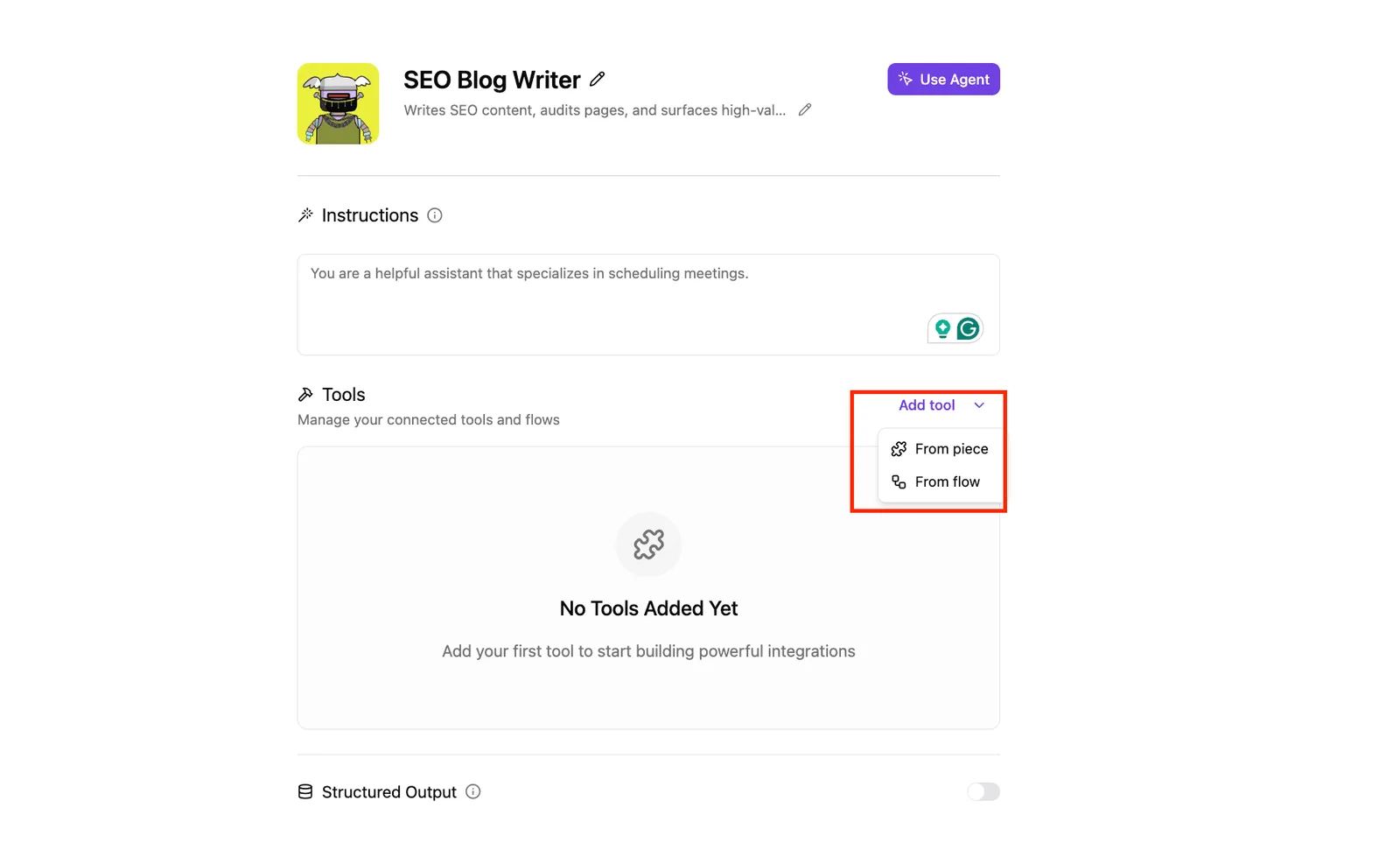
Check the Run Details and Debugging UI documentation for the per-step agent decision trace that companies like MoneyGram and Moneypenny use to maintain oversight.
If a model like GPT-6 Astra produces a hallucination that leads to a financial error, the exact technical state of the system at that moment is retrievable for forensic review.
You can follow the rest of this with the builder open. Start free, no card.
Step 2: Performing the Fundamental Rights Impact Assessment
A technical trail is preserved for auditors. This documentation serves as the backbone for the EU Registration Workflow, a mandatory sequence that transforms abstract safety claims into a legal right to operate within the Single Market.
- Appoint EU Representative (for non-EU providers)
- Complete Fundamental Rights Impact Assessment
- Submit to EU AI Database
- Affix CE Marking to system
Identifying affected stakeholders and risks
To prevent algorithmic discrimination, the Fundamental Rights Impact Assessment (FRIA) requires a granular mapping of how a model like GPT-6 Astra interacts with specific demographics, such as minority groups or protected classes.
Using a FRIA Template, you must document the intended purpose of the system and the environments where it'll be deployed.
Appointing an Authorised Representative in the EU
If you're a non-EU entity, such as a San Francisco-based startup deploying Claude Opus 5.5, you must appoint an Authorised Representative established within the Union. This representative acts as your primary point of contact for market surveillance authorities.
The representative must have a physical presence in an EU Member State. This provides a clear address where legal notices can be served and compliance queries can be resolved.
Signing the EU Declaration of Conformity
The final administrative hurdle is the drafting and signing of the EU Declaration of Conformity. This is a formal document where you assume full responsibility for the AI system’s adherence to the Act.
By signing this, you certify that every step meets the statutory requirements. This includes the robustness of Gemini 3.8 Flash and the transparency of the training data. This allows you to finally affix the CE marking to your product.
Step 3: conformity audits and registration
Conformity audits and registration turn the technical requirements of the Act into a mandatory financial and administrative gate. This stage moves beyond internal testing to validate that your governance, data handling, and model performance are legally defensible under independent scrutiny.
Budgeting for third-party conformity audits
Audit costs are determined by the complexity of the AI system and the depth of the required verification, creating a significant upfront capital requirement for you.
According to ZDNet, a standard audit ranges between €50,000 and €200,000, so firms must allocate significant capital reserves just to secure market entry.
For specialized high-risk software, the range climbs to between €85,000 and €240,000, which forces you to price in a substantial compliance tax before the first user is even onboarded.
Between €100,000 and €500,000 is what large-scale audits for complex, multi-modal systems reach, effectively creating a high barrier to entry for smaller startups attempting to compete in the enterprise space, meaning that market consolidation may favor well-capitalized incumbents.
Uploading documentation to the public EU registry
Once the audit is complete, you must register the system in the EU Database for high-risk AI systems to ensure public transparency and oversight.
Registration Data must include your name, contact details, and the trade name of the AI system. A summary of the intended purpose and the specific context of use is required as a System Description.
The screenshot of the workflow builder shows how these administrative tasks are now being automated through scheduled triggers and database integrations. By setting a schedule to run "Every Hour," you ensure that your internal logs are continuously synced with your compliance records.
Affixing the CE mark to the AI product or documentation
The final step is the visible attestation of compliance, where you affix the CE marking to the product or its accompanying documentation.
Visible, legible, and indelible, the mark must be on the AI system itself or the packaging. For systems audited by a third party, the identification number of the Notified Body (the auditor) must follow the CE mark.
You must draft a formal EU Declaration of Conformity and keep it for 10 years after the system is placed on the market, requiring companies to maintain long-term administrative oversight for every version of their software, which necessitates the creation of permanent, searchable archives for all regulatory filings, ensuring that compliance documentation remains accessible throughout the entire product lifecycle, so firms must commit to a decade of rigorous record-keeping for every release.
Automating EU AI Act compliance with Activepieces
Activepieces is an MIT-licensed AI automation platform that automates the continuous monitoring required by the EU AI Act by linking live model performance data to centralized compliance records without manual data entry.
Syncing model logs to compliance databases
Maintaining a verifiable audit trail requires a bridge between the inference environment and the administrative record. Activepieces, which features 735+ integrations, acts as this bridge by capturing telemetry from production environments and routing it to structured storage.
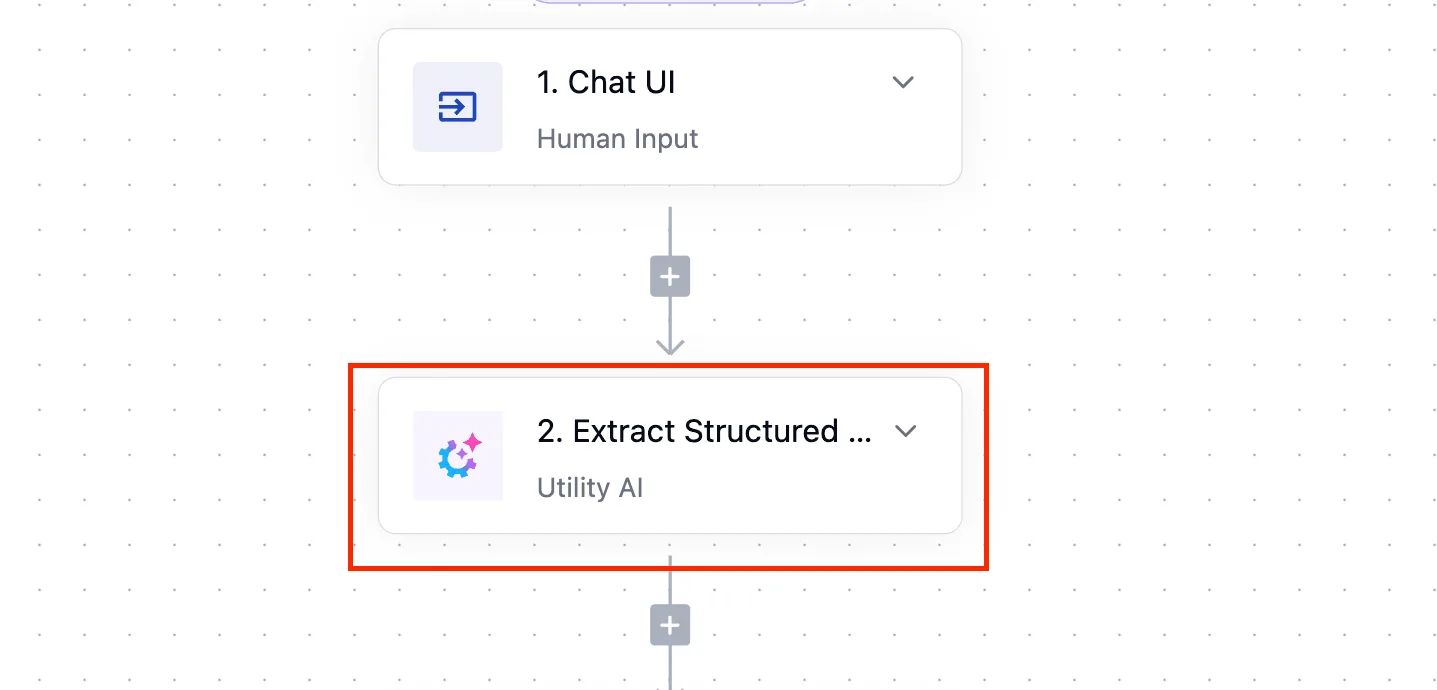
Every interaction generates metadata that must be preserved when you deploy a high-stakes application using Gemini 3.8 Flash for enterprise workflows.
By connecting the API output to a "Create Row" action in Airtable (a cloud-based relational database) you create a tamper-evident log of system inputs and outputs.
Triggering alerts for prohibited output detection
Continuous compliance depends on immediate intervention when a model’s behavior deviates from its safety guardrails. If a system utilizing Claude Opus 5.5 for knowledge work begins to produce biased results or hallucinate outside of accepted safety bounds, the enforcement workflow must escalate the issue.
- Connect model performance logs to Activepieces to ingest real-time inference data.
- Set a 'Filter' step for accuracy below 95% to isolate failures, so that developers can focus their debugging efforts exclusively on the most problematic model outputs.
- Add a 'Slack' action to notify the compliance officer so they can initiate an immediate system override.
- Log the incident automatically in a Google Sheets compliance ledger to satisfy mandatory reporting requirements.
Automating the document versioning for audits
The EU AI Act demands that technical documentation stays current with every significant update to the model's weights or system prompts.
Using Activepieces, which has earned 24,798 GitHub stars for its open-source approach, you can sync your GitHub repository directly to a centralized compliance folder in Google Drive.
Every time a new version of a model like GPT-6 Astra is pushed to production, the automation triggers a document duplication and timestamping process.
Frequently asked questions about AI Act enforcement
What are the maximum fines for non-compliance?
Financial penalties for violating the AI Act are scaled based on the severity of the infringement and the global turnover of your parent organization.
Prohibited AI practices, such as real-time biometric identification in public spaces, carry the heaviest financial weight. The cost of a breach outweighs the potential profit of the violation.
Non-compliance with transparency obligations or data governance standards results in mid-tier penalties.
Supplying incorrect or misleading information to regulatory bodies triggers the lowest tier of fines.
Does the AI Act apply to companies outside the EU?
The AI Act follows an extraterritorial mandate where the location of the software developer is irrelevant if the system’s output is utilized within the European Union.
If you're a creative agency in New York using Gemini 3.8 Flash to generate localized marketing assets for a client in Berlin, you're legally bound by the Act’s transparency requirements.
How are General Purpose AI (GPAI) models regulated?
General Purpose AI models are governed by a two-tiered system that distinguishes between standard models and those that present systemic risks to the Union.
Standard GPAI models must provide technical documentation and summaries of the content used for training.
Models identified as having systemic risk must undergo mandatory adversarial testing and report serious incidents to the AI Office to prevent widespread technical failures.
If you're a provider of systemic risk models, such as those deploying GPT-6 Astra for enterprise infrastructure, you're required to implement cybersecurity protections.
Related reading
References
Build it
Set this up in minutes.
No code required. Connect your accounts, and Activepieces runs it from there.
Start free Talk to sales