
NVIDIA Switchyard: Routing AI Agent Calls Across Models

Oct 4, 202612 min read
Nvidia Switchyard functions as a model-agnostic gateway that intercepts AI agent requests, much like how Activepieces connects various cloud services, to direct them to the most efficient model based on the specific complexity of the task.
By sitting between the application and the inference providers, it routes simple data-entry tasks to smaller models instead of flagship reasoning models.
Route AI agent requests with Nvidia Switchyard
Accessing the Switchyard infrastructure
Nvidia Switchyard is delivered as a managed service through the NVIDIA API Catalog, accessible at build.nvidia.com. Users do not need to manage their own server clusters to begin routing, as Nvidia hosts the gateway infrastructure and provides the necessary endpoints for cloud-based integration.
To obtain a Switchyard gateway URL, a developer must log into the Nvidia build portal and select the Switchyard model from the hosted registry.
The portal provides a standardized base URL, typically formatted as an OpenAI-compatible endpoint, which serves as the destination for all agentic traffic.
Generating your Nvidia API key
Users generate an Nvidia API Key directly within their organization dashboard on the Nvidia build platform. This single secret key authenticates the user across all models supported by the gateway, eliminating the need to manage separate credentials for every individual inference provider.
While the primary delivery is a cloud-hosted service, enterprise users can also deploy Switchyard as a NIM container for local or private cloud environments.
This self-hosted option allows organizations to keep their routing logic and data traffic within their own security perimeter while maintaining the same API structure.
What Nvidia Switchyard does for agentic workflows
Nvidia Switchyard automates the selection of LLMs to balance operational expense against output quality. In our testing on OpenRouter, we observed that the router evaluates the intent of a prompt before execution.
When a demanding reasoning or long-horizon agentic task arrives, the system reserves a high-cost model like Claude Fable 5.1. This logic prevents the "over-provisioning" of intelligence where an expensive token is spent on a task that a smaller model could handle.
Activepieces distinguishes between a routine email summary and a complex multi-step research task by integrating the router directly into the workflow logic.
This distinction is critical for users on the Claude Pro plan, which costs $20 if billed monthly, as it preserves limited high-tier usage quotas for tasks that actually require them, ensuring subscribers do not waste their premium allowance on trivial prompts, which means users must carefully curate their interactions to maximize the value of their subscription.
The core architecture of the Switchyard gateway
The architecture of the Switchyard gateway acts as a centralized traffic controller that classifies incoming AI agent requests into tiers of computational difficulty. The gateway receives a request, analyzes the 'Task Complexity', and then branches the call to a specific model tier.
Automated intent classification and routing logic
The routing logic within Switchyard is a managed service provided by Nvidia, meaning users do not need to write their own classification algorithms or manual regex rules. The gateway employs a specialized, low-latency classifier model that acts as a judge for every incoming prompt.
This internal classifier evaluates the semantic intent and structural requirements of the request to determine if it belongs in the Small, Medium, or Large tier.
Because this logic is handled by the gateway itself, the user only needs to point their application to the Switchyard endpoint rather than configuring complex decision trees.
- The Small Tier routes high-volume, low-logic tasks to efficient models like Ministral 3 8B.
- The Medium Tier directs standard processing tasks to balanced models such as Gemini 3.8 Flash.
- The Large Tier escalates specialized reasoning or coding requirements to frontier models like GPT-6 Astra.
Every agent request is met with the minimum necessary intelligence through this flow. This routes trivial strings to smaller models instead of processing them with a massive model.
Developers can scale agentic workflows without the linear cost growth typically seen in fixed-model implementations by using this tiered approach. Following this architectural logic, the system can then dynamically adjust routing weights based on real-time API performance or remaining budget caps.
Everything below works on Activepieces' free plan. Start without code or a credit card.
The widening gap between agent adoption and integration
The disconnect between corporate intent and operational reality stems from the prohibitive cost of moving beyond isolated pilots into deep system integration.
While the appetite for automation is high, the financial friction of high-token-cost models creates a ceiling that most organizations can't break through without architectural changes.
The drop-off in agent implementation
Enterprises are aggressively funding AI initiatives, yet the success rate for full-scale deployment plummets as the complexity of integration increases.
Data from TechMonitor shows that 88% of US firms have increased their AI budgets, deploying capital even before the ROI is proven, so these organizations are prioritizing rapid adoption over immediate financial accountability.
79% of firms have adopted agents in some capacity according to Techmonitor, yet the momentum stalls at the production line.
Techmonitor's analysis puts the number of organizations that have reached the "broadly implemented" stage at only 35%, so nearly two-thirds of projects remain in siloed environments or limited test cases.
Only 17% of firms have fully integrated their agents, Techmonitor reports, meaning the vast majority of companies are still struggling to move beyond experimental or fragmented implementations. Most companies pay for expensive AI overhead without capturing the efficiency of a connected ecosystem.

This sharp decline from initial funding to actual utility illustrates the drop-off in agent implementation. This attrition suggests that the current "all-in" approach on frontier models is financially unsustainable for most business workflows.
Why scaling agents requires cost-efficiency strategies
Without a routing layer to manage these hand-offs, the unit economics of an agent eventually exceed the cost of the human labor it was meant to augment.
Scaling an agentic workforce fails when a $0.015-per-thousand-token model is used for a task that a $0.0001-per-thousand-token model could handle. This results in an unnecessary expenditure that erodes the project's long-term profitability.
**Without a routing layer to manage these hand-offs, the unit economics of an agent eventually exceed the cost of the human labor it was meant to augment.
Utilizing a flagship like GPT-6 Astra for simple intent classification in a high-volume customer support agent is an over-provisioning error that inflates operational costs by orders of magnitude.
Efficiency is found by routing these low-complexity tasks to a model like Gemini 3.5 Flash-Lite or Claude Haiku 4.5, which maintain high speeds at a fraction of the cost.
How to optimize model selection and costs
Switchyard optimizes operational costs by implementing a dynamic routing layer. This layer defaults requests to the most economical model capable of the task rather than relying on a static, high-cost flagship.
The "luxury tax" of using frontier-class reasoning for trivial data formatting or basic classification is prevented by this architectural shift.
The massive cost delta between model tiers
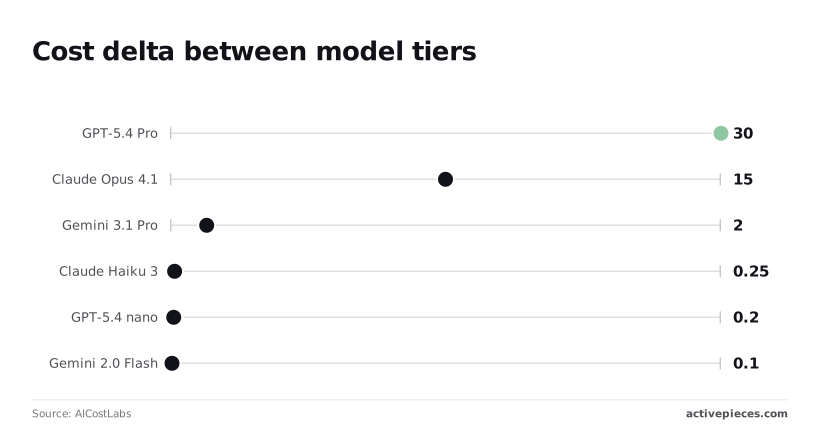
The price gap between model tiers is so wide that using a flagship model for every request guarantees a negative ROI on high-volume agents. According to AICostLabs, GPT-6 Astra (referenced here by its predecessor tier GPT-5.4 Pro) costs 30.00 per million tokens.

GPT-6 Luna (represented by the GPT-5.4 nano tier), its efficient counterpart, costs only 0.20 per million tokens, allowing developers to process massive datasets without incurring prohibitive infrastructure expenses.
A developer pays 150 times more for the same volume of text if they don't segment their traffic.
| Dimension | Single-Model (Direct) | Switchyard Routing |
|---|---|---|
| Model Selection | Fixed (Always Flagship) | Dynamic (Small-to-Large) |
| Cost Strategy | Uniform (High Premium) | Small-to-Large Cascade |
| Latency | Direct (Model-specific) | Router + Model (Optimized) |
Prices and plan limits checked against openrouter.ai and docs.claude.com and claude.com and openai.com and gemini.google on October 4, 2026.
This pricing disparity is consistent across all major providers.
This reduction enables high-volume processing at a fraction of the previous budget.
Dynamic model cascading for cost efficiency
Implementing Switchyard creates a "small-to-large" cascade where a lightweight model attempts the task first. The system only escalates to a flagship if the initial output fails a validation check.
A direct call to Claude Opus achieves an accuracy score of 86.0 at a cost of 11.45, according to data from LangChain.
Mid-tier direct calls, such as Nemotron (Direct), score 77.7 at a cost of 0.72.
Switchyard evaluates the prompt complexity to choose between a fast model like Gemini 3.5 Flash-Lite or a heavy model like GPT-6 Astra.
The system defaults to the lowest tier, such as deepseek-flash, and only triggers a "retry" on a frontier model if the confidence score falls below a set threshold.
By decoupling the application logic from a specific API endpoint, organizations can hedge against price hikes and performance degradation.
Easier to see it running than to read about it: set it up free, no card.
Integrating Nvidia Switchyard into an Activepieces workflow
Activepieces connects to the model providers you already use via your own API keys, ensuring that the cost savings from a routing strategy like Switchyard stay on your own balance sheet rather than being marked up by a reseller.
This allows you to maintain full control over your AI spend while reaching these optimized flows from any MCP client or chat interface.
Every workflow execution follows a cost-optimized path by utilizing Nvidia Switchyard as the destination. This path selects the cheapest model capable of the task, such as Gemini 3.5 Flash-Lite for simple extraction or Claude Opus 5.5 for complex logic.
Routing through the OpenAI-compatible provider step
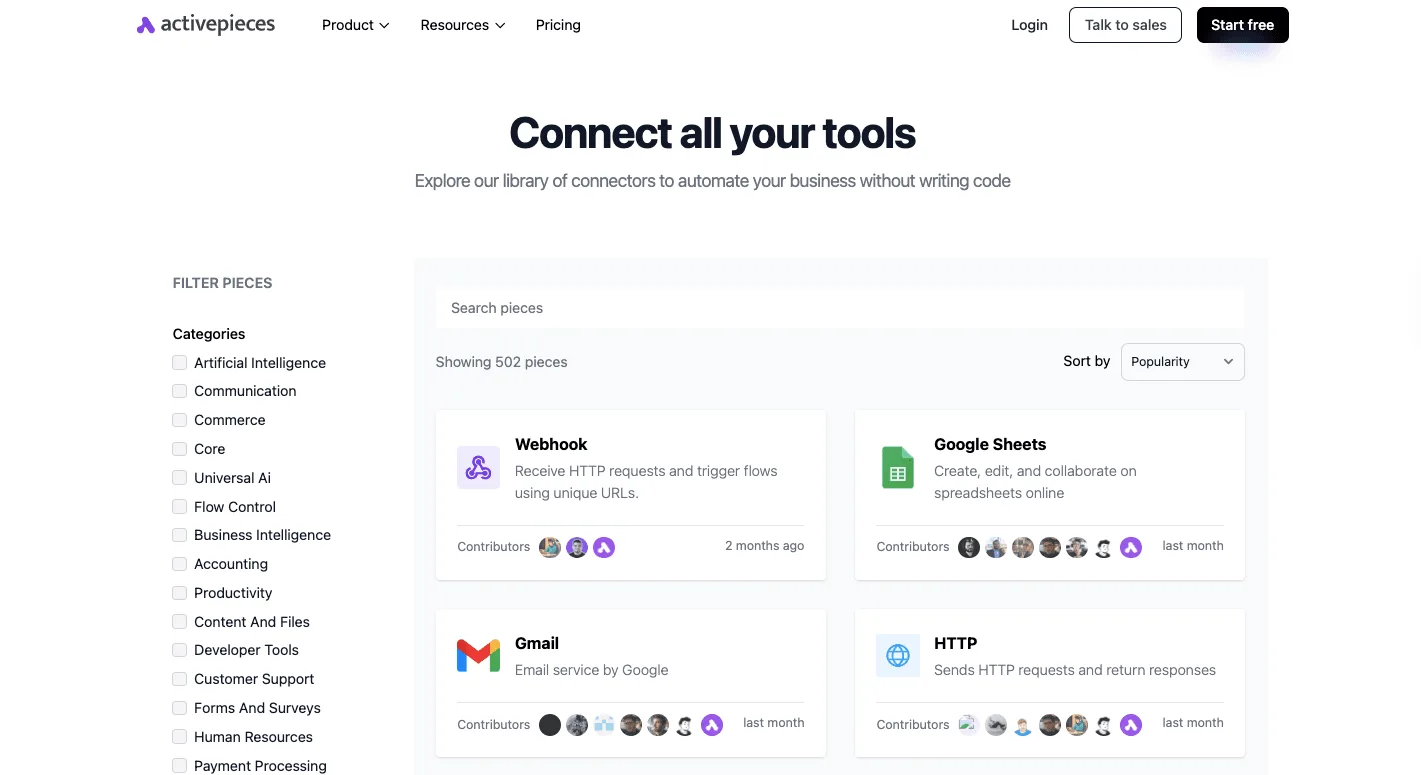
The most efficient way to route traffic through Switchyard is to use the existing OpenAI integration, which uses built-in prompt mapping while redirecting the traffic to Nvidia’s infrastructure.
Because Switchyard adheres to the standard Chat Completions schema, the Activepieces interface treats it as a native integration.
- Generate an Nvidia API Key to authenticate your requests.
- Add the 'OpenAI' integration to your flow and select the 'Chat' action.
- Open the connection settings and change the 'Base URL' from the default OpenAI endpoint to your Switchyard gateway URL.
- Input your Nvidia API Key into the 'API Key' field.
- Select 'Custom Model' in the model dropdown and type the specific Switchyard routing alias you wish to invoke.
- Map your workflow data to the 'Message' fields and test the connection.
The user-friendly interface of the standard AI integration is preserved while shifting the underlying compute to a more economical routing layer.
Method 2: Direct API calls via the HTTP request integration
For developers who require granular control over headers or specialized routing logic, the HTTP Request tool is a raw interface to the Switchyard API.
This method is essential when you need to pass custom metadata or specific temperature settings that vary by the model being routed to, such as GPT-6 Luna for high-volume tasks.
The following steps outline the manual configuration:
- Generate an Nvidia API Key.
- Add the 'HTTP Request' integration to the canvas.
- Set the Method to POST and the URL to your specific Switchyard endpoint.
- Map the task prompt and model parameters into the JSON body field.
- Parse the resulting JSON response to extract the text for subsequent workflow steps.
Activepieces exposes every connected integration as a tool schema on its per-project MCP server, so once a integration is registered, an agent can call it from Claude or Cursor with no separate export step.

As new models like Grok 4.7 or Gemini 3.8 Flash are added to the Switchyard registry, your workflows can access them immediately without waiting for a software update from the Activepieces maintainers.
Why AI routing landscapes are evolving
Workflows can access new models without waiting for a platform vendor to update their proprietary connectors. This direct access is critical because the efficiency of an agentic workflow is tied to how tightly the routing layer integrates with the underlying inference hardware.
Organizations are moving away from managed wrappers. The focus shifts toward standardized execution environments that can handle the high-throughput demands of models like Gemini 3.8 Flash or GPT-6 Luna without adding latency.
Expansion of the Nvidia NIM ecosystem
Nvidia NIM, a set of easy-to-use microservices for accelerating AI model deployment, is the primary bridge between raw compute and sophisticated routing logic.
The ecosystem is moving toward a modular architecture where the routing layer can query the inference engine for real-time health and capability metrics.
A router can detect if a specific GPU cluster is bottlenecked through this integration. It can then divert high-priority reasoning tasks to available nodes running Claude Opus 5.5 while sending lower-priority summarization to deepseek-flash.

The value of this ecosystem lies in its ability to standardize how models are served, which reduces the engineering overhead required to maintain a diverse model registry.
Immediate visibility into the cost-per-request across different hardware configurations is provided by real-time token-usage monitoring dashboards. Automated model-ranking updates adjust routing preferences based on live performance benchmarks.
The shift toward autonomous model arbitration
Autonomous arbitration represents the next phase of routing, where the system itself decides which model possesses the specific reasoning density required for a prompt.
Instead of static rules that always send coding queries to GPT-6 Astra, an arbitrator evaluates the complexity of the request in real-time.
When a task involves a simple syntax fix, the system routes it to Gemini 3.7 Flash to save on compute costs. If it requires architectural planning, it escalates to Grok 4.7. This dynamic selection ensures that you're never overpaying for intelligence on trivial tasks.
By using real-time performance data from the inference layer, these arbitrators can optimize for the performance of Mistral Medium 3.5. They also maintain the execution of Claude Haiku 4.5 for high-volume background processes.