
AI Agents for Legal Teams: What’s Possible Now
Learn how AI agents for legal teams work and explore common use cases. Discover how Activepieces can help you automate your workflows.

Feb 5, 20268 min read
You’ve probably heard that artificial intelligence (AI) will “change everything” more times than you can count.
Whether you are in-house or at a firm, the question is no longer if AI belongs in legal work, but where it actually makes sense. You don’t need another software that creates oversight work or adds risk.
You need support that fits into how your team reviews, researches, and responds under pressure.
This article shows what AI agents can realistically take off your plate today and how legal teams are using them now.
Let AI take work off your plate, not add to it. Try Activepieces!
TL;DR
- AI agents for legal teams help handle intake, contract review, research, and reporting.
- These agents can capture missing details, flag risks, and summarize documents.
- Common use cases include client intake, document drafting and review, legal research, compliance tracking, and matter reporting.
- Activepieces lets you connect existing tools like email, storage, and databases into your legal workflows that AI agents can read, decide, and act on.
Everything below works on Activepieces' free plan. Start without code or a credit card.
Operational Pain Points AI Agents Address for Legal Teams
Legal AI agents are made to solve your time-consuming tasks and those at risk of human error. These include:
Manual Intake and Triage
Let’s talk about intake first, since that’s where legal professionals’ days go sideways.
Client intake often starts with a Slack message that says “quick question,” followed by an email with half the details missing. Someone on your team has to stop, read, send follow-ups, and then decide who should handle it.
AI agents change that flow by guiding requests through a short exchange that mirrors the questions you already ask. Urgency, contract value, location, and purpose get captured up front.
Repetitive Contract Reviews
Reading the same clauses again and again wears people down, even if you’re the most thorough and focused human reviewer. Over time, inconsistency creeps in and legal operations slow.
AI agents take on routine tasks by handling the first review pass. Each document gets checked against internal standards. Clauses outside approved positions get flagged, and suggested wording appears beside the text.
High-volume work in practice areas such as vendor agreements moves faster. During due diligence, particularly for mergers and acquisitions (M&A), hundreds of contracts can be reviewed quickly.
In turn, productivity improves, your business teams move sooner, and efficiency rises without added risk.
Disconnected Legal Systems
Picture how many tools you touch in a day. Dealing with many platforms will likely create issues long before anyone notices.
AI agents connect those systems by watching activity and triggering the next step automatically. Final drafts lead to follow-ups. Then, questions pull relevant information from emails, documents, and legal databases at once.
Lack of Visibility Into Workload
AI agents observe activity as it happens and tie it back to records. Patterns reveal where time goes and where pressure builds.
Some teams even use predictive analytics where AI agents evaluate potential litigation outcomes based on historical data patterns. That insight helps with planning before problems hit.
Common Use Cases for AI Agents in Legal Teams
These use cases fit naturally into legal practice and rely on AI technology that supports how your team operates:
Legal Intake and Request Management
Every legal team has a front door, even if it doesn’t feel organized. For many law firms, that front door is open all the time, and requests walk in from every direction.
An AI agent acts as the automated front door of your legal department or law firm. It monitors various entry points, including web forms, email, and client communication platforms.
When someone reaches out, the system asks for details that usually get missed. It pulls background from vast databases of prior work, so a lawyer starts with history.
Case Document Drafting and Review
Drafting and document review take up more time, but AI agents can now do that.
You provide the deal points, and the system assembles language based on prior work. It’s especially useful for employment cases, including drafting for injury, medical malpractice, labor, and employment matters.
Attorneys review suggested language rather than writing every paragraph manually. New clients further receive documents faster, even when cases involve vast amounts of material.
Legal Research and Summarization
Legal research often hides its cost. Hours disappear in searches that return more than anyone needs. AI agents manage research by navigating large datasets that include case law, statutes, regulations, and internal history.
You ask questions using natural language. The agent then gets relevant passages, explains the answer in plain terms, and links back to sources.
Compliance Monitoring and Deadline Tracking
Deadlines carry extra weight in the legal profession. Missing one can affect client confidentiality and create regulatory exposure.
AI agents track dates inside contracts, filings, and regulatory updates. When workloads grow and teams handle more cases, alerts surface early.
Matter Management and Internal Reporting
Once work starts, visibility shapes decision-making. An agent queries the legal database and generates the chart for you instantly.
Those AI-powered insights show where time goes, which cases stall, and where resources are stretched thin. Reporting becomes part of daily work, which helps you act with clarity rather than reacting late.
Easier to see it running than to read about it: set it up free, no card.
How Activepieces Gives Legal Teams What They Need to Run AI Agents
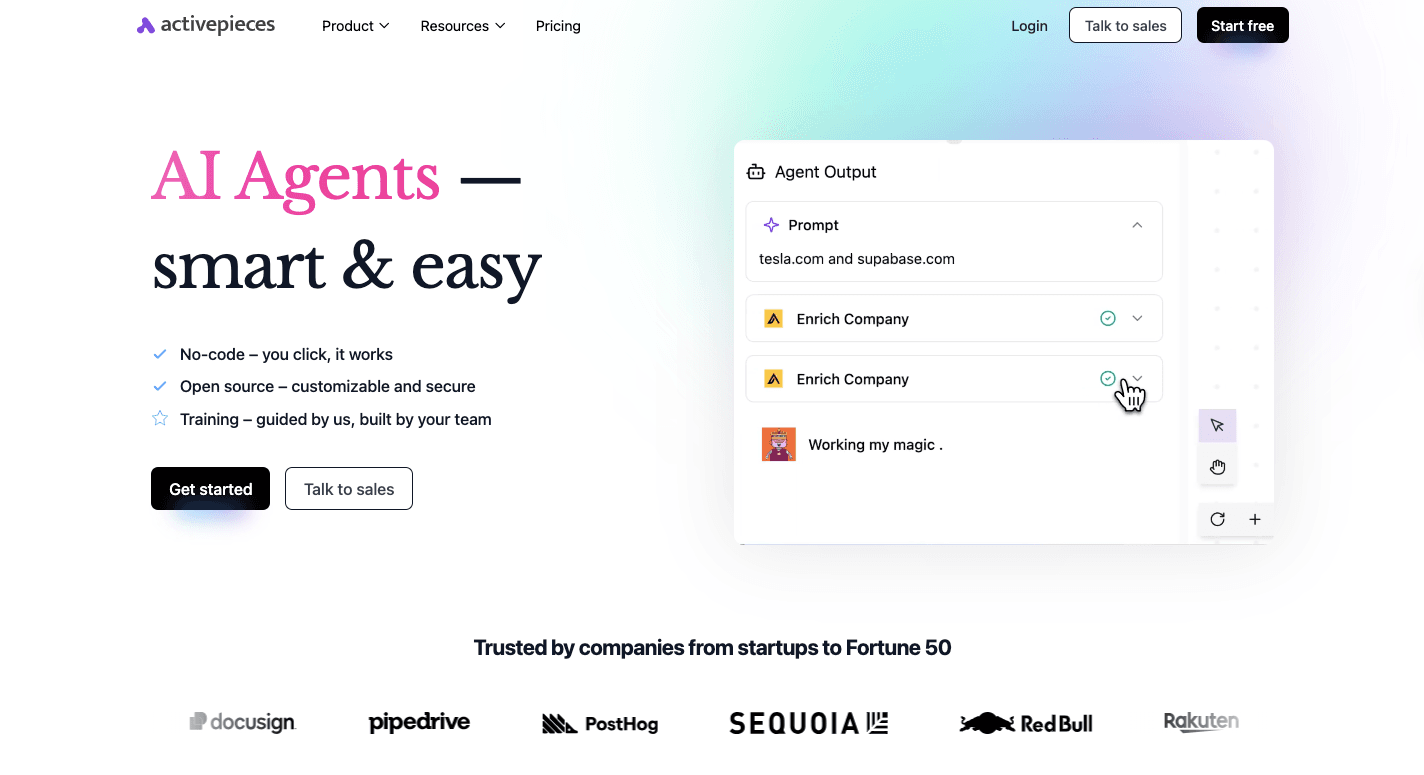
Many legal teams use multiple tools that don’t integrate. That forces you to copy text, recreate context, and handle follow-ups manually.
Activepieces is an AI automation platform that changes the way you work by letting you build workflows that integrate your existing AI tools. It also gives you:
Seamless Integration With Your Tech Stack
Activepieces uses pieces to connect systems. Right now, you can use 627 pre-built pieces, and that number keeps on increasing due to the community contributions.
Here are some data integrations you can use today:
- Google Drive — Lets an automation read, create, update, or move files in your Drive. You can point it at a folder where new contracts land and take action when something arrives.
- Slack — Can post messages into channels or send DMs. That means you can notify a partner or ops lead when a high-priority request enters the queue.
- Gmail — Lets you watch for new emails with attachments and extract those attachments automatically.
- Airtable — Can create records, update fields, and push structured data into tables that your team uses for reporting.
- Webhooks — Let you connect to systems that don’t have a native connector yet by letting them send data into Activepieces flows.
When you combine those real pieces with AI actions, you don’t just move data. You have a system that reads it, interprets it, and acts on it.
That’s what makes it different from basic automation tools that only trigger on simple events.
Workflow Orchestration and Control
Legal processes involve many sequential steps. Activepieces lets you chain those steps together in a visual builder that maps to real legal workflows.
For instance, you can add:
- Trigger — New email arrives with an attachment (using the Gmail piece).
- AI extraction — The AI action reads the document text and pulls out key fields like deadlines.
- Classification — The agent identifies whether it’s a contract review or another request and assigns internal tags.
- Routing — Based on rules (like practice area or urgency), the flow sends a Slack message or a Teams message to the right team.
- Record update — The flow writes structured data into Airtable so you have a searchable log.
Governance and Oversight
Activepieces includes features that support human supervision and nuanced judgment:
- Approval steps — You can insert manual confirmation points. For example, the agent can prepare a draft notification, then wait for a human click before posting it.
- Audit logs — Every action Activepieces takes gets logged so you can trace what happened, when, and why.
- Self-hosting — You can self-host Activepieces in your own environment (on-prem or private cloud). That means your data never leaves systems you control, which helps protect client confidentiality and compliance with internal policies.
Run automation inside your own environment with clear approval steps. Explore Activepieces!
Execute Legal AI Agent Workflows With Activepieces
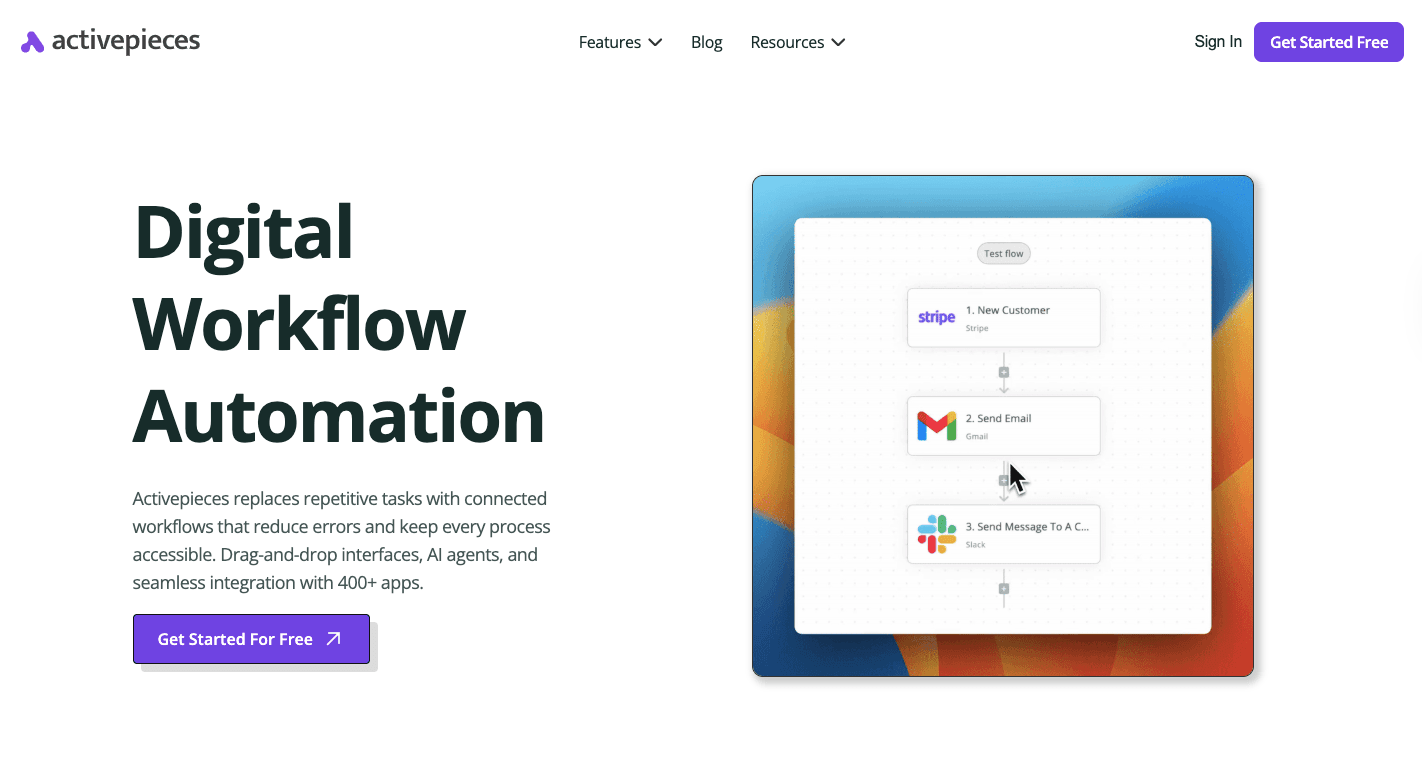
Execution is where tools either help or get ignored. Activepieces focuses on running workflows the same way your team already thinks about work, one step leading cleanly into the next.
A typical flow might start when a document appears or a message arrives. The AI agent reads the content, pulls out specific fields, and then applies rules you define.
From there, it can prepare summaries, assign tasks, or notify the right people. You automate time-consuming tasks, such as extracting dates or sorting requests.
Additionally, you decide where the flow pauses and when people step in, which supports human oversight. Developers can also extend logic when needed, while non-technical users adjust rules and approvals themselves.
Turn legal requests into structured workflows that actually run. Contact Activepieces!
FAQs About AI Agents for Legal
Is there AI for legal work?
Yes. Teams already use AI to support how legal work moves, mainly by reading documents early and pulling relevant information before a human reviews it.
Is it illegal to use AI for legal documents?
No. Risk only appears when people skip review. AI should handle preparation, not final decisions, to avoid significant risks.
Is there a ChatGPT for legal teams?
Yes. Legal-focused tools provide instant answers to common legal questions using trusted sources instead of open web data.
What are the benefits of using AI agents in legal processes?
They streamline client communication, identify patterns in large workloads, handle heavy lifting early, and point teams toward the right next step as the future moves forward.