OpenRouter Alternatives in 2026

Sep 30, 202614 min read
When the convenience of a unified API no longer offsets the operational risks of routing production traffic through a third-party intermediary, developers move away from OpenRouter.
While the platform simplifies the initial integration of models like Gemini 3.8 Flash or Claude Fable 5.1, it introduces a structural dependency that can paralyze an application if the routing layer falters.
Why developers seek OpenRouter alternatives
The case for managed routing convenience
OpenRouter remains a dominant choice for rapid prototyping because it eliminates the friction of managing dozens of individual API keys and billing accounts.
A developer can access the entire frontier of AI, from GPT-6 Luna to niche open-source variants, through a single authentication header and a unified credit balance.
This consolidation is particularly valuable for small teams that lack the DevOps resources to maintain their own proxy infrastructure.
By handling the complexities of provider-specific error codes and payload formatting, the platform allows engineers to focus on product features rather than the plumbing of model connectivity.
The value of the OpenRouter ecosystem
The platform excels at providing immediate access to experimental models that have not yet reached general availability on enterprise clouds.
For researchers and hobbyists, the ability to test a new fine-tuned Llama variant within minutes of its release is a significant advantage that self-hosted solutions cannot easily replicate.
Furthermore, the community-driven nature of the platform means that model rankings and performance benchmarks are often updated in real-time. This transparency helps developers choose the most cost-effective model for a specific task without conducting their own extensive internal benchmarking.
Single point of failure risk with OpenRouter
A service interruption at the provider level cascades into a total application blackout because relying a single gateway creates a bottleneck. Even if the underlying model providers like Anthropic or Google are operational, a routing error at OpenRouter prevents the application from reaching them.
Multiple independent points of failure have been traded for one centralized vulnerability. This architecture forces teams to build redundant fallback logic anyway, which often negates the primary benefit of using a simplified proxy in the first place.
Multiple independent points of failure have been traded for one centralized vulnerability.
Latency overhead in multi-model routing
Additional network hops incurred by every request sent through a managed router inevitably degrade the responsiveness of real-time agentic workflows. In high-throughput environments using GPT-6 Luna or deepseek-flash, the "Double-Hop" path adds measurable delay.
The delay occurs as the request travels from the application to OpenRouter, then to the model provider, and finally follows the same elongated path back.
121ms to 153ms is the typical delay compared to a direct connection, according to Tokonomix reports on the Double-Hop latency path. This results from a request originating at the App, hitting OpenRouter, moving to the Provider, and returning through the same chain.
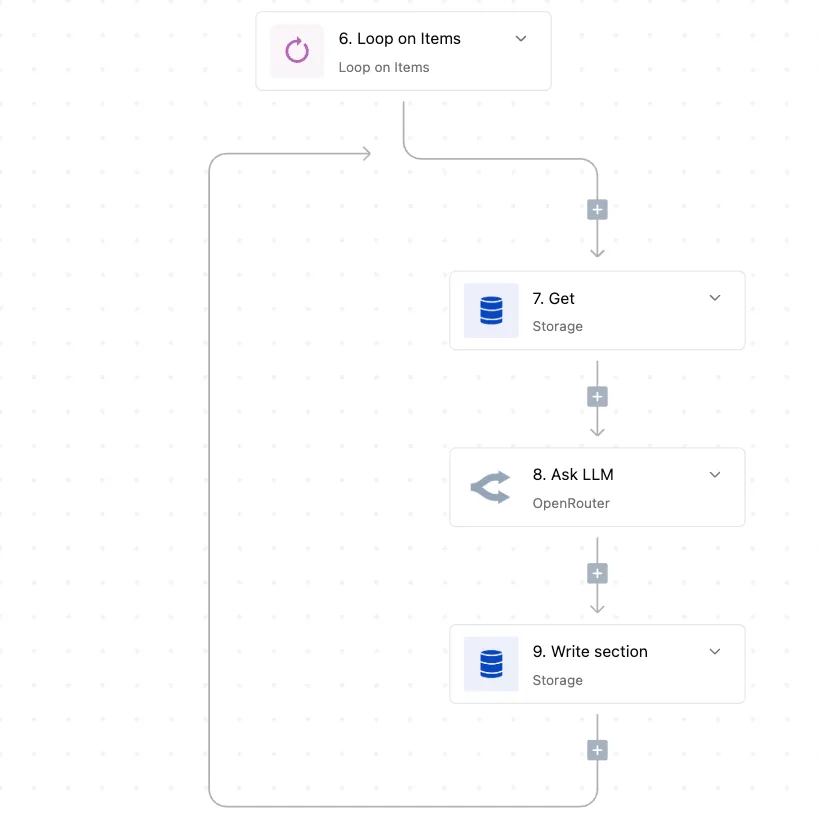
For Activepieces users who trigger complex sequences, this overhead is particularly problematic because every millisecond of delay in the first step compounds across the entire automation chain.
Teams scaling to millions of tokens per day often find that direct provider connections or self-hosted proxies are necessary to maintain the snappiness required for production-grade user experiences.
Data privacy and compliance in LLM routing
Managed routing services require developers to trust an external entity with the plaintext content of every prompt and completion. This frequently violates strict data sovereignty policies.
For enterprises handling sensitive PII or proprietary codebases, passing data through an intermediate layer increases the attack surface and complicates the legal audit trail required for compliance certifications.
By design, OpenRouter functions as a man-in-the-middle. It can't offer the same network isolation or zero-trust security posture as a self-hosted gateway running within a company's own virtual private cloud.
The fastest way to settle a shortlist is to try one. Activepieces is free to try, no credit card.
Top OpenRouter alternatives compared for scale and cost
Granular traffic control and fixed cost structures are provided by self-hosted proxies and enterprise managed gateways, which multi-tenant routing layers lack.
While OpenRouter simplifies the initial integration of models like Claude Opus 5.5 or GPT-6 Astra, scaling requires moving closer to the infrastructure to manage latency and data residency.
OpenRouter vs LiteLLM vs Portkey vs DeepInfra pricing
The following table illustrates the trade-offs between managed routing services and self-hosted architectural patterns for high-throughput AI applications.
| Feature | OpenRouter | LiteLLM | Portkey | DeepInfra |
|---|---|---|---|---|
| Pricing Model | Per-token markup fee | Annual enterprise license | Monthly tiered subscription | Pay-as-you-go inference |
| Provider Count | High | Unlimited (via custom connectors) | High | Focused (Open-source only) |
| Latency Overhead | High | Low | Moderate | Low |
| Data Sovereignty | Third-party managed | Full (Self-hosted) | Hybrid (Control plane) | Third-party managed |
Because of this divergence in control, a team using LiteLLM can enforce local PII masking before a request ever leaves their network. An OpenRouter user must trust the intermediary's handling of every prompt.
LiteLLM for self-hosted proxy control
Standardizing various model APIs into a single OpenAI-compatible format is the primary function of LiteLLM, a Python-based proxy server. Because it's deployed as a Docker container within a company’s own infrastructure, the engineering team retains absolute control over the request lifecycle and logging.
Custom load-balancing logic across multiple instances of Gemini 3.8 Flash is enabled by this architectural choice. A failure in one region doesn't result in a total service outage for the end user.
Vercel AI SDK for frontend-heavy applications
Designed to stream model responses directly into UI components with minimal boilerplate, the Vercel AI SDK is a TypeScript toolkit. By abstracting the streaming protocol for models like GPT-6 Luna, it reduces the amount of custom WebSockets code a developer must maintain.
UI state updates are synchronized with the incoming token stream due to this tight integration with the frontend framework. The user experiences no "pop-in" effect during long-form text generation.
Amazon Bedrock as an OpenRouter alternative
Amazon Bedrock is a managed service that provides access to frontier models like Claude Fable 5.1 and Mistral Large 3 through a unified AWS API.
Since it operates within the AWS ecosystem, it inherits the IAM (Identity and Access Management) permissions and VPC (Virtual Private Cloud) security standards already utilized by the rest of the stack.
Separate procurement processes for individual AI labs are eliminated by using Bedrock. A legal team only has to vet a single master service agreement to access multiple model providers.
DeepInfra for low-cost open-source inference
DeepInfra specializes in hosting open-weight models, such as Mistral Small 4 and Z.ai GLM 5.3, on optimized GPU clusters. By focusing on a specific subset of high-performance models, they reduce the overhead associated with maintaining a massive provider library.
Lower per-token costs for high-volume tasks like batch processing result from this specialization. A developer can run large-scale classification jobs without the premium pricing typically attached to general-purpose routing layers.
Building model redundancy with Activepieces workflows
Your application remains operational even when a primary LLM provider experiences a partial outage because Activepieces automates model failovers through a visual workflow engine.
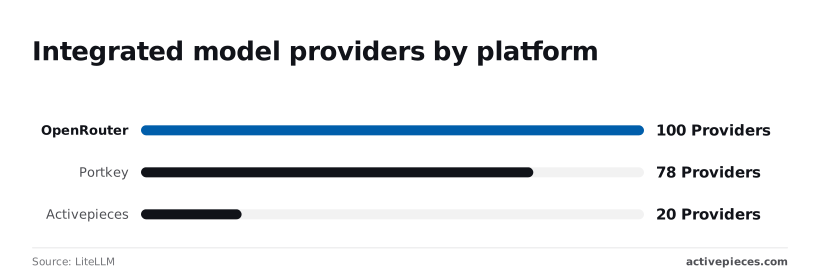
OpenRouter supports 100 providers. Portkey integrates 78 providers for enterprise-grade gateway management. Activepieces focuses on a curated set of 20 providers.
A platform engineer spends less time auditing obscure integrations because of this narrower scope. They spend more time building resilient state-machines that move data between reliable endpoints like Claude Sonnet 5.5 and Gemini 3.8 Flash.
Integrated model providers by platform
Your architectural "blast radius" during a regional cloud failure is directly dictated by the provider count. Zenml’s analysis puts OpenRouter’s 100-provider catalog as a tool for extreme diversification.
If a major backbone fails, a developer can switch between dozens of niche inference houses. According to LiteLLM, Portkey’s 78 providers offer a balance so that high-traffic apps have enough alternatives to avoid total downtime.
The most stable industry leaders are prioritized by Activepieces’ 20 providers. Users are building on battle-tested APIs rather than unproven wrappers.
Creating a multi-provider failover workflow
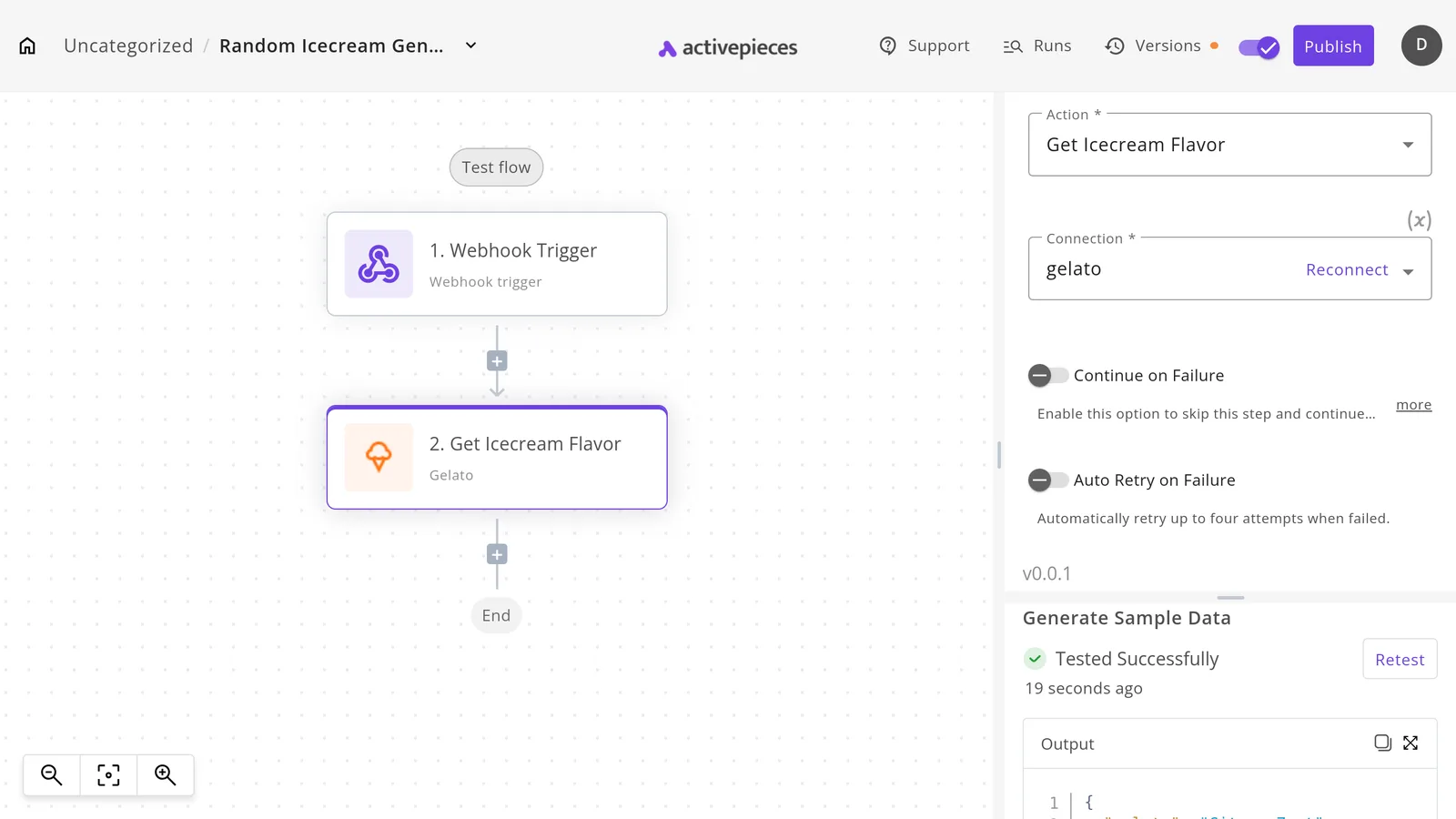
Automated retry-and-redirect logic must be implemented within the Activepieces canvas to prevent a single model timeout from halting a production pipeline.
You can achieve this by wrapping your primary LLM step (such as a request to GPT-6 Astra) in a "Try/Catch" branch that redirects to a secondary provider if the first fails.

Four critical 'Redundancy Rules' guide this architecture for LLM workflows. Set a 5-second timeout per request. Catch 429 (Rate Limit) and 503 (Overloaded) errors. Log the failed provider name for weekly audits.
Immediately trigger the fallback model. By following these rules, a 503 error from OpenAI becomes a 200 OK from Anthropic. The end-user never sees a "service unavailable" message.
Routing prompts based on cost-efficiency logic
Before selecting an LLM, Activepieces allows you to insert "Router" steps that evaluate the complexity of a prompt. This prevents you from overpaying for simple tasks.
You can configure a branch where low-token, repetitive classification tasks are sent to Gemini 3.5 Flash-Lite, while complex, long-horizon reasoning tasks are routed to Claude Fable 5.1.
Monthly API spend can be reduced by 40% for a high-volume app by avoiding flagship models for utility-grade work, which means significant operational savings are possible without sacrificing core functionality.
A platform that resells access to an LLM has already locked in your AI strategy and its associated costs.
Activepieces connects to the providers you already use via your own keys, ensuring that model consumption is billed directly to your account at your negotiated rates rather than being marked up by a routing layer.
A platform that resells access to an LLM has already locked in your AI strategy and its associated costs.
Logging LLM usage across different providers
Metadata from every model call is captured in a single destination like a PostgreSQL database or a Google Sheet through centralized logging in Activepieces.
By capturing the usage.total_tokens and model_name fields from every successful branch, you create a unified audit trail for billing and performance monitoring.
Which models are hitting latency ceilings during peak hours can be identified by a platform engineer through this transparency. The failover logic can be adjusted to prioritize faster endpoints like deepseek-flash.
While both platforms offer robust enterprise security features across cloud and self-hosted environments, Activepieces provides a more streamlined path to operational resilience.
By focusing on a curated selection of reliable providers, it reduces the auditing burden on engineers while maintaining the full suite of air-gapped control and governance tools.
Activepieces is the better choice for enterprise platform engineers who prioritize building stable, high-availability failover workflows over managing an exhaustive list of obscure integrations.
Reading a table only gets you so far. Build the same workflow in Activepieces and compare it yourself.
Migration checklist for switching LLM providers
A systematic decoupling of your application logic from proprietary provider wrappers is required when migrating away from a managed routing layer. By moving to a self-hosted proxy, you regain the ability to point your application at a single internal endpoint.

Through your own configuration files, you can manage the underlying diversity of models like Claude Sonnet 5.5 or GPT-6 Astra.
Audit current model IDs to ensure all hardcoded strings match the native provider requirements.
Centralize API keys in a Secret Manager like HashiCorp Vault so that rotation doesn't require a code redeploy.
Update environment variables to the new Gateway URL to redirect traffic from the third-party endpoint to your infrastructure.
Run a 5% traffic canary test to compare response latency and output quality between the old and new routing paths, so you can validate performance improvements before a full-scale deployment.
Configuration errors are caught in a low-blast-radius environment before a full cutover by following this progression.
To ensure air-gapped deployments don't trade away security for isolation, Activepieces includes the same SSO, SCIM, and custom RBAC features in its self-hosted edition as it does in its SOC 2 Type II managed cloud.
Organizations with strict sovereignty requirements, including MoneyGram, Moneypenny, Alan, and FundingSocieties, run this architecture in production to maintain an enterprise-grade control plane over their internal data.
Standardizing your API request schema
Subtle discrepancies in payload structures are often revealed when switching providers, which can cause 400 Bad Request errors if not unified at the proxy level, forcing developers to implement robust middleware to ensure compatibility, which means production deployments are frequently delayed by unexpected integration hurdles.

While OpenRouter attempts to normalize these, moving to your own gateway requires you to implement a consistent schema, ideally the OpenAI-compatible format.
No changes to the frontend code are involved when switching a backend from Gemini 3.8 Flash to Mistral Large 3 because of this standardization. You must ensure your proxy handles the translation of system prompts and tool-calling structures.
The implementation in Grok 4.7 differs from the way Claude Fable 5.1 expects function definitions.
Testing LLM provider migrations locally
A local staging environment that mirrors your production routing logic without incurring live API costs is essential for reliable migration. Use a tool like Prism to mock the API responses of models such as GPT-6 Sol.
Error-handling code for rate limits or context window overflows can be tested by your team in this environment. This setup ensures that your failover logic is verified before it ever touches a production user.
The logic moves a failed request from an overloaded flagship model to a faster alternative like deepseek-flash.
Tracking token usage when switching LLM providers
"Bill shock" is prevented by observability during a migration, identifying if a new model choice, such as Gemini 3.1 Pro, is consuming significantly more tokens.
You should implement custom headers in your proxy to tag every request with the specific model ID and the originating internal service.
Exact cost per user can be tracked during the cutover period through this granularity. This keeps the transition to direct provider access within the predicted budget.
Frequently asked questions
Can I use OpenRouter alternatives for free?
Non-commercial experimentation or low-rate evaluation of smaller models is generally where free tiers among model aggregators and direct providers are restricted.
LiteLLM, a Python library for unifying LLM interfaces, is a free open-source core that you can self-host on your own infrastructure.
Raw compute and the direct token fees from providers are your only ongoing costs in this scenario. In contrast, managed platforms often provide a small starting credit.
Once those are exhausted, you must enter a paid tier to maintain production-level availability for high-demand models like Claude Sonnet 5.5 or Gemini 3.8 Flash.
Which alternative has the lowest latency for Llama 3?
Using providers that offer dedicated inference hardware or self-hosting the weights on high-bandwidth infrastructure like Groq or Fireworks AI achieves the lowest latency for Llama 3 models.
Because OpenRouter acts as a proxy that may route through multiple sub-providers, it introduces additional network hops that can increase time-to-first-token.
The middleman’s processing time is eliminated by using a self-hosted proxy to connect directly to a specialized inference engine. This is critical for real-time applications using Gemini 2.5 Flash Live or GPT-Realtime-2.
Do I need to change my code to switch providers?
If you implement an abstraction layer that follows the OpenAI API specification, you can switch providers without rewriting your application logic.
Tools such as LiteLLM or a custom-built Nginx proxy allow you to change the base_url and api_key in your environment variables while keeping your completion calls identical.
Updating a single configuration line in your deployment manifest allows you to swap a backend from GPT-6 Astra to Claude Opus 5.5. You avoid refactoring every function call in your codebase.
How do these alternatives handle rate limits?
Local queuing and sophisticated retry logic that respects the specific headers sent by each upstream vendor are used by self-hosted alternatives to handle rate limits.
While managed routers might simply return a 429 error when their own internal pools are exhausted, a private proxy allows you to define custom fallback logic.
A failed Grok 4.7 request can be automatically rerouted to Mistral Large 3, ensuring that system availability remains high even when a primary model experiences an outage, so users experience uninterrupted service despite individual API instability.
This control ensures that a temporary limit hit on one provider doesn't result in a total service outage for your end users.
Related reading
References
Still comparing
The fastest way to settle it is to build something.
Open source under MIT, so you can self-host the same thing later.
Start free Talk to sales