Pika Pricing 2026: Plans, Credits and Cost per Video

Nov 17, 202614 min read
Every Pika plan, price and credit limit
Direct answer and check date
Pika charges by credits, not by clips, so each plan's price buys a pool of credits and every generation draws that pool down. The plan name matters less than how many credits your clips consume. Check date for pika.art/pricing: 17 November 2026.

Pika is Pika Labs' AI video generator at pika.art. You describe a clip or upload an image, and it returns a short video.
A figure I can't tie to the page today would only mislead you, and you should read those straight from the page.
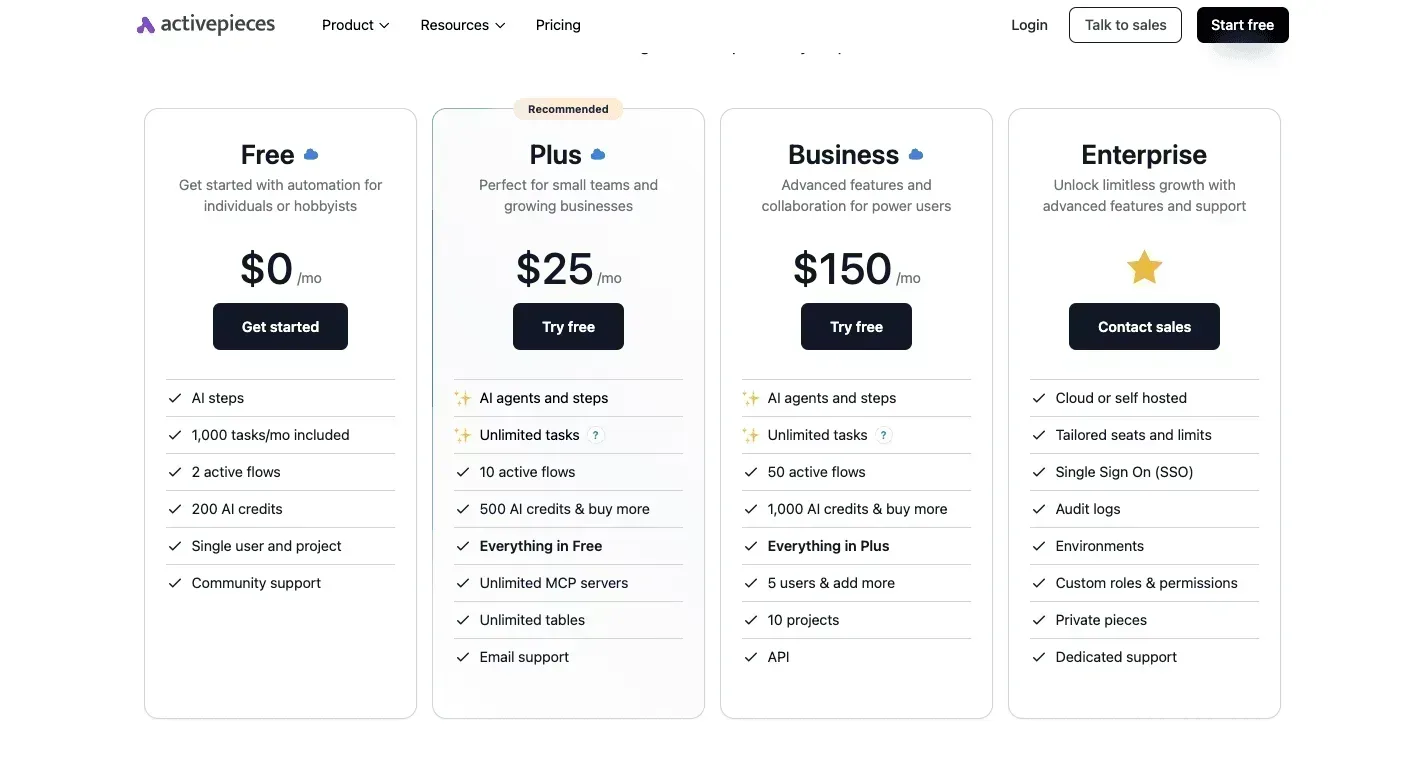
You can't run a small spend check, whether a spreadsheet or a workflow in Activepieces, which allows unlimited flows on every plan including free, until you have a cost per clip, and the sections after this one turn those figures into it.
Plan-by-plan table
Read down the pricing page and every plan, from the free tier up, is compared on the same five columns. Each column changes your real cost in a different way.
| Column on the page | What it decides for you |
|---|---|
| Monthly price | What you pay if you stay month to month, and the cost of testing a plan for one project |
| Annual-billed price | What you pay per month when committing for a year, which is cheaper only if you will still be generating in month twelve |
| Monthly credits | The size of your pool, which divided by credits per clip gives your clip count |
| Watermark | Whether clips can leave your drafts folder without a logo on them |
| Commercial use and model access | Whether client work is allowed, and which generation models your credits can be spent on |
Fill that in for each plan, then divide credits by the credits one clip costs.
What a credit is and whether it rolls over
When you run a generation, it spends some number of credits, Pika's metered unit, and the amount depends on the model and options you pick. The same pool can therefore produce many cheap clips or a few expensive ones.
I haven't confirmed the rollover terms stated on the pricing page, so until you've read them, plan as if unused credits expire at the end of each billing period. Then a plan bigger than your monthly need is money you can't recover.
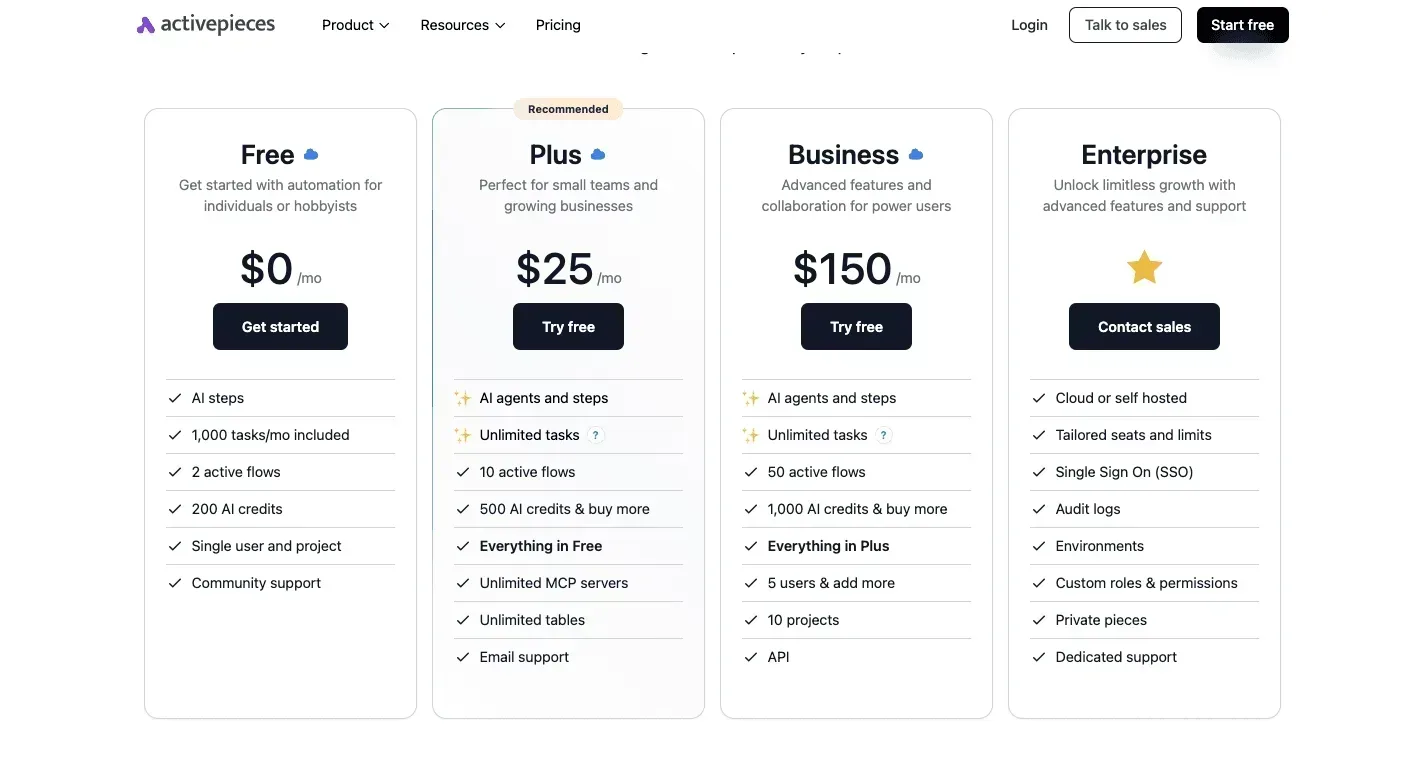
If you are running this arithmetic for your own team, see what the same workload costs on Activepieces.
Credit run-out during launch week
Overspending on a plan is recoverable only by waiting, but underspending has a worse failure: the balance hits zero while the work is still unfinished.
Picture a three-person team, an illustration and not a real customer, on a paid Pika plan, with clips due at 9 a.m. and a balance that has just stopped.
Pika credit balance hits zero at night
At 11:40 p.m. the balance reads zero, with the deliverable still short of finished. The team budgeted by clips: so many shots, so many credits per shot.
The unit Pika meters is the credit, not the clip, and a credit leaves the balance whether or not you keep what it produced.
Nobody saw it coming because the balance was checked at the start of the evening and not again.
Why Pika retries use more credits than drafts
The ways credits drained that night:
- the failed generation that still cost credits
- retries on one shot
- a bump to 720p
- a longer duration
- the upgrade-or-wait choice
A clip that came back broken was paid for like a good one, because a failed generation still cost credits. Retries on a single shot multiplied that cost, because each attempt is a fresh charge, not a correction of the last.

Once the team bumped to 720p, every attempt after it cost more, and a longer duration did the same.
Settle the shot at the cheapest setting first, and raise resolution and length only for the take you intend to ship.
Top up, upgrade or wait for Pika reset
At 11:40 p.m. the team has three moves. They can top up if the plan offers it, upgrade to a larger plan, or wait for the monthly reset. Waiting costs nothing but misses the 9 a.m. deadline unless the reset lands first.
Upgrading solves tonight and commits the team to a larger monthly bill, which is exactly the oversizing the previous section warned against.
Which move wins depends on how many clips the team needs next month, not only tonight.
Run-out costs in credits, dollars and hours
$1 is about what each usable Pika 2.5 720p clip costs in top-up credits once the balance is zero, making it feasible to keep producing even after freebies run out.
A Seedance 2.5 720p clip costs about $6.10, which is roughly 15 times Pika's per-clip rate. The metered unit is the credit, and top-ups price it at roughly 1.7 cents.
Cost per usable clip on each plan
On the Pika Lab Studio calculator, the $25 pack is listed at 1,500 credits, $50 at 3,000, $100 at 6,000, $200 at 12,000 and $500 at 30,000. Every pack except the $1,000 one is the same 1.67 cents per credit, so buying bigger buys no discount.
Only the $1,000 pack, at 66,000 credits, drops the rate to about 1.5 cents, so bulk is mandatory for economy pricing. The table assumes three tries per usable clip and prices them at the 1.67-cent rate.

| Clip | Credits per clip | Clips on Free (80) | Clips on Standard (700) | Clips on Fancy (6,000) | Dollars per usable clip at 3 tries |
|---|---|---|---|---|---|
| Seedance 2.5, 480p, 5s | 54 | 1 | 12 | 111 | $2.70 |
| Seedance 2.5, 720p, 5s | 122 | 0 | 5 | 49 | $6.10 |
| Pika 2.5, 720p, 5s | 20 | 4 | 35 | 300 | $1.00 |
Take a weekly social clip, a monthly product teaser and a client storyboard. Eight Pika 2.5 clips with three tries each is 480 credits, inside Standard's 700. Ten Seedance 720p clips with retries is 3,660 credits, which only Fancy covers. Free suits testing only.
At $100 the pack buys 6,000 credits, fewer than Fancy's 8,550+ monthly credits. If Fancy costs under $100 a month, one month of top-ups already costs more than upgrading. Past a single top-up in a month, upgrade.


Before you rely on the clip counts above, confirm three things on your own plan. They are whether output carries a watermark, whether the licence covers client work, and whether unused credits expire.
Worth checking against a plan that does not meter every step: one credit covers a whole run on Activepieces.
Pika vs Luma Dream Machine and Krea
Priced per second of finished video, Pika is mid-pack: three times Veo's rate, close to Hailuo's, and well under Runway and Kling. These rates are API prices, so they rank the engines, not the app plans you'd actually buy.
Entry price and monthly allowance
At $0.013 per second, Veo is the cheapest, so a 10-second clip costs about $0.13. Pika is at $0.04 per second, or $0.40 for the same clip, so it's easy to compare against vendors using either pricing model.
Hailuo is at $0.0417, a difference too small to decide anything, so you need to compare by features and integrations.
At $0.056, Runway costs 1.4 times Pika, and Kling at $0.084 costs about 2.1 times Pika, or $0.84 per 10-second clip. At 100 clips a month, that's $40 on Pika against $84 on Kling.
Neither Luma Dream Machine nor Krea meters its plans in seconds; each uses its own credits. Compare them on one job: the number of clips you need per month, at the length you need, divided into each plan's monthly credits.
Pika's own plans are on pika.art, and Krea's are on krea.ai. Read both against your clip count, checked 17 Nov 2026.
Free tier and watermark
Treat a free tier as a test budget. Spend it on the exact shot type you'll sell, because failed generations usually consume allowance too.
Check each free tier for a watermark, since a watermarked clip can't go to a client, which makes the free tier a trial only.
Commercial rights and fit
Check the commercial-use terms on the plan you'd pay for, not the one you tested on, because rights often differ between tiers. If you sell clips to clients, confirm those terms in writing before you commit credits.
When the job fits an alternative better than Pika, the alternative wins. For bulk clips where cost per second is the only constraint, Veo's $0.013 rate was the lowest in the cited comparison, though Google's current video model is Gemini Omni Flash, so check its pricing too.

For work that needs Krea's image tools alongside video, Krea saves you a second subscription.
Pika wins on a middle-of-the-road job, where Runway and Kling cost 1.4 to 2.1 times as much for no gain you need.
Credit rules the team set
Unless credits stop leaking through retries and full-quality re-renders, a cheaper clip doesn't stay cheaper, so the team wrote five rules, and they work in this order on Monday morning.
- Set a monthly credit budget for each project, not one pool for everyone.
- Cap retries per shot, so no single shot can drain the budget.
- Render drafts at the cheapest setting before any final render.
- Check the balance mid-month, against the budget and not against the plan total.
- Upgrade, rather than top up, once you cross a threshold you wrote down in advance.
Set a Pika credit budget and retry cap
Because Pika meters credits per clip, the unit you're budgeting is the clip, not the month. Divide each project's credit allowance by the clips you expect to need, then add a small allowance for rejects. That gives every shot a ceiling.
Set the retry cap at the same moment: a fixed number of attempts per shot, after which you rewrite the prompt or drop the shot. Without the cap, one stubborn shot quietly eats the credits meant for several others.
Draft cheaply first, render Pika clips once
Run every concept at the cheapest setting first. A draft tells you whether the motion and framing work, which is all you need before committing. Only the approved draft gets a final render.
Reject an idea and you lose a draft's worth of credits, not a full render's. Retries then also cost less, because the cap counts cheap attempts, not expensive ones.
When to upgrade your Pika plan
Write the trigger down before the month starts. If the mid-month check shows you've used more of the budget than half the month justifies, and the next project is already booked, move up a plan.
A top-up buys credits at the moment you're most rushed and fixes nothing next month. An upgrade changes the allowance you plan against.
For a one-off spike, top up. If the shortfall repeats two months running, it's your normal volume, and the plan should match it.
Track Pika credit spend with Activepieces
Only from a balance you type in yourself can Activepieces, an automation tool with an MIT-licensed core, 750 integrations counted from its open source monorepo and scheduled workflows, warn you before your Pika credits run out, or you won't be alerted at all.
It doesn't connect to Pika, and I wouldn't pretend it does.
What the workflow does
One run per check is all you need, since the unit being metered here is a workflow run.
On Activepieces' Free plan, which includes 1,000 credits a month, a run costs 1 credit however many steps it has, so a check on the first and another mid-month uses 2 of them.
Both the 1,000-credit allowance and unlimited flows on every plan, free included, are listed on the Activepieces pricing page. The point of it is that a reminder arrives while you can still change plans or clips, not after a render fails.

A run is a short chain of steps, and the order matters:
- Start with a schedule trigger that fires on a fixed day, such as the first of the month for the reset, and again mid-month.
- Add a row to a Google Sheet holding the date and the credit balance you read from your Pika account and typed in by hand. This gives you a history, so you can see how fast a project burns credits instead of guessing.
- Compare that balance to 20% of your plan's monthly allowance, which you enter once as a fixed value in the sheet or the workflow, so you're measuring against a threshold that never changes.
- Send a Slack message or an email. The mid-month run always sends one, so you get a pace check whatever the balance. The second kind fires only when the balance is at or below 20% of the allowance, meaning it stays silent whenever your balance climbs above that mark.
Mid-month, the message tells you whether you're on pace. At 20%, it tells you to stop starting new clips until you've decided what to do.
What it cannot do
It can't read your balance. I haven't confirmed a Pika integration among Activepieces' 750, and I have no balance endpoint I can point you to, so the number in the sheet is only as fresh as your last manual check.
If you forget to enter it, the comparison runs against an old figure and the alert stays quiet when it shouldn't.
Treat it as a nudge that costs almost nothing to run, not as a meter. If Pika later exposes balances in a form a workflow can fetch, step two is the part you'd replace.
Frequently asked questions
Can I use Pika's free plan for commercial work? Not until Pika's own terms say your plan covers it.
Commercial rights are set per plan, so read the licensing line for the free tier on the pricing page at pika.art and in the terms of service.
A client clip made under unclear rights is a cost that no credit count shows, and re-making it later spends credits twice.
Do unused Pika credits roll over to next month? Plan as if they don't, and confirm on the pricing page before you rely on it. Allowances that reset each cycle reward spending, not saving.
If you often finish a month with credits left, that points to a smaller plan, not a stockpile. If you run short, it points to a larger one.
Is Pika's annual plan cheaper than paying monthly?
Check it as arithmetic: take the annual price on the pricing page, divide it by twelve, and compare that with the monthly price. The saving is real only if you'd have kept the plan for the full year.
If a project ends in four months, the annual discount is a prepayment for months you never use. Also check whether the annual plan changes the credit allowance or only the price.
What happens to my credits if I cancel or downgrade?
Treat the end of your paid period as the deadline, and confirm the exact handling in Pika's terms and billing help pages.
On a downgrade, credits tied to a higher plan may not carry over to a lower one, and a cancelled plan may not keep a balance.
Before you change plans, spend what you need on the plan that granted the credits. That's the same spend check the earlier sections describe, run once more at the point where a balance can disappear.
Related reading
References
Running the numbers
See what the same workload costs here.
Free forever plan, and every paid plan self-hosts at no extra cost.
See pricing Talk to sales