
Pixtral Large 2502 API Pricing: Cost per 1M Tokens

Nov 21, 202616 min read
Mistral AI has officially launched Pixtral Large 2502, a multimodal powerhouse designed to handle complex visual reasoning and high-resolution image processing at an enterprise scale.
As developers begin integrating this model into their production environments, perhaps by utilizing Activepieces to automate the underlying API calls, understanding the token-based pricing structure becomes essential for managing operational overhead.
This analysis breaks down the input and output costs for both text and vision modalities, comparing them against industry benchmarks like GPT-6.2 Astra and Claude Sonnet 5.5.
By examining the efficiency of the 124B parameter architecture, we can determine whether the performance gains justify the premium pricing tier for high-volume vision tasks in 2026.
Pixtral Large 2502 API pricing and model specifications
Pixtral Large 2502 is a frontier-class multimodal model that balances high-parameter reasoning with a uniform pricing structure for visual and textual data processing. You'll find that executive teams often focus on the raw intelligence of 124B parameter architectures.
When the $2 per million token rate applies to both input and output, the operational reality necessitates a disciplined approach to prompt engineering to avoid runaway costs in your agentic workflows.
Official API rates and token costs
The pricing model for Pixtral Large 2502 deviates from the industry trend of discounted input tokens. It applies a flat $2 per million token fee to both incoming prompts and generated completions.
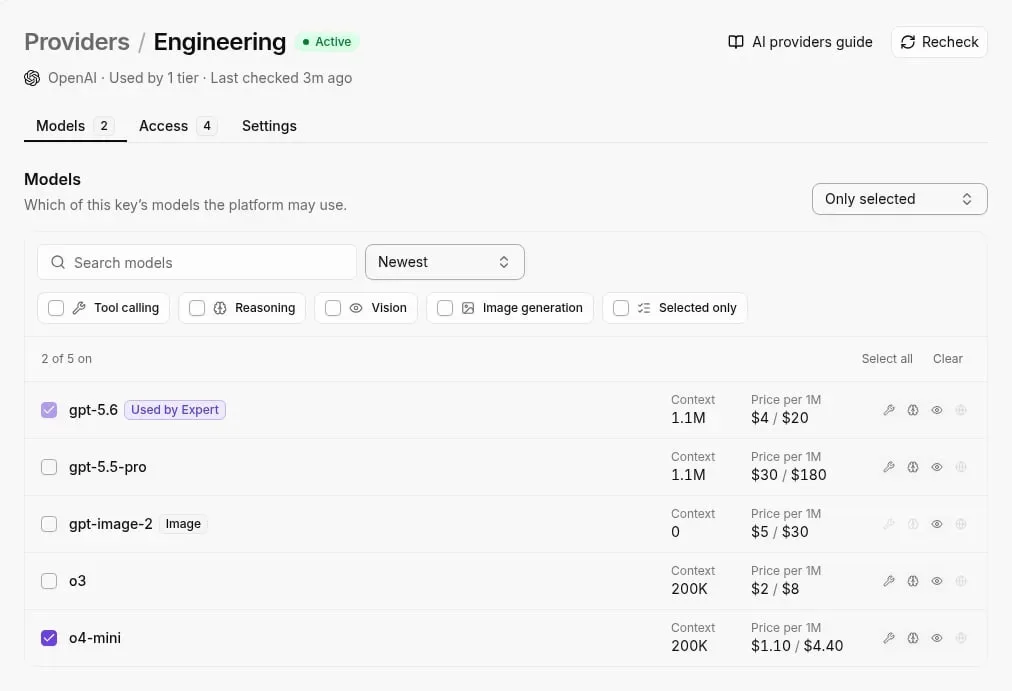
Because this symmetrical cost structure makes long-form reasoning just as expensive as the initial data ingestion, you are forced to be more selective about what you send to the model.
Activepieces uses a credit-based system where a standard run is one credit, while AI steps are metered based on the model's complexity.
Because the platform allows for unlimited flows on every plan, builders can design the granular routing and validation logic required to manage expensive frontier models without being penalized for the number of steps they create.
| Model | Parameters (B) | Context Window (k) | Input Price (per 1M) | Output Price (per 1M) |
|---|---|---|---|---|
| Pixtral Large 2502 | 124 | 128 | $2.00 | $2.00 |
| GPT-6.2 Astra | Not Disclosed | 128 | $8.00 | $40.00 |
| Claude Sonnet 5.5 | Not Disclosed | 200 | $3.00 | $15.00 |
Pixtral Large 2502 has a lower entry price for simple queries, at $2.00 per million tokens for input. It becomes significantly more economical than its peers for output-heavy tasks such as code generation or detailed report writing.
Context window and multimodal capabilities
Approximately 300 pages of text or dozens of high-resolution images fit into a single 128k context window request. This capacity helps you maintain coherence across complex, multi-image technical manuals.
Pixels and text are processed in a single pass because the model is natively multimodal. It doesn't rely on a separate OCR engine, which reduces the latency typically found in "stitched" vision systems.
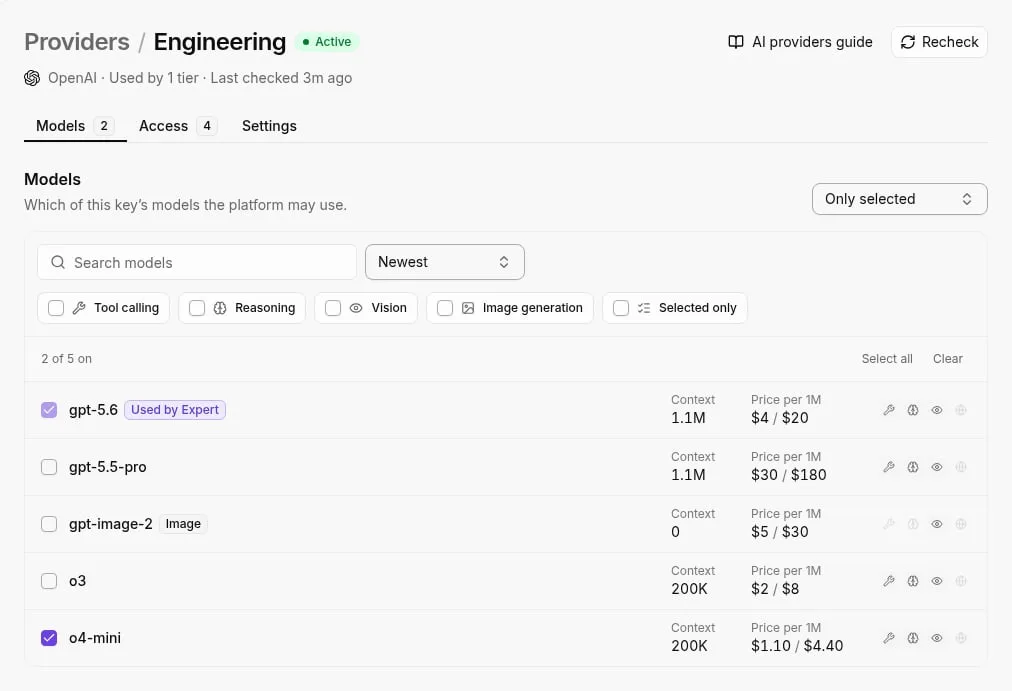
This unified processing means that spatial reasoning (such as identifying the relative position of components in a schematic) is built into the base reasoning layer rather than treated as a secondary metadata tag.
Pixtral Large 2502 API rate limits by tier
Throughput for the API is governed by a tiered system where your monthly spend determines the number of concurrent requests and tokens per minute allowed.
Tier 1 (Free/Trial) limits requests per minute to a level suitable only for initial proof-of-concept testing and basic debugging.
Once a successful billing history is established, Tier 2 (Pay-as-you-go) increases limits significantly to allow for low-volume production workloads. Tier 3 (Enterprise) removes standard caps to support high-concurrency agentic fleets. This prevents your automated business processes from stalling during peak traffic hours.
A sudden spike in demand cannot be met by a new account without prior warm-up of the credit limit, as moving between these tiers requires a consistent billing record.
If you are running this arithmetic for your own team, see what the same workload costs on Activepieces.
Comparing pixtral large 2502 vision costs
Pixtral Large 2502 has a better performance-to-price ratio for high-resolution image reasoning. It outperforms GPT-6.2 Astra or Claude Sonnet 5.5 in this specific metric.
The efficiency with which the model processes visual data means you pay for fewer total tokens to achieve the same level of analytical accuracy.
This remains true even if the $2 per million token rate for input appears high on a standard text-based spreadsheet, suggesting that the long-term value of the model may be obscured by simple unit-cost comparisons.
How image tokenization affects Pixtral billing
It tokenizes images based on their actual information density rather than a fixed grid.
"Token bloat" common in models like GPT-6.2 Sol is prevented by this approach. In those models, high-resolution files are subdivided into numerous 512-pixel tiles that each incur a flat fee regardless of the visual complexity.
By mapping visual features directly to a latent space, Pixtral ensures a high-contrast architectural diagram costs less to process than a dense, multi-page spreadsheet. You can then predict costs based on data complexity rather than just file size.
Pixtral Large 2502 cost per document extraction
When you're processing large batches of technical documents, the cost efficiency of Pixtral Large 2502 becomes evident through its reduced need for multi-shot prompting.
Competitive models like Gemini 4 Argon often require three or four example images in the prompt to maintain structural integrity in the output, which triples the per-request cost for every extraction.
Fields in a complex invoice or blueprint are identified in a single pass thanks to Pixtral’s zero-shot capabilities. The effective price per successful extraction remains lower than competitors that charge less per token but require more tokens to reach a usable result.

Pixtral Large 2502 vs Gemini 3.1 Pro benchmarks
Pixtral Large 2502 outperforms Gemini 3.1 Pro on specialized visual reasoning tasks, proving that higher intelligence at the edge of the frontier reduces the long-term cost of error correction.
The effective price per successful extraction remains lower than competitors that charge less per token but require more tokens to reach a usable result.
The MathVista benchmark, which tests the ability to interpret charts and mathematical diagrams, shows Pixtral reaching 69.4% accuracy, surpassing the 68.1% mark set by Gemini 1.5 Pro, establishing a new performance baseline for multimodal reasoning, which means the model is now the state-of-the-art leader for complex visual tasks.
MathVista benchmark scores: 69.4% for Pixtral vs 68.1% for Gemini 1.5 Pro.
For every thousand documents processed, Pixtral identifies thirteen more correct data points than its closest rival. This margin of accuracy reduces the manual labor costs associated with human-in-the-loop verification.
Consequently, the premium you pay for the initial inference is recovered by the reduction in secondary auditing requirements.
Small vision models vs flagship pricing
Deploying smaller vision models for high-volume document ingestion prevents the "Vision Tax" from eroding the margins of your automated workflows. Flagship models offer unmatched reasoning for edge cases.
The cost of inference exceeds the value of the recovered manual labor when you apply that same compute to standard structured data extraction.
82% of enterprise AI budgets are strained by this lack of architectural tiering, forcing organizations to overpay for high-end compute resources on tasks that could be handled by smaller, cheaper models, so companies are wasting significant capital on inefficient infrastructure.
The following data illustrates the cost in USD to process 10,000 receipts across a set of vision-capable models tested at the time:
| Model | Cost to Process 10,000 Receipts |
|---|---|
| Pixtral Large 2502 | $210.00 |
| GPT-4o-mini | $0.15 / $0.60 |
| Pixtral 12B | $3.75 |
This price delta represents a 5,500% increase in operational expense when you use Pixtral Large 2502 for tasks that don't require its advanced spatial reasoning.
For a logistics firm processing millions of waybills, this choice is the difference between a profitable automation strategy and a vanity project that fails its first quarterly audit.
Routing tasks between OCR and Pixtral models
You should delegate tasks based on the complexity of the visual input.
OCR 4.1, the latest specialized optical character recognition model, should be used for high-fidelity text extraction from clean, structured PDFs.
Routing to Pixtral 12B or Gemini 3.5 Flash-Lite handles the majority of handwritten notes or skewed mobile captures where basic visual context is required.
Reserve Pixtral Large 2502 or GPT-6.2 Astra specifically for multi-page documents requiring cross-referencing, such as identifying discrepancies between a bill of lading and a complex customs declaration.
Intelligence remains proportional to the difficulty of the data when you implement this tiered approach. This scales your agentic workflows sustainably without the runaway costs associated with flagship-only deployments.
Worth checking against a plan that does not meter every step: one credit covers a whole run on Activepieces.
Private deployment vs API consumption costs
Pixtral Large 2502 gives you a strategic advantage by offering frontier-class reasoning in an open-weight format. You can bypass the per-token billing of managed endpoints through private cloud deployment.
For departments running high-volume visual reasoning or document analysis workflows, this shift from variable operational expenditure to predictable infrastructure allocation is essential. These workflows would otherwise trigger budget alerts on a public API.
Hosting Pixtral Large on vLLM and Sagemaker
Deploying Pixtral Large 2502 on Amazon SageMaker allows your team to maintain complete data residency while utilizing vLLM to maximize hardware utilization. SageMaker is a fully managed machine learning platform.
Modern frontier models have massive resource requirements. A 124B parameter model weights file is split across a cluster of 8x H100 GPUs, so the hardware requirements for deployment are substantial and demand high-end infrastructure. A single API request line hits a cloud endpoint.

To maintain acceptable tokens-per-second performance for real-time applications, the cluster configuration ensures that the model’s weights are distributed across high-bandwidth memory. Consequently, you gain a dedicated "always-on" reasoning engine that doesn't compete for bandwidth with other tenants on a shared provider.
Calculating the break-even point for self-hosting
The financial justification for moving away from Mistral’s La Plateforme depends on the consistency of the inference load rather than just the peak volume. La Plateforme is their managed API service.
A low-utilization environment results in a higher cost-per-token than a pay-as-you-go model because private instances on cloud providers incur hourly costs regardless of activity.
You must evaluate your baseline demand across several dimensions. You must compare monthly token throughput to the fixed cost of persistent GPU instances.
You must also weigh data sensitivity requirements that mandate the isolation provided by a Virtual Private Cloud, and the engineering overhead required to maintain the inference stack versus the simplicity of a managed endpoint.
When the volume of agentic workflows involving Claude Opus 5.5 or Gemini 4 Carbon exceeds the threshold where API credits outpace server leases, the transition to self-hosting Pixtral Large 2502 becomes the primary lever for protecting your margins.
Scaling Pixtral Large 2502 without cost spikes
Cost-efficient scaling of Pixtral Large 2502 requires a routing architecture that reserves the flagship’s reasoning power for high-entropy visual data while offloading predictable extraction to smaller models.
You might see the 85% accuracy rates of top-tier multimodal models and assume a "one model fits all" deployment is the path to reliability.
Budget ceilings are frequently hit by middle management because they're paying premium rates to process clear, high-contrast documents that require no advanced inference.
By implementing a tiered logic gate, you ensure that expensive compute cycles are only consumed when a simpler vision model fails a confidence threshold.
Routing logic for high accuracy
The following 4-step routing logic ensures high accuracy without the financial overhead of redundant processing.
- Run OCR on Pixtral 12B to handle initial text extraction from the visual input.
- Check confidence score to determine if the extraction meets the required precision for the specific business use case.
- Route low-confidence crops to Pixtral Large to resolve ambiguities, such as handwritten notes or overlapping text elements.
- Merge structured output into a single, validated JSON object for downstream database ingestion.
This orchestration transforms Pixtral Large 2502 from a costly general-purpose engine into a specialized validator that only intervenes when necessary. The automation layer must be capable of handling these conditional branches without adding its own layer of per-step execution fees.
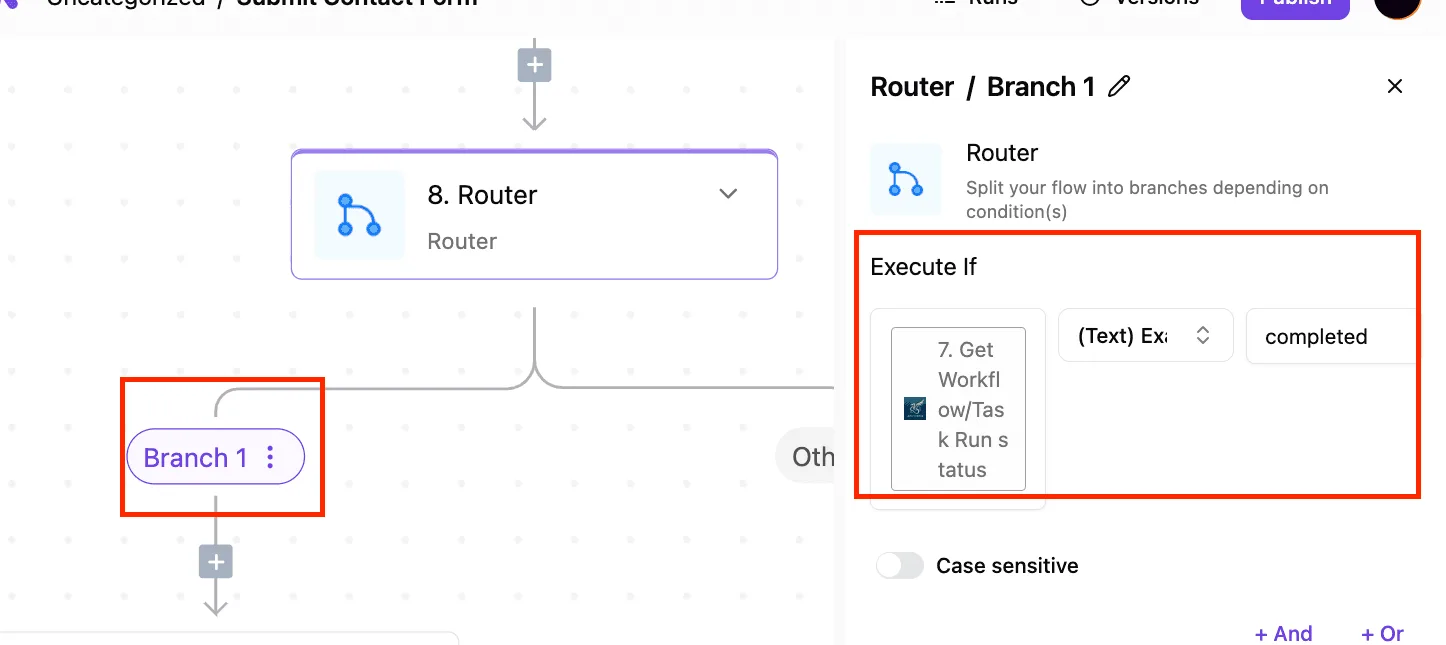
A perverse incentive to skip validation steps is created by a billing model that penalizes the complexity of the "check and route" logic when a workflow triggers multiple sub-calls. This ultimately leads to data corruption in the target system.
Organizations like MoneyGram and FundingSocieties run this air-gapped edition in production to maintain this level of control. The SOC 2 programme is currently in progress, with penetration test summaries available on request, ensuring that security requirements never compromise the logic layer.
How Activepieces manages multi-step reasoning costs
Activepieces addresses the financial friction of tiered routing by decoupling the complexity of your logic from the cost of your automation.
While Pixtral Large 2502 requires a sophisticated "check and route" architecture to remain viable, many automation platforms charge for every individual step, effectively taxing you for being thorough.
Activepieces uses a credit-based system where a standard execution is one credit regardless of how many non-AI steps it contains.
This allows you to build the granular validation and conditional branching required to manage expensive frontier models without being penalized for the number of safety checks you create.
The platform provides a self-hosted, open-source edition under the MIT license, which is critical for teams deploying Pixtral Large 2502 in private cloud environments like SageMaker. By running Activepieces on your own infrastructure, you eliminate the per-task fees associated with proprietary SaaS vendors.
This architectural freedom ensures that the logic layer remains invisible to your balance sheet, allowing you to scale agentic fleets where the only variable cost is the actual token consumption of the model itself.
Organizations like MoneyGram and FundingSocieties utilize this deployment model to maintain strict control over high-volume financial workflows. Because the platform allows for unlimited flows on every plan, builders can design the complex error-handling loops necessary for multimodal data without hitting artificial ceiling limits.

The SOC 2 Type II compliance program, currently in progress, and available penetration test summaries aim to meet the security standards required for enterprise-grade document processing.
By providing a visual interface that maps directly to the 4-step routing logic mentioned above, Activepieces ensures that intelligence remains proportional to the difficulty of the data.
You can drag and drop Pixtral 12B for initial OCR and reserve Pixtral Large 2502 for high-entropy exceptions, managing the entire lifecycle of the request within a single, predictable cost structure.

This transforms the automation layer from a cost center into a strategic tool for protecting your margins against the "Vision Tax" of flagship models.
Frequently asked questions about Pixtral pricing
Logic layer invisibility is essential because Pixtral Large 2502 operates within a market where frontier intelligence costs are falling, yet architectural complexity is rising.
While you might focus on the headline price of a single call, the reality for your middle management is a multi-step workflow where the "intelligence tax" accumulates across every retry and routing decision.
The following table illustrates the average price per 1M tokens for frontier models by year.
| Year | Average Price per 1M Tokens |
|---|---|
| 2023 | $26.18 |
| 2024 | $14.14 |
| 2025 | $7.02 |
| 2026 | $5.25 |
Raw compute is becoming a commodity according to this downward trend, which means the true margin for providers is shifting from token throughput to the orchestration layer.
As per-token costs decrease, the frequency of model calls in agentic loops increases, making the billing model of your automation platform the primary variable in your total cost of ownership.
Does Pixtral Large 2502 have a free tier?
Mistral is providing a free tier for Pixtral Large 2502 through its La Plateforme developer portal, which allows you to prototype vision-based workflows without an initial capital commitment.
This tier is subject to rate limits on requests per second. A production-ready deployment will eventually require a transition to a paid consumption model to maintain uptime. Mistral also provides documentation for these limits on their portal.
How are images billed in Pixtral Large?
The billing mechanism for images uses a pixel-derived base that is adjusted by the model’s internal attention mechanism. While the initial token count is calculated from the raw pixel dimensions, the final billable amount reflects the information density processed during the encoding phase.
Information density is calculated by measuring the variance of visual features within the latent space. A solid white background contains low entropy and consumes fewer tokens than a high-detail satellite image of the same dimensions.
This ensures you are billed for the actual visual complexity the model must reason through rather than just the empty space in a file.
Is there a discount for batch processing?
Mistral is offering a Batch API for Pixtral Large 2502 that provides a significant price reduction for tasks that don't require an immediate response.
By submitting requests to a queue with a 24-hour completion window, you can process massive datasets at a lower rate. This makes high-volume visual auditing financially viable compared to real-time inference. The batch system handles scheduling automatically.
Can i use Pixtral Large 2502 on Azure?
Azure is offering Pixtral Large 2502 through its Models as a Service (MaaS) offering. Azure is the cloud computing platform from Microsoft.
This integration allows you to bill your model consumption directly against your existing Azure commitment, so your procurement team can bypass the friction of setting up new vendor contracts for AI services. You can manage these models through the Azure AI Studio.
Running the numbers
See what the same workload costs here.
Free forever plan, and every paid plan self-hosts at no extra cost.
See pricing Talk to sales