
Poe Subscription Pricing 2026: Plans and Point Costs

Oct 29, 202615 min read
Poe is a multi-model chat app that sells a monthly pool of compute points rather than a message count, much like the usage-based billing you'll find in automation tools such as Activepieces.
The entry plan covers most individuals, but what you actually pay per answer shifts with the model you pick.
Poe subscription pricing: every plan, price and limit
The plan table, checked against poe.com on 29 October 2026
Poe's pricing page lists the allowances and prices., so the table flags every such cell instead of guessing. Treat "Unconfirmed" as "read it off poe.com before you pay", and don't budget from this table alone.
| Plan | Monthly price | Annual price | Points allowance | Inclusions |
|---|---|---|---|---|
| Starter | Unconfirmed | Unconfirmed | Unconfirmed | One points pool shared across all models |
| Premium | Unconfirmed | Unconfirmed | Unconfirmed | Larger pool, same model access (unconfirmed) |
| Premium Plus and higher tiers | Unconfirmed | Unconfirmed | Unconfirmed | Larger pool again; extras unconfirmed |
What follows is structural: every tier draws from the same points pool, so moving up buys more runway, not a different kind of product.
What a compute point is and how it is spent
Every reply costs points according to the model behind it, and a compute point is the unit of that usage.
A short answer from a small, fast model costs little. A long answer from a flagship reasoning model costs far more, so two people on the same plan can run out at very different speeds.
A message count's easy to forecast; points depend on model choice, prompt length and reply length.
My rule from running small budgets: default to a cheap model and escalate deliberately.
What the Poe free tier includes
Treat the free tier as a trial of the points system, not a working plan. It lets you see how quickly different models consume points, which is the most useful thing to learn before paying.

Its allowance's unconfirmed here, so test it with your real tasks for a week. If you never hit the limit on cheap models, stay free. If you hit it on premium ones, the entry plan is the next step.
If you are running this arithmetic for your own team, see what the same workload costs on Activepieces.
What compute points really cost
If you outgrow the entry plan, expect the model you choose to set your bill more than the plan does. The monthly fee isn't your cost; the points each message burns are, and that number swings roughly threefold between models.
Points per message across cheap, mid and premium models
Per 1,000 tokens, the points range like this, according to [Whizi]:
- GPT-5.5 at 150 to 900 points per 1,000 tokens
- Claude Opus 4.7 at 142 to 709
- Claude Sonnet 5 at 67 to 334
- Gemini 3.5 Flash at 50 to 300
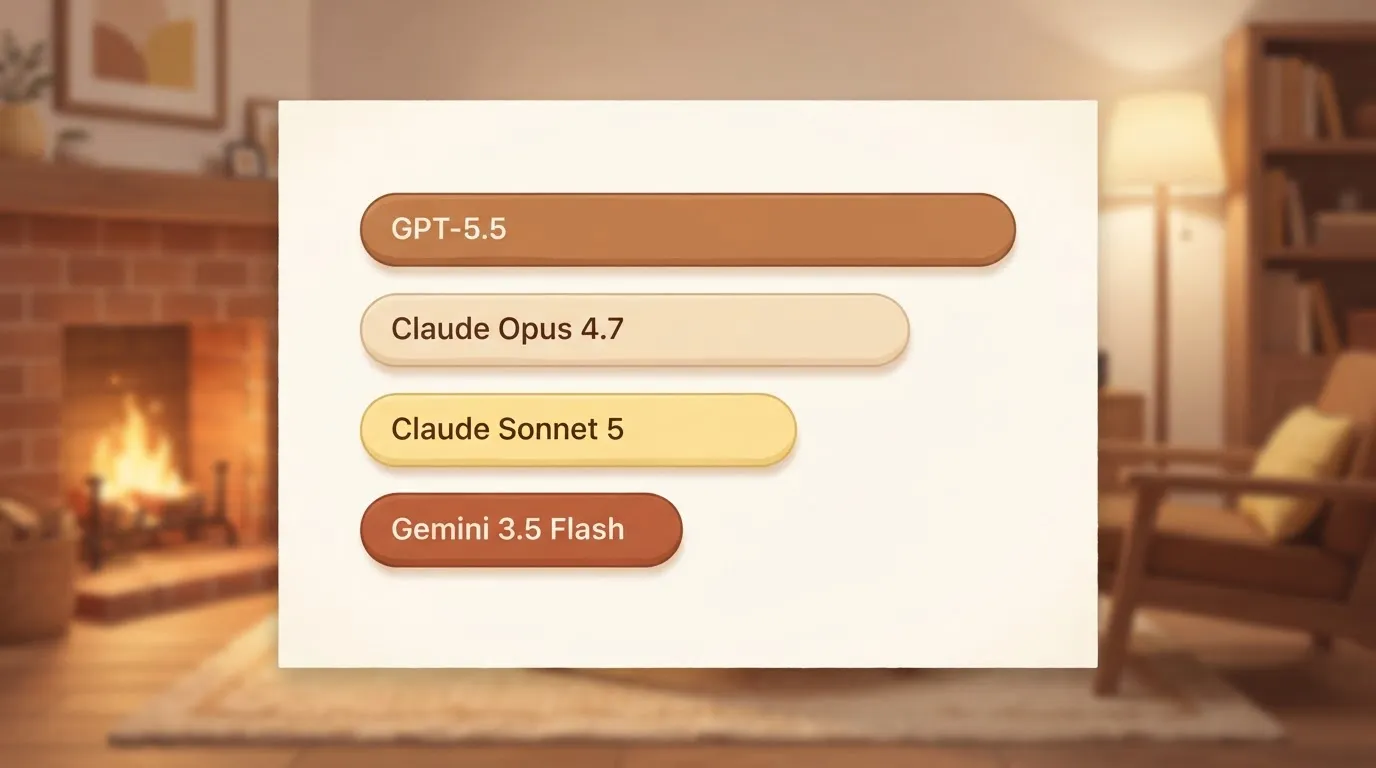
Read the low end of each range as input and the high end as output, which is why output costs about six times more. A chatty model that writes long answers drains you far faster than one that reads long prompts.
On the 660,000-point plan, that spread decides how many messages you get. In Whizi's figures, Gemini 3.5 Flash got you 3,300 a month, Claude Sonnet 5 got 2,820, and GPT-5.5 got only 1,100 short answers.
How long prompts, attachments and media generation change cost
When you paste a document, it's billed as input on every turn of the conversation, because points are charged per token. A long reply's billed at the output rate, the expensive end of each range above.

Treat attachments and long chats as the quiet budget killers, and start a fresh thread when the old one has done its job.
For media generation, the sources I used give no point figures, so check the cost shown for an image or video model before you run it in bulk.
Whether unused points roll over
Don't budget around rollover. Poe's FAQ says unused points don't roll over unless specified. Plan as if each month starts fresh.

There's no per-point saving in buying a larger monthly plan, though paying yearly saves 17%. Omid Saffari puts the 1.65M plan at $30.30 per million points, the 660K plan at $30.29, and add-on points at $30, so bulk purchases offer no per-point savings.
Moving up buys volume, not a discount.
At $16.63 per million, the Starter plan with 10,000 daily points is the outlier, so it's the cheapest way to use points if you stay within the daily allowance.

Which Poe plan fits three everyday uses
Staying inside the Starter daily allowance is easy for most people, so Starter covers light writing, questions and moderate research; only heavy premium-model or media use justifies paying more.
Read the table below as a guide to which use drives your points, since I have no confirmed monthly figures to quote. It sorts the three uses by how many points they burn, which plan covers them, and what should push you up a tier.
| Use | Points per month | Cheapest covering plan | Price | Break-even for next plan or add-on points |
|---|---|---|---|---|
| Drafting and Q&A | Low, mostly on lighter models | Starter | Lowest entry price | Rarely; only if you move drafts to premium models |
| Daily research and coding | Moderate to high, driven by long context | Starter if you ration, otherwise the 660K plan | Entry price, or a higher monthly price for a larger pool | When the daily allowance runs out before the workday ends |
| Image or video generation | High and lumpy | The 660K plan | Higher monthly price | When a single project would otherwise need add-on points |
That pattern's the point: cost follows model choice and media, not how often you open the app.
For light writing and questions, Starter's enough. Short drafts and quick questions on efficient models barely dent the daily allowance, so paying for a larger plan buys headroom you won't touch.
For daily research and coding assistance, long pasted files and multi-step coding sessions consume points quickly, especially on premium models.
Try Starter first and watch whether you hit the daily cap on ordinary days. If you do, you're paying in interruptions, which costs more than the plan difference.
One video can cost more than a day of text work, which is why image and video generation is the use most likely to outgrow Starter. Treat it as a project expense and size the plan to your heaviest week.
Move up to the next plan when you reliably exhaust Starter's daily points and would otherwise buy add-on points, since the larger plan's per-million cost is about the same as add-ons at steady volume. If overruns are occasional, buy add-ons and stay put.
If your heavy use is a scheduled prompt chain rather than a person typing, the same problem shows up as a billing question: does a ten-step chain cost more than the two-step shortcut it replaced?
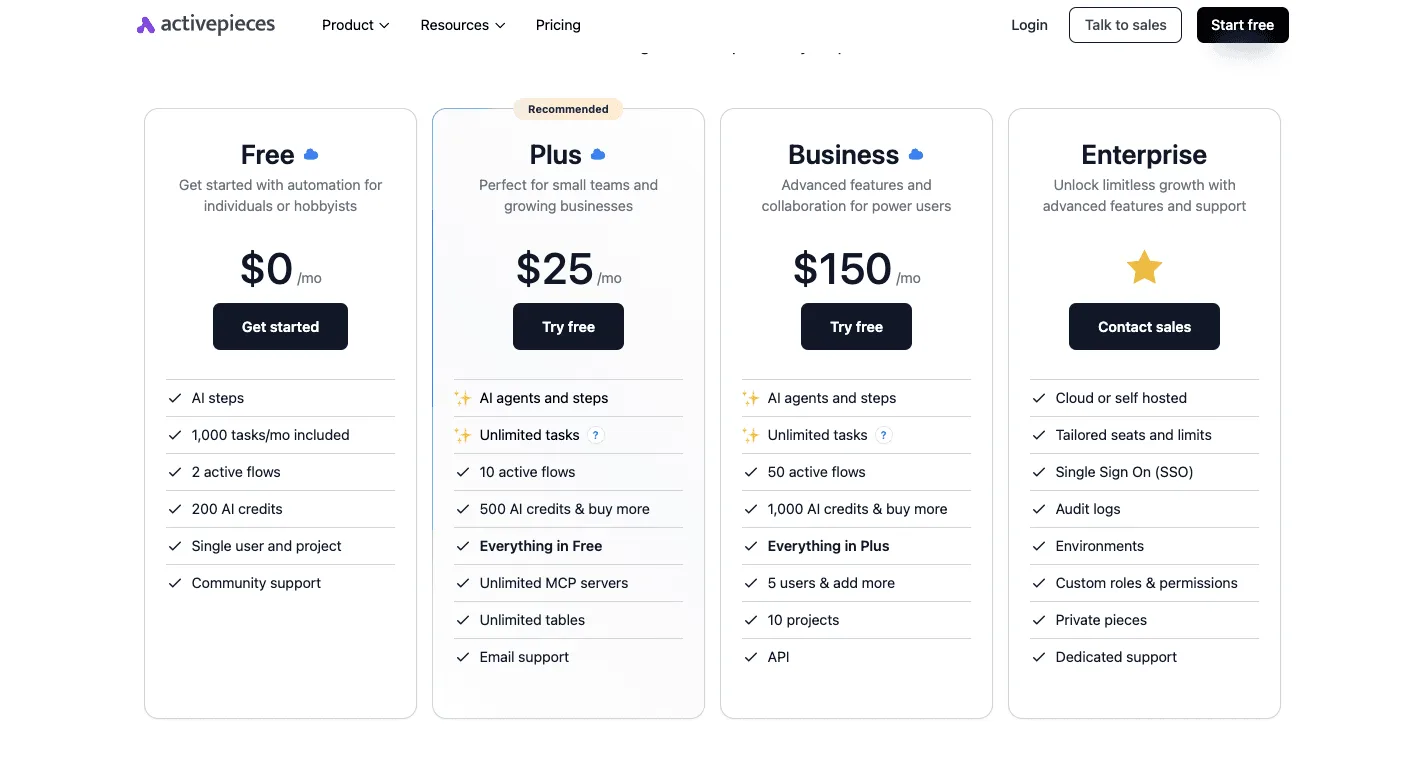
On Activepieces a run costs 1 credit however many steps it has; AI steps cost more by model tier, and with your own AI keys each AI step is 1 credit and model cost goes to your provider bill.
Its pricing page lists 1 credit per flow run however many steps sit inside it, where Zapier bills per task and Make per module, so splitting a chain into smaller, more reliable steps never raises the bill.
Worth checking against a plan that does not meter every step: one credit covers a whole run on Activepieces.
The case against paying for Poe
Pay OpenAI, Anthropic or Google directly and you get limits you can plan around and features Poe doesn't carry.
I'm not going to soften that, because for some readers it wins.
It comes down to predictability. A direct plan tells you roughly how much you can use before a cap, and the cap resets on a schedule.
On Poe you get a pool of compute points that a heavy model drains faster than a light one. The same monthly fee can last three weeks or the full month depending on what you ran.

For a bootstrapped team that budgets by the line item, a bill you can't forecast is a maintenance cost, and it recurs every month.
Stacked up, the objections look like this:
- Points can run out mid-month, usually right when a deadline makes you reach for the strongest model.
- Unused points don't roll over, so a light month is money you can't bank against a heavy one.
- Some features lag the first-party apps, because a vendor ships to its own product before it ships to a reseller.
- There's no first-party memory or projects, so the standing context a direct subscription keeps for you is something you rebuild by hand each time.
- The newest tools tend to arrive elsewhere first, which matters if your work depends on whatever launched this month.
None of these is fatal alone. Together they describe a person who uses one vendor's model daily, wants it to remember their work, and wants the latest feature on day one. That reader should buy direct and skip Poe.

I have no checked figures to put against these claims, so I won't pretend the gap is a specific size.
Poe versus direct vendor plans
Poe wins if you use several models lightly; a direct subscription wins if one model carries your whole workday. The difference is what you're billed for: Poe sells shared compute points, while the others sell access to a single vendor's models.
Monthly price and how each limit is measured
Since all four plans are flat monthly fees, the real cost difference is in what the limit counts. The table shows that only Poe pools one budget across vendors, which means your spend's flexible but harder to forecast.
| Plan | Monthly price | What the limit is measured in | Multi-model access | First-party-only features |
|---|---|---|---|---|
| Poe Premium | One flat fee | Compute points shared across every model | Models from many vendors in one app | None of its own; vendor app extras may lag |
| ChatGPT Plus | One flat fee | Usage allowance on OpenAI models | OpenAI models only | ChatGPT's own voice and app tools |
| Claude Pro | One flat fee | Usage allowance on Claude models | Claude models only | Claude's own app and coding tools |
| Google AI Pro | One flat fee | Usage limits across Gemini models | Gemini inside Google's own apps | Gemini inside Google's own apps |
Since each direct plan limits one vendor, you always know which budget you're draining. On Poe, a single premium-model session can eat points you meant to spread across three tools.
If you draft with one model, check facts with another and occasionally try a third, one subscription replaces three. That makes Poe the cheaper way to compare models.
Where a direct subscription wins
If you live in one model all day, the direct plan gives you a limit you can read and the vendor's own features. Voice modes, tool integrations and app-level workflows usually arrive there first.
Heavy daily use of a single model is where Poe's points become the harder budget to manage.
From that the verdict follows: start on Poe if your use is varied and light, and move to a direct plan once one model dominates your week.
What to do on Monday before you subscribe
Spend a week on the free tier and read the points counter before you pay. That number tells you whether your use is varied and light or already dominated by one model. Guessing from the pricing page is how people buy the wrong plan.
Because Poe charges in compute points, not messages, a casual chat on a small model and a long session on a flagship like GPT-6 Astra or Claude Opus 5.5 can differ enormously in cost.
On Poe, your own log is the only honest way to see which kind of user you're. Work through these steps in order:
- Use the free tier normally for a week, doing your real work and not a test script, so the counter reflects what you'd actually spend.
- Read the points counter at the end of each day and write down the daily figure. A single heavy day tells you little, but a week shows your pattern and your worst case.
- Log which models you used by noting, next to each day's figure, which models drove it. If one premium model accounts for most of the burn, you're the user the verdict says should price a direct plan. If the spend is spread thinly across several, stay on Poe.
- Pick the plan from that number: choose the entry subscription if your weekly total sits comfortably inside it. Move up only if you hit the ceiling on premium models repeatedly, not once.
- Start monthly, not annual. A monthly plan can be dropped the moment your habits change. An annual one locks in a guess you made in week one.
- Set a review date by putting it in your calendar for the end of the first full month. Compare that month's points against your trial week, and switch tiers or leave if the two disagree.
Skip the review date and the plan quietly stops fitting.
What Activepieces does about this
The unpredictability in Poe's pricing comes from one thing: the cost of an answer depends on the model, and you only find out after the points are gone.
Activepieces can't change Poe's meter, but it can take the model choice out of your head and put it in a workflow you can read.
The unpredictability in Poe's pricing comes from one thing: the cost of an answer depends on the model, and you only find out after the points are gone.
A flow can send routine drafting and classification to a cheap model, then escalate to a premium one only when a branch condition says the task needs it.
That is the "default cheap, escalate deliberately" rule from earlier, written down so it runs the same way every time.
Activepieces' own cost for that flow is easy to forecast. A run costs 1 credit however many steps it contains, and an AI step costs more only by model tier.
If you connect your own AI keys, each AI step is 1 credit and the model spend goes to your OpenAI, Anthropic or Google bill.
That bill comes with the vendor's own usage limits, which is the predictability the direct plans offered in the comparison above.
If even the platform fee is something you'd rather not forecast, the community edition is MIT-licensed and self-hostable. You then pay for your own infrastructure and your model providers, and nothing per run to us.
It's a heavier setup than a chat subscription, so it only makes sense if you already have scheduled or multi-step AI work.
For an individual who mostly types into a chat window, none of this changes the verdict. Start on Poe's entry plan and read your counter.
Activepieces becomes relevant when your heavy use is a repeating chain of prompts and you want its cost fixed before it runs.
Frequently asked questions
Whether a plan fits comes down to a few small questions, and the short answers are below.
Does Poe have a free plan?
Yes. The free tier gives you a small allowance of compute points, enough to try several models and judge whether the app suits you. Premium models burn those points quickly, so treat it as a trial, not a working setup.
If you hit the ceiling in your first week, that tells you the entry subscription is the realistic starting point.
When you cancel a Poe subscription, the next renewal stops, and you keep access to what you already paid for until the period ends. Don't plan on a pile of leftover points carrying you forward afterward.
Check your account's billing page before you cancel, and spend down the balance first if you intend to leave.
Is Poe cheaper than paying for ChatGPT and Claude separately?
It depends on how evenly you use the models. If you touch several models lightly, one Poe subscription usually costs less than two or three separate ones.
If you live inside a single flagship model all day, a direct subscription gives you a limit you can predict, and Poe's point burn is harder to forecast. Tally a typical week of use before you switch.
Paid annually, Poe works out cheaper per point than paying monthly. The saving only matters if your usage is steady.
If you're still testing which models you rely on, pay monthly and move to annual once your point consumption stops surprising you. Locking in a year of the wrong tier costs more than the discount saves.
When a month runs heavy, you needn't jump a tier: Poe sells add-on points separately. Add-on points are usable for one year, so you can stock up a little, but they are not refundable, transferable, or redeemable for cash. If you're topping up every month, that's the signal to price the next plan up instead.
References
Running the numbers
See what the same workload costs here.
Free forever plan, and every paid plan self-hosts at no extra cost.
See pricing Talk to sales