
Qwen API Pricing: Costs, Tiers, and Models (2026)

Oct 10, 202615 min read
By decoupling input and output rates, Qwen allows you to scale high-context applications without the linear price spikes common in Western frontier models.
Qwen API pricing refers to the tiered cost structure applied to the processing of input and output tokens across Alibaba's suite of large language models.
Compare qwen API token costs by model
While raw token costs are low, your final invoice depends on how effectively an orchestration layer manages the overhead of recursive API calls.
Activepieces simplifies this by billing 1 credit per flow run regardless of how many steps are inside it, ensuring that breaking a complex Qwen prompt into a more reliable ten-step chain doesn't quintuple the cost.
The following table compares the current Qwen 3.7 and 3.8 variants to demonstrate how architectural efficiency impacts your bottom line for high-volume production environments.
| Model | Input Price (per 1M) | Output Price (per 1M) | Cache-Hit Rate (Discount) | Context Window |
|---|---|---|---|---|
| Qwen 3.8 Max | $2.00 | $6.00 | 10% | 32k |
| Qwen 3.7 Plus | $0.80 | $2.00 | 25% | 128k |
| Qwen 3.7 Flash (<256k) | $0.10 | $0.30 | 50% | 1M |
| Qwen 3.7 Flash (256k-1M) | $0.40 | $1.20 | 50% | 1M |
This pricing hierarchy forces a trade-off between reasoning depth and the frequency of execution. A high cache-hit rate on the Flash model can reduce your operational costs by half for repetitive prompts.
Qwen-max: The flagship reasoning model pricing
When you use the flagship Qwen 3.8 Max model, the system charges 2 USD per 1M input tokens.
A standard 2,000-token prompt costs exactly $0.004, which means developers can run hundreds of iterations for less than the price of a cup of coffee. While this is negligible for single runs, it becomes a significant line item for agents processing long-context documentation.
Because the model utilizes denser compute clusters to maintain coherence during complex reasoning tasks, Alibaba prices output generation higher, at 6 USD per 1M tokens.
The Max variant is restricted to a 32k context window, which limits its use to high-precision reasoning rather than massive document ingestion. This constraint ensures that the model maintains its reasoning depth without the performance degradation often seen in larger windows.
Qwen-plus: The mid-tier performance balance
For workflows that require more intelligence than a basic chatbot but less overhead than a full reasoning engine, Qwen 3.7 Plus serves as the utility model at $0.80 per 1M input tokens, allowing for sophisticated processing without the premium price tag of flagship models, so teams can scale complex tasks without ballooning their operational budget.
At $2.00 per 1M tokens for output, this tier costs 66% less than the Max model, making it a highly economical choice for high-volume text generation, which means users can generate massive datasets while significantly reducing their monthly spend.

With a 128k context window, Qwen-Plus balances breadth and depth, making it the standard choice for most RAG systems.
Unlike the Flash model, the Plus variant maintains a flat pricing structure across its entire context range, ensuring that a 120k token request costs the same per-unit as a 1k token request.
Qwen-turbo: High-speed, low-cost processing
Targeting sub-second latency, the Qwen 3.7 Flash model (formerly Turbo) costs $0.10 per 1M input tokens, ensuring that real-time applications remain responsive and affordable, so developers can build high-speed interfaces without sacrificing cost-efficiency.
At $0.30 per 1M output tokens, the model is cheap enough to be used as a router that evaluates incoming queries before passing complex ones to more expensive tiers, which means developers can optimize their total infrastructure spend without sacrificing performance.

The Flash model supports a massive 1M token context window, enabling the processing of entire codebases or long video transcripts. While this allows for extreme data ingestion, users must monitor the tiered pricing shifts that occur as they cross the 256k token threshold.
Free tier and trial credits for new developers
New developers typically receive a starting grant of 2,000,000 tokens across all models. This grant ensures that your initial integration testing and prompt engineering don't incur immediate out-of-pocket expenses.
Because this trial period expires 30 days after account verification, you must complete your benchmarking within a month or risk losing the subsidy.
Once you exhaust these credits, the system transitions to a pay-as-you-go model. On the pay-as-you-go model, this is the only billing method that removes rate-limit throttles on production environments.
If you are running this arithmetic for your own team, see what the same workload costs on Activepieces.
Monthly bills for realistic Qwen API usage scenarios
To estimate your monthly expenditure for Qwen-Plus, you must map raw token throughput against specific operational demands. The price-to-performance ratio fluctuates based on the ratio of prompt tokens to generated output.
Estimating Qwen API costs for support chatbots
Deploying a support bot involves a constant stream of short-form interactions where the primary cost driver is the repetitive injection of system instructions and retrieved knowledge base fragments.
Because each user query requires the model to re-read the grounding data, a high-traffic bot can consume millions of tokens even if the final answers are brief.
| Use Case | Monthly Tokens | Estimated Cost (Qwen-Plus) |
|---|---|---|
| Support Bot | 50M | $70.00 |
| Doc Summarization | 200M | $280.00 |
| Data Extraction | 1B | $1,400.00 |
A shift toward longer chat histories will cause these figures to climb linearly. Consequently, you must implement aggressive caching or summarization of past turns to prevent the context tax from doubling your monthly bill.
Processing 1,000 long-form PDF documents monthly
Summarizing large documents relies heavily on the model's ability to ingest massive blocks of text in a single request, shifting the financial burden toward input token pricing.
Every character converted into a token results in a charge on Qwen-Plus. This makes the per-document cost highly variable; a technical manual costs significantly more to summarize than a legal brief, even if the final summary length is identical.

High-frequency structured data extraction costs
Data extraction tasks represent the highest volume of token consumption because they often involve passing the same raw data through the model multiple times to ensure schema compliance.
Single-pass extraction minimizes cost but increases the risk of hallucinated fields. Multi-stage verification, where a second call audits the first, effectively doubles the per-record price.
When source data formats change, your bill can spike silently because extraction is often an automated backend process. This causes the model to generate longer, redundant reasoning tokens before outputting the structured JSON.
Multi-stage verification, where a second call audits the first, effectively doubles the per-record price.
Hidden expenses beyond the standard token price tags
Alibaba Cloud Model Studio hides the true cost of operation behind a tiered infrastructure that penalizes long-context workflows and architectural complexity.
While the headline rates for Qwen-Plus suggest a bargain, the price jumps for the Flash model from 0.1 USD per 1M tokens for requests up to 256k tokens to 0.4 USD per 1M tokens for context windows between 256k and 1M.
Context length pricing tiers
This four-fold price increase is exclusive to the Flash model's extended context capabilities. Developers using Qwen-Plus or Qwen-Max do not face these tiered jumps, as their context windows are capped below the 256k threshold where the surcharge begins.
If your application regularly exceeds 256k tokens, the Flash model remains cheaper than Plus in absolute terms, but the margin narrows significantly.
You must calculate whether the intelligence of the Plus model is worth the premium when the Flash model's cost advantage is partially eroded by long-context surcharges.
Fine-tuning costs and managed hosting fees
Training a custom version of Qwen-Plus incurs a unit price of ¥0.35 per 1,000 tokens. This forces you to be surgical with your datasets to avoid four-figure experimentation bills.
Once the model is trained, deployment becomes the primary financial burden. Alibaba Cloud requires a dedicated hosting fee to keep the custom weights active in memory.
Alibaba Cloud vector storage and data transfer fees
Building a Retrieval-Augmented Generation (RAG) system within the ecosystem introduces recurring storage fees for the Vector Storage service.
These fees scale from $0.007 to $50.00 per month depending on index size and query volume, so users can expect their bills to fluctuate in direct proportion to their actual usage.
High-frequency updates to these indexes also trigger data transfer costs, particularly when syncing across regions to mitigate the average 0.40s latency experienced by users outside of mainland China.
The price of dedicated throughput (Provisioned Capacity)
For enterprise workloads that can't tolerate the variable latency of shared public endpoints, Alibaba Cloud has Provisioned Capacity. This service trades a fixed monthly commitment for guaranteed tokens-per-second.
By moving the financial model from a variable utility bill to a fixed capital expenditure, this often results in a higher effective cost per token if the provisioned lane isn't utilized at 80% capacity or higher, meaning that under-utilization directly undermines the intended savings.
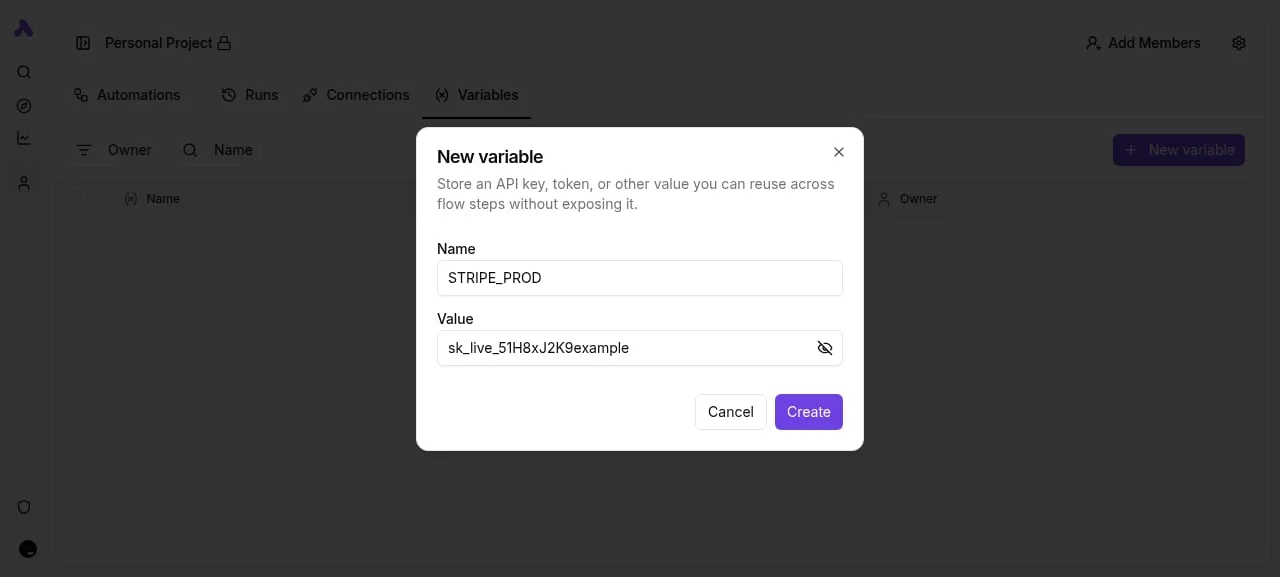
Without this commitment, API rate limits can throttle execution during peak hours, causing automation scripts to fail and requiring manual intervention.
Worth checking against a plan that does not meter every step: one credit covers a whole run on Activepieces.
Qwen pricing versus OpenAI, Anthropic, and Meta alternatives
Qwen maintains a distinct pricing advantage by positioning its flagship models at a fraction of the cost required to access comparable proprietary intelligence from Western providers. This price gap allows you to run high-density RAG pipelines that would otherwise be cost-prohibitive on premium tiers.
Qwen-max vs GPT-6 Astra: The flagship price war
Qwen-Max costs significantly less for high-reasoning tasks than GPT-6 Astra, lowering the barrier for startups automating complex decision-making workflows.
| Model | Input Price (per 1M tokens) | Output Price (per 1M tokens) |
|---|---|---|
| Qwen 3.8 Max | $2.00 | $6.00 |
| GPT-4o | $5.00 | $15.00 |
| Claude 4.8 Opus | $5.00 | $25.00 |
This pricing structure ensures that even when a prompt requires a massive context window for document analysis, the total cost per run remains predictable.
Consequently, you can afford to implement more frequent chain-of-thought steps. These steps improve output accuracy without the exponential cost increases seen in the Claude or GPT ecosystems.
Qwen-turbo vs Llama 3: the race to the bottom on price
In the high-speed utility segment, Qwen-Turbo competes against Llama 3 hosted on Groq. The primary value proposition is the lowest possible cost for simple classification and extraction tasks.
Because Qwen-Turbo frequently offers more generous context window limits than Llama 3 on Groq, it can process larger batches of data in a single API call.
How region and currency affect Qwen API pricing
The hosting provider's geographic location heavily influences the true cost of Qwen. Currency fluctuations and regional data egress fees can quickly negate a low base-token price.
Alibaba Cloud International is the primary gateway for global users, offering standardized pricing but subject to varied regional tax laws.
Third-party hosts like Together AI or DeepInfra, known as Model-as-a-Service (MaaS) Providers, may offer fixed USD pricing to shield you from local currency volatility.
For those with H100 or A100 GPU hardware, On-premise Deployment is the only way to eliminate variable API costs entirely, though this requires a significant upfront investment.
How Activepieces reduces Qwen API operational overhead
Activepieces reduces the operational burden of Qwen deployments by providing unlimited flows on every plan, including free, so that the cost of managing model logic remains decoupled from the number of automations you build.
For regulated industries, this control extends to the infrastructure itself. Activepieces provides an air-gapped edition where enterprise features like SSO, SCIM, and custom RBAC run exactly as they do in the managed cloud, a configuration currently used in production by organizations like MoneyGram and FundingSocieties.
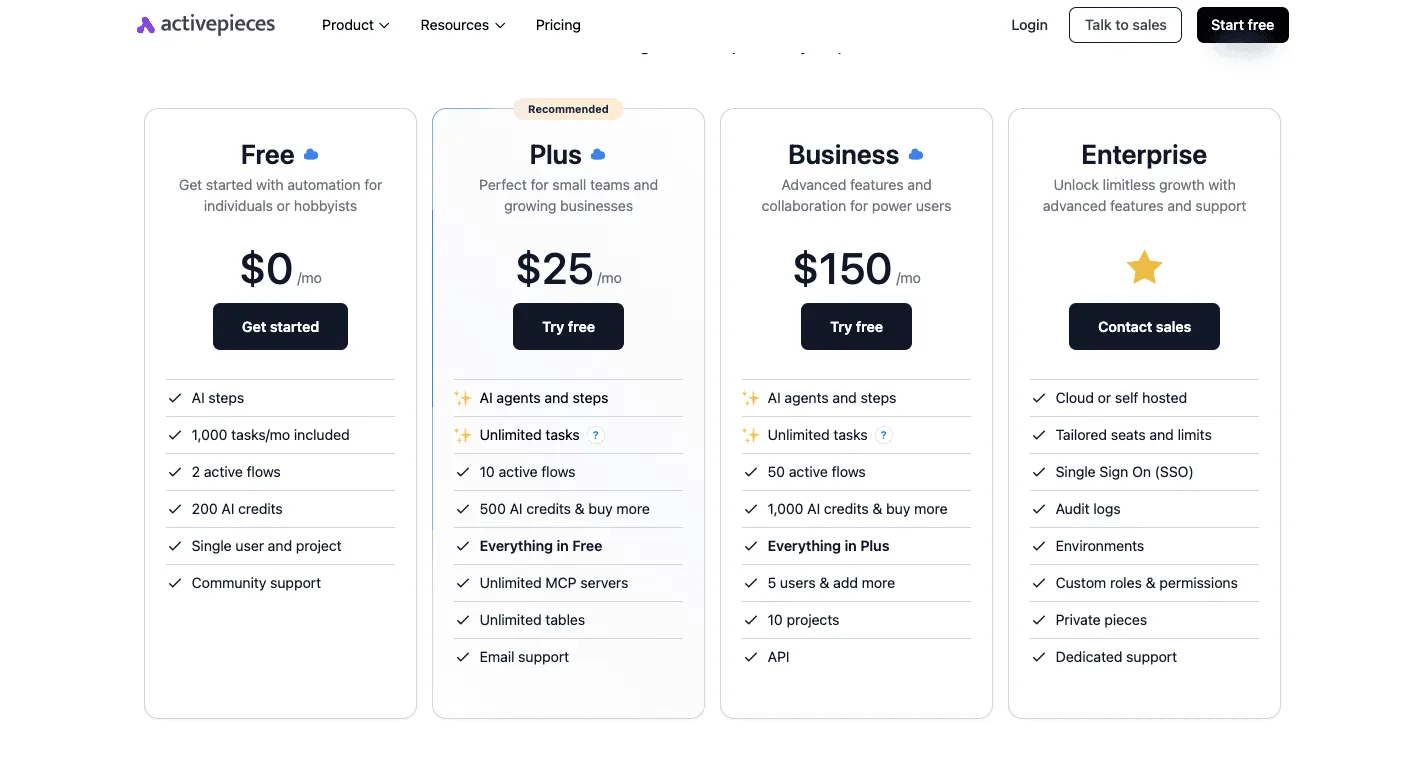
Automating model-routing based on task complexity
Activepieces reaches every model provider a company uses, including Qwen, and pushes the combined spend into the sheet finance already reads, a capability supported by its 738 integrations, which means the accounting team no longer needs to manually aggregate fragmented invoices from multiple AI vendors.
By using the Router integration, a flow control tool that directs data based on specific conditions, you can screen incoming prompts for complexity before they reach the API.
Real-time token usage alerts and budget caps
The platform serves as a financial circuit breaker that tracks the volume of data processed in every execution step.
Because Activepieces is an MIT-licensed platform that can be self-hosted, you can maintain full audit logs and run traces of every Qwen interaction within your own firewall.
When a project hits a specific percentage of its monthly budget, a threshold trigger sends an immediate notification to a Slack channel.
Integrating qwen with existing CRM and support workflows
Activepieces connects Qwen to business data sources through 738+ integrations, roughly 60% of which are built by the community, so users benefit from a vast ecosystem of crowd-sourced connectivity options.
Instead of writing custom middleware to handle authentication and data formatting, you drag these integrations into a sequence.
This direct integration means that Qwen can ingest a new lead’s details or a support ticket’s history and write a drafted response back into the CRM without you needing to maintain the underlying connection code.
Monday morning checklist for Qwen API budget management
Effective cost control for Qwen deployments requires a structured audit of DashScope, the primary API gateway for Alibaba’s models.
A weekly review prevents the death by a thousand pings that occurs when loops or recursive agent calls run unmonitored.
- Export DashScope usage logs to identify which specific API keys or sub-accounts are consuming the most resources.
- Compare actual vs. forecasted token burn to detect anomalies in prompt length or unexpected increases in output verbosity.
- Adjust Router logic for high-cost flows by shifting low-complexity tasks from flagship models to more efficient variants like Gemini 3.5 Flash-Lite.
- Rotate API keys for security to prevent unauthorized usage from abandoned testing environments or leaked scripts.

By verifying the token-to-value ratio every seven days, you can justify the continued use of Qwen over more expensive western alternatives.
Frequently asked questions about Qwen billing?
Managed through the Alibaba Cloud International console, Qwen billing decouples the underlying model costs from the regional financial regulations of the user. While the models themselves are highly efficient, the administrative overhead of managing a global cloud account introduces specific logistical requirements for non-domestic enterprises.
Does Qwen API support credit card payments from outside China?
International users must register through the Alibaba Cloud International portal, which accepts major credit cards like Visa and Mastercard. This ensures global businesses can bypass the local payment restrictions of the Chinese domestic market.
For teams outside of mainland China, using the international portal is the only way to access a standard USD-based billing cycle. This allows you to treat the service as a typical SaaS expense rather than a complex cross-border trade.
How does Qwen count tokens for non-English languages?
Qwen utilizes a dedicated multilingual tokenizer that assigns unique IDs to common character clusters in languages like Chinese, Japanese, and Korean. This prevents the token bloat often seen when Western models process non-Latin scripts.
Because a single character in these languages frequently maps to a single token, the effective cost per page of text is significantly lower than models optimized primarily for English. This replaces the multiple sub-tokens used by other models.

Are there discounts for high-volume enterprise commitments?
Direct volume discounts are restricted to users who commit to reserved capacity instances. This provides a predictable monthly cost in exchange for a fixed throughput limit.
For organizations that can't predict demand, the only way to lower unit costs is to move from the pay-as-you-go tier to a pre-paid resource package. Unused credits expire at the end of the term rather than rolling over.
What happens when i hit my Qwen API rate limits?
When you hit a limit, the API returns a 429 status code and immediately halts processing. Any agentic workflow without built-in retry logic will fail mid-execution.
Because rate limits are enforced at the account level rather than the API key level, a single runaway script in a testing environment can starve production applications of resources until the current minute or hour window resets.
Related reading
References
Running the numbers
See what the same workload costs here.
Free forever plan, and every paid plan self-hosts at no extra cost.
See pricing Talk to sales