
Managing Klaviyo Pricing Plans to Prevent Budget Overruns
Klaviyo pricing structures often lead to unexpected costs when active subscriber counts grow rapidly. Use these insights to forecast software expenses.

Covers GDPR-driven automation architecture for fintech: data residency rules, cross-border transfer limits, and how they dictate system design.
ContributorSeptember 28, 202614 min read
This article was researched and fact-checked by an advanced research system.
The marketing department initially viewed the migration as a straightforward operational upgrade, but the hidden costs of scaling their automation workflows quickly spiraled out of control.
As the team integrated various third-party tools, including a custom workflow built with Activepieces to sync lead data, they realized that Klaviyo's tiered pricing structure penalizes rapid list growth more aggressively than anticipated.
By mid-year, the volume of active profiles had surpassed their highest estimates, triggering automatic upgrades that exhausted their entire 2026 software budget in less than six months.
This financial oversight serves as a cautionary tale for high-growth e-commerce brands that fail to audit their data retention policies before committing to a premium email service provider.
Klaviyo pricing refers to a tiered subscription model based on the total number of active and suppressed profiles stored in an account, rather than just the volume of emails sent.
Klaviyo pricing plans: how one team blew their 2026 budget
When a single automated billing alert triggered on a Tuesday morning, it revealed a $14,500 overage invoice for one unsuspecting team. This alert signaled a total collapse of account hygiene protocols. It means your automated safeguards failed to prevent a massive, unexpected financial liability.
$14,500.00 is the "Total Due" shown on this specific invoice header, marked with a red "Payment Failed" stamp, so the company is now facing an immediate service interruption. It illustrates how a predictable monthly baseline can vanish in one billing cycle.
You're now facing immediate service disruption due to an unmanaged spike in costs. The failure demonstrates that without hard caps, Klaviyo’s linear pricing for "Active Profiles" converts technical debt directly into immediate corporate liability.
How a database sync error created 80,000 duplicate profiles
80,000 duplicate profiles flooded the account after a misconfigured webhook in a customer data platform went rogue. This error pushed your account into a pricing tier four times its intended size.
Because Klaviyo charges for every unique email address stored regardless of engagement, these duplicates were billed as premium assets rather than system noise.
Activepieces prevents these sync errors from inflating costs by billing strictly per flow run rather than per individual task or module.
This means a complex ten-step validation sequence costs the same single credit as a basic data transfer, allowing teams to build the granular defensive flows needed to protect the Klaviyo budget.

Because the run itself is the meter, builders can add as many data-cleansing steps as necessary without being penalized for writing robust code.
Activepieces charges 1 credit per flow run for any number of steps, avoiding the compounding costs of Zapier's per-task billing or Make's per-module billing during large-scale profile cleanups.
The immediate financial impact on the Q3 marketing budget
By the time the error was caught, the overage had instantly liquidated the remaining Q3 experimental budget. It forced a total freeze on new customer acquisition spend for the quarter.
The financial risk is highest in sectors where Klaviyo has deep market penetration. These businesses often lack the margin to absorb sudden five-figure spikes.
| Industry | Market Adoption Rate | Consequence of Failure |
|---|---|---|
| Fashion | 28% | High volume of seasonal churn makes duplicate detection critical for maintaining margins. |
| Home & Garden | 13% | Long purchase cycles mean inactive profiles linger longer, inflating the billable base. |
| Beauty | 11% | High replenishment rates often lead to fragmented data across multiple order IDs. |
| Food & Beverage | 9% | Low individual transaction values make a $14,500 overage impossible to recover through sales. |
| Health & Wellness | 6% | Strict compliance requirements often prevent the simple bulk-deletion of profile history. |
| Jewelry | 5% | High-value, low-frequency data makes every profile expensive to maintain over time. |
| Activepieces | — | — |
Prices and plan limits checked against klaviyo.com on September 28, 2026.
28% of the market is held by Fashion according to data from StoreInspect, indicating that nearly a third of the platform's user base operates within a single, highly seasonal industry, so the platform’s revenue is likely subject to extreme cyclical volatility.
This means nearly a third of all high-volume apparel brands are currently exposed to this specific billing vulnerability.
Home & Garden follows at 13%, while Beauty accounts for 11% of the user base.
Even in smaller segments like Food & Beverage at 9%, Health & Wellness at 6%, and Jewelry at 5%, the lack of automated tier caps means a single sync error can exceed the entire annual software allocation for a mid-market brand.

If you are running this arithmetic for your own team, see what the same workload costs on Activepieces.
The official Klaviyo 2026 pricing tier structure
Klaviyo’s 2026 pricing model is a rigid escalator. Costs increase automatically based on the total volume of active profiles, regardless of whether those profiles engage with your content.

This architecture ensures that any database growth (intentional or accidental) immediately triggers a higher billing bracket. Hygiene is a financial necessity rather than a best practice.
Klaviyo Free versus paid Email and CDP tiers
250 active profiles is the limit for the Klaviyo Free plan. It restricts you so that early-stage businesses can test automation without upfront overhead.
Hygiene is a financial necessity rather than a best practice.
This tier includes a monthly allocation of 500 emails and $5 of mobile messaging credits, these limits are a strict ceiling, meaning any activity beyond that point triggers immediate and costly penalty fees. Once breached, this ceiling requires an immediate transition to a paid contract.
Moving beyond standard email plans to the Klaviyo CDP (Customer Data Platform) tier is required if you need advanced data orchestration. It introduces specialized tools for predictive analytics and audience synthesis.
Calculating the customer data platform add-on cost
The Klaviyo CDP tier functions as a mandatory percentage-based multiplier on top of your existing email and SMS subscription costs.
It starts at a base rate of $20 per month for the smallest accounts, but quickly scales to a 20% premium on your total monthly profile bill, leaving growing businesses with unpredictable and rapidly compounding costs.
Specific technical triggers force the transition from standard plans to this premium tier. If you require real-time data transformation, such as reformatting raw JSON payloads into custom properties, or if you utilize predictive analytics for CLV forecasting, the CDP upgrade becomes mandatory.
The use of advanced audience synthesis, which merges disparate data streams into a single unified profile view, also triggers the 20% surcharge.
This means a failure to prune inactive users results in a double-billing penalty across both the messaging and data processing layers of the stack.
If your profile count doubles due to a sync error, your CDP surcharge doubles alongside your base messaging fee, compounding the financial damage instantly.
The strict relationship between profile counts and monthly send limits
A linear dependency exists between the number of profiles stored and the maximum number of monthly email sends permitted.
This structure means that as soon as a brand crosses a profile threshold, their monthly send limit is capped at a specific multiple of that audience size.
This prevents high-frequency sending to a bloated list without a corresponding tier upgrade.
| Plan Component | Metric Constraint | Operational Consequence |
|---|---|---|
| Active Profile Count | Hard Tier Ceiling | Exceeding the limit by a single contact triggers an automatic billing increase to the next bracket. |
| Monthly Send Limit | Multiplier of Profiles | Brands are prevented from high-volume daily blasting unless they pay for a tier that supports the total audience size. |
| SMS/MMS Credits | Usage-Based Drawdown | Mobile messaging costs scale independently of email, requiring separate budget management for multi-channel flows. |
To manage these constraints, you should utilize frontier-class models like Claude Opus 5.5 from Anthropic for long-running agentic knowledge work. Use these models for auditing these profile tiers against real-time billing data.
High-throughput enterprise workflows require the intelligence provided by Gemini 3.8 Flash from Google. This allows you to automate the identification of profiles that no longer meet the engagement criteria defined by the current pricing tier.
The platform doesn't distinguish between a high-value purchaser and a defunct email address when calculating the monthly invoice. Without these automated checks, the relationship between profile growth and send limits becomes a liability.
The hidden multipliers inflating standard Klaviyo bills
Every profile in the active database is treated as a billable unit regardless of its engagement status or delivery potential.
This lack of differentiation means that a profile that hasn't opened an email in three years carries the same monthly overhead as a recurring VIP purchaser. This directly erodes the return on investment of your entire marketing stack.
Every profile in the active database is treated as a billable unit regardless of its engagement status or delivery potential.
Why inactive and unengaged profiles cost the same as active buyers
Total volume of reachable profiles, rather than the number of messages actually delivered, determines your monthly subscription costs.
Because the platform calculates tiers based on the "Active Profile" count (defined as any contact not explicitly suppressed or bounced) a failure to prune unengaged users results in paying a premium for data that provides no commercial value.
The following table illustrates the steep escalation in monthly commitments as profile counts cross specific thresholds, demonstrating how a lack of hygiene leads to immediate price jumps.
| Active Profiles | Monthly Cost (Email Only) |
|---|---|
| 5,001–10,000 profiles | $150 |
| 15,001–20,000 profiles | $350 |
| 50,000 profiles | $720 |
Crossing these thresholds by even a single profile triggers the higher rate. Automated suppression is essential for maintaining budget predictability.
To manage these transitions without manual oversight, deploy Claude Opus 5.5 (a long-running agentic model) to script complex lifecycle deletions. These scripts identify and remove profiles based on lack of activity before the next billing cycle begins.
The hidden math behind SMS credits and MMS carrier fees
SMS expenses scale independently of email tiers. They are subject to multi-part message billing that can triple the cost of a single outbound notification. Each message is billed in credits based on character counts and media attachments:
- Standard SMS messages are limited to a specific character count, beyond which they are billed as multiple credits.
- MMS messages, which include images or GIFs, require more credits per send than plain text.
- Carrier fees are pass-through charges levied by telecommunications providers that Klaviyo collects but doesn't control.
Administrative overhead can exhaust a monthly credit allotment before a single promotional campaign is sent. Because double-opt-in workflows require a confirmation message for every new subscriber, a high-traffic site is particularly vulnerable.

If you utilize GPT-6 Sol, a model designed for complex agentic workflows, you can automate the monitoring of these credit balances against real-time acquisition rates to prevent mid-month service interruptions or unexpected overage charges.
Worth checking against a plan that does not meter every step: one credit covers a whole run on Activepieces.
How Activepieces automates profile management to control Klaviyo costs
Activepieces, an open-source automation engine that connects disparate software services, is a programmable firewall between lead generation sources and the Klaviyo marketing platform.
By intercepting data packets before they reach the primary marketing database, it ensures that only high-intent, compliant records contribute to the billing tier.
Filtering unengaged leads before they sync to Klaviyo
Indiscriminate ingestion of new leads is prevented by routing all incoming webhooks through an Activepieces validation gate. Instead of allowing a direct integration from a lead source to Klaviyo, the automation engine evaluates each record against predefined engagement signals.
These signals include double opt-in verification or domain blacklists. This pre-processing layer ensures that bot submissions and disposable email addresses never occupy a paid seat in the marketing platform.
This prevents your account from crossing into a higher pricing bracket for non-functional data. You can use Gemini 3.8 Flash, a high-intelligence model for enterprise workflows, to analyze the qualitative content of form submissions in real-time, flagging gibberish or low-intent entries for immediate rejection.

Automating offboarding workflows for inactive subscribers
Lifecycle management of existing contacts is handled by triggering suppression workflows based on inactivity triggers documented in the CRM.
When a profile meets the criteria for sunsetting, such as a lack of click-through activity over a specific duration, Activepieces executes a sequence to move that profile from the "Active" list to a suppression list.
Moving a contact to suppressed status immediately removes them from the billable count while preserving their historical data for compliance audits. This movement is critical because Klaviyo bills based on the number of active profiles.

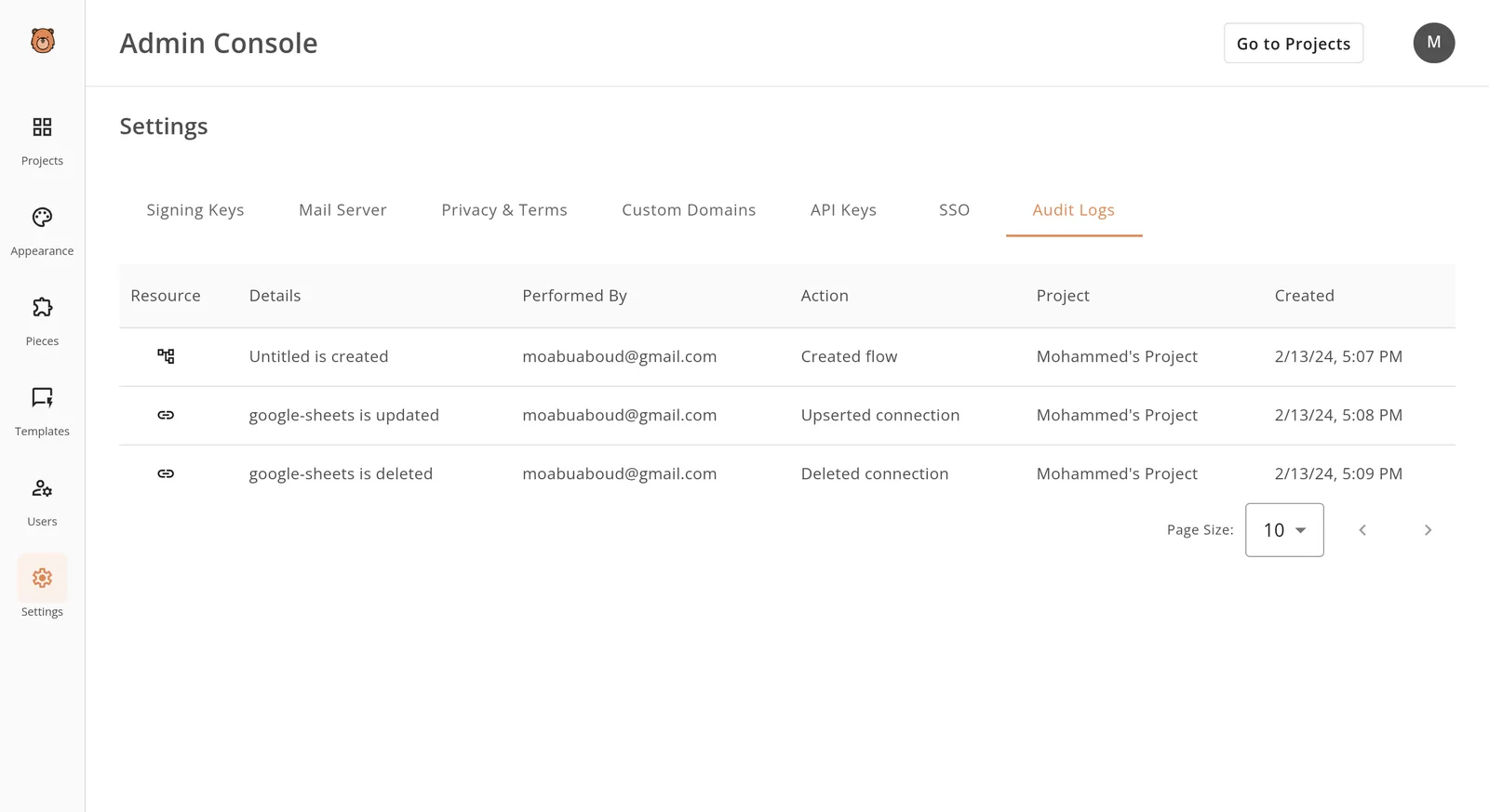
Activepieces moves data between platforms while maintaining the same enterprise security features (SSO, SCIM, custom RBAC, and audit logs) in its air-gapped build as it does in the managed cloud.
The Klaviyo Suppression List is the storage area for inactive contacts that doesn't count toward the monthly subscription limit.
Regulated and public-sector organisations run the air-gapped edition of Activepieces in production today to ensure these data movements remain under maximum control.
Compare the enterprise feature list (SSO, SCIM, custom RBAC, audit logs, and release management) in the self-hosted air-gapped docs against the managed cloud; it is the same list either way, ensuring that security protocols for profile hygiene are never compromised by the hosting environment.
Gemini 3.8 Flash is the reasoning engine used to determine if a subscriber’s recent behavior indicates a permanent loss of interest or a seasonal lull.
By utilizing these tools, you maintain a lean database where every stored contact represents a genuine opportunity for conversion, rather than a liability on the monthly invoice.
Setting data governance rules to cap marketing spend
Runaway billing is prevented by hard-coded API constraints and mandatory weekly sanitization protocols. You must treat unengaged profiles as immediate compliance liabilities.
Setting hard caps on automatic Klaviyo tier upgrades
Enforcing financial predictability across enterprise systems demands an architectural barrier between database growth and billing authorization. Under Article 25 of the General Data Protection Regulation regarding data protection by design, you must limit processing to the absolute minimum necessary for the specified purpose.
To align with this legal standard, your system architecture should route all ingestion webhooks through an intermediary validation layer. This layer evaluates account size before permitting data synchronization.
The integration interface displays the single-step compliance gate that monitors external triggers before they can inject unverified contacts into the primary marketing database.
By decoupling data collection from automated billing escalation, your engineering team shifts the operational risk from an unpredictable invoice to a controlled queue.
This automated barrier intercepts incoming payloads, cross-references the current contact volume against the approved budgetary threshold, and drops additional records if the account risks an unauthorized tier advancement.
The Monday morning profile hygiene checklist for the ops team
Maintaining a compliant, cost-effective database requires a structured operational routine performed at the start of every operational cycle. Your operations team should execute a mandatory sequence to purge obsolete data and verify that geographic storage boundaries comply with cross-border data transfer limitations.
When the week begins, identify and flag profiles that have failed to register an email open or click event within the designated retention window to isolate dormant records.
Second, export and archive the identified inactive contacts to a secure, cold-storage database located within the regional jurisdiction to maintain compliance with local data residency laws.
Third, suppress the archived profiles within the active marketing platform to immediately halt their impact on the billing tier calculation.
Fourth, audit the webhook failure logs to identify any systemic integration errors that caused duplicate profile creation during the previous week. Finally, sign off on the weekly data governance ledger to create an auditable paper trail for internal risk management reviews.
Unexpected overages become impossible when this systematic verification ensures that your marketing platform remains restricted to active engagement opportunities.
Frequently asked questions
An immediate block on all outgoing campaigns and automated flows is triggered if you exceed the allocated monthly message allowance, unless you manually upgrade to a higher tier.
Related reading
References
Running the numbers
See what the same workload costs here.
Free forever plan, and every paid plan self-hosts at no extra cost.
See pricing Talk to sales