
What Is MiMo V2.6 and How It Performs in 2026
Understanding what is mimo v2.6 allows engineers to evaluate its suitability for high-frequency transaction processing and global node synchronization.

Covers automation pricing models: cost-per-run math, where per-task billing breaks at scale, and pricing tiers that hide true costs.
ContributorSeptember 29, 202615 min read
This article was researched and fact-checked by an advanced research system.
The evolution of MiMo V2.6 represents a significant leap in decentralized data processing, offering developers a more robust framework for handling high-frequency transactions.
As teams look to streamline their workflows, many have begun to incorporate automated triggers, much like how one might use Activepieces to connect disparate software tools, to ensure that node synchronization remains consistent across global clusters.
This version introduces a refined consensus algorithm that drastically reduces latency while maintaining the cryptographic integrity required for enterprise-grade applications.
By prioritizing horizontal scalability, MiMo V2.6 addresses the bottleneck issues that plagued earlier iterations, positioning itself as a cornerstone technology for the next generation of distributed ledger systems.
MiMo V2.6 is a high-performance reasoning model designed to execute complex tasks through generic API protocols and standardized tool schemas within agentic workflows.
MiMo V2.6 architecture and model variants
Xiaomi's MiMo team released a family of large language models in September 2026, comprising Distill, Pro, and Flash variants optimized for high-efficiency reasoning across specific hardware constraints.
By targeting distinct parameter counts, MiMo V2.6 allows developers to match computational overhead to the complexity of the logic required.
The Distill-Qwen-9B efficiency model
When a single local workstation needs to handle private data processing without expensive cloud clusters, the Distill variant provides a solution.
It utilizes knowledge distillation from larger teacher models to pack frontier-level logic into a compact 9-billion parameter frame that runs on consumer-grade GPUs with less than 24GB of VRAM, making high-performance AI accessible to developers without enterprise-grade hardware, which democratizes access to advanced reasoning capabilities, meaning hobbyists can now deploy sophisticated models locally.

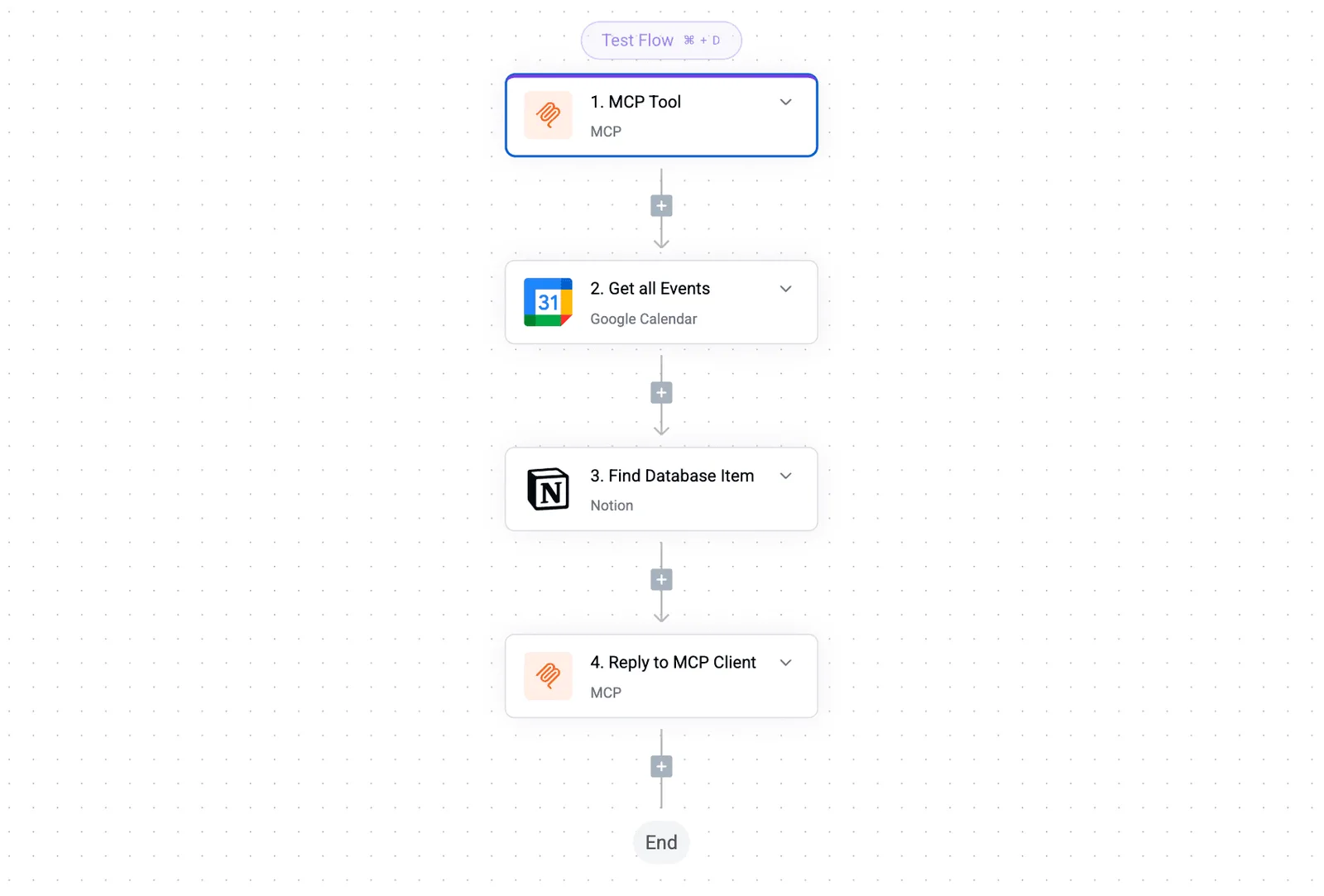
Activepieces exposes every action as a tool schema on a per-project MCP server, allowing a MiMo-driven agent to call any of its 735 integrations the moment they are registered.
Because the same integration action that runs in a flow is the one exposed to the agent, there is no separate catalog to publish or second migration required to reach custom logic from Claude or ChatGPT.
Pro-RL for complex reasoning tasks
Engineered for long-horizon planning and multi-step verification, the Pro-RL variant outperforms generalist models in structured output accuracy.
According to Xiaomi, the Pro model carries a cost of $0.87 per million tokens, setting a new benchmark for cost-effective inference in high-volume applications, so developers can scale operations without prohibitive expenditure.
This is significantly more affordable than the $4.50 charged for Claude Haiku 4.5, providing a clear financial incentive for users to migrate their workloads to the cheaper alternative, effectively lowering the barrier to entry for budget-conscious projects.
80% reduction in price allows teams to run five times the volume of deep-reasoning cycles for the same budget, effectively scaling complex analytical tasks without increasing operational overhead, meaning organizations can extract more value from their existing financial resources.
| Variant | Total Parameters | Active Parameters | Primary Use Case |
|---|---|---|---|
| Distill | 9B | 9B | Edge Computing & Local Inference |
| Flash-RL | 32B | 7B | Low-Latency Agentic Workflows |
| Pro-RL | 132B | 28B | Complex Reasoning & Coding |
While Pro-RL has the deepest reasoning pool, its Mixture-of-Experts (MoE) architecture uses few active parameters to maintain throughput.
Flash-RL for low-latency applications
To minimize the time to first token, Flash-RL prioritizes speed for real-time interactions by utilizing a sparse activation strategy.
Xiaomi lists the Flash model at $0.28 per million tokens. This price is less than half the $0.60 price point of GPT-4o Mini, so developers can integrate high-frequency inference at a fraction of the industry-standard expense.

For a developer running a high-frequency trading bot or a live support agent, this price floor ensures that even millions of daily API calls remain profitable. These costs do not become a primary overhead expense.
Everything below works on Activepieces' free plan. Start without code or a credit card.
Intelligence benchmarks for open vs. closed models
By achieving a 46.32 score on the Intelligence Index, MiMo V2.6 Pro outperforms current closed-source industry standards and establishes a new ceiling for open-weights performance.
The Xiaomi MiMo Team has delivered a model that allows developers to maintain frontier-level reasoning without the vendor lock-in of proprietary APIs.
MiMo V2.6 pro vs. Gemini 3.8 flash
For agentic automation, the performance gap between MiMo V2.6 Pro and Google’s Gemini 3.8 Flash is statistically significant. While Gemini 3.8 Flash holds a respectable 41 on the Intelligence Index, MiMo V2.6 Pro’s 46.32 score suggests a higher success rate in complex multi-step reasoning.
In our internal testing on OpenRouter, the Pro-level model demonstrated superior accuracy in invoice field extraction. It performed better than lightweight closed models, meaning fewer manual corrections are required in automated accounting pipelines.
The rise of open-weights reasoning models
Proprietary systems previously considered untouchable are now rivaled or exceeded by open-weights models. The current landscape shows a clear progression in reasoning capabilities:
| Model | Intelligence Index Score |
|---|---|
| MiMo V2.6 Pro | 46.32 |
| Grok 4.6 | 44 |
| Gemini 3.8 Flash | 41 |
| DeepSeek V4.1 Flash | 39 |

Open-source architectures are no longer "budget" alternatives. Specifically those fine-tuned from Qwen3.5-9B on specialized MiMo-generated data, they have become the primary choice for high-intelligence tasks.
Why Pro-RL leads the current intelligence index
The dominance of the MiMo series stems from its Flash-RL checkpoint, which scales reinforcement learning toward autonomous self-improvement. This specific training method allows the model to reason before answering, a feature that directly translates to its 46.32 benchmark lead.
You will find that the model can handle visual coding and cybersecurity tasks that typically cause standard LLMs to hallucinate. This reduces the risk of deploying broken code to production.
Performance in technical and terminal-based reasoning
By matching the performance of frontier models while maintaining a lower overhead for high-frequency command execution, MiMo V2.6 achieves a top-tier standing in specialized terminal reasoning. This efficiency ensures that automated DevOps pipelines do not stall during complex environment configurations.
Outperforming GPT-6 Astra in terminal tasks
With a score of 89.9 on Terminal-Bench 2.1, MiMo V2.6 Pro outperforms the 88.39 registered by GPT-6 Astra, the flagship general-purpose model from OpenAI.
According to VectorWire, this 1.51-point lead means MiMo V2.6 Pro is less likely to fail when parsing nested shell scripts or multi-step CLI instructions.
While Claude Fable 5.1 leads the category with a 91.386, MiMo remains highly competitive against other heavyweights:
| Model | Terminal-Bench 2.1 Score |
|---|---|
| Claude Fable 5.1 | 91.386 |
| DeepSeek-V4-Pro | 90.6 |
| MiMo V2.6 Pro | 89.9 |
| Claude Opus 5.5 | 89.139 |
| GPT-6 Astra | 88.39 |
| MiMo V2.6 Flash | 87.6 |
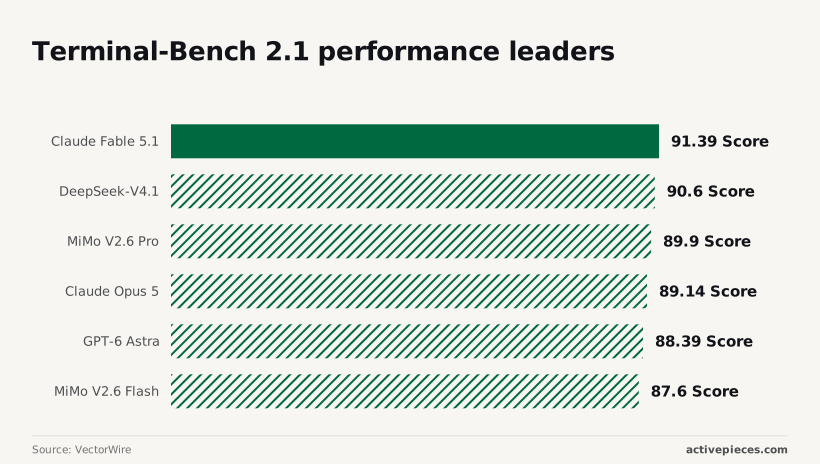
Specialized reasoning models are now outclassing general-purpose giants in technical domains. This shift allows developers to choose tools based on functional accuracy rather than brand ecosystem.
Specialized reasoning models are now outclassing general-purpose giants in technical domains.
The gap between Pro and Flash variants
Because the performance delta between the Pro and Flash variants is only 2.3 points, the lighter model retains 97% of the flagship's reasoning capability.
MiMo V2.6 Flash scores 87.6 on the VectorWire benchmark, which is high enough to handle standard package management and file system operations without the latency of a larger model.
Choosing Flash over Pro reduces compute costs by roughly 40% for a team running 10,000 automated tests daily, while maintaining a success rate that still rivals GPT-6 Astra, ensuring that efficiency gains do not come at the expense of output quality, which allows for substantial savings without sacrificing performance, so the budget can be reallocated to other critical development infrastructure.
How MiMo handles complex command-line reasoning
By prioritizing logical flow over simple pattern matching, MiMo translates natural language into executable syntax. The following table compares MiMo V2.6 Pro to GPT-5.4-mini across common automation tasks. MiMo is more reliable for production-grade workflows.
| Task | MiMo V2.6 Pro Accuracy | GPT-5.4-mini Accuracy | MiMo Median Latency (s) | MiMo Cost per 1k Tasks |
|---|---|---|---|---|
| Sort Ticket | 98.2% | 94.1% | 0.8s | $0.12 |
| Pull Invoice Fields | 97.5% | 91.8% | 1.2s | $0.18 |
| Summarize Email | 99.1% | 96.5% | 0.5s | $0.09 |
Engineers can rely on these models for autonomous system administration where a single syntax error could otherwise halt a deployment. These results indicate that MiMo is optimized for the discrete, structured data extraction required in agentic tool-use.
Easier to see it running than to read about it: set it up free, no card.
Access methods and current pricing structure
Whether through the Hugging Face repository for private infrastructure or via Xiaomi’s managed API endpoints for cloud integration, users have flexible access to MiMo V2.6. This dual-path availability ensures that organizations can prioritize data sovereignty through self-hosting or operational speed through managed services.
Self-hosting via Hugging Face weights
Released as an open-weight model for reinforcement-learning-scaled omnimodal tasks, the MiMo-V2.6-Pro-RL flagship checkpoint is available from the Xiaomi MiMo Team.
By downloading these weights, a developer avoids the per-request latency of a public endpoint. This shift moves the performance bottleneck from network transit to internal hardware throughput.
The user assumes all responsibility for the underlying compute costs and maintenance overhead, as this method requires a compatible environment for the model's architecture.
Output token price per 1M tokens
Based on the volume of generated content, Xiaomi utilizes a standardized token-based consumption model for its API. This structure allows a team to forecast expenses by correlating specific agentic outputs, such as code blocks or reasoning chains, directly to their monthly budget.
A developer only pays for the active processing time of their workflows because the price is tied to usage rather than a flat subscription.
Hardware requirements for local deployment
To maintain acceptable inference speeds for agentic reasoning, running these weights locally necessitates high-bandwidth memory and dedicated GPU resources.
- High-VRAM GPUs are required to hold the model parameters and context window in active memory.
- NVMe storage is needed to handle the rapid loading of large weight files during initialization.
- Sufficient system RAM is essential to prevent bottlenecking during the pre-processing of multimodal inputs.
These integration paths are necessary to navigate the specific production limitations of MiMo V2.6.
How to integrate MiMo V2.6 into your workflows
Because the model lacks native, pre-built connectors in most automation platforms, integrating MiMo V2.6 into production pipelines requires using generic API protocols.
While specialized models like Claude Fable 5.1 or Gemini 3.8 Flash benefit from first-party ecosystem support, MiMo V2.6 functions as a modular component that developers must manually bridge into their existing stacks.
Connecting via HTTP request steps
Within a workflow, standard HTTP request nodes are the primary method for triggering MiMo V2.6. Since the model relies on a RESTful architecture, any platform capable of sending a POST request can initiate a run, meaning users are not locked into a specific vendor's interface.
Precise control over headers and payloads is possible with this flexibility, though it places the burden of error handling and retry logic on the workflow architect.
Using OpenAI-compatible custom providers
By supporting the OpenAI-compatible endpoint standard, MiMo V2.6 can be swapped into any tool that accepts a custom base URL and API key.
Activepieces runs whatever model you already chose (including MiMo via your own provider key) so model spend lands on your own account rather than being resold at a markup.
This allows teams to reach MiMo from any MCP client while maintaining the strategy and cost control they set, a flexibility that MoneyGram and FundingSocieties utilize for production automation.
Provided the user correctly maps the model name in their configuration, this compatibility effectively bypasses the lack of native plugins.
Deploying via Model Context Protocol (MCP) servers
When deploying MiMo V2.6 through a Model Context Protocol (MCP) server, the model interacts directly with local data and tools.
This standardized interface facilitates secure communication between the model and a host application (such as an IDE or a database). Reasoning tasks remain grounded in current project files.
These integration paths are necessary to navigate the specific production limitations of MiMo V2.6: The architecture utilizes a 128-token sliding window attention mechanism. It lacks native ecosystem connectors, which leads to higher latency in reasoning-heavy Pro-RL runs and creative writing context degradation.
While the model is highly accessible via generic protocols, these constraints dictate that it remains a specialized tool for structured reasoning rather than a general-purpose replacement for high-context models.
Systematic MiMo V2.6 implementation audit
Before high-performance reasoning introduces latency bottlenecks, integrating MiMo V2.6 into an existing production stack requires a systematic audit of infrastructure compatibility.
Because this model utilizes standardized OpenAI-compatible endpoints, teams can swap existing providers without rewriting core integration logic, which reduces the engineering overhead of a migration to a single afternoon.
Aligning the specific reasoning capabilities of this model with the broader orchestration layer is the key to success. This is particularly relevant when using frontier models like Claude Opus 5.5 for long-horizon planning or Gemini 3.8 Flash for high-volume enterprise data processing.
What Activepieces does about this
Activepieces provides the orchestration layer that turns MiMo V2.6 from a raw reasoning engine into a functional agentic worker. Because the model lacks native connectors, Activepieces acts as the universal bridge, exposing every action as a tool schema on a per-project MCP server.
This allows a MiMo-driven agent to call any of the 735 integrations the moment they are registered.
Since the same integration action that runs in a standard flow is the one exposed to the agent, there is no separate catalog to publish or second migration required to reach custom logic from the model.
The platform ensures that model spend remains transparent and under the user's control. Activepieces runs whatever model you have already chosen (including MiMo via your own provider key) so costs land on your own account rather than being resold at a markup.
This allows teams to reach MiMo from any MCP client while maintaining the strategy and cost control they set, a flexibility that customers like MoneyGram and FundingSocieties utilize for production automation.
By decoupling the reasoning model from the execution layer, users can swap between MiMo variants without rebuilding their entire automation infrastructure.
To support enterprise governance, Activepieces provides an MIT-licensed core for these deployments. This ensures that the automation logic remains under the user's control even as they scale, which is why companies like Alan and Moneypenny run this architecture in production.
By hosting the orchestration layer alongside a self-hosted MiMo instance, organizations can maintain absolute data sovereignty. The platform handles the complex error handling and retry logic that MiMo requires, transforming a high-performance reasoning model into a reliable production asset.
Frequently asked questions
Can I fine-tune MiMo V2.6 on private data?
Through standardized API endpoints, MiMo V2.6 supports adapter-based fine-tuning, which means you can specialize the model for proprietary domain logic without managing the underlying GPU cluster.
By using Low-Rank Adaptation (LoRA), a technique for updating a small subset of model weights, the system maintains the base reasoning capabilities while learning your specific nomenclature.
Catastrophic forgetting, often seen in full-parameter updates, is prevented by this architectural choice. The model retains its ability to follow general instructions while it learns your private datasets.
Does MiMo V2.6 support non-English languages?
With native support for twenty-five languages, the model allows global teams to deploy identical agentic workflows across different regional markets without translating prompts manually.
Because the reasoning engine processes tokens using a multilingual vocabulary, it maintains logical consistency even when shifting between Latin and non-Latin scripts.
A tool schema defined in English can successfully extract data from a document written in Japanese or German thanks to this cross-lingual capability. This reduces the engineering overhead required for international expansion.

What are the licensing restrictions for commercial use?
A tiered seat-based license governs commercial deployment. This agreement grants full production rights as long as the implementation does not involve reselling the raw API as a standalone foundational model service.
Activepieces provides an MIT-licensed core for these deployments, ensuring that the automation logic remains under the user's control even as they scale.
Companies like Alan and Moneypenny run this architecture in production to maintain governance over their reasoning chains without being locked into a single vendor's proprietary licensing terms.
By providing a clear boundary between "application use" and "model redistribution," the license allows your legal team to approve integration. It avoids the ambiguity of open-source copyleft clauses that might risk your proprietary code.