MiniCPM-V 4.7: 35B-A3B and 1B Models Compared

Oct 15, 202610 min read
MiniCPM-V 4.7 is OpenBMB's latest vision-language model, published on Hugging Face in two sizes: a 35B-A3B and a 1B. Both repos are open, so you can host either one behind an endpoint that a workflow tool such as Activepieces calls.
MiniCPM-V 4.7 is a vision-language model from OpenBMB, released with open weights in 35B-A3B and 1B sizes, that accepts images alongside text and returns text, so teams can run it on their own hardware and call it from automated workflows.
What OpenBMB released with MiniCPM-V 4.7
The two models published
Since both models handle single images, several images and video, the choice between them comes down to size and architecture, not input type.
On parameter count, the 35B-A3B (openbmb/MiniCPM-V-4.7-35B-A3B) has 35 billion and is a MoE. The 1B (openbmb/MiniCPM-V-4.7-1B) is listed at 1 billion parameters and isn't described as MoE.
Open the 35B-A3B card and it calls the model the first open-source MoE model to run smoothly on-device without compromising performance. The 1B card lists only the dense-style size. According to OpenBMB, earlier releases ran:
- V2.6 ran at 8 billion parameters
- V4.0 ran at 4.1 billion parameters
- V4.5 ran at 8 billion parameters
- V4.6 ran at 1 billion parameters
Plan hosting memory around the total count, not the "A3B" label.
I read OpenBMB's own Hugging Face model cards and its V4.7 cookbook overview on 2026-10-15, and every claim here comes from them. No benchmark or speed result has been run independently, so treat anything beyond these listings as unverified.
The fastest way to settle a shortlist is to try one. Activepieces is free to try, no credit card.
What self-hosted models mean for automation teams
Why self-hosting MiniCPM-V 4.7 keeps documents private
Host the model yourself and document images stay inside your own boundary. A hosted vision API can't do that, because every call sends the file to someone else's servers.
That's the whole argument, and it rests on what OpenBMB states: MiniCPM-V 4.7 is an open release, so the weights are something you can run on hardware you control.
What a typical workflow step sends out
Think about what a typical workflow step does. An invoice, a scanned form, or a screenshot arrives, a step reads it, and the extracted fields go on to the next app.
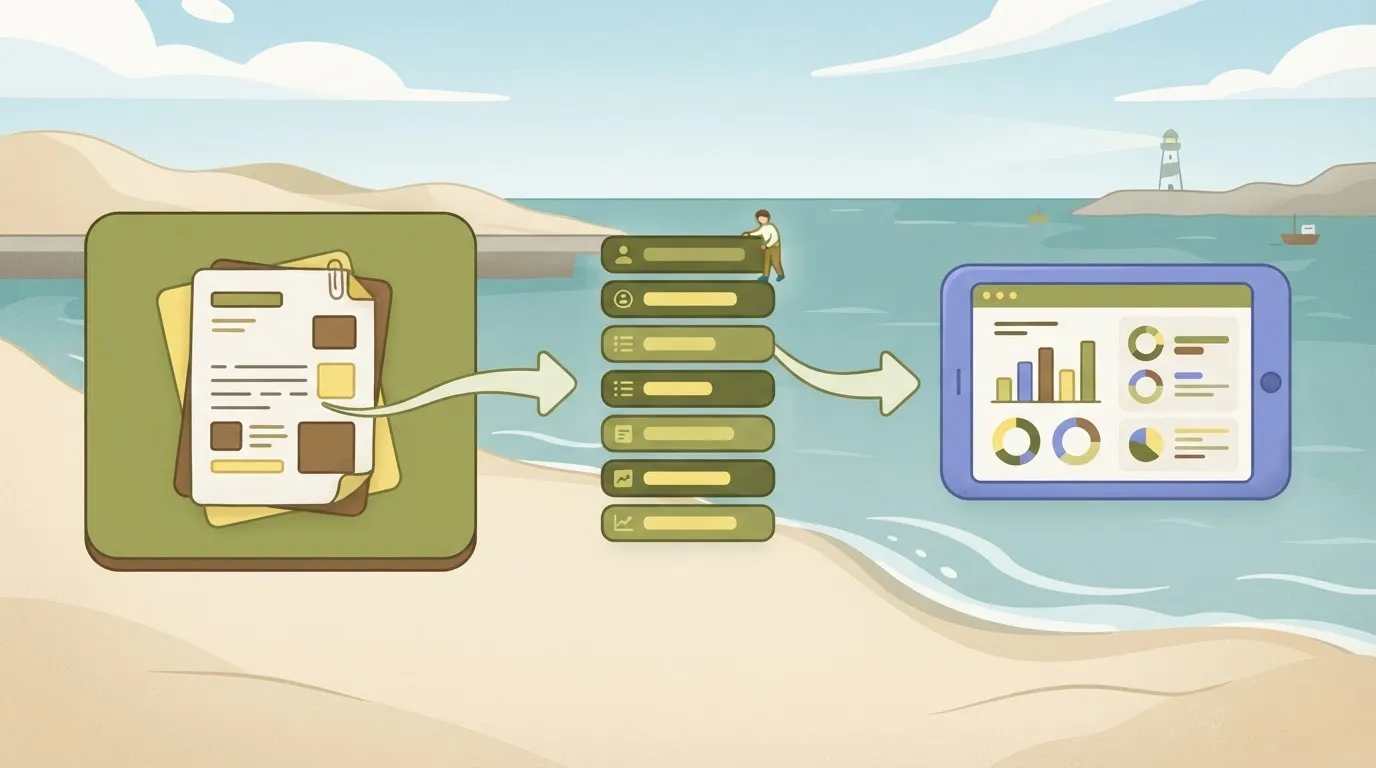
With an external vision API, that image leaves your network at the read step. For contracts, patient paperwork, or customer IDs, that single hop is often what stops the project before anyone looks at accuracy.
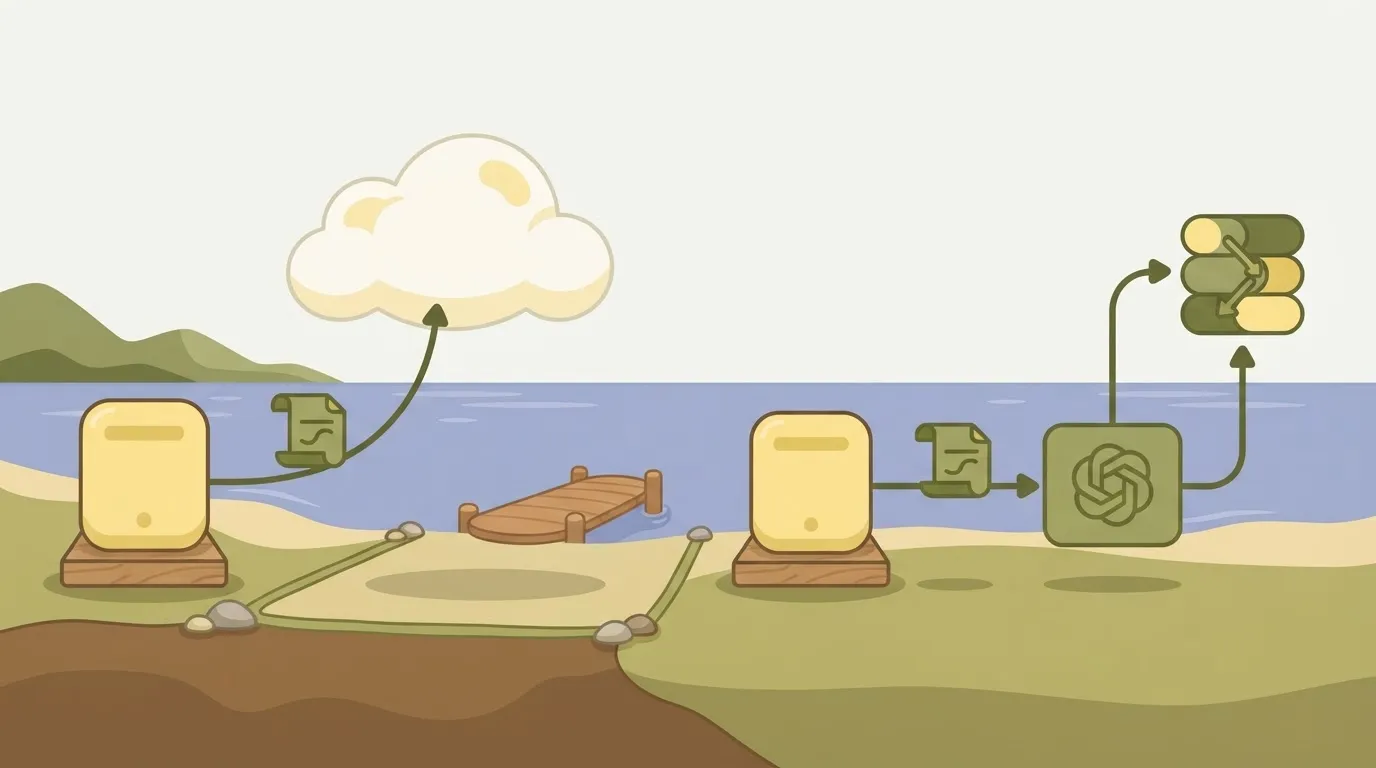
In the illustration below, the left path sends the image from a company server to an external cloud. On the right, the image goes to a model inside the company boundary and then straight to the workflow tool.
Look at where the image stops: on the right, it never crosses the boundary.
What a self-hosted MiniCPM-V 4.7 endpoint can call
Once you host the model, what a step can call changes too. Your own endpoint is something a workflow can reach with an ordinary HTTP request, on an address you choose.
What the maker's pages don't settle is the serving setup, hardware needs, or licence terms for commercial use, so read those before you quote the job.
What OpenBMB changed in MiniCPM-V 4.7
On the maker's list there are four changes, and each one bears on what you'll have to host and pay for, which the pages leave open. All of these claims come from OpenBMB's model page:
- The first mixture-of-experts model in the series, the 35B-A3B
- Image, multi-image and video understanding
- Intra-ViT early compression
- Mixed 4x/16x token compression
35B-A3B versus 1B, side by side
These are OpenBMB's figures, not ours. Next, the 35B-A3B alone across more tests.
On the maker's second table, the 35B-A3B has more scores. Its lowest score here is MMStar, so check it against your own documents.
To fetch the weights, go to OpenBMB's pages, where they are listed. No price appears there.
You can't yet quote a per-call cost, because OpenBMB states no pricing, and its only speed claim is 13+ tokens/s on an iPhone 17 Pro Max.
How to connect MiniCPM-V 4.7 in an Activepieces workflow today
There's no shortcut on the Activepieces side either. Its repository and catalog list nothing specific to MiniCPM-V 4.7 as of 2026-10-15, so you reach the model through a general step.
We haven't run any of this, and every route below follows from the maker's description of an open model you host yourself.
Keeping a vision model inside your boundary usually means accepting a cut-down build of whatever sits around it, but Activepieces doesn't sell that smaller product: its air-gapped edition ships audit logs, SSO, SCIM, custom RBAC, secret manager integration and release management exactly as the managed cloud does on its EU or US regions with SOC 2 Type II, and regulated and public-sector organisations run it in production today.
From simplest to most involved, the sequence below runs in order, and each stage depends on the one before it.
Host the model on your own endpoint first, then point an HTTP request step at it. You send the image and prompt in the body and read the reply from the response.

The HTTP route is the least dependent, since it needs no provider setup, but you write the request shape yourself and must match whatever your serving software expects.
If your serving software exposes an OpenAI-style interface, an AI step can use it as a custom provider. That saves hand-built requests and keeps the model swappable later. Whether image inputs pass through cleanly is exactly what needs testing.
Option 3: an MCP server
Wrap the endpoint in an MCP server (a standard way to expose tools to agents) when an agent step should decide when to look at an image. It's the most work, so choose it last.
Whichever route you take, map the output fields to the apps you already use, such as a spreadsheet row or a ticket, and check each mapping against a real response.
Reading a table only gets you so far. Build the same workflow in Activepieces and compare it yourself.
What MiniCPM-V 4.7 changes for cost and speed
If you self-host, per-call fees give way to hardware you supply, and the maker publishes only one speed figure, so the cost case is clear while the speed case is still open.
That trade only matters once the output fields are mapped and tested, because every extra test run now costs you either a metered call or your own machine's time.
Read the "not stated" cells as work you do before quoting a job; the table below shows what each route leaves you paying for and what the maker has stated.
| Self-hosted MiniCPM-V 4.7 | Hosted API | |
|---|---|---|
| Weights | Downloadable from OpenBMB | Held by the provider |
| Per-call fees | None from the maker | Charged by the provider |
| Hardware | You supply it | The provider supplies it |
| Hosting | You run and maintain it | Provider-run |
| Speed | 13+ tokens/s on iPhone 17 Pro Max | Not stated |
| Our benchmark | Not measured by us | Not measured by us |
Prices and plan limits checked against huggingface.co and huggingface.co and huggingface.co on October 15, 2026.
Nothing in that table says which route is cheaper per task, and we won't pretend otherwise.
What self-hosting MiniCPM-V 4.7 costs in hardware
No per-call fee comes from the maker, because the weights are free to download. The bill moves to the machine you run it on, plus whoever keeps it patched and online.
Choose a hosted API and that reverses: no hardware to buy, but a fee on every call. Which one wins depends on your volume, and the maker gives no per-task cost to settle it.
On speed, the maker has stated no figures that we can cite, and we haven't measured any.
Because speed on your own hardware depends on that hardware, a published number from someone else's machine wouldn't transfer anyway. Time a real request from your workflow before you commit a trigger to it.

What to monitor with MiniCPM-V 4.7
Watch three dated things: edits to each model card, whether community runtimes list your chosen size, and whether your own timed request holds up. Check them in that order, because a runtime that can't load your size makes the other two moot.
Two sizes came out, and each has its own model card. Read the card for the size you plan to host, not the family page, since the update date and the stated runtime support can differ between the two.
When a card is edited after launch, the maker is still changing what it claims, so note the date before you build anything on it.
Sources and check dates for MiniCPM-V 4.7 claims
No one has run independent tests on this model yet, so everything here rests on what OpenBMB states. Treat accuracy claims as the maker's, not as results. Record the date you read each card, and read it again before you promote anything past a trial.
For Monday, pick one low-risk image workflow and run this:
- Pick the workflow, such as sorting incoming receipts or tagging product photos, where a wrong answer costs a retry, not a refund.
- Note the model card dates for your chosen size.
- Confirm a runtime that supports that size.
- Stand up a test endpoint.
- Run 20 sample files through it with one HTTP step.
- Compare the outputs by hand against what a person would have decided.
If step three fails, stop there and recheck the card next week.
What people ask about MiniCPM-V 4.7
Is MiniCPM-V 4.7 free to use? The release is open, so you can download the weights without paying OpenBMB.
Whether your use is permitted, commercial use in particular, depends on the licence on the maker's model card. Read that before you build anything a client will rely on, because we haven't summarised its terms here.
Does Activepieces support MiniCPM-V 4.7? There's no maker-named Activepieces integration for it in the facts we were given.
Once you host the model behind an endpoint, you can call it from a flow with an HTTP request step and pass the output to the next action. That works, but you write the request body and the response mapping yourself.
Which MiniCPM-V 4.7 size should an automation team start with?
Start with the smaller of the two. It's cheaper to host and quicker to find out whether the model reads your own documents or screenshots correctly.
Move to the larger size only if the small one fails on samples from your real workflow. That's a sequencing suggestion, not a benchmark result, because nobody has run those tests here.
Can MiniCPM-V 4.7 run without sending data to a cloud API? Yes, in principle. Open weights mean you can serve the model on hardware you control, so images and text stay inside your network.
That holds only if the rest of your flow also avoids outside services. We haven't tested it, so confirm the hardware requirements on the maker's page before you commit a machine.
Related reading
Still comparing
The fastest way to settle it is to build something.
Open source under MIT, so you can self-host the same thing later.
Start free Talk to sales