What is Power Automation? How AI Orchestration Works

Oct 8, 202613 min read
By utilizing AI-orchestrated software to execute multi-step business processes across disconnected applications, power automation removes the need for manual intervention. This architecture replaces static logic with dynamic reasoning. It allows systems to interpret intent rather than just following hard-coded instructions.
Power automation defines the 2026 workflow standard
The shift from linear triggers to AI orchestration
Workflows move away from rigid "if-this-then-that" sequences as they shift toward centralized intelligence hubs that manage task distribution.
Raw voice notes or complex PDFs enter this central node as unstructured inputs before the system branches out to specific endpoints. These include the Slack messaging platform for alerts, the Salesforce customer relationship manager for record updates, and a SQL database for long-term storage.
By interpreting the context of the data before acting, the orchestrator ensures that information reaches the correct destination without a human sorting the mail. This shift allows you to build workflows that adapt to the data you receive rather than breaking when a variable changes.

Why 'power' implies cross-platform autonomy
The "power" designation refers to a system’s ability to operate across fragmented software ecosystems without requiring you to bridge the gaps.
Deployment on Activepieces is a setting, not a commitment, allowing a flow built on managed cloud and a flow built self-hosted to run on the same codebase.
Where a platform with no self-hosted edition decides for you whether you can ever leave, a solution that ships the same product either way, with Git Sync and Releases documented as a core feature for moving flows between environments, provides true portability.
This ensures that RBAC, SSO, and audit logs remain consistent whether you run via Docker on your own infrastructure or use the managed cloud.
How LLMs power automated task execution
Large Language Models (LLMs) are the cognitive engine that translates human objectives into machine-readable actions.
- Claude Fable 5.1 manages long-horizon agentic work where the process spans multiple days or complex approvals.
- GPT-6 Astra provides the reasoning foundation for high-stakes coding and architectural decisions within a workflow.
- Gemini 3.8 Flash handles high-volume agentic tasks where speed is the primary requirement for real-time response.
Everything below works on Activepieces' free plan. Start without code or a credit card.
How power automation systems execute complex tasks
Modern power automation operates through a three-layer stack that separates raw connectivity from cognitive processing and secure output.
In the following hierarchy, the bottom Connectivity layer manages API handshakes, the middle Intelligence layer utilizes reasoning engines to evaluate data, and the top Execution layer provides a shielded environment to commit changes to production systems.
API hooks and event listeners
The foundation of any automated sequence is the listener, a persistent service that monitors external platforms for specific triggers.
An automation engine that ships its core under an MIT licence, which is stated plainly in the LICENSE file of the repository alongside the commercial licence for enterprise directories, offers a different level of transparency.
This distinction ensures that every commit released under MIT is yours to run, fork, or embed without the restrictions of a fair-code clause.
While source-available tools like n8n limit your rights to fork or resell, the use of an MIT-licensed core ensures you migrate on your own schedule even if a vendor changes their pricing.
What source-available licensing means for you
Source-available licenses often include sustainable use clauses that prohibit you from offering the software as a managed service or competing commercially with the original vendor.
These restrictions mean that while you can view the code, you do not possess the full legal freedom to redistribute or modify it for any business model you choose.
By contrast, the MIT license grants you the right to use, copy, and modify the software for any purpose, including commercial competition. This legal clarity prevents vendor lock-in and ensures that your automated infrastructure remains a permanent asset rather than a conditional lease.
How LLM reasoning drives automated decisions
Once the system captures data, it passes the information to a reasoning engine to determine the appropriate path forward based on unstructured variables. Claude Fable 5.1 evaluates complex multi-step dependencies to decide if a support ticket requires immediate escalation.
Gemini 3.8 Flash analyzes incoming telemetry to identify whether a server spike is a legitimate traffic surge or a potential security breach. GPT-6 Astra synthesizes historical customer data with real-time sentiment to choose the specific discount code most likely to prevent churn.
Managing data transformation and workflow state
After a decision is made, the system must translate the AI’s natural language intent into a structured format that a database or application can ingest.
The state manager tracks these changes across the entire lifecycle of the task. It allows the workflow to pause for human approval without losing the progress of the initial reasoning steps.
The wide range of automation entry costs
14,000% is the variance in entry-level pricing for AI orchestration between the most accessible and the most restrictive platforms, which means a developer’s choice of vendor dictates a massive difference in initial barrier to entry.
Market analysis notes that while a developer can start building on Make for just 9 to 29 USD, allowing for rapid prototyping without a significant capital hurdle, the ceiling for high-volume operations rises quickly.
Zapier occupies the middle ground at 20 to 69 USD. This means your small team can automate basic lead flows, but you'll face steep per-task costs as you scale into complex agentic workflows.
In contrast, Power Automate dominates the enterprise tier at 15 to 215 USD, providing a predictable per-user cost for internal corporate tasks.
Workato costs between 75 and 1275 USD, which establishes a high barrier to entry that effectively reserves the platform for you if you have centralized IT budgets and complex compliance needs.
The following table illustrates how these costs align with deployment flexibility and technical requirements:
| Platform | Pricing Model | Deployment | Technical Barrier |
|---|---|---|---|
| Zapier | Per-task | Cloud-only | Low-code |
| Make | Per-task | Cloud-only | Low-code |
| Power Automate | Per-user | Hybrid | Low-code |
| Workato | Per-task | Hybrid | Low-code |
| Activepieces | Unlimited flows | Hybrid | — |

Choosing AI models within your platform budget
Which AI models you can economically integrate into a workflow is dictated by this pricing spread.
For instance, a high-frequency task running on Make might utilize the efficient GPT-6 Luna to keep operational costs within its 29 USD ceiling.
A Workato-orchestrated process justified by a 1275 USD base fee is more likely to leverage the deep reasoning of Claude Opus 5.5 for high-stakes knowledge work.
Easier to see it running than to read about it: set it up free, no card.
The true cost of scaling automated workflows
Enterprise automation expenses are primarily dictated by the volume of discrete operations and the number of authenticated users.
Understanding the 'task tax' in usage-based pricing
Every incremental step in a workflow increases the monthly invoice under usage-based pricing models, creating a "task tax." This includes steps such as a GPT-6 Luna API call or a data transformation.
A fivefold increase in volume can result in a nearly tenfold price hike on specific proprietary platforms, as shown in the disparity above. Consequently, you must choose between the convenience of managed connectors and the long-term sustainability of self-hosted alternatives.
Hidden infrastructure and maintenance costs explained
Beyond the sticker price of the software, you must fund the technical debt inherent in maintaining fragile third-party integrations.
When logic gates aren't strictly defined, automated retries for failed Claude Sonnet 5.5 calls can burn through an entire month’s task quota in hours.
Managed platforms often lag behind official API releases, forcing you to build custom webhooks to access new features in models like Gemini 3.8 Flash.
Costs of security and compliance certifications
Securing an automated environment introduces non-negotiable fees for governance and data sovereignty. On enterprise tiers, SAML-based Single Sign-On (SSO) is often the only way to access the feature, effectively charging a premium for basic identity management.

Running sensitive workloads through a vendor's cloud requires rigorous SOC2 Type II audits and Data Processing Agreements (DPAs). These add administrative friction and legal review costs that don't exist in air-gapped, open-source deployments.
Common failure modes in enterprise automation strategy
Enterprise automation strategies fail when technical constraints are treated as secondary to business logic. High-volume workflows that rely on proprietary model calls, such as those routed through GPT-6 Astra for complex reasoning, frequently collapse under the weight of three specific structural oversights.
The fragile nature of brittle API connections
Hard caps on throughput turn efficient workflows into operational bottlenecks without warning. When you integrate Salesforce, the customer relationship management platform, the system imposes a strict daily limit on API requests.
A sudden spike in lead generation can freeze all data synchronization for the remainder of the business cycle. These limits are rarely flexible, forcing you to either pay for higher-tier licenses or implement aggressive caching strategies.
Why silent automation failures go unnoticed
Automations often fail "softly," where a script completes successfully but produces no output or corrupted data.
If a Claude Fable 5.1 reasoning agent encounters an unmapped edge case in a supply chain workflow, the lack of explicit error-handling branches means the system may simply stop without alerting an administrator.
API Rate Limiting, such as the Salesforce 100k/day cap, halts data flow during peak demand.
Silent Logic Failures are characterized by missing error-handling branches that allow broken processes to persist. Automation Debt refers to undocumented flows with no clear owner or maintenance schedule. These failures necessitate a shift toward robust observability tools that monitor execution health in real-time.
Risks of over-privileged automation service accounts
Granting broad administrative rights to automation tokens creates a massive, unmonitored attack surface.
Security teams must enforce the principle of least privilege. This ensures that every automated agent possesses only the specific permissions required for its narrow task.
How Activepieces provides an open-source alternative
Activepieces allows companies like MoneyGram and FundingSocieties to run complex workflows behind their own firewalls, ensuring that sensitive operational logic never leaves their infrastructure.
Self-hosting for data sovereignty and privacy
By deploying Activepieces via Docker or Kubernetes, you ensure that the entire execution environment remains under the control of your internal IT department.
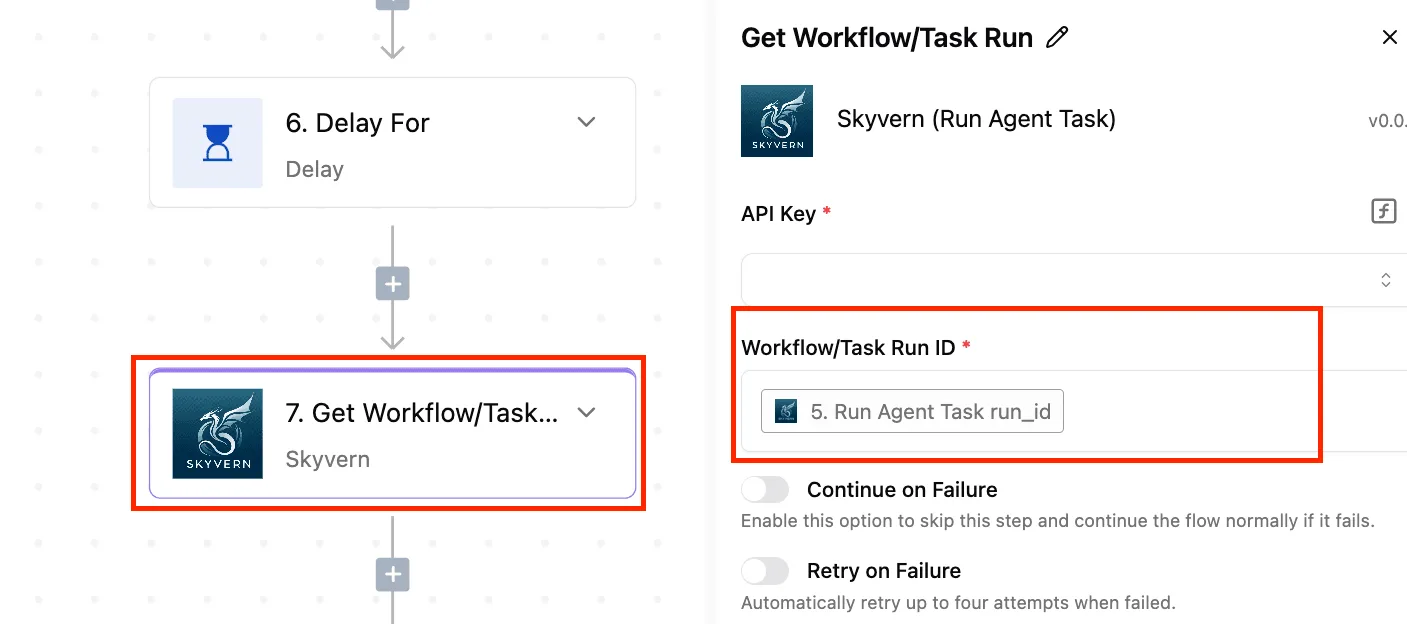
The granular run details show the exact input and output JSON, illustrating how technical teams can monitor internal API interactions without exposing these credentials to a managed SaaS provider's logs.
Building custom integrations with the Typescript SDK
When a pre-built connector doesn't exist for a legacy internal tool, the Activepieces Typescript SDK allows developers to wrap any private API into a reusable "Integration."
This framework provides a structured way to define inputs, outputs, and authentication methods that other non-technical staff can then use in a drag-and-drop interface.
Eliminating per-task costs with unlimited execution
Proprietary platforms often charge a premium for every successful step in a flow, which creates a financial penalty for building robust, multi-step error handling. Activepieces removes this variable cost by decoupling the software license from the execution volume.
Proprietary platforms often charge a premium for every successful step in a flow, which creates a financial penalty for building robust, multi-step error handling.
Self-hosted instances allow for millions of monthly tasks without increasing the monthly software spend.
Parallel execution scales based on the underlying hardware you provide rather than an arbitrary plan tier. Complex branching using models like Gemini 3.8 Flash for agentic decision-making becomes economically viable because the platform doesn't tax the resulting API calls.

A practical roadmap for deploying your first workflow
Successful automation deployment relies on isolating high-frequency friction points before committing to a specific infrastructure stack.
To maintain fiscal control while scaling, you must follow a structured implementation sequence that prioritizes measurable efficiency over broad feature sets. The following sequence ensures that the chosen architecture supports the actual workload requirements of your business:
- Audit high-frequency manual tasks to identify where staff spend the most time on repetitive data entry or document synthesis.
- Select a pilot process with fewer than five steps so that logic errors can be debugged without tracing complex nested dependencies.
- Define success metrics, such as total hours saved or the reduction in API error rates, to justify the transition from a pilot to a production environment.
- Choose architecture by weighing the ease of use in proprietary platforms against the long-term cost-efficiency of open-source frameworks.
Once these parameters are established, you can determine whether the workflow requires the deep reasoning of a flagship model like GPT-6 Astra or if the task is better suited for a high-volume, low-latency utility model.
Frequently asked questions about power automation
Is power automation the same as RPA?
Power automation refers to API-driven orchestration that communicates directly between software backends, whereas Robotic Process Automation (RPA) mimics human keystrokes on a user interface. Relying on RPA creates a brittle workflow because a single pixel change in a legacy application’s layout will break the automation.
API-based power automation remains stable as long as the underlying data structure exists. The following table distinguishes these two approaches to help you identify where to invest your engineering hours.
| Feature | RPA (Legacy Logic) | Power Automation (Modern Logic) |
|---|---|---|
| Interaction Method | UI-based (Screen scraping) | API-based (Direct data exchange) |
| Primary Use Case | Legacy apps without APIs | Modern SaaS and AI-orchestrated stacks |
| Stability | Brittle; fails on visual updates | Robust; follows defined schemas |
| Intelligence | Rule-based scripts | Integrated AI like Claude Haiku 4.5 |
Choosing the wrong method leads to high maintenance costs and frequent downtime.
Do I need to know how to code to use these tools?
Even if you never write a line of Python, you must understand logic structures and data schemas, as modern platforms require you to map variables between disparate systems.
While visual builders lower the barrier to entry, complex agentic workflows often require low-code expressions to transform data formats. This is common when utilizing Gemini 3.8 Flash for multi-step reasoning.
How do I secure API keys in an automated workflow?
Securing API keys requires the use of a dedicated secret management service, such as HashiCorp Vault or AWS Secrets Manager.
This ensures credentials aren't hard-coded into the workflow script. Storing a key in plain text within a logic flow exposes your entire compute budget to anyone with read access to the repository.
Use environment variables to call keys at runtime. Rotate keys automatically every ninety days to limit the window of impact for a leak. Apply least-privilege scopes so a compromised key can't delete your entire database.