
Retool Alternatives vs Custom Code for Internal Tools

Oct 8, 202613 min read
Centralized platforms for internal tools allow developers to connect private data sources to pre-built UI components. These systems eliminate the need to write boilerplate CSS for every admin dashboard.
When teams encounter rigid pricing tiers, they often seek alternatives to Retool, despite its status as the standard for complex applications. The high technical overhead of its JavaScript-centric environment and the limitations of its proprietary hosting model also drive these searches.
Why engineering teams seek Retool alternatives
The 'retool tax' on internal users
Licensing costs in Retool are calculated based on the number of individual users who access an application. This creates a scaling penalty for tools intended for broad company use.
Because the Business tier is significantly more expensive than the Team tier, adding a single feature like Single Sign-O (SSO) or audit logs forces a migration. This move multiplies the total monthly bill by nearly ten times for the same headcount.
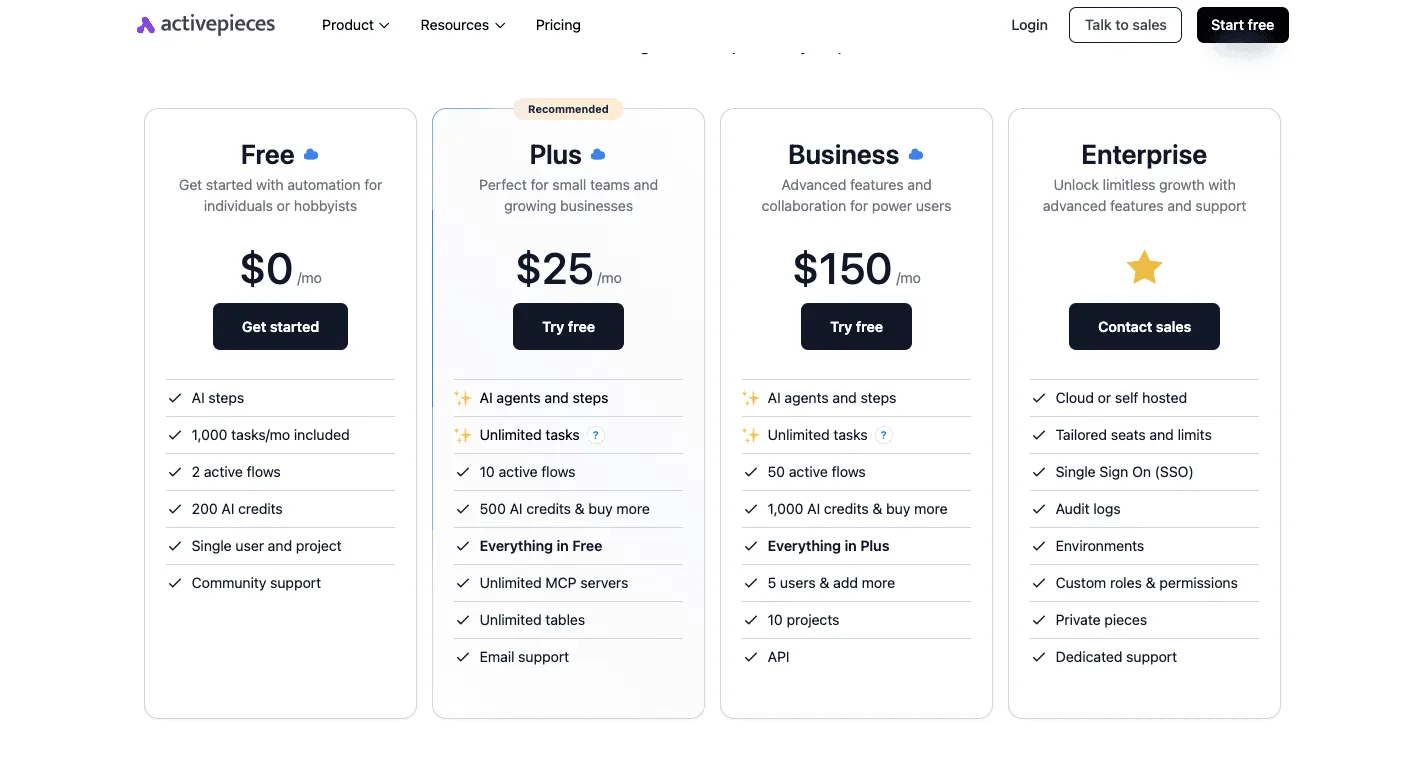
The following comparison illustrates the cost trajectory for a 50-person department requiring professional-grade security and access controls:
| Platform | 50-User Cost (Team/Basic) | 50-User Cost (Business/Pro) |
|---|---|---|
| Retool | $350 | $3,250 |
| Appsmith | Free (Community) | $750 |
This price gap often forces engineering managers to choose between overpaying for basic access or restricting tool availability to a small subset of the team. Developers look toward platforms like Appsmith, which has a more linear cost per user for comparable enterprise features.
JavaScript dependency vs. no-code speed
Even basic logic in Retool requires a high level of JavaScript proficiency. This technical barrier prevents non-engineers from maintaining their own tools. Every minor UI change remains stuck in the engineering backlog.
While some teams utilize Activepieces to automate the background logic, the front-end assembly in Retool still demands manual coding for state management.
For rapid prototyping, many teams prefer Budibase. This platform uses a visual approach to database creation and interface design to reduce the time spent on syntax.
The requirement for local data residency
Strict compliance frameworks often clash with proprietary cloud platforms. While Retool has a self-hosted version, the vendor locks its most advanced deployment and management features behind high-tier enterprise contracts.
Unlimited internal users are included in the open-source edition of Appsmith. Teams deploy it via Docker on local hardware.
Budibase supports air-gapped installations where no metadata or query results leave the local server. Self-hosted runners execute code behind a firewall, so database credentials never touch the vendor's infrastructure.
These open-source alternatives provide the transparency needed for security audits. Teams can inspect and modify the underlying code to fit specific infrastructure requirements.
The fastest way to settle a shortlist is to try one. Activepieces is free to try, no credit card.
Comparing the top five internal tool platforms
For teams choosing between these platforms, matching their technical debt tolerance against their specific deployment constraints is the only way. Retool functions as the baseline for complex, logic-heavy interfaces where developers write JavaScript directly into component properties.
| Platform | Pricing Model | Primary Interface | Hosting Options |
|---|---|---|---|
| Retool | Per-user seats | JS-heavy / Component-driven | Cloud & Self-hosted |
| Appsmith | Per-user seats | JS-heavy / Grid-canvas | Cloud & Self-hosted |
| Budibase | Per-user seats | Drag-and-drop / Data-centric | Cloud & Self-hosted |
Retool complexity and technical debt issues
When the hand-off between UI and logic reaches a breaking point, development velocity usually stalls.
Complexity in Retool scales with the number of hidden JS snippets scattered across a page. This can make debugging a multi-step query flow difficult for anyone who didn't build the original app.
A closed integration catalogue creates a ceiling for these background operations, forcing teams to wait for a vendor's roadmap. Activepieces bypasses this by allowing users to generate missing connectors with AI and add them to their own instance.
The 738 integrations in the open-source monorepo on GitHub are counted directly from the code, with roughly 60% contributed by the community rather than the vendor, which means the platform’s expansion relies relies heavily on external developer activity.
Appsmith encounters a similar ceiling when managing global states across large-scale applications. The dependency tree between widgets can become opaque during a production outage.
Budibase hits its limit when a workflow requires a custom UI component that falls outside its pre-built library.
Retool for complex enterprise interfaces
Retool remains the market leader because it offers the most mature component library and the deepest level of customization for professional developers.
It is the logical choice for teams that have standardized on JavaScript and need to build mission-critical applications that look and feel like native software.
The platform provides a highly polished IDE experience that includes integrated debugging tools and a comprehensive state manager. This allows engineers to build sophisticated logic directly into the UI, making it the preferred option for high-density dashboards that require complex user interactions.
Retool component library and developer customization
The primary advantage of Retool is the sheer breadth of its component library, which includes over 100 pre-built widgets. Developers can customize every property of these components using JavaScript, providing a level of control that simpler drag-and-drop builders cannot match.
For organizations with specialized needs, Retool allows for the creation of custom components using React.
This ensures that if a specific visualization or input method is not available out of the box, the engineering team can build it themselves and integrate it seamlessly into the platform.
Retool security, compliance, and governance features
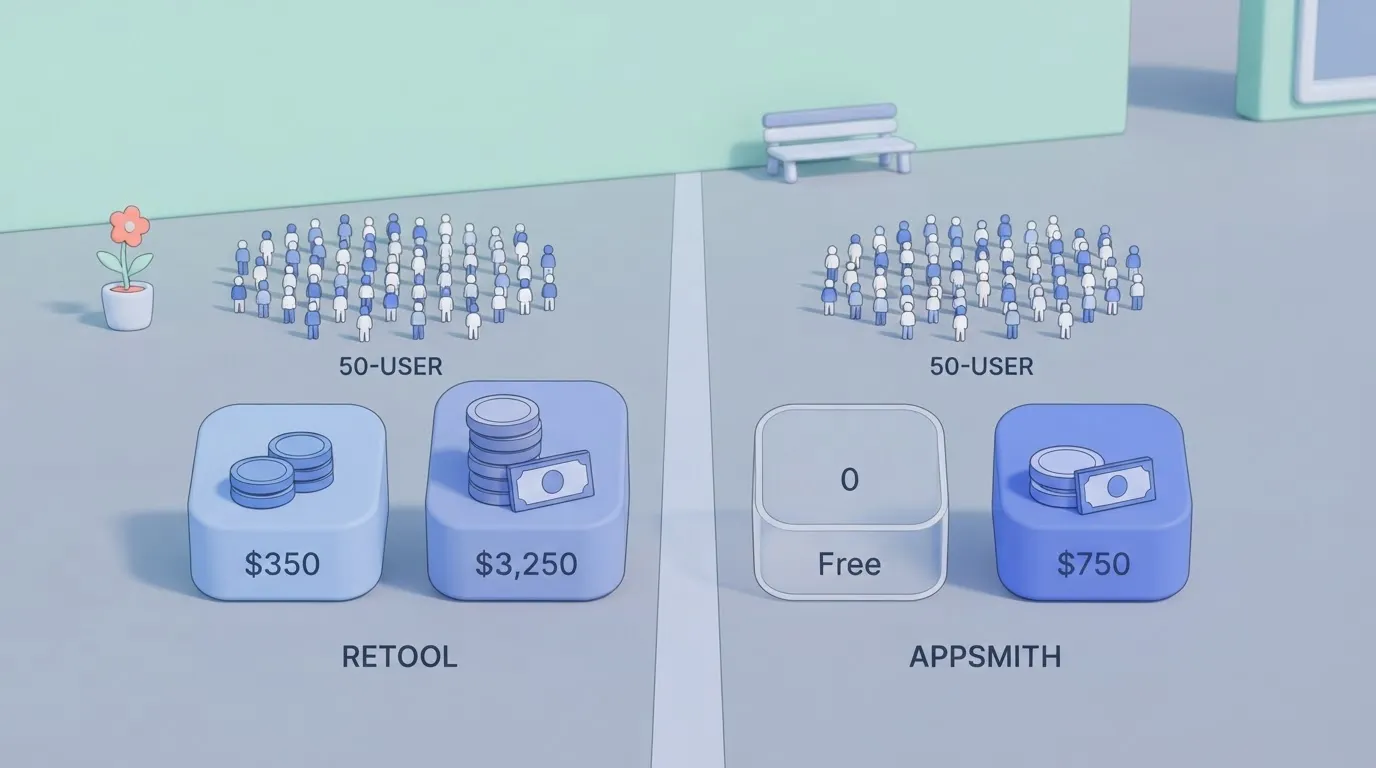
Retool has invested heavily in the features that large IT departments require for compliance and safety. The platform includes robust version control, environments for staging and production, and detailed audit logs that track every change made by developers or end-users.
The permissions system is exceptionally granular, allowing administrators to control access at the application, folder, or even component level. This makes it suitable for large organizations where different teams need varying levels of access to sensitive internal data.
Appsmith for open-source UI customization
Appsmith is a direct alternative for engineering teams who require the granular UI control of Retool but demand the transparency of an open-source core.
Because the underlying source code is accessible on GitHub, developers can inspect the execution engine and modify the deployment environment to meet specific internal security audits.
The platform distinguishes itself through three specific implementation choices. The primary codebase is public. Developers can inject custom styles into UI components to match a specific corporate design system.
Free users can connect their applications to a Git repository, tracking every change to the UI or logic in a commit history without requiring an enterprise license.
How Appsmith handles data binding
Appsmith uses a reactive programming model where every property of a widget or a data query is a JavaScript object that can be referenced globally. When a developer writes code inside double curly braces, the platform creates a dependency graph.

Every UI element referencing a query re-renders automatically if the database query updates. This differs from manual state management because the developer doesn't need to write explicit update functions to sync the data layer with the visual layer.
Self-hosting Retool with the community edition
Teams can deploy the entire platform on their own hardware using the community edition. This ensures that sensitive database credentials never leave the company's private network.
Because the platform is distributed as a Docker image, it can be orchestrated via Kubernetes to scale alongside other internal services. This self-hosted approach removes the dependency on a third-party vendor's uptime.
Reading a table only gets you so far. Build the same workflow in Activepieces and compare it yourself.
Budibase for database-first internal applications
Budibase is for teams that need to transition from messy spreadsheets to structured internal tools without the overhead of manual component mapping.
While Retool requires you to drag every table and button onto a canvas, Budibase uses a schema-first approach to generate functional interfaces automatically.
This shift in workflow means an operator can move from a data definition to a usable inventory or task tracker in a single session.
Budibase automatic CRUD app generation
The platform accelerates development by inspecting a data schema and instantly producing the four standard views (Create, Read, Update, and Delete). When you point the builder at a table, it generates a multi-screen application with pre-configured forms and validation logic.

Manual linking of every text input to a database column is not required. To further customize these flows, developers can integrate LLMs like Gemini 3.8 Flash to categorize incoming form data or summarize long-form entries.
Internal vs. external data sources
Budibase is a built-in database, allowing teams to launch applications without provisioning an external PostgreSQL instance. This internal table structure acts as a managed backend.
For teams with existing infrastructure, the platform also supports external connectors. It's a direct connection to MySQL, PostgreSQL, and Microsoft SQL Server.
It integrates with MongoDB for document storage and REST APIs for interacting with third-party services like Jira or Slack.
Native blocks for Anthropic Claude Sonnet 5.5 and OpenAI GPT-6 Astra enable applications to process unstructured text or generate code snippets directly within the internal data pipeline.
Activepieces for automation-led internal workflows
Activepieces reaches every model provider a company uses among its 738+ integrations, and pushes the combined spend into the sheet finance already reads. While other platforms prioritize the layout of buttons and tables, this tool treats the background sequence of events as the first-class citizen.
Activepieces ships its core under an MIT licence, ensuring that teams retain the right to run, fork, or embed their automation infrastructure. This contrasts with source-available alternatives like n8n, where the licence is designed to prevent commercial reuse.
The LICENSE file in the activepieces/activepieces repository confirms this MIT status for the core, providing a level of permanence that MoneyGram and Alan rely on for production workflows.
When the UI is secondary to the logic
In many internal tools, the interface is merely a way to trigger a complex chain of events. Activepieces handles these scenarios by providing a visual canvas where logic, not layout, dictates the structure of the application.
The Activepieces homepage demonstrates this by showing a workflow builder where a HubSpot lead trigger initiates a multi-step AI agent sequence.
By using high-reasoning models like Gemini 3.7 Flash for the "Qualify Lead" step, the workflow can handle specific customer inquiries that traditional rule-based logic would miss.
Connecting 100+ business apps without custom code
The speed of deployment in Activepieces is driven by its library of pre-built integrations. Managing these connections through a visual interface reduces the maintenance burden that typically comes with handling API authentication and rate-limiting manually.
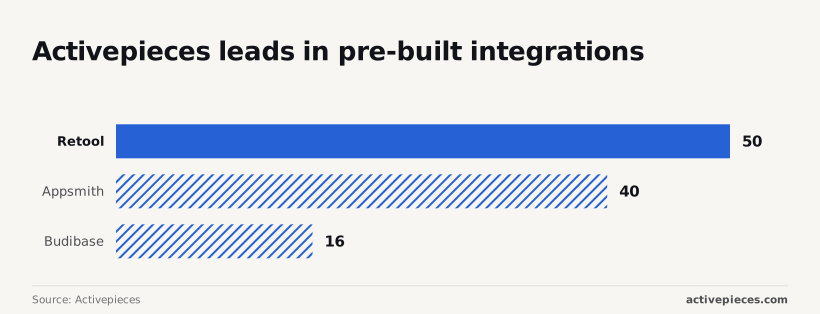
Over 100 pre-built integrations are available in Activepieces, which means most common SaaS stacks can be linked without writing custom wrapper functions.
Retool provides 50 integrations, so developers there are twice as likely to spend time configuring raw REST API blocks for standard services.
Appsmith includes 40 integrations, requiring more frequent reliance on custom JavaScript to bridge gaps between internal tools and external platforms, which means developers must maintain a larger codebase to ensure seamless connectivity.
Budibase features 16 integrations, positioning it as a tool primarily for internal data management rather than cross-platform orchestration, so users should anticipate needing alternative solutions for complex external workflows.
By prioritizing the underlying logic over interface layout, Activepieces provides a foundation where the integration catalog serves as a starting point for growth rather than a fixed limit.
Activepieces is the better fit for organizations that require a truly open, MIT-licensed core to ensure their automation infrastructure remains permanent and extensible.
For teams that value verifiable transparency and the freedom to fork or embed their workflows without licensing restrictions, this platform offers the most reliable long-term floor.
Choosing your internal tool stack this week
Selecting an internal tool platform depends on whether your priority is the interface the user touches or the data integrity behind the scenes.
If the primary goal is a high-density administrative panel for a PostgreSQL database, the choice leans toward platforms with robust component libraries like Retool.
If the requirement is a self-hosted environment that allows for custom React components without vendor lock-in, Appsmith is the provider.
For teams needing to spin up a new internal database and a functional UI in a single afternoon, Budibase is a unified builder that handles both the schema and the screen layout simultaneously.
The following framework helps narrow these options based on your specific production deadline:
- Identify the core need (Form, Dashboard, or Sync).
- Check the user count for pricing impact.
- Verify the data source connector availability.
- Select the platform.
Running a 48-hour internal tool pilot
A successful pilot requires building a "Steel Thread." This is a single functional path from a user action to a database update to verify that the platform’s authentication layer handles your specific identity provider.
If you can't connect your production Google Sheets or BigQuery instance and see live data within the first hour, the platform’s abstraction layer may be too rigid for your existing stack.
Long-term maintenance costs of internal tools
The initial speed of a drag-and-drop builder often masks the technical debt incurred when business logic is scattered across dozens of hidden "on-click" handlers.
To mitigate this, prioritize tools that allow for global scripts or reusable queries. This ensures that a logic update in one area propagates across the entire application without manual intervention.
The initial speed of a drag-and-drop builder often masks the technical debt incurred when business logic is scattered across dozens of hidden "on-click" handlers.
Frequently asked questions about switching tools
Can I export my Retool apps to another platform?
Because Retool applications are stored in a proprietary JSON schema, you can't directly import a Retool file into a competing platform to recreate your interface.
While you can export the underlying logic and queries, the layout and component configurations must be rebuilt manually in the new environment.
Which alternatives have the best free tier for small teams?
The utility of a free tier depends on whether your constraints are based on the number of users or the complexity of the application features.
Unlimited users and applications are allowed in the open-source edition of Appsmith when self-hosted.
Budibase offers a free cloud tier that includes built-in database storage and support for multiple users, though it limits the total number of records and monthly automation runs.
Retool limits its free plan to a specific number of users, which forces small teams to upgrade once they need to share an internal tool with a wider department.
Do these tools support my existing SQL database?
Every major internal tool builder supports standard SQL integrations through dedicated connectors for PostgreSQL, MySQL, and Microsoft SQL Server.
These connections function by providing the platform with credentials to execute queries against your database.
To assist with writing these queries, many platforms now integrate LLM-based assistants. For example, developers can use Gemini 3.8 Flash or GPT-6 Astra within their IDEs to generate SQL syntax or debug connection strings.
Related reading
References
Still comparing
The fastest way to settle it is to build something.
Open source under MIT, so you can self-host the same thing later.
Start free Talk to sales