
Agent37 Review (2026): Pricing, Security & Features

Oct 13, 202614 min read
When the system addresses the infrastructure gap for you, it functions as a managed hosting platform that maintains persistent, isolated environments, much like how Activepieces facilitates the flow of automated tasks, for autonomous coding swarms to operate without manual intervention.
Agent37 launches as a dedicated multi-agent orchestration layer
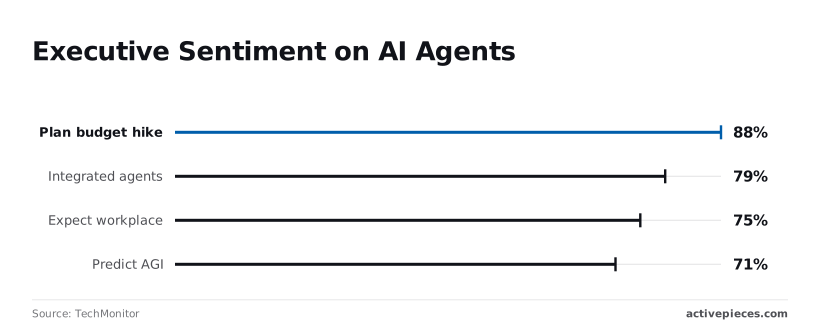
Backed by a Y Combinator-backed team, the platform arrives as 88% of executives have increased AI budgets, signaling a market primed for immediate enterprise adoption, which means the product is launching into a landscape of ready capital.
Capital is now chasing execution over experimentation.
75% of leaders expect agentic transformation to redefine workplace operations, according to TechMonitor, while 71% predict AGI capabilities within two years, creating an urgent mandate for companies to overhaul their current infrastructure, so businesses must accelerate their digital upgrades to avoid obsolescence.
Capital is now chasing execution over experimentation.
These expectations necessitate tools to govern high-reasoning models like Claude Fable 5.1 or GPT-6 Astra, leading you to seek guardrails before full integration.
By centralizing the management of diverse agent architectures through a unified hub, the platform connects to isolated sandboxes.
This ensures that a process running in OpenClaw (an open-source agent framework) doesn't compromise the environment of a Claude Code (Anthropic's terminal-based agent) or Hermes (a fine-tuned reasoning model) instance.
Furthermore, segregating these "always-on" workers allows you to deploy specialized swarms while maintaining the security boundaries required for your enterprise codebases.
To facilitate these workflows, Activepieces reaches every model provider a company uses among its 739+ integrations and pushes the combined agentic spend into the sheet finance already reads. Agent37 structures your adoption across four managed tiers:

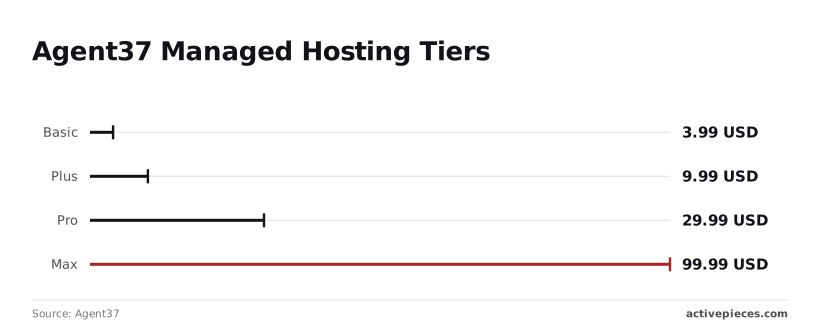
| Tier | Price | Target Audience / Use Case |
|---|---|---|
| Basic | 3.99 USD | hobbyists to run single-agent scripts |
| Plus | 9.99 USD | small team collaborations |
| Pro | 29.99 USD | concurrent execution required for complex multi-agent swarms |
| Max | 99.99 USD | high-throughput enterprise environments |
Prices and plan limits checked against agent37.com and agent37.com and agent37.com and agent37.com on October 13, 2026.
Even at the highest scale, this tiered access ensures that the cost of compute remains predictable for the 75% of organizations anticipating total workplace transformation through automation. This allows you to forecast long-term budgets with confidence despite the rapid evolution of AI capabilities.
If you are running this arithmetic for your own team, see what the same workload costs on Activepieces.
Why multi-agent swarms change the automation landscape
Rigid, pre-defined sequences are being replaced by multi-agent swarms, dynamic goal-seeking networks that adjust their own execution paths based on real-time feedback.
This transition shifts the burden of logic from the human architect to the orchestration layer, meaning you, as a Site Reliability Engineer, now monitor system boundaries rather than individual step transitions.

Moving from linear steps to autonomous loops
Recursive evaluation is the fundamental shift that alters how a task progresses from initiation to completion. In traditional setups, a failure at step three halts the entire process, requiring manual intervention to restart the sequence.
Agentic swarms utilize a central goal node. Models like Claude Opus 5.5 or GPT-6 Astra act as a reasoning core, delegating sub-tasks to specialized agents that communicate in a web-like structure.
Feedback loops allow the system to self-correct, as this visual shift highlights. If an agent fails to extract data from a legacy portal, it can autonomously signal a secondary agent to attempt an alternative method without dropping the primary objective.
Consequently, the workflow isn't a fragile line but a resilient mesh.
The requirement for centralized agent supervision
Autonomy introduces a transparency debt that requires a centralized orchestration layer to ensure every agent action remains within compliance and budgetary limits.
Without a unified supervisor, high-velocity models like Gemini 3.8 Flash or GPT-6 Luna can trigger thousands of API calls in a "hallucination loop," exhausting rate limits before you notice the spike.

Effective supervision in 2026 must provide:
- State persistence to track the "memory" of a swarm across long-running tasks.
- Token budgeting to prevent recursive agents from over-consuming compute resources on low-priority goals.
- Human-in-the-loop triggers for high-stakes decisions, such as executing financial transactions or modifying production code.
You ensure that while the agents are autonomous, they're never unmonitored by centralizing these controls. This allows your infrastructure team to audit the reason behind an agent's decision long after the swarm has dissolved.
Technical capabilities and pricing of the Agent37 platform
Agent37 provides managed hosting for autonomous agent harnesses by assigning you a dedicated, isolated sandbox to prevent cross-tenant data leakage.
The platform, backed by Y Combinator, is a centralized dashboard for deploying always-on instances of specialized frameworks like Claude Code or Hermes. This setup allows you to maintain a persistent trust boundary for every active agent.
Agent37 native support for MCP servers
By utilizing the Model Context Protocol (MCP), Agent37 bridges autonomous swarms with external data sources, allowing agents to execute complex, multi-step operations without custom integration code.
As a standardized orchestration layer, the platform lets high-reasoning models such as Claude Fable 5.1 interact with local files or remote databases through a unified interface.
The MCP server acts as the translator when you connect a tool like GitHub (a version control platform). The agent can then perform long-horizon tasks like refactoring codebases or managing pull requests autonomously.
Agent37 pricing and credit consumption explained
The platform operates on a tiered subscription model paired with a credit-based system that scales costs directly with the compute resources consumed by the agent swarm. The Agent37 Blog states that the platform bills managed instances based on the underlying hardware specifications.
Entry-level instances provide a baseline of virtual CPU, RAM, and storage, which establishes the minimum monthly overhead for a single always-on agent. Advanced reasoning tasks involving flagship models draw from a pool of credits.

Compute is billed per minute based on the vCPU, memory, and disk resources used, while token usage for models like GPT-6 Astra or Grok 4.7 is billed separately through your own API keys.
Agent37 provisions isolated sandboxes per customer. You can forecast infrastructure costs based on the number of distinct trust boundaries required rather than just total user count.
Worth checking against a plan that does not meter every step: one credit covers a whole run on Activepieces.
How to connect Agent37 to Activepieces workflows today
Activepieces treats every agent as a managed user, applying enterprise RBAC, SSO, and SCIM to govern what the swarm may connect to rather than just what a person may open.
Because Agent37 lacks a native integration in the Activepieces library, you, as the DevOps engineer responsible for the pipeline, must manually define the interface to ensure that agentic outputs reach downstream tools like Slack or Linear.
The following sequence establishes the connection through the standard REST interface:
- Deploy agent instance in Agent37 dashboard
- Copy the Cloud API endpoint and Auth Token
- Add an HTTP Request integration in Activepieces
- Map the JSON payload to the specific agent skill requirements
This configuration creates a verifiable audit trail for every request, allowing you to identify exactly where a handshake fails in a multi-step swarm.
Option 1: The HTTP Request method for API triggers
The HTTP Request integration is the primary bridge for sending data from Activepieces to an Agent37 instance. By selecting the POST method and entering the specific endpoint URL, you can transmit structured data to specialized skills.
One example is the YC Advisor which utilizes a knowledge base of 434 essays, interviews, and lectures to provide startup guidance. This method requires the manual entry of Bearer tokens in the request headers.
Every connector established in Activepieces is instantly available as an agent tool, meaning a single configuration serves both deterministic flows and autonomous swarms.
By registering a connection once, the platform exposes it via a per-project MCP server, allowing Agent37 to call any of the 1,000+ integrations without a second migration or manual schema export.
This dual-purpose architecture ensures that the same integration action running in a standard flow is the one reachable by your agents, a mechanism verifiable in the open-source Integrations Framework documentation.
Option 2: Using the AI Step with custom providers
Activepieces includes a dedicated AI Step that can be reconfigured to point toward Agent37’s OpenAI-compatible API layer. By overriding the default Base URL, you can utilize models like Claude Sonnet 5.5 through the Agent37 proxy while maintaining the standard chat-completion format.
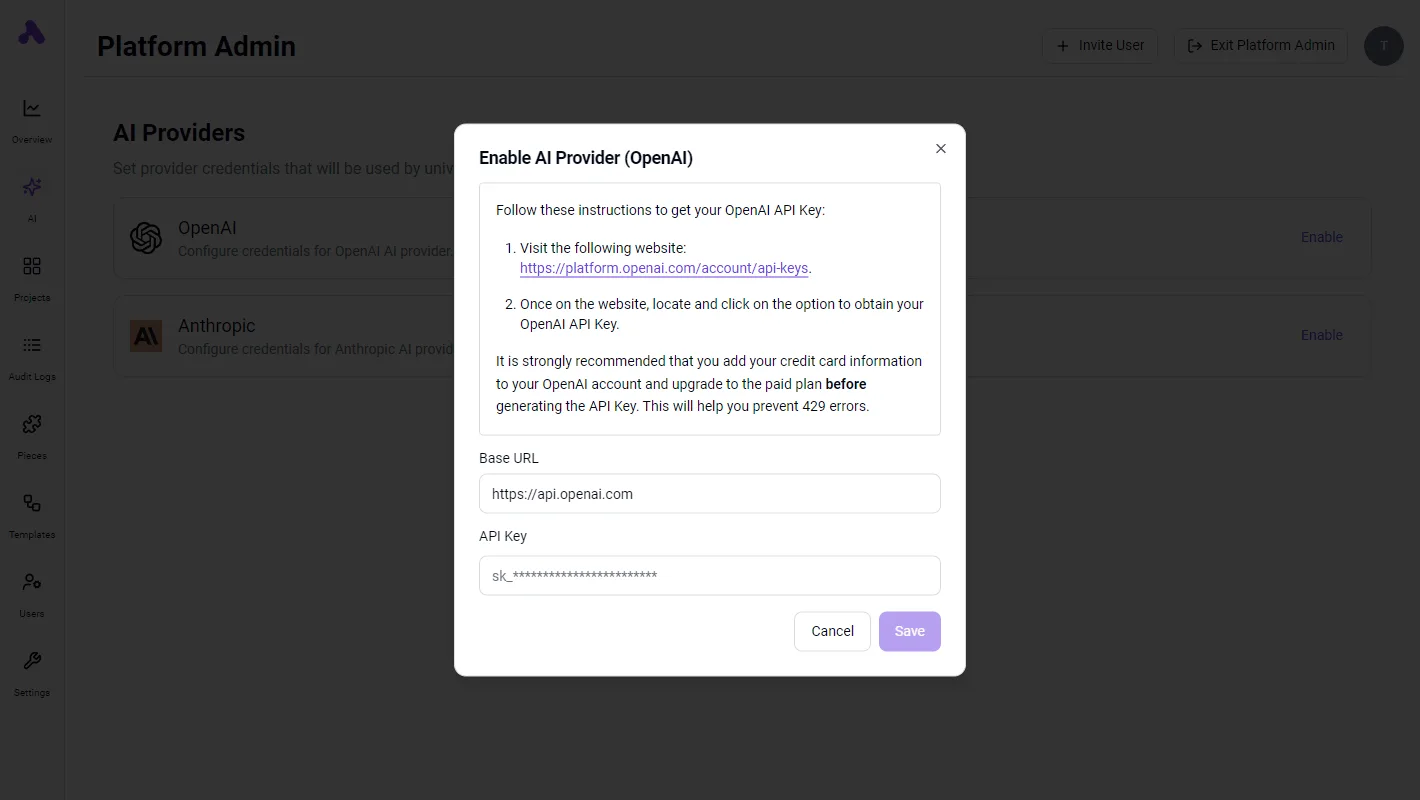
This approach simplifies the mapping process because the platform treats the autonomous agent as a standard LLM provider, reducing the complexity of the data transformation logic.
It's particularly effective for high-volume routing tasks where Claude Haiku 5.5 is employed to categorize incoming support tickets before the agent initiates a self-directed resolution path.
Connecting Agent37 via MCP servers
For environments requiring deep integration with local files or private databases, bridging through Model Context Protocol (MCP) servers allows Activepieces to interact with Agent37’s underlying toolset.
This setup involves hosting an intermediary server that translates Activepieces webhooks into MCP commands, which the agent then executes to perform complex reasoning tasks.
When using a high-reasoning model like Gemini 3.8 Flash for agentic coding, the model has the necessary context from your production environment. This bridge ensures the model has the necessary context from your production environment without exposing the entire database to the public internet.
The burden of maintenance is placed on your infrastructure team by this architecture. They must manage the uptime of the bridge server alongside the automation platform itself.
Compare cost and speed to traditional automation
How recursive synthesis cuts automation costs
Agent37's prepaid, per-minute billing model helps keep the financial overhead of running workflows proportional to actual usage.
In a traditional automation environment, you typically build a static chain where every step requires a fresh prompt and context window from a model like GPT-6 Astra. This increases the cost per execution as the workflow grows.
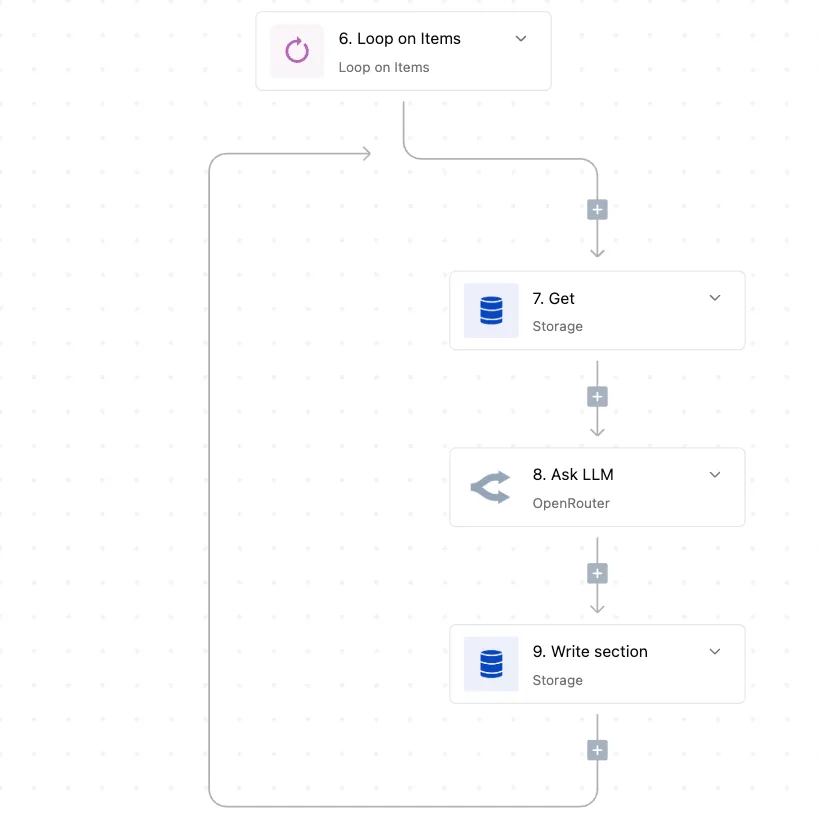
Agent37 shifts this burden to a synthesis layer that consolidates instructions before hitting the API. A single high-reasoning pass handles what previously required multiple sequential hits.
Benchmarking task completion costs
The efficiency gains are most visible when comparing the unit cost of autonomous task completion across different architectural styles.
Research from the RST data highlights a significant gap between legacy custom logic and the newer recursive approach.
Traditional custom agent logic costs between $0.80 and $2.00 per task, while Agent37 recursive synthesis costs $0.05 per task, effectively reducing the financial barrier to deploying high-frequency automation, which means companies can now afford to automate tasks that were previously cost-prohibitive.
Agent37 cost control and scalability
The orchestration layer acts as a financial filter, preventing the "token sprawl" that occurs when autonomous agents iterate without structured boundaries.
By utilizing Claude Haiku 5.5 for rapid routing and only escalating to Gemini 3.1 Pro for final validation, the system maintains a low price floor without sacrificing the reliability of the output.

You can scale your agent swarms to handle thousands of concurrent tickets or leads. Consequently, you can scale your agent swarms to handle thousands of concurrent tickets or leads, whereas a traditional custom-built agent would eventually hit a budgetary ceiling that makes mass deployment unsustainable.
This shift moves the conversation from whether an agent can perform a task to whether it can perform it at a margin that supports your business.
Watch for evolution in autonomous agents
Monitoring these shifts allows you to identify the precise moment when the overhead of managing autonomous swarms becomes lower than the cost of manual intervention.
Operational viability for autonomous swarms depends on the emergence of standardized handoff protocols that prevent proprietary lock-in. You must monitor the Model Context Protocol (MCP), an open standard that enables agents to swap data sources without custom shims.
This ensures that a switch from one vector database to another doesn't break your entire production pipeline.
As Agent37 matures, the focus will shift.
The focus will shift from individual task completion to the stability of multi-agent systems (MAS) where different models (such as Claude Fable 5.1 for strategic reasoning and Gemini 3.8 Flash for high-speed routing) must collaborate within a single workflow.
The following indicators will determine if an agentic architecture is ready for enterprise deployment:
- Interoperability standards like MCP, which let agents access local and remote tools through a unified interface.
- Agentic commerce revenue milestones. These indicate when autonomous systems move from cost-saving automations to independent profit-generating entities.
- Multi-agent system market growth. This reflects the transition from single-purpose bots to complex, collaborative swarms.
- Scaled deployment frameworks that manage the orchestration of diverse model families across a single business logic layer.
These metrics provide a roadmap for moving beyond experimental sandboxes. Once these interoperability benchmarks are met, the focus moves to the specific technical requirements of your underlying infrastructure.
Frequently asked questions about Agent37
Does Agent37 require a specific LLM provider?
Agent37 is an agnostic orchestration layer that allows you to swap backend models based on the specific latency or reasoning requirements of a workflow.
While it doesn't mandate a single provider, the stability of the swarm depends on selecting models that support advanced tool-calling and structured outputs.
Claude Fable 5.1 is the primary choice for complex, long-horizon agentic work where multi-step reasoning is the bottleneck. GPT-6 Astra has the necessary depth for flagship-level coding and complex logical deduction within a swarm.
Gemini 3.8 Flash has the optimal balance for high-volume routing and multimodal agentic tasks where speed is the priority. Mistral Large 4 acts as the preferred open-weight multimodal option for teams requiring frontier-level performance without proprietary lock-in.
Can I run Agent37 on-premises for data privacy?
Deployment flexibility is restricted to environments that can maintain a persistent connection to the orchestration control plane. A fully air-gapped on-premises installation is currently unsupported. You must utilize a hybrid cloud configuration if you require high data residency standards.
Sensitive data processing occurs within a private Virtual Private Cloud. In this setup, the sensitive data processing occurs within a private Virtual Private Cloud (a private network interface within a public cloud), while the agent logic is managed via the standardized API.
This ensures that you retain control over data egress points without losing the ability to receive central logic updates.
How does Agent37 handle long-running tasks?
Long-running tasks are managed through asynchronous state persistence, which ensures that an agent doesn't lose its progress if a network timeout or API rate limit occurs.
Instead of maintaining a single continuous connection, the system checkpoints the task state into a database after every discrete action.
The orchestrator assigns a task to a specialized model like Claude Opus 5.5 for deep knowledge work. The agent executes a step and writes the current result to a persistent log.
If the process exceeds a standard execution window, the orchestrator pauses the agent and queues it for the next available compute slot.
The system resumes the task from the last verified checkpoint, preventing the redundant token spend associated with restarting complex workflows from scratch.
Related reading
References
Running the numbers
See what the same workload costs here.
Free forever plan, and every paid plan self-hosts at no extra cost.
See pricing Talk to sales