
Best ElevenLabs Alternatives in 2026 Compared
ElevenLabs alternatives provide specialized features for developers needing precise control over prosody and flexible pricing for synthetic speech.

Covers no-cost and low-cost automation for solopreneurs: free API workarounds, tool substitutions, and bootstrap alternatives to premium software.
ContributorSeptember 28, 202615 min read
This article was researched and fact-checked by an advanced research system.
As the demand for high-fidelity synthetic speech continues to surge, developers are increasingly looking for tools that offer a balance between low latency and emotional nuance.
While ElevenLabs remains a dominant force in the market, many teams are exploring specialized engines that provide greater control over prosody or more flexible API pricing structures.
Integrating these voices into existing workflows often requires a bridge between services, and many users find that using a workflow builder like Activepieces to connect their chosen voice engine with other applications simplifies the deployment process significantly.
Whether you are building a real-time customer service bot or a complex narration tool, selecting the right alternative depends heavily on your specific requirements for language support and voice cloning accuracy. In the following secti
An ElevenLabs alternative is a text-to-speech platform or software tool that provides high-fidelity synthetic voice generation through proprietary models or third-party API integrations.
ElevenLabs alternatives for high-fidelity AI voice synthesis
ElevenLabs alternatives are AI voice platforms that offer speech-to-speech, text-to-speech, or voice cloning capabilities for users seeking better pricing, specific regional accents, or local deployment options.
While ElevenLabs remains a dominant force, the market has fractured into specialized providers that prioritize cost-efficiency or open-source flexibility over broad emotional range.
The shift toward open-source voice models
When developers move toward local execution to avoid recurring subscription costs, the centralization of AI voice power begins to shift.
Llm-stats reports that ElevenLabs recently secured a $500M Series D funding round, representing nearly 10% of the $5.3B total invested across 137 tracked AI voice startups.
Investors must be satisfied, which means ElevenLabs must maintain high margins, whereas smaller, open-weight models allow bootstrapped founders to run synthesis on their own hardware for zero per-character fees.
Reselling you a model is effectively deciding your AI strategy for you before you have even begun.
Activepieces runs whichever voice engine you have already selected (using your own provider key at your own direct rate) so that model spend stays on your own account rather than being sold back to you at a markup.
Reselling you a model is effectively deciding your AI strategy for you before you have even begun.
You can verify this by checking Bring-Your-Own-Key availability on the pricing page and comparing that rate to platforms that resell their own models.
Why users look beyond ElevenLabs in 2026
Cost remains the primary driver for migration, especially for high-volume applications like automated news narration or game dialogue. ElevenLabs charges 100 units per block of text, which sets a high baseline for enterprise scaling.

50 units is all the Turbo v2.5 model costs, allowing a developer to generate twice the content for the same budget.
For those requiring studio-grade quality, OpenAI HD sits at 30 units. A creator can access high-fidelity output at less than a third of the cost of the market leader.
Criteria for evaluating modern speech platforms
Raw fidelity must be balanced against operational constraints when choosing a provider in today's landscape. Models like Gemini 3.8 Flash TTS prioritize sub-second response times. This speed is necessary for interactive voice agents that cannot tolerate the "dead air" of slower models.
Data privacy is determined by the choice between a managed API and a local model. Local models ensure sensitive scripts never leave your firewall.
Systems that offer granular creative control, such as Lyria RealTime, are essential for music and sound design where fixed presets are too restrictive.
The fastest way to settle a shortlist is to try one. Activepieces is free to try, no credit card.
Comparing the top four ElevenLabs competitors
Selecting a speech provider depends on whether you prioritize the granular control of a studio interface or the cost-efficiency of direct API integration.
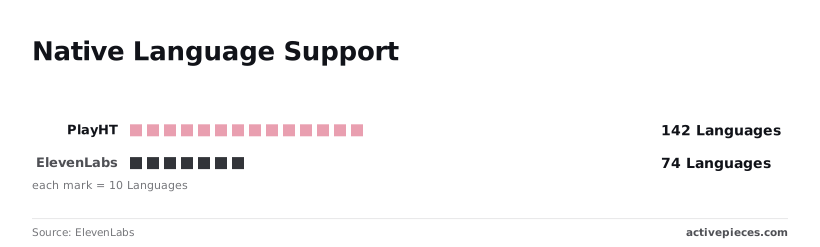
ElevenLabs supports 74 languages. This is a narrower linguistic reach than the 142 languages supported by PlayHT, though ElevenLabs maintains a lead in zero-shot emotional performance.
The following table breaks down how the leading alternatives distribute their features across pricing tiers and technical specialties.
| Provider | Entry Price | Core Strength | Primary Limit | Ideal User |
|---|---|---|---|---|
| ElevenLabs | $0 (Free) | Emotional Range | Character Caps | Creative Pro |
| OpenAI | $0 (Usage-based) | Low Latency | Limited Voice Variety | Developers |
| PlayHT | $31.20/mo | Language Support | High Entry Cost | Global Agencies |
| Murf AI | $19/mo | Studio Workflow | No API on Basic | Content Creators |
You pay only for what you consume rather than a flat monthly commitment with the OpenAI GPT-4o Mini TTS model, providing a cost advantage for bootstrap setups.
However, if your workflow requires high-fidelity cloning for international audiences, PlayHT’s support for 142 languages ensures you can localize content for twice as many regions as ElevenLabs currently permits.
By locking its API behind higher tiers, Murf AI targets the "prosumer" instead. A $19 monthly subscription only buys you access to their manual web editor.
These structural differences dictate your long-term margins. Over time, the character-based billing of ElevenLabs can become a scaling bottleneck compared to the token-based efficiency of the OpenAI ecosystem.
PlayHT for low-latency and multilingual diversity
PlayHT is a specialized alternative for developers who prioritize instantaneous voice response and a vast library of localized accents over the broad emotional textures of ElevenLabs.
By focusing on the speed of the initial audio byte, it reduces the "processing pause" that can break immersion in interactive voice agents.
Real-time streaming capabilities
Audio playback begins before the model has processed the full text buffer thanks to the streaming architecture utilized by PlayHT. This reduces perceived latency for the end user.
a customer support bot can start speaking its greeting while the rest of the response is still being generated.
For developers using the PlayHT API, this eliminates the need for long pre-loading sequences that often frustrate users in live conversational interfaces.
Voice cloning accuracy vs ElevenLabs
ElevenLabs is frequently cited for its ability to capture subtle emotional shifts. PlayHT focuses on maintaining phonetic accuracy across a wider range of regional dialects and non-English languages. Its cloning engine excels at preserving the specific cadence of a speaker’s native accent.
Specific regional identity is a requirement for brand trust, and this precision prevents the "Americanized" inflection that sometimes occurs when cloning diverse voices on other platforms. This makes it a more reliable choice for localized marketing content.
Pricing tiers for high-volume creators
Usage blocks favor consistent, high-output production rather than the pay-as-you-go character limits that often penalize scaling startups. By offering tiers that decouple specific feature access from total volume, it allows teams to predict monthly expenses without fear of sudden overage charges during traffic spikes.
Predictability enables bootstrapped creators to integrate high-fidelity voice into long-form projects without the financial volatility associated with per-character billing models.
OpenAI Voice Engine for ecosystem integration
OpenAI’s text-to-speech models prioritize API stability and cost-predictability for developers already utilizing the broader ecosystem, offering a reliable alternative to platforms that emphasize granular emotional control. This integration allows teams to maintain a unified billing and authentication structure across their entire generative stack.
API reliability and response times voicing
Rapid audio synthesis is provided by the GPT-4o Mini TTS model. Rapid synthesis ensures that applications requiring near-instant feedback remain responsive for the end user.
By utilizing the same infrastructure that powers their flagship LLMs, the platform minimizes the latency overhead often found when daisy-chaining multiple specialized providers.
Low-latency audio-in and audio-out interactions are facilitated by GPT-Realtime-1.5 for developers building conversational agents. Low-latency interactions reduce the awkward pauses that typically disrupt natural human-machine communication.
Cost efficiency for massive text blocks
High-throughput workloads benefit from a pricing structure that favors volume over artistic nuance. While boutique voice platforms often charge premiums for high-fidelity emotional ranges, OpenAI’s models provide a standardized output that remains consistent across millions of characters.
Forecasted operational expenses are essential for bootstrapped startups, and this predictability removes the risk of fluctuating character-based surcharges common in more specialized marketplaces.
Safety features and usage restrictions
Defensive safeguards are enforced by integrated safety layers, such as those found in Daybreak Blue, to prevent the unauthorized generation of sensitive or deceptive content.
These restrictions ensure that enterprise users remain compliance with internal risk frameworks, though they limit the creative flexibility available in less-regulated environments.
Every generated clip is subject to automated moderation. Developers are protected from liability at the cost of restricted stylistic expression.
Reading a table only gets you so far. Build the same workflow in Activepieces and compare it yourself.
Murf AI for enterprise and e-learning workflows
Murf AI functions as a dedicated multimedia production suite rather than a simple voice generator, prioritizing the alignment of synthesized speech with visual assets.
This integrated approach serves teams who need to produce training modules or corporate announcements without toggling between separate audio and video editing software.
The built-in video and voice sync studio
Users can upload video clips or slide decks and map voiceover segments directly to specific timestamps using the platform's timeline-based editor. The formula-like logic used to chain audio blocks together demonstrates this granular control.
For example, a builder might use a function to merge separate strings of dialogue into a single cohesive narration track. The following interface shows how these elements are concatenated to ensure there are no unintended gaps in the final presentation.
Precise timing adjustments are possible once the audio is merged. The voiceover does not lag behind the visual transitions. This eliminates the need for external post-production tools to fix synchronization errors.
Collaborative workspaces for teams
Multiple users can contribute to a single voiceover project within a shared environment thanks to project management features. Instead of passing large audio files back and forth, team members can edit scripts and swap voice profiles in real-time, which keeps the version history centralized.
Assets are organized by department or client in Shared Folders to prevent cross-project clutter.
Role-Based Access restricts editing rights so that junior staff can draft scripts while senior producers retain final approval over voice selection. Comment Threads enable direct feedback on specific audio timestamps to speed up the revision cycle.

Enterprise-grade security and permissions
Administrative controls that go beyond standard consumer privacy settings allow Murf AI to secure sensitive corporate data. This infrastructure is designed for organizations that must maintain strict oversight of who can generate content and where that data is stored.
Only authorized employees can access the production studio when Single Sign-On (SSO) integrates with existing identity providers.
Data Deletion Policies allow admins to purge project data according to corporate retention schedules. Centralized Billing consolidates all user licenses into a single invoice to simplify procurement and budget tracking.
Automating voice production with Activepieces workflows
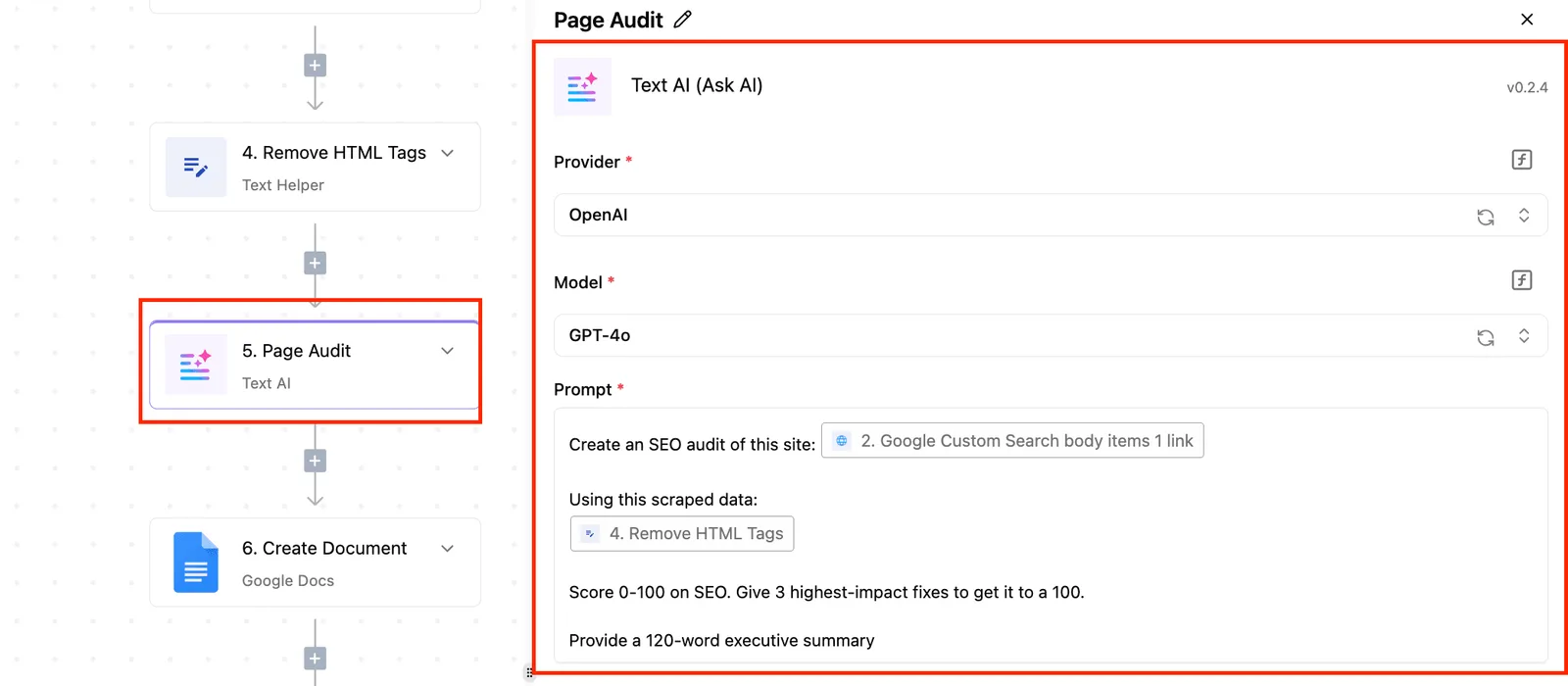
The moment a voice provider is connected in Activepieces, an agent can call it as a tool.
Registering a integration once allows it to run as a step in a structured flow and as a tool schema on the per-project MCP server, reachable from Cursor or any agent you have built yourself.
Organizations like MoneyGram and FundingSocieties run this in production to maintain a single, unified catalog of AI capabilities without re-integrating for every new agent.
Connecting speech APIs to your CMS
The moment a integration is connected in Activepieces, an agent can call it.
Register a integration once and it runs two ways at once: as a step inside a flow, and as a tool schema on Activepieces' per-project MCP server, reachable from Claude, ChatGPT, Cursor, or an agent you built yourself.

There is no separate catalog to publish to, no export step, nothing to wire up twice. A catalog you have to re-integrate for your agents is not a catalog. It is a second migration.
By linking a CMS "New Post" event to the Gemini 3.8 Flash TTS API, the system generates a high-fidelity narration file the moment a draft is published.
A catalog you have to re-integrate for your agents is not a catalog. It is a second migration.
Editors no longer need to manually trigger a conversion or download files to create an accessible audio version of every blog post.
Automated social media voiceover generation
Marketing copy in a Google Sheet can be watched by a workflow and automatically routed to GPT-4o Mini TTS for processing.
The resulting audio file is then sent to a cloud storage bucket or directly to a video assembly tool, which removes the need for creative teams to spend time on repetitive exports.
Strategy becomes the focus for social media managers while the background infrastructure handles the heavy lifting of asset generation.
Scaling voice output without manual uploads
Activepieces routes synthesized audio across 735+ integrations to meet high-volume distribution needs simultaneously. A single trigger can send a voice file to a podcast hosting provider, an internal Slack channel for review, and a customer-facing app via a Webhook.
A single piece of text becomes a distributed audio asset across your entire ecosystem through this multi-step routing. It effectively turns a simple API call into a fully autonomous production line.
By allowing users to connect their own speech APIs directly rather than forcing the use of resold models, Activepieces ensures that organizations retain full control over their AI strategy and cost structures.
Activepieces is the better fit for teams prioritizing long-term flexibility and architectural sovereignty, as it eliminates the need for redundant migrations when expanding a unified tool catalog.
The Monday morning voice evaluation checklist
Testing technical resilience against your specific business vocabulary is the only way to determine the true value of a voice provider. This checklist provides a framework for identifying where a model’s prosody breaks down and where the hidden costs of scaling reside.

Testing your specific industry jargon
Specialized terminology used in medical, legal, or technical fields may cause a model that sounds human reading a novel to stumble.
To ensure your customers do not experience the "uncanny valley" effect, you must run scripts through providers like Gemini 3.8 Flash TTS or Voxtral TTS (an open-weight model by Mistral) that include non-standard acronyms and product names.
Manual configuration of phonetic overrides will be required if the model mispronounces a core product.
Calculating the 'Cost per 1,000 Characters' accurately
Raw API costs must be isolated from the interface fee because platform markups often hide the true expense of high-volume synthesis.
By comparing the direct token pricing of GPT-4o Mini TTS against bundled subscriptions, you can identify the exact point where a "Bring Your Own Key" model becomes more profitable.
Margins will not be eroded as your user base grows if you perform this calculation.
Reviewing data privacy and commercial rights
Whether you can legally reuse content across different marketing channels without additional royalties depends on the ownership of generated audio.
You must verify if a provider like OpenAI or Google grants full commercial ownership or if they retain rights to use your inputs for model training.
- Test 'edge case' scripts with industry jargon
- Measure Time to First Byte (TTFB) for real-time apps
- Calculate 1M character cost at projected scale
Technical requirements and financial constraints are both supported when these steps are followed. Following this evaluation, the focus shifts to the implementation of these models within a production environment.
Frequently asked questions about AI voice platforms?
Can I export my ElevenLabs clones to other platforms?
Direct export of trained voice model weights to competing services is not supported by ElevenLabs.
You must re-upload your source audio to each new provider. This lack of portability forces users to maintain separate voice libraries, increasing the time required to switch production workflows between vendors.
Which AI voice generator has the best free tier in 2026?
High-quality synthesis within the standard Google AI Studio free allocation makes Gemini 3.8 Flash-Lite TTS a generous entry point for developers. This allows entrepreneurs to prototype voice-enabled applications without an initial financial commitment, whereas platform-specific tools often gate their highest-fidelity voices behind monthly subscriptions.
Do these alternatives provide full commercial rights?
Subscription tiers, rather than the model itself, typically determine commercial rights.
While OpenAI Daybreak Blue and Gemini 3.8 Flash TTS allow for commercial use of generated output, you must verify the terms of service for each platform to ensure your specific use case is covered by your current plan.
Is local hosting available for any of these tools?
Mistral Voxtral TTS is the primary path for local hosting because its open-weight architecture allows you to run the model on your own hardware. By self-hosting, you eliminate reliance on external API uptime and ensure that sensitive voice data never leaves your private infrastructure.
Related reading
References
Still comparing
The fastest way to settle it is to build something.
Open source under MIT, so you can self-host the same thing later.
Start free Talk to sales