
Comparing Splice Pricing Plans and Credits

Nov 13, 202613 min read
Splice is a digital library and marketplace that provides music producers with royalty-free samples, loops, and software plugins through a monthly credit allotment, which users often manage alongside other creative tools using Activepieces to streamline their production workflows.
By centralizing millions of sounds into a searchable desktop application, it allows a bedroom producer to access the same high-fidelity recordings used by major label engineers without purchasing entire physical sample packs.
Splice is a credit-based subscription for music samples
How the Splice credit system works
The platform operates on a recurring monthly fee that deposits a fixed number of credits into a user’s account. These credits are the internal currency for the ecosystem.
A single credit typically unlocks one "one-shot", which is a single hit like a snare drum. It can also unlock one "loop", which is a repeating melodic or rhythmic phrase.
When the billing cycle ends, credits do not always roll over indefinitely. A producer who does not spend their full balance essentially pays for assets they never receive.
The credit rollover cap
While active subscribers benefit from rollover, Splice does not enforce a stated maximum credit limit based on the specific tier of the user's plan.
A producer who does not spend their full balance essentially pays for assets they never receive.
This cap prevents users from accumulating thousands of credits over several years without spending them, effectively placing a ceiling on the value an account can hold.
Once a user reaches their plan's maximum capacity, any new credits they pay for in the next billing cycle are forfeited if the balance is not reduced.
This creates a pressure to spend credits even during creative droughts to avoid losing the financial value of the subscription.
For those managing high-volume production schedules, a workflow built on Activepieces can automate the organization of these downloaded files into cloud storage.
The run is the meter, so a ten-step process that sorts, tags, and backs up a sample costs the same single credit to run as the two-step workaround it replaced.
Activepieces bills 1 credit per flow run regardless of the number of steps, a direct contrast to the per-task or per-module metering found on the Zapier or Make pricing pages.
Splice Sounds vs Gear subscription plans
Splice separates its offerings into two distinct financial tracks: the Sounds plan, which covers the library of audio files, and the Gear plan, which facilitates "Rent-to-Own" agreements for professional software.
The Sounds subscription is a perpetual overhead cost. Gear payments function as installments toward the full retail price of a third-party plugin, such as the wavetable synthesizer Serum or the vocal processing suite Izotope Nectar.
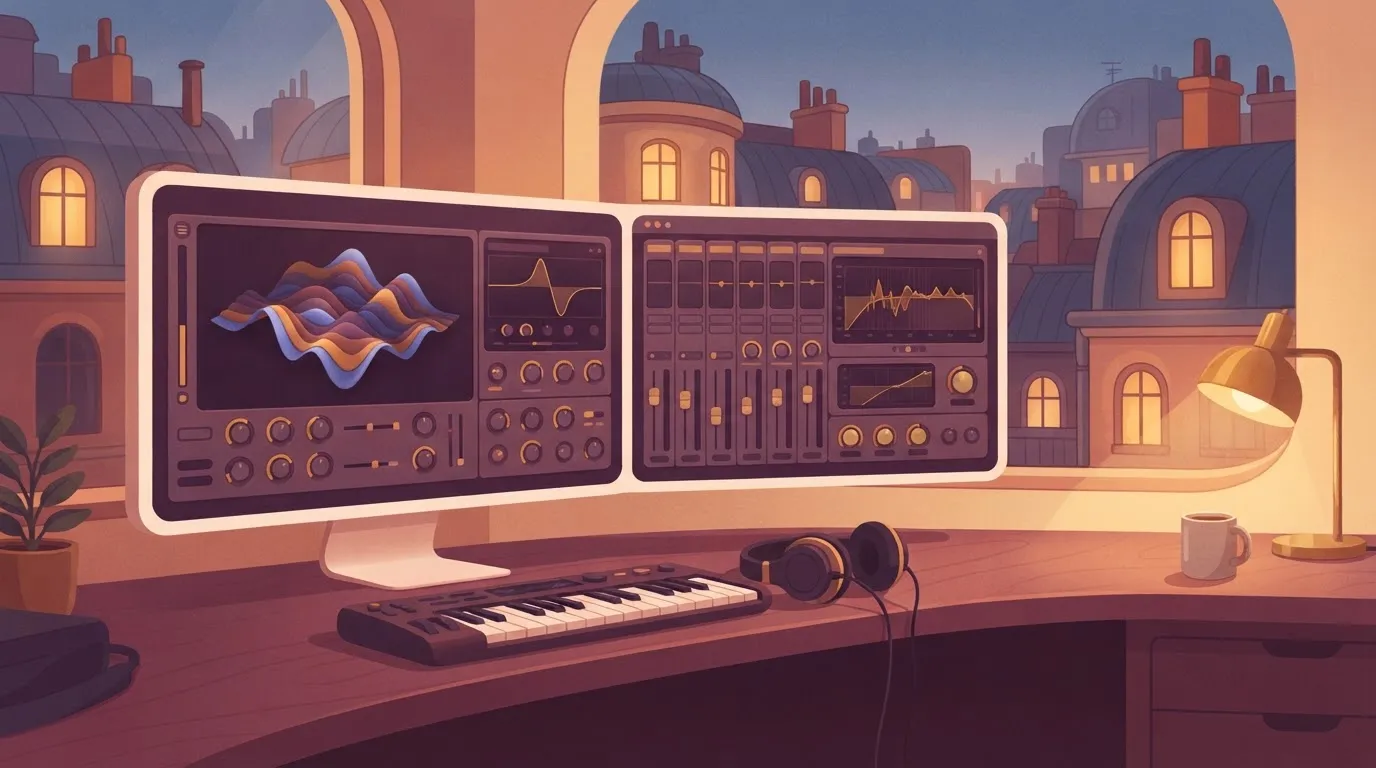
Because of this distinction, a user can own their software tools outright after a set number of months, but they will never "own" the library itself. They own the specific samples they spent credits on, regardless of whether their subscription remains active.
What happens to your samples if you cancel?
Because unused credits always roll over to the next month while a plan stays active, there is no "use it or lose it" pressure forcing a producer to spend their entire bank before the billing period ends. If a user terminates their subscription, they retain the legal right to use any samples they have already downloaded in their commercial projects.
They immediately lose access to any unspent credits remaining in their balance.
By restricting the ability to search the library and re-download previously owned sounds, Splice forces users to manually back up their local library to avoid losing access to their curated palette.
32% of Hip-Hop, 24% of R&B, and 4% of Rock songs in the Top 100 contain samples, according to Statista, suggesting that genre-specific production techniques heavily influence how artists approach modern composition.
As these genres continue to dominate the charts, the pressure to maintain a library subscription becomes a fixed cost of business for professional creators.
Which Splice plan fits you
- The Sounds+ plan ($12.99/month) provides 100 credits for hobbyists building one or two tracks a month, effectively capping the creative scope of any single composition, which means users must carefully ration their assets to finish a project.
- The Creator plan ($19.99/month) offers 200 credits and access to "Beatmaker" tools for professional beatmakers who need a higher volume of loops for daily composition, so those working on a tight schedule can maintain a consistent production pace.
- The Creator+ plan ($39.99/month) grants 500 credits for studio teams in high-output environments where multiple projects run simultaneously, ensuring that collaborators do not exhaust their shared resources before the workday ends.

If you are running this arithmetic for your own team, see what the same workload costs on Activepieces.
Splice pricing tiers for 2025 and 2026
Splice scales its subscription costs based on the volume of monthly downloads and the inclusion of creative software tools. The model requires more "credits" as a producer’s output increases, necessitating a move to higher-priced monthly or annual commitments.
The following table outlines the current cost-to-value ratio for each tier:
| Plan | Monthly Price | Annual Price | Credit Allotment | Included Plugins |
|---|---|---|---|---|
| Sounds+ | Monthly Rate | Annual Rate | 100 Credits | None Included |
| Creator | Monthly Rate | Annual Rate | 200 Credits | Astra, Beatmaker |
| Creator+ | Monthly Rate | Annual Rate | 500 Credits | Astra, Beatmaker |
While the entry tier has the library, the middle and top tiers bundle the core sample library with proprietary tools. These include Astra, a polyphonic synthesizer, and Beatmaker, a pad-based drum sequencer.
Splice Sounds+ plan features and price
The Sounds+ plan is the entry point for users who need access to the Splice Desktop App and the Bridge plugin. Bridge allows a producer to preview samples in the tempo and key of their Digital Audio Workstation (DAW) before spending a credit.
According to Support, this tier provides 100 credits per month.
For those who primarily use Splice to find "hero" sounds like a specific vocal hook, the Sounds+ tier is well-suited. The primary constraint is the lack of creative plugins, meaning users must rely on their existing software instruments to manipulate the sounds they license.
Splice Creator plan features and price
The Creator plan doubles the monthly credit allotment to 200. This supports a workflow where a producer might download ten to fifteen samples for every track they start.
This tier introduces the Astra synth and Beatmaker plugin, providing dedicated environments to process raw samples into finished instruments.
For a producer working on multiple commissions a month, this allotment ensures they do not run out of "currency" during the experimentation phase of a project.
Splice Creator+ plan features and price
Creator+ is the highest standard tier, offering 500 credits per month to accommodate high-volume production environments where teams finalize multiple tracks weekly.
This volume is essential for sound designers who need to audition vast quantities of foley, textures, and atmospheric loops to meet tight delivery deadlines.
By providing the largest credit buffer, this plan minimizes the risk of a user having to purchase "credit packs" at a premium price when their monthly allowance expires.
Usage limits that trigger a plan upgrade
Splice forces a plan upgrade when a creator’s monthly creative output outpaces the basic 100-credit allocation or requires advanced AI-assisted composition tools.
The 100-credit monthly bottleneck
The standard entry tier restricts users to 100 credits per month. This effectively limits a producer to auditioning and downloading roughly three new sounds per day.
A professional working on multiple client projects exhausts this volume quickly, meaning they must upgrade to a higher monthly allotment or wait for the next refresh to acquire new assets.
Exclusive access to Splice Skills and AI tools
Users move beyond the basic tier to access Splice Skills, a library of educational video content, and Astra, a synthesizer plugin that utilizes AI to generate custom presets.
Restricting these features prevents a novice producer from using the platform’s educational resources without paying a premium. On lower plans, Splice restricts the AI-driven "Create" mode, which suggests harmonically compatible loops.

Splice Bridge and Beatmaker plugin access
Integration with a Digital Audio Workstation (DAW) via the Bridge plugin and the use of the Beatmaker drum sequencer are locked behind the mid-tier upgrade.
Bridge allows a user to sync the Splice library directly to their project’s tempo. Without it, a producer must manually time-stretch every previewed sample.
Astra and Beatmaker are bundled as "Creator" perks, meaning the moment a user wants to move from simple file downloads to an integrated instrument workflow, their monthly cost increases.
Worth checking against a plan that does not meter every step: one credit covers a whole run on Activepieces.
Splice costs compared to Loopcloud and Arcade
Splice operates a credit-based subscription where users pay a monthly fee for tokens exchanged for individual sounds. This granular metering means a professional producer must budget their creative exploration.
Loopcloud: The direct competitor for sample management
Loopcloud mirrors the credit system but differentiates itself through deep integration with the user’s local hardware.
Loopcloud includes a standalone application that allows users to preview sounds in their project’s tempo and key before spending a credit. By defining tiers by cloud storage volume, the platform also functions as a backup utility for a producer's private library.
Output Arcade pricing and features
Output Arcade functions as a VST plugin that streams content directly into a digital audio workstation.
Unlike the "buy-to-keep" credit systems, Arcade is a pure access model where the monthly fee unlocks the entire library for as long as the subscription remains active. This approach favors the high-volume creator who needs immediate access to thousands of curated "Kits."

Artlist flat-fee licensing for video creators
Artlist offers a flat-fee annual subscription that provides unlimited downloads, removing the per-asset friction found in credit-based audio platforms.
For video editors and content agencies, this model is a predictable overhead cost because it covers music, sound effects, and footage under a single license.
| Service | Library Size | Ownership Model | Integration Type |
|---|---|---|---|
| Splice | 3M+ Samples | Keep (Permanent) | Standalone App |
| Loopcloud | 4M+ Samples | Keep (Permanent) | VST & Standalone |
| Output Arcade | 50,000+ Loops | Rent (Access-based) | VST Plugin |
Choosing between them depends on whether a creator values a permanent collection of individual files or the lower overhead of a streaming library.
Automate your sample workflow with Activepieces
Activepieces eliminates the manual overhead of sample management by executing entire automation sequences for a flat "flow run" fee rather than billing for every internal step. This architecture ensures that a complex multi-app synchronization costs the same as a single-step alert.
Syncing Splice downloads to Google Drive or Dropbox
Activepieces connects your local Splice Desktop folder to cloud storage providers like Google Drive or Dropbox using its library of 747 integrations, ensuring that users have a vast array of automation possibilities at their fingertips, so workflows can be tailored to almost any file management preference.
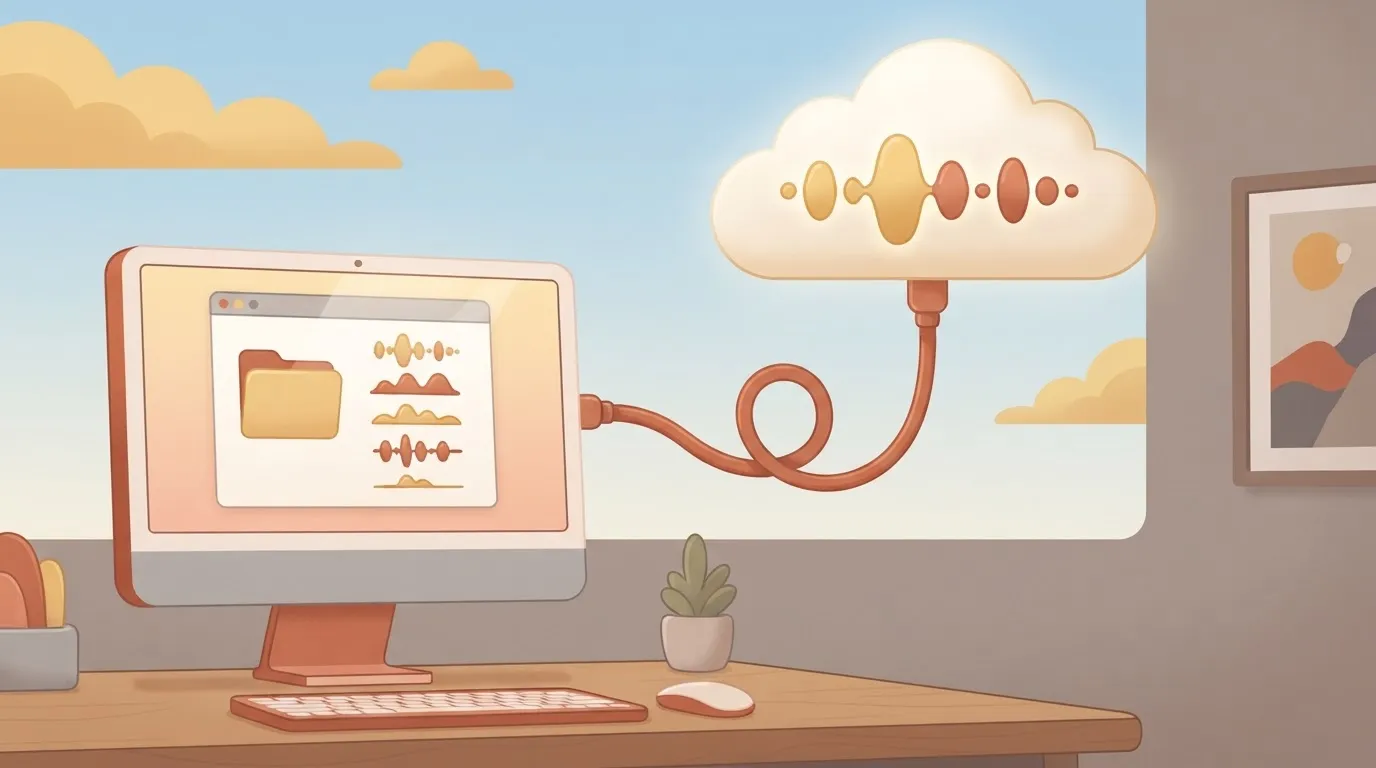
It ensures your library is accessible on mobile devices or remote workstations.
By monitoring the specific directory where Splice saves downloaded .wav files, the platform can trigger a recursive backup every time you click "Get" on a new sound.
This creates a mirrored, searchable cloud repository that functions even if the Splice desktop client is closed.
The 4-step automation flow:
- Watch new file in Splice folder
- Extract metadata (BPM/Key)
- Create folder in Google Drive project
- Upload and notify collaborator
By following this sequence, you transform a raw file download into a structured project asset ready for immediate use.
Automate Splice sound pack notifications
Connecting your sample library to communication tools like Discord or Slack ensures that your production team is alerted the moment new sonic palettes are available for a project.
Instead of manually sharing links, Activepieces can parse the folder name of a new Splice download and post the genre or instrument tags directly into a project-specific channel.
Archiving licensed samples for client billing
Activepieces automates the administrative trail required for commercial clearance by logging every unique sample used into a database tool like Airtable or a spreadsheet in Microsoft Excel.
When a file is moved into a "Project Active" folder, the automation captures the file name and timestamp.
This creates a verifiable audit trail of exactly which licensed assets were used. Organizations like MoneyGram and Moneypenny run Activepieces in production to manage these types of complex, multi-step workflows without the scaling costs associated with per-task metering.
Frequently asked questions
This automated record-keeping protects you during contract closeouts, as you can provide a complete manifest of licensed content to the client's legal team without manually retracing your creative steps.
Common billing and licensing questions
Splice currently offers a student discount of $4 off the monthly price of its Sounds+ plan for eligible college students and educators. This lack of specialized pricing means that independent learners and university students must pay the same monthly rate as professional studios, regardless of their enrollment status or educational budget.

Every sample you download using a credit is provided with a royalty-free license for use in commercial music productions and synchronization projects.
This license allows you to distribute your work on streaming platforms like Spotify or sell it to production music libraries without paying additional fees to the original sound designer or Splice itself.
As long as you maintain an active monthly or annual subscription, credits do not expire.
They roll over into the next billing cycle, which allows you to accumulate a surplus of assets during months when your production volume is low so you can use them during high-demand projects later in the year.
This rollover has no stated maximum cap—credits simply continue to roll over to the next month for as long as the subscription remains active.
How do I pause my Splice subscription without losing credits?
You cannot pause a subscription to stop payments while retaining access to your credit balance; you must remain on a paid plan to spend your accumulated credits. The platform's credit retention rules dictate how your balance behaves based on your subscription status:
| Subscription Status | Credit Behavior |
|---|---|
| Active Paid Tier | Credits remain available for use as long as the account is on an active paid tier. |
| Cancellation | Credits remain usable through the end of the current billing cycle after cancellation, then expire 28 days after the final cancellation date. |
| Resubscription | Credits are reinstated only if the user resubscribes to a paid plan using the same account credentials. |
If you cancel, you lose the ability to download new sounds, which effectively locks your prepaid assets behind a paywall until you resume monthly payments.
Running the numbers
See what the same workload costs here.
Free forever plan, and every paid plan self-hosts at no extra cost.
See pricing Talk to sales