Dropstone CLI Review: Terminal AI Coding Agent for 2026

Oct 14, 202611 min read
Dropstone CLI moves AI-assisted development from the isolated chat window into your local execution environment, allowing you to run autonomous agents that interact directly with your file system and shell, much like how Activepieces connects various cloud services to automate complex workflows.
Dropstone CLI is an open-source tool that enables AI agents to autonomously execute terminal commands, manage file systems, and perform complex coding tasks directly within a user's local development environment.
By bridging the gap between reasoning models and local compilers, it transforms your terminal into an active workspace where agents execute code rather than just suggesting it.

Run autonomous AI agents in terminal
Dropstone CLI v0.0.0 release details
Dropstone released the stable v0.0.0 version of its CLI as a cross-platform binary compatible with macOS, Windows, and Linux.
According to the official downloads page, the tool installs via a single command, which reduces the friction of setting up your local agentic environments.
The pricing structure includes the CLI in all tiers, meaning even if you're on the Free tier you can execute terminal-based agent tasks, albeit with usage limits that restrict high-volume automation.
This launch marks a shift toward standardized toolsets, where the same Activepieces integrations used in cloud flows are reachable as tool schemas on a per-project MCP server for local agents.
Dropstone CLI core features for developers
The CLI functions as an agentic coding tool that operates within your terminal to perform multi-step software engineering tasks. As detailed in the technical documentation, the tool supports three distinct model configurations to match the computational cost to the complexity of your task.
| Tier | Optimized For | Models |
|---|---|---|
| fast | high-volume routing or simple syntax extraction | Dropstone Fast |
| pro | standard feature development and iterative debugging | Dropstone Pro |
| heavy | long-horizon agentic work and complex refactoring | Dropstone Heavy with XHigh Thinking |
Prices and plan limits checked against dropstone.io and dropstone.io and docs.dropstone.io and docs.claude.com and claude.com and openai.com and gemini.google on October 14, 2026.
Browser automation via Skyvern
Skyvern acts as a web-based agent that automates complex browser interactions by navigating websites just as a human would. It translates high-level instructions into clicks and keystrokes, making it possible to extract data from legacy web portals that lack a formal API.
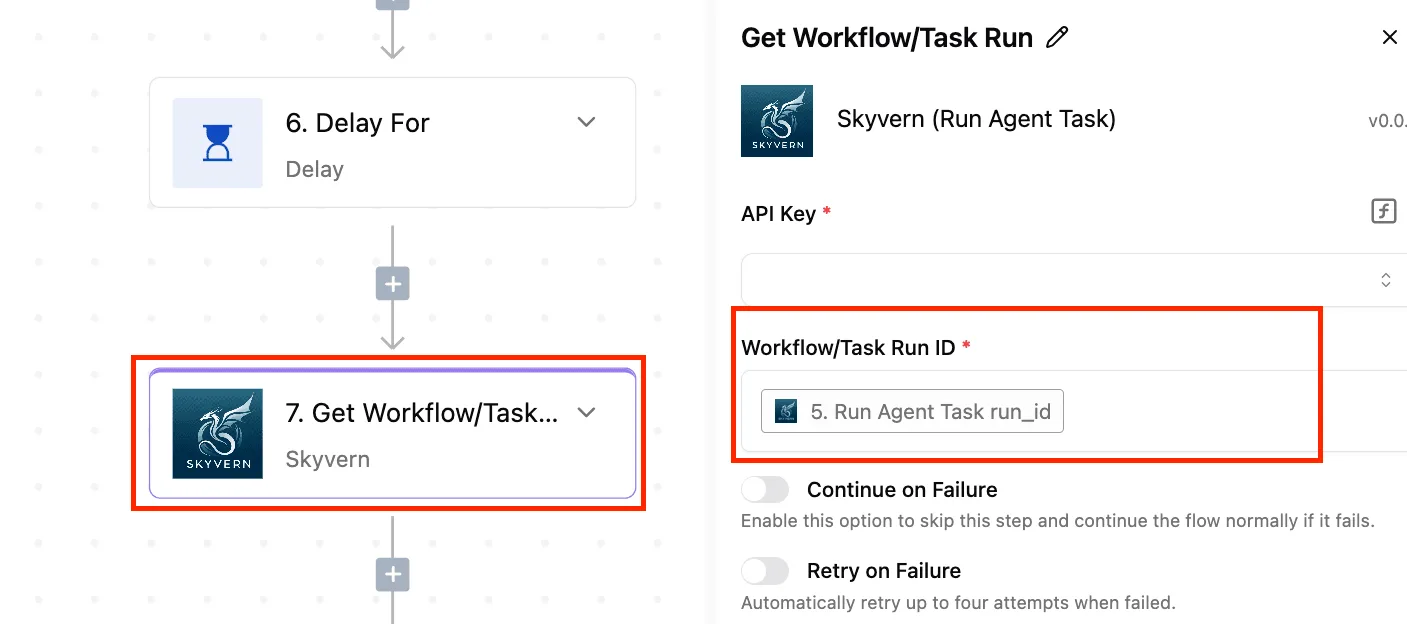
By connecting Skyvern to your local CLI, you can feed live browser data into your terminal-based coding tasks.
This allows the agent to verify documentation on a website or pull real-time configuration settings from a cloud console to inform the code it is writing on your machine.
The screenshot below illustrates how these agentic capabilities integrate with broader automation workflows. The canvas shows a "Get Workflow/Task Run" action within a Skyvern step, which allows you to pull specific execution data from a web-based agent task directly into your local environment.
[Prose continues here...] By selecting a specific task ID from a previous run, you ensure the CLI agent is working with the exact state captured during a cloud-based automation. This integration prevents the "it works on my machine" syndrome by synchronizing your local terminal actions with verified remote task outputs.
Everything below works on Activepieces' free plan. Start without code or a credit card.
Benchmarking agent accuracy in code repair
Dropstone CLI operates in an environment where agentic frameworks are now benchmarked by their success rate in resolving complex, multi-file software defects without your intervention. While legacy models like Codex achieved a 75.3% repair accuracy according to the PolyHunk benchmark, this performance level still requires significant manual cleanup for one out of every four attempted fixes.
PolyHunk reports that Claude Code, a terminal-based agent from Anthropic, achieves a 92.82% repair accuracy on the same PolyHunk dataset. This means it can autonomously resolve nearly the entire scope of a standard bug backlog. In contrast, PolyHunk's analysis puts Qwen Code's accuracy at only 26.98%, which indicates that if you're using lightweight local models you must verify and rewrite three-quarters of the agent's output.
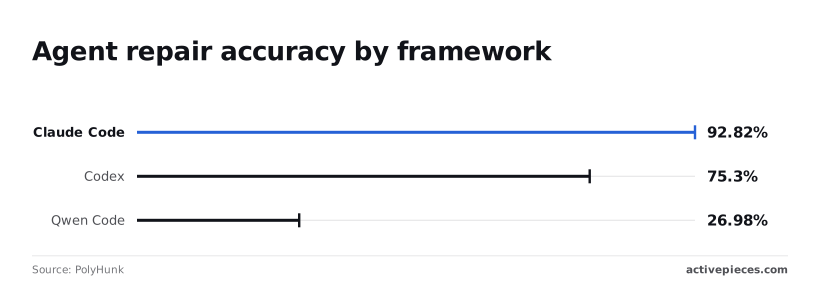
The following data illustrates the performance gap between these frameworks:
These metrics demonstrate that while high-reasoning models can handle the logic of a fix, the execution environment determines whether that logic translates into a working build.
Stateful command execution
Reliable code repair requires an agent to maintain a persistent state across multiple terminal commands to avoid environment drift. Dropstone CLI utilizes the same toolsets found in cloud automation to ensure that a local npm install or docker-compose up persists across your entire agentic session.
Reliable code repair requires an agent to maintain a persistent state across multiple terminal commands to avoid environment drift.
According to Docs, this statefulness is critical when you're using models like Claude Opus 5.5, which is optimized for long-running agentic coding tasks, or Gemini 3.8 Flash. Without this persistence, an agent might attempt to run a test suite against a binary that wasn't successfully compiled in the previous step, leading to false negatives.
Dropstone CLI permission and safety model
Terminal agents require a permission architecture that prevents destructive commands from executing without your explicit verification. Dropstone CLI implements a gated execution model where high-risk actions, such as deleting directories or pushing to a main branch, are paused for your approval.
Openai notes that this safety layer is particularly relevant if you're on the Google Gemini Free plan. This plan costs $0/month with a Google Account and provides 15 GB of cloud storage across Gmail, Drive, and Photos for logging and artifact storage, ensuring that no subscription fees are required to begin building.

For developers requiring more intensive processing, the Google AI Plus tier at $4.99/month offers expanded resources. The local CLI ensures that sensitive environment variables never leave your local vault during the reasoning process.
By scoping agent permissions, you can leverage the 92.82% accuracy of top-tier models without risking the integrity of your local file systems. You can automate complex tasks while maintaining strict control over your private data.
Trigger terminal automations through Activepieces
Activepieces, an open-source automation engine, bridges cloud events to local execution by routing external payloads through authenticated webhooks to the Dropstone CLI. This architecture eliminates the need to expose a persistent shell to the public internet. Local commands only execute when a specific, signed request validates against a predefined workflow. By utilizing the Activepieces HTTP piece, you can map a GitHub pull request or a Jira ticket update directly to your local environment setup.
The moment a connector is registered in Activepieces, it becomes available as a tool for any agent to call. This mechanism, visible in the packages/pieces directory of the open-source repository, ensures that the same integration action running in a structured flow is exposed as a tool on the Activepieces MCP server. This allows agents in the terminal to reach the same integrations used by cloud workflows without a second integration step.
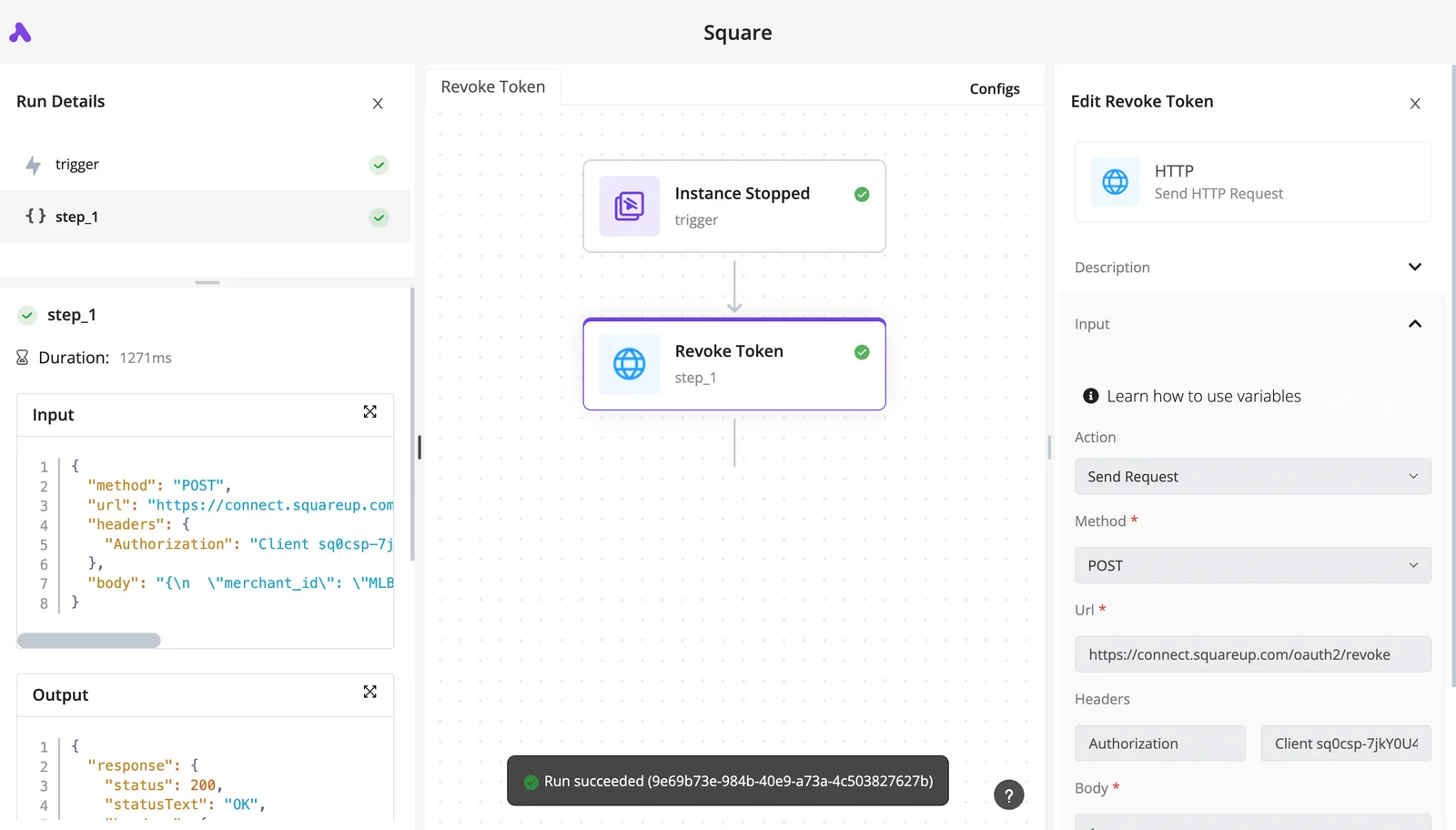
The following sequence demonstrates how a cloud event initiates a local agentic task:
- Activepieces receives a GitHub Webhook triggered by a new issue or code push.
- Activepieces sends a JSON payload to a local tunnel URL, such as a Cloudflare Tunnel or Tailscale Funnel.
- The local listener, monitoring the tunnel endpoint, triggers the
dropstone runcommand. - Dropstone CLI executes the task by analyzing your local repository and generating the required fix.
This bridge allows you to treat your local machine as a specialized worker node within a larger CI/CD pipeline. The consequence is a workflow where high-reasoning models like GPT-6 Astra can perform file-system operations without the latency or context-window limitations often found in purely cloud-based sandboxes.
Activepieces brings these agents under the same governance as the rest of the stack, applying enterprise RBAC and SSO to what an agent may connect to. While a library might give an agent code to run, Activepieces treats the agent as a user, logging each individual tool call with its specific input and output in the run detail view. Organizations like MoneyGram and FundingSocieties run this in production to maintain an audit log of every automated action across their infrastructure.
Easier to see it running than to read about it: set it up free, no card.
Managing the token costs of terminal automation
Terminal agents consume significantly more tokens than standard chat interfaces because they must ingest local file contexts and execute iterative feedback loops to resolve command errors. While a chat session might only exchange a few hundred words, a terminal agent using Claude Opus 5.5 must process your entire directory structure and compiler output to maintain state.
Claude pricing tiers for terminal agents
Accessing high-reasoning models for terminal automation requires moving beyond the basic Free tier. This tier offers access to Dropstone CLI with limited usage. For consistent local development, the Pro tier is the standard entry point. Individual users pay $20 per month for a monthly subscription. An annual subscription costs $17 per month, which requires a $200 upfront payment, effectively locking in a 15% discount for your long-term infrastructure planning.
Token costs of boilerplate code generation
Data from Dataku shows that code generation is the most expensive task type, consuming 67,300 tokens on average per session. A single complex refactor can exhaust a daily rate limit in minutes.
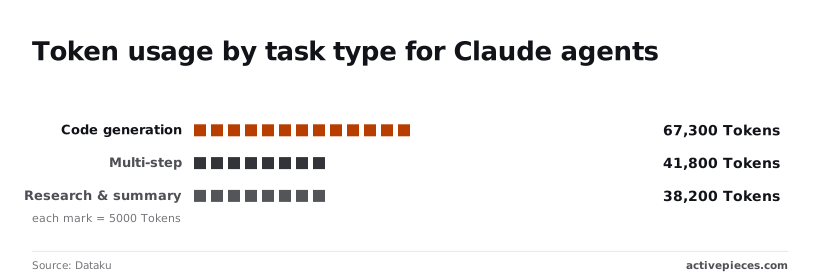
The following chart illustrates how different agentic behaviors impact your usage quotas:
As the chart indicates, code generation demands nearly double the resources of other tasks. According to Dataku, multi-step reasoning requires 41,800 tokens, while research and summary tasks consume 38,200 tokens.
This disparity exists because code generation involves constant "read-write-test" cycles where the agent re-reads the updated file after every small change to ensure syntax validity. Consequently, you must optimize your .gitignore and local context filters to prevent the agent from wasting tokens on heavy build artifacts or node modules.
Frequently asked questions
Does Dropstone CLI support private repositories?
Dropstone CLI functions as a local binary that inherits the existing authentication state of your host machine’s Git client. It provides native access to any private repository you can already reach via terminal.
Because the agent executes commands within your local shell environment rather than a proxied cloud container, it utilizes your stored SSH keys and personal access tokens without requiring secondary credential handoffs to a third-party platform. This architecture ensures that source code never leaves your local disk for indexing purposes, so your intellectual property remains confined to your managed infrastructure.
What LLM providers does Dropstone CLI use?
The CLI routes reasoning and code generation tasks through a configurable selection of frontier models, allowing you to swap providers based on specific project requirements or data residency constraints. You can toggle between various high-performance backends to optimize for different development needs:
- Claude Opus 5.5 (Anthropic) for complex, long-running agentic coding tasks.
- GPT-6 Astra (OpenAI) for flagship-grade reasoning and architectural planning.
- Gemini 3.8 Flash (Google) for high-speed agentic workflows and large-context analysis.
- Mistral Large 4 (Mistral) for flagship open-weight multimodal capabilities.
- Grok 4.7 (xAI) for integrated coding and general-purpose reasoning.
Selecting a specific model allows you to match the logical depth required for a particular refactor.
Can I use Dropstone CLI with CI/CD pipelines?
Dropstone CLI integrates with CI/CD environments by operating as a non-interactive process that accepts direct instructions via standard input or command-line arguments. In these automated contexts, the agent acts as a diagnostic or remediation layer within a workflow runner, such as a GitHub Actions virtual machine or a Jenkins build node. By passing the --yes flag to bypass manual confirmations, the agent can autonomously execute the following sequence:
- Analyze build logs to identify the specific file and line number causing a compilation failure.
- Apply a corrective patch to your source code based on the error signature.
- Re-run the test suite to verify the fix before committing the changes.
This capability transforms your pipeline from a passive reporter of failures into a self-healing system that reduces the time you spend on trivial syntax or configuration errors.