
FedRAMP Authorized Vendor List for Secure Integrations

Sep 30, 202613 min read
FedRAMP provides a standardized approach to security assessment, authorization, and continuous monitoring for cloud products. This framework ensures that any service handling federal data meets the encryption and access control requirements mandated by FISMA.
FedRAMP authorization defines the federal cloud security standard
The three impact levels: Low, Moderate, and High
The FedRAMP program categorizes Cloud Service Providers (CSPs) by the potential impact that a loss of confidentiality, integrity, or availability would have on an agency’s operations.
| Impact Level | Data Sensitivity | Control Baselines | Typical Use Case |
|---|---|---|---|
| Li-SaaS (Low) | Publicly available data | 156 | Basic project management or social media tools |
| Moderate | Non-public, controlled unclassified information (CUI) | 325 | Enterprise resource planning (ERP) or CRM systems |
| High | Highly sensitive, life-critical data | 421 | Law enforcement systems or emergency response data |
Because the Moderate level covers nearly 80% of all authorized applications, it's the baseline for most enterprise integrations. You might use tools like Activepieces to orchestrate data movement between these compliant endpoints.
FedRAMP Ready versus Authorized status for buyers
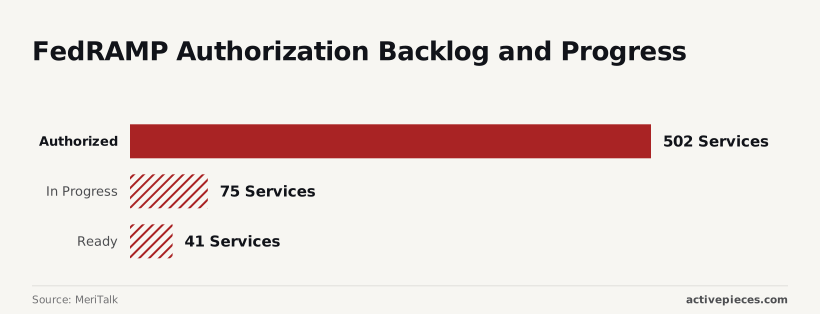
An "Authorized" status signifies that a service has completed the full security assessment and received an Authority to Operate (ATO). This status makes it immediately available for federal procurement. According to MeriTalk, there are currently 502 Authorized services.
The FedRAMP Marketplace as the official repository
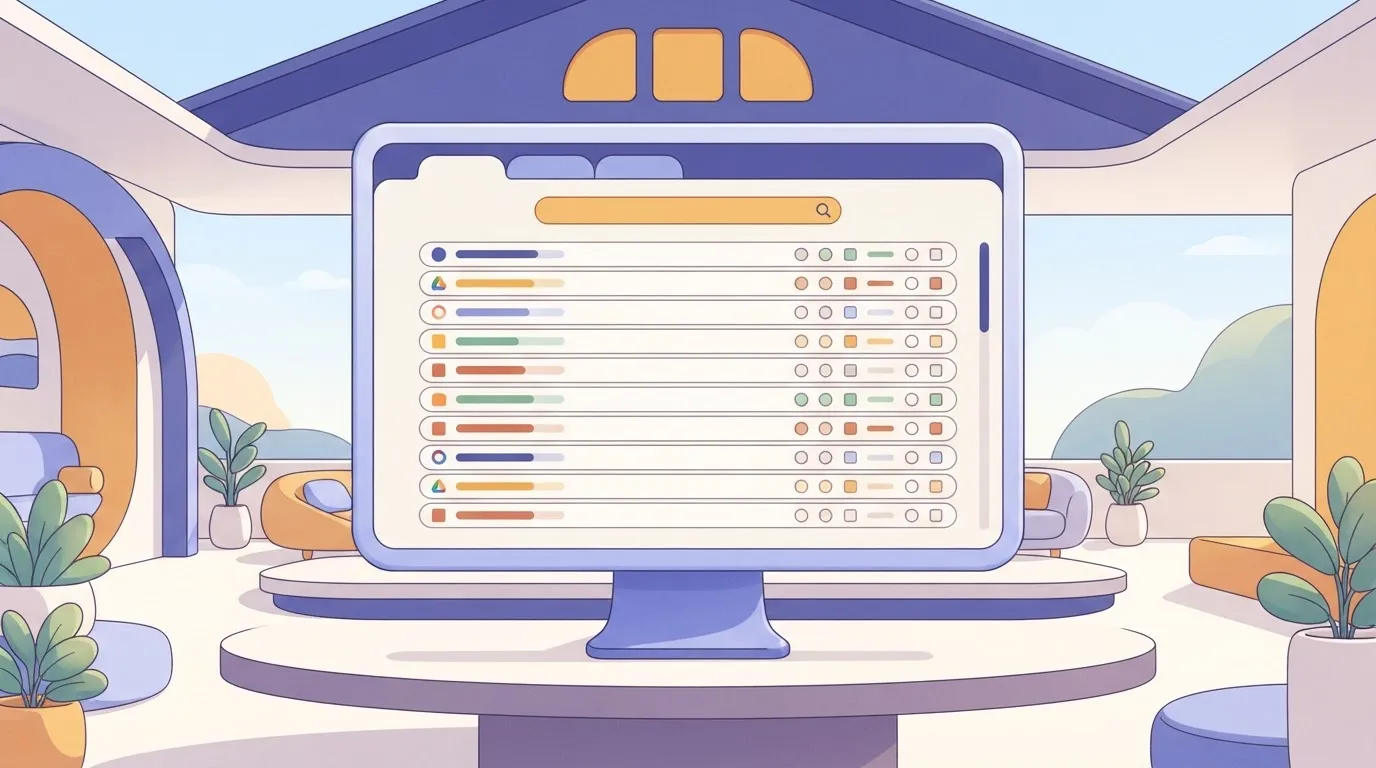
The FedRAMP Marketplace serves as the central, searchable database for all cloud service providers seeking or maintaining federal compliance. It is the definitive source of truth where procurement officers and IT architects verify the current status of any tool.
A service must be listed here to be considered for agency use.
The marketplace provides detailed profiles for each vendor, including their specific impact level and the agencies that have granted them an ATO.
It allows users to filter by service model or authorization type, ensuring that technical teams select tools that align with their specific security boundaries.
Fedrampcost notes that you must distinguish this from "Ready" status, which indicates a Third Party Assessment Organization (3PAO) has merely vetted a Readiness Assessment Report (RAR).
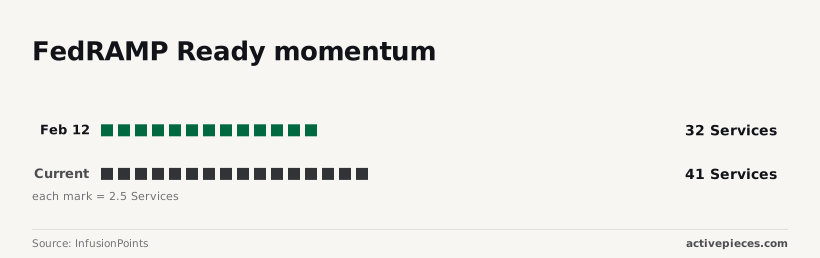
41 services currently sit in the Ready state, up from 32 on February 12th. InfusionPoints reports that the pipeline for new federal cloud tools is accelerating as the PMO finds efficiencies.
75 services are currently "In Progress," meaning they have a dedicated agency sponsor but haven't yet cleared the final security hurdles.
The role of the Joint Authorization Board (JAB)
The JAB acts as the primary governing body for FedRAMP, consisting of the Chief Information Officers from the DoD, DHS, and GSA. While individual agencies can issue a specific ATO, a JAB Provisional Authority to Operate (P-ATO) represents the highest level of scrutiny.
This takes minutes, not a project: automate it in Activepieces free.
The 2026 FedRAMP landscape prioritizes continuous monitoring
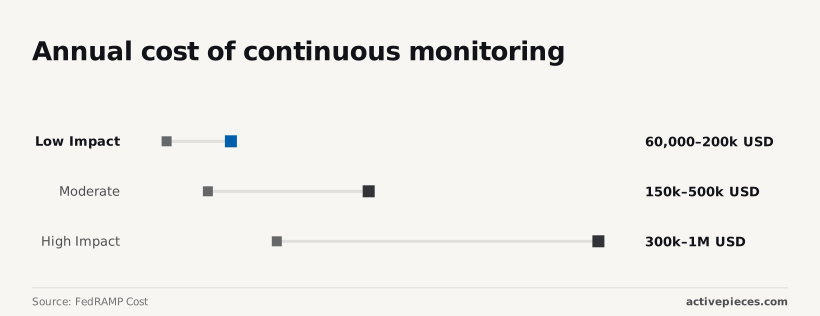
Maintaining a FedRAMP Moderate authorization now requires an annual investment of $150,000 to $500,000, which creates a significant financial barrier to entry for smaller technology firms, effectively excluding innovative startups from federal procurement.
You must allocate the equivalent of two full-time security engineers just to remain in the marketplace.
Transitioning from Rev. 4 to Rev. 5
When migrating to NIST SP 800-53 Revision 5, Nvlpubs states that compliance mandates a transition from static system security plans to a dynamic, threat-informed posture.
The FedRAMP 20x Initiative codifies this shift, aiming to accelerate the authorization process while tightening technical scrutiny, so vendors must prepare for a more rigorous and rapid compliance cycle. These pillars demonstrate a move toward a modular, data-driven ecosystem:
The program targets a five-week streamlined review. Vendors may reuse components under the presumption of adequacy. Validation is now led by automation. The PMO has introduced AI-specific security requirements.
New mandates for AI and Machine Learning vendors
Generative AI and machine learning tools face a new tier of scrutiny regarding data provenance and model weights.
A High Impact system can cost up to $1,000,000 annually to monitor, effectively limiting participation to only the largest enterprise providers, so smaller competitors are priced out of the most secure government contracts.
Why the 'authorized' list is shrinking in 2026
The barrier to entry is rising as the FedRAMP PMO deprecates legacy systems that can't meet the Rev. 5 automation requirements.
Even for Low Impact SaaS, the annual monitoring floor of $60,000 ensures that only vendors with a committed federal pipeline can justify the overhead, forcing many startups to abandon the public sector market entirely.
The rising price of maintaining continuous compliance
Maintaining a FedRAMP Authorization to Operate (ATO) has transitioned from a periodic audit expense to a permanent line item in your operational budget.
How FedRAMP monitoring costs scale with data sensitivity
The financial burden of continuous monitoring is directly proportional to the complexity of the boundary and the impact level of the data residing within it.
Maintaining a FedRAMP Authorization to Operate (ATO) has transitioned from a periodic audit expense to a permanent line item in your operational budget.
Budgeting for the FedRAMP Rev. 5 transition
Transitioning to Revision 5 introduces significant costs associated with the implementation of privacy controls and the supply chain risk management (SCRM) requirements.
The hidden costs of manual compliance reporting
Manual reporting creates a persistent drag on engineering velocity by diverting senior architects away from product development to manage the System Security Plan (SSP). To mitigate this, you must invest in:
Automated evidence collection engines pull state data directly from cloud APIs. Standardized OSCAL editors ensure documentation remains machine-readable for federal reviewers. Dedicated compliance engineering roles manage the constant stream of Plan of Action and Milestones (POA&M) updates.
Standardizing FedRAMP documentation with OSCAL
The Open Security Controls Assessment Language (OSCAL) provides a set of formats expressed in XML, JSON, and YAML that allow for the exchange of security information. It is the mandatory standard for machine-readable FedRAMP documentation, replacing static Word documents with dynamic data.
By using OSCAL, agencies can automate the validation of security plans against actual system configurations. This reduces the manual labor involved in reviewing thousands of pages of documentation and ensures that compliance data is consistent across different tools and platforms.
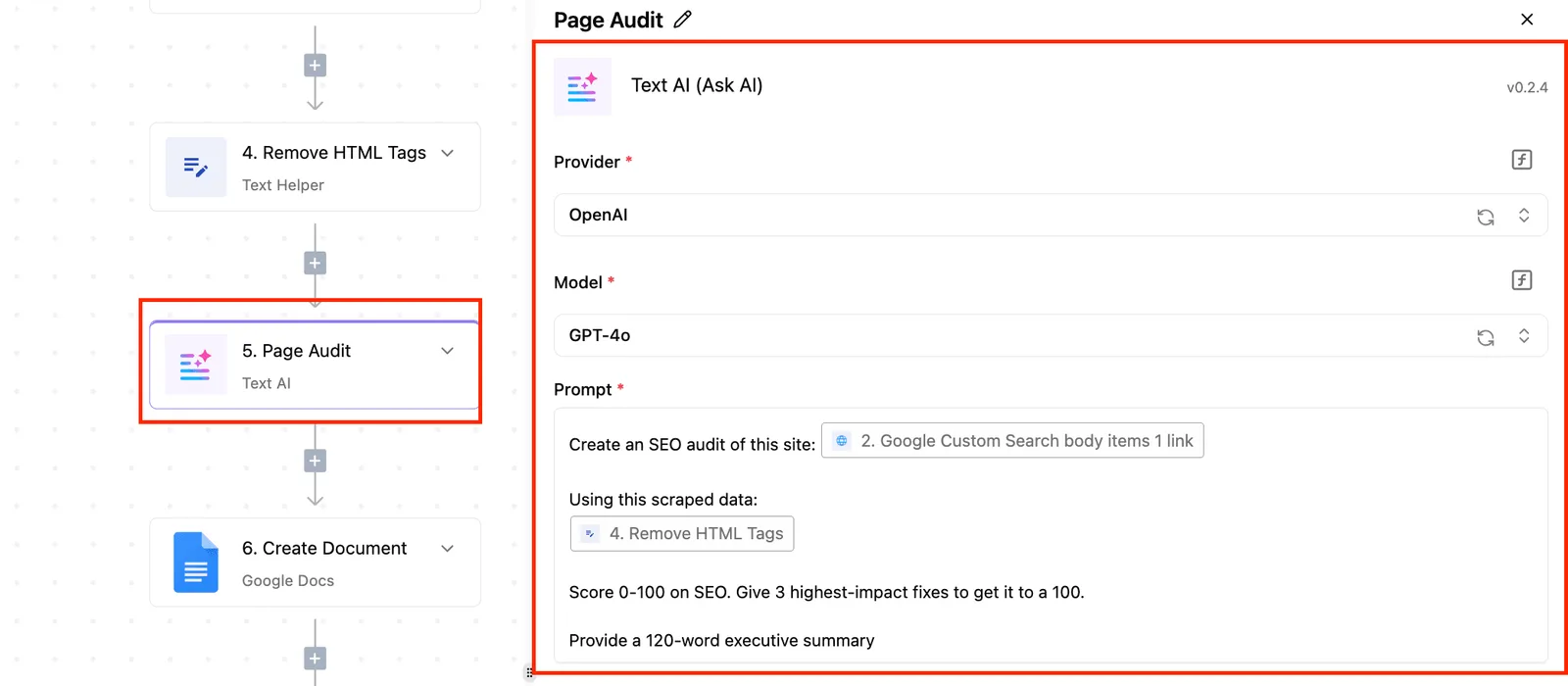
You can follow the rest of this with the builder open. Start free, no card.
Integration gaps create the most common compliance failures
Gaps in integration security lead to authorization drift. Your security posture is determined by the weakest link between two FedRAMP-authorized boundaries rather than the tools themselves.
The danger of 'shadow integrations' in federal workflows
Shadow integrations occur when personnel use unauthorized third-party connectors or "no-code" plugins to bridge functional gaps, effectively bypassing the security controls defined in the system boundary.
Your security posture is determined by the weakest link between two FedRAMP-authorized boundaries rather than the tools themselves.
Why standard API keys are insufficient for Rev. 5 compliance
Standard API keys fail NIST 800-53 Rev. 5 requirements because they lack the granular, time-bound permission structures and non-repudiation features necessary for high-impact systems.
| Integration Method | Security Risk | Auditability | Maintenance Overhead |
|---|---|---|---|
| Manual Data Entry | Low (Air-gapped) | High (Human logs) | Extreme |
| Custom API Scripts | High (Hidden vulnerabilities) | Low (Requires custom logging) | High (Code rot) |
| Authorized Middleware | Low (Inherited controls) | High (Automated trails) | Low (Vendor managed) |
Maintaining the System Security Plan (SSP) during updates
A System Security Plan (SSP) becomes obsolete the moment a custom integration script is modified without a formal re-assessment of the control implementation.
Architecting a compliant integration between authorized vendors
Maintaining compliance during inter-service communication requires an integration layer that mirrors the highest security impact level of any connected system.
- Define the data boundary to identify exactly where federal information leaves one controlled environment and enters another.
- Map the highest water mark of sensitivity so the integration inherits the most stringent controls required by the connected peers.
- Select FIPS-validated encryption to ensure the protection of data in transit meets the specific cryptographic modules mandated by federal law.
- Implement automated audit logging so that every exchange between tools creates a non-repudiable record for the continuous monitoring process.
Step 1: Define the authorization boundary for data in transit
The authorization boundary must encompass every component that touches federal data, including the middleware, API gateways, and temporary storage buffers used during the integration process.
Step 2: Implement FIPS 140-3 validated encryption standards
You must utilize cryptographic modules that have been formally validated under the Federal Information Processing Standards (FIPS) 140-3 program to ensure the integrity of the data pipeline.
Step 3: Establish Multi-Factor Authentication (MFA) at the API layer
Service-to-service communication must transition from static API keys to dynamic, multi-factor authentication methods to mitigate the risk of credential theft.
Establishing secure data bridges with Activepieces automation
Activepieces connects disparate FedRAMP-authorized SaaS tools through 735 integrations, executing automated workflows across applications under central governance without creating unmonitored backdoors between their respective security boundaries, which means organizations can scale their automation without compromising their compliance posture.

By acting as the central traffic controller for automated workflows, it ensures that data moving between platforms remains subject to the same encryption and access controls defined in the initial Authority to Operate (ATO).
Automating workflows across authorized government clouds
Connecting two authorized platforms doesn't automatically result in an authorized connection, as every API call introduces a new potential vector for data exfiltration. Activepieces mitigates this risk by providing a standardized framework for building these bridges.
Maintaining audit trails for continuous monitoring requirements
Continuous monitoring under FedRAMP requires a granular record of every action taken within the environment.
Audits move faster when security teams can inspect the logic directly rather than relying on a vendor's assurances, as a closed platform forces a reliance on faith rather than verifiable evidence.
Activepieces ships an MIT-licensed core that allows agencies to clone the repository and trace the worker architecture or run the engine fully air-gapped.
Deploying orchestration tools in secure environments
The most stringent federal security requirements often necessitate that orchestration tools reside entirely within a customer-managed Virtual Private Cloud (VPC). Activepieces supports self-hosted deployment models.
Activepieces syncs flows to git and promotes them through Release Management, ensuring that every change is versioned and reviewed like software rather than saved in a private in-app history.
Organizations like MoneyGram and FundingSocieties run this in production to maintain deliberate control over their automation environments. Check the Activepieces documentation for Git Sync and Release Management to see how these features function identically across self-hosted and cloud instances.
The Monday morning FedRAMP compliance checklist
Compliance continuity requires a weekly verification of the technical handshakes between authorized services to ensure that no unauthorized data pathways have opened during routine updates.
Inventory all SaaS API keys to ensure that no long-lived credentials are stored in plain text within configuration files.
Verify 'Legacy' vs 'Certified' status in the FedRAMP Marketplace to identify vendors that haven't yet committed to the Rev. 5 transition.
Review Plans of Action and Milestones (POA&Ms) for integration gaps that could lead to lateral movement between clouds.
Validate Rev. 5 control inheritance to ensure the underlying infrastructure provider is still assuming responsibility for physical security and network isolation.
Audit your current SaaS stack against the 2026 Marketplace list
You must reconcile your active service catalog against the FedRAMP Marketplace weekly. A vendor’s status can shift from 'In-Process' to 'Withdrawn' without a direct notification to you.
Verify the 'significant change' impact of new integrations
Any new connection between two FedRAMP-authorized tools constitutes a potential "Significant Change." This must be documented in the System Security Plan (SSP) to avoid a compliance violation during the next annual assessment.
Schedule a vulnerability scan for all third-party API connections
Scanning the points where external services ingest agency data identifies misconfigured headers and weak encryption protocols that standard infrastructure scans often overlook.
Frequently asked questions about FedRAMP integration
Does FedRAMP authorization cover StateRAMP requirements?
FedRAMP authorization typically fulfills the technical requirements for StateRAMP through a formal reciprocity process. StateRAMP is modeled directly on the NIST SP 800-53 security controls used by federal agencies.
A provider with an active federal Authorization to Operate (ATO) can usually bypass the primary audit phase for state and local government contracts.
This allows you to leverage a single security package to meet compliance standards across multiple jurisdictions without duplicating the documentation of your control environment.
How much does it cost for a vendor to get FedRAMP authorized?
The cost of FedRAMP authorization is determined by the complexity of the system architecture and the maturity of the existing security documentation. Expenses scale based on the selection of a Third-Party Assessment Organization (3PAO) for independent auditing.
The initial authorization process typically costs between $1,000,000 and $2,000,000 when accounting for 3PAO fees and the extensive engineering required to harden the environment, a capital requirement that effectively limits government competition to only the most well-funded enterprises.
This upfront capital expenditure represents a massive hurdle before the annual monitoring fees even begin.
For a vendor, this investment is a reflection of how far their current "commercial-grade" infrastructure sits from the rigorous boundary requirements of a federal baseline.
Can I use a non-authorized tool if it sits behind a VPN?
A Virtual Private Network (VPN) provides a secure tunnel for data transit but doesn't grant a non-authorized tool the legal status required to process federal data. FedRAMP focuses on the security of the data at rest and the operational integrity of the provider.
A network-level encryption layer can't verify these aspects.
Relying on a VPN for an unauthorized SaaS product leaves a compliance gap where you remain responsible for any data breach occurring within that tool’s unvetted environment.
What is the 'FedRAMP Tailored' path for low-risk apps?
The FedRAMP Tailored path is a streamlined authorization process specifically for Low-Impact Software-as-a-Service (LI-SaaS) applications that don't store personally identifiable information.
This path reduces the number of required security controls. It shortens the timeline for specialized tools like collaboration platforms or project management suites to reach the federal market.
For you, this represents a faster way to integrate niche productivity tools while maintaining a defensible security posture.
Related reading
References
Build it
Set this up in minutes.
No code required. Connect your accounts, and Activepieces runs it from there.
Start free Talk to sales