
Grok Alternatives: Best Options for 2026

Sep 30, 202613 min read
Grok’s primary appeal lies in its native, low-latency access to the X firehose, yet you're migrating to alternatives to secure higher reasoning benchmarks and reliable production infrastructure.
While the real-time social layer has a temporal advantage for trend analysis, it often lacks the architectural depth you need for complex, multi-stage enterprise logic.
Why you're switching from Grok to alternatives
Grok's real-time access to X data
Grok remains the only model with a direct, unfiltered pipeline into the global conversation as it happens. This native integration allows the model to summarize breaking news and public sentiment without the lag associated with third-party scrapers or search engine indexing.
If your primary goal is to monitor viral trends or track live events on social media, Grok provides a seamless experience that alternatives struggle to match.
The ability to toggle between "Fun Mode" and "Regular Mode" also gives the model a distinct personality that makes it more engaging for casual, conversational use cases.
The trade-off between real-time data and model depth
When you access the live X stream, Grok 4.7 can surface breaking events before indexed search engines. This speed often comes at the expense of rigorous logical deduction.
According to Docs reports, for long-horizon agentic work, you're turning to Claude Fable 5.1, which prioritizes complex reasoning chains over immediate data ingestion.
Platform's analysis puts GPT-6 Astra at a level of architectural understanding that social-media-tuned models struggle to replicate in scenarios where high-volume coding tasks are the priority.
Grok's regional and data residency limitations
Significant hurdles face you with Grok due to a lack of granular regional data residency options. These options are necessary to meet strict sovereign data requirements.
Unlike Google’s Gemini 3.8 Flash, which has broad geographic availability and enterprise-grade network isolation, Ai notes that Grok’s infrastructure is tightly bound to X’s centralized data centers.
In highly regulated markets, this creates a compliance vacuum for you. You must ensure your telemetry and prompt data never leave specific jurisdictions. Scaling an application on Grok often reveals friction in API rate limit stability.
API stability and developer ecosystem maturity
When building complex workflows through Activepieces, you require predictable uptime and robust error handling to prevent pipeline collapses.
Every connector registered in the platform is instantly available as an agent tool; a integration runs as a flow step and simultaneously as a tool schema on the Activepieces per-project MCP server.
This allows an agent to call any of the 735+ integrations directly from Claude or ChatGPT without a separate export step, removing the need to re-integrate a catalog for your agents.
Several factors drive your Grok migration. API rate limit instability and the lack of regional data residency options are primary concerns.
Limited multi-agent orchestration and restricted integration with non-X data silos also motivate the move. These infrastructure gaps force a shift toward providers like OpenAI or Anthropic.
The fastest way to settle a shortlist is to try one. Activepieces is free to try, no credit card.
Comparing reasoning performance across flagship models
Flagship models have reached a performance ceiling where marginal gains in benchmarks like MMLU no longer dictate real-world utility for complex automation.
While technical specifications suggest a tight race at the top, the practical difference in how these models handle multi-step logic determines whether an autonomous workflow succeeds or fails without human intervention.
Flagship models have reached a performance ceiling where marginal gains in benchmarks like MMLU no longer dictate real-world utility for complex automation.
xAI holds a narrow lead, followed closely by OpenAI. Both outperform previous industry standards.
92.7% was the score for Grok-3 [ShawnHack], which meant it held the highest recorded accuracy for general knowledge and problem-solving at that time.
GPT-5 scored 92.5% [ShawnHack], representing a near-identical level of reasoning to Grok-3 at the time, though today's flagships, GPT-6 Astra and Grok 4.7, have since moved past both scores.

Long-horizon reliability
You can prioritize workflow integration over raw performance metrics. Omniscience scored 78% [ShawnHack], the 2026 industry record score that is the baseline, so any model falling below this threshold is effectively obsolete for professional tasks.
It shows that modern flagships have improved by nearly 15 percentage points to handle much more nuanced instructions, indicating a significant leap in the ability to follow complex multi-step prompts, which means users can rely on these models for increasingly sophisticated automated tasks.
This data illustrates that while Grok-3 led on paper at the time, the practical gap between it and GPT-5 was statistically negligible for most enterprise applications.
The shift in focus is toward long-horizon reliability. For tasks requiring sustained logic over hours of execution, you look toward Claude Fable 5.1 [Anthropic], which is designed for demanding reasoning and long-horizon agentic work.
If your goal is high-volume processing that maintains intelligence, Claude Haiku 4.5 [Anthropic] is the fastest near-frontier intelligence to reduce latency in customer-facing bots.
Google has a low barrier to entry for testing these capabilities. It has a Free plan at $0/month [Google] for basic experimentation, ensuring that financial barriers do not prevent developers from testing the model's capabilities, so anyone can begin building without an upfront investment.
The Google AI Plus tier at $4.99/month grants 2x higher usage access, allowing you to stress-test reasoning models at double the standard frequency before committing to a full API deployment, effectively doubling your capacity to refine prompts under load, which means you can iterate on complex workflows twice as fast for a relatively low recurring cost.
OpenAI for industry-leading reasoning and developer tools
OpenAI is the primary benchmark for you if you prioritize complex logic and a stable, well-documented API over the real-time social media signals found in Grok.
While xAI focuses on the velocity of X’s data stream, OpenAI has the architectural depth you need to build autonomous agents that can debug code, manage long-form knowledge work, and maintain state across multi-step business processes.
Advanced reasoning with the GPT-6 Astra models
The GPT-6 Astra model has the sophisticated reasoning necessary for you to move beyond simple chat interfaces into autonomous agentic workflows.
By utilizing models designed for high-order logic, you can automate technical support or complex data synthesis without the constant manual oversight required by less capable models.
Developers managing large datasets could once leverage the OpenAI GPT Instant total context window, an older tier since succeeded by GPT-6 Astra and GPT-6 Luna. It offers 27K tokens on the Free plan so that your initial testing occurs with enough memory to handle multi-page documents.
By upgrading to the Go plan, you increase this to a 54K token context window. It doubles the amount of information the model can retain during a single session to prevent the loss of critical project details.
OpenAI's third-party integration ecosystem
OpenAI’s API stability is the foundation for deep integration with browser automation tools and external service providers. This ensures that automated tasks don't break during routine model updates.
[Screenshot as described: A multi-step workflow builder showing Step 7 "Get Workflow/Task Run" selected with a red border. The configuration panel for Skyvern is open, showing required fields for the API Key and Task Run ID.]
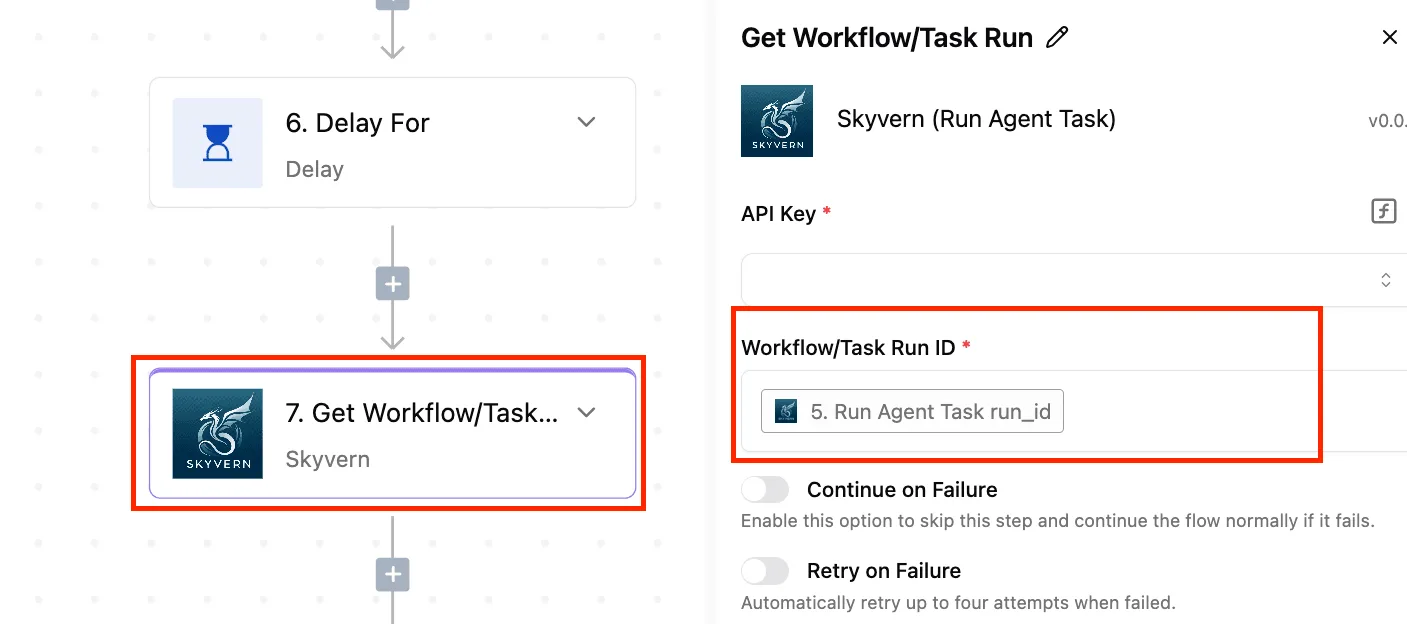
This connection allows the workflow to verify the success of a browser-based action before proceeding. Following this verification, the system can then pass the structured data into a database or a communication tool like Slack.
Reading a table only gets you so far. Build the same workflow in Activepieces and compare it yourself.
Managing large datasets with superior context windows
Modern enterprise AI relies on a model’s ability to ingest massive amounts of internal documentation without losing the thread of the conversation.
While Grok provides a gateway to social data, its architectural limits during high-volume ingestion often force you to segment your data. This increases the risk of missing critical cross-references in large codebases.
Context window size and RAG performance
The context window determines the total amount of information a model can process in a single request, directly impacting the accuracy of Retrieval-Augmented Generation (RAG) systems.
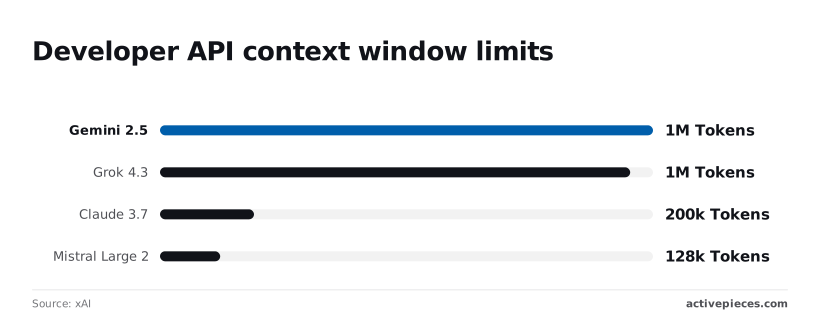
Claude 3.7 had a 200,000 token window. This allows you to upload roughly 150,000 words so the model can maintain nuance across long technical manuals.
Mistral Large 2 supported 128,000 tokens. It can handle a single large PDF without needing to break the file into smaller chunks that confuse the reasoning engine.
Comparing Gemini's million-token capacity to Grok
For massive datasets, the difference in capacity determines whether you can process an entire repository or just a few files at a time.
Gemini 2.5 supports 1,048,576 tokens, providing enough room to analyze hour-long video files or thousands of lines of code in one pass. GPT-6 Astra extends this further with a 1,050,000 token limit.
While Grok 4.3 reached a respectable 1,000,000 tokens, the slight edge held by competitors was the basis for deeper data density before the system required expensive preprocessing.
| Model | Price per 1M Input Tokens | Context Window | Primary Use Case |
|---|---|---|---|
| GPT-6 Astra | $15.00 | 1.05M | Complex reasoning and coding |
| Gemini 2.5 Pro | $1.25 | 1.04M | Advanced reasoning and coding |
| Claude Opus 5.5 | $4.00 | 200K | Long-running agentic coding |
| Perplexity | $5.00 | 128K | Real-time web research |
Prices and plan limits checked against docs.claude.com and claude.com and openai.com and gemini.google on September 30, 2026.
Claude for coding and nuanced writing tasks
Claude Sonnet 5.5 and Claude Opus 5.5 outperform Grok in complex logical sequencing and stylistic versatility. They provide a predictable output for you if you require precision over personality.
Artifacts and the superior user interface experience
The Claude interface introduces a dedicated side-window called Artifacts that renders code, documents, and websites in real-time. This allows you to iterate on a visual component without scrolling through a long chat history.

Because of this separation of conversation and content, you can view a live preview of a React component while simultaneously prompting for styling adjustments in the chat bar.
Claude's constitutional AI and safety approach
Anthropic builds its models using Constitutional AI, a training method that gives the model a written set of principles to govern its behavior rather than relying solely on human feedback.
This framework ensures that Claude Fable 5.1 is the source of objective, neutral responses even when prompted with controversial topics that might trigger the more combative persona found in Grok.
For you, this translates to a reduced risk of the AI generating brand-damaging content or violating internal compliance standards during automated workflows.
Replicating Grok features with Activepieces automation
Activepieces allows you to bypass the limitations of a closed ecosystem by connecting frontier models directly to X’s API. This is what makes automated workflows that trigger based on live social data possible.
By shifting from a single-model interface to a modular automation builder, you can swap the underlying intelligence without rebuilding your entire monitoring stack. MoneyGram and FundingSocieties run Activepieces in production to manage these types of complex, multi-provider environments.

Connecting LLMs to real-time X (Twitter) data streams
Replicating the "Live on X" experience outside of the native interface requires a bridge between the social platform's data firehose and a high-reasoning engine.
Activepieces, an open-source automation tool, is this bridge by providing pre-built connectors that watch for specific keywords or mentions on X and pass the payload to an LLM.
By routing this data into Claude Sonnet 5.5, you gain a reasoning capability that can categorize sentiment or extract technical signals with higher precision than Grok’s default "Fun Mode."

| Grok Feature | Alternative Equivalent | Migration Effort |
|---|---|---|
| Live on X | Activepieces X Search + GPT-6 Astra | Moderate (API setup required) |
| Fun Mode | System Prompting in Claude Haiku 4.5 | Low (Prompt engineering) |
| Long Context | Gemini 3.1 Pro (2M+ Context) | Low (Model swap) |
Building autonomous agents that act on social insights
Once the data stream is established, the focus shifts from observation to execution using agentic workflows.
By deploying Gemini 3.8 Flash within Activepieces, you can create agents that don't just summarize a thread, but actively perform tasks like updating a lead status in a CRM or drafting a technical response in a Slack channel.
By treating every connector as a native agent tool through the Pieces Framework and MCP server integration, the platform ensures that the same actions powering automated flows are immediately available to large language models.
Activepieces is the better fit for developers who need to build modular, multi-provider environments where real-time X data is seamlessly exposed to frontier models as executable tools. This architecture allows for a level of extensibility and intelligence swapping that closed ecosystems cannot match.
Frequently asked questions about switching from Grok
Can I access X (Twitter) data through the OpenAI API?
OpenAI doesn't provide a native integration for live X data, which means you must build your own ingestion pipelines to replicate Grok’s real-time search features. To bridge this gap, you typically use the X API to pull raw posts into a vector database.
This architecture allows a model like GPT-6 Astra to analyze social trends. It requires you to maintain separate API subscriptions and handle the data cleaning that Grok performs automatically.
Which alternative has the largest context window in 2026?
Z.ai GLM 5.3 currently is the most expansive context window among frontier models. It allows you to process massive technical documentations or entire codebases in a single prompt.
While Grok handles standard conversational threads, the million-token capacity of GLM 5.3 ensures that long-horizon projects don't lose critical details due to memory cutoff.
For you, focused on deep reasoning across these large datasets, Claude Opus 5.5 and Gemini 3.1 Pro provide high-capacity alternatives that maintain logical consistency even as the input grows toward its limit.
Is there a free alternative to Grok for casual use?
Several providers offer free tiers for their most efficient models. This allows you to test automation workflows without an upfront monthly subscription.
Google provides access to Gemini 3.5 Flash-Lite through its AI Studio platform for rapid prototyping. DeepSeek offers deepseek-flash with a free daily usage quota for vision and text tasks.
Mistral makes Mistral Small 4 available for you if you need a balance of reasoning and speed in a cost-free environment.
Related reading
Still comparing
The fastest way to settle it is to build something.
Open source under MIT, so you can self-host the same thing later.
Start free Talk to sales