
How Much Does MiMo V2.6 API Pricing Cost in 2026?

Oct 11, 202613 min read
The 2026 update to MiMo V2.6 introduces a tiered pricing structure designed to accommodate high-volume enterprise demands while maintaining competitive rates for smaller developers.
As organizations look to scale their operations, many are opting to connect these endpoints through automation platforms like Activepieces to streamline their internal workflows.
This year’s cost per million tokens reflects a significant reduction in overhead for long-context processing, ensuring that large-scale data synthesis remains economically viable across all global regions.
Understand MiMo V2.6 pricing and limits
When processing 1,000 documents via MiMo-V2.6-Flash, a standard workflow incurs an output cost of 0.28 USD per 1M tokens. This three-tier multimodal model separates costs by latency requirements and reasoning depth.
According to AI on Mac, if the task shifts to the flagship MiMo-V2.6-Pro, the output rate increases to 0.87 USD per 1M tokens.
Higher computational overhead for nuanced text and vision synthesis accounts for this increase. For mission-critical applications where millisecond response times are non-negotiable, AI on Mac notes the V2.6-Pro-UltraSpeed tier charges 8.70 USD per 1M output tokens.
The run is the meter, not the steps inside it. Activepieces uses credit-based AI billing that allows for per-project cost caps, ensuring that a complex orchestration of MiMo V2.6 models stays within a defined budget.
The run is the meter, not the steps inside it.
This prevents the platform from taxing the exact granularity required to build reliable AI agents, a direct contrast to the per-task or per-module billing found on the Zapier and Make pricing pages.
| Tier | Input Price per 1M Tokens | Output Price per 1M Tokens | Latency Target |
|---|---|---|---|
| Flash | $0.14 | $0.28 | < 200ms |
| Pro | $0.435 | $0.87 | < 800ms |
| Pro-UltraSpeed | $4.35 | $8.70 | < 100ms |
Moving from Pro to UltraSpeed increases costs by 900%, meaning speed optimization is the primary driver of API spend.
MiMo V2.6 text and vision token rates
Unified pricing logic applies to both text and vision within the V2.6 suite. The system bills an image based on its equivalent token weight rather than a flat fee per file.
Calculating vision weight by pixel density
The vision engine processes images by breaking them into a grid of 512x512 tiles. Each tile consumed by the model is billed at a fixed rate of 170 tokens, regardless of the visual complexity within that specific tile.

To calculate the total weight, the system first resizes the image to fit within a 2048x2048 square while maintaining the original aspect ratio. It then scales the shortest side to 768 pixels and counts how many 512-pixel tiles are required to cover the resulting dimensions.
An additional 85 tokens are added to every image as a base processing overhead for the initial downsampling and metadata analysis.
At the 0.28 USD rate for Flash output, a vision-heavy workflow remains viable for mass-market apps. The 8.70 USD UltraSpeed rate limits vision processing to high-end enterprise tools.
MiMo V2.6 rate limits by plan tier
Three distinct tiers govern concurrency and dictate how many requests a system can handle simultaneously, which defines the operational capacity available to your infrastructure.
- The Free Tier allows 3 requests per minute for basic functional testing, so developers are limited to very low-traffic experimentation.
- The Pay-as-you-go tier permits 50 requests per minute for small-scale production deployments, meaning modest traffic spikes will likely trigger rate-limiting errors.
- The Scale Tier offers 500 requests per minute for department-wide automation, ensuring that high-volume workflows remain uninterrupted during peak operational hours.
Tiered discounts for high-volume enterprise users
Only after a monthly spend exceeds 5,000 USD do enterprise volume discounts trigger. Smaller startups will pay the full list price regardless of growth trajectory.
On the UltraSpeed tier, the discount schedule is the only way to reduce the 4.35 USD input cost, as standard accounts have no access to negotiated rates.
Contractual commitments for 12 months offer a flat 15% reduction, meaning a firm can lock in predictable margins for long-term AI agents.
If you are running this arithmetic for your own team, see what the same workload costs on Activepieces.
Calculate MiMo V2.6 production scale costs
Once an application requires the low-latency response times of the UltraSpeed tier, MiMo V2.6 pricing shifts from a competitive commodity to a significant infrastructure overhead.
While the standard processing tier handles asynchronous batching efficiently, moving to UltraSpeed introduces a multiplier on every million tokens, which forces you to choose between user experience and unit margin.
Model interoperability in the MiMo ecosystem
MiMo V2.6 is a standalone family of models, but it is rarely deployed in a vacuum. Because the V2.6 suite is designed for high-speed inference, developers often use it as a routing or synthesis layer alongside other frontier models.
Comparing MiMo to external models is necessary because production workflows are rarely monolithic. A pricing guide for MiMo must account for these external dependencies, as the cost of a MiMo-powered agent often includes the price of the "expert" models it consults.
MiMo V2.6 UltraSpeed pricing premium
Performance is taxed on the UltraSpeed tier, requiring a higher spend for the exact same model weights used in standard processing.
Because this tier prioritizes compute availability, a developer building a customer-facing support bot must pay this premium to avoid the multi-second hang times associated with standard queues.
Total cost per 1,000 requests for common RAG use cases
Accounting for multiple model calls is necessary to calculate the expense of a Retrieval-Augmented Generation (RAG) workflow. In a typical production pipeline, the system must perform the following actions:
- A call to an embedding model to vectorize the user's incoming search query.
- A classification step using a model like Claude Haiku 5.5 to determine if the query requires a database lookup or a direct response.
- A final synthesis call to a high-reasoning model like Gemini 3.8 Flash to generate the answer based on retrieved context.
MiMo V2.6 specific RAG cost breakdown
Calculating the cost for a native MiMo V2.6 workflow requires applying the specific tier rates to the average token volume of a RAG interaction. A standard request typically involves 500 input tokens for the query and context, followed by 200 output tokens for the response.
For 1,000 requests using the MiMo V2.6 Flash tier, the input cost is $0.07 and the output cost is $0.056, totaling $0.126, representing the baseline expense for entry-level processing.
Scaling this same 1,000-request workflow to the MiMo V2.6 Pro tier increases the total cost to $0.3915, reflecting a significant premium for the enhanced capabilities of the higher tier.
If the application requires the UltraSpeed tier for near-instant synthesis, the cost jumps to $3.915 per 1,000 requests. These figures demonstrate that the choice of tier is the primary lever for controlling the operational budget of an automated agent.
Comparing MiMo V2.6 to GPT-6.1 Sol and Claude Sonnet 5.5 on value
MiMo V2.6 positions itself as a middle-ground alternative, yet its value proposition weakens when compared to the ecosystem advantages of established frontier models.
While MiMo has lower entry costs for basic text completion, Claude Sonnet 5.5 has superior multi-modal reasoning. This often reduces the total number of turns needed to solve a complex task, which lowers the aggregate token count per session.
Similarly, GPT-6.1 Sol has a more predictable pricing ceiling for high-volume workloads, whereas MiMo V2.6 requires careful monitoring of tier-switching to prevent a sudden spike in the monthly cloud bill.
Avoid hidden MiMo V2.6 billing pitfalls
Managing the financial footprint of an AI deployment requires a shift from viewing tokens as a flat utility to treating them as a highly volatile resource.
While the unit price of a model like Claude Haiku 5.5 remains low, the compounding nature of orchestration means that inefficient data handling can double an invoice before the system generates a single successful output.
Why context window utilization is your biggest variable expense
Because every interaction carries the cumulative weight of the entire conversation history, context window utilization represents the primary driver of monthly spend.
When using a high-reasoning model like GPT-6 Astra, the system re-processes every previous instruction and data point for every new turn. This means a twenty-turn conversation costs significantly more than twenty individual queries.
Unexpected spikes in these costs are most frequently caused by the following triggers:
- An agent repeatedly attempts to call a failed tool, incurring full input costs for every unsuccessful retry.
- The application sends the entire chat history for every turn. The cost of the tenth message is ten times higher than the first.
- Excessive instructions occupy permanent space in the context window, acting as a fixed tax on every single token generated.

Latency overhead and the cost of retries
Latency is a financial risk factor where slow responses from flagship models like Gemini 3.1 Pro force you to implement aggressive timeout and retry logic.
In a complex workflow, a single stalled request can trigger a cascade of automated retries that multiply the expected cost of a transaction without delivering a result. Engineering teams must account for the "ghost tokens" consumed during these failed attempts.

Most vendors bill for the input tokens processed even if the connection drops before the output is fully realized.
Monitoring tools to prevent runaway API spending
Preventing runaway spending requires real-time observability platforms that can kill a process the moment it exceeds a predefined token threshold.
Generic cloud monitoring tools often fail here because they track server health rather than the specific token consumption of an agentic loop.
A robust monitoring stack must include a proxy layer that inspects the usage object returned by models like Mistral Large 4 to attribute costs to specific users or features.
Hard limits should be set at the API key level, and circuit breakers implemented for recursive functions. These safeguards move the responsibility of cost control from the monthly accounting review to the active execution layer.
Worth checking against a plan that does not meter every step: one credit covers a whole run on Activepieces.
Optimizing MiMo V2.6 workflows with Activepieces automation
Air-gapped means full control, not a fraction. Regulated organizations run the self-hosted edition of Activepieces in production today, accessing enterprise features like SSO, SCIM, and audit logs in their own infrastructure exactly as they appear in the managed cloud.
This ensures that sensitive MiMo V2.6 token data never leaves the internal network during high-volume orchestration.
Building cost-aware routing for LLM requests
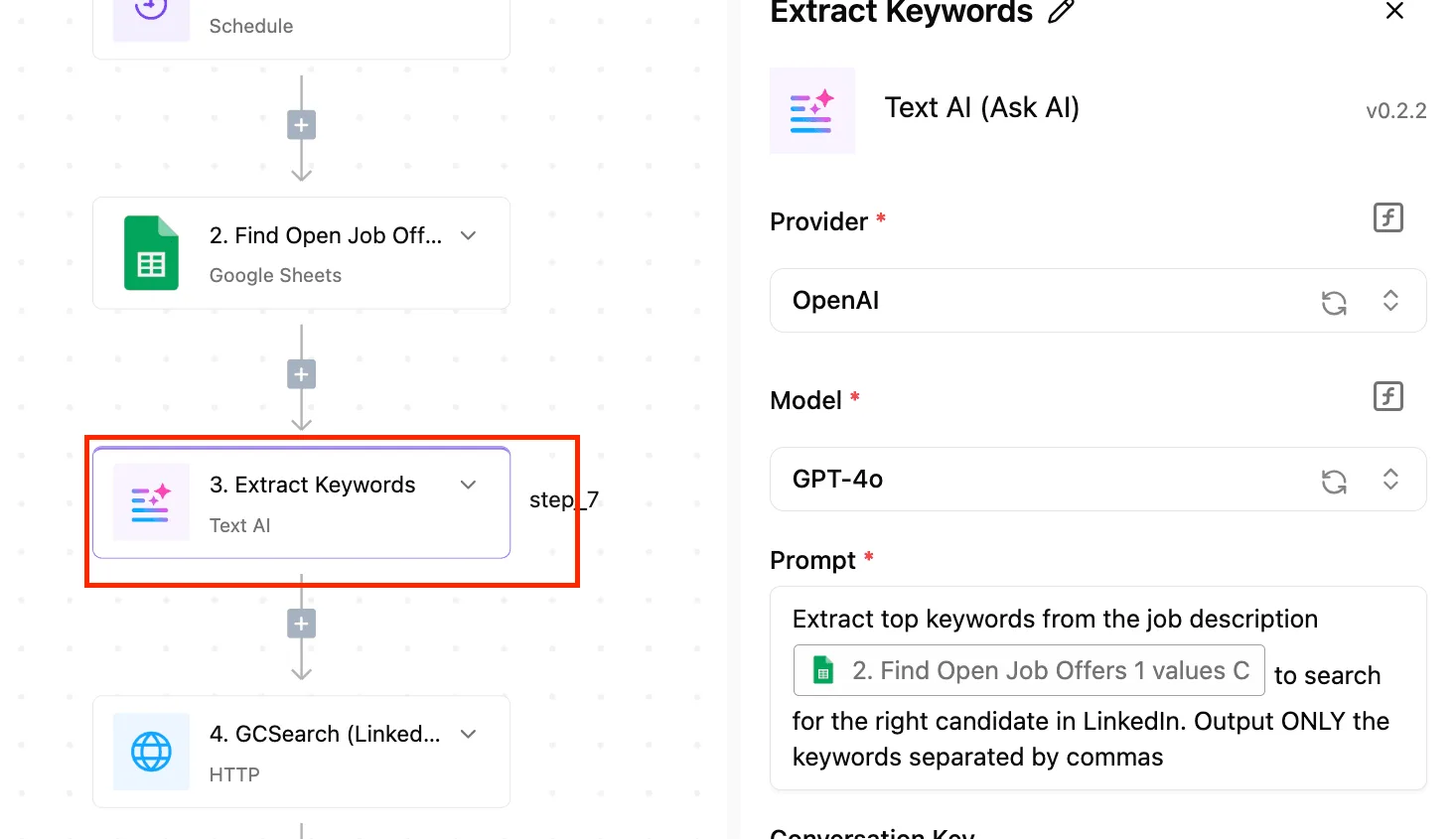
Incoming data streams can be bifurcated using the Activepieces Router. Expensive reasoning models are only invoked when a cheaper classification step deems it necessary. This creates an 'Orchestration Filter' where an incoming request hits an Activepieces Router. MiMo-V2.6-Flash handles simple tasks like classification or formatting.
MiMo-V2.6-Pro handles complex tasks involving multi-step logic.
This architectural split ensures that the high-density logic of the Pro tier is reserved for high-stakes decisions, while the Flash tier handles the high-volume noise.
Automating usage alerts and budget caps via webhooks
Activepieces has a centralized mechanism to monitor consumption across disparate API keys by listening for usage webhooks and triggering immediate circuit breakers.
- The system uses an HTTP Webhook to receive real-time usage data from the MiMo API so that the system reacts within milliseconds of a threshold breach.
- The system uses Slack or Microsoft Teams to send an automated notification to the engineering channel.
- Activepieces Flow Control disables the specific automation branch responsible for the overage. This ensures the rest of the business infrastructure remains operational while the leak is plugged.
The Monday morning MiMo V2.6 budget audit checklist
A rigorous audit of your MiMo V2.6 expenditure requires a granular examination of how orchestration overhead interacts with model-specific billing rates.
You must isolate the "chatter" of your orchestration layer from the actual payload processed by models like Claude Haiku 5.5 or Gemini 3.5 Flash-Lite. The following sequence establishes a baseline for your quarterly projections:
- Export last week’s usage logs by Model ID to isolate which specific engines are driving the highest gross costs.
- Calculate the Input-to-Output token ratio to detect "looping" prompts that generate excessive internal reasoning without equivalent business value (aim for < 1:5).
- Identify the top 5 most expensive individual Request IDs to pinpoint specific edge cases or complex documents that trigger inefficient recursive processing.
- Compare your actual per-run cost against the theoretical MiMo V2.6 minimums to reveal the hidden premium you're paying for orchestration latency.
If your logs show that a high-volume routing task currently handled by Claude Sonnet 5.5 could be offloaded to a more specialized model like Ministral 3 8B, you can adjust your routing logic to capture immediate margin.
If your orchestration platform charges a flat per-step fee, your focus must shift from token optimization to step consolidation.
If you're billed on raw compute time, your audit should prioritize migrating long-horizon reasoning tasks to high-efficiency models like GPT-6 Luna to minimize the duration of active execution threads.
Frequently asked questions about MiMo V2.6 pricing?
Does MiMo V2.6 offer a free tier for developers?
Rather than a permanent free production tier, MiMo V2.6 has a limited-use sandbox environment for initial testing.
This restriction ensures that system resources remain available for paying users, meaning you can't maintain a live customer-facing application without transitioning to a metered plan.
Are there extra charges for image generation vs. image analysis?
By applying different multipliers to the base token rate, the pricing model distinguishes between vision-in and vision-out tasks.
Analyzing a static document or an image file incurs a cost based on the total pixel density translated into tokens. This allows for predictable billing when processing standardized forms.
Generating new visual assets typically carries a higher per-request fee to account for the specialized GPU clusters required for diffusion. A marketing team generating high-resolution banners will see a larger invoice than a logistics firm using OCR 4.1 for simple barcode verification.
How do MiMo V2.6 reserved capacity contracts work?
Reserved capacity contracts allow high-volume enterprises to pre-purchase a dedicated throughput of tokens per second for a fixed monthly fee. This commitment guarantees that critical workflows won't be throttled during peak global traffic hours. These contracts are structured with the following parameters:
- Throughput Floor is the minimum guaranteed tokens per second, which ensures that automated customer service bots never experience latency spikes due to noisy neighbors on a shared server.
- Burst Allowance is a secondary tier of pricing for usage that exceeds the reservation, so a company can handle unexpected viral traffic without the system dropping active execution threads.
- Regional Availability is the specific data center location where the capacity is anchored, so a firm subject to GDPR can ensure their reserved compute stays within European borders.
Related reading
References
Running the numbers
See what the same workload costs here.
Free forever plan, and every paid plan self-hosts at no extra cost.
See pricing Talk to sales