
Can Agentic AI Replace Your RPA Bots? A Real Postmortem
Agentic AI systems interpret interface changes dynamically to maintain workflow stability where traditional scripts frequently fail.

Covers indie SaaS workflow automation: Claude Desktop tool configs, which integrations ship fast, and which get rewritten twice.
ContributorSeptember 25, 202616 min read
This article was researched and fact-checked by an advanced research system.
The shift from rigid, rule-based RPA to agentic AI marks a fundamental change in how enterprises handle brittle workflows. While traditional bots often break when a UI element shifts by a single pixel, agentic systems leverage large language models to reason through interface changes dynamically.
Many organizations are now exploring hybrid architectures, often utilizing open-source tools like Activepieces to orchestrate these complex tasks, to ensure that automation remains resilient even as underlying software environments evolve.
This transition promises to reduce the high maintenance costs associated with legacy scripts, allowing developers to focus on strategic logic rather than constant debugging.
Ultimately, the goal is to move beyond simple task replication toward autonomous problem-solving that can adapt to the unpredictability of modern digital ec
How brittle RPA bots stall pipelines
A single CSS update to a lead capture form can paralyze a traditional RPA bot. These systems rely on rigid coordinate mapping rather than functional understanding.
When a front-end developer at a major CRM provider renamed a button class to improve site accessibility, the automation script lost its target.
The script scraped new inquiries and ported them into the fulfillment system. Because the bot was programmed to click a specific selector that no longer existed, it sat idle for hours.
This caused a backlog of high-intent leads to sit unaddressed while competitors responded first.
The $12,000 button change
The cost of a broken automation is the delta between automated speed and the sudden return to manual labor. In this instance, the failure occurred at the peak of a marketing campaign.
Every hour the bot remained broken resulted in dozens of abandoned carts and missed consultations. This specific UI tweak effectively silenced the primary intake engine.
It turned a routine software update into a significant revenue leak because your business lacked a system capable of self-correcting when a visual element shifted by a few pixels.
Why the bot couldn't 'see' the solution
Traditional RPA lacks the semantic reasoning required to understand that a "Submit" button and a "Send Request" button perform the same logical action. These bots operate on "if-then" logic tied to static identifiers. If the identifier changes, the logic collapses.
Traditional RPA lacks the semantic reasoning required to understand that a "Submit" button and a "Send Request" button perform the same logical action.
While a human or an agentic system might recognize the intent of a page, a standard bot is functionally blind to context.
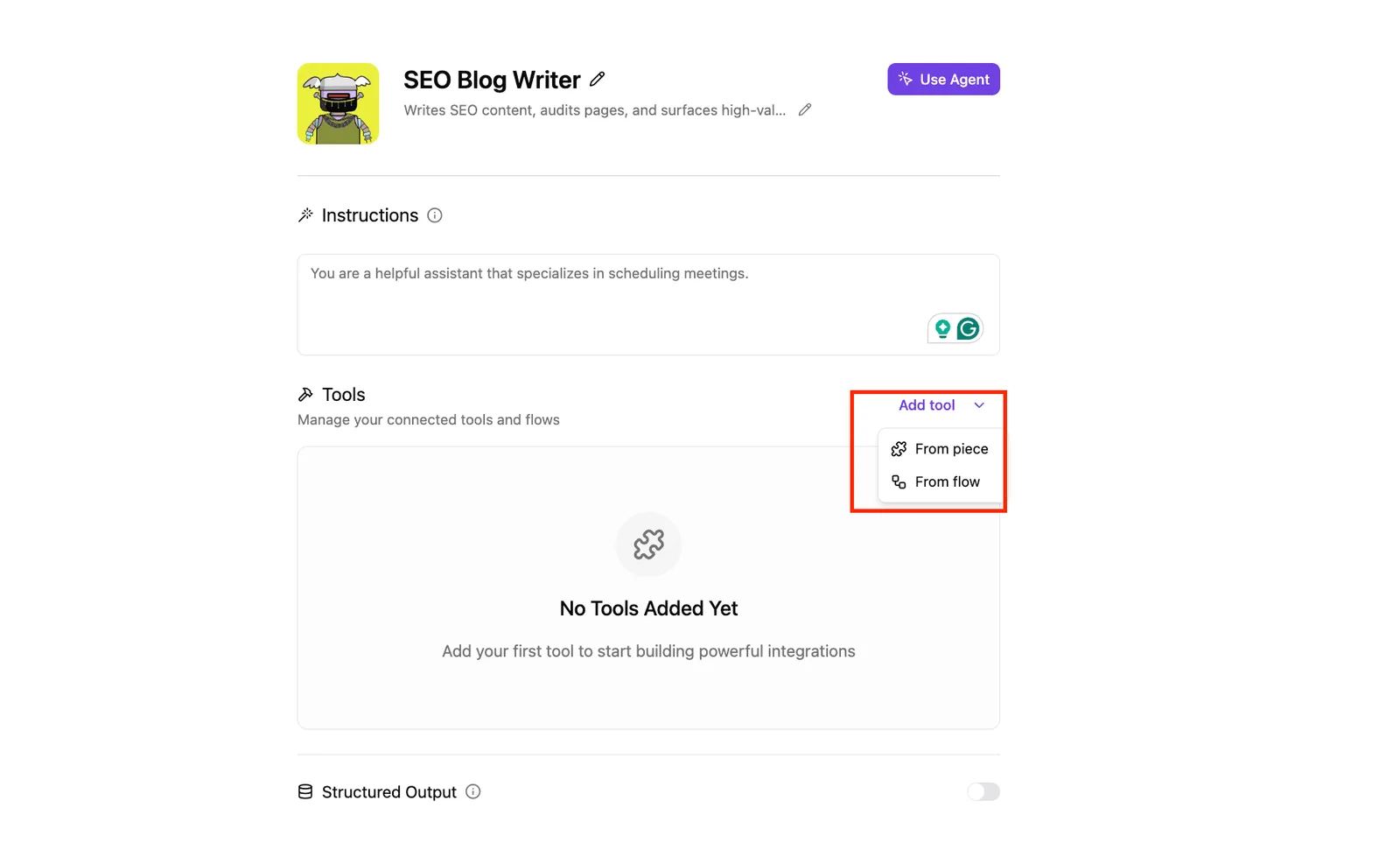
Activepieces exposes every integration as a tool schema on a per-project MCP server, allowing an agent to call any of its 735+ integrations using the same logic that runs a deterministic flow.
Because the same action in the MIT-licensed core repo serves as both a workflow step and an agent tool, there is no separate catalog to maintain or re-integrate when moving from rigid scripts to reasoning agents.
Cost of manually fixing broken bots
Fixing a brittle bot requires a developer to stop high-value feature work to perform digital plumbing.
Mendral reports that 1.1% of total developer time is spent investigating false failures where the bot reported an error despite the data being correct, which means engineering resources are being diverted away from actual feature development.
Developers are essentially debugging the testing infrastructure instead of building new features. 1.3% of productive hours are lost to repairing flaky tests and re-mapping UI selectors that changed during routine updates, so teams are forced to prioritize reactive maintenance over innovation.
Your team is constantly forced to divert focus away from shipping product improvements.
Engineering teams lose 2.5% of their total capacity to basic maintenance rather than building new automations. This fragility tax means that for every forty developers on staff, the equivalent of one full-time engineer is doing nothing but keeping existing bots on life support.

This constant cycle of breakage and repair creates a ceiling on how much you can actually automate. The cost of maintenance eventually exceeds the value of the time saved.
Everything below works on Activepieces' free plan. Start without code or a credit card.
How agentic AI replaces rigid scripts
Agentic AI shifts the burden of process navigation from the developer’s foresight to the software’s ability to interpret intent and context in real-time.
The cost of maintenance eventually exceeds the value of the time saved.
While traditional automation relies on a pre-defined map of every possible click, an agent is a GPS that recalculates the route when it encounters a road closure.
From fixed paths to dynamic goals
Traditional automation fails because it treats a business process as a series of immutable coordinates rather than a destination. If a field in a CRM like Salesforce moves two inches to the left, a standard script will click the empty space and crash.
This requires a developer to manually rewrite the step. Agentic AI focuses on the outcome, such as "update the lead status." This allows the system to locate the correct button regardless of minor interface changes or layout updates.
The following comparison illustrates how this shift in architecture transforms a fragile sequence into a resilient network: [A side-by-side comparison of a 'Rigid Script', a linear chain of dominoes where one missing integration stops the flow, versus a 'Reasoning Engine', a neural network web that reroutes around a missing node.]

This structural flexibility ensures that a single UI update doesn't result in a total work stoppage for your entire department.
How LLMs power agentic AI automation
The Large Language Model (LLM) is the central reasoning unit that translates high-level instructions into specific technical actions.
Instead of a developer hard-coding "If X, then Y," the LLM evaluates the state of the application and decides which tool to use next based on the available information.
This means the system can interpret unstructured inputs, such as a messy email from a client. The model determines which fields in a database need to be populated without a human defining every possible permutation of human speech.
Why agents handle exceptions that kill bots
Agents excel at resolving ambiguity because they can synthesize new instructions when they encounter a scenario that wasn't in the original training data. When a bot encounters a pop-up window or a new security prompt, it typically times out.
This leaves the transaction in a half-finished state that requires manual cleanup. An agent can recognize the unexpected prompt as an obstacle to the primary goal. It can read the text within the prompt to understand the requirement.
It can provide the necessary information or flag the specific issue for a human without breaking the rest of the workflow. This ability to self-correct transforms automation from a fragile experiment into a reliable component of your production stack.
Maintenance costs of legacy RPA agents
RPA maintenance creates a recurring financial burden because traditional bots lack the cognitive flexibility to adapt to minor interface updates without human intervention.
While a human sees a button move two pixels to the left and clicks it anyway, a legacy bot fails the entire workflow.
Every minor patch to an enterprise resource planning (ERP) system like SAP triggers an emergency ticket for your automation team.
Calculating the cost of UI automation fragility
The fragility tax is the cumulative cost of developer hours spent re-mapping selectors and fixing broken paths every time a web application updates its Document Object Model (DOM). In a typical RPA deployment, maintenance consumes a significant portion of the initial investment annually.
A firm spending six figures on automation is effectively paying for the same software again every few years just to keep it functional.
Agentic AI reduces this overhead by using computer vision and large language models (LLMs) to understand the intent of a UI element rather than its exact coordinate.
The automation continues to run even if the underlying code of the website changes.
Furthermore, this shift in technical debt is best reflected in the long-term cost of ownership.
Legacy RPA has an annual maintenance cost of 15-20% of the initial implementation cost, while Agentic AI is projected at 5-8%, indicating a significant reduction in the long-term financial burden of automation, which means companies can reallocate substantial capital toward innovation.
AI token costs versus RPA VM licenses
Switching to agentic workflows moves the primary expense from fixed infrastructure to variable usage, trading static server costs for dynamic intelligence. Traditional RPA requires dedicated Virtual Machines (VMs) to be spun up and licensed regardless of whether the bot is actively processing or idling.
This forces you to pay for empty compute cycles to ensure availability. Agentic AI operates primarily on token usage from model providers like OpenAI or Anthropic. The cost scales strictly with the complexity and volume of the work performed.
While the price per thought in an LLM is higher than a simple script execution, the elimination of idle VM overhead often results in a more efficient allocation of your total IT budget.
Developer hours: Scripting vs. Prompt Engineering
The transition from RPA to AI agents replaces rigid, multi-week scripting cycles with iterative natural language instructions that are faster to deploy and easier to audit. Building a legacy bot requires a developer to map every possible "if-then" branch in a process.
A single unforeseen edge case can halt production for days while the script is rewritten. Prompt engineering allows a subject matter expert to describe the desired outcome and the constraints of the task.
This enables the agent to navigate unstructured data (like a messy PDF invoice or a vague customer email) without a developer needing to hard-code a rule for every variation.
Consequently, this shift reduces the time-to-value for new automations, as your team spends their time defining business logic rather than debugging selector strings.
Easier to see it running than to read about it: set it up free, no card.
How RPA and AI agents compare
Agentic AI replaces the brittle, coordinate-based execution of traditional automation with a semantic understanding of the interface.
This allows it to navigate changes that would otherwise trigger a system failure. While RPA relies on rigid selectors, Agentic AI uses Large Language Models to interpret the intent of a page.
If a software vendor updates their navigation menu, an agent identifies the new location of the "Submit" button based on its function.
It doesn't crash because the element moved three pixels to the left. The fundamental difference lies in how these systems process the messy reality of enterprise information.
To understand how this impacts operational overhead, consider the core capabilities of each.
| Feature | Traditional RPA | Agentic AI |
|---|---|---|
| Data Handling | Fails on the vast majority of enterprise data | Uses native LLM processing to extract meaning from emails and PDFs |
| UI Resilience | Breaks on minor layout shifts | Semantic element recognition ensures the agent finds the correct field |
| Deployment Speed | Requires extensive upfront mapping | Rapidly deployed by describing the goal in natural language |
Scaling automation with self-correcting AI agents
This shift in architecture moves the burden of maintenance from the human developer to the AI model itself. When an automation can self-correct during a minor UI update, the fragility tax of constant debugging disappears.
This allows you to scale your digital workforce without a linear increase in support staff. The focus moves from simply keeping the lights on to expanding the scope of what you can automate.
Modernizing your automation stack with Activepieces agents
Activepieces enables you to shift from rigid, click-based sequences to flexible, agent-led workflows that use LLMs to navigate the edge cases that typically break traditional automation. This architectural shift addresses the primary cost driver in automation.
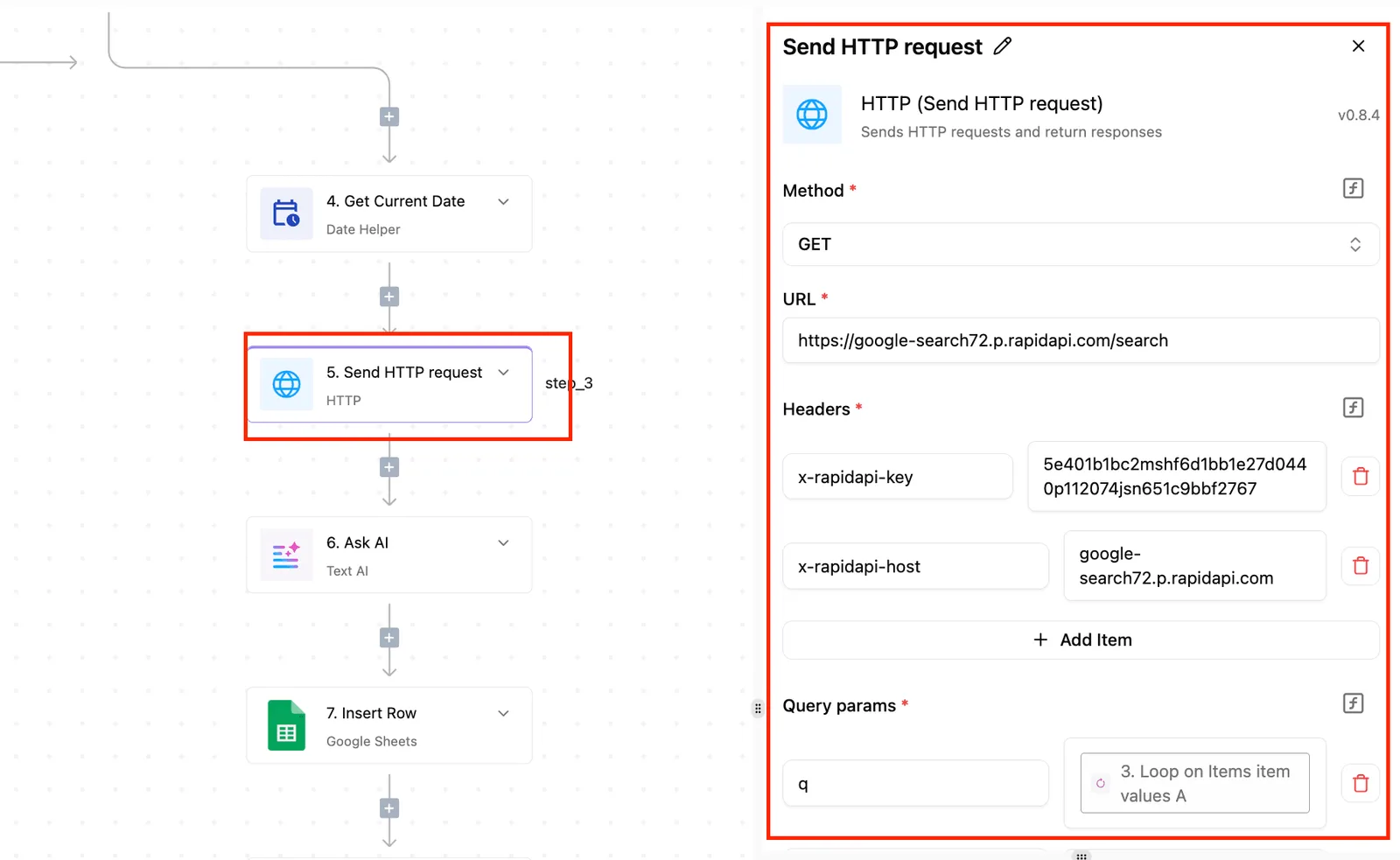
MoneyGram and FundingSocieties run this in production to manage complex environments where every agent decision and flow step is captured in the Run Details and Debugging UI.
This per-step trace ensures that an agent's reasoning is as auditable as a fixed workflow, exporting directly to event streams for security review.
Wrapping legacy bots in AI reasoning
You can stabilize existing RPA investments by using Activepieces agents as an intelligent front door that evaluates unstructured data before triggering a legacy bot.
Instead of feeding a fragile UI-automation raw, messy emails that cause it to crash, an AI agent parses the intent and passes clean, structured variables to the legacy system.
This transition flips the maintenance burden to an 8:92 ratio for Agentic AI.
Developers spend less than 10% of their time on upkeep and can focus almost entirely on building new revenue-generating flows, effectively maximizing the return on their technical expertise, so the organization sees faster product iteration cycles.
Moving from UI automation to API integrations
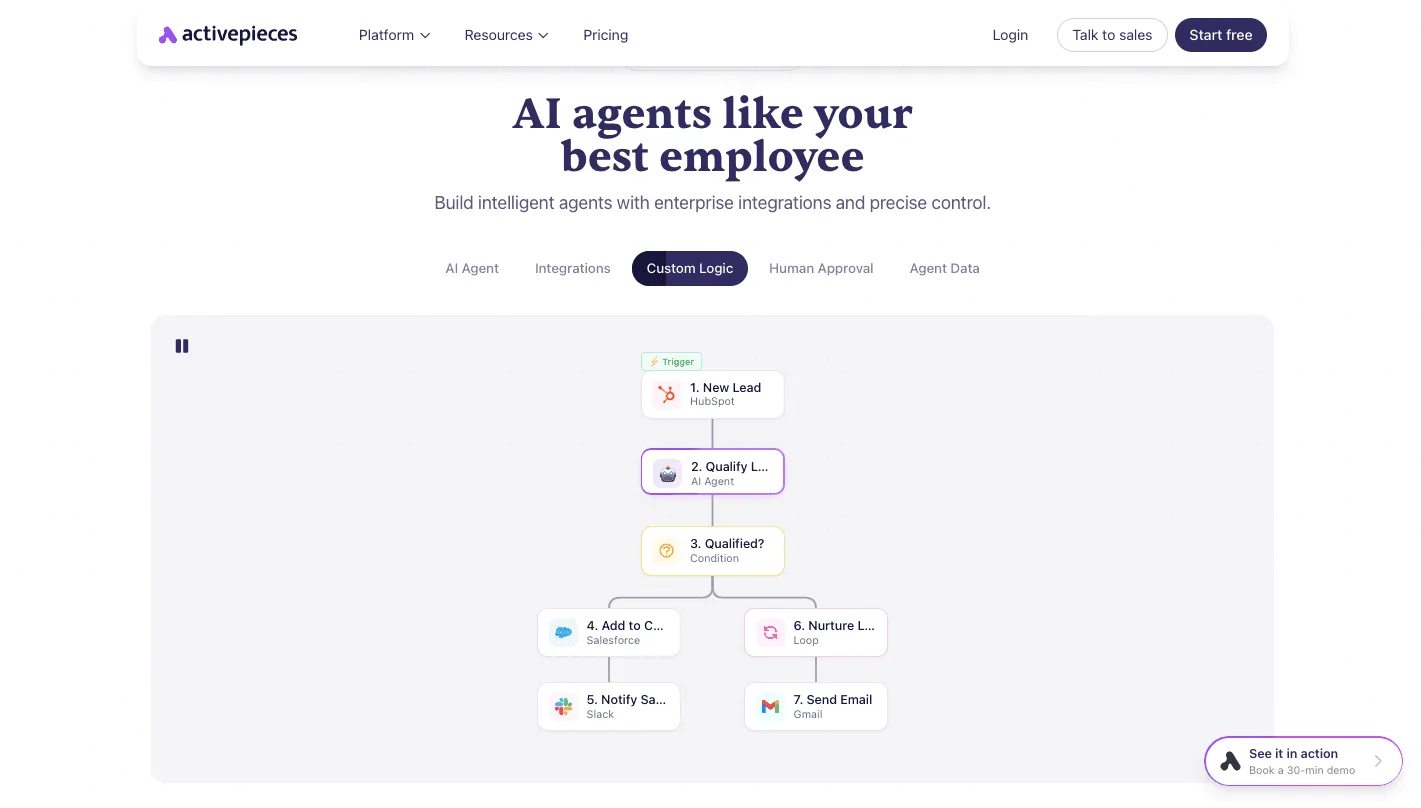
Activepieces facilitates a move away from screen-scraping toward API-first connectivity, which eliminates the fragility tax inherent in UI-based automation. The platform uses a visual flow builder to orchestrate complex logic.
This is seen in lead qualification workflows where a HubSpot trigger initiates an AI Agent that decides the lead's fate in real-time.
It autonomously decides whether to route a lead to the Salesforce CRM or initiate a nurture sequence in Gmail.
By offloading these decisions to an agent, you remove the need to hard-code every possible customer response. This allows the workflow to survive changes in lead behavior that would stop a standard bot.
Governing AI agents at scale
Scaling agentic automation requires a central control plane that balances autonomous reasoning with human oversight. Activepieces provides a "Human Approval" step. This is a mandatory checkpoint for high-stakes actions like processing refunds or sending external contracts.
This ensures that while the agent does the heavy lifting of data synthesis, a human remains the final arbiter for 100% of sensitive transactions, thereby maintaining strict oversight and accountability for critical operations, which means the risk of automated errors impacting high-stakes decisions is effectively neutralized.
This prevents the hallucination risk from reaching the customer.
Monday morning audit for replacing failing bots
Transitioning from rigid automation to agentic AI begins by auditing the specific workflows where your developers spend more time fixing selectors than shipping features.
This audit is a triage protocol to identify which legacy bots are currently costing you more in maintenance hours than they save in manual labor.
Identify your 'High-Maintenance' bot list
A high-maintenance bot is any automation that requires manual intervention more than once every twenty runs. The promise of RPA has effectively become a part-time job for a support engineer.
To find these candidates, you should execute a four-step diagnostic to move from brittle scripts to resilient agents:
- Identify bots with a failure rate higher than five percent to isolate where UI changes are outpacing script updates.
- Map workflows that rely on unstructured data inputs (such as PDF invoices or customer emails) which typically force RPA bots into error states.
- Replace brittle CSS selectors or XPaths with LLM vision and reasoning to allow the system to see the interface like a human would.
- Run the new agent in 'Shadow Mode' alongside the existing bot to compare accuracy without risking production data.
This framework provides a clear path for decommissioning technical debt while proving the reliability of generative agents in a controlled environment.
Once the audit is complete, the focus shifts to the specific data types that cause traditional bots to stall.
Select a pilot workflow with unstructured inputs
The ideal pilot for an agentic replacement is a process where the input data varies in format. Examples include the Zendesk customer support platform or the Workday HR management suite.
These environments require the reasoning capabilities that traditional RPA lacks. While a standard bot might fail if a customer attaches a photo instead of a text file, an agent can interpret the image context to route the ticket correctly.
Choosing a workflow with high variability ensures the agent provides the most immediate ROI by eliminating the manual exception handling that plagues static automations.
Set the guardrails for autonomous agents
Effective guardrails ensure that while an agent has the autonomy to navigate a UI, it doesn't have the authority to commit a transaction without a verified trigger.
This is achieved by limiting the agent’s permissions within the target application to read-only during the initial pilot phase.
This prevents unintended data writes while the model is learning the environment. By enforcing these boundaries, you can benefit from the agent’s ability to parse complex screens without the risk of an unscripted action impacting the bottom line.
Will AI agents make my existing RPA investments redundant?
AI agents act as a compatibility layer that extends the lifespan of existing RPA scripts by handling the exceptions that previously required human intervention.
Instead of ripping out a functional Blue Prism process that handles payroll entry, you wrap it in an agent that can interpret a sudden change in the government’s tax portal layout.
Your legacy automation continues to run without a developer having to rewrite the underlying selectors every time a website updates.
Are AI agents as secure as traditional RPA bots?
Agents maintain security parity with RPA by operating within the same Identity and Access Management (IAM) frameworks to ensure every action is tied to a logged service account.
While a traditional bot follows a hard-coded path, an agent uses a Large Language Model (LLM) to determine its next step.
This necessitates specific guardrails to prevent unauthorized actions. Human-in-the-loop triggers for high-value transactions ensure a person approves the final send on a wire transfer.
Read-only permissions for the agent’s browsing sessions prevent the model from accidentally modifying sensitive database records during a data retrieval task.
Token-based authentication for API calls ensures the agent never sees or stores raw user passwords.
Do I need a data scientist to build agentic workflows?
Building agentic workflows requires a focus on process mapping and prompt engineering rather than the deep statistical modeling associated with data science.
Most successful migrations are led by the same business analysts who managed the original RPA rollout. Their primary job is to describe the business rules in plain English.
This shift allows the software to handle the technical interaction with the DOM while the human focuses on the business logic.