When Not to Use an AI Agent: Limits of Agentic Automation
Agentic process automation requires human oversight for complex decision-making and high-stakes accountability.

Covers AI approval-chain design against SOX, GDPR, and PCI-DSS requirements: audit findings, control gaps, and implementation fixes.
ContributorSeptember 16, 202615 min read
This article was researched and fact-checked by an advanced research system.
Agentic process automation is reasoning-led execution
From if-this-then-that rules to goal-seeking agents
Rigid, pre-defined logic paths are replaced in agentic process automation by a Large Language Model (LLM). This model evaluates real-time data to determine the most compliant path toward a specific business objective.
Traditional automation relies on hardcoded "if-then" statements that fail when a vendor changes an invoice format or a customer submits a request in a language the system wasn't programmed to recognize.
When an agentic system treats the objective (such as "reconcile this transaction against the Master Service Agreement") as a goal to solve using available tools, it stops treating it as a sequence to memorize.
This shift allows workflows you've built in Activepieces, which provides an MIT-licensed core for self-hosting these logic paths, to handle the high-variance edge cases that typically trigger manual exceptions in legacy systems.
The following comparison illustrates how the architecture shifts from a linear sequence to a centralized intelligence hub.
By making this structural change, the system no longer breaks when it encounters an unplanned variable; it simply re-evaluates its available tools to find a new path to the defined outcome.
Why LLMs are the engine of agentic workflows
LLMs serve as the "reasoning engine" because they can parse unstructured data and map it to structured API calls without you writing specific parsing rules for every possible input.
When verifying data privacy compliance under GDPR, an LLM can scan a data processing agreement to identify missing sub-processor clauses that a standard keyword search would overlook. This capability allows the automation to act as a first-line auditor, flagging entries based on semantic meaning.
Using retrieval-augmented generation to ground agent data
The reasoning engine is only as reliable as the facts it can access. To prevent the model from inventing plausible but incorrect answers, practitioners use Retrieval-Augmented Generation (RAG) to ground the agent in specific business data.
By connecting the agent to a vector database containing your internal manuals, past contracts, or product specifications, you provide a factual anchor for its decisions. Instead of relying on general training data, the agent retrieves relevant snippets of proprietary information to inform its next step.

The difference between a script and an agent
The fundamental distinction lies in how the system handles uncertainty. A script is a set of instructions that fails when the environment changes, while an agent is a set of capabilities that adapts to the environment to fulfill a mandate.
An agent uses a feedback loop to observe the result of its last action. This means it can self-correct if a database query returns a null value or a server times out. A script executes blindly until it hits a stop command.
An agent operates within a "reasoning loop," checking its progress against the business rules provided in its system prompt.
Everything below works on Activepieces' free plan. Start without code or a credit card.
The compound reliability decay in multi-step agents
Multi-step agentic workflows suffer from a linear erosion of certainty. The probability of a successful outcome decreases with every additional autonomous decision point.
Multi-step agentic workflows suffer from a linear erosion of certainty.
While a Large Language Model (LLM) might demonstrate high accuracy on isolated tasks, these errors are not additive; they're multiplicative.
In a production environment governed by the Sarbanes-Oxley Act (SOX), this creates a significant internal control deficiency. The system can't guarantee the integrity of the final financial record if any single intermediary step deviates from the prescribed logic.
Even when individual steps perform at a near-perfect level, this visual confirms that the cumulative risk of a "hallucinated" variable or a tool-call failure renders the entire process unsuitable for unattended high-stakes automation. To mitigate this, you must implement deterministic guardrails at each junction.
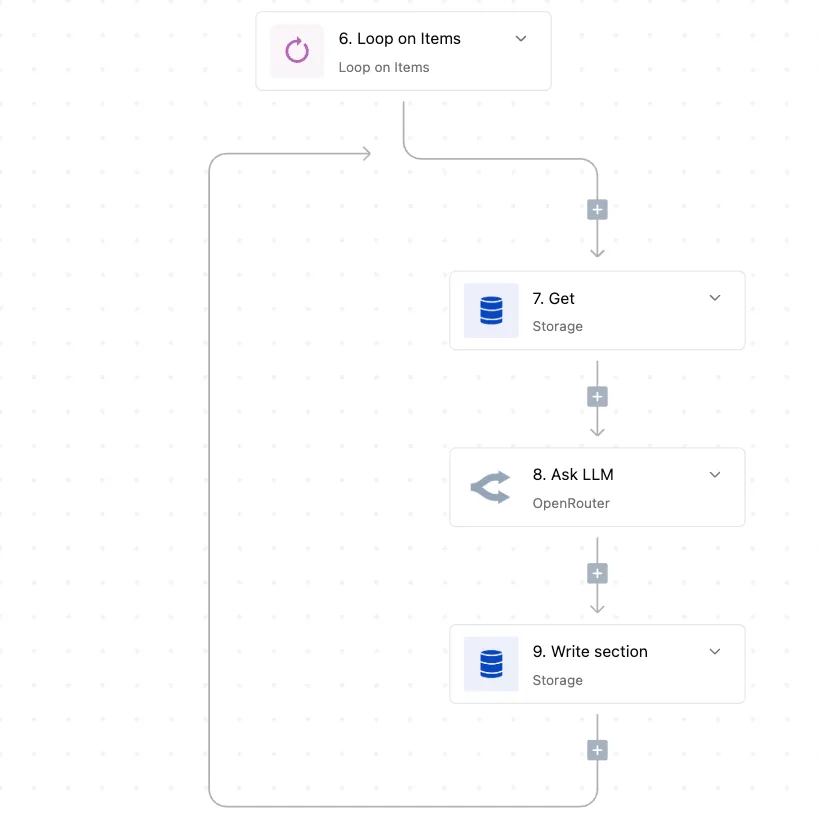
Multi-agent systems fix the reliability decay curve
Practitioners overcome the decay curve by moving away from monolithic, long-horizon chains in favor of a Multi-Agent System (MAS) or a Plan-and-Execute pattern. Instead of one agent attempting to navigate eight steps in a single context window, a supervisor agent breaks the primary goal into smaller, independent sub-tasks.
Each sub-task is assigned to a specialized worker agent that operates within a narrow scope. This allows for discrete validation at every hand-off, where the supervisor or a deterministic validator checks the output of step one before step two begins.
By isolating the reasoning, a failure in one sub-task can be caught and retried without corrupting the state of the entire workflow.
Calculating agent failure probability across multiple steps
The decay follows a predictable mathematical curve where the overall reliability is the product of each individual step's success rate. If an agent must complete five sequential tasks, each with a 95% success rate, the final probability of a correct outcome is only 77%. By the time a workflow reaches ten steps, even with 98% accuracy per step, the total reliability drops to approximately 81%.
Effective governance requires three specific interventions:
- Hard-coded schema validation at every hand-off to ensure the output of one step meets the strict data requirements of the next.
- Human-in-the-loop triggers for any confidence score falling below a pre-set threshold.
- Immutable audit logs that capture both the prompt sent to the model and the raw metadata of the response, providing the forensic trail required for PCI-DSS compliance.
Reliability gaps prevent fully autonomous financial decisions
Financial integrity requires absolute precision that stochastic Large Language Models (LLMs) can't guarantee. Their probabilistic nature creates compounding failure rates across sequential tasks.
Financial integrity requires absolute precision that stochastic Large Language Models (LLMs) can't guarantee.
While a human accountant follows the rigid logic of GAAP (Generally Accepted Accounting Principles), an autonomous agent operates on statistical next-token prediction. This introduces a margin of error that is incompatible with the Sarbanes-Oxley Act (SOX) Section 404 requirements for internal controls.
The cost of a 2% error rate in high-volume billing
A marginal error rate in automated billing triggers systemic financial discrepancies that require manual reconciliation efforts far exceeding the cost of the original automation.
In high-volume environments using enterprise resource planning (ERP) systems like SAP, even a 2% failure rate in tax calculation or currency conversion results in hundreds of misstated invoices per day, creating a massive backlog for the finance department.
Misstated invoices lead to significant regulatory exposure under GDPR if overcharging occurs. You face a constant risk of financial penalties and legal scrutiny.
The Zylos "Compound Reliability Decay" chart illustrates how quickly these errors scale. According to Zylos, a single-step agentic task operates at only a 76% reliability rate, so one in four automated operations will inevitably require human intervention.

Why agents struggle with strict 'zero-variance' logic
Autonomous agents lack the deterministic constraints necessary for zero-variance financial logic. Their reasoning fluctuates based on prompt sensitivity rather than hard-coded business rules.
As a process moves from the initial trigger through subsequent validation steps, the probability of success drops precipitously. 49% of reliability is lost between steps 2 and 8, according to the Zylos research.
Zylos finds that by the time a process reaches an 8-step total, the cumulative reliability sits at just 27%. Nearly three-quarters of the time, any fully autonomous task of this length will fail.
The Zylos agent reliability curve explained
The Zylos data maps a steep downward trajectory that highlights the danger of long-horizon autonomy. At step one, the agent maintains a 76% success rate, but this falls to 55% by step four and bottoms out at 27% by step eight.
The chart demonstrates that the "reasoning gap" widens as the agent is forced to rely on its own previous outputs as the context for new decisions. Each step introduces a new layer of statistical noise, eventually drowning out the original business objective.
Why LLM black-box reasoning fails audit trails
The non-deterministic nature of LLMs creates a "black box" that violates the requirement for a clear audit trail in regulated industries. Under PCI-DSS (Payment Card Industry Data Security Standard), every change to financial data must be traceable to a specific, authorized logic.
However, an agent may arrive at a correct conclusion through an incorrect or unrecorded heuristic. You cannot provide the evidence required by an external auditor without a deterministic workflow to capture the reasoning behind a decision.
System connectivity remains a physical barrier for agents
Autonomous agents lack the ability to manage the hard technical constraints and throttled throughput of legacy enterprise infrastructure.
The struggle with non-standardized API documentation
Agents fail to execute cross-system workflows because enterprise API documentation often lacks the semantic clarity required for machine reasoning.
Modern RESTful services might follow predictable patterns, but legacy systems frequently utilize proprietary schemas or undocumented "hidden" fields. If an agent encounters a mandatory field that isn't defined in the available OpenAPI spec, it will either stall or inject "hallucinated" data to satisfy the schema.

Why agents fail at navigating 'walled garden' enterprise software
Enterprise resource planning (ERP) and customer relationship management (CRM) platforms impose rigid structural barriers. These platforms utilize aggressive rate-limiting and concurrency caps to maintain multi-tenant stability.
The following table illustrates the operational ceilings that dictate how slowly an agent must actually move to avoid service denial:
| System | Rate Limit | Concurrency |
|---|---|---|
| Salesforce CRM | 100,000 calls per 24-hour period | Not applicable |
| NetSuite ERP | Not applicable | 5 to 20 concurrent requests |
| Microsoft Dynamics 365 | 6,000 requests per 5-minute window per user | Not applicable |

These physical constraints necessitate a deterministic queuing layer to ensure that agentic output doesn't exceed the platform's intake capacity.
Security risks of granting agents broad system permissions
Granting an autonomous agent the high-level permissions required to manage complex software suites creates a massive, unmanaged attack surface. This violates the principle of least privilege.
Under frameworks like SOX or PCI-DSS, every automated action must be traceable to a specific, authorized intent. Yet an agent with broad "Write" access can inadvertently modify sensitive tables outside the scope of its immediate task.
How Activepieces bridges the gap between agents and systems
Activepieces resolves the execution gap by running judgment and rules on a single engine, placing an Agent step alongside deterministic automation steps inside one flow definition.
In the flow builder, an agent's reasoning and the fixed steps it triggers are part of the same run trace, providing a single log from start to finish rather than two systems bridged by a callback.
By treating an agent as a single, discrete step within a broader directed acyclic graph (DAG), the platform ensures that the output of a Large Language Model (LLM) can't trigger downstream actions without first satisfying hard-coded conditional logic.
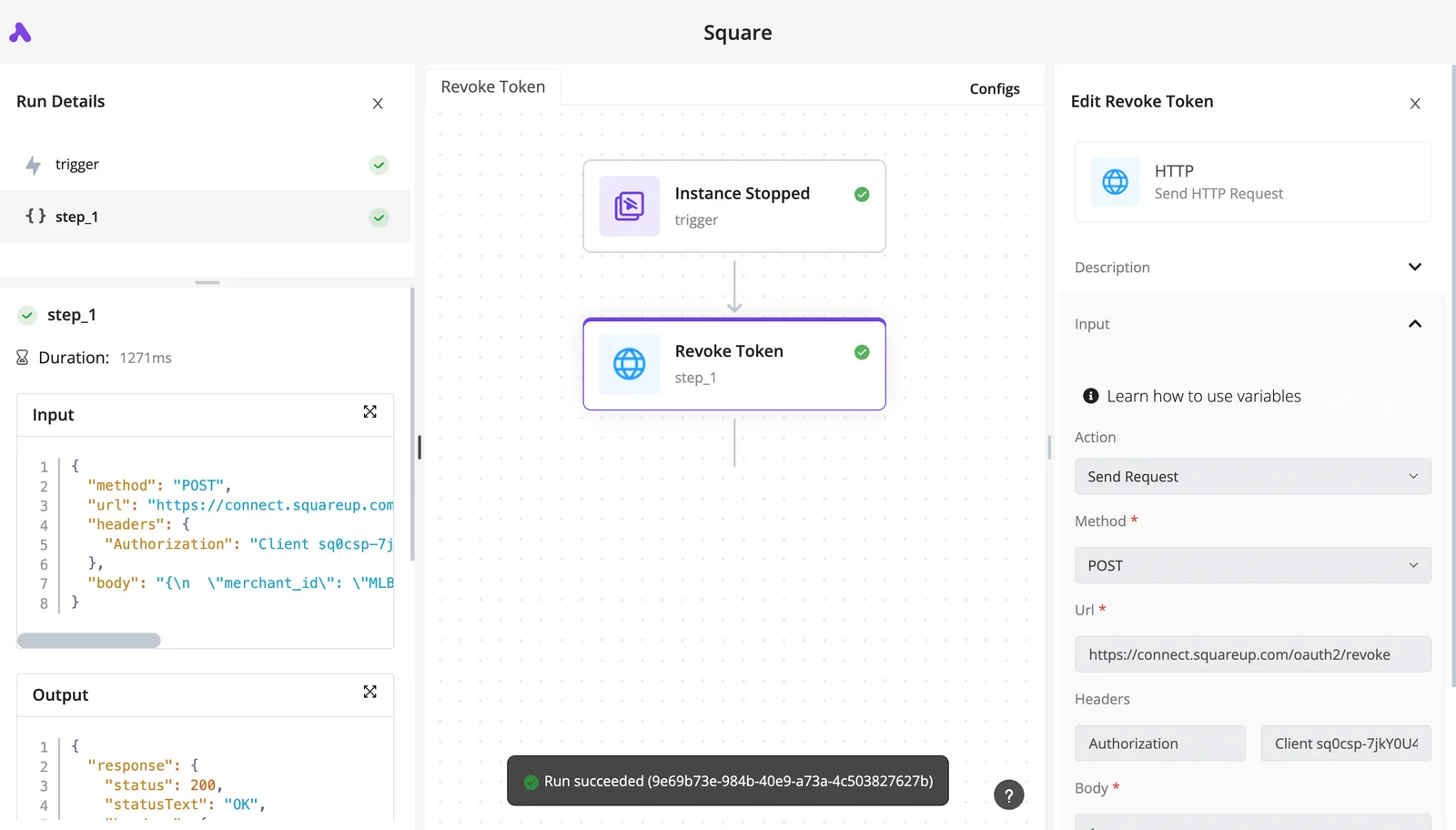
Using deterministic steps as agentic guardrails
The platform mitigates the risk of non-deterministic failure by requiring agentic outputs to pass through structured "Wait for Approval" or "Branch" steps before interacting with sensitive production environments.
In the Activepieces builder, an 'Ask AI' agent step is followed immediately by a 'Wait for Approval' step.
Every agent decision and the data it acted on is captured in the per-step agent decision trace, which can be exported via the audit logs and event-streaming feature to a SIEM.
This allows companies like MoneyGram and Moneypenny to review agent decisions with the same rigor as deterministic workflow steps.
Providing the 'hands' for the agent's 'brain' via connectors
Activepieces provides the necessary interface between an agent’s reasoning and the actual execution of tasks through its library of 734+ integrations, including verified connectors for services like the HubSpot CRM or the Jira project tracker.
Without these structured connectors, an agent would require broad API permissions to interact with your data. Instead, the platform limits the agent’s reach to specific, scoped actions defined within the connector’s code.
Monitoring agentic outputs within structured workflows
The platform’s centralized logging transforms opaque agentic "black boxes" into auditable trails necessary for meeting SOC2 or GDPR compliance requirements.
Because every execution is captured in the Runs table, you can inspect the exact prompt sent to the LLM and the resulting data payload it returned.
The Monday morning audit for agent readiness
Your managerial oversight must shift from monitoring output to validating the structural integrity of the automation path to ensure compliance with SOC2 Type II principles.
Step 1: Mapping the cost of a single failure
Determining agent readiness begins with quantifying the maximum potential damage of a single erroneous execution. An agent operating without a safety net can cascade errors across interconnected systems.
Processes suitable for agentic involvement are those where the cost of error is confined to a reversible state, such as a draft email or a flagged internal notification.
Step 2: Identifying API-ready vs. UI-locked tasks
Stability in automation is contingent upon the interface used. Agents interacting with a graphical user interface (GUI) are susceptible to breakage whenever a software vendor updates a button's location.
Reliability is higher when an agent interacts with an Application Programming Interface (API), which provides a structured, versioned contract. High stability is found in API-ready tasks utilizing documented endpoints in tools like the Stripe payment gateway or the Jira project tracker.
Step 3: Defining the 'Human-in-the-loop' checkpoint
A robust audit requires the insertion of manual gates at every junction where the agent must exert "judgment" or handle sensitive PII (Personally Identifiable Information).
The following checklist facilitates this transition from raw automation to a governed business asset:
- Identify high-volume/low-risk tasks
- Verify API availability for all steps
- Define 'Safe Failure' states
- Insert human-in-the-loop approval nodes
- Set operational guardrails
Even if the underlying LLM (Large Language Model) produces a non-compliant suggestion, this sequence ensures the deterministic workflow prevents that suggestion from becoming an executed action.
Frequently asked questions about agentic limitations
Can agents replace traditional RPA entirely?
Agentic tools lack the rigid predictability required for high-stakes financial reporting. They supplement rather than replace the deterministic scripts used for Sarbanes-Oxley (SOX) compliance.
While a Large Language Model (LLM) can interpret unstructured emails, it can't guarantee the 100% identical execution path required for reconciling a general ledger, which means it is unsuitable for tasks where absolute auditability is mandatory.
Audit failures are the likely result if you attempt to replace Robotic Process Automation (RPA) with agents for fixed-logic tasks. The nondeterministic nature of the AI makes it impossible to reproduce the exact same result for every transaction.
How do I stop an agent from 'looping' and wasting API credits?
Preventing infinite loops requires the implementation of hard execution limits within the orchestration layer. These limits terminate a runaway process before it exhausts your monthly compute budget.
Without these circuit breakers, an agent stuck in a logic trap will continue to call external APIs until it hits a rate limit or a credit ceiling. Effective governance involves setting a maximum number of steps an agent can take per session.
It also requires implementing a "human-in-the-loop" trigger that pauses the agent and alerts a supervisor if a specific task takes more than three attempts.
Finally, establishing time-to-live (TTL) headers on all internal requests ensures stale processes don't persist in the background.
Are agentic processes safe for handling PII?
Agents are only safe for handling Personally Identifiable Information (PII) if they're deployed within a private cloud environment. This prevents data from being used to train the underlying model.
Under the General Data Protection Regulation (GDPR), sending customer data to a public LLM provider constitutes a data transfer that often lacks the necessary "Right to be Forgotten" controls.
Compliance requires using an enterprise-grade gateway that scrubs sensitive strings before the data reaches the model. This ensures the agent functions as a processor without ever "learning" the identity of the user.
When will agents be able to handle complex spreadsheets?
Agents will be capable of managing complex spreadsheets once they can reliably navigate the hidden dependencies and macro-enabled logic of Microsoft Excel.
This currently causes them to miscalculate values by ignoring background formulas. Because agents process data as text tokens rather than mathematical entities, they frequently fail to account for the order of operations in nested cells.
Until models can natively parse the underlying XML structure of a workbook, they remain a risk for any task involving tax calculations or regulatory capital reporting.