Jasper Alternatives: Best Options in 2026

Oct 8, 202612 min read
When the platform’s all-in-one approach creates a price floor that exceeds the cost of specialized models, teams start moving away, often transitioning to open-source alternatives like Activepieces to regain control over their infrastructure.
Why teams are moving away from Jasper AI
The rising cost of seat-based AI pricing
Compared to the cost of accessing frontier models like GPT-6 Astra or Claude Opus 5.5 directly, Jasper’s Pro tier carries a significant premium.
This seat-based model forces companies to pay for the entire Jasper ecosystem for every user, even if those employees only need a text editor. Scaling a creative team requires a linear increase in software spend, rather than capitalizing on the decreasing cost of raw tokens.

The shift from chat interfaces to automated workflows
The primary driver for churn is the friction of manual input. Users are moving from chatting with an AI to building systems that run without human intervention.
Scaling a creative team requires a linear increase in software spend, rather than capitalizing on the decreasing cost of raw tokens.
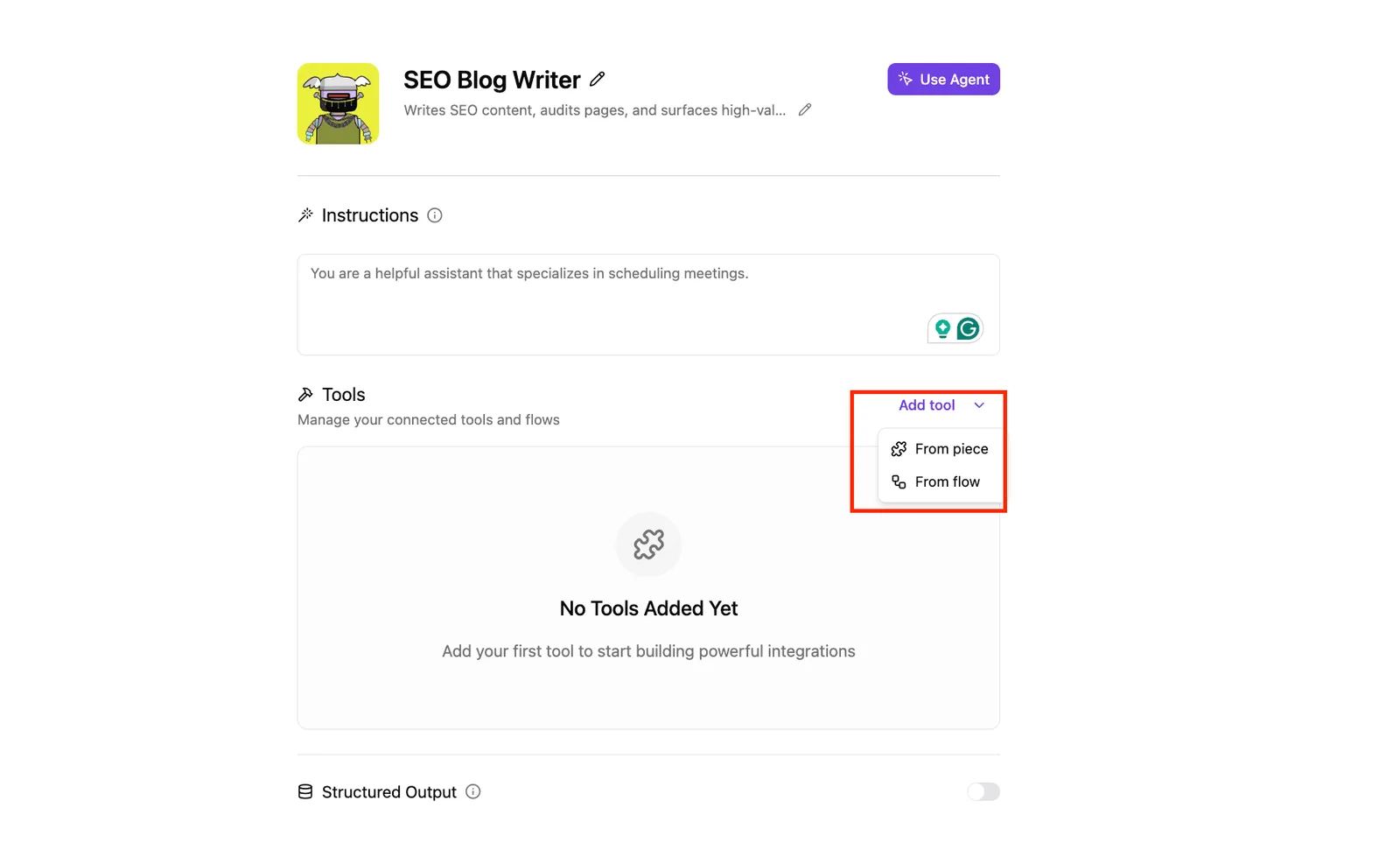
The moment a content integration is connected in Activepieces, an agent can call it. Every integration registered in the framework is instantly available as both a step in a visual flow and a tool schema on a per-project MCP server.
This allows agents in Claude, ChatGPT, or Cursor to use your existing integrations directly, ensuring that a catalog built for automation is immediately reachable by your AI without any secondary migration or manual wiring.
Enterprise requirements for data sovereignty and LLM choice
Modern organizations now demand the ability to swap underlying models based on specific task performance. Jasper’s closed ecosystem restricts this flexibility.
When a project requires the cybersecurity reasoning of GPT-5.6 Cyber or the high-fidelity speech synthesis of Gemini 3.8 Flash TTS, being locked into a single provider’s wrapper prevents the team from using the best tool for the job.
The fastest way to settle a shortlist is to try one. Activepieces is free to try, no credit card.
Monthly starting price for AI writing tools
At the high end of the market sits Jasper with a $49 monthly entry point, which represents a significant premium for users seeking specialized features, potentially pricing out casual creators looking for basic utility.
9 USD is where Rytr starts, creating a step barrier for Jasper by comparison, according to Thestacc.
Markleyo’s analysis puts writers focused on long-form fiction at 10 USD per month for Sudowrite, while those needing integrated grammar checks and tone adjustments pay 12 USD for Grammarly.
For access to frontier models like GPT-6 Astra or Claude Opus 5.5, users typically pay 20 USD for ChatGPT Plus or Claude Pro. This effectively halves the cost of Jasper while gaining direct access to the underlying LLM intelligence.
The following table compares these platforms based on their core strengths and the limits that define their target user base.
| Platform | Strength | Limit |
|---|---|---|
| Copy.ai | GTM Workflows | High entry cost for Scale tier |
| Writesonic | SEO/Real-time data | Credit-based complexity |
| Claude | Creative Nuance | No native SEO optimization tools |

Jasper for brand consistency and template variety
Jasper remains the standard for marketing teams that prioritize a unified brand voice across every piece of collateral. The platform excels at providing a polished, user-friendly interface that requires zero technical knowledge to operate effectively.
The strength of the template ecosystem
The library of over 50 templates provides a structured starting point for common marketing frameworks like AIDA or PAS. These templates are pre-engineered to produce high-quality marketing copy, saving users the time it would take to build complex prompts from scratch.

For teams that lack internal prompt engineering talent, Jasper provides a reliable safety net. The interface guides the user through the input process, ensuring the AI has enough context to generate relevant results without the trial and error often required by raw LLM interfaces.
Centralized brand voice management
The ability to upload style guides and past content to create a digital twin of a brand's voice is Jasper's most significant advantage. This ensures that whether a freelancer or a full-time employee is generating copy, the output remains indistinguishable from the company's established tone.
This centralized control is particularly valuable for large agencies managing multiple clients. It allows for a level of consistency that is difficult to replicate when using disconnected AI tools or manual prompting across different platforms.
Copy.AI for automated go-to-market workflows
By shifting the focus from a single text editor to a system that connects tools into a unified production line, Copy.ai targets teams that need to transform a single source of truth into dozens of localized assets.
Automating the content supply chain
The Workflows feature allows users to map out multi-step logic where the output of one AI model serves as the immediate context for the next.
A workflow can ingest a URL and extract key value propositions using Claude Sonnet 5.5. It then passes those specific points to a secondary step that generates platform-specific social posts.
This ensures brand consistency because the AI is constrained by the data retrieved in the first step.
Zero-retention data modes for security-conscious firms
Enterprise adoption of AI often stalls at the legal review stage. Copy.ai addresses this by offering specific compliance tiers that ensure proprietary campaign data or internal product specs never leave the designated environment.
| Feature | Jasper | Copy.ai | Anthropic (Claude) |
|---|---|---|---|
| Data Encryption | AES-256 at rest | AES-256 at rest | AES-256 at rest |
| SOC2 Compliance | Type II Certified | Type II Certified | Type II Certified |
| Model Training Opt-out | Available on Business tier | Available on all paid tiers | Default for API/Team/Enterprise |
Writesonic for SEO-driven high-volume publishing
To ensure content aligns with current search intent, Writesonic prioritizes search engine visibility by integrating live web data directly into the drafting process.
Real-time factual accuracy with Article Writer 6.0
Article Writer 6.0 mitigates the risk of model hallucinations by grounding its output in real-time search results from Google. While standard LLMs rely on a static training cutoff, this specific feature pulls current citations and trending data points to populate its drafts.
By referencing live URLs, the tool builds a structured outline based on what’s currently ranking.
Bulk content generation for e-commerce and blogs luxury
The platform handles high-volume production through dedicated workflows for product descriptions and large-scale blog deployments. Instead of prompting for individual pages, users can upload spreadsheets to generate hundreds of descriptions simultaneously.
The system utilizes Gemini 3.8 Flash to maintain a balance between execution speed and the logical coherence required for technical product specs.
Reading a table only gets you so far. Build the same workflow in Activepieces and compare it yourself.
Claude Sonnet 5.5 for creative nuance and reasoning
Claude Sonnet 5.5 has a higher degree of creative control and logical reasoning than rigid template systems. While Jasper relies on structured inputs, Sonnet handles complex, multi-step instructions within a single prompt.
The 'Artifacts' feature for real-time content editing house
Artifacts is a dedicated side-window interface. It separates generated content from the chat conversation so that a user can view, edit, and iterate on a draft without losing sight of their previous instructions.
The following data demonstrates the cost efficiency of moving from a flat-rate subscription to direct model usage, showing how much volume is available for every dollar spent.
Claude 3.5 Sonnet's input cost was $3.00 per million tokens, while output cost was $15.00 per million tokens, so heavy usage would have quickly scaled operational expenses at the time.
This compares to the flat-rate monthly cost of a $20/mo Claude Pro subscription, meaning that individual power users may find the subscription model more predictable than usage-based billing.
Superior long-context handling for technical documentation
Claude 3.5 Sonnet had a 200,000-token context window, which allowed it to ingest entire technical manuals or codebases to ensure every generated response was grounded in the user's specific documentation.
A technical writer can ask for a summary of a hundred-page PDF without the AI losing track of the early chapters.
Activepieces for custom AI orchestration and scale
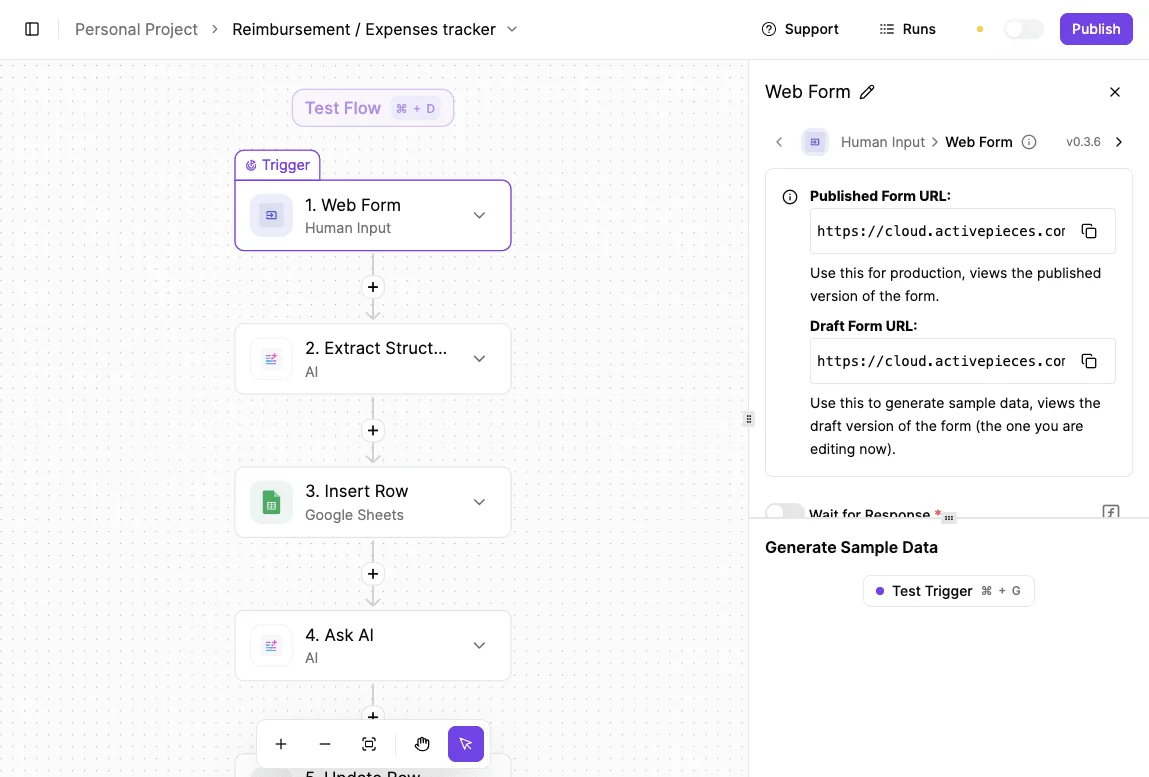
By replacing the rigid user interface of a writing assistant with a visual logic builder, Activepieces connects specific AI models to your existing software stack.
A platform that resells you a model has effectively decided your AI strategy and its markup before you even start. Activepieces runs whichever model you already chose on your own provider key, meaning model spend lands on your own account at the provider's direct rate.
This allows you to set your own strategy rather than buying it back from a vendor, with Bring-Your-Own-Key availability across tiers.
Building private AI agents without per-seat licensing
Moving your workflows to Activepieces eliminates the cost scaling issues inherent in SaaS platforms that charge for every user who needs to trigger a prompt.
Because you connect your own API keys for models like Claude Sonnet 5.5 or Gemini 3.8 Flash, you pay only for the tokens you consume rather than a flat monthly fee for every employee.
Connecting LLMs to 200+ business applications natively
The platform has pre-built connectors for a vast library of tools, removing the need to write custom glue code for every automation.
You can configure a trigger in a CRM like HubSpot to initiate a research task in Gemini Deep Research, then automatically format the results into a document.
By unifying the logic of standard automation with the capabilities of AI agents, the platform ensures that every connector in its library functions natively as an MCP tool.
Activepieces is the better fit for organizations that require a scalable, open-source framework where the same piece actions used in traditional flows are instantly available to power custom AI agents.
This architectural alignment allows teams to leverage their existing software stack as a comprehensive toolset for intelligence without the friction of separate integrations.
Activepieces connector library
Pre-built connectors allow you to bridge the gap between LLM reasoning and the software where your team actually works.
The following table identifies the depth of these integrations by the number of specific tasks, such as "Send Message" or "Update Row," available for each service:
| Service | Pre-built Actions |
|---|---|
| Slack | 29 |
| Google Sheets | 27 |
| Telegram | 20 |
| OpenAI | 19 |
| Google Drive | 17 |
| Notion | 15 |
29 actions are provided for Slack in the library. For data management, 27 actions for Google Sheets allow a workflow to append rows or search for existing records. The 20 actions for Telegram ensure that mobile-first teams can interact with bots.
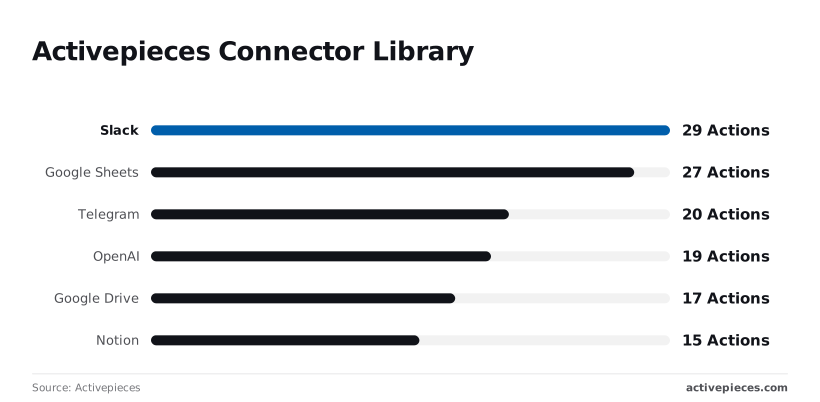
Deep model integration is handled via 19 actions for OpenAI, giving you granular control over fine-tuning. File management is covered by 17 actions for Google Drive, and 15 actions for Notion allow you to sync AI outputs directly into your internal wiki.

Migration checklist for switching AI platforms on Monday
Moving your content operations off a locked platform requires a systematic extraction of the logic that makes your AI sound human.
Audit your existing Jasper 'Brand Voice' assets
Retrieving the raw data points that define your tone is the first step because these instructions are what keep AI outputs from sounding like a generic chatbot.
Instead of copying and pasting between tabs, teams are using Activepieces to connect their existing stack directly to LLMs, effectively removing the middleman UI that Jasper provides.
- Exporting existing Brand Voice and style guides.
- Mapping Jasper templates to new tool workflows.
- Run a 5-prompt 'Head-to-Head' quality test.
- Update API keys in your internal automation stack.
Run a parallel output test on 5 core templates
A side-by-side comparison reveals which model handles your specific vocabulary best. Take your high-volume templates and run them through Gemini 3.8 Flash and GPT-6 Astra simultaneously.
While Gemini 3.8 Flash handles high-speed agentic workflows, GPT-6 Astra often handles the complex reasoning required for long-form narrative structure.
Calculate the break-even point on API-based pricing house
Switching to direct API access replaces fixed monthly seats with variable costs where you only pay for the tokens the AI actually processes.
You must track the token consumption of a model like Claude Sonnet 5.5 against your previous flat-rate billing. This allows you to see exactly when the volume of content justifies the overhead of managing your own keys.
Frequently asked questions about Jasper alternatives
Which Jasper alternative is best for small SEO teams?
By integrating directly with SEO auditing tools to analyze keyword density and search intent, Writesonic focuses on the technical side of search visibility. The platform uses Gemini 3.8 Flash to generate long-form articles that match current ranking patterns.
Can I use ChatGPT as a full Jasper replacement?
ChatGPT lacks the structured campaign memory and brand voice assets that allow Jasper to maintain a consistent tone across different marketing channels.
While you can access GPT-6 Astra for complex reasoning or GPT-6 Luna for high-volume drafting, these models operate in a generic chat interface without the specialized templates for AIDA frameworks or product descriptions.
Is there a free Jasper alternative that actually works?
Copy.ai offers a free tier that provides access to their core writing interface and basic workflows, though it limits the total volume of words generated per month.
This allows solo creators to test the platform's ability to generate social media copy using models like Claude Sonnet 5.5 without an upfront financial commitment.
Related reading
References
Still comparing
The fastest way to settle it is to build something.
Open source under MIT, so you can self-host the same thing later.
Start free Talk to sales