
Best AI Writing Tools for 2026 (Tested & Ranked)
Top-rated AI writing tools are evaluated based on their ability to automate complex drafting tasks and integrate directly into existing project workflows.

Covers workflow-automation adoption inside teams: rollout cadences, meeting structures, and the habit changes that turn users into practitioners.
ContributorSeptember 26, 202614 min read
This article was researched and fact-checked by an advanced research system.
Effective AI writing tools in 2026 function as specialized interfaces that bridge the gap between raw model intelligence and specific business outputs. The value of these systems isn't found in the generic chat window.
Instead, it lies in how deeply they can be embedded into the proprietary data streams and existing software stacks of a professional team.
AI writing tools are now defined by workflow integration
The shift from chatbots to specialized agents
When modern writing workflows moved away from manual prompting, they favored autonomous agents that handle research, drafting, and formatting within a single pipeline. These agents utilize high-reasoning models like Claude Opus 5.5 for complex knowledge work.
Reselling you a model is deciding your AI strategy for you, often at a significant markup. Activepieces runs whichever model you already chose (on your own provider key, at your own rate) so model spend lands on your provider account, not ours.
Reselling you a model is deciding your AI strategy for you, often at a significant markup.
You can check Bring-Your-Own-Key availability by tier on the pricing page to see how this decouples your writing infrastructure from a vendor's specific model margin.
This transition means that a writer’s primary role has shifted from drafting sentences to managing the logic of the underlying infrastructure.
How we evaluated the 2026 shortlist
To determine which tools provide the highest utility for operational teams, we assessed the current market against three specific criteria:
- Output quality across frontier models. We tested whether each tool uses GPT-6 Astra to handle complex narratives.
- Factual accuracy controls, such as the ability to ground responses in verified datasets to prevent hallucinations.
- Integration depth, measuring how effectively the tool pushes content directly into content management systems or developer environments.
Everything below works on Activepieces' free plan. Start without code or a credit card.
Comparison of top AI writing platforms for 2026
The utility of an AI writing platform depends on the balance between its licensing overhead and its specialized functional depth.
While simple chat interfaces like the free tier of Anthropic provide immediate access at a $0 price point, they lack the centralized brand controls required to keep a 50-person marketing department from producing divergent messaging.
For teams requiring collaborative workspaces, the market separates into specialized suites with distinct cost-to-value ratios.
| Platform | Monthly Cost (Pro) | Primary Strength | Ideal User Profile |
|---|---|---|---|
| Jasper | $345 (5 users) | Brand voice and campaign management | Enterprise marketing teams |
| Copy.ai | $29 (5 users) | GTM process automation | Growth and sales operations |
| Writer | $195 (5 users) | Enterprise-grade data security | Legal and compliance-heavy firms |
| Grammarly | $15/user | Real-time syntax and tone correction | Individual professional writers |
Prices and plan limits checked against docs.claude.com and claude.com and openai.com and gemini.google on September 26, 2026.
The financial commitment varies significantly depending on whether a team prioritizes creative output or operational scale. A 5-user team pays $345 per month for Jasper, which means the per-seat cost is $69 for each member.
High barriers to entry are created for smaller agencies that don't yet have high-volume client retainers. This effectively prices out bootstrapped startups before they can scale.
In contrast, (source.com/tool/writer) costs $195 for the same headcount, allowing mid-sized firms to implement structured AI governance for under $2,400 annually.
Copy.ai sits at a disruptive $29 for 5 users, meaning a startup can automate their entire go-to-market workflow for the cost of a single lunch.
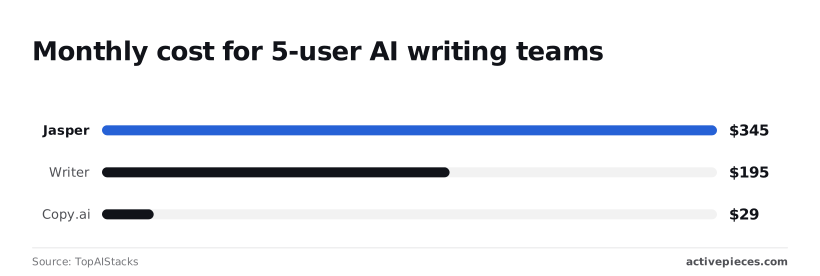
These pricing tiers dictate which tools a company deploys across an entire department versus those restricted to a few power users.
Jasper for brand-consistent marketing campaigns
Jasper is a centralized repository for brand guidelines and past campaign data so that every generated asset adheres to specific corporate identities. This infrastructure moves beyond simple prompting by anchoring the output of models like Claude Sonnet 5 in a permanent knowledge base.
The tone remains consistent regardless of which team member triggers the workflow.
Setting up Jasper's brand voice feature
Teams achieve a unified brand voice by mapping specific stylistic constraints and vocabulary preferences across all AI-generated outputs. In the Jasper dashboard, users upload style guides and product descriptions to create a "Brand Voice" profile, which acts as a persistent filter for every request.
Generic or fluctuating tones often found in basic chatbot interactions are prevented by this setup. A social media manager and a technical writer will produce cohesive copy without manual cross-checking.
For instance, when using Gemini 3.8 Flash for high-volume social posts, the system enforces the same brand-specific adjectives and prohibited terms defined in the central settings.
Generating full campaigns from a single brief
Campaign-level generation allows teams to transform a single creative brief into a full suite of assets that share a common context and strategic goal.
Instead of treating every email or blog post as an isolated task, the platform uses its memory of the initial brief to inform subsequent outputs.
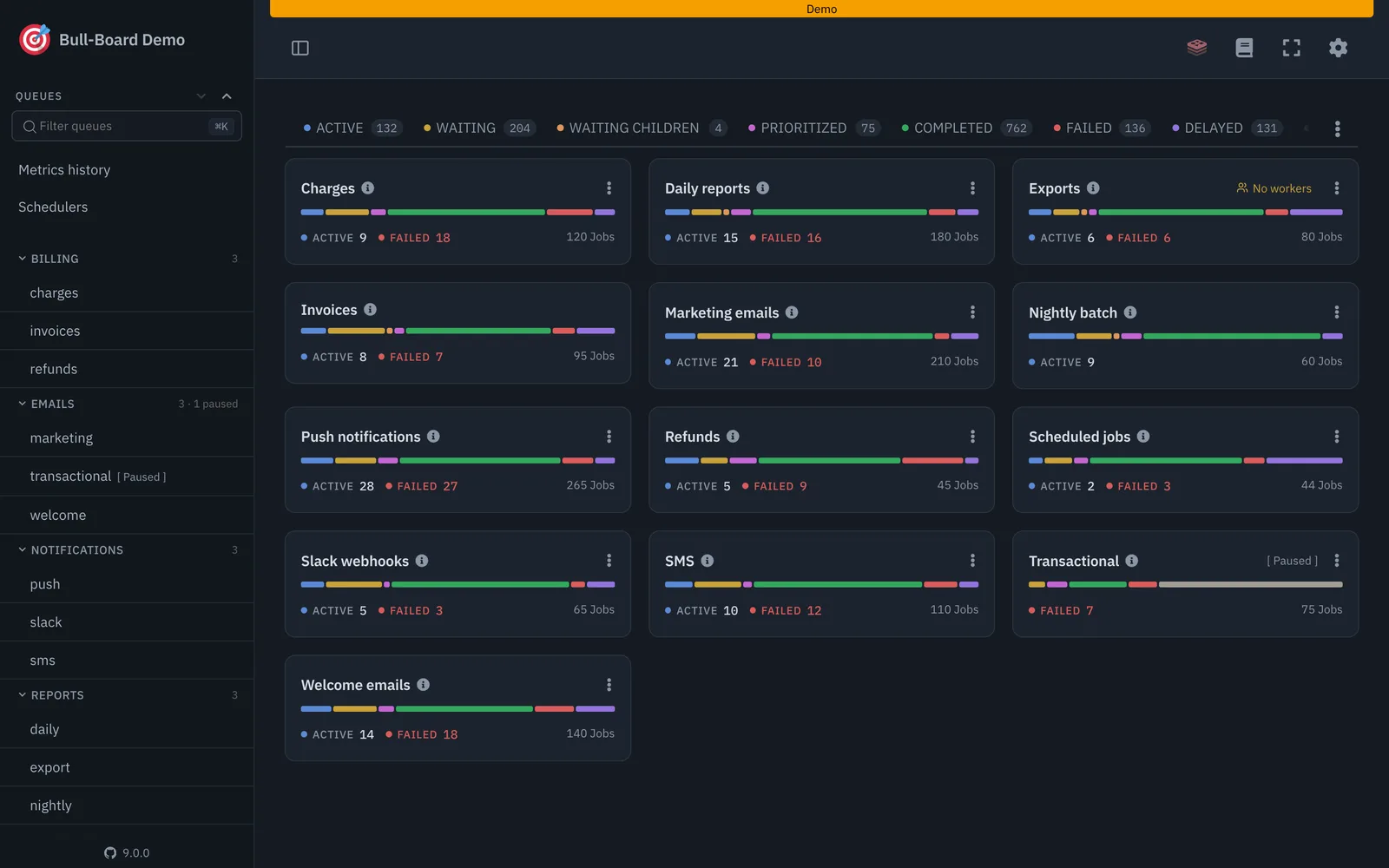
The following Bull-Board dashboard illustrates how these multi-step processes are monitored at scale. It shows the health of various automated queues. Large-scale marketing deployments don't stall due to API timeouts or credit limits because of this visibility into active and failed jobs.

By tracking the status of transactional emails alongside marketing pushes, ops leaders can identify bottlenecks before they impact a product launch.
Copy.AI for automated GTM and sales content
Copy.ai operates as a GTM orchestration layer that moves AI writing out of isolated chat boxes and into multi-step, automated pipelines. This shift allows a team of four to execute the output of a dozen by connecting disparate data sources directly to generative models.
Automating the SEO brief-to-draft cycle
Scalable content production relies a centralized system that transforms raw keywords into structured drafts without manual copy-pasting. By using the Workflows feature, teams can ingest a list of target phrases from a spreadsheet.
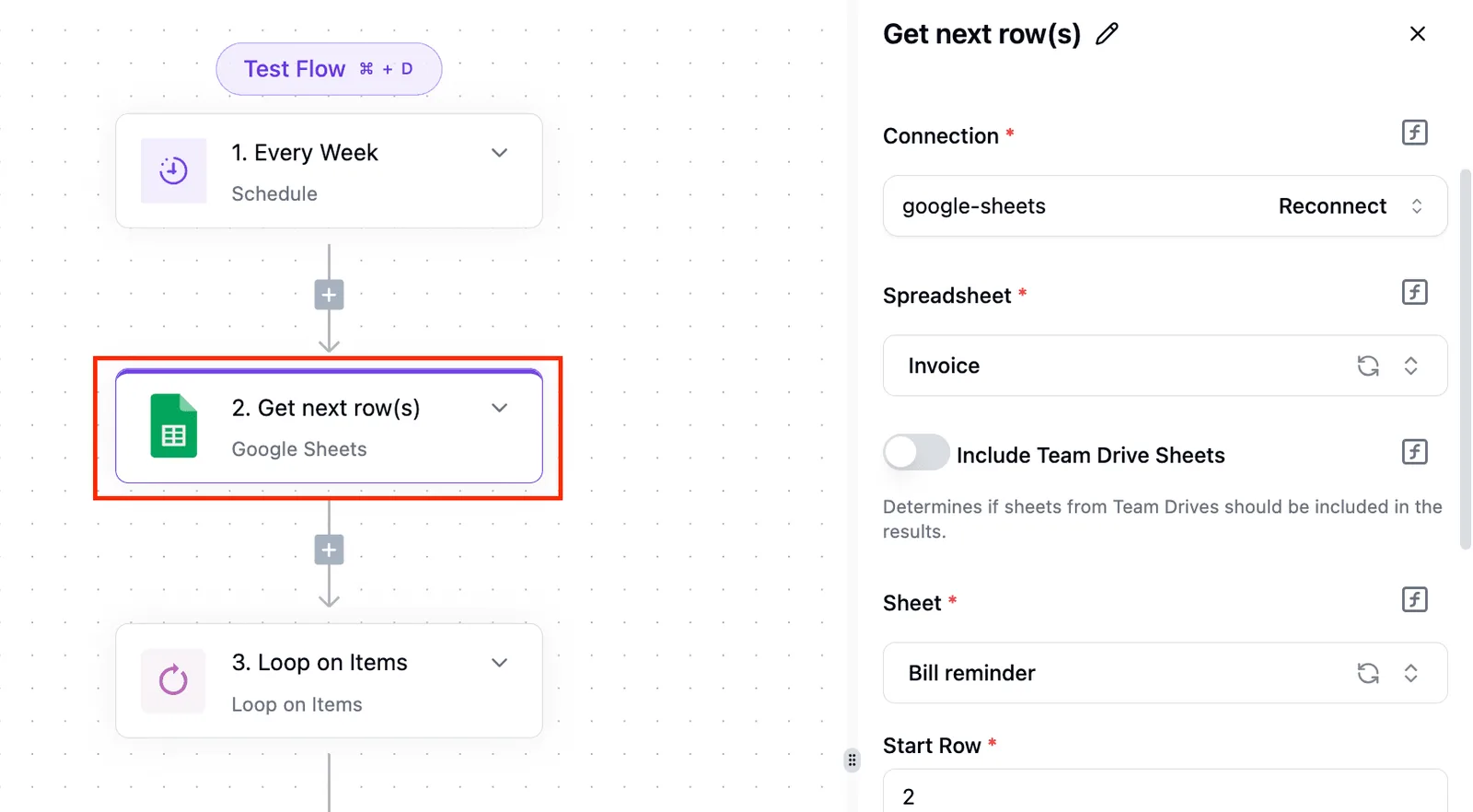
A search is triggered to identify current top-ranking competitors and passes that context to Gemini 3.8 Flash to generate comprehensive outlines. This integration grounds every draft in real-time search intent rather than static training data.
Because the system supports branching logic, a content lead can set a condition to route technical topics to a specialized editor while sending standard blog posts straight to a CMS for final review.
Copy.ai for personalized sales outreach
Personalized prospecting requires a bridge between public social data and internal record-keeping systems to avoid sending generic templates. Copy.ai is the connective tissue between lead sources and communication platforms to ensure every touchpoint feels researched.
The Copy.ai GTM Automation Flow:
- Scrape LinkedIn profile
- Cross-reference with CRM data
- Generate personalized outreach email
- Push to Slack for approval
This sequence utilizes Claude Sonnet 5 to synthesize profile highlights into a custom message. This message reflects the prospect's recent career milestones.
Once the Slack notification is triggered, a sales development representative can approve or edit the text in one click, which reduces the time spent switching between browser tabs. This workflow-first approach ensures that high-volume outreach maintains a high standard of quality.
Easier to see it running than to read about it: set it up free, no card.
Writer for enterprise security and data privacy
Writer maintains enterprise-grade security by allowing teams to deploy proprietary models within their own virtual private clouds. This architecture ensures that sensitive drafting never leaves the organization's controlled environment, which is a requirement for legal and financial firms handling non-public information.
Self-hosting Writer's models for data residency
Writer allows teams to self-host their underlying models. This meets data residency requirements without sacrificing generative performance.
While a standard implementation of OpenAI GPT-6 Astra requires sending data to external servers for processing, a self-hosted Writer instance keeps the entire inference lifecycle behind the corporate firewall.
Internal data is prevented from being used to train global models by this setup. It protects intellectual property during the development of sensitive internal documentation.
The following archetypes illustrate how different operational needs dictate specific infrastructure choices:
[Illustration: Three distinct workflow archetypes for 2026: 'The Creative Agency' (brand-heavy), 'The GTM Engine' (high-volume automation), and 'The Secure Vault' (regulated enterprise drafting).]
These archetypes demonstrate that the choice of platform depends entirely on whether the priority is public-facing speed or internal data isolation.
Enforcing corporate style guides automatically
The platform integrates a native Knowledge Graph that anchors model outputs to a company’s specific facts and approved terminology. Unlike generic prompting, which often drifts in tone, this system checks every generated sentence against uploaded style guides to ensure brand consistency.

This automated oversight means communications teams spend less time correcting recurring vocabulary errors and more time on high-level strategy.
Activepieces for custom AI content pipelines
Activepieces connects your chosen AI models to the rest of your software stack through an MIT-licensed core, allowing teams to strip away the chatbot interface and build automated, multi-step content production lines.

This platform enables ops leaders to treat AI models as modular components within a larger mechanical process rather than isolated text boxes.
Connecting LLMs to your existing CMS
The moment a integration is connected in Activepieces, an agent can call it.
Register a integration once and it runs two ways at once: as a step inside a flow, and as a tool schema on Activepieces' per-project MCP server, reachable from Claude, ChatGPT, Cursor, or an agent you built yourself.

You can check the Integrations Framework and MCP Server documentation to see how the same integration action that runs in a flow is the one exposed as an MCP tool.
By using pre-built connectors for platforms like WordPress or Contentful, teams can trigger a Claude Sonnet 5 instance to format raw notes into structured HTML the moment a status field changes, so manual formatting is eliminated from the publishing workflow.
Version control chaos is eliminated by this direct integration, which otherwise occurs when writers bounce between browser tabs. The model writes straight to the staging environment where your specific CSS rules and metadata fields are already enforced.
Building multi-step research and drafting loops
The platform allows teams to build agentic workflows where one model’s output is the prompt for the next stage of the pipeline. You can design a sequence where Gemini Deep Research first crawls technical documentation to generate a fact sheet.
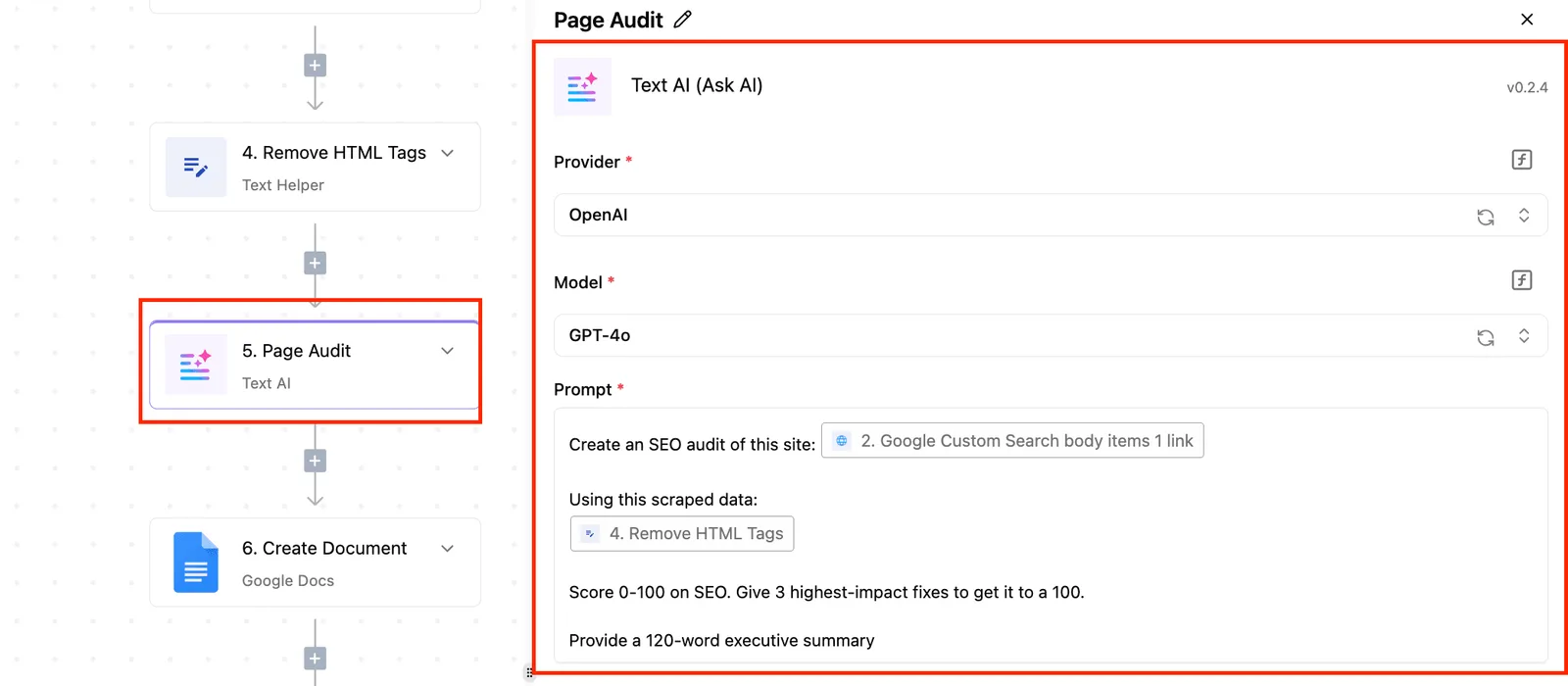
This sheet is then passed to GPT-6 Sol for a first draft, followed by a final pass through Mistral Moderation 2 to ensure compliance.
Hallucination risks inherent in single-prompt generation are reduced by this tiered approach because each model is constrained to a specific sub-task within the larger logic flow. The following data illustrates how the system maintains responsiveness even as these logic chains grow in complexity:
Activepieces execution latency in seconds: Warm (0.2s), Heavy Load (0.5s), and Cold Start (2.0s).
Sub-second execution speeds under normal load ensure that real-time content updates, such as breaking news summaries or live product catalog refreshes, happen fast enough to meet customer expectations.
Consequently, the bottleneck in your department shifts from technical latency to the speed at which your editors can approve the incoming queue.
By allowing users to integrate their own API keys rather than forcing the use of resold, marked-up models, Activepieces ensures that organizations maintain full control over their AI strategy and cost structures.
Activepieces is the better fit for operations leaders who prioritize modularity and transparency, as it treats LLMs as interchangeable components within a broader automation stack.
This approach prevents vendor lock-in and provides the necessary flexibility to scale content pipelines without the hidden overhead of platform-mandated model reselling.
Grammarly for real-time editing and refinement
Grammarly is the primary interface for real-time stylistic refinement because it integrates directly into the existing workspace to enforce brand voice without forcing editors to context-switch between tabs.
While raw output might originate from high-reasoning models, this tool acts as the final operational filter that ensures consistency across a distributed team.
Grammarly's tone and audience adjustment tools
Effective tone management requires the tool to interpret the intent behind a draft. It then suggests adjustments that align with a specific audience profile.
By setting goals for formality and domain, an editor can standardize the output of diverse contributors, which prevents the disjointed brand voice often caused by mixing different LLM outputs.
When a team uses Claude Haiku 4.5 for rapid drafting, Grammarly provides the necessary guardrails to ensure that speed doesn't degrade the professional polish required for client-facing documents.
Grammarly's real-time rewriting for clarity
Real-time rewriting features let editors condense verbose sentences and improve readability scores as they type. This immediate feedback loop is essential for maintaining high throughput in departments where manual proofreading is the primary bottleneck.
For complex technical documentation generated by Claude Fable 5.1, these clarity suggestions help break down advanced reasoning into accessible language. This makes the final product useful for the end-user rather than just technically accurate.
How to audit your AI writing stack next week
Auditing your AI stack requires shifting focus from individual seat costs to the total volume of tokens processed across your entire operational surface.
You must move beyond looking at who has an account and start analyzing how much data is actually moving through your APIs. This reveals whether you're paying for unused capacity or hitting rate limits that stall production.
The Monday AI Audit:
- Map every seat license currently paid for to reveal redundant subscriptions across different departments.
- Identify 'Shadow AI' usage in browser history to surface where teams are using unmanaged tools for sensitive drafting.
- Calculate cost-per-word across tools to determine which models provide the best value for your specific content density.
- Consolidate into one workflow-specific stack to eliminate the friction of switching between disconnected interfaces.
Baseline data needed to transition from experimental usage to a structured procurement strategy is provided by this audit.
Once these figures are centralized, you can begin testing high-throughput models like Claude Haiku 4.5 for high-speed drafting or Gemini 3.5 Flash-Lite for cost-effective multimodal processing. Following this assessment, the next step is to align these technical capabilities with your team's specific output requirements.
Frequently asked questions about AI writing tools
Does AI-generated content hurt SEO rankings in 2026?
Search engines prioritize the utility and factual accuracy of information over the specific method of its production. Google, the primary search provider, uses automated systems to identify and demote content created primarily to manipulate search results.
Low-effort automation without human oversight will likely trigger ranking penalties. If your team uses Gemini 3.8 Flash to generate high volumes of technical documentation, the value lies in the editorial review that ensures the output solves a user’s specific problem.
Content that fails to provide original insight or unique data is categorized as "thin." A strategy relying on unedited AI drafts will result in a loss of organic visibility.
Who owns the copyright to AI-generated text?
Current legal frameworks generally dictate that copyright only protects works created by human beings. In the United States, the Copyright Office refuses to register works produced by a machine without significant human creative input.
Your raw outputs from GPT-6 Astra aren't legally defensible assets. To secure intellectual property rights, your staff must transform the AI output through substantial editing or structural reorganization.
Without this human intervention, your competitors can legally scrape and republish your AI-generated marketing copy. The material resides in the public domain the moment it is generated.
Can AI tools detect and cite their own sources accurately?
Reliable citation depends on the model's ability to browse the live web and verify claims against primary documents. Models like Gemini Deep Research are designed to perform multi-step verification and provide direct links to sources.
Researchers can audit the evidence before publication. However, standard generative models can still present plausible-sounding but non-existent citations when operating without a retrieval-augmented generation (RAG) framework.
Gemini Deep Research includes inline citations linked to verified web URLs. Claude Opus 5.5 analyzes uploaded PDF repositories to cite internal company data. GPT-6 Astra uses integrated search tools to verify real-time news events.