25 Best AI Marketing Tools to Scale Your Strategy in 2026

Sep 30, 202614 min read
Competitive marketing in 2026 requires you to select tools based on their specific cognitive role within a larger automated stack.
This categorization allows you to deploy specialized models like Claude Fable 5.1 for reasoning-heavy strategy while using faster utilities, including workflow engines like Activepieces that bridge disparate data sources, for high-volume execution.
Top AI marketing tools by category
Future model projections and availability
Generative AI for content and design
High-reasoning strategic work and high-velocity asset generation are the two paths content production has taken. For complex, multi-stage campaigns, Claude Fable 5.1 is the long-horizon agentic tool you'll need to maintain narrative consistency across months of output.
When the priority shifts to speed, Claude Haiku 4.5 is near-frontier intelligence at the lowest latency. Design workflows now rely on GPT-Image-2.5 Sunburst for precise brand-aligned editing, while Midjourney remains the standard for conceptual visual ideation.
Frase and other SEO optimization tools
At $39 per month, Frase offers entry-level optimization that makes it the most accessible option for individual contractors or small startups, which means solo users can begin professional SEO workflows without a heavy financial commitment.

Mid-market teams often scale to Scalenut at $59, which has a higher ceiling for automated brief generation, so growing organizations can produce larger volumes of content without manual intervention.
For enterprise-grade semantic analysis, Clearscope costs $129, and MarketMuse sits at the top of the tier at $150, meaning these platforms are positioned as premium investments for teams prioritizing deep data insights over budget savings.
These higher price points reflect the deeper competitive data mining required for high-authority domains.
Social media and video automation tools
Multimodal transformation is the new focus of social media automation, where you atomize a single long-form video into dozens of platform-specific clips. Tools like HeyGen and Runway utilize Veo 3.1 to handle the heavy compute required for video synthesis.

Sprout Social and Hootsuite have integrated agentic layers to handle community management. The shift here is from scheduled posting to reactive engagement. The AI monitors sentiment and adjusts your publishing queue in real time based on audience retention metrics.
Marketing orchestration and workflow automation
Every connector is an agent tool. When you register a integration in Activepieces, it functions simultaneously as a step in a structured flow and as a schema on a per-project MCP server, accessible to Claude, ChatGPT, or custom agents.
This eliminates the need to re-integrate a separate catalog for your agents, preventing a second migration.
While Zapier has a massive library of 6,000+ integrations, its task-based pricing can become a bottleneck for high-volume synchronization. Make is a visual logic builder for complex branching.
Activepieces provides an MIT-licensed core that allows teams to self-host their entire automation logic, ensuring that proprietary prompts and customer data never leave their own infrastructure.
Everything below works on Activepieces' free plan. Start without code or a credit card.
Standardizing tool access with Model Context Protocol
The Model Context Protocol (MCP) is an open standard that enables AI models to interact with external data sources and software tools through a consistent interface.
Instead of writing custom code for every new integration, a developer creates an MCP server that acts as a universal translator between the AI and the specific marketing platform.
Unified schemas for agentic tools
When an automation platform hosts an MCP server, it exposes its entire library of integrations as a set of standardized schemas.
This allows an agent to understand the capabilities of a tool, such as a CRM or an email provider, without needing a manual setup for each individual connection.
The agent simply reads the server definition to know which functions are available and what parameters they require.
Why MCP servers reduce marketing tool integration
By centralizing these connections on an MCP server, marketing teams avoid the friction of re-integrating their stack every time they deploy a new agent. The server provides a persistent bridge where the agent can fetch real-time data or execute actions across different apps.
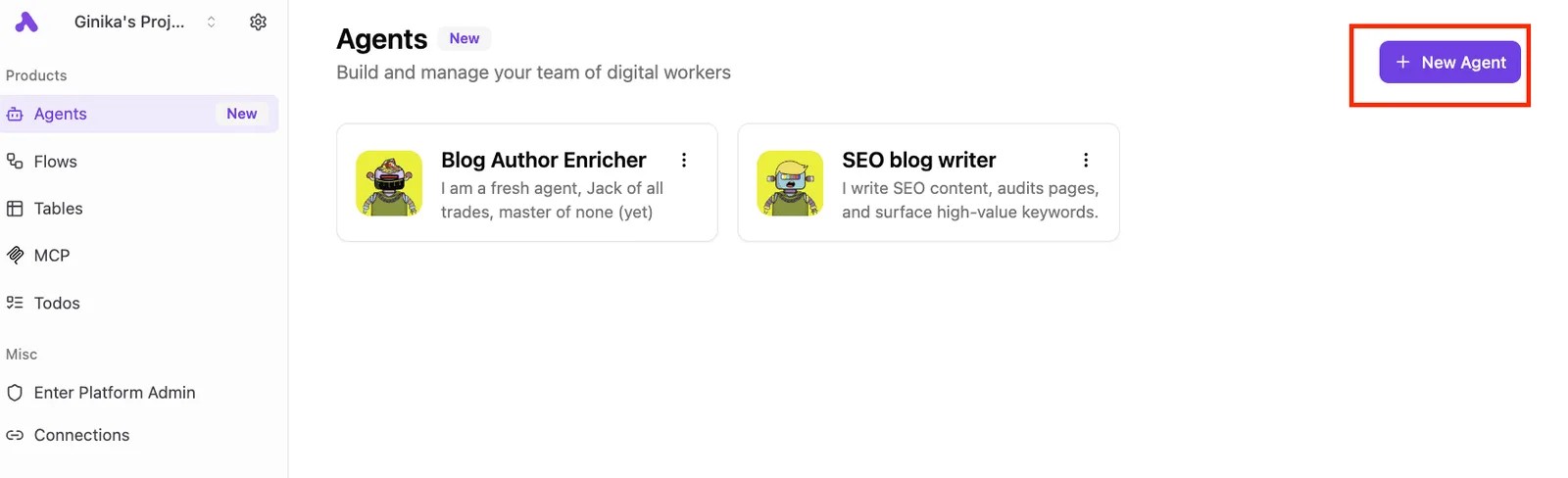
This architecture ensures that the intelligence layer and the execution layer remain perfectly synchronized.
Compare top AI marketing platforms
Selecting an AI marketing platform in 2026 requires you to align specific operational bottlenecks with a vendor's architectural strengths. The current market has bifurcated into suites that prioritize deep database integration and specialized tools that excel at high-velocity content or SEO intelligence.
The following table identifies the strategic trade-offs for the most prevalent systems deployed by growth teams today.
| Platform | Primary Strength | Limitation | Ideal User |
|---|---|---|---|
| HubSpot AI | CRM Integration | High entry cost | Scaling Enterprises |
| Jasper | Brand Voice Enforcement | Limited data visualization | Content Agencies |
| Surfer SEO | Content Optimization | Narrow functional scope | SEO Specialists |
| Copy.ai | GTM Workflow Automation | High learning curve | Operations Teams |
| Canva Magic Studio | Visual Asset Generation | Restricted prompt complexity | Creative Teams |
Prices and plan limits checked against docs.claude.com and claude.com and openai.com and gemini.google on September 30, 2026.
While enterprise suites offer breadth, entry-level SEO and research intelligence often begin with standalone model subscriptions.
For those managing tight overhead, Google is a free plan at $0/ month with a Google Account, ensuring that even users with no budget can access basic AI-assisted research tools.
Moving to the Google AI Plus tier costs $4.99/ month, a nominal fee that unlocks advanced features for users who have outgrown the limitations of the free version.
This price point grants 2x higher usage access than the Free plan, allowing you to run twice the volume of keyword clustering or competitor analysis sessions before hitting rate limits, so power users can maintain a faster pace of work without interruption.
Downstream complexity in your automated workflows is dictated by your choice of platform. A team utilizing Gemini 3.8 Flash for high-volume categorization will find different integration requirements than one leveraging the advanced reasoning of Claude Fable 5.1 for long-horizon campaign planning.
Generative AI tools for high-velocity content production
Strategic advantage in 2026 relies on selecting models that balance raw linguistic processing with the specific operational constraints of a global marketing department.
Human expert writing moves at 12.5 words per minute. AI writing output in 2026 reaches 750 words per minute, based on generating 1,500 words in two minutes.
Strategic advantage in 2026 relies on selecting models that balance raw linguistic processing with the specific operational constraints of a global marketing department.
This massive disparity in output means that without automated guardrails, you can generate more off-brand collateral in one afternoon than a traditional agency could produce in a year. The following platforms represent the primary levers for managing this volume at the enterprise level.
Jasper for brand voice and style guides
Jasper is a centralized style guide orchestrator that allows you to upload style guides and product catalogs directly into its Brand Voice engine. This ensures that every piece of copy adheres to your company's specific tone of voice.
For teams moving beyond basic prompting, the platform is a Campaign feature that enables the simultaneous generation of assets across multiple channels from a single brief. As of late 2024, their Pro plan starts at a price point designed for small teams.
The Business tier is custom pricing to include unlimited brand voices.
Copy.AI: Scaling GTM workflows with AI workflows
By utilizing Workflows, you can connect your CRM data to the generation process. Copy.ai has shifted its focus from a simple chat interface to a GTM (Go-To-Market) AI Platform that treats content as a series of repeatable steps.
The platform supports a wide array of models, including OpenAI's GPT-6.1 Sol for balanced performance and Claude Fable 5.1 for complex reasoning tasks. Their pricing structure includes a free tier for individual exploration.
Writer for regulated industries like finance and healthcare
Writer is a full-stack approach that includes its own proprietary models, such as the Palmyra family, which are specifically trained on business data. This vertical integration is critical for regulated industries like finance or healthcare.

Non-technical users can build internal tools for legal review or compliance checking using the "App Studio" feature. Pricing is divided between a Team plan for smaller groups and an Enterprise plan.
Midjourney for AI-generated marketing visuals
Midjourney remains the benchmark for high-fidelity visual assets, particularly for mood boards and conceptual advertising photography. While it lacks the enterprise management dashboard found in text-based platforms, its "Style Reference" and "Character Reference" parameters allow you to maintain visual continuity.
For high-volume production, you'll often utilize the web-based alpha interface to bypass chat-based generation. Pricing remains a per-user subscription model ranging from Basic to Mega plans.
Easier to see it running than to read about it: set it up free, no card.
SEO intelligence tools for the AI-search era
Optimizing for Generative Engine Optimization (GEO) requires shifting from keyword density to entity-based authority that AI models can parse and cite.
47 days is the median time-to-first-citation according to data from Xale. This means a brand’s presence in AI summaries won’t even begin to register until the second month of a campaign.
Because these models prioritize verified information over mere relevance, the time-to-measurable-traffic stretches to 78 days.
Consequently, the time-to-pipeline-attribution reaches a median of 112 days, so stakeholders must prepare for a nearly four-month wait before seeing measurable campaign results. This nearly four-month window means quarterly planning must account for a full season of latency before AI-driven search yields revenue.
| GEO Metric | Median Days to Result |
|---|---|
| Time-to-first-citation | 47 |
| Time-to-measurable-traffic | 78 |
| Time-to-pipeline-attribution | 112 |

SurferSEO: Real-time content optimization and auditing house
SurferSEO is a structural validator, comparing live drafts against the top-ranking SERP competitors to ensure technical parity. The platform utilizes its proprietary Content Editor to score drafts on a scale of 0 to 100.
By integrating with Google Search Console, it identifies "decaying" pages that have lost their topical relevance.
MarketMuse: Predictive content planning and gap analysis
MarketMuse focuses on topical authority by mapping the "semantic distance" between your existing library and the ideal coverage of a subject. The platform’s Research application identifies specific sub-topics that competitors have missed.
BrightEdge for AI search intent tracking
BrightEdge tracks how search intent shifts across different AI-generated layouts. Its "Generative Parser" tracks which fragments of a site appear in AI summaries.
BrightEdge Data Cube is a massive index of search demand used to identify emerging trends. BrightEdge Autopilot automates technical SEO fixes, such as broken links or missing tags. BrightEdge Opportunity Forecasting is a reporting layer that predicts the business impact of ranking changes.
Automating marketing operations with Activepieces and orchestration tools
Marketing orchestration platforms transform AI from a standalone chat interface into a functional nervous system by connecting large language models to legacy databases and communication channels.
Activepieces: Open-source AI automation for privacy-conscious teams
Activepieces runs agentic judgment and deterministic rules on a single engine, allowing teams to place an Agent step directly alongside fixed automation steps in one flow.
For customers like MoneyGram and FundingSocieties, this architecture provides a unified run trace that logs the entire execution from start to finish, rather than bridging two separate products with a webhook.
When a new WordPress post is detected, the Activepieces 'Flow Builder' view shows a triggered automation that immediately kicks off a multi-step sequence. First, Claude Sonnet 5.5 analyzes the draft for SEO keywords, followed by an HTTP request to update a central content calendar.

Following this automated keyword injection, the system can then route the output to social media schedulers or email marketing tools.
Zapier Central: Creating persistent AI agents for marketing tasks
Zapier Central allows you to build persistent AI agents that maintain context across thousands of third-party integrations. These agents use reasoning to decide which tool to trigger based on the specific intent of an incoming lead or customer inquiry.
87/13 is the accuracy-to-error ratio in lead scoring achieved by AI-hybrid teams, according to data from GVM Technologies.

Human-only teams operate at a 76/24 ratio, resulting in a 24% error rate that causes high-value prospects to stall in the funnel due to manual misclassification, meaning nearly a quarter of potential revenue is currently being mismanaged.
Make: Visualizing complex multi-step marketing logic
Make (formerly Integromat) is the advanced orchestration tier where workflows require branching logic and data manipulation. It treats every automation as a visual map, allowing you to troubleshoot a "break" in a workflow by seeing exactly which node failed.
Data Transformation standardizes formatting between disparate tools like HubSpot and Slack. Model Routing directs simple tasks to Gemini 3.5 Flash-Lite to save costs while escalating complex reasoning tasks to Claude Opus 5.5.
By unifying deterministic automation and agentic judgment within a single engine, the platform ensures that every connector functions natively as an agent tool through its integrated framework.
Activepieces is the better choice for privacy-conscious teams that require a unified run trace and the ability to expose the same piece actions across both automated flows and MCP-supported agent environments.
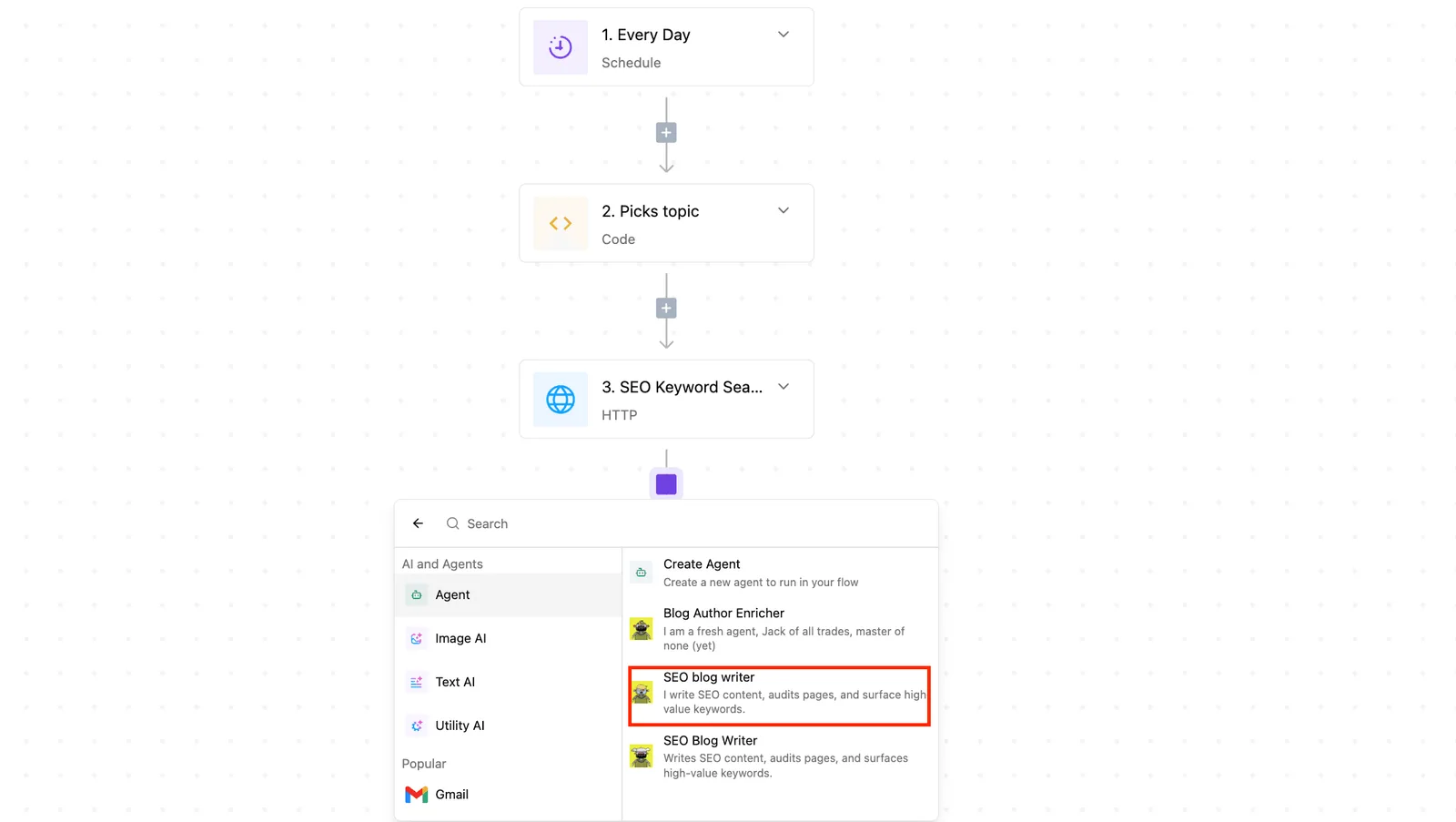
This architectural alignment eliminates the need for fragmented middleware, making it the superior option for those prioritizing cohesive, open-source AI orchestration.
Frequently asked questions about AI marketing tools
Which AI marketing tools are free to start?
Entry-level access to automated marketing depends on finding providers that offer permanent free tiers rather than expiring trials.
Via Google AI Studio, Google Gemini 2.5 Flash-Lite is a free tier for developers. HubSpot, a customer relationship management platform, has free versions of its marketing tools.
DeepSeek-V4.1-Flash is a significant amount of free tokens to new users, which allows for high-volume testing of vision-based tasks and text generation at no initial cost.
Protecting SEO and auditing for cost efficiency
Maintaining search visibility requires shifting the focus from AI-generated quantity to human-verified quality and original data. Search engines prioritize content that demonstrates expertise, so a raw output from a model is a draft rather than a final product.
A quarterly audit is the standard cadence for you to prevent "subscription creep" and ensure you're utilizing the most cost-effective models for specific tasks.
- Use Claude Fable 5.1 for demanding reasoning tasks to structure the initial outline based on proprietary internal data, ensuring the foundation of the integration isn't a generic hallucination.
- Assign a subject matter expert to inject "Information Gain" into the draft to signal original value to crawlers.
- Run the final text through Mistral Moderation 2, a tool designed to detect policy violations and jailbreak attempts, to ensure the content doesn't inadvertently trigger spam filters or safety flags.
Because the price-to-performance ratio of models changes rapidly, a static stack quickly becomes a financial liability.
| Audit Focus | Tool Example | Consequence of Neglect |
|---|---|---|
| Model Optimization | GPT-6 Luna | Using a flagship model for simple categorization tasks leads to overpaying for intelligence that the task doesn't require. |
| Seat Utilization | Salesforce | Keeping inactive users on a marketing cloud license results in paying for "shelfware" that provides zero utility to your campaign team. |
| API Throughput | Gemini 3.8 Flash | Failing to monitor token usage in high-volume agentic workflows can lead to unexpected budget exhaustion before the end of the fiscal month. |