Best AI Tools 2026: The Top 20 Ranked and Tested
The best AI platforms for 2026 help managers select software that automates workflows and improves data integration across enterprise tech stacks.

Covers turning ad-hoc RevOps automations into team-maintainable tools: ownership, on-call accountability, and what breaks first.
ContributorSeptember 26, 202616 min read
This article was researched and fact-checked by an advanced research system.
As the digital landscape evolves, the integration of artificial intelligence into daily workflows has transitioned from a luxury to a fundamental necessity for competitive businesses.
Organizations are increasingly prioritizing systems that offer seamless interoperability, often relying on sophisticated automation frameworks, including those built with Activepieces to bridge disparate software, to ensure that data flows efficiently across their entire tech stack.
This shift toward hyper-automation allows teams to focus on high-level strategy while autonomous agents handle repetitive tasks with unprecedented precision.
Consequently, selecting the right platform in 2026 requires a deep understanding of how these tools interact within a broader ecosystem to drive measurable growth and operational resilience.
The best AI tools and platforms in 2026 refer to a modular ecosystem of specialized applications designed to handle distinct tasks like reasoning and automation more effectively than monolithic, all-in-one systems.

TITLE: The Best AI Tools and Platforms to Use in 2026
TITLE: The Best AI Tools and Platforms to Use in 2026
Ranking Criteria for the 2026 AI Stack
When a single API call fails, the modern AI stack is evaluated by its ability to maintain operational continuity. This requirement shifts the burden of reliability from the model provider to you, the systems architect.
Because a monolithic "all-in-one" solution creates a single point of failure for your entire enterprise, you should prioritize modularity. This ensures that a service outage at one node doesn't paralyze your entire workflow.
Because a monolithic "all-in-one" solution creates a single point of failure for your entire enterprise, you should prioritize modularity.
The 2026 AI Evaluation Pillars provide a framework for this assessment:
- Reasoning Depth involves the capacity for multi-step logic.
- Multi-modal Versatility relies on native audio and video processing.
- Creative Fidelity ensures brand-consistent aesthetics.
- Cost-per-Action measures the API expense against successful task completion.
Choosing specialized AI tools by task
Moving away from general-purpose interfaces toward specialized execution layers is the direct result of this shift toward granular evaluation.
For instance, while OpenAI’s o1-preview handles deep logic, it lacks the native automation triggers found in Activepieces. The former functions as the logic layer while the latter executes actions.
Google Gemini Pro similarly offers expansive context windows for document analysis, yet requires separate vector database integration to maintain long-term memory across sessions. By isolating these capabilities, you can swap underperforming components without rebuilding your entire automation infrastructure.
The fastest way to settle a shortlist is to try one. Activepieces is free to try, no credit card.
Claude 3.5 Sonnet and the cost of intelligence
To avoid logic failures in production, the reliability of a modular stack depends on selecting a model whose reasoning depth matches the complexity of the specific task.
When an automated workflow misfires at 2:00 AM, you'll usually find a model that lacked the nuance to handle an edge case in the data schema.
Claude 3.5 Sonnet for advanced reasoning
High-stakes decision-making is now handled by specialized models acting as the "brain" of the stack, while cheaper models manage basic data routing.
Anthropic reports that Claude 3.5 Sonnet is frequently deployed for code generation and complex logical extraction. Its internal architecture reduces the hallucinations that break downstream automations.
You can move from static, rigid forms to dynamic intake systems that react to user intent in real-time because of precision at this level. Replacing legacy input methods with AI-driven adaptive interviews shifts the unit economics of lead generation.

Static forms convert at 6% to 15% with a $40 cost per lead, while adaptive interviews convert at 18% to 44% at a $4 cost, which means your marketing budget can generate significantly more qualified prospects for a fraction of the previous investment.
Lead volume can quadruple for your marketing department while the cost per acquisition drops by 90%, so your team can achieve exponential growth in pipeline scale without increasing total spend.
However, these efficiency gains are only realized if the underlying API costs don't scale faster than the conversion lift.
API pricing: input vs. Output costs
The "intelligence tax" of top-tier models must be balanced against the raw throughput requirements of your application.
Claude 3.5 Sonnet costs between $3 and $15 per 1M tokens, meaning high-volume summarization tasks will quickly eat the margin of a SaaS product.

$1.25 to $10 per 1M tokens is the price for GPT-5, which means developers must budget for an eightfold increase in operating costs depending on the complexity of their queries.
This price is a lower entry point for you if you need high reasoning but operate on tighter infrastructure budgets.
Advanced AI capabilities are becoming accessible to smaller teams. Silicon Analysts’ analysis puts Mistral Large at $3 to $9 per 1M tokens. This price is a predictable ceiling for your enterprise if you need to cap your variable output expenses.
For high-frequency, low-complexity tasks like basic data cleaning, DeepSeek-V3.2 costs only $0.28 to $0.42 per 1M tokens, allowing enterprises to automate routine processing at a negligible fraction of the cost of premium models.
This allows your system to process millions of records for less than the cost of a single cup of coffee.
It effectively removes cost as a barrier to large-scale data operations. Selecting the wrong model for a high-traffic node results in a "success disaster," where a spike in user activity creates an unmanageable cloud bill.
Use ChatGPT Plus for unified workflows
If you prioritize a unified entry point for voice, vision, and real-time web browsing over fragmented specialized tools, ChatGPT Plus is the primary interface.
Selecting the wrong model for a high-traffic node results in a "success disaster," where a spike in user activity creates an unmanageable cloud bill.
By consolidating these disparate inputs into a single conversational thread, it reduces the cognitive load on you as an individual contributor. You no longer have to pivot between analyzing a spreadsheet and describing a physical whiteboard sketch.
Multi-modal Interaction Capabilities
Between visual data and text-based reasoning, the platform acts as a general-purpose bridge. It allows you to upload a technical diagram and receive a functional summary within the same window.
This eliminates the need for manual transcription. In turn, it lowers the risk of human error when moving data between disconnected media types.
Advanced Voice Mode is integrated directly into the interface. It's a source of near-instantaneous verbal feedback so that a field technician can troubleshoot hardware hands-free without looking at a screen.
How modular systems handle data mapping is highlighted in the screenshot of the flow builder. Within the ChatGPT interface, this process is abstracted into a single chat box.
The modal showing variables illustrates the backend complexity that ChatGPT hides from you to maintain a low barrier to entry. You rely on the model’s internal logic to correctly interpret context rather than manually mapping every data field.
ChatGPT custom instructions and GPT Store
Persistent system prompts can be set using Custom Instructions. The model adheres to specific formatting or tone requirements across every new session without manual repetition.
This creates a standardized output format. You'll receive status updates that are consistently compatible with your existing reporting templates.
Specialized configurations of the model, such as the "Consensus" search tool or "Canva" integration, populate the GPT Store. These connect the underlying LLM to specific external databases or design engines.
These configurations function as pre-packaged workflows. You can perform complex research or asset generation tasks that would otherwise require writing custom API calls.
Midjourney for AI-generated visuals
For creative directors who manage brand consistency across automated marketing pipelines, visual fidelity is the primary metric. While generic models produce serviceable placeholders, this specialized tool generates the specific lighting, texture, and composition required for production-ready assets.
Midjourney image quality and realism
With a level of photorealistic nuance and stylistic range that reduces the time you spend on post-production retouching, Midjourney generates images.
This specificity allows you to move from a conceptual prompt to a final asset without the "uncanny valley" artifacts common in multipurpose models.
Rather than serving merely as a reference, the output can be placed directly into a layout. By focusing exclusively on the diffusion process rather than general-purpose chat, the system maintains a high density of visual information.
This focus ensures that lighting and material properties behave predictably. Your team can scale their visual output without a corresponding increase in manual quality control hours.
Web Interface and Style Tuning
Precise control over image composition is granted through the transition from a chat-based Discord bot to a dedicated web-based editor.
This interface has granular adjustments that are difficult to communicate through text alone. Examples include isolating specific areas of a render for modification.
From a linear command line into a professional workstation for asset manipulation, this layout demonstrates how the platform has evolved.
By pinning a style reference, you ensure that every subsequent generation adheres to the same color palette and lighting profile. This eliminates the drift that occurs when relying on text descriptions alone.
The 'Vary Region' tool is a localized in-painting function. You can swap a single element in a complex scene without triggering a complete regeneration of the image.
This modular approach to image editing means you retain ownership over the final composition, rather than accepting whatever the first seed provides.
Reading a table only gets you so far. Build the same workflow in Activepieces and compare it yourself.
Activepieces
When a brittle API connection snaps, the DevOps engineer is the one who gets paged at 2am. This makes them the ultimate arbiter of whether a modular stack is a strategic asset or a liability.
While specialized models handle the thinking, Activepieces reaches every model provider a company uses among its 735+ integrations and translates those thoughts into executed business actions across disparate software environments.
Agentic Workflow Orchestration
For the transition from simple linear triggers to complex agentic loops, Activepieces exposes every connected action as a tool schema on a per-project MCP server, reachable from Claude, ChatGPT, or Cursor.
In these loops, an LLM can autonomously query databases, update CRM records, and ping Slack based on its own reasoning.
Every action registered in the Integrations Framework is immediately available to an agent as a tool schema via the built-in MCP server, removing the need to re-integrate the catalog for different models.
You can verify this mechanism in the packages/pieces directory of the open-source repository, where the same logic powers both deterministic flows and agentic tools.
This orchestration shifts the burden of logic from you to the model. Edge cases that previously required dozens of manual "if-then" branches can be handled by a single workflow.
By using a block-based interface that mirrors the logic of the underlying code, the platform ensures that you can audit the path an autonomous agent took. This provides a clear paper trail for your compliance teams during a failure post-mortem.
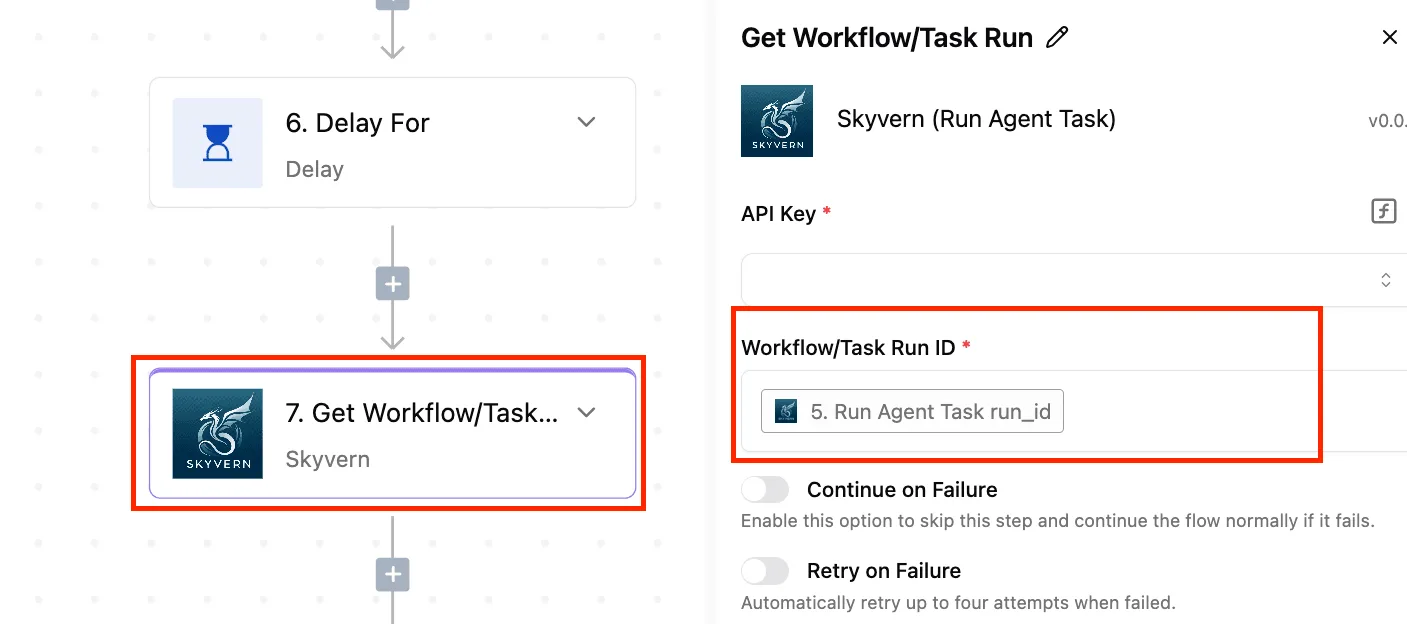
The following comparison illustrates how the 2026 stack allocates specific cognitive and operational tasks to ensure no single point of failure cripples your entire business process.
| Tool | Primary Use Case | Monthly Value Proposition |
|---|---|---|
| Claude 3.5 | Reasoning & Complex Coding | High-fidelity logic reduces the time spent debugging generated scripts. |
| ChatGPT Plus | Generalist Interaction & Voice | Low-latency multimodal input allows for rapid, hands-free data entry and retrieval. |
| Midjourney | Visual Asset Generation | High-aesthetic consistency eliminates the need for repeated manual retouching cycles. |
| Activepieces | Workflow Glue & Automation | Open-source connectivity prevents vendor lock-in and reduces the overhead of API maintenance. |
Labor is distributed this way to ensure that a failure in the creative layer never halts the operational flow of your business.
Self-hosted vs. Cloud Flexibility
Who ultimately owns the data sitting in your automation logs is determined by the choice between a managed cloud service and a self-hosted Docker instance.
Activepieces offers a self-hosted tier. This allows you to keep sensitive execution data within your own virtual private cloud.
MoneyGram and FundingSocieties run this in production to maintain control over their automation infrastructure while utilizing an MIT-licensed core.
By bringing your own provider keys, you ensure that model spend remains on your own accounts rather than being resold at a markup, a policy you can verify by comparing the Bring-Your-Own-Key availability across tiers on the pricing page.
Proprietary payloads moving between your internal tools are never accessed by a third-party vendor. This level of network isolation is a prerequisite for you if you work in regulated industries.
In these sectors, sending customer data to a multi-tenant cloud environment is a non-starter for your legal department. By decoupling the automation engine from the model provider, you ensure that your entire operational infrastructure doesn't need to be rebuilt from scratch.
By unifying standard workflow automation with Model Context Protocol, the platform ensures that every integration functions natively as an agentic tool without requiring redundant configuration.
Activepieces is the better choice for engineering teams who prioritize a unified architecture where the same connector logic powers both linear flows and autonomous LLM reasoning.
Through this framework, developers gain a scalable way to transform their entire integration library into a functional toolkit for AI agents.
Zapier for enterprise ecosystem breadth
If your primary requirement is the sheer volume of legacy software connections rather than deep agentic control, Zapier remains the industry standard for ecosystem breadth.
By maintaining thousands of pre-built connectors, it allows your non-technical teams to link obscure business tools without writing a single line of code.
Massive integration library
For organizations that rely on a long tail of niche SaaS products, the platform provides the most comprehensive library of triggers and actions. You can connect specialized accounting software or regional CRM platforms that newer automation tools have not yet prioritized.
This breadth ensures that no part of your legacy stack is left isolated. By providing a stable, managed environment for these connections, the system reduces the initial friction of setting up basic data transfers between departments.
Centralized management and stability
Large enterprises often choose this route for its mature administrative controls and predictable uptime. You can manage thousands of simple tasks across a global workforce from a single dashboard with granular permission settings, which means you can maintain centralized oversight without sacrificing operational agility.
While it may lack the open-source flexibility of a modular stack, it offers a "set-and-forget" reliability for linear processes. This makes it a reasonable choice for teams that value a managed service over the ability to customize the underlying execution engine.
Perplexity Pro for cited AI research
If you require real-time data retrieval with traceable citations rather than the probabilistic guesses of a standard large language model, Perplexity Pro is the primary verification layer.
By shifting the burden of truth from the model’s internal weights to a live index of the internet, the platform reduces the risk of silent hallucinations that typically force manual fact-checking.
Perplexity Pro citation accuracy
By mapping every sentence in its response to a specific numbered citation, the platform prioritizes attribution. This architecture allows you to click through to the original source immediately.
Time spent on a query is used for synthesis rather than hunting for the origin of a claim. The output is restricted to the information found in the retrieved documents because the system utilizes a "search-and-summarize" loop.
This prevents the engine from inventing plausible but non-existent case studies or software documentation. The output acts as a curated bibliography rather than a black-box generation for you.
Multi-model Selection Features
To process the retrieved search results, the Pro tier allows you to toggle between different underlying models, such as Claude 3.5 Sonnet from Anthropic or GPT-4o from OpenAI.
This flexibility means you can switch to a model known for superior coding logic when researching API documentation, or a model with better creative nuance when performing competitive brand analysis.
Even if one model provider experiences a service outage or a sudden shift in output quality, you can maintain a consistent research interface.
This is possible since you aren't locked into a single provider’s reasoning style. Applying the most capable logic available in the market to the most current data is ensured by this decoupling.
How to build a modular AI stack
Identifying which specific department head owns the recovery process when a cross-platform handshake fails is where a modular AI strategy begins.
Because no single vendor manages the entire lifecycle of a modular stack, the first step is mapping data dependencies. This ensures that a failure in the reasoning engine doesn't silently corrupt the records in your execution layer.
Follow this sequence to transition from a monolithic platform to a specialized stack:
- Audit existing "all-in-one" licenses to identify where generic output is currently bottlenecking your expert workflows.
- Separate your data storage from your processing layer so that you can swap models without migrating your entire knowledge base.
- Deploy a dedicated orchestration layer to manage the API calls between specialized tools.
- Establish a "model-agnostic" prompt library that allows your team to test the same instruction set against different LLMs.
Distinguish between the tools based on their primary architectural role rather than their marketing claims when selecting components:
| Component Role | Industry Example | Functional Constraint |
|---|---|---|
| Reasoning Engine | OpenAI’s GPT-4o | Requires high-latency processing, making it unsuitable for real-time edge triggers. |
| Vector Database | Pinecone | Operates as a standalone index, meaning it cannot generate text without an external LLM. |
| Code Execution | Replit Agent | Confines logic to a sandbox environment, which prevents it from accessing local files without explicit permissions. |
If a provider changes their pricing or deprecates a critical feature, this modularity ensures that you only replace one link in the chain. Your entire business process doesn't need to be rebuilt.

Related reading
References
Still comparing
The fastest way to settle it is to build something.
Open source under MIT, so you can self-host the same thing later.
Start free Talk to sales