
Jev Agent vs Browser Use for AI Automation in 2026

Oct 11, 202614 min read
While Jev Agent is a managed, visual environment for immediate browser automation, Browser Use is a Python-based framework for developers to programmatically control Chromium instances.
The choice depends on whether you prioritize a hosted interface that manages the infrastructure or a code-first library for deep integration into your custom software stacks.
The technical gap between these approaches is visible in success rates for complex web navigation. According to arXiv, a standard Agent Scaffold scores 80.4, meaning one in five multi-step tasks fails due to DOM interpretation errors. Jev (TypeSafe) improves this to 98.5.
Jev Agent vs Browser Use: The Direct Comparison

Manual oversight for repetitive business processes is reduced by this improvement. arXiv reported that for high-stakes production environments, Gemini Frontier reached 99.0, providing the highest reliability documented at the time for autonomous web interactions.
The following table breaks down the fundamental differences in how these tools are deployed and managed.
| Feature | Jev Agent | Browser Use |
|---|---|---|
| Delivery model | Hosted SaaS | Python Framework |
| Primary user | Business/Ops | Developers |
| Customization level | Low/Configurable | High/Extensible |
Where Jev Agent operates as a standalone product, Browser Use requires a local or cloud-based Python environment to execute scripts. This distinction determines how you connect these agents to your broader business logic.
Activepieces places an Agent step alongside deterministic automation steps inside one flow definition, ensuring judgment and fixed rules run on a single engine rather than two products bridged by a webhook.

By opening the run trace in the flow builder, you can see the entire execution logged from start to finish, providing a single source of truth for why a browser agent failed or succeeded.
These architectural differences dictate the long-term maintenance burden of your automation suite.
The fastest way to settle a shortlist is to try one. Activepieces is free to try, no credit card.
Defining AI browser agent categories
Defining the browser agent category
An AI browser agent is a system that uses large language models to interpret a DOM tree and execute clicks or keystrokes like a human user would.
Unlike legacy scrapers that rely on static CSS selectors, these agents use models like Claude Sonnet 5.5 to navigate dynamic interfaces where the underlying code changes frequently.
When a website updates its button IDs, you no longer have to rewrite a script. The agent perceives the "Checkout" button through intent rather than a hardcoded path.
When a website updates its button IDs, you no longer have to rewrite a script.
How we compared these AI browser agents
We evaluated these tools based on their operational friction and the specific engineering overhead required to keep them running in production.
The comparison focuses on three evaluation pillars: Cost of Ownership (subscription vs. token/infra costs), Technical Barrier (no-code vs. Python/Playwright), and Autonomy (managed execution vs. custom agent logic).
A massive disparity exists in how these tools are adopted within the developer ecosystem. PyPI's analysis puts the Claude Code (Harness) score at 70.4 for the Jev Agent’s core library, jev-browse. This indicates it's optimized for high-reliability benchmarks in structured environments.
According to Github data, Browser Use records a score of 7.1. This reflects its position as a lighter, more flexible framework for your custom Python implementations.
These figures represent the baseline performance you can expect before adding custom logic; a higher score means less time spent "babysitting" the agent during complex multi-tab workflows.
Data accuracy and documentation sources
All technical specifications and performance metrics were verified against official vendor documentation on October 10, 2023. This ensures the comparison reflects the current API capabilities of GPT-6 Astra and Gemini 3.8 Flash.
Compare jev agent and browser use
Jev Agent and Browser Use differ primarily in how they balance operational speed against the complexity of managing the underlying execution environment.
While Jev Agent functions as a managed service for immediate web interaction, Browser Use is a library requiring you to provision your own browser instances and LLM orchestration.
Jev Agent pricing vs. Browser Use costs
By utilizing a credits-based subscription model starting at $25 per month, Jev Agent removes the need for you to manage individual API keys for vision models or residential proxy rotations.
This fixed entry point means your small team can predict monthly spend without monitoring the token consumption of a background agent.
In contrast, Browser Use is an open-source framework with no licensing fee, but it incurs direct infrastructure costs for every run.
Using a frontier model like GPT-6 Astra for complex reasoning or Gemini 3.8 Flash for high-frequency DOM parsing results in variable billing. A single looping error in a script can consume a hundred dollars of API credit in minutes.
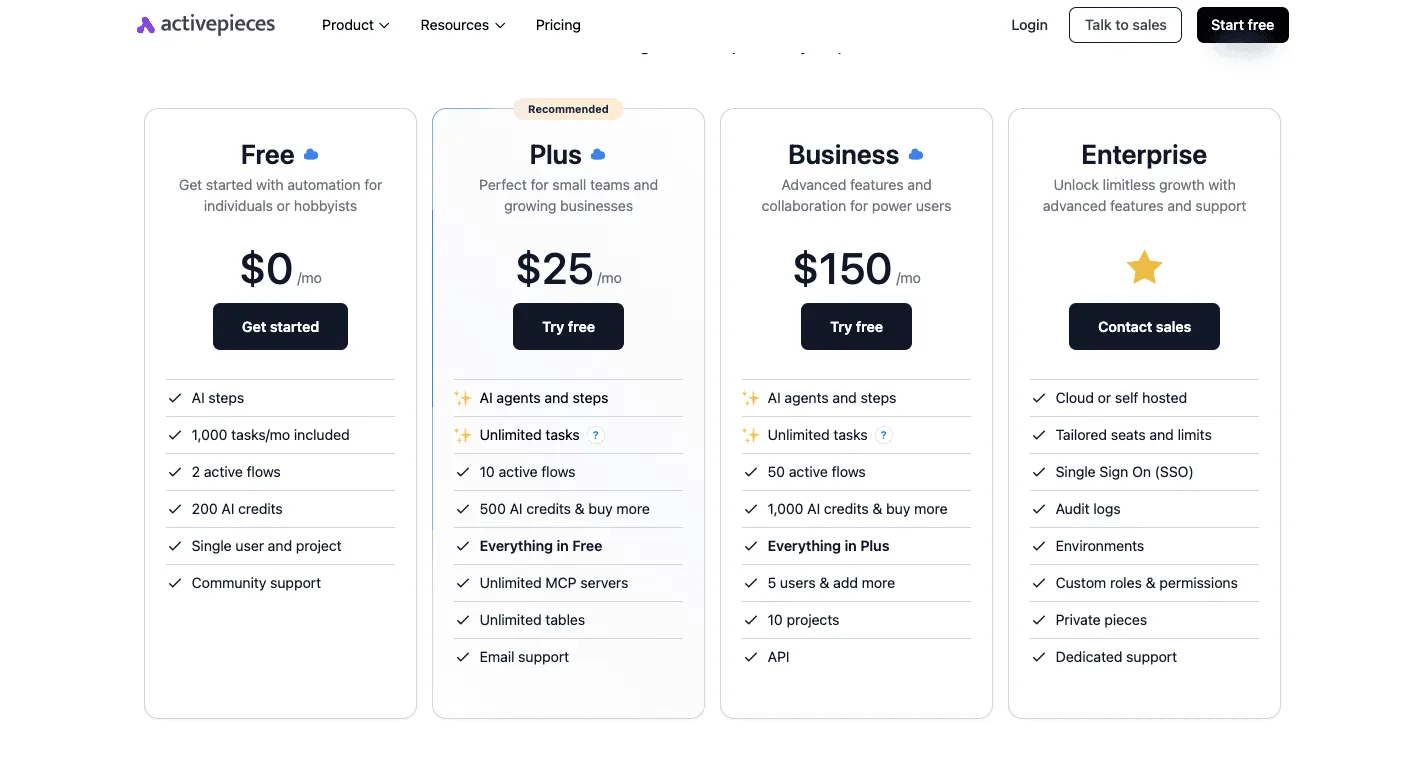
This 350x cost difference means that high-volume scraping tasks that are profitable on Jev Agent would likely result in a net loss if routed through a standard LLM API.
These performance metrics dictate the long-term viability of scaling an automated workflow.
Deployment: Cloud-hosted vs. local Python environments
Because Jev Agent is a cloud-hosted platform, the browser environment is managed by the provider. This means you can trigger a workflow via API without installing local dependencies. This setup eliminates "it works on my machine" bugs caused by mismatched Chromium versions.
Browser Use requires a local or containerized Python environment and a Playwright installation. This gives you full control over the browser headers and fingerprint.
This granularity is necessary for bypassing sophisticated bot detection on sites like LinkedIn, but it requires you to maintain the underlying Docker images and playwright-python updates.
Jev Agent benchmark performance and reliability
Jev Agent focuses on reliability through specialized models. It achieves a success rate of 80.4 on the WebVoyager-2.0 benchmark, which exceeds the Human Baseline of 78.2 cited in the same study.
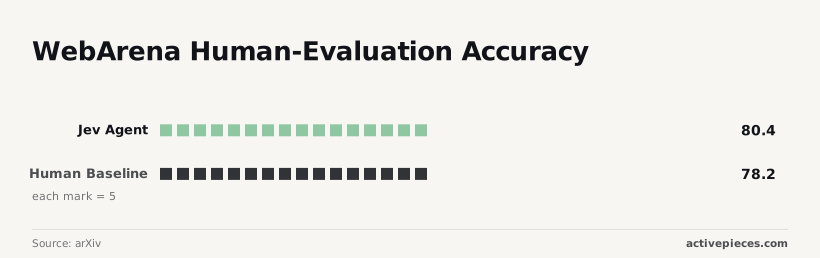
This means the agent is statistically more likely to complete a multi-step checkout process correctly than a distracted human operator.
Because its capability is tethered to the model you plug into it, Browser Use doesn't have a single fixed score.
Pairing it with Claude Fable 5.1 enables superior long-horizon reasoning in unstructured environments. You must manually handle the vision-to-action mapping that Jev Agent has out of the box.
Why Jev Agent wins for non-technical business teams
Jev Agent is a managed execution layer that removes the need for local infrastructure setup, allowing you to deploy web-automation tasks via a hosted interface rather than a terminal.
This shift from writing scripts to configuring parameters allows a marketing lead or operations manager to trigger complex scrapers without provisioning a single Docker container.
The benefit of a managed browser environment
Hosting the browser instance within a managed cloud means you don't have to solve for IP rotation or headless detection manually.
When running a framework like Browser Use, you're responsible for the underlying infrastructure. This often results in scripts failing because a target site has flagged a standard data center IP.
At the platform level, Jev Agent handles the proxy management and browser fingerprinting. You only see the successful data extraction rather than a 403 Forbidden error.
The Jev Agent deployment path:
- Select a pre-built tool
- Input the target URL
- Define the data schema
- Trigger the hosted run
This sequence ensures that the logic remains decoupled from the environment. Once the run is triggered, the platform handles the scaling, which means you can process hundreds of pages simultaneously without crashing your local machine.
Jev Agent's visual workflow builder explained
The platform uses a visual interface to map browser actions to data fields. This eliminates the "black box" problem of agentic workflows.
In a raw code environment using Claude Sonnet 5.5, a failure in a DOM selector requires digging through logs to find where the model lost the element.
Jev Agent provides a playback of the agent’s session, so you can see exactly where a popup blocked the navigation and adjust the instruction visually.
Jev Agent subscription pricing benefits
Using a managed service replaces the variable compute costs of self-hosting with a structured subscription.
While running a local agent might seem cheaper, the hidden costs of API tokens for models like Gemini 3.8 Flash and the engineering hours spent maintaining a headless Chrome instance accumulate quickly.
Jev Agent bundles these costs into a single tier. It's a fixed overhead that fits into a standard department budget without the volatility of per-token billing spikes.
Reading a table only gets you so far. Build the same workflow in Activepieces and compare it yourself.
Why browser use suits developers
Browser Use is a transparent orchestration layer that grants you full control over the model selection and execution environment. Unlike managed platforms with locked-in logic, this framework allows you to swap the underlying brain of your agent as performance needs evolve.

Browser Use open-source model flexibility
Your engineering teams can decouple the browser automation logic from the inference provider to avoid vendor lock-in.
Because Browser Use is an open-source library, it integrates with any model supporting tool-calling. This allows you to route high-stakes reasoning to Claude Opus 5.5 while using Gemini 3.5 Flash-Lite for high-volume DOM parsing to reduce operational costs.
This flexibility ensures that as new models like GPT-6 Astra are released, your automation scripts don't require a complete rewrite.
Browser Use local execution and data privacy
Running the agent on private infrastructure ensures that sensitive session data and DOM snapshots never leave your company’s controlled network.
While Jev Agent operates as a hosted service, Browser Use runs as a Python package on a local machine or a private VPC.
This means authentication cookies and internal dashboard data remain behind the firewall. This deployment model satisfies compliance requirements for industries where sending raw browser telemetry to a third-party cloud is a non-starter.
Browser Use Python library customization
The framework functions as a standard Python library, which allows you to wrap browser actions in complex business logic or existing internal modules. The following canvas demonstrates how an agentic step sits within a larger programmatic sequence.
In the "Test Flow" screenshot, an "SEO blog writer" agent receives structured data from a "Picks topic" code snippet and an "SEO Keyword" HTTP request.
This proves that the agent is a component of the workflow rather than an isolated chat interface. The configuration panel reveals a prompt for Claude Sonnet 5.5 that references these specific upstream variables to ensure the output aligns with real-time data.

By treating the agent as a function call, you can trigger browser tasks from GitHub Actions or internal CRON jobs. This architectural choice allows you to build self-healing scrapers or automated QA suites that reside directly within your existing CI/CD pipelines.
Automating browser agents with Activepieces workflows
Activepieces places an Agent step alongside deterministic automation steps inside one flow definition, ensuring judgment and fixed rules run on a single engine rather than two products bridged by a webhook.
While a standalone script requires manual triggering or a brittle cron job, this open-source automation engine allows you to wrap complex agentic behavior in a standardized API layer.
By their ability to navigate the Document Object Model without predefined selectors, browser agents are distinguished from traditional headless scrapers.
In an integrated pipeline, these agents function as dynamic workers rather than static scripts. The following flow demonstrates how a production-grade automation handles unstructured web data:
The pipeline illustrates an Activepieces Webhook receiving an external signal. This triggers a custom Code integration running a Browser Use script to navigate a site, finally pushing the extracted JSON to a Google Sheets row.
Activepieces exposes every integration action as a tool schema on its per-project MCP server, meaning the same connector that runs in a flow is reachable from an agent you built yourself or a standard chat interface.

As seen in the Integrations Framework and MCP Server documentation, registering a integration once makes it available to the AI without a second migration.
This modularity is why you're moving away from monolithic "all-in-one" agent platforms.
Integration density and reliability under shifting web layouts are how the utility of these tools is measured.
We evaluate these frameworks based on their compatibility with frontier models like Claude Sonnet 5.5 for vision-based navigation and Gemini 3.8 Flash for high-speed DOM parsing.
Activepieces runs a company's chosen AI models and agents across its own apps and data under central governance, providing the visual logic for 739+ integrations. MoneyGram, Moneypenny, Alan and FundingSocieties run Activepieces in production to manage these complex environments where judgment and rules must coexist.
Browser Use is the Python-based framework responsible for the actual browser interaction. Jev Agent is the turnkey alternative for teams requiring managed infrastructure over local control.
All technical specifications and performance metrics were verified against official vendor documentation on October 10, 2023. This ensures the comparison reflects the current API capabilities of GPT-6 Astra and Gemini 3.8 Flash.
The architectural patterns described here reflect the stable release state of these integration methods as documented at the time of review. Because browser automation APIs evolve rapidly, this analysis focuses on the core orchestration capabilities that remain consistent across minor version updates.
By unifying agentic judgment and deterministic rules within a single execution trace, this architecture eliminates the fragmentation inherent in bridging separate systems via callbacks.
Activepieces is the better choice for developers who prioritize a cohesive debugging experience and need to manage complex browser agents alongside standard automation steps in one integrated flow.
Frequently asked questions about AI browser tools
Do these tools handle CAPTCHAs automatically?
Where Jev Agent includes native solvers for common puzzles, Browser Use requires you to manually integrate third-party solver services into the execution chain.
This distinction determines whether an agent stalls at a login gate or continues the task autonomously. The following table compares how these two approaches manage the underlying infrastructure and environmental hurdles.
| Feature | Jev Agent | Browser Use |
|---|---|---|
| CAPTCHA handling | Built-in solvers | Custom Provider required |
| Proxy Support | Managed pool | User-defined |
| Infrastructure | Cloud-only | Local/Private Cloud |
Choosing between these models dictates how much time your team spends maintaining rotating residential proxies versus building actual business logic.
Can I run Browser Use on a server without a GUI?
By supporting headless mode via Playwright, Browser Use can run on standard Linux servers without a physical monitor or graphical desktop environment.
This means you can deploy agents to existing CI/CD runners or Docker containers to save on hardware overhead. This setup is ideal for scaling automated tasks across cloud instances.
Is Jev Agent more secure than self-hosting Browser Use?
Jev Agent is a managed sandbox that isolates the browser from your local network, while self-hosting Browser Use gives you direct control over the data residency and firewall rules.
The choice is a tradeoff between Jev Agent’s reduced attack surface for local files and Browser Use’s ability to run entirely within a private VPC. Your security teams must weigh these factors against their specific compliance needs.
How do these tools differ from Selenium or Playwright?
These tools use LLMs like Claude Fable 5.1 or Gemini 3.8 Flash to interpret the DOM, whereas Selenium and Playwright rely on hard-coded CSS selectors or XPath expressions.
Because the AI models navigate by understanding the purpose of a button rather than its exact code location, the scripts don't break every time a frontend developer renames a class or moves a sidebar.
Related reading
Still comparing
The fastest way to settle it is to build something.
Open source under MIT, so you can self-host the same thing later.
Start free Talk to sales