
Multi-step Approval Workflows for Donor Data Governance
Structured approval chains prevent data discrepancies when integrating payment gateways with non-profit CRM systems.

Covers government automation rollouts: approval chains, audit requirements before benefits claims, and which pilots survive budget review.
ContributorSeptember 18, 202611 min read
This article was researched and fact-checked by an advanced research system.
When a payment gateway like Stripe fires a donor webhook at the peak of a seasonal giving surge, Activepieces immediately executes CRM updates and receipting.
Modernize non-profit tech with donor automation
This protects the accuracy of your tax-exempt records by using an MIT-licensed core that ensures your logic remains your own property.
By offloading these repetitive tasks to automated software triggers, you enforce a standardized validation logic. This prevents human intervention from corrupting your general ledger.
Risks of overwriting donor records automatically
Unchecked automation frequently results in the irreversible loss of historical donor data when incoming webhooks overwrite existing fields without a reconciliation step.
This logic ensures that high-value relationships aren't reduced to a line item in a database without oversight. If this validation fails, your system risks updating a record with incorrect metadata, forcing a manual audit of the entire fiscal quarter.
IRS compliance through donor audit trails
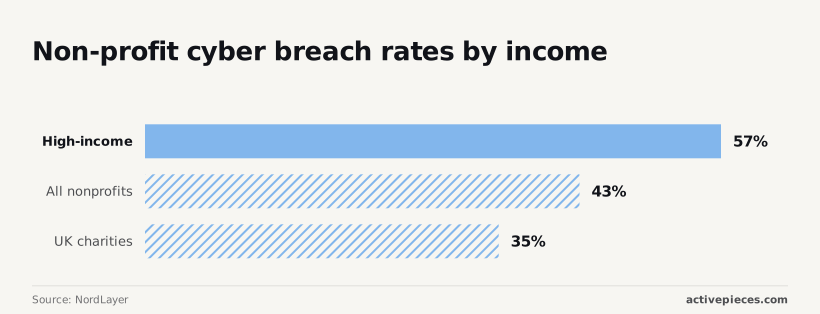
Maintaining a defensible audit trail requires logging every automated change to a donor record outside of the application’s volatile memory. This level of scrutiny is a functional necessity because 43% of all nonprofits have experienced a cyber breach according to NordLayer.
NordLayer reports that the risk profile increases significantly with the size of your organization, as 57% of high-income charities report breaches, which means larger entities face a disproportionately higher likelihood of security failure.
Activepieces syncs these donor flows to git and promotes them through Release Management, moving them from a test environment to production as versioned software rather than private in-app edits. Separate projects and environments ensure that promoting a new tax-receipting logic is a deliberate, reviewed step.

The Git Sync and Release Management features function identically across both self-hosted and cloud instances, providing a consistent deployment pipeline for governance.
This requires a strict segregation of duties between the data entry layer and the permanent record.
Even in regions with different regulatory frameworks, the threat remains constant: 35% of UK charities average at least one breach, so organizations cannot rely on local laws to provide inherent protection.
This compels you to demand version-controlled workflows that staff can restore to a known-good state after an incident.
Hidden costs of manual donor data entry
Manual data entry creates a bottleneck that prevents you from processing surges in seasonal giving without hiring temporary staff who lack proper security clearances.
Relying on human cycles for data hygiene introduces a 3% to 5% error rate in zip codes and tax identifiers, meaning that a significant portion of your donor database is likely to contain inaccurate contact or tax information.
This results in thousands of dollars in postage costs for undeliverable tax receipts.
When these processes aren't codified in a transparent workflow, the institutional knowledge of how your system processes a gift resides only with the individual clerk.
Everything below works on Activepieces' free plan. Start without code or a credit card.
The financial barrier to scaling donor management
Evaluating the Raiser's Edge and DonorPerfect price floors
Entry-level access to industry-standard donor management systems requires a minimum capital outlay that often exceeds the total operational budget of smaller development offices.
According to pricing data from GrantPipe, the DonorPerfect Core tier ranges from $1,688 to $6,188 per year, leaving a significant gap between entry-level and enterprise-scale commitments.
Grantpipe’s analysis puts the starting cost for the Blackbaud Raiser’s Edge NXT platform for small teams between $5,000 and $8,000 annually, so smaller nonprofits must carefully weigh these baseline expenses against their available operating capital.
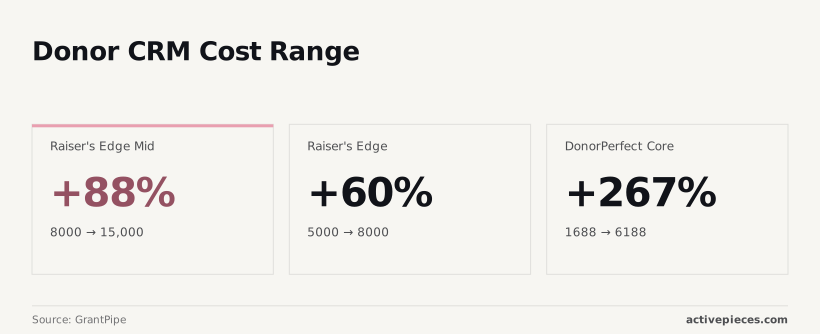
At the mid-market level, Raiser’s Edge costs jump to between $8,000 and $15,000, forcing organizations to allocate a much larger share of their annual budget to software maintenance, leaving fewer resources for direct programming and outreach, which means these nonprofits must sacrifice growth initiatives to keep their systems running.
These figures represent only the starting point for a multi-year commitment, as they don't account for the technical debt that accumulates when you lock workflows into these proprietary interfaces.
Why high software costs demand high data integrity
A high licensing fee is only defensible if the underlying data remains an auditable asset rather than a liability trapped in a vendor’s specific UI.
When you pay upwards of $15,000 for a seat in a CRM, Avantit notes that every manual entry error represents a degradation of that investment.
Internal auditors can't verify the provenance of a gift that was moved via a "black box" sync. If the logic governing a donor's tax receipt lives only in a hidden automation menu, you risk a compliance failure that the software vendor won't indemnify.
Donor platform fees versus automation savings
Justifying the expense of high-tier donor platforms requires a measurable reduction in manual administrative hours through external, transparent automation.
A dedicated integration layer ensures that data mapping is visible to your entire IT department.
External version control for gift processing logic allows for a 100% audit trail, which satisfies the requirements of external financial examiners during annual reviews, thereby streamlining the compliance process, so staff can spend less time preparing for audits and more time on core operations.

Decoupling the automation logic from the CRM UI prevents vendor lock-in.
Protect donor database integrity with approval chains
Establishing hard-coded thresholds for database modifications ensures that high-value donor relationships are never jeopardized by the automated scripts of a junior administrator.
Decoupling the automation logic from the CRM UI prevents vendor lock-in.
| Approval Tiers | Gift Sensitivity | Required Oversight |
|---|---|---|
| Tier 1 | <$500 | No Approval |
| Tier 2 | $500 - $5k | Development Manager |
| Tier 3 | >$5k or Anonymous | Director/Board Review |
This hierarchy dictates the level of manual intervention required before a record is permanently altered, preventing the "drift" of data quality that occurs when every user has global write-access.
Approving low-risk donor record updates
Standardizing minor record updates allows your development team to maintain momentum without the bottleneck of executive oversight for every mailing address change. If a donor updates their preferred email via a web form, the risk of fraud is negligible.
The system processes these changes instantly to ensure the next communication reaches the correct inbox.
Tier 2: Major gift alerts and wealth screening data
Mid-level transactions require a secondary review by the Development Manager to ensure that wealth screening data isn't overwriting internal history.
Because these updates trigger automated outreach tasks, a manager must validate the data to prevent the embarrassment of sending a solicitation based on an incorrect financial profile.
Every decision made by an agent or a deterministic step is traced in the Run Details and Debugging UI, allowing for a per-step audit of why a specific donor was flagged.
These traces export as event streams into existing SIEM tools, ensuring that an automated decision to pause a major gift record is reviewed with the same rigor as a manual entry.

Approving restricted funds and legal name changes
Significant financial commitments and changes to legal identities require the highest level of scrutiny to protect you from liability and audit failures. When a gift exceeds the board-mandated threshold or involves restricted funds, the Director or Board must sign off on the record change.
This manual intervention is the final safeguard against the accidental misallocation of funds.
Easier to see it running than to read about it: set it up free, no card.
Activepieces manages complex approval logic without developer overhead
Activepieces provides a visual canvas where non-technical staff can insert an "Approval" block directly into an automated flow, drawing from 735+ integrations to connect donor forms to internal review tools. This keeps high-stakes actions paused until a designated officer grants permission.
How to pause automation for approval
The "Wait for Approval" step functions as a stateful pause in the automation. It prevents the subsequent steps from executing until a unique webhook URL receives a specific "Approved" or "Disapproved" signal.
By placing this step immediately after a trigger, you ensure that funds aren't processed or acknowledged until the vetting process is complete.
Activepieces allows for unlimited flows on every plan, so organizations like FundingSocieties can build granular approval chains for every gift category without hitting a licensing ceiling.
Routing notifications to Slack or Microsoft Teams for review
To bridge the gap between the automated backend and the human decision-maker, Activepieces uses pre-built connectors for internal communication tools like Slack or Microsoft Teams to deliver the approval link, a capability used by companies like MoneyGram to maintain oversight across distributed teams.
This delivery mechanism ensures that the person responsible for the audit doesn't need to maintain an active login to the automation platform. Each notification includes the specific metadata of the transaction, such as the donor's name and the amount.
Routing approval workflows after a rejection
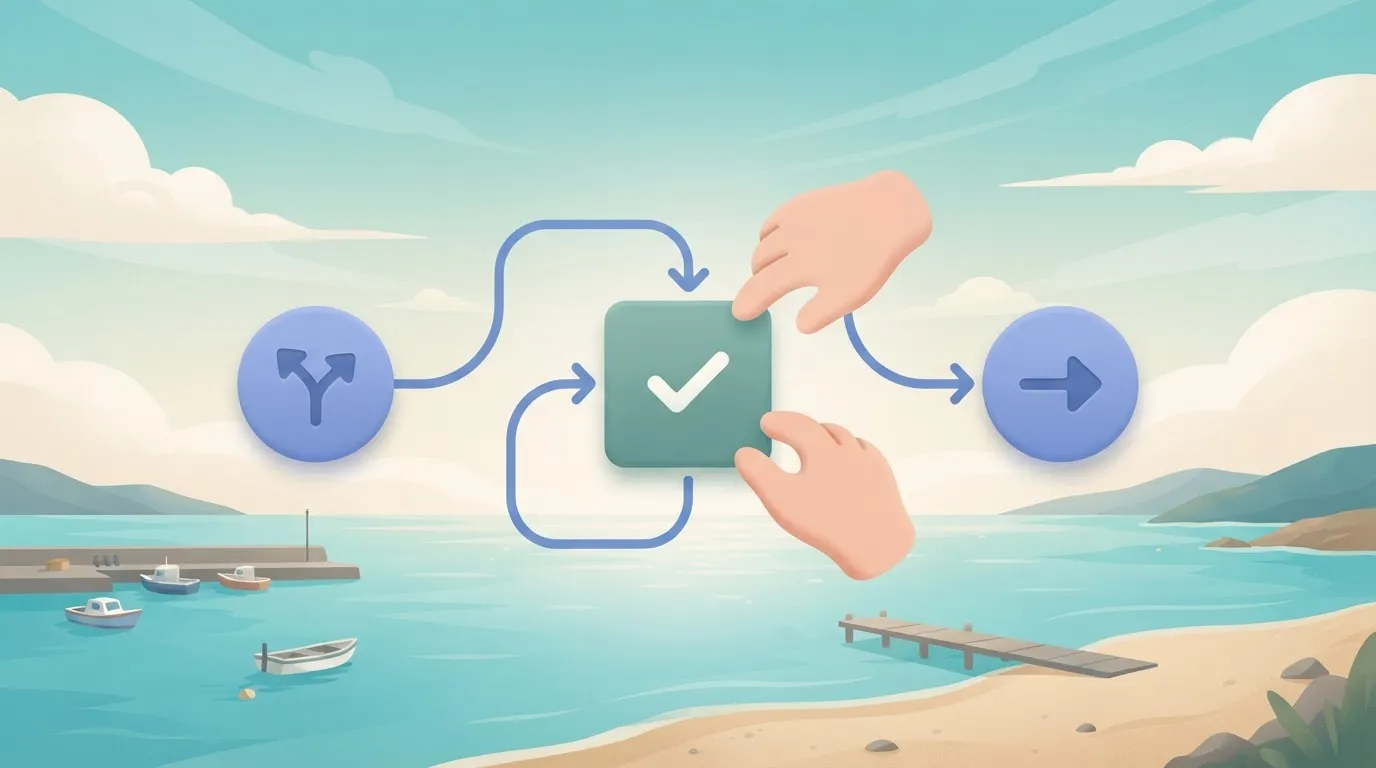
The "Branch" integration in Activepieces allows the workflow to split into two distinct paths based on the reviewer's response.
The "Approved" path triggers the final API call to the donor management system, completing the transaction only after the digital signature is recorded.
The "Rejected" path routes the data to a "Needs Review" queue or sends an alert to a supervisor to ensure that staff flag potential errors or fraudulent attempts for manual investigation.
Implementation steps for a secure donor automation pilot
Audit your most frequent manual data tasks surfacing errors
Governance begins by identifying which specific manual entry points currently bypass your internal controls. You must isolate the specific fields in your constituent relationship management (CRM) software where human oversight consistently fails. These include the donor’s tax-exempt status or gift restrictions.
Building an approval matrix for donor automation
Your development team requires a formal matrix defining which personnel can authorize changes to the automation logic. This document must map out the following requirements:
- The specific job roles permitted to trigger a production deployment.
- Mandatory peer-review steps for any logic that touches payment processing gateways.
- The escalation path for failed automation runs.
Set up a 'Sandbox' CRM record for initial testing
Testing must occur within a dedicated sandbox environment, which is a mirrored instance of your database provided by the CRM vendor. This allows your developers to stress-test the automation without risking the integrity of live donor records. Within this environment, you must create a set of dummy donor profiles that represent every edge case in your approval matrix.
Frequently asked questions about donor data governance?
Does adding an approval step slow down the fundraising cycle?
Integrating a formal sign-off into the data workflow prevents the downstream labor costs associated with correcting inaccurate donor records or misapplied tax receipts.
While a manual review requires a temporary pause in the sequence, it ensures that the CRM only ingests validated entries.
This eliminates the need for emergency data cleaning cycles that typically take longer than the initial approval.
To maintain velocity without sacrificing oversight, you should structure your governance to trigger automated notifications to the relevant budget holder or compliance officer.
You should provide a direct link to the specific data payload requiring review and log the timestamp of the approval to satisfy internal control audits.
Is donor data encrypted during the automation process?
Data remains protected by industry-standard encryption protocols both while moving between applications and while resting within the automation platform’s database.
Because these platforms act as a bridge between sensitive environments, maintaining encryption ensures that a breach at the transport layer doesn't result in a plaintext exposure of personally identifiable information.
Most enterprise-grade automation tools utilize Transport Layer Security (TLS) for data in transit and Advanced Encryption Standard (AES) at the 256-bit level for data at rest. Even if the physical storage medium is compromised, the donor records remain unreadable to unauthorized parties.
Can we set different approvers for different grant types?
Conditional logic allows for the routing of approvals to specific personnel based on the financial value or the legal complexity of the incoming gift.
This granular control ensures that a high-value private foundation grant undergoes a more rigorous legal review than a standard individual donation. This prevents the compliance team from becoming a bottleneck for low-risk transactions.
- The Finance Director reviews grants exceeding a specific monetary threshold.
- Legal Counsel handles restricted funds with complex reporting requirements.
- The Development Manager oversees recurring monthly giving programs.