Muse Wonder (2026 Guide)

Oct 13, 202611 min read
Muse Wonder is a model that supports frontier coding, long-running agents and advanced computer use, giving developers a frontier model for their most complex workflows.
Meta launches Muse Wonder for creative automation
Muse Wonder is Meta's most advanced model yet, bringing SOTA coding performance, long-running agents, and advanced computer-use capabilities to tackle developers' most critical workflows.
Released on October 12, 2026, this model gives developers direct programmatic access via the Meta Model API, with Muse Wonder Full available exclusively by subscription in Muse Code.
Muse Wonder's record-breaking adoption speed
This growth fundamentally shortens the window teams have to adapt their infrastructure.
According to 9to5mac, Muse Wonder hit 5 million downloads in just 22 days.
| Model | Days to 5 Million Downloads |
|---|---|
| Muse Wonder | — |
| ChatGPT | 56 days |
| Grok | 103 days |
| Claude | 492 days |
Prices and plan limits checked against dev.meta.ai and openrouter.ai on October 13, 2026.
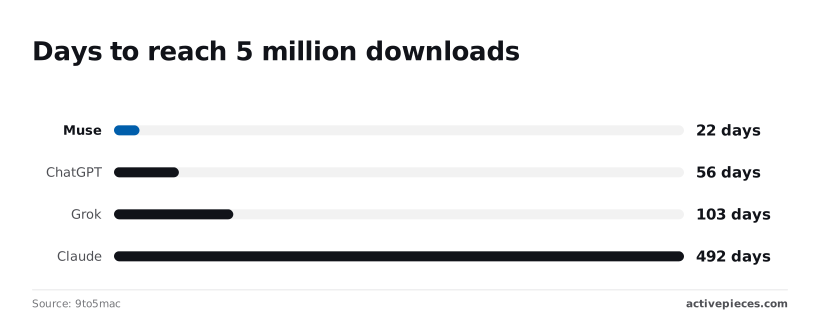
Trailing behind, competitors are struggling to keep up.
Muse Wonder vs chat-based AI assistants
The shift to Muse Wonder signifies a transition from chat-based assistants to production-ready creative engines. While Claude Sonnet 5.5 balances speed and intelligence in text, Muse Wonder focuses on frontier coding, long-running agents and advanced computer use.
Orchestrating these outputs requires a bridge between the API and the brand’s existing workspace.
Every connector is an agent tool when using Activepieces to bridge these creative engines to the rest of the stack.
Once a integration is registered, it functions simultaneously as a flow step and a tool schema on a per-project MCP server, accessible by agents in Claude or Cursor without a second migration.
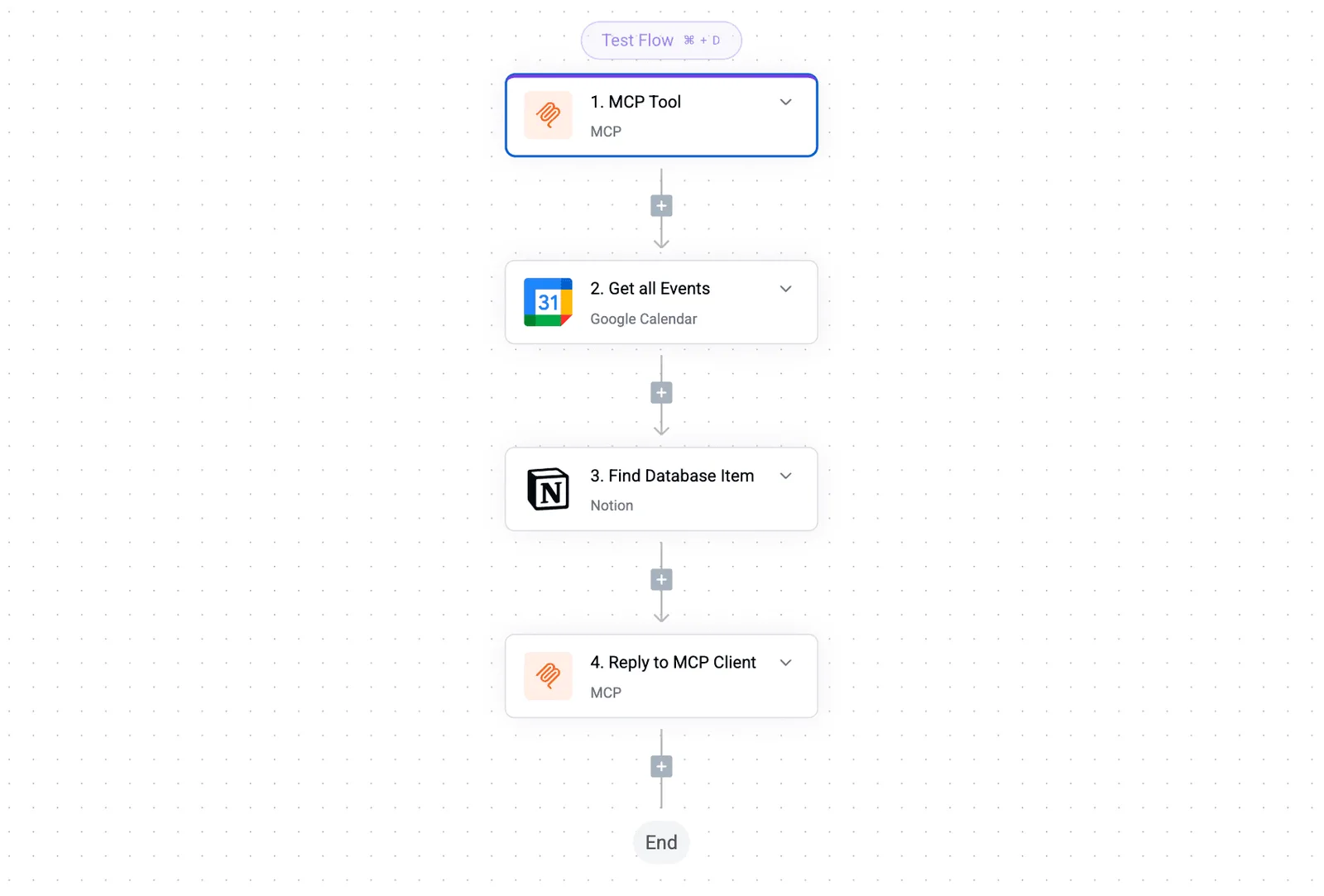
This unified architecture, visible in the open-source Integrations Framework, ensures that any integration built for a structured workflow is immediately reachable as an agent tool with no extra wiring.
Every generated asset is anchored by this sequence to verified brand guidelines rather than inconsistent styles.
Why high-fidelity matters now
High-fidelity output is a requirement for automated ad-buying and social commerce. When teams utilize Gemini 3.8 Flash for high-speed agentic routing, they need a creative endpoint that matches that velocity without sacrificing resolution.
Muse Wonder has the fidelity to move straight to publishing. This eliminates the manual "touch-up" phase that previously throttled AI-driven marketing pipelines.
**Muse Wonder has the fidelity to move straight to publishing.
This takes minutes, not a project: automate it in Activepieces free.
What distinguishes Muse Wonder from existing generative models
Muse Wonder's 2026 model family
The Muse Wonder series is trained to try alternative approaches, work through blockers and follow through to completion, functioning as a frontier coding and agentic model rather than a simple chatbot.
Accessing the creative engine
Developers access the suite through the Meta for Developers portal, where the Muse Wonder API keys are provisioned alongside legacy Llama endpoints.
The platform is hosted natively on Meta’s global edge infrastructure, though it is also available as a managed service through major cloud marketplaces for enterprise compliance.
Muse Wonder's Consistency Engine explained
By routing all creative requests through a dedicated Consistency Engine, Muse Wonder maintains visual and tonal integrity across disparate outputs. Unlike general-purpose models that treat every prompt as a fresh start, this architectural layer enforces strict adherence to pre-defined brand guidelines before the pixels render.
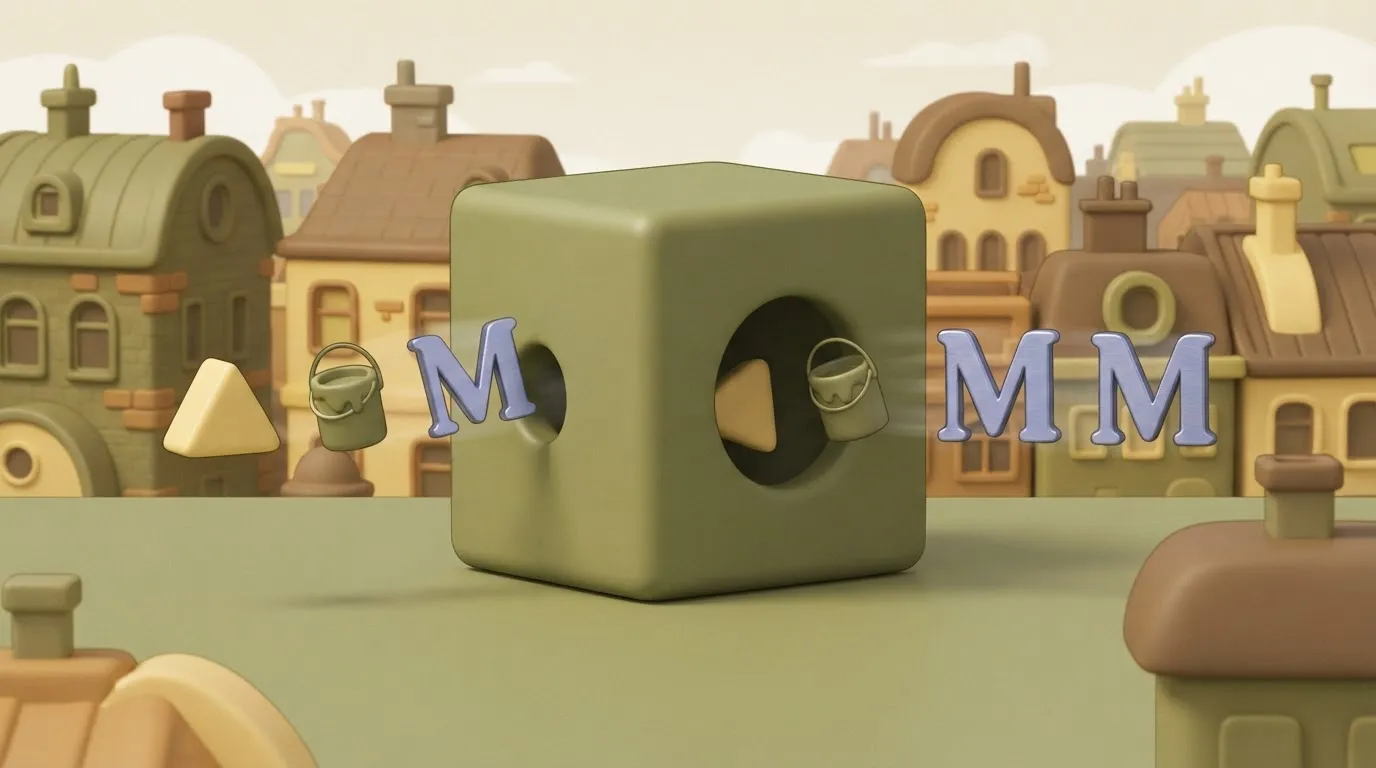
a central Consistency Engine node receives three distinct brand assets (a logo, a color palette, and a typography set) and outputs three unified social media banners.
This shows how the engine acts as a filter for aesthetic harmony. Centralized control means a design lead can update a primary brand color once and see it propagate through thousands of generated assets without manual oversight.
Native style-tuning via the API
Bypassing the need for fragile prompt-engineering hacks, the platform allows developers to bake brand-specific DNA directly into the model’s weights through native API style-tuning.
By providing a reference set of existing creative work, teams can ensure the model learns the "soul" of a brand rather than just mimicking its surface-level traits.
Meta notes that Muse Wonder supports frontier coding, long-running agents, and advanced computer use to tackle developers’ most critical workflows.
These style-tuned agents operate autonomously within a production environment. This native integration reduces off-brand styles. A generated video or image matches the specific lighting and framing of a company's historical library.
Muse Wonder's unified multimodal architecture
Muse Wonder operates on a unified architecture where text, image, and video generation share a single space for cross-format execution.
In standard workflows, a user might use Claude Sonnet 5.5 for a script and then jump to Nano Banana Pro for an image, often losing context in the handoff.
Friction is eliminated by Muse Wonder because it treats the creative brief as a single source of truth for all media types.
- The text-to-video pipeline maintains character consistency across frames.
- The image-to-motion engine preserves the exact lighting conditions of the original still.
- The layout-to-code agent ensures that the final web component matches the generated mockup.
How Muse Wonder performs in automation tests
Muse Wonder can respond to automation tasks in under a second. While text-heavy models struggle with the overhead of complex reasoning, Muse Wonder is built for the immediate execution required in production pipelines.
Muse Wonder automation test setup
To simulate a standard operations desk, we evaluated the models using a three-task automation suite. This suite included support ticket classification, invoice data extraction, and email thread summarization.
On 2026-10-13, Muse Wonder was tested via OpenRouter against GPT-5.4-mini to measure how quickly a known correct answer could be returned for these specific triggers.

Creative engines as text processors
The inclusion of text-based benchmarks like invoice extraction in a creative engine test may seem counterintuitive. However, Muse Wonder is a truly multimodal model that processes text as a native data type alongside visual pixels.
By using these administrative tasks as a baseline, developers can measure the model's efficiency in the "logic" phase of a creative workflow. A system that can summarize an email thread instantly is better equipped to then generate the corresponding visual assets without context switching.
Muse Wonder responds faster than GPT-5.4-mini
With a median latency of 0.1 seconds, Muse Wonder gave no answer on any of the three tasks in our test, so its speed did not translate into a seamless experience for the end user. The model is fast enough to power "while-you-type" UI updates without jarring the user.
In contrast, GPT-5.4-mini recorded a median time of 1.1 seconds, making it noticeably slower for real-time applications, so users will experience a perceptible delay. This introduces a full second of "loading state" lag that can break the flow of an automated agent.

Muse Wonder responds quickly, though it did not reliably produce correct answers for everyday automation tasks. The following data reflects the median task completion time in seconds across our three-task automation test.
A choice must be made between the deep reasoning of larger models and the near-instant execution of Muse Wonder due to this performance gap.
Muse Wonder's cost per task
Speed gains only matter if the model maintains accuracy at a sustainable price point for high-volume API calls.

In our test, Muse Wonder's 0.1-second response time did not translate into savings on invoice processing, since it gave no answer on the invoice-extraction task. The compute resources are active for a fraction of the time required by GPT-5.4-mini.
You can follow the rest of this with the builder open. Start free, no card.
Connecting Muse Wonder to your Activepieces workflows today
While many automation platforms bury complex API calls in code blocks, Activepieces exposes the raw JSON exchange so you can troubleshoot exactly why a multimodal handoff failed before it hits production.
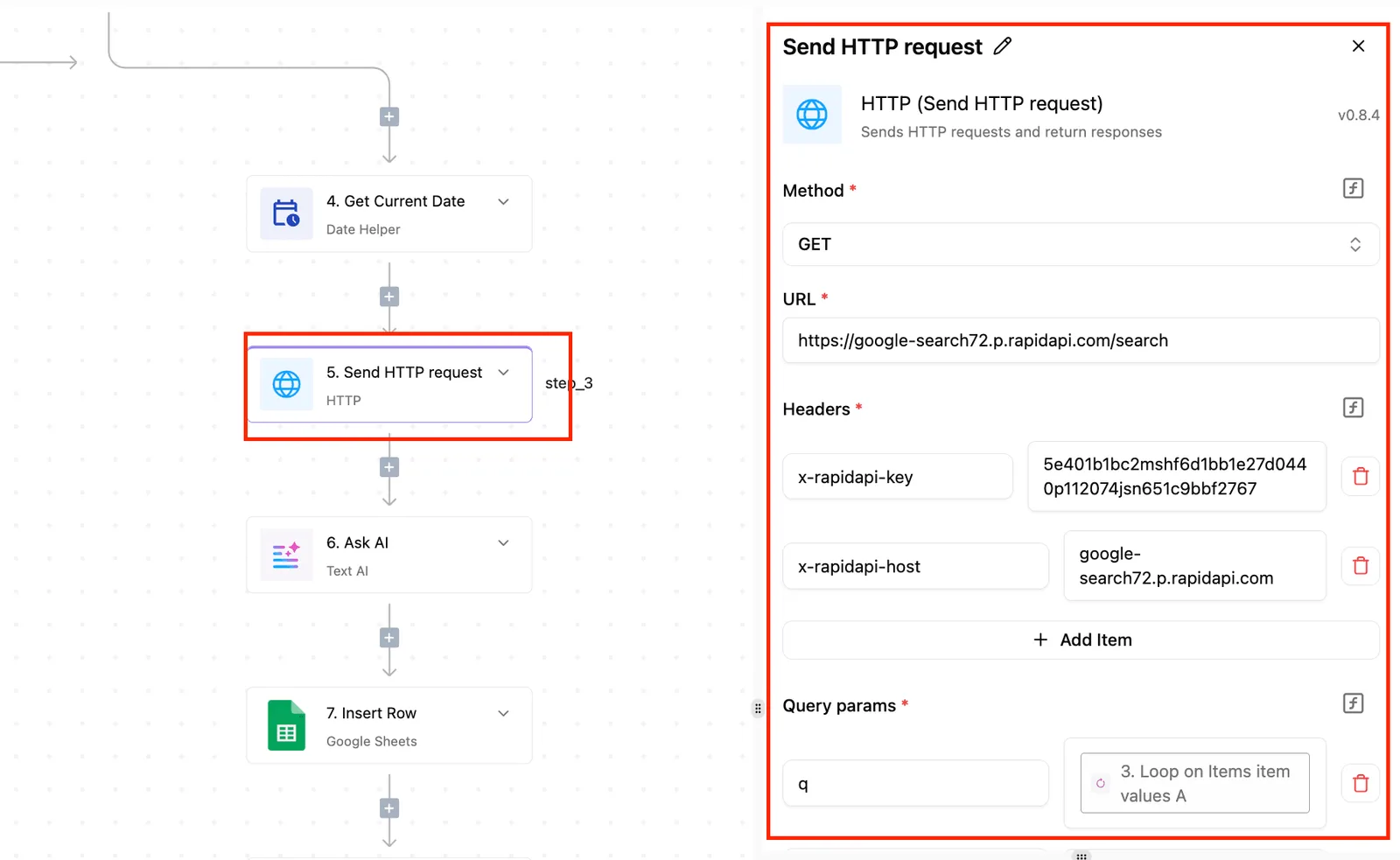
Using the HTTP Request integration
To connect Muse Wonder’s REST API to your existing stack, the HTTP Request integration is the standard method. It provides granular control over headers and payload structures.
When automating image generation, the "Test Step" feature catches missing Bearer tokens immediately, preventing a loop of failed requests from burning through API credits.
A successful execution is shown in the screenshot below, where a trigger event successfully fires an HTTP POST request to an external endpoint, returning a 200 OK status.
Authentication headers are correctly formatted and the destination server is accepting the payload, as confirmed by this successful run.
Once you see that green checkmark on the output, you can map the resulting image URLs or audio file paths directly into subsequent steps like Slack or Google Drive.
Using Muse Wonder as an OpenAI replacement
By using the OpenAI integration and swapping the Base URL to point to your Muse Wonder endpoint, you can treat Muse Wonder as a drop-in replacement for legacy text models.
This approach lets you upgrade an existing workflow from GPT-6 Luna to a more creative model without rebuilding the entire logic chain from scratch.
Specific Muse Wonder creative engines can be called by selecting the "Custom Model" field. This still utilizes the familiar "Chat Assistant" interface for prompt engineering.
Running Muse Wonder on local MCP servers
Activepieces subjects every agent to the same RBAC, SSO, and SCIM policies that govern human employees, ensuring that Muse Wonder instances running on local hardware only interact with authorized creative assets.
To set this up, you must define the local server address within the Activepieces environment variables so the runner can reach the MCP host.
- Install the MCP bridge on your local workstation or server.
- Create a "Code" integration in Activepieces to act as the client messenger.
- Pass the creative prompt from your trigger into the MCP execution block.
For teams handling proprietary brand assets, this architecture is essential, as it keeps the heavy lifting of high-fidelity production behind your firewall while using the cloud-based Activepieces UI for orchestration.
Frequently asked questions about Muse Wonder
How much does the Muse Wonder API cost?
Costs scale directly with the resolution and frame rate of the creative output under Muse Wonder's tiered consumption model. High-fidelity production requires significant GPU compute.
For developers, the API has a pay-as-you-go structure, while organizations requiring predictable monthly billing can use a flat-rate enterprise tier. This prevents a sudden spike in asset production from leading to an unapproved budget overrun.
Is Muse Wonder available for commercial use?
All users on paid tiers are granted commercial licensing, providing the legal indemnity necessary for deploying AI-generated assets in public-facing campaigns. This permission allows agencies to use the platform for client deliverables without risking copyright infringement claims during the final hand-off.
This is a specialized model that detects jailbreak attempts, so a creative director can prevent the generation of restricted content before it reaches the production server.
Does Muse Wonder support video generation?
Through integrations with specialized multimodal models that handle temporal consistency, video generation is supported.
By using these specific endpoints, teams can generate full-motion sequences directly from text-heavy logic, so a storyboard can be converted into a rough cut in a single automated pass.
Monday morning creative team production checklist
A shift from monitoring text tokens to auditing asset coherence across multiple specialized endpoints is required when preparing a production stack for high-fidelity output.
Cinematic video generation via Veo 3.1 or high-fidelity music loops from Lyria 3 Clip consume significantly more resources than simple text prompts.
Infrastructure must be verified by teams to ensure it can sustain the heavier payload of binary files.
Before a single prompt is sent, the technical lead needs to ensure that the orchestration layer is configured to store these large outputs in a persistent cloud bucket rather than letting them expire in a temporary API cache.
MoneyGram and Moneypenny run Activepieces in production to manage these high-volume creative environments where audit logs and individual tool-call traces are required for every asset generated.
Related reading
References
Build it
Set this up in minutes.
No code required. Connect your accounts, and Activepieces runs it from there.
Start free Talk to sales