Oracle Fusion Cloud ERP Pricing: Costs by Module 2026

Oct 31, 202614 min read
Oracle Fusion Cloud ERP price list by module
Oracle Fusion Cloud ERP pricing summary
Oracle Fusion Cloud ERP lists at $175 per user per month for Financials, $120 for Project Portfolio and $625 for Procurement, according to ComparEdge, a spread that matters most to teams who, like those wiring up lighter workflows with Activepieces, watch per-seat costs closely.
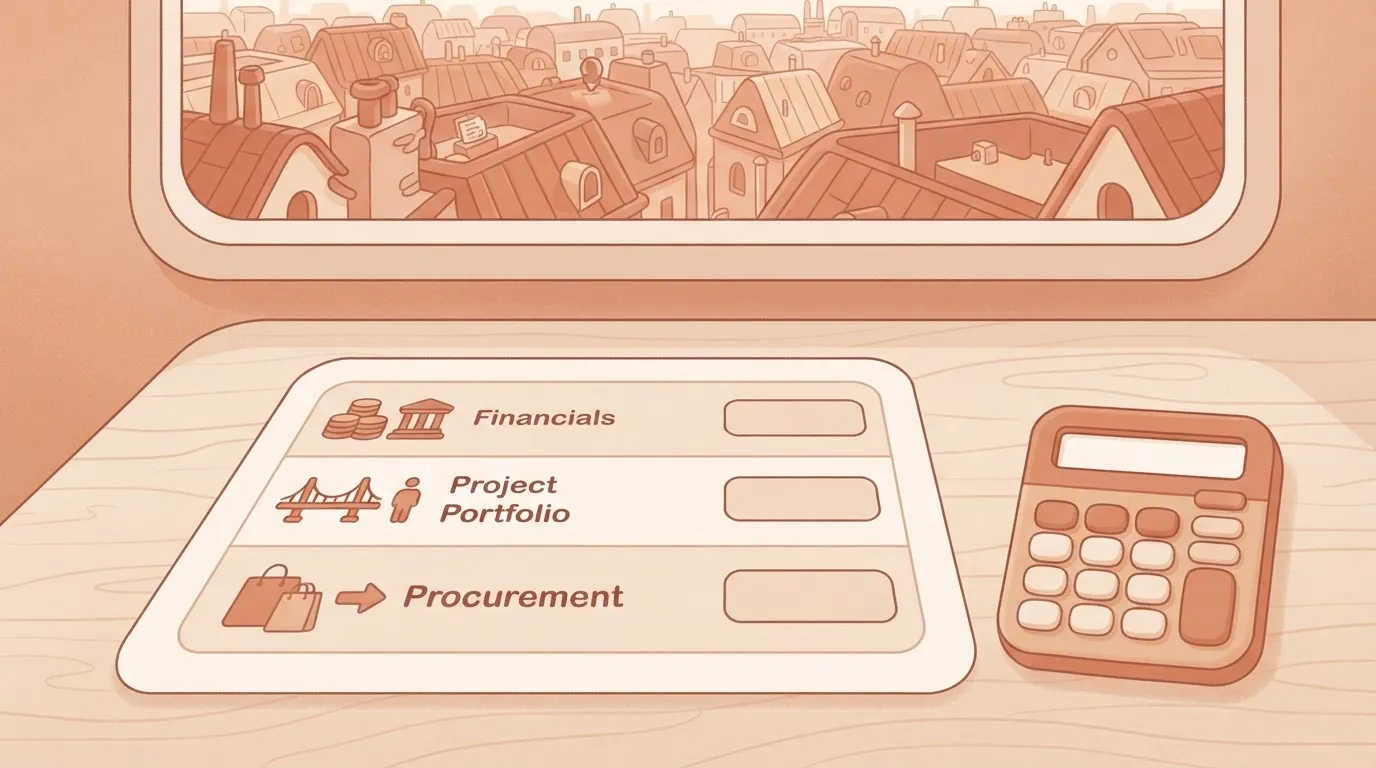
Fusion Cloud ERP is a suite of cloud applications for finance, procurement and project accounting, each licensed separately, so your actual spend depends entirely on which modules you implement. Those are starting points, not what Oracle will invoice you.
Procurement costs more than three times Financials per seat, so a team of 20 buyers carries a very different bill from 20 finance users.
Where Oracle publishes no figure, the table says "Contact sales", and the scenarios use planning rates only. Read the blanks as the part of the bill you can't budget yet.
| Offering | Price | Metric | Inclusions | Limits | Checked |
|---|---|---|---|---|---|
| Procurement | $625 | Per user per month | Not published | Not published | 2026-10-31 |
| Project Portfolio Management | $120 | Per user per month | Not published | Not published | 2026-10-31 |
| Test environments | Contact sales | Not published | Not published | Not published | 2026-10-31 |
| AI Units | Contact sales | Not published | Not published | Not published | 2026-10-31 |

What the pricing page does not publish
Two lines have no public price, and a shared account quietly spreads both across everyone. They are test environments and AI Units.
If you run client work or automations through one tenant, a sandbox or AI usage one team consumes gets billed to all of them.
Ask for both as separate quote lines so you can charge each client for what it uses.
If you are running this arithmetic for your own team, see what the same workload costs on Activepieces.
Oracle Fusion ERP cost at realistic company sizes
Once licences are separate quote lines, the annual bill is users × monthly price × 12, and on the assumed rates below it runs from $60,000 to $1.8 million. The rates are planning inputs, not Oracle list prices, so replace them with quoted figures.
Take from the table that module mix moves the blended rate as much as user count does.
| Scenario | Module mix | Full / self-service | Monthly per user | Arithmetic | Annual total | Assumptions |
|---|---|---|---|---|---|---|
| 50 users | Finance | 40 / 10 | $100 | 50 × $100 × 12 | $60,000 | One production environment |
| 250 users | Finance, procurement | 150 / 100 | $120 | 250 × $120 × 12 | $360,000 | Separate test environment |
| 1,000 users | Multi-module | 400 / 600 | $150 | 1,000 × $150 × 12 | $1,800,000 | Several environments |

At $60,000 a year, the 50-user finance-only deployment is the licence line only. Most of the 10 self-service users approve and view, so confirm Oracle prices them below full users, or the client pays full rates for occasional access.
At $360,000 for 250 users, procurement raises the blended rate. Charge it to the departments that use it, not to finance alone, or finance quietly subsidizes buyers.
When 1,000 users reach $1.8 million, a small gap in the self-service rate multiplies across 600 users, so a negligible per-person gap becomes a material cost. A $10 difference is $72,000 a year.
Where list price and a negotiated quote part ways
Licences aren't the whole budget. ERP Pilot puts them at 57% of three-year cost for a 100-user deployment, so the total is roughly 1.75 times the licence figure. Implementation takes 27%, and a quote that omits it understates the project by over a quarter.

Another 10% goes to ongoing operations which makes them a recurring cost to bill, not absorb. Training and change are 6%, the line most often cut and then paid for in poor adoption.
Contract costs and limits in Oracle Fusion ERP
Before you sign, price each cost outside Oracle's headline price into the quote: partner fees, extra environments, storage, update testing and renewal uplift. Oracle publishes none of them.
Implementation and partner fees
The implementation partner is a separate contract, billed by the partner and not by Oracle.
Ask the partner for a fixed scope with change-order rates written in, because every unscoped requirement becomes an hourly charge.
Oracle Fusion ERP test environment and storage costs
You won't find a rate card for non-production environments or data storage, because Oracle's sizing isn't published. Extra test or development environments and storage beyond the included allowance are typically negotiated line items.
If a shared environment serves several teams or entities, one team's testing quietly consumes capacity the others are paying for, so ask who owns each environment and what happens at the cap.
Oracle Fusion ERP quarterly updates and testing costs
You can't skip any update Oracle pushes to Fusion on its regular cycle. Your team, or your partner on a retainer, must regression-test customizations and integrations each time.
Oracle publishes no price for this work. It's a recurring labor cost that belongs in the annual run budget, not the project budget, and it never appears on an Oracle invoice.
Oracle Fusion ERP contract term and renewal increases
Minimum terms and renewal uplift are contract terms and aren't published. A longer commitment may earn a better rate, but it locks in modules and user counts you may not need by year three.
Ask for the renewal uplift cap in writing, and confirm whether you can reduce quantities at renewal. Without a cap, the first-year price is only a starting point for later increases.
Oracle Fusion ERP versus NetSuite, SAP and Dynamics
Oracle Fusion is quote-led on nearly every line. A renewal cap protects you more here than with a product that publishes its rates, though none of these four publishes a complete price.
| Pricing model | Quote-only items | Company size | Implementation effort | Customisation limits | Check date | |
|---|---|---|---|---|---|---|
| Oracle Fusion | Module subscriptions on usage metrics | Modules, metrics, environments | Mid-size to large | Heavy | Configuration and supported extensions | 2026-10-31 |
| NetSuite | Base licence plus modules and user seats | Edition, modules, user counts | Small to mid-size | Lighter | Broad scripting inside the platform | 2026-10-31 |
| SAP S/4HANA Cloud Public Edition | Subscription by scope and users | Scope, volumes | Mid-size to large | Moderate to heavy | Strict standard, little core modification | 2026-10-31 |
| Dynamics 365 Finance | Per-user licences by role | Partner discounts, services | Mid-size to large | Moderate | Extensions through Microsoft's own tooling | 2026-10-31 |

Read across a row before you read down a column, because a cheap licence with heavy implementation can cost more than a dearer one that goes live quickly.
If you want the easiest budget of the four, Dynamics 365 Finance is it, because licences attach to named user roles.
Oracle and SAP price by scope, so your bill depends on what you switch on, and you can't estimate it before a vendor scopes it.
Smaller groups that want one platform without a long project are NetSuite's fit.
Oracle, SAP and Dynamics suit larger or multi-entity businesses, and they charge for that capacity whether or not you use it.
With one or two entities, modest user counts and standard finance processes, NetSuite usually wins. The saving disappears if you need deep customisation or global complexity, because you then pay in workarounds what you saved in licences.
Worth checking against a plan that does not meter every step: one credit covers a whole run on Activepieces.
Negotiation levers that lower an Oracle ERP quote
Once the scope is lean enough to keep the saving, five levers lower the quote: phased modules, right-sized user types, a term trade-off, a renewal cap and a competing quote.
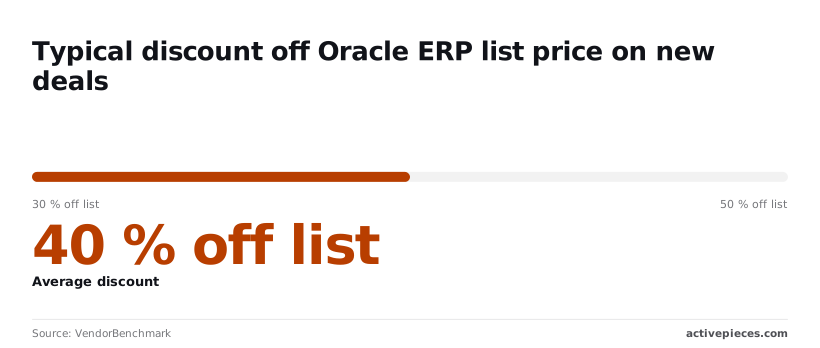
VendorBenchmark puts the average discount on new deals at 40% off list, which means negotiating down from list is routine, not exceptional.
Phasing, user types and the renewal cap rest on contract terms you can write down. Trading a longer term for price and pitting a competing quote against Oracle are common practice, and nothing obliges Oracle to honour either.
If you contract only the modules you'll run in year one, and fix the price of later modules in the order form, you avoid paying for shelfware from day one. Otherwise a module added later is priced at whatever leverage you have left by then.
Count who actually posts, approves or only views. A full-user rate for an occasional approver is a quiet cross-subsidy: your core finance team funds seats that light users should cost less. Get the metric definitions in writing, because the quote follows them.
Capping Oracle ERP renewal price increases
An uncapped renewal is where a good first-year price gets taken back. The chart shows annual subscription indexed to 100 under a capped renewal, against uncapped uplifts of 8% and 12% a year, and what to take from it is how fast the gap opens.
At 8% the subscription reaches about 147 after five uplifts. At 12% it reaches about 176. A 12% habit adds three-quarters to the bill, so the cap is worth more than a bigger opening discount. Put it in the contract, not in an email.
Activepieces for the integration work around Oracle Fusion
Approvals, record syncs and exception alerts around Oracle Fusion can run on Activepieces, an MIT-licensed workflow automation tool with 746 integrations in its open source repository. That means fewer billable partner hours spent on glue work you could run yourself.
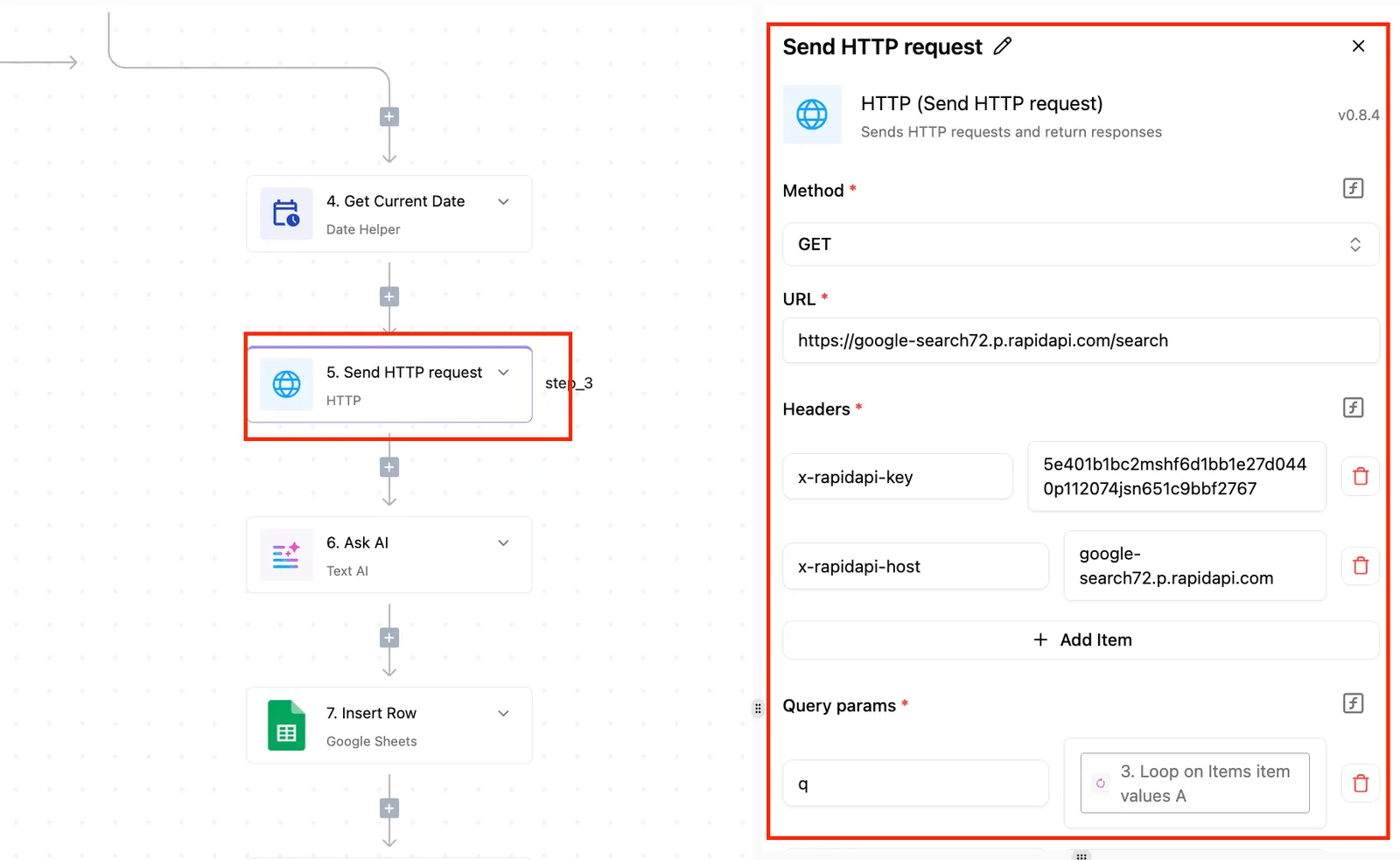
Every hour a partner spends wiring a notification is an hour on the invoice, and a retainer client rarely questions it until renewal.
Flows are unlimited on every plan, including free, so only runs draw on credits. An HTTP step is the fallback path when a ready-made connection is missing.
Take from the diagram that the ERP stays the system of record and the automation sits beside it, so the work moves out of the quote without moving into the ERP.
What it can automate beside an ERP
Approval routing is the clearest case: a purchase request or invoice exception goes to the right person by chat or email, and the answer goes back to the record.
Record sync covers moving customer, supplier or order data between Fusion and the other tools your team lives in, so nobody rekeys it.
Exception alerts watch for things like a failed import or a stalled approval and tell a named owner instead of waiting for month-end.
Activepieces bills a run as 1 credit however many steps it has, so an approval split into ten small steps costs the same as the two-step shortcut.
Its pricing page at activepieces.com/pricing shows that 1-credit run on every plan, from the Free tier's 1,000 credits a month to Team's 50,000, while Zapier's per-task billing and Make's per-module billing, each on its own pricing page, count the steps inside the flow.

What it cannot do
It's not an ERP replacement. It doesn't hold your ledger, enforce your financial controls or change what Oracle charges for modules, users or environments. Those costs are settled by the quote.
Before you plan around it, look for an Oracle Fusion connector among the 746 integrations in Activepieces' open source repository, roughly 60% of them community-contributed. The plan terms above come from its pricing page as checked on 2026-10-23.
Where no connector exists, an HTTP step can call Fusion's interfaces directly. That works, but someone has to build and maintain it, so count that time as a real cost, not a free fallback.
Pricing steps for Oracle Fusion ERP purchases
Five steps, done in order this week, turn Oracle's list price into a number you can defend on an invoice. Skip the order and you negotiate against a guess.
Oracle Fusion ERP pricing steps before sales call
The first two steps cost nothing but time, and they set what every later quote gets measured against. Without them, a salesperson's bundle becomes your baseline.
First, list every module you need and every type of user. Separate people who run transactions from those who only approve or view, because usage-based metrics can charge them differently.
Anyone left off this list becomes a surprise add-on later.
Second, re-check Oracle's public pricing page and write down the date you looked. Pages change, and a dated note shows whether a quote has drifted from what was published.
Questions to put in writing
A verbal assurance can't be invoiced against, so the remaining steps move the conversation to documents you can compare.
- Request an itemised written quote. Ask for each module, the usage metric behind it, the user counts, the environments (test and production copies), and implementation shown separately. A bundled total hides which line is carrying someone else's cost.
- Get three alternative quotes, whether from other vendors or from implementation partners for the same scope. One quote is only a price, while several show which lines are inflated.
- Get the renewal cap in writing.
If renewal can rise without limit, year-one pricing is a promotion, so the cap tells you what the later years will cost.
Frequently asked questions
Line-by-line quotes still leave a few questions the quote itself won't answer.
Trials and pricing metrics
You should not plan around a self-serve free trial of Oracle Fusion Cloud ERP's full suite.
Ask your Oracle rep for a demo or a proof-of-concept environment, and get in writing how long it runs and what it covers. A trial that includes only one module tells you little about what the whole bundle will cost.
Per user or per usage, depending on the module: that is how Oracle Fusion Cloud ERP is priced. Some are priced by a usage metric such as transaction volume or revenue, others by named users.
Ask for the metric behind every line, because the metric decides what grows your bill after year one.
Implementation time
How long an Oracle Fusion ERP implementation takes depends on how many modules you switch on, how many entities and environments you run, and how much data you migrate. Each added module or entity lengthens the project and the partner invoice.
Ask the implementer for a phased plan priced per phase, so one slow module doesn't push every other cost out with it.
Fusion versus NetSuite, and small businesses
The two products are easy to confuse, but Oracle Fusion ERP is not Oracle NetSuite. They're separate Oracle products with different pricing models.
NetSuite is generally sold as a per-user subscription with add-on modules, while Fusion is quoted module by module against usage metrics. Don't carry a NetSuite per-user figure into a Fusion budget.
A small business can sometimes afford Oracle Fusion Cloud ERP, but only after the quote is in. Cost depends on how few modules, users and environments you need, not on company size alone.
Start from what the business can carry as a monthly cost, then cut modules until the quote fits. If it only fits by dropping something you need, a lighter product is the better buy.
Related reading
References
Running the numbers
See what the same workload costs here.
Free forever plan, and every paid plan self-hosts at no extra cost.
See pricing Talk to sales