Pinata Pricing: Plans and Costs in 2026

Nov 21, 202614 min read
Pinata operates as a managed multimedia hub for the InterPlanetary File System (IPFS), abstracting the complexity of node maintenance, much like how developers use Activepieces to automate their internal workflows, into a suite of tiered subscriptions.
By providing a dedicated content delivery network (CDN) and simplified pinning APIs, the platform allows you to treat decentralized storage as a predictable line item rather than a volatile infrastructure burden.
Pinata pricing starts at free and scales to enterprise levels
Pinata Free Plan details and limits
When you need to validate proof-of-concept builds without immediate financial commitment, the Free Plan serves as a non-commercial entry point. Because this tier relies on a shared public gateway, content retrieval speeds are subject to global network congestion.
The Picnic Plan for growing apps
The Picnic Plan's dedicated gateway, bundled with CDN, provides a private entry point that prioritizes your specific content over the public IPFS swarm. This tier targets small-scale deployments or individual creators who require branded subdomains and basic security features like gateway plugins.

You can use Activepieces, an open-source automation tool, to trigger metadata updates or file uploads as part of a wider deployment pipeline.
Pinata Fiesta Plan for production apps
Production-grade applications that demand higher throughput and more granular control over asset distribution usually land on the Fiesta Plan. It includes enhanced support for staging environments and larger storage volumes.
This prevents your growing user base from encountering 429 rate-limit errors during peak traffic periods.
Pinata Enterprise Plan pricing and terms
The Enterprise Plan is a tailored infrastructure environment for you if you have specific compliance or massive-scale requirements.
On the Enterprise Plan, you access custom contract terms, dedicated account management, and white-glove technical support for high-stakes migrations. A negotiated rate handles enterprise-level bandwidth consumption.
If you are running this arithmetic for your own team, see what the same workload costs on Activepieces.
Current Pinata plans and feature limits compared
High-traffic applications pay for the infrastructure they consume, rather than just storage capacity. While the Free tier is a sandbox for initial development, it already includes a single dedicated gateway, with paid plans adding more gateways and CDN support.
These remove the rate limits imposed by public IPFS nodes and ensure content loads reliably for your end-users.
| Feature | Free | Picnic | Fiesta | Palooza |
|---|---|---|---|---|
| Storage | Limited capacity for small-scale testing | Increased allocation for active projects | High-volume storage for production apps | Maximum enterprise-grade capacity |
| Bandwidth | Shared public throughput | Included monthly allowance | Expanded allowance for scaling traffic | High-tier allowance with overage options |
| Dedicated Gateways | 1 gateway | Single gateway for branded delivery | Multiple gateways for varied workloads | Highest gateway count for redundancy |
| API Access | Standard rate-limited endpoints | Full API access for automation | Priority API performance | Optimized API for high-frequency calls |
Pinata dedicated gateway options explained
The move from Picnic to Fiesta is defined by the need for multiple gateways. You can isolate different media types or environments to prevent one heavy asset from bottlenecking your entire application.
Beyond these fixed limits, the true utility of the Palooza tier lies in its ability to handle massive concurrent requests without the latency spikes common on lower-tier shared bandwidth pools.
If you're integrating large-scale data processing, such as those using Gemini 4 Carbon to analyze repositories of pinned technical documentation, though the model may still experience occasional slowness or timeout issues.
Real-world monthly costs for common Pinata use cases
Data throughput impacts the final Pinata invoice more than the flat subscription fee. While a base plan is a predictable entry point, the platform functions as a metered utility where high-traffic events trigger bandwidth overages that often exceed the monthly recurring cost.

Pinata cost for a small NFT project
When the total storage footprint is negligible and the transfer volume is low, a small-scale digital art collection typically stays within the limits of the entry-level paid tier.
For a creator pinning a limited set of metadata and assets, the primary cost is the subscription itself. The included bandwidth usually covers the sporadic traffic of a secondary market listing or a static gallery.
Scenario B: The high-bandwidth media platform
Egress fees often dominate the bill for decentralized applications (dApp) serving video or high-resolution images, as they frequently exceed the plan’s included data transfer.
Even if the storage requirements are modest, every time a user streams a video through a Dedicated Gateway, it consumes bandwidth that the platform bills at a per-gigabyte rate.
To prevent redundant gateway requests from inflating your bill, you must implement caching layers or Content Delivery Networks (CDNs).
Scenario C: The high-availability enterprise app
Reliability comes at the highest premium for enterprise users requiring network isolation and high-speed retrieval for large datasets. These users, such as those using Gemini 4 Carbon for complex software engineering audits, pay for a high-tier subscription to unlock dedicated gateways with custom domains.

Pinata keeps their data accessible even when the public IPFS nodes are congested. For these users, the cost is a trade-off. They accept higher monthly minimums and bandwidth charges in exchange for the uptime guarantees required to run production-grade services.
Hidden costs and usage limits in the Pinata billing model
Pinata's financial profile shifts from a predictable monthly subscription to a variable infrastructure expense as soon as an application exits the development phase.
The final monthly cost is determined by a specific sequence of billing triggers:
Pinata's financial profile shifts from a predictable monthly subscription to a variable infrastructure expense as soon as an application exits the development phase.
- First, the base monthly fee grants access to the platform and a set amount of storage.
- Second, Pinata charges a storage overage of $0.07/GB when the total volume of pinned data exceeds the plan's included capacity, which means users face escalating costs as their data footprint grows.
- Third, according to Pinata, bandwidth overage is $0.10/GB on standard plans, applied once the monthly allowance is exhausted, so high-traffic applications risk sudden and unpredictable billing spikes.
- Fourth, additional gateway fees provide dedicated access points for faster content delivery.
Bandwidth overages beyond the plan limit
Bandwidth consumption is the primary driver of unexpected costs because it resets every billing cycle. A popular asset is paid for every time a new user requests it.
If you host a high-resolution video or a large dataset, a single download by a thousand users can consume hundreds of gigabytes.
Beyond the plan's ceiling, Pinata bills these downloads as overage charges per gigabyte. This creates a direct correlation between an application's success and its infrastructure overhead.
The cost of dedicated IPFS gateways
Shared among all users, standard gateways often lead to increased latency and potential rate limiting during peak network congestion.
To ensure production-grade reliability, you must provision a Dedicated Gateway. This carries its own separate monthly cost and is the only way to obtain a custom branded URL.
These gateways provide a private lane for data retrieval. Because they're billed as an add-on, they represent a significant step up in the total cost of ownership for any project that requires consistent uptime and professional branding.
Pinata file size and API rate limits
To maintain stability across its multi-tenant architecture, Pinata enforces strict limits on the size of individual files and the frequency of API requests. Maximum file sizes are capped based on the subscription tier, preventing the upload of massive archives that would strain the indexing service.
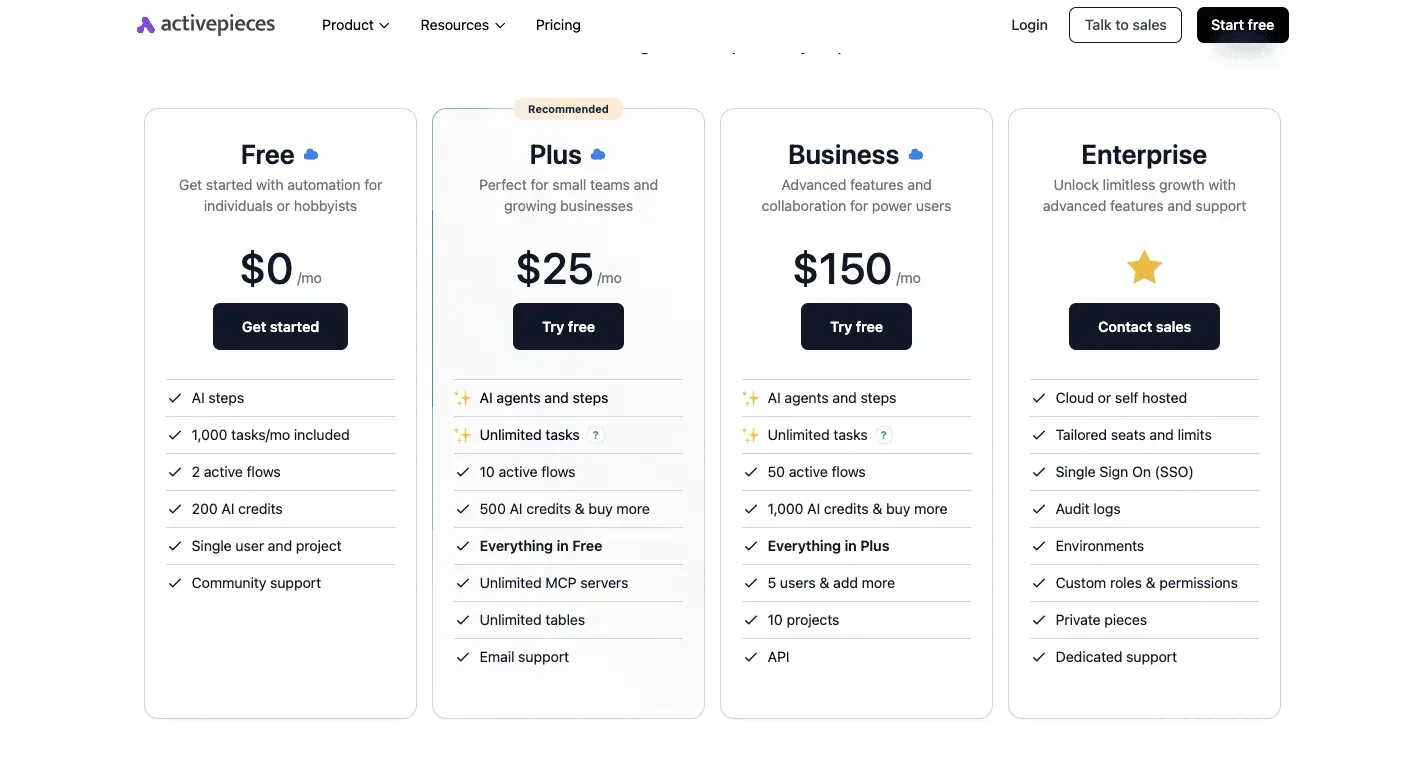
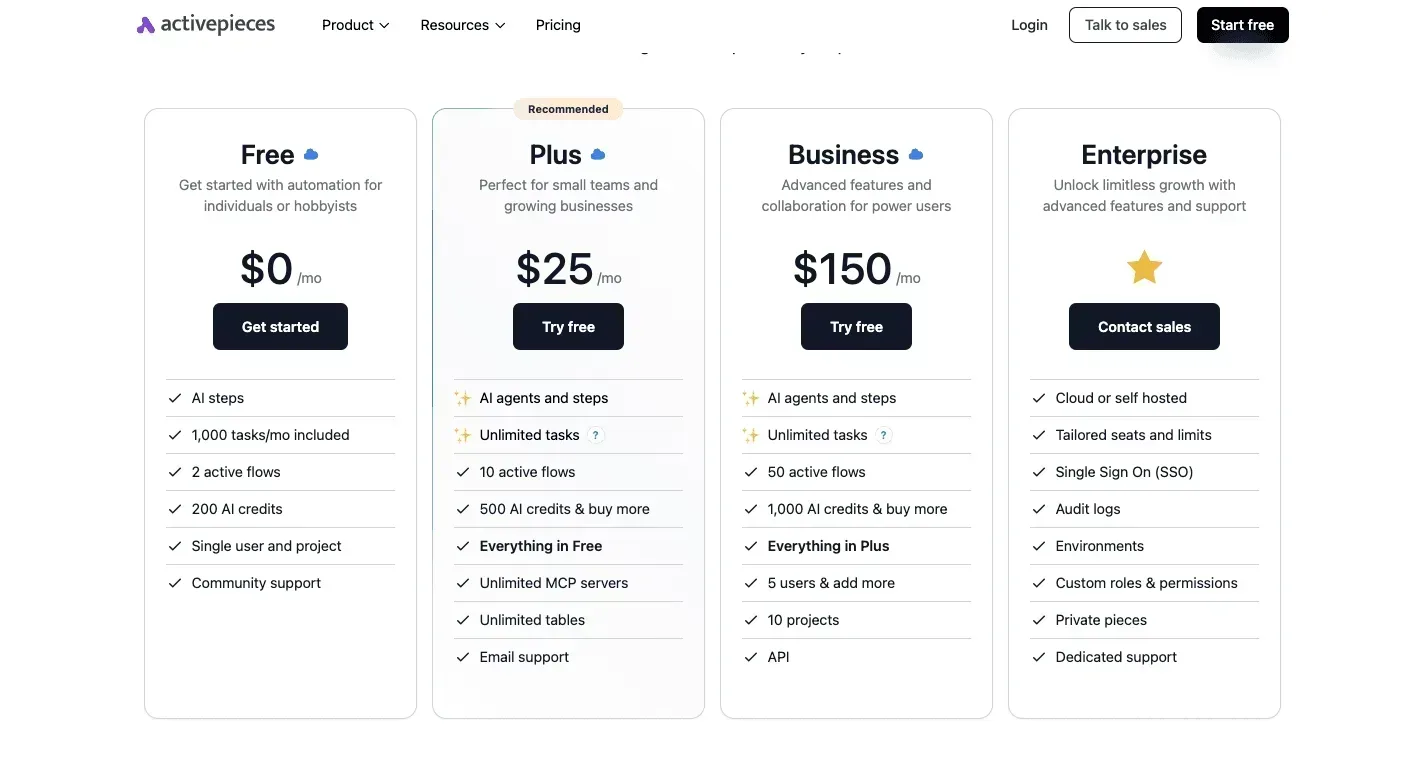
Worth checking against a plan that does not meter every step: one credit covers a whole run on Activepieces.
Why Pinata justifies its premium over self-hosted IPFS nodes
By shifting the burden of content persistence and network routing from you to a managed infrastructure layer, Pinata justifies its cost.
While a self-hosted InterPlanetary File System (IPFS) node requires constant maintenance to ensure files remain "pinned" and accessible, Pinata automates this redundancy across multiple global regions.
| Feature | Self-Hosted IPFS Node | Pinata Managed Service |
|---|---|---|
| Availability | Dependent on single-node uptime and peer discovery. | Multi-node redundancy with automated pinning. |
| Content Delivery | Limited by the host server's outbound port speed. | Global Dedicated Gateways with CDN caching. |
| Maintenance | Requires manual garbage collection and security patches. | Fully abstracted API-driven asset management. |
Self-hosted IPFS node reliability risks
If a specific server drops off the network, relying on a single self-hosted node often results in "content addressed" data becoming unreachable.
Chainscorelabs illustrates this risk in a diagram where the left side shows a self-hosted node where 60% of files are unreachable due to peer discovery failures, leaving the majority of stored content inaccessible to the end user.
Pinata performance versus p2p IPFS retrieval
You bypass the "cold start" latency common in p2p networks (where finding a file CID (Content Identifier) can take minutes) by utilizing Pinata.
Instead, the platform functions as a high-performance bridge for production applications, such as those using Claude Sonnet 5.5 to dynamically generate and store assets.
How Pinata pricing stacks up against IPFS alternatives
Pinata commands a price premium because it bundles dedicated gateway performance with storage. Competitors often treat retrieval as a metered secondary service.
The storage-first approach of Web3.Storage
Web3.Storage offers a different value proposition by prioritizing verifiable cryptographic proofs of storage over immediate, low-latency retrieval. Their pricing model is often more attractive for massive archival projects where the primary goal is long-term data integrity on Filecoin rather than high-speed media delivery.
If your application does not require a dedicated CDN for every request, the raw cost per gigabyte on Web3.Storage can be significantly lower.
It is a reasonable choice for developers who are comfortable managing their own retrieval layers or who are building decentralized archives that prioritize cost-efficiency over millisecond response times.
Using Pinata alongside Infura's Ethereum tools
For those already using Ethereum API services, Infura (a blockchain infrastructure suite managed by Consensys) provides a unified dashboard. It is an excellent choice for developers who want to consolidate their web3 stack under one vendor and one billing cycle.
While it requires more manual configuration to optimize gateway speeds compared to Pinata's turnkey solution, Infura offers deep integration with other developer tools.
This makes it a strong contender for teams building complex dApps that need a reliable, all-in-one infrastructure provider for both blockchain data and IPFS storage.
Activepieces bridges the gap for teams who need to automate these file uploads to Pinata's API without writing custom multipart/form-data scripts.
The published pricing page shows 1 credit per flow run regardless of the number of steps, which avoids the cost penalties found in Zapier's per-task or Make's per-module billing.
Deployment on Activepieces is a setting, not a commitment. A flow built on managed cloud and a flow built self-hosted run on the same codebase, allowing teams to promote or move logic between environments as their data residency needs change.
Activepieces ships the same product either way (RBAC, SSO, SCIM and audit logs included on cloud and self-hosted alike) as documented in the Git Sync and Releases feature list.
Pinata versus other IPFS pinning services
Pinata's entry tier is a controlled environment for testing small-scale deployments, but its utility is defined by its strict limits on the number of individual files pinned.
Pinata offers a streamlined SDK and API that automates the "pinning" process, reducing the lines of code required to ensure data persistence.
What Activepieces does about this
Activepieces provides the automation layer that prevents Pinata’s bandwidth and storage costs from scaling out of control.
By using the open-source Activepieces engine, you can build workflows that automatically unpin assets from Pinata once they reach a specific age or after a successful migration to cheaper long-term storage.
This ensures that your storage footprint stays within your plan’s included capacity, avoiding the $0.07/GB overage charges that accumulate when stale data is left on the platform indefinitely, saving you from unexpected monthly billing increases.
To protect against the $0.10/GB bandwidth spikes described in Scenario B, Activepieces allows you to implement automated usage monitoring, so you can prevent sudden costs before they impact your budget.
You can configure a flow that polls the Pinata API for current egress levels and triggers an immediate alert via Slack or PagerDuty if consumption hits a predefined threshold.
This gives your team the opportunity to rotate gateway tokens or adjust caching headers before a viral traffic event results in a four-figure infrastructure bill.
Because Activepieces is licensed under the MIT-compatible Integration License, you can self-host the entire automation stack alongside your IPFS nodes. This architecture is used by teams who require the reliability of Pinata but want to avoid the vendor lock-in of proprietary automation tools.
By self-hosting Activepieces, you maintain full control over the API keys and metadata that drive your deployment pipeline, ensuring that your infrastructure management costs remain as predictable as your Pinata subscription.
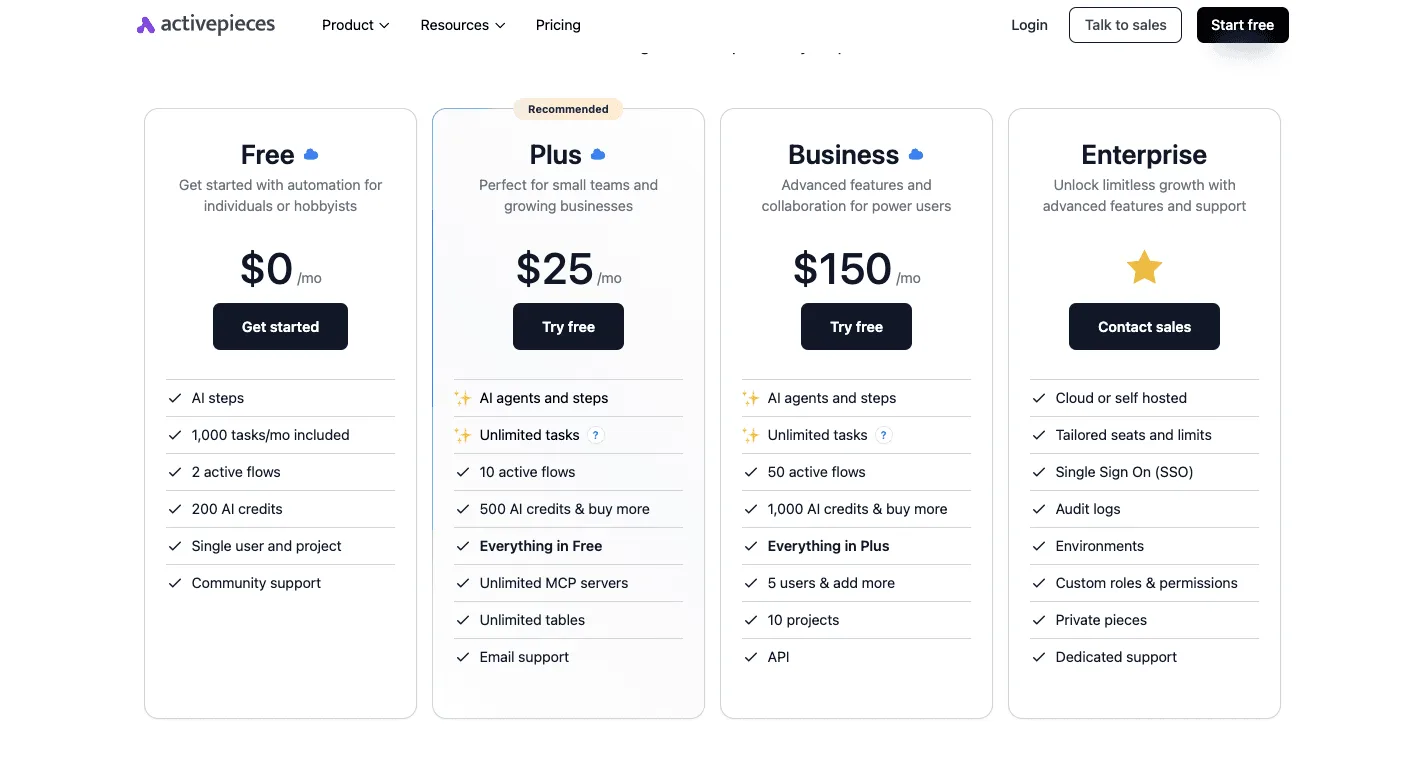
The platform also simplifies the complex multipart/form-data requirements of the Pinata API into a visual interface.
Instead of writing custom scripts to handle file uploads and metadata tagging, you can use the native Pinata integration to sync assets from sources like Google Drive or AWS S3.
This reduces the development time required to maintain a production-grade IPFS integration, allowing you to focus on application logic rather than the nuances of decentralized storage protocols.
Frequently asked questions about Pinata billing?
Integrating these services into a production stack involves different levels of operational overhead. Pinata streamlines the management of the InterPlanetary File System (IPFS), a peer-to-peer network for storing and sharing data, but its managed nature introduces specific billing behaviors that differ from raw cloud storage.
Does Pinata charge for pinned files that are deleted?
The moment a file is unpinned from their nodes, Pinata stops charging for it.
Because the platform bills based on current data stored, removing a CID ensures the specific asset no longer contributes to the storage total going forward.

Unpinning doesn't delete the file from the global IPFS network if other nodes have cached it. It does remove the financial obligation to Pinata for hosting that specific copy.
Can I set a hard spending limit on bandwidth overages?
Pinata doesn't currently offer a native "kill switch" or hard cap that automatically disables a gateway once a specific dollar amount is reached. This architectural choice prevents sudden service outages for production applications.
You must monitor usage via the dashboard or API to avoid unexpected costs from viral traffic. To mitigate risk, you can implement Dedicated Gateway security features like IP address filtering or custom access tokens to restrict who can pull data through your paid bandwidth.
What happens to my data if I downgrade to the Free plan?
Moving to the Free plan subjects your account to the storage and file count constraints of that tier. This may result in data becoming inaccessible if the existing volume exceeds those limits.
When an account is over the Free tier threshold, Pinata reserves the right to stop serving the content or delete files to bring the account back into compliance.
Does Pinata support credit card and crypto payments?
To provide a standard SaaS billing experience for your team, Pinata accepts all major credit cards for its monthly and annual subscriptions. While the platform is a cornerstone of the web3 ecosystem, it doesn't support direct cryptocurrency payments for its standard self-service plans.

High-volume enterprise customers can sometimes negotiate alternative payment terms through the sales department. For the majority of you, a traditional fiat payment method is the only way to maintain an active subscription.
Running the numbers
See what the same workload costs here.
Free forever plan, and every paid plan self-hosts at no extra cost.
See pricing Talk to sales