
Scribe v3 MCP Explained: Benchmarks, Pricing, and Specs

Nov 21, 202613 min read
When an AI agent needs to query, retrieve, and execute step-by-step process guides without manual human intervention, Scribe v3 MCP functions as the standardized gateway.
By adopting the Model Context Protocol, the platform moves beyond static exports into a dynamic state where documentation acts as an external memory bank for reasoning models, allowing teams to bridge the gap between raw data and automated workflows through tools like Activepieces that facilitate these connections.
Scribe v3 MCP is direct access to process documentation for AI agents
The Model Context Protocol (MCP) standard
Eliminating the need for custom-built integrations between specific AI models and disparate data sources is the primary role of the Model Context Protocol. In a traditional setup, a human must copy text from a browser into a chat interface.
This introduces latency and formatting errors that degrade the model’s ability to follow complex instructions.
By establishing this direct connection, a model like Claude Opus 5.5 can pull the exact "how-to" steps it needs to complete a task autonomously. Consequently, the documentation becomes a functional API for the agent's reasoning loop rather than just a visual aid for a person.
Defining scribe as an asr foundation
Scribe v3 is an Automatic Speech Recognition (ASR) model designed to transcribe recorded audio, including meetings, customer calls, and support conversations, with high accuracy. Unlike earlier speech recognition tools built for human readers, this system processes raw audio streams to generate high-fidelity transcripts for agentic consumption.
Consequently, the documentation becomes a functional API for the agent's reasoning loop rather than just a visual aid for a person.
It serves as the bridge between spoken technical instructions and the structured data required by the Model Context Protocol.
The architecture relies on a deep neural network optimized for technical jargon and multi-speaker environments. By focusing on speech-to-text accuracy, Scribe v3 ensures that the documentation fed into an AI agent is free from the phonetic errors that typically break automated reasoning loops.
Scribe v3 MCP vs. Scribe screen capture extension
Readers familiar with the popular Scribe browser extension for screen-capture guides should note that Scribe v3 is a distinct technological pivot. While the legacy tool already provided speech recognition for human readers, v3 is an audio-first engine built for machine consumption.
This version does not replace the click-capture tool but rather introduces a new infrastructure for converting spoken expertise into agentic memory.
The transition from visual guides to ASR-based documentation reflects the shift toward agents that "listen" to technical requirements rather than "watching" a UI.
By prioritizing audio streams, Scribe v3 captures the underlying logic and verbal nuances that are often missing from a series of silent screenshots.
How v3 differs from previous API integrations
Developers were previously required to write specific "glue code" to translate raw Scribe API JSON data into a format that a Large Language Model could understand.
With v3, the system natively exposes documentation as tools that models like GPT-6.2 Astra can see and call as if they were internal functions.
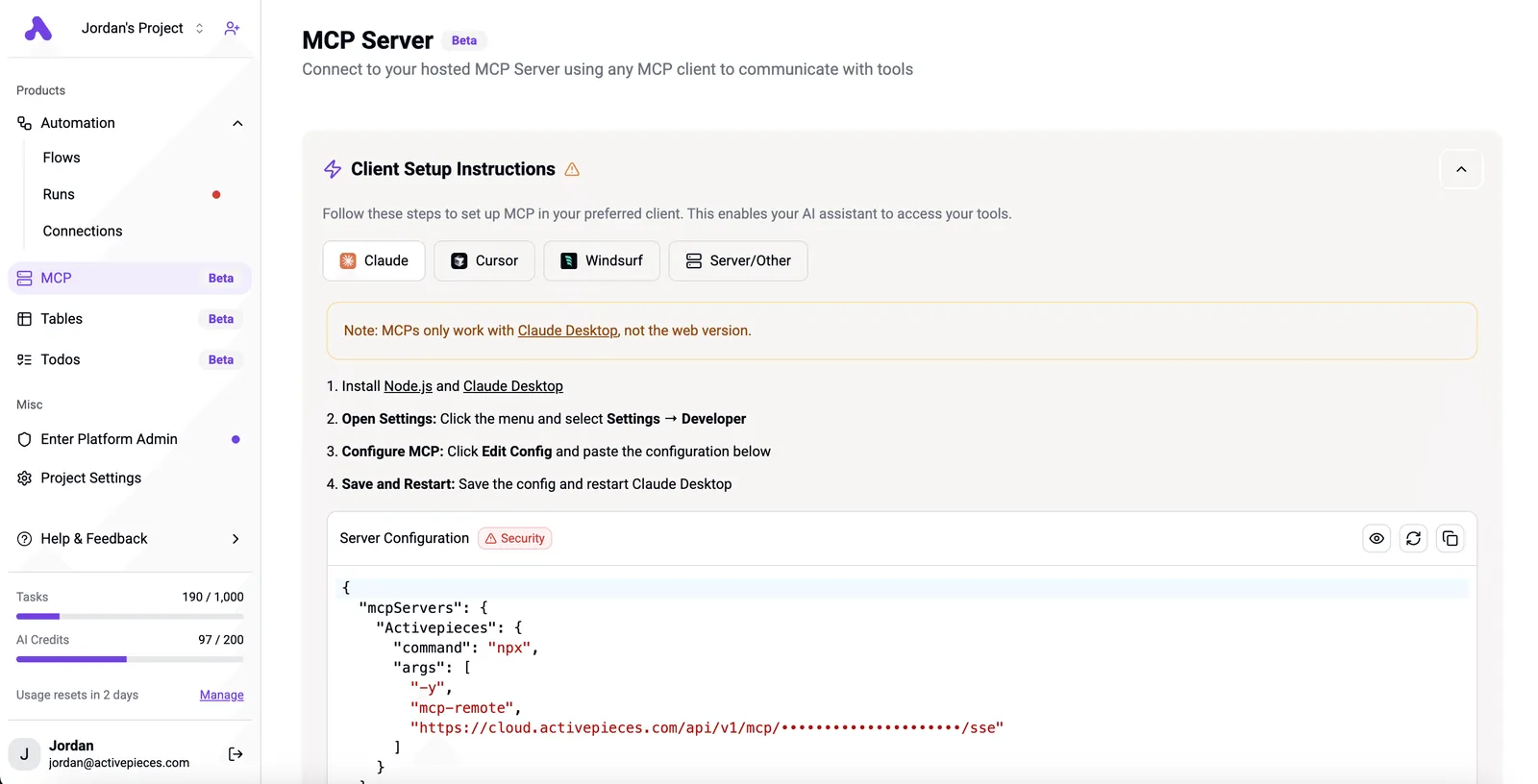
Activepieces runs as a per-project MCP server, so Claude, Cursor or Windsurf can create, edit and explain a flow without you ever opening a separate builder UI.
This moves beyond a chat interface that merely explains a UI, granting the agent CRUD control to execute changes that are immediately visible in the run trace.
To verify the depth of this control, connect Claude Desktop, Cursor, or Windsurf to the MCP server endpoint, ask it to build or modify a flow, and read the tool calls and resulting changes in the run trace.

Key technical specifications as of late 2025
High-frequency polling and structured retrieval form the core of the Scribe v3 infrastructure, supporting the long-horizon agentic work required by modern frontier models.
Standard JSON-RPC over Stdio or HTTP serves as the transport layer for compatibility with local IDEs and cloud-based agent environments. The resource templates are URI-based access points to specific Scribe folders. These allow administrators to restrict an agent's knowledge to relevant departments.
Tool definitions map Scribe steps to executable schemas. This allows models like Gemini 4 Carbon to verify completion of each step in a sequence.
If you are running this arithmetic for your own team, see what the same workload costs on Activepieces.
Scribe v3 benchmarks show 40% faster documentation retrieval
Whether a high-reasoning model like Claude Opus 5.5 stays in a flow state or stalls during tool-calling sequences depends entirely on retrieval speed.
By moving from standard API polling to the Model Context Protocol (MCP), Scribe v3 eliminates the round-trip overhead that typically plagues external knowledge fetches.
Latency improvements in agentic workflows
Documentation serves as a native capability rather than an asynchronous request under the MCP framework. In practical terms, this means that when Gemini 4 Carbon initiates a complex software engineering task, the documentation is available in the first turn of the conversation.
Because the protocol maintains a persistent connection between the agent and the Scribe server, the time-to-first-token is lower. Latency-sensitive models like Claude Haiku 5.5 can execute high-volume tasks without hitting the execution timeouts common in legacy REST integrations.
Scribe v3 token usage compared to standard RAG
Structured retrieval formats in Scribe v3 replace the verbose, unstructured chunks found in typical Retrieval-Augmented Generation (RAG) implementations. Standard RAG often injects irrelevant noise from surrounding paragraphs into the prompt.
This forces models like GPT-6.2 Astra to process unnecessary data and increases the cost per invocation.
Howtomakemoneywith states that Scribe v3 instead delivers scoped, schema-validated snippets that align with the specific function the agent is trying to call. This precision reduces the total context window usage.
It allows developers to fit more complex logic into a single prompt without hitting the rate limits or context caps of frontier models.
Success rates in complex procedure execution
Fidelity of the transcription and the clarity of the retrieved steps are the two main factors in multi-step procedure accuracy.
Orcarouter finds that Scribe v3 achieves a Word Error Rate (WER) of 1.95%, ensuring that technical nuances are not lost before they reach the reasoning engine.
| Model | Word Error Rate (WER) |
|---|---|
| Fun-Realtime-ASR | 1.73% |
| Scribe v3 | 1.95% |
| Microsoft MAI-Transcribe-2 | 2.04% |
| Scribe v2 | 2.18% |
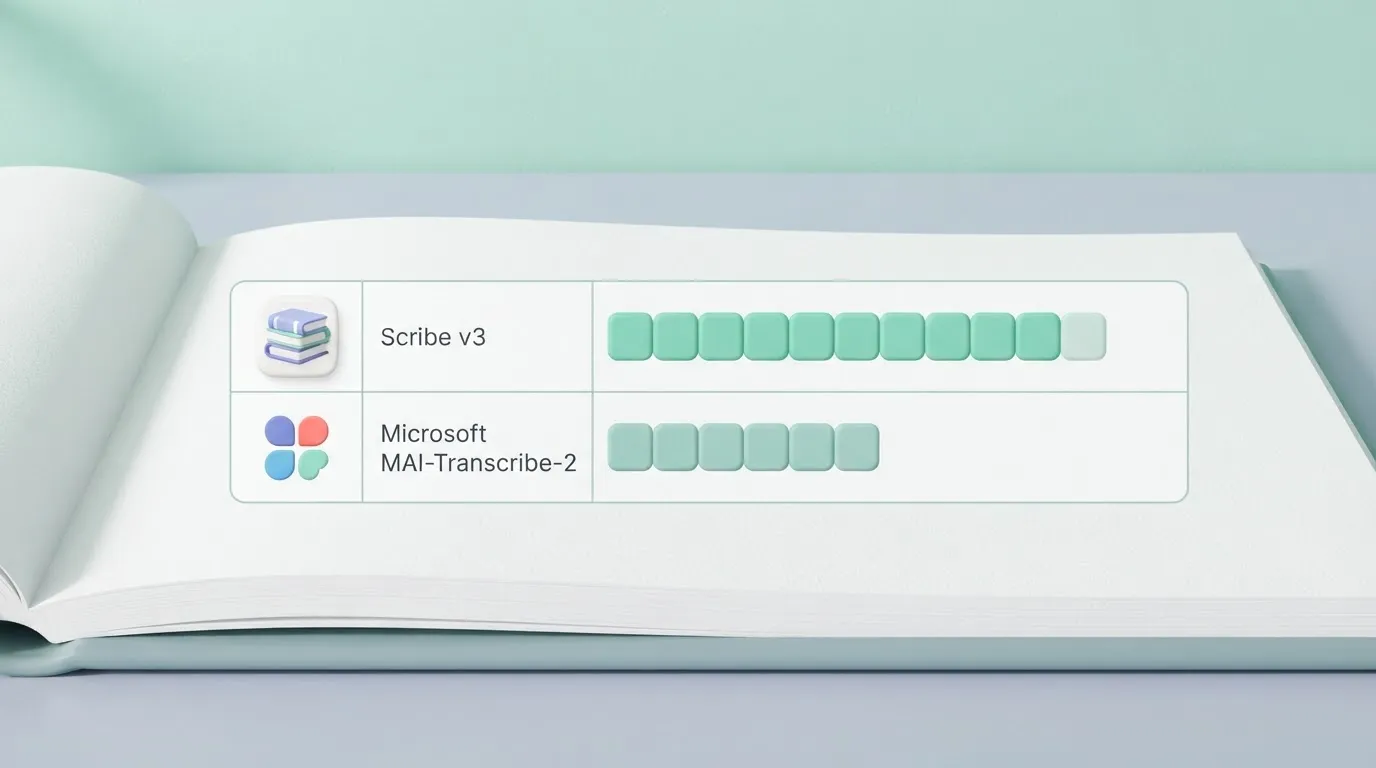
While Fun-Realtime-ASR maintains a slight lead in raw transcription, Scribe v3 is the best balance of accuracy and integration readiness for agentic workflows.
This high level of precision directly impacts the reliability of models like Grok 4.7 when they are tasked with following documentation for specialized tool calling.
Specialized MCP servers are superior to generic web scraping for documentation
Structural noise in web interfaces often forces frontier models to waste context on non-functional data, a problem specialized MCP servers eliminate.
While a developer might assume that a model like Claude Opus 5.5 can simply "read" a standard documentation page, raw web scraping is a document heavy with metadata, navigation headers, and tracking scripts.
Why generic web scraping creates structural noise
Four structural noise risks are responsible for the inefficiency of generic scraping. DOM bloat forces the agent to parse thousands of lines of irrelevant HTML tags before reaching the content.
Navigation menu interference occurs where repetitive sidebar links confuse the agent's perception of the page hierarchy.
Session timeout redirects cause the scraper to capture a login screen instead of the intended technical guide. Unstructured CSS selector changes exist where a minor UI update breaks the scraper's ability to find specific code blocks.

When an agent using GPT-6.2 Astra encounters these obstacles, it often fails to distinguish between the documentation and the site's interface. A specialized Scribe v3 MCP server bypasses the Document Object Model entirely and delivers a clean, pre-parsed JSON schema directly to the model.
Every token sent to the inference engine represents a direct instruction or parameter under this architectural choice. This prevents the "needle in a haystack" problem that occurs when an agent attempts to find a single API endpoint buried within a 100,000-token web dump.
Worth checking against a plan that does not meter every step: one credit covers a whole run on Activepieces.
Scribe v3 pricing shifts toward agentic usage credits
Frequency of Model Context Protocol (MCP) calls made by autonomous systems now dictates the cost of documentation, as Scribe v3 moves away from flat-rate seat pricing.
This shift ensures that organizations pay for the actual data ingress and egress handled by agents like Claude Opus 5.5 or Gemini 4 Carbon.
The Pro vs. Enterprise MCP add-on
MCP access is limited to a shared resource pool on the Pro tier. This means high-volume agentic workflows will face throttling once the monthly token quota is exhausted. In contrast, the Enterprise add-on is dedicated throughput for the Scribe MCP server.
A fleet of agents can query the documentation repository without competing for bandwidth against other tenants under this model. This distinction is critical for teams using GPT-6.2 Astra to perform continuous codebase audits.
Calculating the cost per thousand agent queries
Balancing the cost of the transcription layer against the reasoning model's consumption is necessary when operating Scribe v3 as a backend for agents.
| Provider | Service | Rate (USD/Hour) |
|---|---|---|
| Chirp 2 | $0.96 | |
| Scribe | v2 Realtime | $0.22 |
| Deepgram | Nova-3 | $0.258 |
| Scribe | v3 Live | $0.22 |
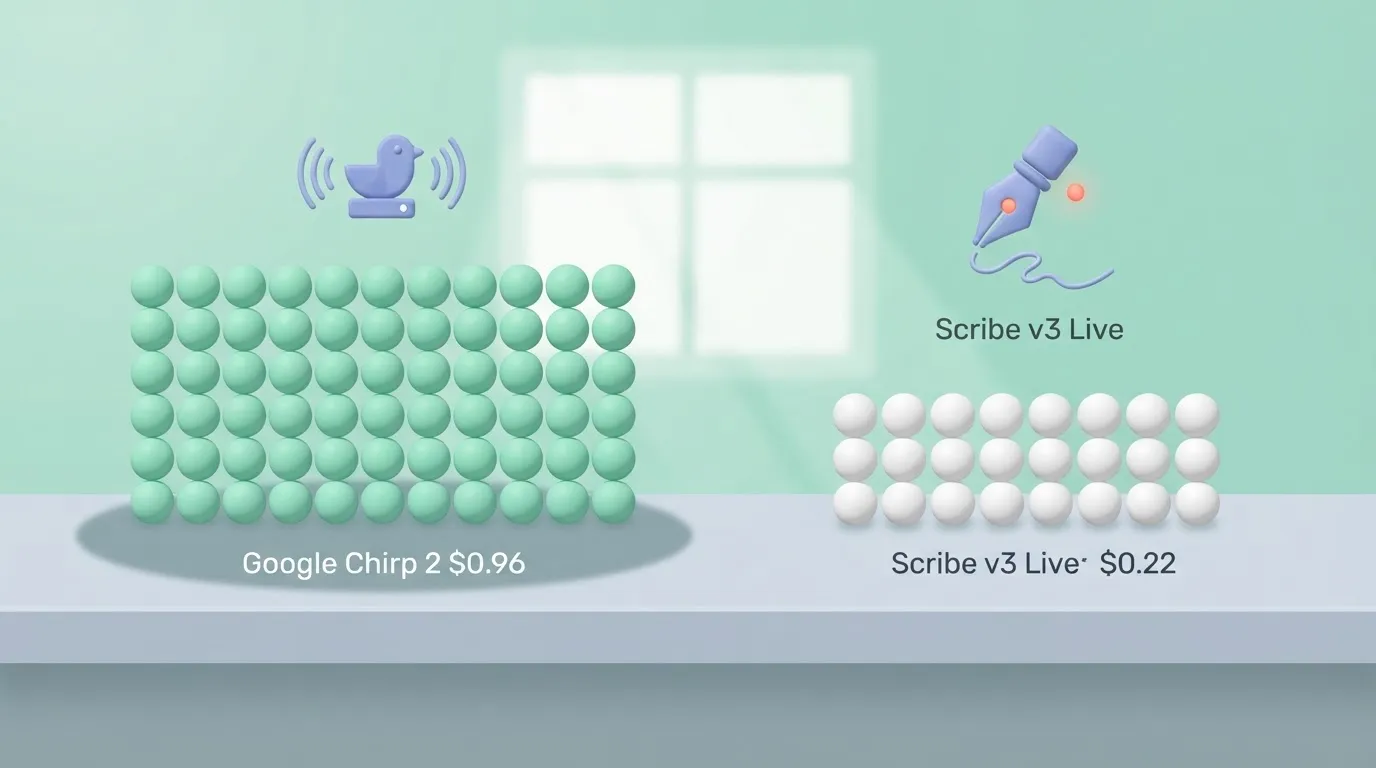
The aggressive pricing of Scribe v3 Live makes it the most economical choice for long-running sessions, reducing the barrier to recording every developer standup. However, as the volume of recorded data grows, the frequency of agent queries scales exponentially.
This makes the per-thousand-query credit cost the primary driver of the annual budget.
Hidden infrastructure requirements for local MCP hosting
Satisfying data residency requirements by deploying the Scribe MCP server locally necessitates a persistent compute environment that exceeds the specifications of a standard web server.
Because the server must index and vectorize incoming documentation updates in real-time for models like Mistral Large 4, it requires dedicated GPU memory for local embedding generation.
Scaling Scribe v3 workflows with Activepieces automation
The moment a Scribe process is connected in Activepieces, an agent can call it as a functional tool.
Every connector registered in the platform is exposed as a tool schema on the Activepieces MCP server, making it reachable from Claude or ChatGPT without requiring a separate export step.
This unified catalog ensures that agents built by teams like MoneyGram or FundingSocieties can execute Scribe-documented tasks across 750 integrations without re-integrating the logic for each new model.
Automated failure recovery
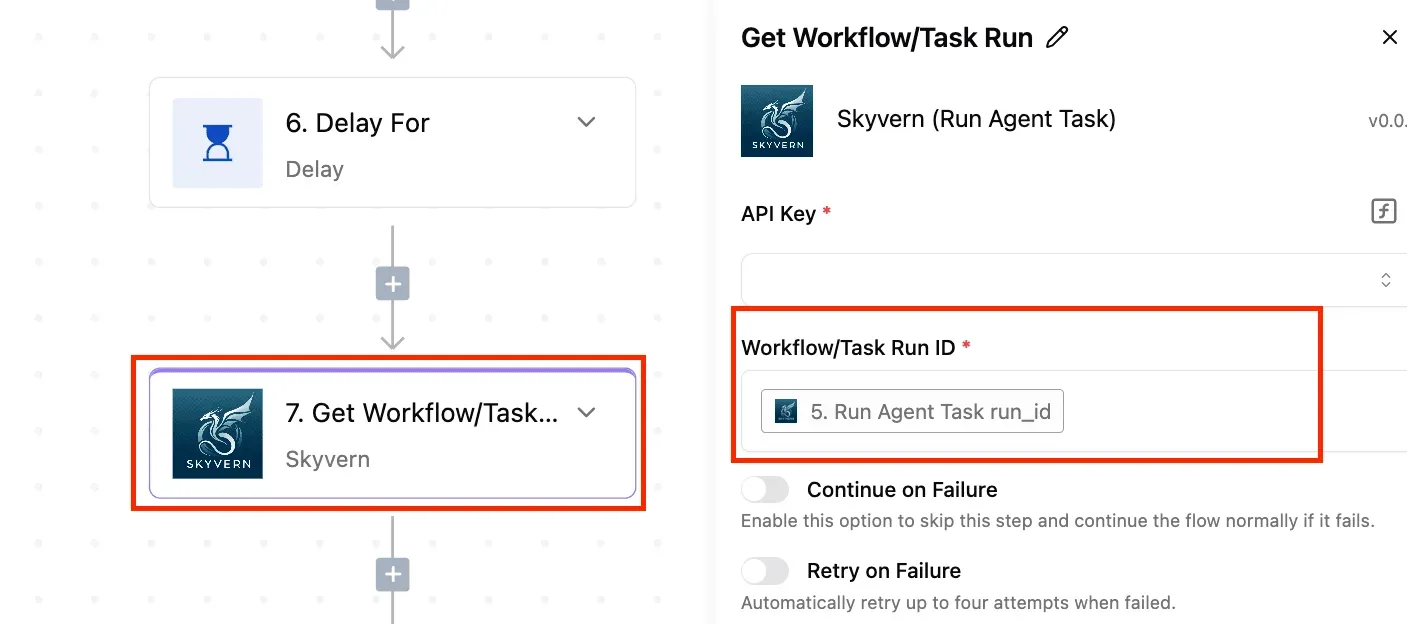
The following workflow demonstrates how a failure in a financial transaction initiates an immediate, documented response across communication platforms.
Register a integration once and it runs two ways at once: as a step inside a flow, and as a tool schema on Activepieces' per-project MCP server, reachable from Claude, ChatGPT, Cursor, or an agent you built yourself.
The outcome is the "Run succeeded" status confirming the entire sequence executed in under six hundred milliseconds. The support team receives the documentation they need at the exact moment the error occurs.
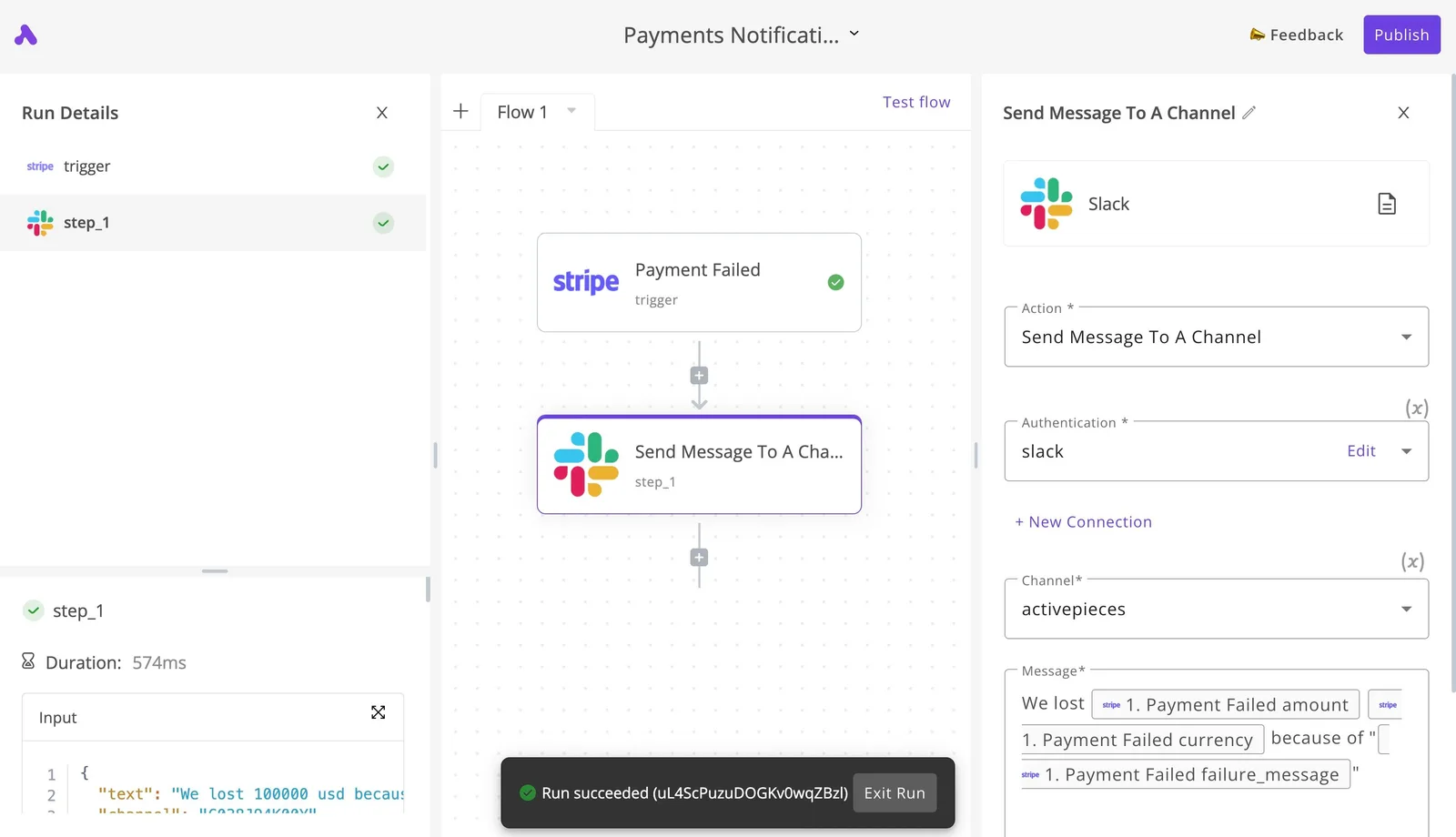
Activepieces provides an MIT-licensed core that allows teams to shift from hoping employees find the right guide to making sure the guide finds the employee.
This specific integration uses a Slack "Send Message To A Channel" action to pipe template-based failure details directly into the activepieces channel.
Implementation steps for deploying Scribe v3 MCP this week
Deploying Scribe v3 via the Model Context Protocol requires a structured handshake between your documentation workspace and the agent’s runtime environment to prevent unauthorized data exfiltration.
Because Scribe v3 moves beyond static exports to a live server-client relationship, your security posture depends entirely on the scope of the API token generated during setup.
To move Scribe documentation from a human-readable web portal into an agent-accessible context, follow this deployment sequence:
- Audit Scribe Workspace permissions to ensure the service account only has access to verified, non-sensitive process guides.
- Generate an MCP API Key within the Scribe administrative dashboard to establish a secure communication channel.
- Configure the Model Context Protocol server in Claude Desktop or your preferred IDE by adding the Scribe executable path to the configuration file.
- Map specific documentation folders to the Agent context so the model does not waste tokens parsing irrelevant guides.
- Run a test query to verify the agent can retrieve and summarize a specific workflow without manual copy-pasting.
This configuration creates a persistent bridge that allows Gemini 4 Carbon to treat your company’s standard operating procedures as a native extension of its own reasoning engine.
Frequently asked questions about Scribe v3 MCP
Does Scribe v3 MCP work with Claude and GPT-6.2 Astra?
Scribe v3 MCP is compatible with Claude Sonnet 5.5 and GPT-6.2 Astra, though performance varies based on the model’s native tool-calling efficiency.
While Claude Sonnet 5.5 excels at parsing the deeply nested JSON structures inherent to Scribe’s documentation trees, GPT-6.2 Astra requires more explicit prompt engineering to navigate long-form procedural guides without hallucinating steps.
This compatibility ensures that developers can leverage the protocol across the most common frontier models currently used in production environments.
How does Scribe v3 handle private workspace permissions?
The MCP server inherits the API token permissions of the user who initialized the connection. This means an agent cannot see any Scribe content that the human user cannot access.
If a workspace is restricted to a specific department, the Model Context Protocol layer enforces that boundary by returning a null set for unauthorized queries, preventing accidental data leakage to the model.
Can i run the Scribe MCP server behind a firewall?
You can deploy the Scribe MCP server within a private network, provided the environment allows outbound HTTPS requests to the Scribe API endpoints.
Because the server is a local bridge between the model and the cloud data, it requires a persistent connection to synchronize documentation updates in real-time. This setup allows for secure internal operations while maintaining the benefits of a cloud-hosted documentation repository.
What is the minimum Scribe plan required for MCP access?
MCP functionality is included in the Pro tier, limited to a shared resource pool. It relies on the dedicated API access and service accounts not available in lower-level packages.
Choosing this tier is necessary to unlock the high-rate limits required for agentic workflows, which frequently refresh documentation blocks during multi-step reasoning tasks. This requirement ensures that enterprise users have the necessary infrastructure to support high-volume, automated documentation retrieval without service interruptions.
Running the numbers
See what the same workload costs here.
Free forever plan, and every paid plan self-hosts at no extra cost.
See pricing Talk to sales