
Source of Truth: Data Warehouse vs CRM for Two-Way Sync
Data synchronization strategies rely on a primary system to resolve conflicting updates between platforms.

Covers data-pipeline schema assumptions for analytics teams: what breaks first, why "source of truth" claims fail, and the fix.
ContributorSeptember 17, 202614 min read
This article was researched and fact-checked by an advanced research system.
Establishing a reliable source of truth is the cornerstone of any successful two-way synchronization strategy, as it dictates how data conflicts are resolved and which system holds the final authority.
When organizations begin to map their data flows, often utilizing tools like Activepieces to bridge disparate applications, they must decide whether a CRM, an ERP, or a specialized database will serve as the primary anchor.
Without this clear hierarchy, automated workflows risk creating circular logic or overwriting critical updates, leading to fragmented records and diminished data integrity across the entire tech stack.
Selecting the right source requires a deep understanding of where information is first captured and which team requires the most accurate, real-time visibility into those specific data points.
Source of truth defined for two-way synchronization
Two-way synchronization maintains data parity across separate environments by establishing a dominant authority to resolve the race conditions that occur when users modify records in both systems at once.
Without this hierarchy, the synchronization logic enters an infinite loop or creates a split-brain scenario where neither system reflects reality.
The difference between a system of record and a source of truth
The physical location where data lives is the system of record. By contrast, the source of truth is the logical policy that dictates which system’s version of a field is correct during a conflict.
23.9% of cloud database revenue is held by AWS, according to Gartner. This means nearly a quarter of all enterprise data resides in environments where the database engine itself doesn't dictate the business logic.
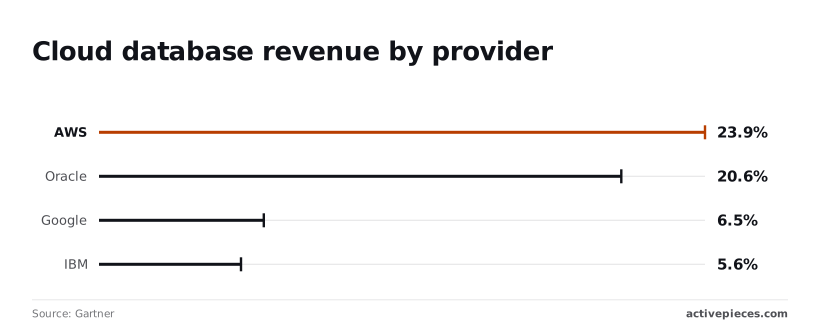
Oracle follows at 20.6%, requiring strict DBA oversight to ensure that legacy on-premise records don't overwrite modern cloud entries, so administrators must remain hyper-vigilant to prevent data corruption.
Even smaller players like Google at 6.5% and IBM at 5.6% represent massive silos of information, making it increasingly difficult for enterprises to maintain a unified view of their data across platforms. These percentages prove that data is rarely centralized.
You must define the "truth" through software rather than physical location.
Why bi-directional sync fails without a tie-breaker
Bi-directional synchronization fails when two systems attempt to update the same attribute simultaneously. This results in data corruption or perpetual overwrites.
The following diagram illustrates a standard Tie-Breaker protocol where System A and System B both attempt to update a 'Phone Number' field.
A central 'Source of Truth' shield evaluates the incoming packets, blocking one update based on pre-defined priority and permitting the other to maintain integrity.
This mechanism ensures that even when an automation platform triggers a flow, the underlying data schema remains protected from contradictory inputs. By enforcing this shield, you prevent the "ping-pong" effect where two systems spend API credits fighting over a single string.
The role of timestamps in conflict resolution
Timestamps are the primary tie-breaker by providing a linear sequence for non-hierarchical data updates. When both systems have equal authority, the synchronization engine compares the updated_at values to determine the final state.
- Last-Write-Wins (LWW) uses the most recent UTC timestamp to discard older packets.
- First-Write-Wins (FWW) preserves the original entry if the second update occurs within a specific latency window.
- Version Vectoring tracks the number of modifications to identify if a record has diverged across multiple nodes.
The fastest way to settle a shortlist is to try one. Activepieces is free to try, no credit card.
Operational autonomy for specialized team systems
Operational autonomy for specialized teams systems
The reality is that a customer support tool requires a different data schema than a sales platform to remain functional; forcing every department to bow to a single master database ignores this.

When a support agent in Zendesk (a specialized ticketing interface) must wait for a sync from a CRM like Salesforce before they can update a "Priority" field, the technical friction degrades the customer experience.
This autonomy allows you to optimize your local environment for speed rather than conformity.
Latency costs of hierarchy middleware in sync
Establishing a rigid hierarchy requires a middleware layer capable of resolving complex logic gates, which introduces measurable latency into the data pipeline. According to architecture benchmarks from Activepieces, system latency sits at 0.2 seconds under warm conditions, meaning you'll experience near-instant updates during standard operation.
A response time of 0.5 seconds is the threshold under heavy load, meaning any delay exceeding this window indicates a performance failure.
If the system faces a cold start, latency jumps to 2 seconds. This is long enough for you to refresh the page and potentially trigger a duplicate API call.

These delays demonstrate that the more "authority checks" a system must perform, the higher the risk of data collisions during peak traffic.
Why 'latest update wins' feels more intuitive to users
Users expect the most recent action to be the definitive one, regardless of which application they were using when they clicked "Save." This "Last-In-Wins" approach mirrors human collaboration.
If a developer updates a task status in GitHub, they expect that status to reflect globally without checking if the CRM agrees.
While this avoids the frustration of "ghost reverts" where a master system overwrites a local change, it places the entire burden of data integrity on the timestamp. Without a hierarchy, you aren't managing a source of truth: you're managing a race condition.
Why democratic data models corrupt databases
Bi-directional synchronization without a defined hierarchy transforms two healthy databases into a single, oscillating failure state where every update triggers an unintended reaction.
Without a hierarchy, you aren't managing a source of truth: you're managing a race condition.
The feedback loop problem in unmanaged syncs
Because they lack an exit condition for automated updates, democratic sync models fail, causing changes to bounce between platforms until the data is unrecognizable.
This is most visible in the "Circular Sync Loop." In this scenario, the CRM updates the ERP tool, which immediately triggers a webhook back to the CRM, creating an infinite cycle of redundant API calls.
This cycle ensures that even a simple name change consumes the entire daily API rate limit in minutes, effectively locking the database for all other users.
Breaking the loop with identity checks
To prevent the ping-pong effect, the synchronization engine must distinguish between a human modification and an automated update. The most effective method involves checking the "Updated By" metadata or a specific "Syncing" tag before the workflow proceeds.
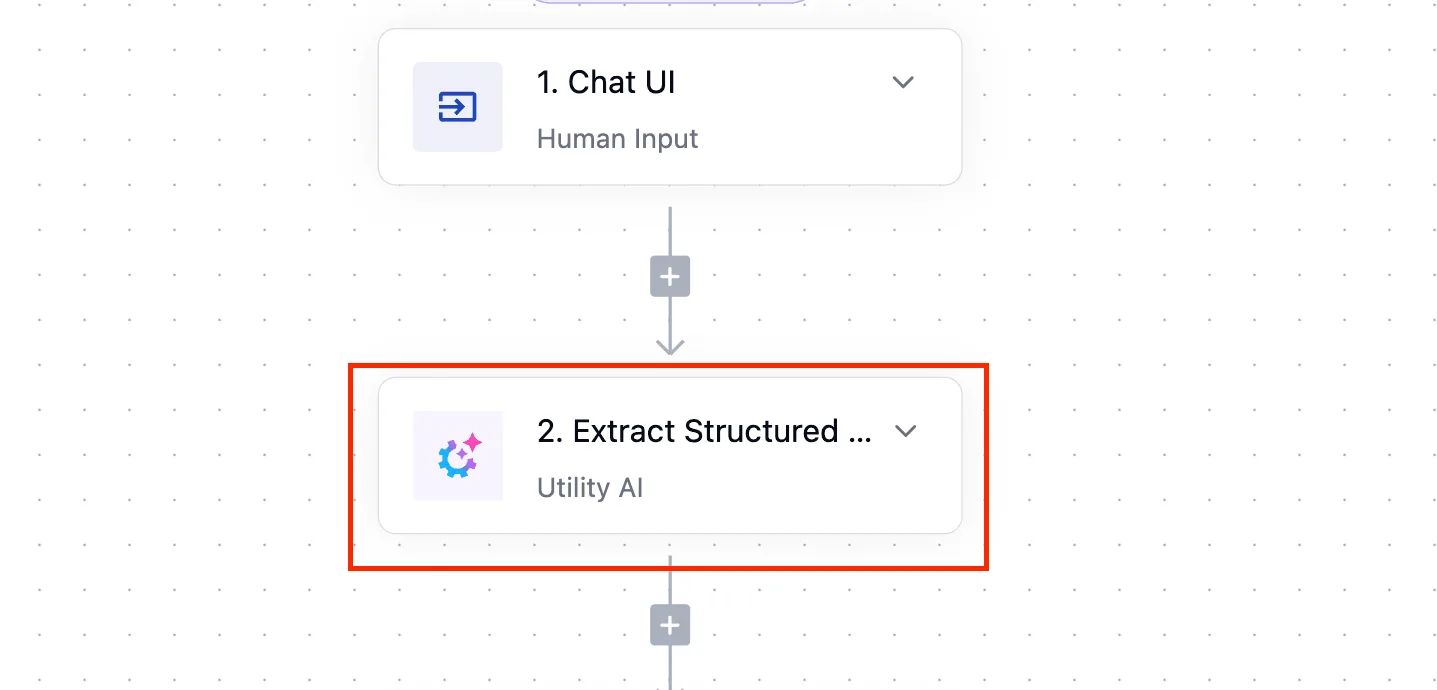
If the system detects that the change was initiated by the automation tool's own API key or service account, it must terminate the flow immediately.
Another robust strategy is the value-comparison check. The sync logic should compare the incoming payload against the current destination value; if the data is already identical, the update is skipped.
This ensures that System B does not "echo" a change back to System A simply because it received a webhook. By implementing these identity and value filters, you create a logical circuit breaker that stops the infinite loop at the first bounce.
Field-level versus record-level data ownership
Integrity requires moving past record-level ownership to a model where specific systems own specific attributes, preventing the "ping-pong" effect on individual cells.
| Field Category | Recommended Authority | Reason |
|---|---|---|
| Billing Address | ERP / Accounting | Financial compliance and tax accuracy. |
| Lead Status | CRM / Sales | Real-time pipeline tracking. |
| Support Tier | Helpdesk / CS | Proximity to active service tickets. |
| Email Opt-in | Marketing Automation | Legal compliance with GDPR/CAN-SPAM. |
- The Billing Platform must hold authority over the Tax ID and Invoice Address to ensure financial compliance.
- The Customer Success Tool should own the Health Score and Last Contacted Date to provide accurate reporting.
- The Marketing Automation Suite owns Subscription Preferences to prevent illegal opt-ins.
How 'latest update wins' propagates human error
The "latest update wins" strategy is the most common cause of silent data loss. It treats a typo made five seconds ago as more valid than a verified record from five minutes ago.

Because this logic prioritizes the clock over the source, an AI agent hallucinating a phone number in a support ticket will instantly overwrite a validated number in the master database.
Modern governance frameworks bring these agents under the same control as human users by applying enterprise RBAC and connection policies to every automated step.
Open the run detail view for any agent step to see each tool call listed separately with its specific input and output, ensuring that automated updates are audited rather than collapsed into opaque results.

Reading a table only gets you so far. Build the same workflow in Activepieces and compare it yourself.
Criteria for selecting your primary data authority
Selecting a primary data authority requires identifying which system possesses the most rigid schema constraints and the lowest frequency of uncontrolled manual overrides.
Evaluating data validation and schema rigidity
The system with the strictest field validation is the superior source of truth because it prevents the propagation of malformed strings into downstream services.
If a CRM allows free-text entry for a "Country" field while the ERP requires a standardized ISO code, the ERP must be the authority.
Otherwise, the sync will eventually attempt to push a typo like "U.S.A" into a system expecting "US," triggering a silent sync failure.
You should run an Authority Audit to map out where the data is most protected to determine which platform should lead.
You must determine which system has the strictest field validation and which has the fewest manual-entry users. You must also identify which system is the financial record of debt and which possesses the most granular timestamp for record updates.
Assessing user proximity to the data origin
A system’s authority is directly proportional to how close it sits to the initial point of data creation.
An invoicing tool that generates a unique ID upon a customer purchase is a more reliable authority for that ID than a marketing platform that receives it via a secondary integration.
Analyzing API rate limits and webhook reliability
The technical capability to broadcast changes determines whether a platform can actually function as a leader in a two-way sync.
A system that lacks real-time webhooks or has restrictive API rate limits will inevitably fall behind. Its "truth" is constantly delayed and therefore unreliable for active agents.
Enforcing data authority using Activepieces workflows
Activepieces applies central governance to every automated step, ensuring that the system you designate as the gavel remains the final authority during a data conflict.
Building conditional logic for field-level updates
Granular control over field authority is provided by the Router integration. This tool directs data flows based on the origin and status of the incoming payload.
This logic ensures that if an AI agent attempts to update a "Protected" field, such as a verified billing address, the workflow can automatically terminate or divert the update to a manual approval queue.
The screenshot below shows the Activepieces flow builder where a "Schedule" trigger is paired with a spreadsheet integration selector. This setup demonstrates how a recurring check can scan for changes across platforms like Google Sheets or Microsoft Excel 365.
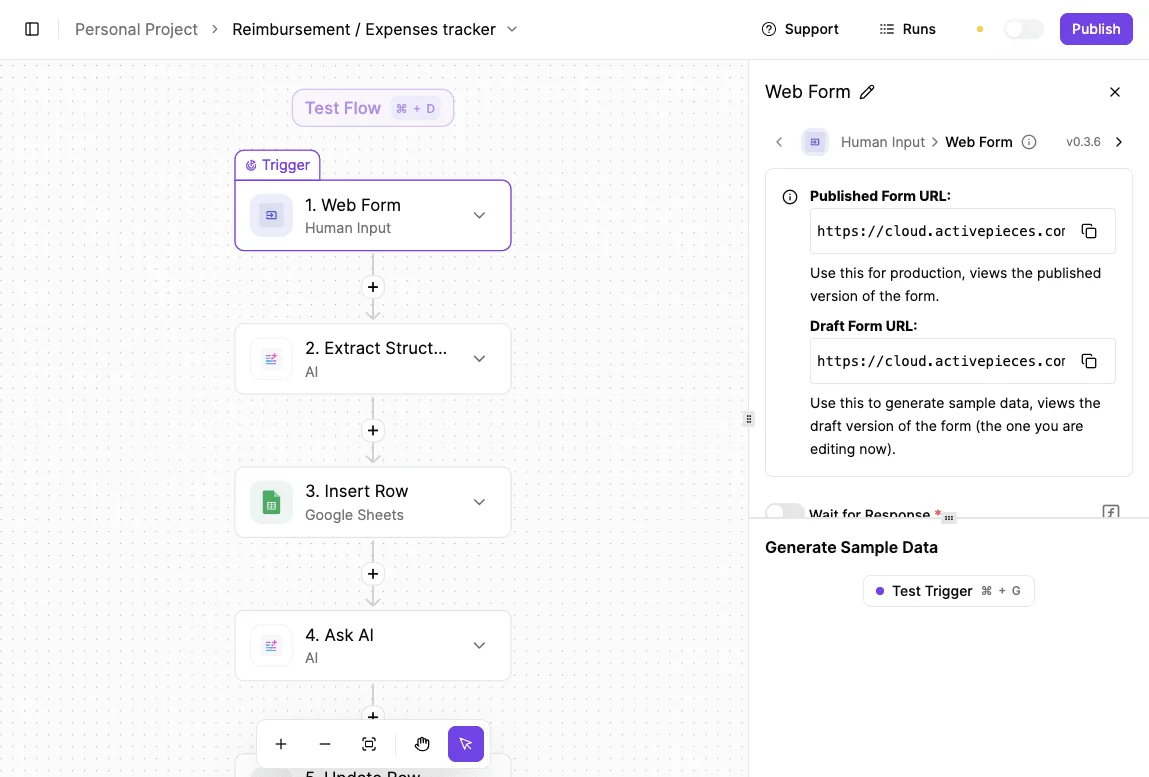

It allows you to select specific actions like "Update Row" only when pre-defined validation steps are cleared. By restricting the agent’s permissions to specific actions within this modal, you prevent the automation from performing bulk deletions or unauthorized schema changes.
Using wait steps to prevent sync race conditions
The "Wait" integration acts as a necessary buffer to ensure that high-frequency updates from AI agents don't collide with slower, authoritative system webhooks.
In a two-way sync, a race condition occurs when two systems attempt to update the same record simultaneously. This often results in the "last write wins" trap where the incorrect data persists.
Mapping custom object IDs across CRM and warehouse
Maintaining integrity across platforms requires strict mapping of unique identifiers between the source of truth and downstream consumers.
Activepieces facilitates this through dynamic data mapping, which links specific IDs across different software environments. The primary key from the source database is the anchor for all syncs.
Activepieces enables teams to manage these complex mappings as code, using Git Sync and Release Management to promote versioned flows from test to production environments.
Reviewing the Git Sync documentation confirms that these sync policies are treated as reviewed software assets rather than private, unversioned UI configurations.
The Monday morning plan for data synchronization
Establishing a source of truth requires a sequential transition from auditing existing entropy to enforcing a rigid hierarchy through small-scale validation.
Auditing field ownership across company departments
Data integrity fails when multiple departments claim ownership over the same attribute without a clear primary system of record. Every field must be traced back to the specific team responsible for its accuracy.
For example, the CRM platform owns the customer’s billing address while the ERP software maintains the official SKU list. Identifying these overlaps prevents the "ping-pong" effect where a marketing tool reverts a change made by the finance team.
Documenting the conflict resolution hierarchy
A documented hierarchy dictates which system wins when two updates occur simultaneously, preventing the database from stalling on conflicting logic.
The Monday Morning Sync Plan provides a structured path for this implementation.
- Audit current duplicate rates to identify how much cleanup is required before the sync begins.
- Map field-level ownership to ensure every data point has exactly one master system.
- Set a 300-second sync delay for safety.
- Run a 10-record pilot sync to verify that the API calls are mapping correctly to the target schema.
- Perform a full-scale deployment once the pilot records show zero transformation errors.
Running a dry-sync on non-critical records
Testing the synchronization logic on a subset of low-stakes data reveals how the systems handle edge cases without corrupting the primary production environment.
By using a sandbox, you can observe how the sync handles null values or character limits before live customers are affected. Validating the logic here means that when the full sync is enabled, you're confident that the source-of-truth policies are being enforced as designed.
Common questions about data synchronization?
Can a source of truth change based on the specific field?
For complex schemas, granular ownership at the field level is the standard requirement. This prevents a single system from overwriting specialized data it doesn't natively manage.
While a Customer Relationship Management (CRM) platform like Salesforce might own the contact email, a dedicated billing engine should own the tax ID.
What happens if the source of truth goes offline?
Sync engines must move into a read-only or queued state when the authoritative system is unreachable. This prevents the creation of "phantom" data that exists only in downstream spokes.
If a system continues to accept writes without a heartbeat from the master, it risks creating a split-brain scenario where two different versions of a record claim validity.
How does two-way sync affect API consumption limits?
Bi-directional synchronization increases the volume of API calls because every change requires a round-trip validation to ensure the source and destination remain aligned. High-frequency polling or poorly filtered webhooks can exhaust a platform's daily tier limits.
This results in the total cessation of data flow across all integrated business tools until the next reset cycle.
Should the ERP always be the master source of truth?
Only for the data it generates should an Enterprise Resource Planning (ERP) system be the master. This includes finalized invoices or inventory counts. It shouldn't act as a global gatekeeper for every peripheral attribute.
Forcing an ERP to own top-of-funnel marketing leads creates a bottleneck where marketing teams can't iterate on data structures without a full backend deployment.
Related reading
References
Still comparing
The fastest way to settle it is to build something.
Open source under MIT, so you can self-host the same thing later.
Start free Talk to sales