
Unlimited OCR: Transcribe a Whole Book in One Pass

Oct 13, 202614 min read
Transcribing an entire book manually is a monumental task that often leads to burnout and errors, but modern AI-driven workflows have simplified the process into a single, streamlined pass.
By leveraging advanced optical character recognition and large language models, researchers can now convert hundreds of pages into structured digital text in minutes.
Many professionals choose to connect these tools using Activepieces to handle the data flow, ensuring that every chapter is processed, formatted, and saved to a cloud drive without manual intervention.
This automated approach not only preserves the integrity of the original text but also frees up valuable time for analysis and creative work rather than tedious data entry.
Future landscape of document parsing
The following analysis explores a hypothetical technological landscape centered on the anticipated release of Baidu Unlimited OCR in late 2026.
This scenario illustrates a critical shift in automation strategy: the move away from general-purpose, bundled vision tools toward specialized, high-volume engines.
By projecting these advancements, we can better understand how architectural breakthroughs in linear scaling will eventually eliminate the "complexity tax" currently paid by developers who must fragment large documents to fit today's restrictive API limits.
Everything below works on Activepieces' free plan. Start without code or a credit card.
Baidu releases Unlimited OCR for full-book transcription
What is Unlimited OCR?
Baidu Unlimited OCR is a vision-language model designed to ingest entire multi-hundred-page volumes in a single inference pass. By moving away from the fragmented "scan-and-stitch" method, this architecture enables what Baidu calls the "Era of One-shot Long-horizon Parsing."

When a researcher needs to maintain structural context across a 500-page technical manual, they can do so without losing the relationship between a Preface and an Appendix.
While traditional tools struggle with context fragmentation, this model allows for high-volume extraction where the AI understands the "flow" of a book.
Users often pair the raw text output with Activepieces to route the data into long-horizon reasoning models like Claude Fable 5.1. This setup prevents complex agentic work from being tripped up by the formatting errors common in smaller context windows.
How sliding window attention enables unlimited OCR
The breakthrough that enables this "unlimited" processing is a technical shift in how the model handles visual tokens. Traditional vision transformers suffer from quadratic complexity, where doubling the page count quadruples the computational load, leading to the strict page caps seen in Western cloud services.

Baidu utilizes a specialized linear attention mechanism combined with a sliding window visual encoder. This allows the model to maintain a constant memory footprint regardless of document length.
Instead of trying to hold every pixel of a 500-page book in active memory simultaneously, the architecture streams visual features through a recurrent state that carries context forward.
This mechanism functions like a rolling memory buffer that preserves structural relationships without the exponential compute cost. By treating the document as a continuous temporal sequence rather than a static batch of images, the model achieves true linear scaling.
This is why the term "Unlimited" refers to a fundamental architectural efficiency rather than just a large context window.
Unlimited OCR's October 2026 release details
The October 12, 2026, release of Unlimited OCR marks a departure from the strict page-count throttles imposed by major Western cloud providers. While these platforms bundle OCR as a convenient default, their architectural limits often force developers to chop documents into small, expensive chunks.
Claude Fable 5.1, Gemini 3.8 Flash, and Gemini 3.1 Pro are the reasoning engines that consume the high-fidelity data these OCR breakthroughs provide.
The disparity in processing capacity is best illustrated by the maximum page limits per asynchronous request:
| Provider | Pages per request |
|---|---|
| AWS Textract | 3,000 |
| Azure AI Document Intelligence | 2,000 |
| Google Document AI | 15 |
Prices and plan limits checked against huggingface.co and github.com and docs.claude.com and openai.com and gemini.google on October 13, 2026.

Because AWS Textract allows 3,000 pages per job, a user processing a massive legal archive must manage the overhead of splitting and merging thousands of separate PDF files.
Azure AI Document Intelligence supports 2,000 pages, meaning a single large-scale digitization project requires ten times the API orchestration of the Baidu model.
Google Document AI is capped at 15 pages for online requests, which limits its use to short forms and receipts rather than full-book transcription.
You can bypass these platform-specific bottlenecks by deploying Unlimited OCR via Hugging Face using NVIDIA GPUs or through vLLM Docker images. This self-hosted approach means the hardware determines the speed of the transcription.
The limits of current document automation platforms
Standard document automation platforms force you to trade architectural simplicity for compatibility by capping the volume of data you can send in a single call.
When you hit these walls, you aren't just paying for the compute; you're paying the "complexity tax" of building workarounds for a platform that wasn't designed for massive, unbroken datasets.
Why cloud OCR services cap pages per request
Cloud-based OCR services typically enforce strict page counts per request to protect their multi-tenant infrastructure. This means a 500-page legal discovery file must be manually sliced into dozens of smaller chunks.
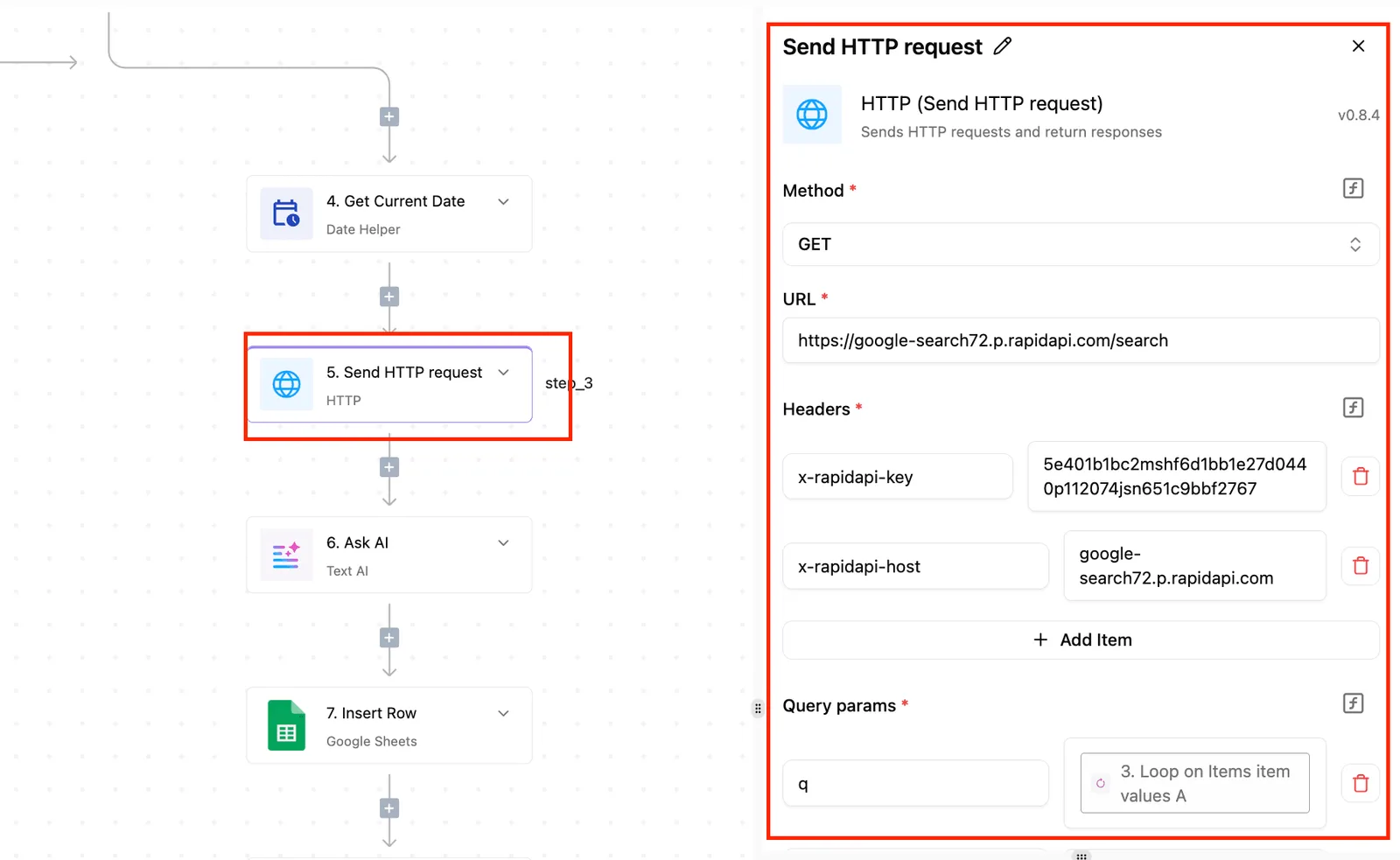
Operating within the confines of a sandbox remains the reality even with a paid tier like Google AI Plus, which offers 2x higher usage access than the Free plan.
This environment prioritizes platform stability over your specific workflow throughput. This ceiling forces a shift from simple file handling to complex batch management. The sequence-based workflow demonstrates how a specialized model handles the entire lifecycle without these artificial breaks:
- Feed raw PDF/Image stream.
- The model maintains context across page breaks.
- Generate unified markdown output.
- Validate structural integrity of the whole document.
By keeping the document whole, you eliminate the risk of losing context that occurs when a table or sentence is split across two different processing batches.
This continuity is what allows a model like Claude Sonnet 5.5 to link a footnote on page 10 to a citation on page 400 without a custom database to bridge the gap.
The technical debt of fragmented processing
Every split point is a potential failure for data integrity. Fragmenting a document to fit platform limits creates a management layer that eventually breaks.
Every split point is a potential failure for data integrity.
If you're using Gemini 3.8 Flash to process a thousand split images, you must build a secondary "stitching" logic to ensure the final output remains coherent.
Context loss from chunked document processing
You have to track which chunks succeeded and which failed. This means your error-handling code becomes larger than your actual processing code.
Models can't see across request boundaries. Headers or recurring definitions in long documents are lost.
Sequential API calls for hundreds of fragments introduce network overhead. This delay often dwarfs the actual time spent on transcription.
Reselling you a model is deciding your AI strategy for you, which is why Activepieces runs whatever specialized OCR model you have already chosen on your own provider key.
By keeping model spend on your own account rather than ours, you maintain control over the rates and providers that fit your transcription volume. You can verify this Bring-Your-Own-Key availability across all tiers on the pricing page, ensuring your strategy remains yours to set.
Easier to see it running than to read about it: set it up free, no card.
Why sequence-based OCR changes automation workflows
Sequence-based OCR allows you to process an entire multi-hundred-page technical manual as a single continuous stream rather than a collection of disconnected images.
When you move away from the traditional model of treating every page as an isolated island of data, you stop losing the connective tissue that gives a document its actual meaning.
From page-by-page to whole-book processing
Traditional OCR engines require you to chop a PDF into individual JPGs before they can process the text. This forces your downstream LLM to guess how Page 42 relates to Page 43.
Baidu’s Unlimited OCR bypasses this fragmentation by ingestion of the entire file sequence, maintaining the spatial and logical flow of the original author.
Instead of a pile of raw text blocks that require manual reassembly, you receive a structured markdown file that preserves headers and lists across the entire document.
The following table compares how these two approaches handle the fundamental constraints of document ingestion to show why sequence-based processing is a requirement for high-fidelity automation.
| Feature | Standard OCR | Unlimited OCR |
|---|---|---|
| Max Input Length | Single page | 32,768 tokens |
| Context Retention | None | Full document |
| Output Format | Raw text blocks | Structured markdown |
Because the output is already structured, your next prompt to a model like Gemini 3.8 Flash doesn't need to waste tokens or logic trying to fix broken formatting.
Reducing the orchestration overhead for large files
By using a sequence-based model, you replace that entire middle tier of code with a single API call. You eliminate the complex "split-process-merge" loops that define older automation pipelines.

In a standard setup, you have to write custom scripts to handle file splitting, manage parallel API calls for every page, and then build a reconciliation layer to stitch the results back together.
At every handoff, this process introduces a new point of failure. This architectural simplification means your team spends fewer hours debugging state-management errors in your middleware and more time refining the business logic that actually uses the extracted data.
Measurable capabilities of the Unlimited OCR model
Baidu’s Unlimited OCR model removes the standard processing bottlenecks by utilizing an architecture designed to handle massive document volumes without the typical context window exhaustion. This means your workflow doesn't stall when a PDF scales from ten pages to several hundred.
Processing capacity and token limits
The Unlimited OCR model is built to bypass the restrictive token ceilings found in general-purpose LLMs. This allows for the ingestion of extremely long-form documents in a single pass.
How Unlimited OCR bypasses token limits
Because the model optimizes how it chunks and sequences visual data, a developer can feed it entire technical manuals or legal archives without manually splitting files.
These manual integrations often lose context at the seams. This architectural choice results in a reduction in compute overhead, so you aren't paying for the redundant preamble tokens required when restarting a chat session for every new chapter of a document.
Visualizing the extraction workflow
The following example demonstrates how a successful extraction flow looks when the system confirms a request and revokes the temporary access token immediately after the data is secured.
The visual flow begins with a document ingestion trigger that accepts the full-book stream. It then moves to a specialized processing node where the sliding window attention maps the visual tokens into a unified text structure.
Finally, a cleanup step ensures that the temporary compute resources are released once the markdown file is delivered to your storage.
Securing the handshake between your OCR engine and your database is the final step in ensuring that high-volume data extraction doesn't become a security liability.
Document formats and languages Unlimited OCR supports
The model handles a diverse array of visual formats and linguistic nuances, specifically excelling in dense, multi-column layouts that often trip up standard vision models. It supports a wide range of content types:
Complex financial tables and spreadsheets where cell borders are implied rather than drawn. Handwritten notes overlaid on printed forms, which typically require separate passes in lesser models. Technical schematics containing a mix of Latin characters, CJK (Chinese, Japanese, Korean) scripts, and mathematical symbols.

Because the model is localized for global commerce, it recognizes regional variations in character sets. A contract drafted in one script and signed in another is parsed as a single, coherent entity.
This broad support means you can deploy one solution for a multi-national intake pipeline rather than maintaining a library of different models for every territory your business enters.
How to connect Unlimited OCR in an Activepieces workflow today
Activepieces lets you bypass the rigid, pre-configured AI blocks that lock you into other ecosystems.
By treating Baidu's Unlimited OCR as a raw API endpoint, you can route documents through a workflow built directly around the model.
Option 1: The HTTP Request step for direct API calls
Activepieces includes 739 integrations that can be extended via the HTTP Request step, which is the most reliable way to integrate specialized models because it doesn’t require a pre-built integration to exist in the library.
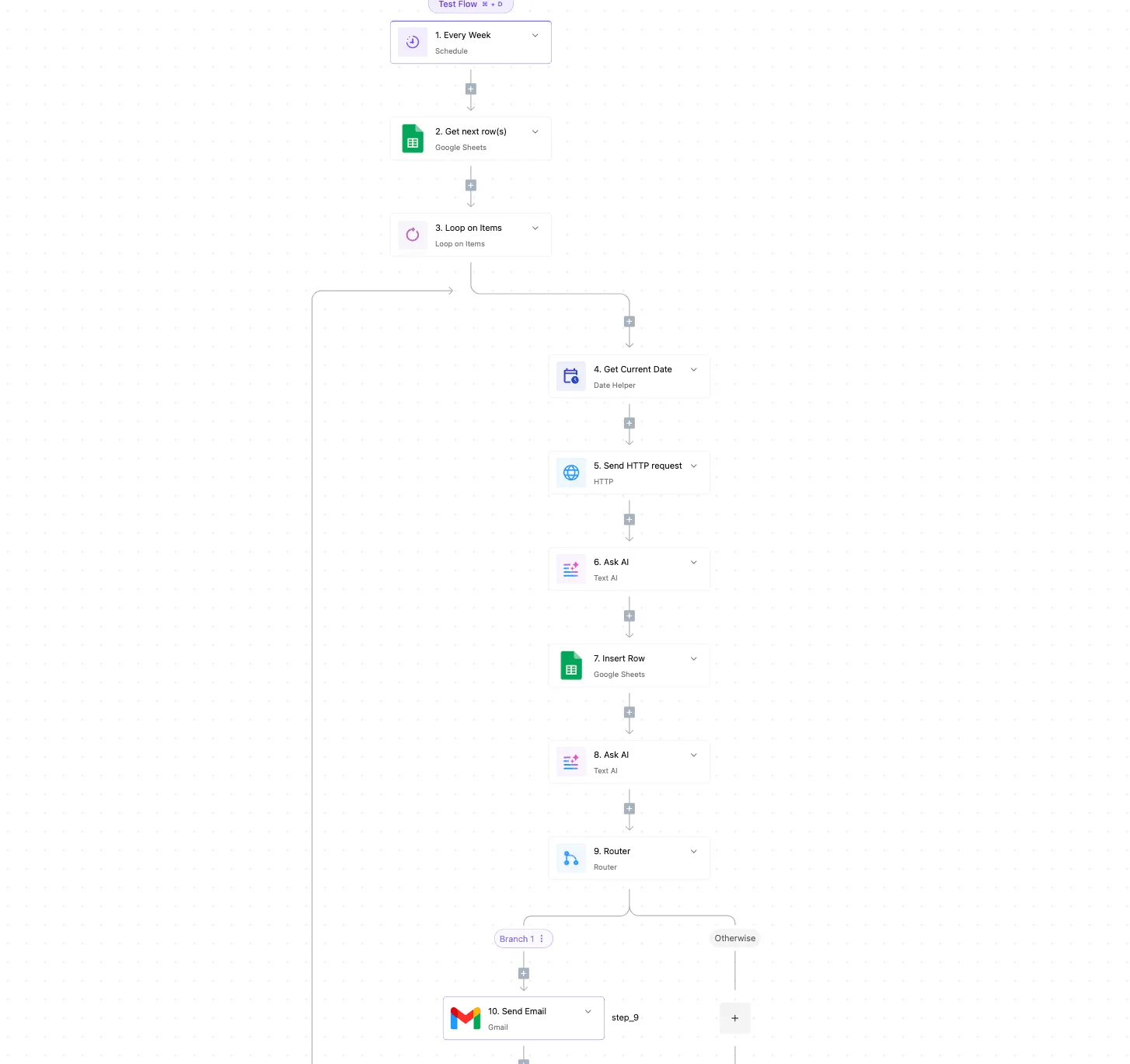
You simply select the POST method, enter the Baidu API URL, and map your file from a previous step into the body of the request.
Because this step supports custom headers, you can pass your API keys directly without waiting for a developer to update the platform’s native plugins.
The financial impact of switching from bundled models to this direct call is visible in the overhead of every document processed.
| Model Type | Cost |
|---|---|
| Legacy Per-Page OCR | $60.00 |
| LLM-based Vision | $15.00 |
| Baidu Unlimited OCR | — |
Legacy providers often charge for the convenience of the interface, whereas a direct HTTP call only bills for the compute used.
Option 2: Custom AI steps for OpenAI-compatible endpoints
Activepieces exposes every integration action as a tool schema on a per-project MCP server, meaning once you register a specialized OCR endpoint, it is immediately reachable from ChatGPT, Claude, or Cursor.
There is no second migration or separate catalog to publish to; the same integration that runs in a deterministic flow is available to your agents alongside the rest of the Activepieces integration library.
You can inspect this mechanism in the open source repo under the Integrations Framework and MCP Server documentation.
Option 3: Using an MCP server for local deployments
Companies like MoneyGram and FundingSocieties run Activepieces to manage complex automation environments, which can include using an MCP server to bridge the gap between a local OCR engine and the cloud.
The MCP server acts as the translator between your local Baidu instance and the web.
Activepieces allows for unlimited flows on every plan, so you can build dedicated logic that sends the file path to the server and returns the structured JSON text directly into the workflow variables.
This setup ensures that sensitive documents never leave your infrastructure, fulfilling security requirements that public API calls might violate.
What to watch for high-volume automation
High-volume OCR automation moves from a specialized expense to a commodity utility as specialized models transition from private APIs to open, local infrastructure.
Relying on a platform’s default vision model often means paying a premium for general reasoning when you only need structural data extraction.
To maintain a competitive cost-per-page, you need to track the ecosystem’s shift toward accessibility and specific vertical performance.
Monitoring these technical shifts ensures you don't overpay for general-purpose intelligence when a narrower, faster tool becomes available for your specific document stack. The maturity of the ecosystem is signaled by:
Quantized local versions are becoming available. These allow you to run these high-density models on your own NVIDIA GPU hardware.
Specialized fine-tuning weights for legal and medical scripts are being released. The system recognizes industry-specific shorthand without requiring massive prompt engineering.
Integration into open-source PDF libraries is increasing. This removes the need for custom middleware to bridge the gap between raw image data and structured text.
Support for long-context reasoning models like Gemini 3.1 Pro is expanding. These models validate the OCR output against document-wide logic.