Best Otter.ai Alternatives for AI Transcription (2026)

Oct 2, 202613 min read
Teams are moving toward specialized tools that solve specific privacy or workflow bottlenecks instead of relying on general-purpose recorders.
While capturing speech was the primary hurdle five years ago, the current challenge for a 50-person engineering pod is the manual labor required to move that data into production systems.
AI transcription alternatives prioritize workflow over simple text
The shift from transcription to intelligence
Modern operations leaders no longer view a text file as the finished product. They require structured data that feeds directly into their existing stacks. A transcript sitting in a siloed dashboard is a dead asset that requires a human to summarize, tag, and export it.
By utilizing modular infrastructure like Activepieces, which offers an MIT-licensed core for maximum transparency, teams are eliminating the "copy-paste" tax that previously consumed hours of administrative time.
A transcript sitting in a siloed dashboard is a dead asset that requires a human to summarize, tag, and export it.
The goal has shifted from simply knowing what was said to triggering automated outcomes without a middleman. These outcomes include updating a ticket in a project management tool or logging a sentiment score in a CRM.
Why users are migrating away from Otter.AI in 2026
When a firm demands granular control over model selection and data residency, they fuel the exodus from closed ecosystems.
Enterprise teams running high-volume workloads now prefer to point their own API keys at specific models. They use Gemini 3.8 Flash for rapid internal meeting summaries or Claude Opus 5.5 for complex technical documentation.
Activepieces runs whichever model a team has already standardized on, using the organization's own provider key so that AI spend stays on their own account rather than being resold at a markup.

Organizations can verify this by checking Bring-Your-Own-Key availability across tiers on the pricing page, ensuring model strategy remains an internal decision.
80% of the barrier to entry for large-scale audio processing has effectively vanished as the cost of raw processing collapses. This makes the fixed-fee per-user model of traditional platforms increasingly difficult to justify for scaled operations.
| Year | Provider | Cost per 1,000 minutes |
|---|---|---|
| 2022 | Legacy Platforms | $30.00 |
| 2026 | Deepgram/AssemblyAI | $4.00 |
| 2026 | Groq | <$1.00 |
As these margins shrink, the value of a transcription tool is no longer the text itself, but how it integrates into a wider automated strategy.
The fastest way to settle a shortlist is to try one. Activepieces is free to try, no credit card.
How audio environment affects transcription accuracy
Transcription accuracy is a variable metric that degrades as soon as a conversation leaves the controlled environment of a sound-treated room.
While high-end models like GPT-Transcribe provide near-perfect logs in ideal settings, the reality for ops teams is that raw data quality fluctuates based on the physical location of the speaker.
Environmental noise impacts the Word Error Rate (WER), which represents the percentage of words the AI misidentifies. Clean Studio recordings average a 5% WER, meaning a five-minute recording requires less than thirty seconds of human proofreading to reach publishing standards.
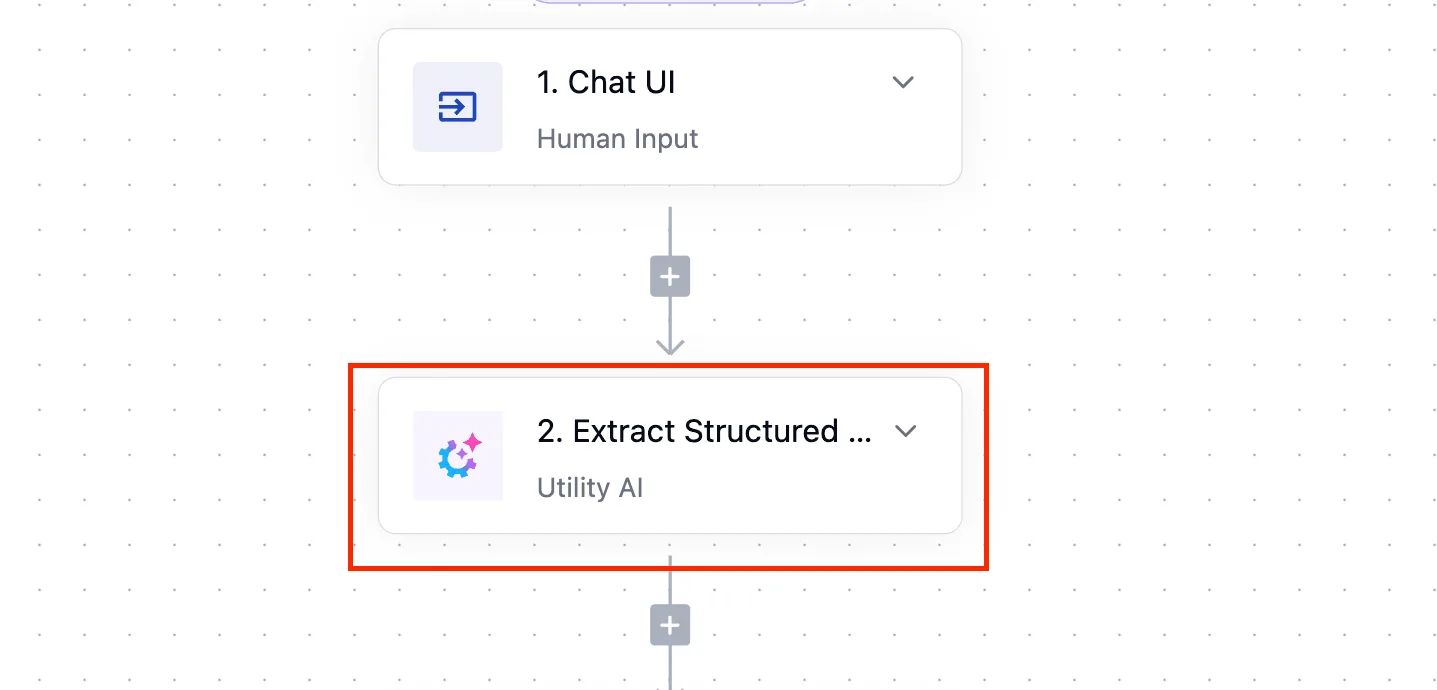
Meeting Audio typically hits a 10% WER. At this level, DeluxeScribe indicates that automated summaries begin to hallucinate specific action items because one in ten words is incorrect.
Zoom or Phone calls often reach a 20% WER. This doubling of errors means a project manager must manually verify every technical term, as the compression on digital lines masks phonetic clarity.
30% of the spoken content is rendered unintelligible by background audio when music or speech overlap occurs, which means listeners will frequently miss key information during these segments. DeluxeScribe reports that this level of interference renders the transcript functionally useless for automated workflows.
The error density breaks the logic of most LLM prompts.
Best transcription tool for noisy environments
When your field team of 40 technicians records site audits in high-decibel mechanical rooms, relying on a general-purpose tool results in a 30% failure rate on data ingestion.
To maintain a reliable pipeline, Gemini 3.5 Transcribe handles low-latency processing. We pair it with Claude Sonnet 5.5 to perform "error-correction passes" that reconstruct context from these high-noise environments. This two-step verification ensures that the downstream automation receives clean data, regardless of the recording source.
Top Otter.AI alternatives compared by utility and cost
Matching your team’s specific output requirements to a platform’s native intelligence layer is the first step in choosing an Otter.ai alternative. You shouldn't just seek the lowest monthly seat cost.
While legacy tools focused on simple text generation, the current market differentiates between platforms that act as passive archives and those that function as active project managers.
For a department head managing twenty concurrent projects, the "cheapest" tool is the one that requires the fewest manual corrections before data enters the CRM.
The following table breaks down how the leading contenders stack up based on their primary business utility and pricing structures.
| Platform | Business Plan Price | Core Strength |
|---|---|---|
| Fireflies.ai | $29/mo | Best for Workflow Automation |
| Fathom | $34/mo | Best for Sales Intelligence |
| Grain | $39/mo | Best for UX Research and Clip Sharing |
Fireflies.ai serves teams that treat meetings as triggers for downstream tasks, utilizing its API to push summaries directly into project management tools.
Fathom focuses on the high-stakes environment of sales. Its automated "deal health" indicators flag risks in real-time so managers can intervene before a lead goes cold.
Grain remains the standard for product teams who need to transform long interviews into bite-sized video evidence. This ensures that developer roadmaps are backed by actual customer sentiment.
By moving beyond basic transcription, these platforms now use advanced reasoning models like Claude Sonnet 5.5 to categorize action items with higher accuracy than previous iterations.
This shift toward agentic processing means that your choice of platform dictates how much time your senior staff spends auditing AI notes versus executing on the insights they contain.
Reading a table only gets you so far. Build the same workflow in Activepieces and compare it yourself.
The ecosystem lock-in argument for staying with Otter.AI
Proprietary data vs. specialized precision
Otter.ai maintains market dominance by using a massive proprietary dataset of conversational patterns. This makes its out-of-the-box transcription feel intuitive for general meetings.
This historical data acts as a significant moat because the platform has seen more diverse acoustic environments than most startups, reducing the initial configuration time for teams that lack dedicated technical operations staff.
However, this convenience creates a dependency on a closed loop where your data improves their product without necessarily increasing your specific competitive advantage.
Where Otter.AI still wins for general users
For teams that do not have the resources to manage their own API keys or build custom logic, Otter.ai offers a superior out-of-the-box experience. The platform excels at speaker identification across diverse accents without requiring manual training or fine-tuning.
The integrated calendar sync and mobile application provide a frictionless way for non-technical staff to capture value immediately. If your primary goal is a searchable archive of internal syncs rather than a data pipeline, the convenience of their all-in-one interface remains difficult to beat.

The argument for staying rests on the "good enough" threshold for general internal syncs. This logic fails as soon as a firm requires high-stakes precision or specialized terminology.
While Otter provides a unified interface for recording and searching, it requires users to use a one-size-fits-all processing pipeline.
Building a modular transcription stack for data ownership
In contrast, teams that prioritize data ownership are now building modular stacks that route audio through specialized models based on the specific needs of the department.
Gemini 3.5 Transcribe handles low-latency speech-to-text during live technical troubleshooting. Voxtral Mini Transcribe 2 handles efficient, high-volume batch processing of customer support archives.
Claude Fable 5.1 manages demanding reasoning and long-horizon agentic work when turning those transcripts into project roadmaps.
If you stick with a closed ecosystem, you are capped at the vendor’s internal development speed.
For an ops leader managing a team of fifty, the risk is the opportunity cost of being unable to swap a legacy transcription engine for a frontier-class model like GPT-6 Astra.
This is necessary when complex reasoning and coding insights are required from a technical sprint. Specialized accuracy and model flexibility now outweigh the comfort of a familiar UI.
Automating meeting outcomes with Activepieces and LLMs
Activepieces reaches every model provider a company uses among its 738+ integrations, and pushes the combined meeting data out of silos and into the specific databases where your team actually works.
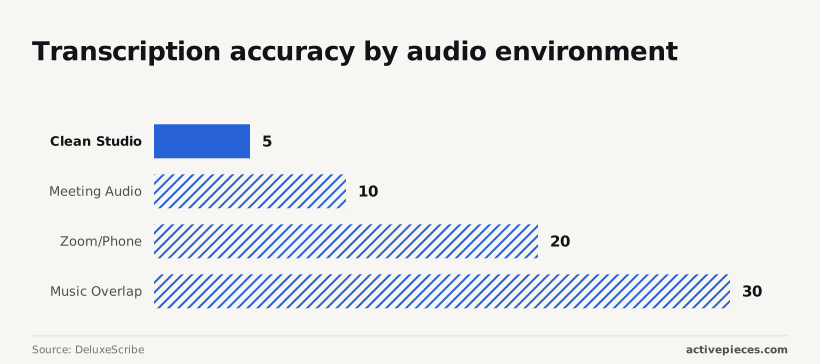
This open-source automation builder allows ops leaders to parse transcripts through Gemini 3.8 Flash to extract structured data before it ever hits the CRM.
The dashboard below illustrates a standard three-step flow. A new transcript from Fireflies acts as the trigger, which then passes through a logic gate to simultaneously update Notion and alert a Slack channel.

This visibility ensures that a transcript is never a dead file, but a live update to the team’s shared truth.
Moving transcripts to custom CRM fields
Sales ops are often left to manually clean up records because standard transcription tools fail to map specific conversation points to unique data structures.
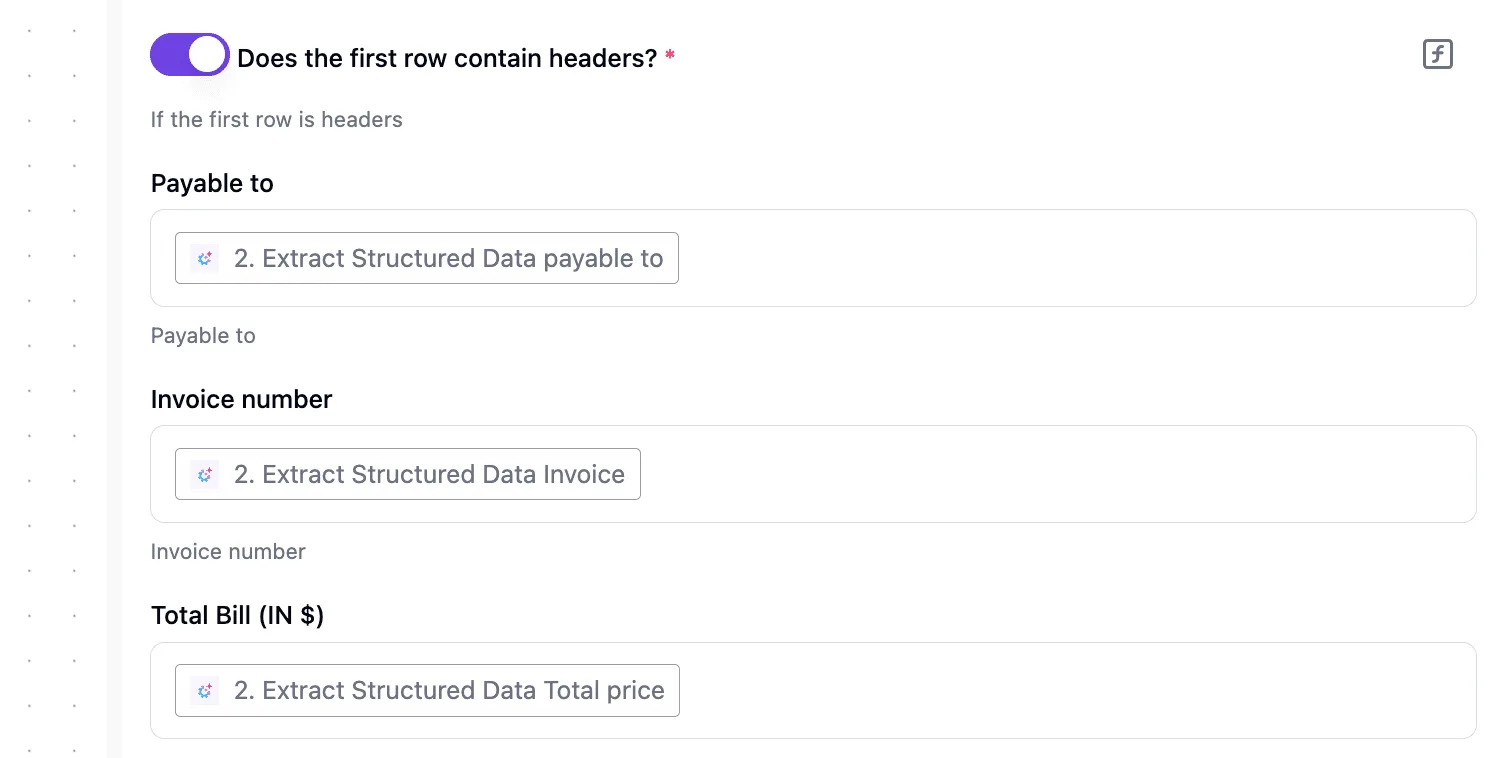
By using Activepieces to route text through Claude Sonnet 5.5, teams can identify specific budget mentions or competitor names and push them directly into custom fields within Salesforce, a customer relationship management platform.

MoneyGram and FundingSocieties run these types of complex automations in production, placing Agent steps alongside deterministic rules in a single flow definition.
Opening a run trace in the flow builder shows the entire execution logged from start to finish, rather than two separate systems bridged by a callback.
Triggering Slack actions from meeting sentiment
Real-time awareness of client frustration or churn risk requires more than a post-meeting email summary that might sit unread for hours.
Activepieces connects the transcription API to Slack, a team communication tool, using Gemini 3.8 Live to evaluate the emotional tone of the speaker in near-real-time.
If the model detects a high-stress interaction, it triggers an immediate notification to a "Customer Success Alerts" channel. A director can then intervene while the account is still recoverable.
Syncing action items to niche project tools
Fragmented workflows occur when meeting tasks are trapped in a transcript while the engineering team lives in GitHub, a developer collaboration platform.
Activepieces solves this by filtering the meeting text for technical requirements and automatically generating issues in the relevant repository, with roughly 60% of its integrations being community-contributed to ensure deep coverage of developer tools, which means users benefit from a vast ecosystem maintained by the very developers who rely on these specific integrations.
GPT-6 Astra analyzes transcripts to separate "hallway talk" from technical debt. Verified tasks are formatted as Markdown to match the team’s documentation standards.
The resulting GitHub Issue includes a direct link back to the timestamped audio for context. This direct handoff eliminates the two-day lag typically spent waiting for a project manager to manually transcribe notes into tickets.
How to migrate from Otter.ai to another tool
A successful transition away from closed transcription silos requires a systematic audit of where your team’s time currently disappears.
Moving to a more open architecture allows you to use advanced reasoning models like Gemini 3.8 Flash. This model can process massive enterprise contexts for a fraction of the cost of proprietary platform seats.
To prevent operational friction during the shift, ops leaders should follow a structured sequence to validate new workflows before decommissioning legacy accounts.
- Audit meeting debt by calculating the total minutes consumed across all departments to identify which teams are overpaying for idle storage.
- Identify workflow bottlenecks by mapping where data currently stops, specifically looking for manual copy-pasting between the transcription tool and the Salesforce CRM or Slack communication channels.
- Run a parallel test on one recurring call using a model like GPT-6 Luna to compare accuracy and automation triggers against your current Otter output.
- Export legacy Otter data into a standardized format to ensure historical knowledge remains accessible once the subscription is terminated.
Finally, export legacy Otter data into a standardized format to ensure historical knowledge remains accessible once the subscription is terminated.
Otter.ai alternatives FAQ
Modern transcription workflows prioritize direct data control and API flexibility over the simple bot-in-the-room model that defined the early 2020s.
Can I use these tools without a bot joining the call?
By integrating directly via system audio or platform-native APIs, teams can capture audio without a visible bot presence. This prevents the "surveillance feel" that often disrupts candid stakeholder interviews.
By routing audio through a virtual cable or the native recording features in communication suites like Microsoft Teams, you can feed a stream directly to GPT-Realtime-Whisper for live processing.
This method ensures the transcription remains a background utility rather than a participant in the meeting invite.
Which transcription service offers the best data privacy?
Zero Data Retention (ZDR) via API provides enterprise-grade privacy in modern platforms. This ensures your proprietary meeting data is never used to train the provider's underlying models.
When you build a custom stack using Gemini 3.8 Flash or Claude Sonnet 5.5 through a cloud provider, you operate under specific Data Processing Addendums that legally isolate your inputs.
This architecture is the only way to satisfy legal departments that require strict network isolation for sensitive intellectual property.
Do these alternatives support offline recording uploads?
Asynchronous processing remains a core feature for teams handling field interviews or recorded webinars. It results in higher accuracy through multi-pass analysis.
Using a dedicated model like GPT-Transcribe for batch uploads is more comprehensive than live streaming because the model can look ahead and back across the entire file to resolve context.
This is particularly useful for technical deep dives where specialized terminology requires the reasoning capabilities of a model like Grok 4.7 to ensure the final summary is technically sound.
Related reading
References
Still comparing
The fastest way to settle it is to build something.
Open source under MIT, so you can self-host the same thing later.
Start free Talk to sales