
What Is an Embedded Integration Platform and How It Works

Oct 14, 202614 min read
By offloading the underlying authentication and data mapping logic to a specialized engine, an embedded integration platform allows software companies to offer seamless, third-party connectivity directly within their own interface.
Instead of forcing users to leave your app to set up a bridge, you provide a unified experience where the integration feels like a core feature of your product.
Embedded integration platforms provide native connectivity for SaaS products
The difference between standard iPaaS and embedded iPaaS
A standard iPaaS is a standalone tool designed for internal operations teams. It helps them glue their own departmental software together. An embedded iPaaS is a developer-facing infrastructure designed to be white-labeled and shipped as part of a commercial product.
When you use a standard platform, your customer must maintain their own account and API keys on a separate site. This creates a disjointed user journey and increases the risk of churn when their external workflows break.

An embedded solution allows you to provision users via JWT (JSON Web Tokens). Your customers never see a third-party logo or manage a separate subscription just to sync their data.
Why native integrations outperform third-party plugins
Native integrations provide a friction-free "one-click" setup. This significantly reduces the support burden associated with manual API configuration and webhooks.
1.5 weeks. That is how long it takes to ship a new integration when Activepieces handles the underlying connectivity, according to CodeNinety. This compares to 4 weeks for an in-house build.
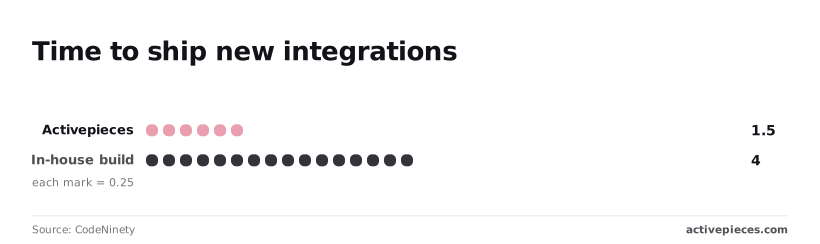
Your engineering team can launch nearly three times as many connectors in the same quarterly sprint. By moving faster than a manual build-out, you prevent competitors from winning deals simply because they support a niche CRM or ERP that your roadmap hasn't reached yet.
Everything below works on Activepieces' free plan. Start without code or a credit card.
How embedded integration architecture functions behind the scenes
The connector library and authentication layer
Embedded integration platforms function by abstracting the complex authentication handshakes and API schemas of third-party services into a standardized internal format.
The connector library acts as the translator between your application and external tools like Zendesk or HubSpot.
When a customer connects their account, the platform manages the OAuth 2.0 flows and refreshes tokens automatically. Your engineering team doesn't have to build custom logic for every provider's unique expiration policy.
Programmatic control via integration APIs and sdks
The host application communicates with the embedded platform through a specialized Integration API or client-side SDK. This mechanism allows your app to programmatically tell the platform which user is currently active and which specific workflow template should be triggered.
When a user clicks "Enable Sync" in your UI, your backend sends a request to the platform's API containing the user's unique identifier and the desired configuration parameters.
The SDK then initializes the connection, ensuring the platform knows exactly which data silo to access without the user ever seeing a technical setup screen.
Workflow engines and execution logs
The workflow engine is the orchestration heart that triggers actions based on specific events, such as a new lead appearing in a CRM. It processes the logic: the branching, loops, and data mapping.
It also generates execution logs that serve as the audit trail for every transaction.
These logs are critical for support teams. They provide the exact payload sent to a destination like Slack, allowing you to troubleshoot a failed sync without guessing what data caused the error.
Choosing between unified APIs and workflow engines
Architectural choices for embedded platforms generally fall into two categories: Unified APIs or Workflow Engines. A Unified API provides a single, standardized schema for an entire category of software, such as CRMs or HRIS platforms.
This approach is entirely headless, meaning your developers build the user interface and the logic, while the platform simply normalizes the data coming from different vendors.
A Unified API allows a developer to write a single integration against the platform's "Universal CRM" schema, which the platform then maps to the specific APIs of Salesforce, HubSpot, and others.

This abstraction means you code the logic once and it works for every supported vendor in that category.
A Workflow Engine, by contrast, provides both the execution logic and a visual interface that can be embedded into your product. This allows your end-users to build their own custom automations using a drag-and-drop builder.
While a Unified API is ideal for simple data syncing, a Workflow Engine is necessary when your customers need to define their own business rules and multi-step processes.
The embedded builder vs. headless API integration
Choosing between a visual builder and a headless API approach determines whether your end-users manage their own automation or if your developers must hard-code every workflow.
| Delivery Method | Implementation Effort | UI Customization | User Experience |
|---|---|---|---|
| API-only | High | Full | Native and seamless |
| IFrames | Low | Limited | Distinct from host app |
| SDK Components | Med | High | Integrated and cohesive |
While IFrames allow for the fastest deployment, they often create a "box within a box" feel.
Conversely, using an SDK with pre-built components allows you to offer a white-labeled experience while still leveraging the platform's underlying logic.
For teams using advanced AI to assist in mapping, you can integrate models like Gemini 3.8 Flash or GPT-6 Astra via the API-only path to suggest field mappings based on historical log data.
Evaluating the build versus buy decision for product integrations
The hidden cost of maintaining custom API connectors
Building your own integration layer ensures your product team has absolute control over the user experience. However, it forces your senior engineers to act as a permanent maintenance crew for third-party vendors.
80 hours for the initial build, followed by 120 hours of annual maintenance, which means your engineering team will spend more time on upkeep than on the project's inception. That is the cost of a standard custom integration according to IT Outsourcing News data.
Your team spends 50% more time fixing breaking changes than they did writing the original code, so developer productivity is being cannibalized by constant reactive patching.
When a vendor like HubSpot deprecates an API version, emergency patches hijack your sprint cycles. Choosing an embedded solution offloads this version-tracking to the provider.
Platform lock-in and data sovereignty risks
Relying on a closed-source embedded iPaaS or a consumer-facing marketplace like Zapier creates a hard dependency. Your customer data must transit through a third-party cloud you don't control.
If the platform lacks a self-hosted option, their uptime and regional availability effectively trap you.
A strategic choice requires a platform that offers both a hosted cloud for speed and a self-hosted runner for data sovereignty. This setup allows your integration strategy to scale into highly regulated markets without a complete re-architecture.
Easier to see it running than to read about it: set it up free, no card.
Pricing models and total cost of ownership for embedded solutions
A strategic choice requires a platform that balances upfront licensing fees against the long-term engineering hours required to maintain custom connectors.
$450,000.
That is what a three-year commitment to building in-house reaches before you have even scaled your connector library, assuming costs of roughly $150,000 per year for developer salaries and maintenance, leaving your budget exhausted before you even achieve full coverage, which means your project risks stalling before it ever delivers value.
In contrast, buying an embedded solution like Alloy, which has a median cost of $62,000 per year, totals $186,000 over the same period, indicating a significantly lower financial barrier for long-term infrastructure, so you preserve capital for other strategic initiatives.
This allows your team to reallocate nearly $264,000 of engineering time toward your core product features, effectively turning a platform expense into a direct investment in your roadmap, ensuring that capital is spent on innovation rather than maintenance, meaning your developers can focus exclusively on competitive differentiation.
Platform fees versus usage-based execution costs
Platform fees represent the "entry price" for offloading infrastructure, but these costs vary based on how much of the heavy lifting the vendor handles.
| Vendor | Entry Price |
|---|---|
| Merge | $7,800 |
| Alloy | $25,625 |
| Cyclr | $31,140 |
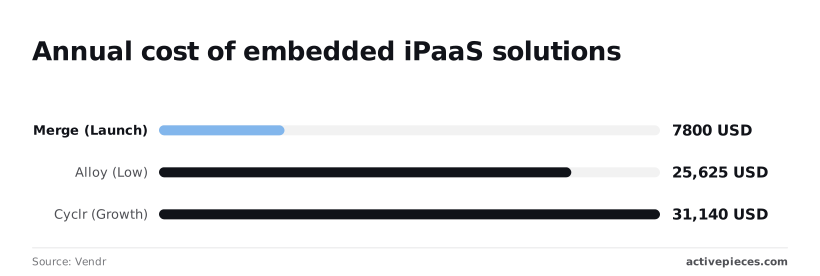
According to data from Vendr, the entry-level Launch tier for Merge is $7,800, providing a low-cost starting point for teams looking to integrate quickly, which enables faster time-to-market for your initial feature set, meaning your developers can begin shipping core functionality immediately.
As requirements grow, the floor rises significantly. Alloy starts at $25,625 for its lower-tier access, so teams must prove a high-value use case to justify the initial twenty-five thousand dollar outlay.
Cyclr Growth costs $31,140 according to Hotglue, a figure that represents a mid-market commitment for scaling operations, so companies must carefully weigh this investment against their projected expansion. Companies must account for this significant upfront capital requirement before beginning their integration strategy.
The price of white-labeling and custom branding
White-labeling is almost exclusively locked behind enterprise tiers. This turns a cosmetic preference into a significant cost driver.
The $31,140 price point for Cyclr is the baseline for growth, meaning companies must be prepared to allocate this specific amount to access the platform's expanded capabilities.
White-labeling is almost exclusively locked behind enterprise tiers. This turns a cosmetic preference into a significant cost driver.
If your roadmap requires a fully invisible integration layer, you should contact the Activepieces sales team to discuss enterprise terms, or review their pricing page to see how self-serve limits compare to the white-label requirements of a professional SaaS offering.
Embedding Activepieces for custom SaaS workflows
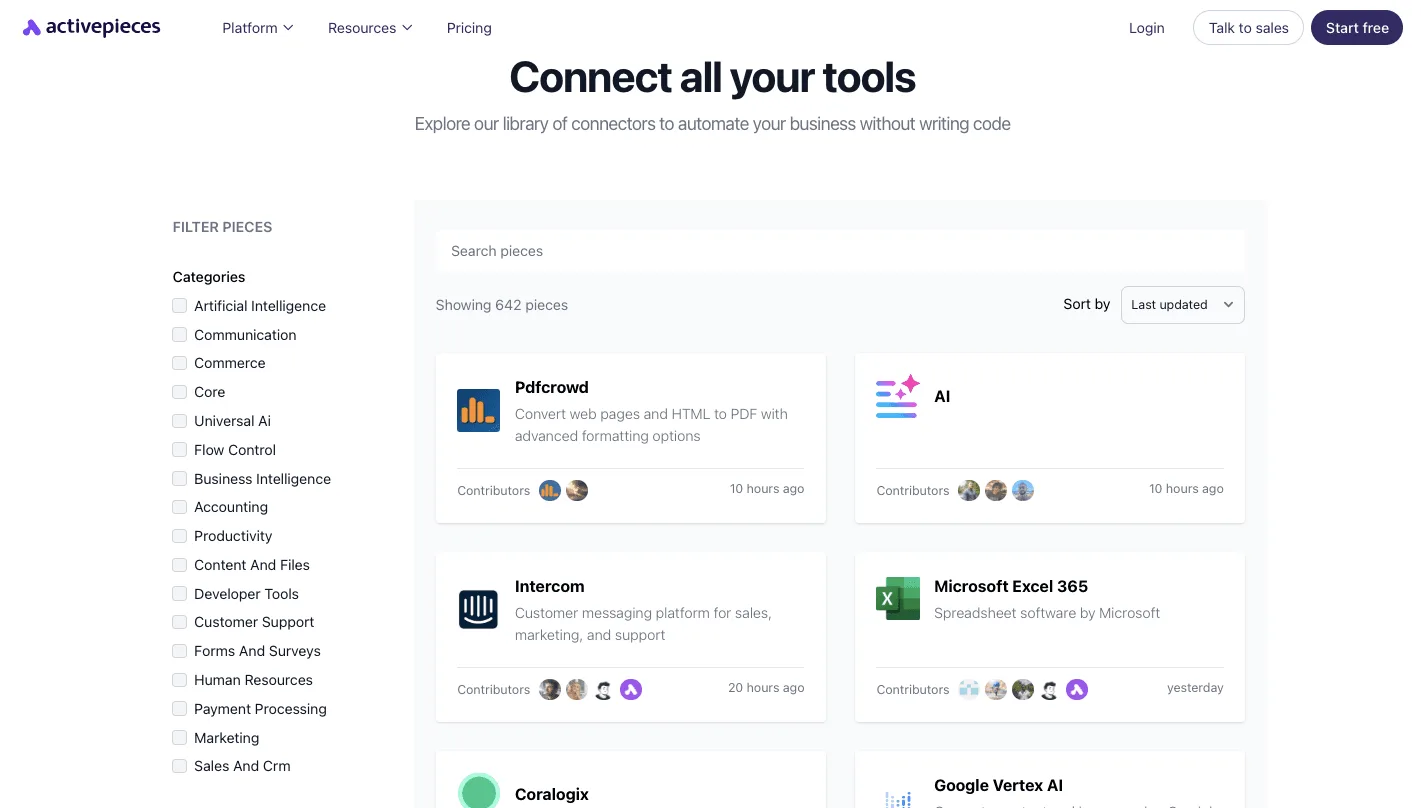
Activepieces provides an MIT-licensed core that allows teams to embed a white-label automation builder directly into their own software products. This architecture ensures that a vendor's rigid UI doesn't limit you, as you can style and scope the platform to match your existing application environment.
White-labeling the workflow builder for end-users
The Activepieces builder can be completely rebranded to appear as a native feature of your own SaaS platform. By using the enterprise-grade embedding features, you can hide all Activepieces branding.
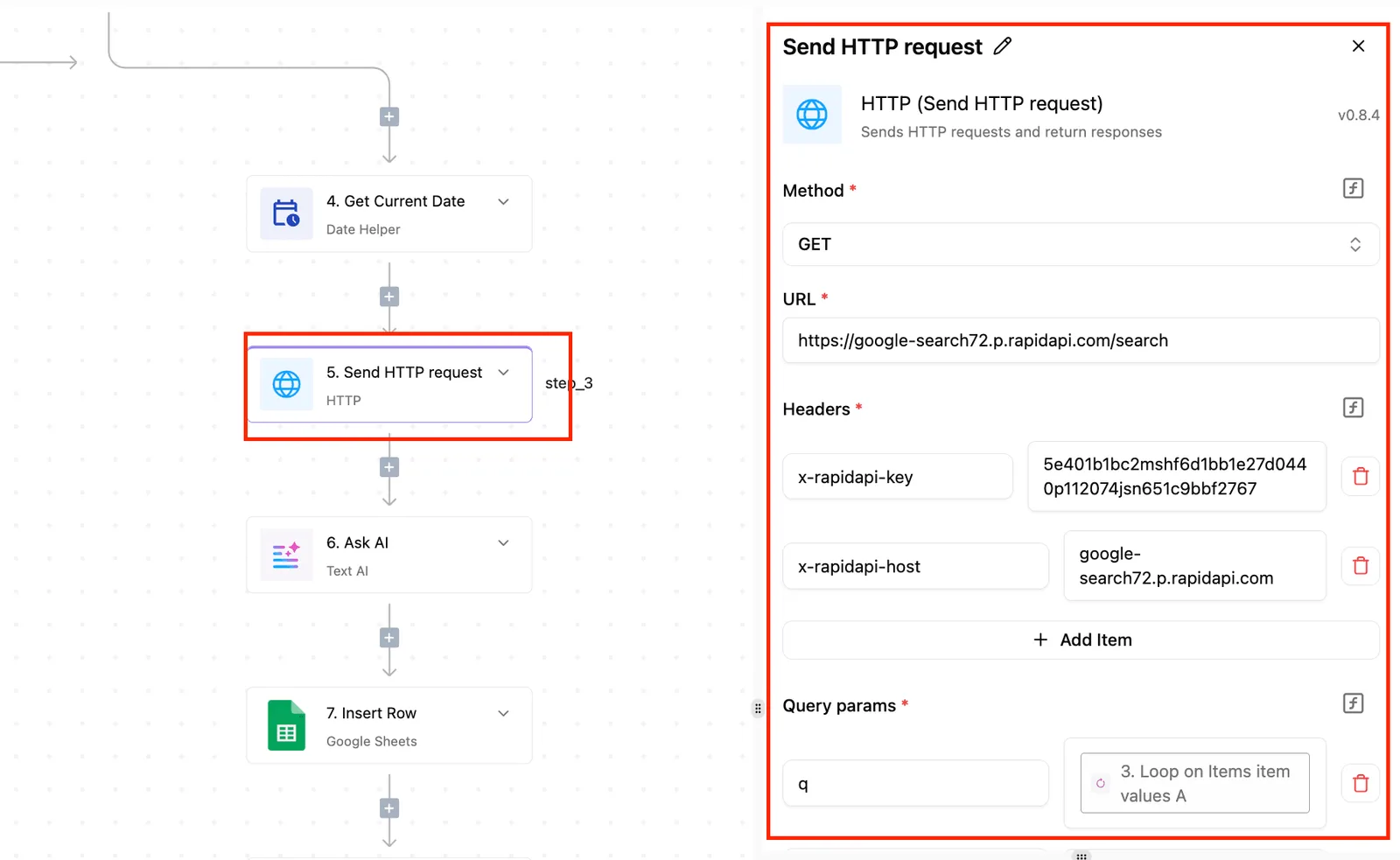
In the screenshot below, the flow builder interface displays a custom "Ice-cream" integration. It shows how a single-step workflow can trigger off a specific business event like "new flavor created."
JWT-based user provisioning and security
JSON Web Tokens (JWT) manage security to ensure that users are automatically authenticated and scoped to their specific resources.
A closed catalogue limits your product to a vendor's priorities, but Activepieces allows you to generate missing integrations via AI and deploy them privately to your own instance.
This removes the dependency on a vendor's release cycle, as evidenced by the fact that roughly 60% of the 739+ integrations in the GitHub monorepo are community-contributed, which ensures that your product roadmap is not stalled by external development delays, meaning you gain control over your own feature delivery timeline.
By isolating data at the token level, you ensure that one customer can't see the automation logs or API keys of another, maintaining strict multi-tenant privacy.
Self-hosting vs. cloud deployment options
You can choose between a managed cloud environment or self-hosting the entire stack on your own infrastructure.
Activepieces Cloud offloads the operational burden of scaling workers and managing the database, which is useful for teams that want to start building immediately.
Activepieces syncs flows to git and promotes them through Release Management, ensuring that updates to production are versioned and reviewed as software rather than just saved in a private history. This allows teams to treat automation as a first-class citizen of their development lifecycle.
For teams requiring a fully invisible integration layer, you should contact the Activepieces sales team to discuss enterprise terms, or review their pricing page for self-serve options.
Implementing an embedded integration strategy on Monday morning
A product team should begin their integration audit by quantifying exactly where user friction meets technical debt.
Auditing the top five customer integration requests
The most effective way to prioritize a roadmap is to correlate churn data directly with specific missing functional capabilities.
When a customer leaves because you lack a "native" connection to a CRM like Salesforce or a communication tool like Slack, they are usually asking for a specific trigger-action pair that solves a workflow bottleneck.
- Export churn logs from a customer success platform like Gainsight to identify every mention of "Missing Integration."
- Rank these requested connectors by the total Annual Contract Value (ACV) of the requesting customers to prioritize high-value retention.
- Map the specific internal API endpoints required to trigger these external actions to verify your backend can supply the necessary data.
- Sign up for a developer account on the target platform to verify their API documentation is current and public.
This structured review ensures that the first five integrations you build address the largest portion of your at-risk revenue, thereby prioritizing the stability of your most critical customer accounts, so your team focuses resources where they protect the bottom line most effectively.
Testing the authentication flow in a sandbox environment
A successful pilot requires verifying that the embedded builder handles complex OAuth handshakes and token refreshes.
You should use a high-reasoning model like Claude Opus 5.5 to generate edge-case test scripts that simulate expired refresh tokens or revoked permissions.
If the platform can't maintain a stable connection to a sandbox instance of a service like HubSpot, your support team will be buried in "re-authenticate" tickets within the first week of launch.
Frequently asked questions about embedded platforms
Can I build my own connectors if the platform lacks them?
Most embedded platforms allow for custom connector development, but the degree of autonomy depends on whether the vendor permits direct code execution or requires a proprietary wrapper.
When a standard library lacks a specific endpoint for a tool like the Jira project management suite, you typically use a generic HTTP requester to bridge the gap.
For more complex requirements, look for platforms that allow you to package your own Node.js modules or Python scripts so your developers aren't blocked by a vendor’s slow roadmap updates.
How does an embedded iPaaS handle sensitive user credentials?
The platform manages the OAuth 2.0 handshake and stores the resulting tokens in an encrypted database. This prevents your application database from becoming a primary target for credential theft. Most providers use AES-256 encryption for data at rest.
If your security policy mandates that secrets never leave your infrastructure, you must select a platform that supports a self-hosted runner or a private data plane. This is the only way on such platforms to keep sensitive environment variables behind your own firewall.
What happens to my integrations if the provider goes down?
If the iPaaS provider suffers an outage, all active workflows and data syncs pause immediately.
This results in a backlog of events that your system must reconcile once service is restored. To mitigate this, many teams implement a queuing strategy using a message broker like RabbitMQ or Amazon SQS to hold incoming webhooks until the integration engine is back online.
Without this buffer, any data sent from external services during the downtime is permanently lost. Most third-party APIs won't retry a failed webhook delivery more than a few times before giving up.