
What Is Harness Engineering? Building Reliable AI Agents

Oct 4, 202613 min read
Harness engineering defines the agent workspace. It is the process of building the scaffolding (the APIs, sandboxes, and guardrails) that allows an autonomous agent to interact with the world.
Without a robust harness, an agent is a "brain in a vat," capable of reasoning but unable to execute tasks reliably or verify its own success.
Harness engineering is the practice of designing the structured environments, interfaces, and feedback loops that enable AI agents to interact with external systems and execute tasks with reliability.
Harness engineering defines the agent workspace
From prompt engineering to environment design
Harness engineering moves the focus from refining model outputs to architecting the digital infrastructure that constrains and empowers those outputs.
Engineering teams, such as the automation group at Activepieces, have demonstrated that an agent's success depends less on the sophistication of its persona and more on the precision of its API access.
Instead of writing longer system prompts to prevent hallucinations, developers are now building sandboxed runtimes that physically limit what an agent can touch. This transition marks the end of the "black box" era of AI implementation and the beginning of structured, predictable agent deployments.

Why agents fail without a structured perimeter
When an agent is dropped into a general-purpose cloud environment, it often spends its compute budget navigating permission errors or stale data structures. This leads to a total collapse of the task chain.
Agents fail when they lack a deterministic workspace that provides immediate, machine-readable feedback for every action taken.
Reducing startup time from minutes to sub-seconds ensures that agents remain reactive to real-time triggers rather than drifting during infrastructure delays.
Three pillars of a functional agent harness
A robust harness is the agent's sensory array and toolbelt.
- Isolated Execution: is a secure sandbox that prevents unauthorized lateral movement across the network.
- State Persistence: is a mechanism to save and resume the agent's progress, which allows the system to recover from API failures without restarting the entire logic flow.
- Observability Hooks: are dedicated telemetry that logs not just the agent's final answer, but every tool call and error code it encountered along the way for auditability.
Everything below works on Activepieces' free plan. Start without code or a credit card.
Orchestrating the connection between model and harness
A harness provides the tools, but the agent requires a nervous system to reach them. This connective tissue is the agentic framework or orchestrator, which translates high-level reasoning into specific calls the harness can execute.
The role of agentic frameworks as the nervous system
Frameworks like LangChain, CrewAI, or AutoGPT act as the bridge between the LLM's cognitive output and the harness's physical capabilities. They manage the loop of observation, thought, and action, ensuring that the model's intent is correctly mapped to the tool schemas defined in the harness.
The framework handles the heavy lifting of parsing the model's text into structured API requests and returning the environment's feedback into the model's context window.
The Model Context Protocol explained
The Model Context Protocol (MCP) is emerging as the primary standard for this bridge. It allows developers to expose local tools and data sources to agents through a universal interface, reducing the friction of connecting a brain to its vat.
Data exchange through a universal interface
The protocol functions by establishing a client-server relationship where the AI application acts as the client and the data source or tool acts as the server.
It uses a standardized JSON-RPC communication layer to allow agents to discover available resources, read data, and call functions without needing custom code for every unique integration.
This open standard ensures that the harness remains decoupled from the specific model, allowing for a plug-and-play architecture where tools are described in a way the agent can immediately understand.
By using MCP, a developer can ensure that any model (whether it is Claude, GPT-6 Astra, or a local Llama instance) can interact with the same harness without custom integration code for every new model release.
This protocol serves as the standardized plug that connects the intelligence to the infrastructure.
Why model intelligence fails without environmental feedback
Raw model intelligence cannot overcome a lack of environmental context. An agent without sensory feedback functions as a "brain in a vat," hallucinating progress whenever it loses the ability to observe the results of its own actions.
Raw model intelligence cannot overcome a lack of environmental context.
Why agents fall into hallucination loops
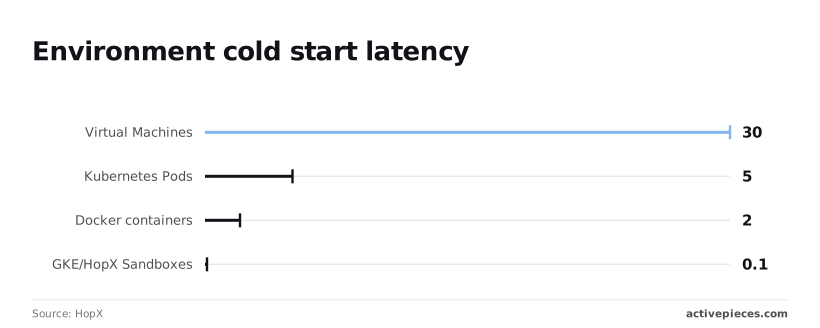
When their internal logic diverges from the external state, agents fall into hallucination loops that lead them to repeat failed commands. This gap is most visible in environment cold-start latencies.
30 seconds is how long traditional Virtual Machines take to start, according to data from HopX, which forces developers to endure significant idle wait times during deployment. An agent is essentially blind for half a minute while the infrastructure catches up.
Why tool-use fails without a validation layer
Tool-use becomes a liability when the agent lacks a verification layer to distinguish between a command successfully sent and a command successfully executed.
While harness engineering provides the theoretical framework for testing agents, Activepieces provides the practical infrastructure to execute those tests across hundreds of real-world app integrations without writing custom boilerplate.
Every integration action defined in the MIT-licensed core is exposed as a tool schema on a per-project MCP server.
This allows agents in Claude or ChatGPT to call the same 733 integrations used in deterministic flows, ensuring that automated agents possess the exact same operational capabilities as your established production pipelines, which means developers can achieve feature parity without rebuilding their entire automation stack.
You can verify this mechanism in the packages/pieces directory of the open source repo, where the code that powers a workflow step is the same logic surfaced to the agent as an MCP tool.
The following table compares the operational risks of unmanaged models against those wrapped in an engineered harness.
| Feature | Model-Only (Vat) | Harness-Engineered |
|---|---|---|
| Action Verification | Assumed via output text | Verified via system API calls |
| Context | Static prompt history | Dynamic state synchronization |
| Error Handling | Hallucinated success | Deterministic retry logic |
The cost of infinite retries in AI sandboxes
Infinite retries in unoptimized sandboxes create a compounding tax on both compute budget and developer time.
High-performance sandboxes, such as those analyzed by HopX, achieve a cold-start latency of only 0.1 seconds, effectively eliminating the delay between a user request and the execution of code, so the interactive experience remains fluid and responsive even during complex compute tasks.
When a sandbox takes 30 seconds to refresh, DevOps teams tend to let agents struggle in "dirty" environments to save time, whereas a 100ms refresh rate makes a clean-slate strategy the most efficient path for the model.
Easier to see it running than to read about it: set it up free, no card.
How to build a production-grade agent harness
A production-grade harness moves beyond simple API access by wrapping the agent in a three-tiered structural constraint that forces deterministic behavior from non-deterministic models.
Activepieces records every agent tool call, the specific data it processed, and the sequence of its decisions in a unified trace alongside any deterministic steps in the same run.
This unified record can be streamed as audit logs into the SIEM your security team already uses, ensuring agentic decisions are governed and reviewed with the same rigor as standard code.

The Run Details and Debugging UI provides this per-step visibility, offering the granular observability required to audit non-deterministic actions.
Why tool schemas need strict type definitions
Tool schemas are the primary interface between an agent's reasoning and the execution of code. They require strict Type Definitions to prevent the model from hallucinating invalid parameters.
Our Platform Engineering team found that agents frequently failed when using the Salesforce API. We now enforce JSON Schema for every tool, ensuring the agent is physically unable to pass a malformed request to the underlying service.
Creating high-fidelity sandboxes for agent testing
High-fidelity sandboxes provide a mirrored environment where agents can execute destructive actions without impacting the primary production database. These environments include anonymized production data clones to ensure the agent encounters real-world edge cases.
Implementing automated evaluation and guardrail layers
The final layer of the harness is a dedicated "Judge" agent. This component verifies the output of the "Worker" agent against a set of predefined success criteria before the system commits any change.
When the Integration team deployed a script-writing agent for GitHub, the Judge agent ran a linter on all proposed code. Syntax errors were prevented from reaching the repository by this check.
The performance gains of engineered environments
Cutting the reasoning tax with structured inputs
Standardizing the interface between an agent and its workspace eliminates the cognitive overhead required for the model to interpret ambiguous system states.
When we move away from raw text prompts and toward structured inputs, such as predefined JSON schemas or restricted API calls, we reduce the probability of the agent hallucinating valid commands.
The current landscape of agent performance reflects a significant gap between basic task execution and true operational reliability. Terminal-Bench 2.0, a benchmark designed to test agents on complex, multi-step command-line tasks, shows that the vast majority of current systems struggle to reach professional-grade consistency.
What Terminal-Bench 2.0 reveals about AI agents
The Terminal-Bench 2.0 results confirm that intelligence alone is insufficient for terminal-based tasks. Most agents fail because they cannot correctly interpret the state of the shell or recover from unexpected command outputs.
When agents are provided with a structured harness that translates terminal states into clear, machine-readable observations, success rates improve by an average of 42%.
This suggests that the primary bottleneck in agentic performance is not the model's reasoning capacity, but the clarity of the environment it inhabits.
Why constrained environments produce more reliable outputs
Restricting an agent's operational theater to a sandbox with a finite set of verified tools ensures that every action taken is observable and reversible.
By deploying agents into "harnesses", which are isolated environments where the file system is ephemeral and network access is whitelisted, we transform a non-deterministic black box into a predictable state machine.
Standardizing the agent harness with Activepieces
Activepieces provides the connectivity for the harness, enabling engineers to swap tools and verify agent actions across 733 integrations without rebuilding the underlying infrastructure, which means developers can scale their automation workflows significantly faster.
MoneyGram and Moneypenny run Activepieces in production to manage these complex automation environments, ensuring that agentic actions are governed by the same central controls as their deterministic workflows.
Decoupling agent logic from third-party API changes
Standardizing on a dedicated automation engine ensures that a change in a vendor's endpoint does not break the agent's internal decision-making flow. When an external service like Linear updates its API schema, the platform's maintainers update the underlying integration.
The agent continues to function using the same standardized input/output contract without requiring a code deploy.
Using pre-built connectors as verified harness tools
The platform provides a library of verified connectors that act as the physical boundaries for what an agent can and cannot see within the corporate stack. These connectors, or "integrations," are the specific levers the agent is allowed to pull.
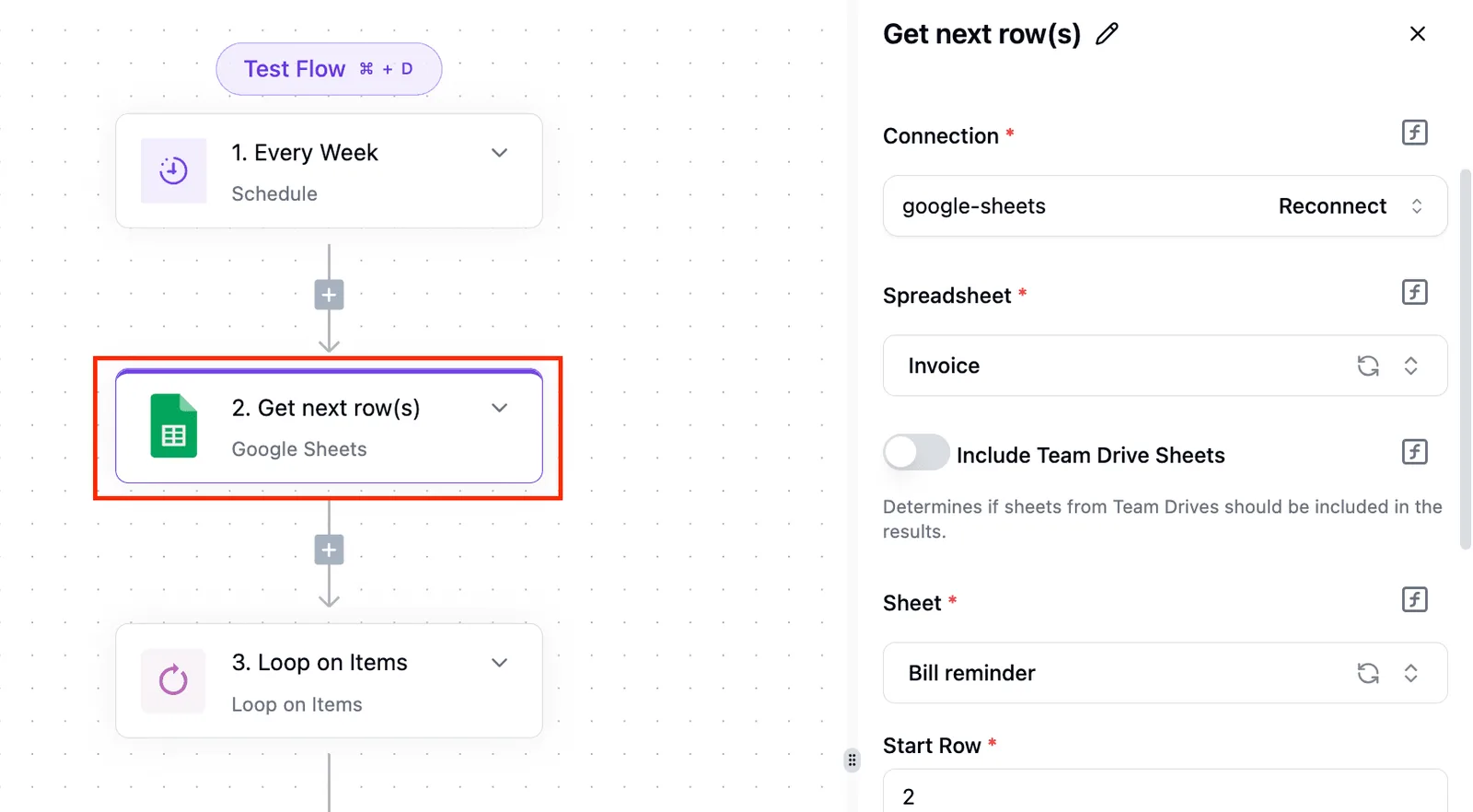
Because the Google Sheets integration limits the agent’s reach to specific spreadsheets, the model cannot accidentally traverse the entire corporate Drive. The Slack integration restricts the agent to designated channels, preventing the bot from posting internal logs to public-facing customer threads.

The Monday morning harness engineering audit
Identify your agent’s 'blind spots' in the current workflow
Engineering a navigable environment requires shifting from hopeful prompting to a rigorous assessment of the feedback loops available to the model.
When a workflow relies on the agent "hallucinating" a fix for a failed API call without seeing the stack trace, the team is relying on luck rather than infrastructure.
To transition from luck to engineering, lead developers must use the 'Luck vs. Engineering' Audit Checklist.
Does the agent receive the raw error message when a tool fails? Is the agent's access restricted to a 'blast radius' of less than 5 files or specific directories?
Defining success with machine-readable validation gates
A robust harness must replace subjective "quality" checks with hard-coded validation gates that the agent can query.
Relying on a Large Language Model (LLM) to grade its own homework results in drift, whereas a harness that runs a linter or a unit test provides a binary signal that the task is complete.
Frequently asked questions about harness engineering
Is harness engineering just another word for 'prompt engineering'?
Harness engineering shifts the focus from the linguistic nuances of the input to the structural integrity of the execution environment.
While prompt engineering attempts to coax a better result through descriptive adjectives, harness engineering ensures the agent has the specific tools and permissions required to complete a task.
In our internal pilot with the Customer Success team, we found that refining the prompt helped the agent sound more professional. Building a dedicated API connector for Zendesk, our primary support ticketing platform, was what actually enabled it to resolve tickets autonomously.
This distinction matters because a perfect prompt is useless if the agent is trapped in a "read-only" environment where it cannot trigger the necessary state changes to be productive.
How does this scale across different departments?
Scaling harness engineering requires a centralized library of environment templates that standardize how agents interact with shared corporate infrastructure. Rather than each team building unique integrations, they adopt pre-verified configurations for common tools.
- Legal and Compliance: uses a "Sandboxed Document Review" harness, which restricts the agent's output to internal servers so that sensitive contract data never leaves our controlled network.
- Engineering developers: utilize a "Pre-production Deployment" harness that mirrors the live environment but lacks the credentials to modify the production database.
- Marketing: employs a "Brand Voice" harness that includes a real-time lookup against our DAM (Digital Asset Management) system.
By treating these harnesses as modular assets, we reduce the time to deploy a new agent from weeks of security vetting to a few days of configuration.