What Is Momentic? AI Test Automation Guide 2026

Nov 2, 202613 min read
Momentic is, according to its own site at momentic.ai, an AI-driven software testing product.
I took everything in this article from the maker's pages as of 2026-11-02, and I treat anything those pages don't state as unknown, much as I would when checking a workflow tool such as Activepieces against its own documentation.
What Momentic is and who makes it
Momentic maker and release date
The maker is the company that operates momentic.ai. Because no release date appears on its pages that I can cite, I give none. Treat the product as new and its track record as unestablished.
Read the list below as a set of questions to put to the vendor rather than a verdict. It shows what the maker publishes about identity and access control, and every item is the vendor's own claim, not something verified independently.
- SOC 2 Type 2 certification (maker's claim)
- SAML/OIDC single sign-on (maker's claim)
- Admin and Member roles (maker's claim)
- Audit logs (maker's claim)
Ask for the SOC 2 report itself, because a badge on a page isn't an audit you have read. Two roles means coarse permissions: anyone who isn't an Admin is a Member, so check whether that split fits your team.

Whether audit logs tell you who did what depends on whether they record the actions you care about, and the pages alone don't settle that.
Where Momentic has to meet other tools, the plan is plain building blocks, such as webhooks, and not connectors nobody has confirmed. Activepieces runs unlimited flows on every plan, including free, and its HTTP request step can call whatever endpoint Momentic documents.
This article relies on the maker's published pages and nothing else, and it doesn't rely on assumed integrations.
This takes minutes, not a project: automate it in Activepieces free.
What Momentic does, according to its own docs
Beyond what they list, the docs say nothing about how it plugs into anything. They describe a tool for testing web, iOS and Android apps, with Mo as its exploratory AI QA engineer.
On the homepage, the claim is three platforms and one exploratory agent. The maker hasn't published anything beyond that, such as visual diffing or load testing, so treat it as unknown.
In web YAML tests, the extract reference says the step "reads a value from the page" using the AI agent. It names no limits on what a value can be, so test your own pages before building on it.
To read spend per session, a script can call qa cost <session-id>, which returns a session's current cost as JSON. The page gives no budget cap, so nothing here stops a runaway session.
Momentic documented integrations and CI/CD hooks
17 entries sit in the integration docs: 8 test suite, 5 CI/CD and 4 Mo extras.
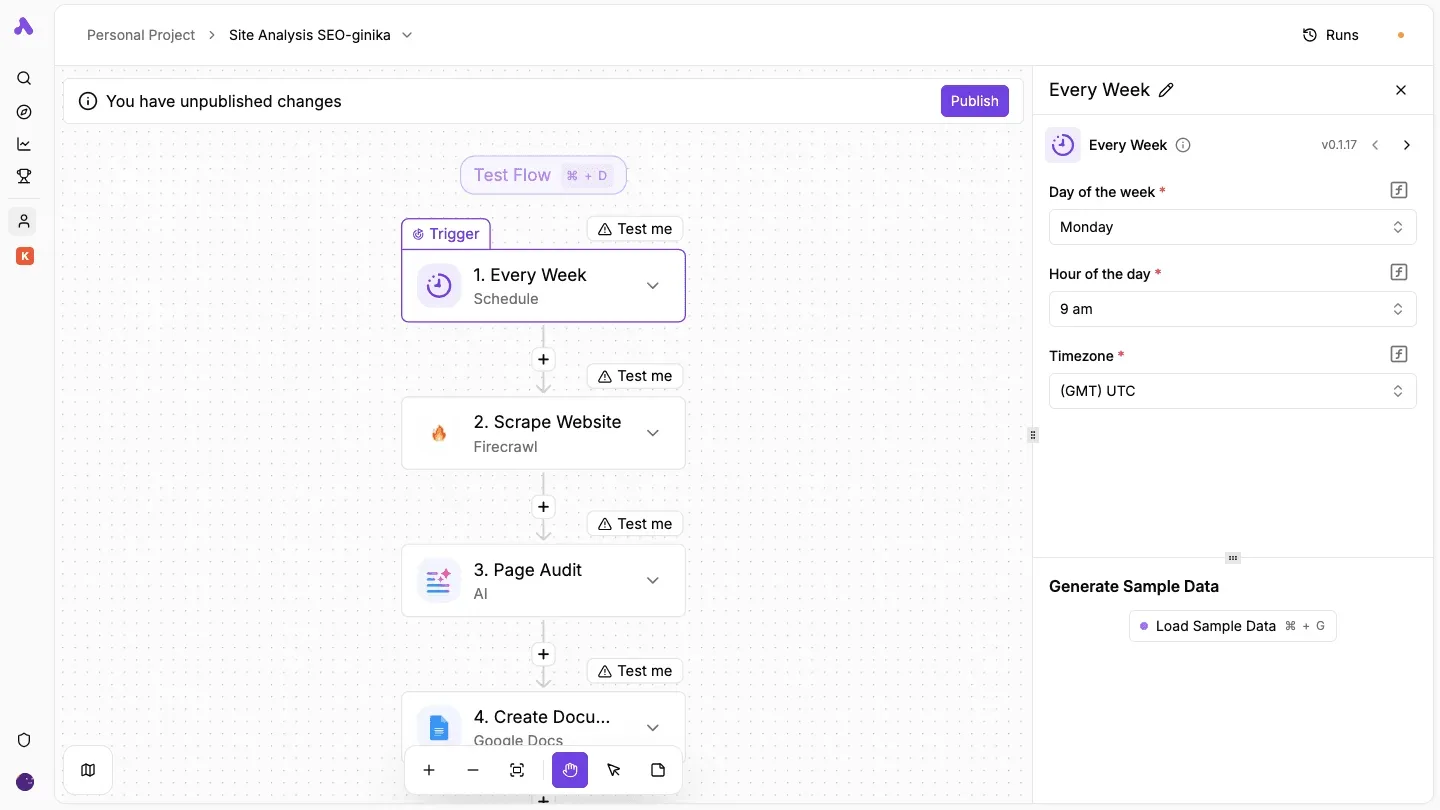
Take a weekly flow: a schedule trigger fires, a scrape step gathers pages, an AI step audits them, and a document step writes the result.
Momentic could slot in as one such step, calling the CLI or a webhook, and the integrations around it stay ordinary, replaceable parts.
How to get access to Momentic today
Start at the maker's own site, momentic.ai, which describes Mo as an AI QA engineer that tests your app end to end. The steps below are the ones its site and docs state, with the gaps marked.
How to sign up and install Momentic
Treat this as a change request: each step is either published or flagged. Follow them in order.
- Open momentic.ai and read the product description, so you know you are looking at the maker's own page.
- Go to the pricing page and pick the Free plan.
- Install the CLI by following the instructions in the docs.
- Run a first command from the docs to confirm the install works.
Nothing more than that is supported: the sequence above is what the site and docs state, and the figure it supports is the existence of a Free plan, not a promise about what it includes.
Between those steps, a good deal isn't published in the material this article relies on: account verification requirements, how long approval takes, which operating systems the CLI supports, and what the first command should print on success.
If a step fails, you have no maker-stated expected output to compare against, so you can't tell a bad install from a normal one by anything written down here.
Before a second person depends on this, confirm three things directly on the maker's pages:
- what the Free plan covers and where it stops
- whether the CLI's documented commands cover the way your team actually runs tests
- how webhooks or CLI calls fit into your existing pipeline
If you can't find an answer there, record it as unknown in your rollout notes.
What Momentic costs and where to confirm it
Before you budget, know that Momentic's price is published on one page, momentic.ai/pricing, and anything not on that page is a figure you must get from Momentic.
Published pricing
As checked on 2026-11-02, Momentic is free to start, with no credit card required.
Credits are the unit you actually spend, so the plan price tells you little until you know what each step consumes.
A suite that leans on AI actions halves your headroom.
Momentic usage cost reported by the CLI
Treat any per-run credit total as something to compare against the rates above, not as a published number, because the pages as read give no figure for what the command line reports after a run.
A mismatch is a finding to record.

Each is unknown.
Confirm them on the pricing page or with Momentic, and write down the date you asked.
What Momentic does well and poorly
So far, everything in Momentic's favor comes from its maker, and everything against it is what nobody outside the company has yet confirmed.
Momentic's claimed strengths, including SOC 2
Start with the compliance claim. Momentic states SOC 2 Type 2, which, if the report is current, means an auditor observed its controls over a period of time rather than on a single day.
A badge on a page isn't the report, so ask for the report itself and read its scope.
The maker also publishes cumulative counts of test runs and of auto-heals, meaning tests that repaired themselves after the interface changed. The run count shows the product is in real use.
The heal count doesn't say how many heals were correct, so you can't tell a genuine repair from a test that now passes while checking the wrong thing.
Then there's the Quora case study, in which testing time dropped from hours to minutes. That's one customer, reported by the seller, so treat it as a lead to verify and not as the result your own suite will see.
The heal count doesn't say how many heals were correct, so you can't tell a genuine repair from a test that now passes while checking the wrong thing.
Open questions for a new product
We haven't run Momentic, haven't checked independent reviews, and have found no outside track record. That leaves open how it behaves on your application, what a wrong heal costs you, and how cleanly you can leave.
Until someone not paid by Momentic answers those, a pilot on a non-critical suite is the sensible way to find out, and you should write down what it showed.
You can follow the rest of this with the builder open. Start free, no card.
How Momentic compares with established alternatives
Because Momentic is the least documented option in its category, a pilot has to cover what an established tool's published record would otherwise tell you.
Comparison table
The table below sets Momentic beside Mabl, an established test-automation vendor, and the wider group of long-standing testing tools. Read the Momentic row as a list of what its maker hasn't told you.
Every "not published" cell is a question you must put to the vendor in writing before any commitment.
For Mabl and the others, the entries describe what such vendors typically put on their own pages. Confirm each one there before relying on it.
| Maturity | How you get it | Pricing transparency | Documentation | |
|---|---|---|---|---|
| Momentic | Not published | Not published | Not published | Not published |
| Mabl | Established vendor with a long public record | Through the vendor's own site | Check the vendor's pricing page | Public documentation on the vendor's site |
| Other established testing tools | Long public track record, third-party reviews available | Vendor site or package registries | Varies by vendor; many publish tiers | Usually public, often with community material |
Prices and plan limits checked against momentic.ai and momentic.ai and momentic.ai and momentic.ai on November 2, 2026.
Don't read an empty cell as a negative finding about Momentic. It means you can't yet verify the point, and your plan should treat it as unknown.
When established test automation tools beat Momentic
Established tools are good at the thing a new product cannot buy: years of use by people who don't work for the vendor.

Mabl and its long-standing peers come with third-party reviews, community answers to odd failures, and a record of how upgrades and outages were handled. On maturity, that is a real lead, and Momentic cannot close it with a better demo.
The same holds for the questions this article keeps flagging as unknown. With an established tool you can usually learn from outside sources how a vendor treats customers who leave, how its self-healing fares on messy applications, and what real teams pay.
Check each on the vendor's own pages, but expect to find more than you do for Momentic.
Judged on the same criteria, Momentic does publish a pricing page, a Free plan and CLI documentation, which is more than the table's blank cells suggest. Its gap is in track record and independent evidence, not in having nothing to read.
A team that must justify its tooling to auditors will still reasonably pick the tool with the longer record.
Choosing Momentic or an established testing tool
Choose the established tool when the suite is critical and you need an auditable record. Choose Momentic only for work where a failure costs you a rerun and nothing more.
With published pricing and documentation, you can budget and train staff before you commit. Without them, you discover both during the trial. That's acceptable on a non-critical suite, where a wrong guess costs little. It isn't acceptable on the suite that gates your releases.
Connect Momentic to other tools with Activepieces
Because Activepieces, the workflow automation tool with an MIT-licensed core, has no native Momentic integration, you connect the two with generic building blocks instead of assuming a connector exists.
No native integration exists
A missing Momentic entry in the Activepieces catalogue of prebuilt connectors, which it calls pieces, isn't a request waiting in a vendor's queue: roughly 60% of its 746 integrations, counted from the open source monorepo, were built by the community, and you can generate a piece with AI and add it privately to your own instance.
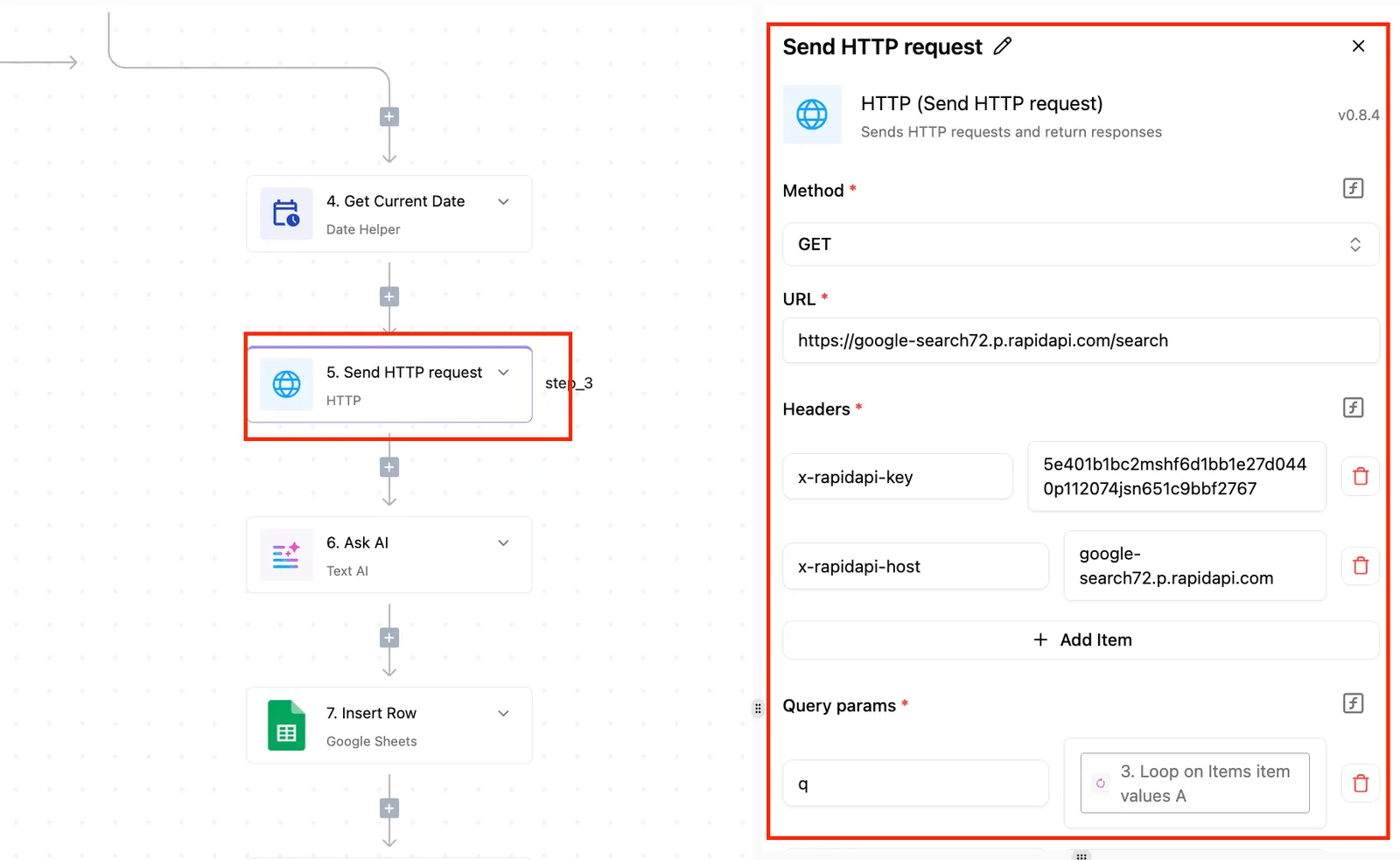
A generated integration still needs a published Momentic endpoint to wrap, so the three routes below run from fewest moving parts to most, and we haven't run Momentic against any of them:
- Add an HTTP request step.
- Add an AI step with a custom or OpenAI-compatible provider.
- Connect an MCP server.
Each is a general Activepieces capability, so none of them needs a Momentic entry among those 746 integrations. Whether it works depends on what Momentic publishes, not on Activepieces.
Option 1: HTTP request step
Give the HTTP request step any URL and it sends a call there. That only helps if Momentic documents an endpoint to call. If its pages show none, you have nothing to point the step at.
Store any credential in a saved connection, not in the step's fields, or it sits in plain view of everyone who can open the flow.
Second comes the AI step with an OpenAI-compatible provider, which lets you set a custom provider by base URL and key. It sends prompts to a model. It doesn't reach Momentic.
It fits only if Momentic publishes an endpoint that speaks that API format, and you shouldn't infer one from the setting existing.
Third comes an MCP server. MCP, the Model Context Protocol, is a standard for exposing tools to AI clients. It's the heaviest option, because you take on a running server and its permissions.
Use it only if Momentic publishes one. Admin visibility shows you what the flow requested, not what the server did with it.
Frequently asked questions
Because a published setting tells you what the product says it does, not what happens behind it, each answer below is limited to what Momentic's own pages state. Where the pages are silent, the answer is "not published."
Is Momentic free to try?
Yes, Momentic publishes a Free plan with a monthly credit allowance, so you can run real tests before anyone approves a purchase. The catch is that the allowance and the retention window for results both depend on the plan.
Check the pricing page for the current limits before you build a trial around them. If a test run must be kept for audit, a shorter window on Free means you export it yourself.
Does Momentic have an API or CLI?
On the CLI, yes: it's published, and it keeps its own logs for a limited time. That means CI jobs can call it, but you should copy the output somewhere you control if you need it later.
A public API isn't published in the material this article relies on, so don't plan an integration that assumes one. Plan around the CLI, plain command-line calls, and files.
Whether Momentic is open source is not published. Momentic's pages describe a hosted product with plans and credits, and they don't offer source code or a license you could build on.
Assume you can't inspect, fork or self-host it, and ask the vendor in writing if your policy requires any of that.
Whether Activepieces integrates with Momentic is likewise not published. Momentic's pages don't list that integration, and the Activepieces side is checkable in the open source monorepo where its integrations are counted, so don't assume a ready-made connector exists.
If you need the two to work together, use the building blocks Momentic does publish, such as the CLI, and wire them up yourself.
Related reading
Build it
Set this up in minutes.
No code required. Connect your accounts, and Activepieces runs it from there.
Start free Talk to sales