
10 Best Intercom Alternatives for 2026

Oct 5, 202613 min read
An Intercom alternative is a customer service or engagement platform that provides an equivalent suite of live chat, help desk, and automation tools, typically chosen to offer more predictable pricing or specialized functionality for specific business scales.
Why companies are moving away from Intercom
When the financial predictability of seat-based licensing collapses under the weight of AI usage fees, modern support teams abandon all-in-one chat platforms. To avoid vendor lock-in, these teams are moving toward specialized tools that separate communication from automation.
Intercom Fin AI pricing and resolution costs
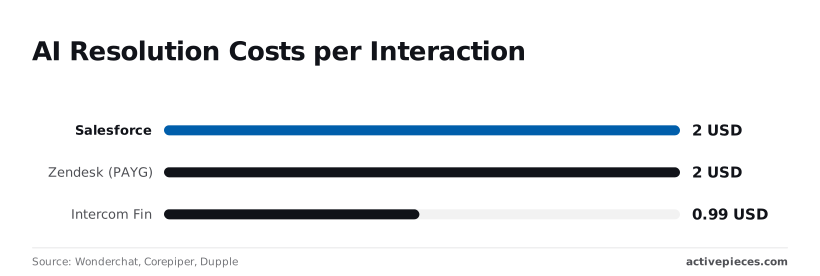
The shift from human-centric to bot-first support has introduced a "resolution tax" that scales with success. Intercom charges $0.99 per successful resolution via Fin, meaning each automated interaction carries a direct, variable cost.
The shift from human-centric to bot-first support has introduced a "resolution tax" that scales with success.
A sudden marketing spike can trigger thousands of dollars in unbudgeted costs overnight.
| Provider | Resolution Cost | Context |
|---|---|---|
| Salesforce | $2 per resolution | Requires higher budgets for enterprise-grade compliance and CRM depth. |
| Zendesk | $2 per resolution | Companies with high ticket counts face steep overhead on this model. |
| HubSpot | $0.50 per resolution | This is a 50% discount compared to Intercom for teams already consolidated within their CRM ecosystem. |
Complexity overhead for mid-market teams
Upgrading an entire department's tier is often required just to add one specialist because of Intercom's seat-based pricing and feature gating.
Because advanced reporting and custom objects are locked behind higher plans, a manager might pay for 30 "Pro" seats just to give one analyst access to specific data exports. This forces teams to choose between overpaying or operating with blind spots.
The case for staying with Intercom
While costs are rising, Intercom remains the market leader because its ecosystem is more mature than any single alternative. The platform provides a seamless experience where the messenger, help center, and outbound marketing tools share a single source of truth.
For teams with high margins and low technical resources, the convenience of a unified interface often outweighs the premium price.
The platform excels at proactive support, allowing teams to trigger in-app messages based on specific user behavior. This capability is difficult to replicate with modular stacks without significant engineering effort.
If your primary goal is reducing churn through targeted education rather than just resolving tickets, the integrated nature of Intercom provides a distinct advantage.
Unbundling your support stack with best-of-breed tools
Resilient support operations in 2026 no longer rely on a single vendor for the chat widget and the database. Instead, companies build modular stacks where a lightweight chat interface connects to specialized backends.
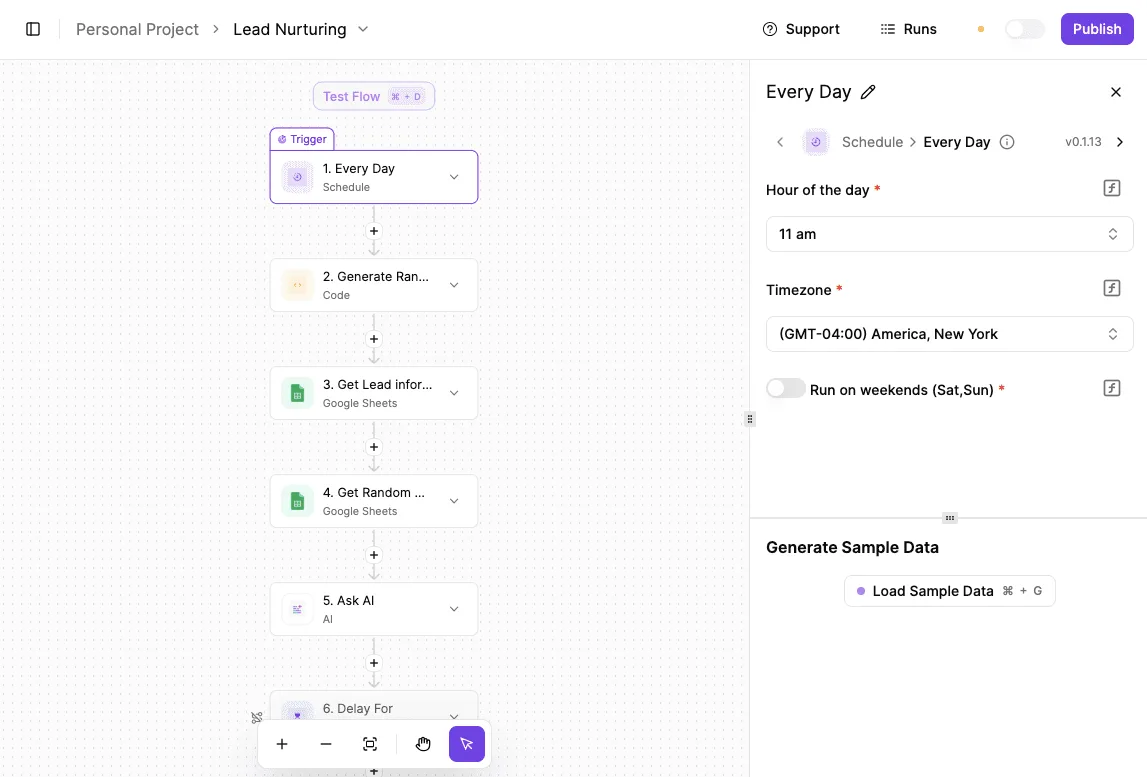
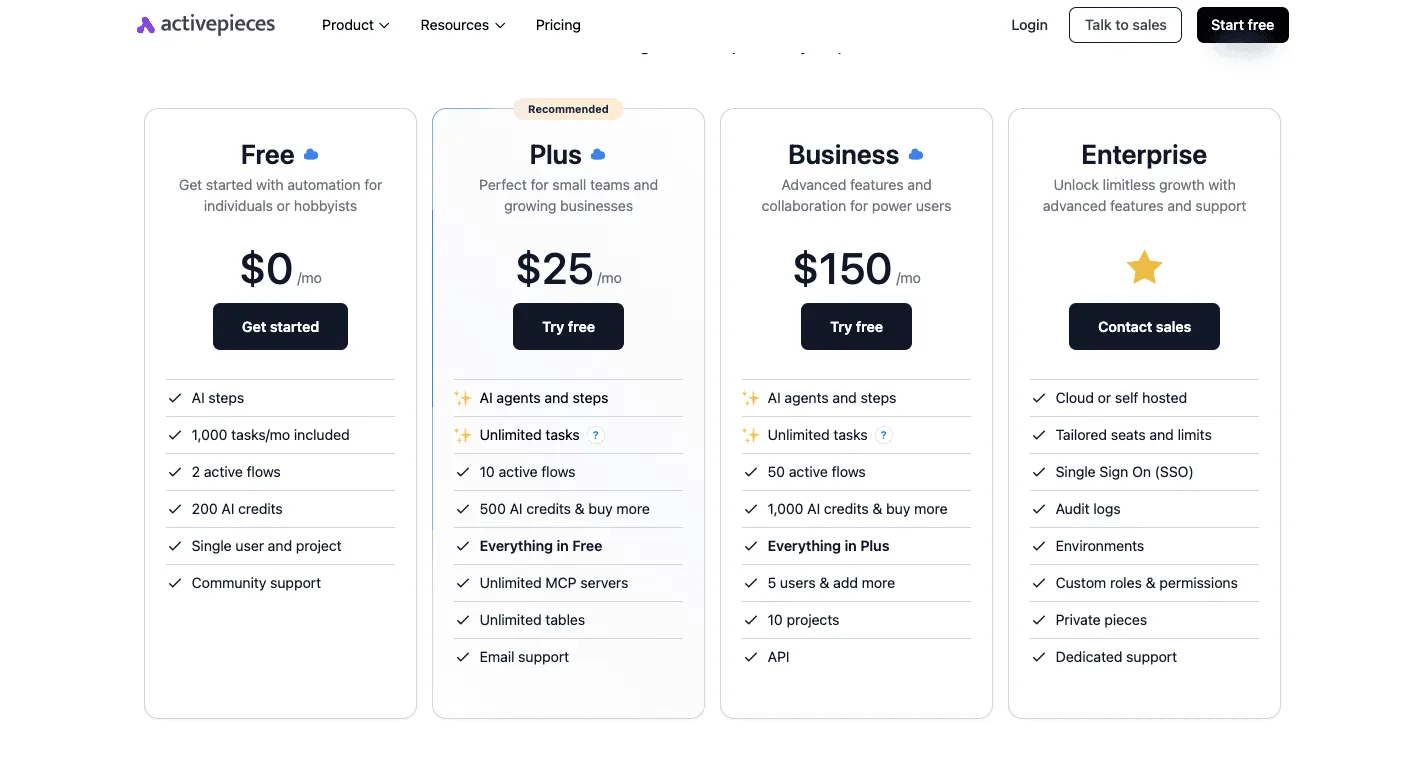
Activepieces runs every step of these support workflows for a single credit per flow run, regardless of how many integrations or logic branches the builder includes.
This prevents the granularity tax common in support workflows, where builders are often penalized for the exact discipline (breaking complex logic into smaller, more reliable steps) that good automation requires.
The published pricing page shows 1 credit per flow run regardless of complexity, a contrast to the per-task or per-module billing that makes granular support flows expensive elsewhere.
| Alternative Name | Fin AI Equivalent | Historical Data Import Support |
|---|---|---|
| Zendesk | Yes | Full |
| HubSpot Service Hub | Yes | Full |
| Help Scout | Yes | Partial |
| Front | Yes | Partial |
| Crisp | Yes | Partial |
Choosing a tool with "Full" import support is critical for maintaining the context required by reasoning models like Claude Sonnet 5.5 to provide accurate answers from day one.
The fastest way to settle a shortlist is to try one. Activepieces is free to try, no credit card.
Compare the top Intercom alternatives
To select an alternative, you must balance seat-based overhead against specific automation capabilities.
Moving from basic chat to automated resolution can quadruple the monthly bill, reflecting the "AI tax" often found in legacy suites. Evaluate these thirteen options based on their primary operational strengths:
| Provider | Core Strength | Primary Limitation |
|---|---|---|
| Zendesk | Enterprise-grade ticket routing and compliance | Significant administrative overhead for setup |
| Help Scout | Shared inbox simplicity for small teams | Limited advanced marketing automation |
| Drift | Conversational marketing and lead qualification | High entry price for support-only use cases |
| Crisp | Lightweight, all-in-one messaging for startups | Fewer integrations for complex enterprise stacks |
| Front | Turning email into a collaborative team workspace | Can feel cluttered for pure live-chat workflows |
| Gladly | Person-centered history across all lemons | High cost per seat compared to entry-level tools |
| Tidio | Easy-to-build visual chatbots for e-commerce | Limited reporting depth for large support teams |
| Gorgias | Deep Shopify and BigCommerce integration | Restricted utility for non-retail businesses |
| Kustomer | CRM-driven support with unified customer views | Steep learning curve for the data engine |
| Intercom | Feature-rich ecosystem and proactive support | Rapidly escalating costs for AI and seats |
| Hiver | Managing support directly inside Gmail | Dependent entirely on the Google Workspace ecosystem |
| Desku | Affordable help desk with basic AI summarization | Smaller third-party app marketplace |
| Activepieces | MIT-licensed core with 738+ integrations | Requires workflow logic design rather than "out of the box" chat |
Established help desk leaders for high-volume support teams
Established help desks ensure your infrastructure can withstand thousands of daily tickets without losing track of service-level agreements.
Zendesk: The enterprise standard for complex routing
Zendesk acts as a centralized engine for organizations coordinating across multiple departments. Its strength lies in granular permission sets and triggers. Zendesk integrates with Gemini 3.8 Flash. A bot can navigate routing rules to solve a customer's problem before a human touches the ticket.
The platform is the logical choice for companies that have outgrown simple chat and require a formal ticketing system. It offers a level of reporting and compliance that smaller competitors cannot match.

If your organization requires HIPAA compliance or SOC2 Type II audits at the software level, the investment in Zendesk's infrastructure is often mandatory.
Help Scout for simple, human-centric email support
By prioritizing a "no-ticket" philosophy, Help Scout ensures customers receive standard emails rather than formatted support messages. The interface removes the clutter of sidebar-heavy enterprise tools, reducing cognitive load for agents.

It is a shared inbox that includes the collision detection necessary to stop two agents from replying to the same customer simultaneously.
Front: Bridging the gap between shared inboxes and CRM
Front treats every incoming message as a collaborative object, allowing team members to chat internally behind the scenes of a customer thread. This design is effective for high-touch account management where a support request might require input from a sales engineer.

By connecting to the company's backend, Front allows agents to pull in customer context from external databases.
Reading a table only gets you so far. Build the same workflow in Activepieces and compare it yourself.
Chat-first alternatives for sales and lead generation
Chat-first tools capture intent before a user bounces by replacing static friction with immediate dialogue.
Median SaaS conversion: 1.9% Top-quartile SaaS conversion: 3.8% Typical Form Abandonment Rate: 75-98%
By deploying chat-first workflows, teams can qualify prospects through real-time interaction. Sales teams receive high-intent traffic while automated flows handle low-fit queries.
Tidio: Affordable AI chatbots for small business
Tidio provides a combined live chat and chatbot interface for teams that need to automate lead qualification without engineering resources. The platform uses Lyra, an AI task-handler, to resolve common questions. Its visual builder creates "if-then" logic paths for returning visitors without writing code.
Crisp: The all-in-one multichannel messaging platform
Crisp aggregates messages from WhatsApp and Instagram into a unified inbox. The platform includes MagicMap, letting agents see where a user is struggling on the site in real-time.
A growing startup can add their entire staff without increasing the monthly bill because Crisp lacks per-seat pricing tiers.
Drift: Conversational marketing for B2B sales teams head-to-head
Drift identifies anonymous website visitors from target companies by integrating with account-based marketing tools. It prioritizes "VIP" routing, alerting an account executive the moment a prospect from their territory lands on the pricing page. It uses GPT-6 Luna to power its conversational bots.
For sales-heavy organizations, Drift is the superior option because it focuses on revenue generation rather than just ticket resolution. The platform’s ability to book meetings directly in a salesperson's calendar from a chat window removes the friction of back-and-forth emails.
While the price point is high, the return on investment is measured in pipeline growth rather than support savings.
Building a custom support stack with Activepieces
Activepieces coordinates 738+ integrations to link tools like Crisp and Notion into a workflow that bypasses Intercom's pricing tiers.
Instead of paying for a "Pro" seat just to see a customer’s lifetime value, you use this hub to pull that data point from your database and push it into your chat sidebar.
MoneyGram and Alan run Activepieces in production to manage these types of complex automation environments where data sovereignty is non-negotiable. The platform provides a full enterprise feature list (including SSO, SCIM, and custom RBAC) within its self-hosted air-gapped documentation, matching the capabilities of its managed cloud.
This ensures that regulated organizations can maintain total control over support data without sacrificing the governance tools required for scale.
Connecting chat triggers to internal business logic
The moment a customer starts a conversation, Activepieces listens for the event and executes connectors to fetch context. You can configure a workflow where a new message triggers a search in your PostgreSQL database, identifying if the user is on a trial.
Roughly 60% of these integrations are community-contributed, ensuring that even niche internal databases can be queried to provide agents with instant account context.
Automating ticket routing without expensive seat licenses
Activepieces allows you to build complex branching paths based on message content. By sending incoming chat transcripts to a model like Gemini 2.5 Flash, you can automatically categorize the intent as "Billing" or "Technical" and route it to the appropriate Slack channel.

This prevents senior engineers from being interrupted by password reset requests.
Syncing customer data between support tools
By acting as a two-way synchronization bridge, Activepieces solves data fragmentation. FundingSocieties runs this in production to ensure that when a support agent updates a user’s contact preference in one tool, the change is reflected across the entire stack.
This eliminates the "tab-switching tax" where agents manually copy-paste email addresses between windows.
For organizations scaling complex support workflows, the billing structure becomes the primary driver of long-term viability. Activepieces is the better choice for teams that prioritize cost predictability, as its model charges per flow run regardless of the number of internal steps or database queries executed.
By decoupling expenses from the complexity of the automation, it offers a more sustainable path for data-heavy operations than platforms that bill for every individual task or module.
The Monday morning Intercom migration checklist
To prevent service gaps, a successful departure from Intercom requires a comprehensive audit of every automated touchpoint.
Moving your customer operations isn't a simple "export and import" task because Intercom’s proprietary data structures often trap context that other platforms cannot natively read.
- Export conversation history by downloading all historical transcripts in CSV or JSON format.
- Map custom data attributes by creating a cross-reference sheet between Intercom’s "User Attributes" and the custom fields in your new tool.
- Audit active Fin AI workflows by documenting every automated path currently handled by Fin AI.
- Redirect DNS and Email forwarding by updating your MX records and support email forwarding rules.
Frequently asked questions about Intercom alternatives
Can I export my entire Intercom conversation history?
Intercom allows you to export your conversation data via their API or through a CSV export in the help desk settings. The latter often strips out rich media like inline images and file attachments. To maintain a readable audit trail in a new system, you must use a migration service or a custom script to map Intercom’s JSON structure to your new provider’s database schema.
Which Intercom alternative has the best AI bot?
Which bot is "best" is determined by whether your priority is creative reasoning, speed, or cost-efficiency within your specific support workflows. Most modern help desks now allow you to bring your own API keys to plug in specialized models:
- Claude Sonnet 5.5 (Anthropic). This model is used for its balance of speed and reasoning in support queries.
- Gemini 3.8 Flash (Google). This is used for workflows where the bot needs to navigate multiple internal documentation pages.
- GPT-6 Luna (OpenAI). This is selected for high-volume tasks where basic deflection is the goal.
- deepseek-v4-pro (DeepSeek). This is a flagship alternative for teams requiring high-performance reasoning.
Is there a free Intercom alternative for startups?
Free tiers exist but are strictly limited by seat count or monthly conversation volume to encourage early upgrades. Tools like Crisp or Tawk.to have free versions for basic live chat. They gate automation features and CRM integrations behind paid tiers. The most sustainable path for startups needing advanced logic without the "startup program" expiration date is often a modular stack.
How long does a full migration from Intercom typically take?
The complete migration timeline is dictated by the volume of your help center articles and the complexity of your existing automated workflows. Moving basic customer contact records can be finished in a few hours using standard import tools. However, recreating intricate "Series" or "Workflows" logic generally requires several weeks of testing.
Related reading
References
Still comparing
The fastest way to settle it is to build something.
Open source under MIT, so you can self-host the same thing later.
Start free Talk to sales