
AI Agents for Project Management: How to Use Them Day to Day
Learn how AI agents for project management work and explore common examples. Discover how Activepieces can help you automate your workflows.

February 5, 202611 min read @ashrafsam
You check your project, and everything looks fine, until someone asks a question you cannot answer right away. Did anyone update this task? Is this still on track?
AI agents can help with those moments. They keep track of task progress, notice when work slows down, and surface what needs attention. You don’t have to constantly check or ask.
This article will show how you can use AI agents day-to-day in project management.
Walk into meetings already knowing what moved and what did not. Use Activepieces!
TL;DR
- AI agents for project management help teams stay on top of tasks, timelines, dependencies, and risks.
- Different agent types handle monitoring, decisions, execution, reporting, and coordination, each covering a specific daily problem.
- You can use them to rebalance work, spot delays early, surface risks, and turn raw activity into updates.
- Activepieces connects existing tools and lets teams decide where AI acts and where people stay in control.
Everything below works on Activepieces' free plan. Start without code or a credit card.
What AI Agents in Project Management Need to Be Effective?
To be effective, AI agents use the following data:
Tasks
Typically, updates land in tickets, decisions hide in chat, and follow-ups drift into email. AI agents for project management watch those signals as they appear and keep everything aligned.
A project management agent notices task changes, ownership shifts, and deadline updates while work happens, so answers exist before questions come up.
As workload changes, agents adjust resource allocation and move assignments before pressure builds.
Timelines
AI agents treat timelines as living structures that react to delays, new scope, and shifting priorities. When a task slips, connected work updates instantly.
Effective agents move from “what happened” to “what will happen” by identifying patterns in your team’s historical data. It shows how long work really takes and where slowdowns appear.
You can ask an agent, “What happens to the launch date if we add two more features to this sprint?” Advanced agents can also run scenarios like “What if this equipment arrives two weeks late?” to show impact before changes lock in.
Dependencies
Delays rarely travel alone, and one blocked step can stall several others. Agents uncover links by reviewing conversations, files, and earlier plans to reveal connections.
By analyzing data from the past 6–12 months, agents can predict that design work often finishes later than planned before frontend work starts, and suggest the dependency early.
Once a delay appears, connected tasks adjust together so schedules stay realistic. External signals further feed into those updates.
In fields like the construction industry, weather or shipping updates change plans quickly. You can ask the agent, “What happens to the launch if the legal review takes two weeks longer?” and see the ripple before the delay hits.
Team Capacity
Agents track workload, meetings, and output to understand availability beyond task lists. When conditions change, assignments rebalance based on time and skills.
You can directly ask the agent, “Can we handle a new 200-hour project starting Monday?” and get an answer grounded in your current commitments.
Types of AI Agents Used in Project Management
Different types of AI agents focus on different parts of daily project work.
Monitoring AI Agents
While you focus on your team, a monitoring agent keeps watch over the project itself. It can scan many data points to confirm the project stays within budget, schedule, and scope.
These agents follow a steady “perception-reasoning-action loop.” First comes perception. The agent connects to your full tool stack through APIs and listens to several signal types:
- Communication signals
- Task updates
- External feeds
Next comes reasoning. Machine learning compares live signals with historical patterns. The agent asks questions like, “Does a delay in Task A usually lead to a missed milestone later?” Subtle signs show up here, such as approval steps taking longer than usual.
Once a threshold breaks, action follows. The agent sends a focused alert with context, updates risk logs, and adjusts health indicators so the right person reacts early.
Decision-Making AI Agents
Decision-making AI agents focus on what to do next.
The agent starts by understanding current conditions. From there, it runs a large number of scenario tests. Those simulations often include options like:
- Delay the launch by five days
- Move a developer from Project B to Project A
- Reduce scope by removing lower-priority features
It also calculates which path lowers risk while keeping delivery stable. Results include clear reasoning, which helps teams apply human judgment with confidence rather than reacting under stress.
Execution AI Agents
Planning and decisions still leave many steps undone. Execution AI agents handle that remaining task directly. Once you give them a goal, they break it into steps and execute tasks using your tools.
Routine tasks such as meeting notes, action item creation, and updates move forward. When missing data blocks progress, the agent asks for input and resumes once it arrives.
Over time, repeated patterns shape future execution, so your work is consistent.
Easier to see it running than to read about it: set it up free, no card.
Examples of AI Agents for Project Management in Day-to-Day Workflows
These examples walk through the common AI use cases for project management:
AI Agents for Task Assignment and Rebalancing
Every morning, the agent checks the board before anyone reacts to yesterday’s problems. It looks at project management tools (e.g., Jira or Monday.com) to see overdue work, then checks Google Calendar to see who’s in meetings all day.
Skill history and open hours shape the next move, which keeps critical tasks moving forward without overloading the same people repeatedly.
When pressure builds, the agent recalculates. Depending on your settings, it may ask or act. For instance:
- Ask: “Project manager (PM) 1 is overbooked. Should I move three low-priority items to PM 2, who has four free hours today?”
- Act: It shifts the cards and sends a Slack message to PM 2 explaining why ownership changed.
By Thursday of a two-week sprint, the agent may see that the team cannot finish all planned points. It moves non-essential work to the next sprint and protects delivery. That steady adjustment keeps team dynamics stable and tasks balanced.
AI Agents for Timeline and Deadline Management
Timeline agents watch how fast work actually finishes and compare it with what the plan expects. Let’s say you often complete 15 tasks a week, but 25 appear due next week, the agent flags a collision early.
Or, for example, on Tuesday morning, the agent may notice a wireframe approval waiting in a client’s inbox for 48 hours. The agent updates project timelines to reflect a projected delay and sends a message asking if a reminder should go out.
This logic supports multi-project portfolio management. A delay in one initiative updates task deadlines elsewhere, which keeps project tracking easy.
In addition, potential delays surface early, so you can adjust calmly.
AI Agents for Risk Detection and Issue Escalation
Risk rarely appears as a single failure. An agent watches behavior, communication, and spending patterns, so you have real-time insights.
An agent may notice two teammates debating a technical detail in Slack for three hours without resolution. It sends a message asking if a short sync should be scheduled to unblock progress, which lets project leaders step in before frustration spreads.
When spend rises faster than delivery, the agent can escalate with context and suggested mitigation strategies, too.
Risk management improves since issues reach the right person with reasons attached rather than vague alerts that arrive too late.
AI Agents for Project Progress Reporting and Status Updates
Reporting agents listen quietly and translate activity into meaning.
Using data analysis, the agent asks, “What actually happened here?” Five closed tickets become “Phase one of the API is complete,” which reads better than raw counts. Those summaries help you track progress on multiple plans.
To predict delays, AI agents use patterns. You can rely on those summaries when making strategic decisions since they reflect real activity.
Daily standups also change. Instead of typing updates, the agent pulls activity from tools and asks focused questions only when something blocks progress.
AI Agents for Cross-Tool Project Coordination
Tasks often span multiple projects and many systems. Coordination agents manage tasks by linking tools, so updates travel automatically. When work finishes in one app, the next step appears elsewhere with context attached.
An engineer merging code can trigger a marketing task. A meeting summary can create follow-ups in the right board with the owners set. That coordination reduces confusion when teams move quickly.
Key Benefits of Applying These AI Agents Examples
Once you start using these agents daily, the changes show up quickly in how work flows and how decisions feel.
The benefits below reflect what actually improves during normal weeks:
- Agents automate repetitive tasks, so time spent on updates, reminders, and follow-ups drops sharply.
- Automated reporting replaces manual status prep and keeps stakeholders informed.
- AI agents support automated reporting and resource allocation for risk mitigation and workflow coordination.
- An AI project manager supports planning by keeping progress tracking current.
- Team productivity improves by shifting work away from low-value tasks and protecting focus time.
- Expense monitoring helps track costs, calculate metrics, such as net operating value, and surface early signs of budget overruns.
- Integrating AI into your daily workflows helps allocate the right resources to the right tasks.
- You can say goodbye to the endless back-and-forth of scheduling meetings since calendars and availability guide timing.
- Clear progress tracking helps you stay aligned and protects project success.
How Activepieces Transforms Project Management
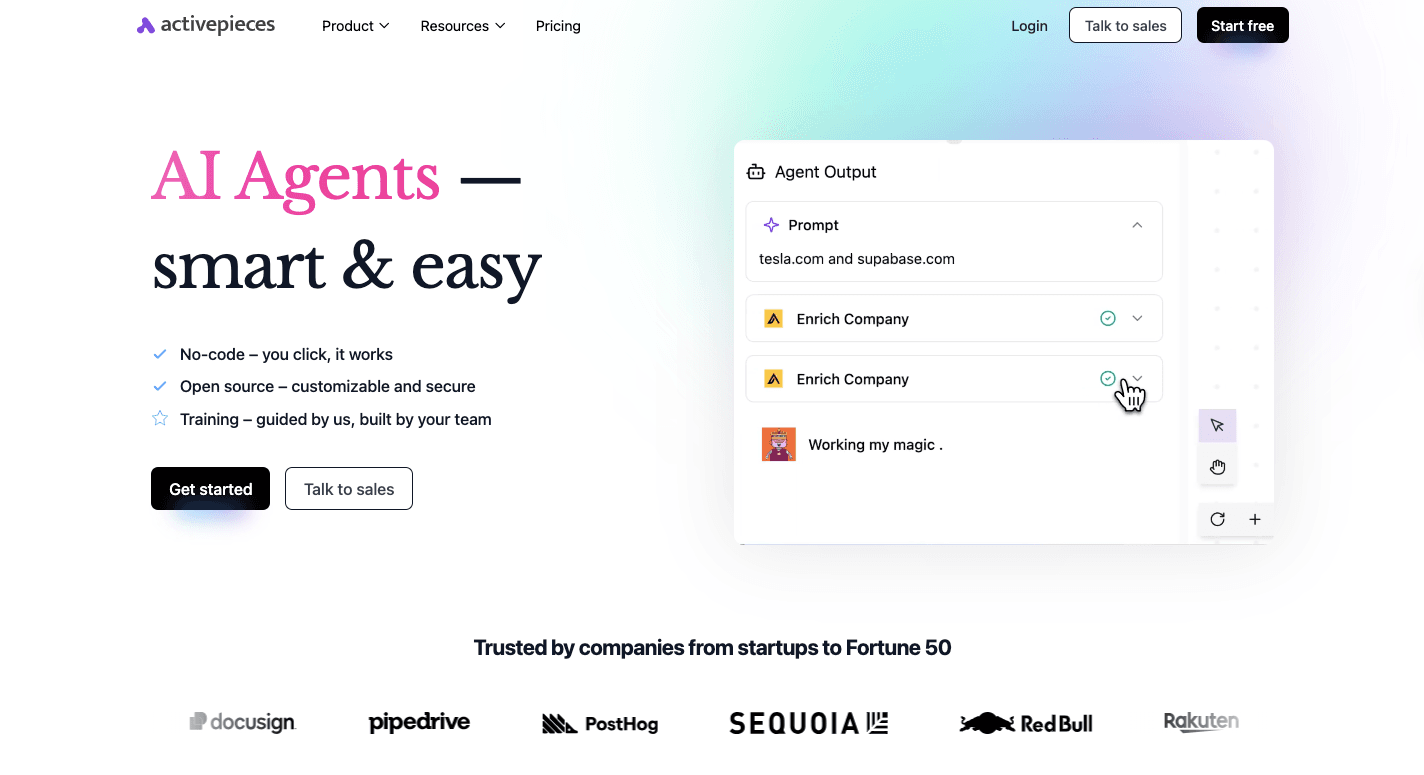
You know the feeling when your projects are everywhere. Activepieces is an AI workflow automation tool that solves that by connecting your tools.
Activepieces offers 627+ pre-built pieces, which include platforms used in project management, such as:
- Jira and ClickUp for planning and execution
- Slack and Discord for daily communication
- Google Sheets for shared tracking and data work
Once connected, agents can generate tasks from real activity, react to updates from communication platforms, and move work forward.
AI tools can handle coordination and logic, then pause when human judgment is required. You can review changes before they go live, which keeps control where it belongs.
Data security stays tight because you decide how and where everything runs. Your teams avoid technical challenges since setup stays simple even as usage grows.
Connect hundreds of pieces and decide exactly how work flows between them. Try Activepieces!
Create Project Management Workflows With Activepieces
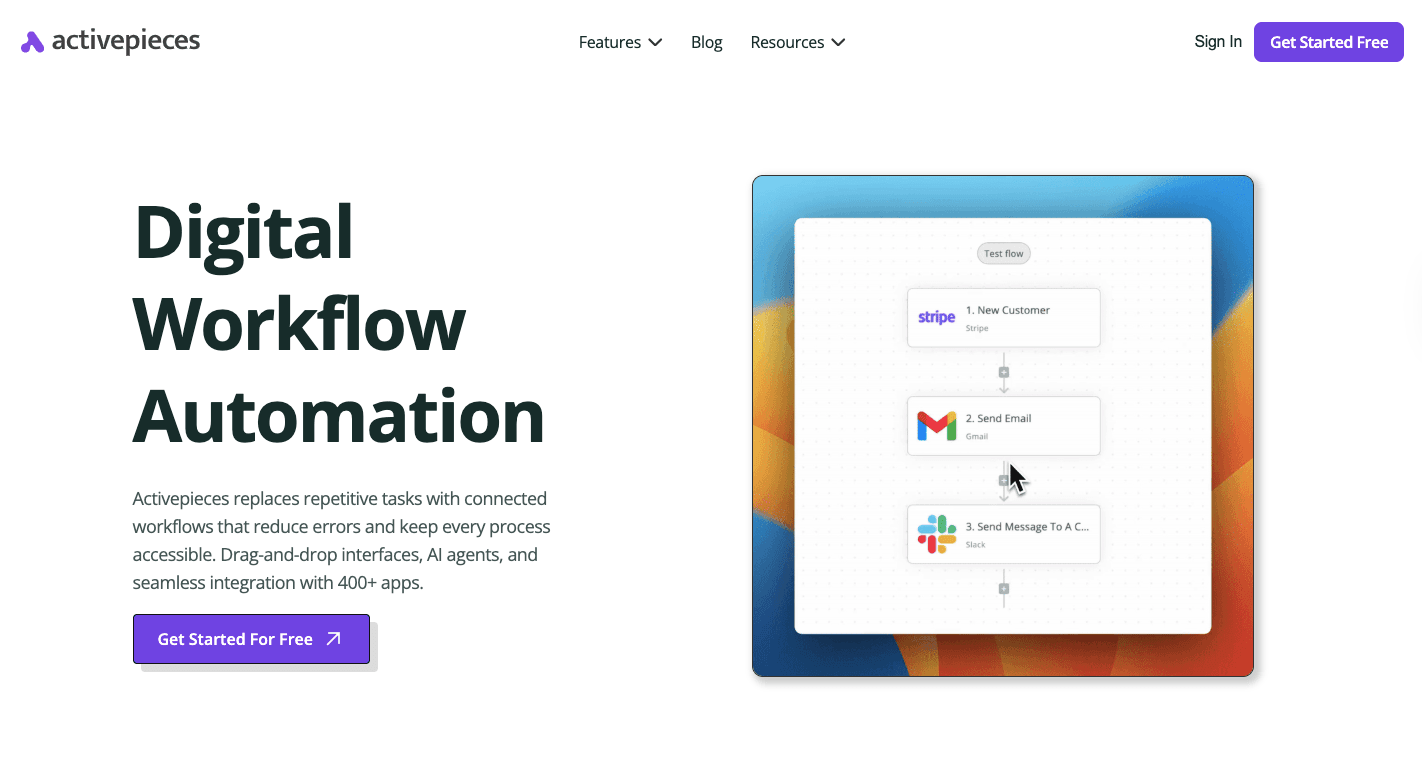
Activepieces lets you create project management automation workflows that connect the tools your team uses, then decide what should happen when data changes.
You start by choosing a trigger, such as a new row added in Google Sheets, a message posted in Slack, or a status change in a project platform. From there, you add steps that run in order, each one using data from the previous step.
AI-powered tools help when text needs interpretation, such as summarizing input from a form or classifying requests before routing them. You always choose where AI fits and where it doesn’t.
Non-technical teammates can adjust logic visually, while developers extend behavior through TypeScript pieces when needed. Human-approval steps pause execution until someone reviews the output.
Security settings define hosting, access, and data handling, which keeps control clear as workflows grow.
FAQs About AI Agents for Project Management
How do AI agents differ from traditional project management tools?
Traditional project management tools show information after someone updates it. AI agents are intelligent systems that can act autonomously within a project management environment and respond to work changes.
Built with machine learning and natural language processing technologies, they read messages, task updates, and signals. Successful project managers dealing with complex work prefer this approach, since project documentation stays current and decisions move faster.
What are the best AI project management tools?
The best AI project management tools connect to existing systems, understand written input, and support decisions. Tools that observe work and suggest next steps perform better than those that only summarize data.
What tools do AI agents need to work well?
AI agents need access to task boards, calendars, messages, and shared files. Those tools provide the signals agents rely on to understand progress and blockers.
How do AI agents prioritize tasks?
AI agents use historical project data and current workload information to determine which tasks need attention first. Past patterns show what usually causes delays, while live activity shows where pressure builds now.