
AI Project Manager Tools: Best Picks for 2026

Oct 2, 202612 min read
The Best AI Project Manager Tools for 2026 Compared
What defines a true AI project manager?
When the software executes multi-step workflows across siloed applications, it becomes a true AI project manager. It does more than simply summarizing existing task descriptions.
According to Docs, while early iterations focused on drafting emails, modern platforms utilize reasoning models like Claude Fable 5.1 to predict resource bottlenecks before they appear in a Gantt chart.
This shift moves the software from a passive record-keeper to an active participant that manages the fragmented data problem. Activepieces solves this by providing an MIT-licensed core that runs a company's chosen AI models and automations across its own apps under central governance.
Quick comparison: Pricing and top features
| Tool | Pricing (Starter/Pro) | Core AI Strength | Primary Limitation |
|---|---|---|---|
| Asana | $10.99 / $24.99 | Predictive Resource Scaling | Rigid API rate limits |
| Monday.com | $9 / $19 | Automated Workflow Logic | High per-seat minimums |
| ClickUp | $7 / $12 | Neural Search & Retrieval | Mobile app latency |
| Notion | $10 / $15 | Generative Knowledge Bases | Weak structured task logic |
| Activepieces | Free / $15 | Custom Automation Layers | Smaller native library |
Prices and plan limits checked against docs.claude.com and openai.com and gemini.google on October 1, 2026.
763 native integrations are currently offered by Activepieces, according to Zapier’s analysis. This means a mid-market firm can connect roughly one-fourth the number of apps available on Zapier, which leads the market with 3,224.
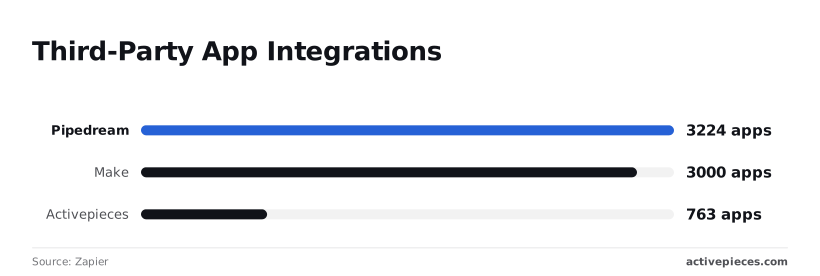
According to Lessannoyingcrm, Make provides 3,000 integrations, which allows enterprise users to link legacy databases that smaller libraries might miss, meaning users have a vast ecosystem of connectivity at their fingertips.
These integration counts determine how much manual data entry your team will still perform in 2026.
Connecting custom applications and legacy systems
Users can bridge the gap between the native library and their specific tech stack by using the HTTP component to make direct API calls to any service.
This component allows the platform to interact with any software that has a web interface, effectively making the integration limit irrelevant for technical teams.
Custom code integrations written in TypeScript can also be added to the workflow to handle complex data transformations or proprietary logic.
This extensibility ensures that even if an app is not among the 763 pre-built connectors, it can still be fully automated within the central AI management layer.
Everything below works on Activepieces' free plan. Start without code or a credit card.
Asana for Predictive Resource and Risk Management
By using its proprietary Work Graph to map relationships between tasks, goals, and people, Asana allows its predictive engine to identify risks that siloed tracking tools miss.
Automating status updates with Smart Summaries
Seconds are all it takes for Smart Summaries to draft comprehensive project status reports, eliminating the manual labor of reviewing individual task comments and subtask progress. The report immediately flags a sudden spike in blocked tasks because these summaries pull directly from the activity feed.
Executive oversight gains an early warning system.
Asana AI for predicting project bottlenecks
The system identifies upcoming resource shortages by comparing current task assignments against historical completion rates. You can then reallocate work before a milestone is missed.
Asana pricing and AI feature availability
- Asana Starter and Personal tiers don't include AI Teammates or predictive risk features, which limits these accounts to basic task management and manual reporting.
- Asana Advanced is the entry point for Smart Summaries and basic AI assistance, providing the first layer of automated status drafting.
- Asana Enterprise and Enterprise+ are the only tiers that include the full suite of predictive intelligence and advanced resource management, making them the requirement if you're seeking automated bottleneck forecasting.
Monday.com for No-Code Workflow Generation
By describing your operational goals in plain English, Monday.com allows you to generate functional project boards and automation recipes.
Building automations using natural language prompts
Time spent mapping out conditional "if-this-then-that" statements is reduced by the Monday AI Assistant, which translates descriptive text into multi-step automation logic. Docs notes that by integrating with Claude Fable 5.1, the platform handles demanding reasoning for long-horizon agentic work.
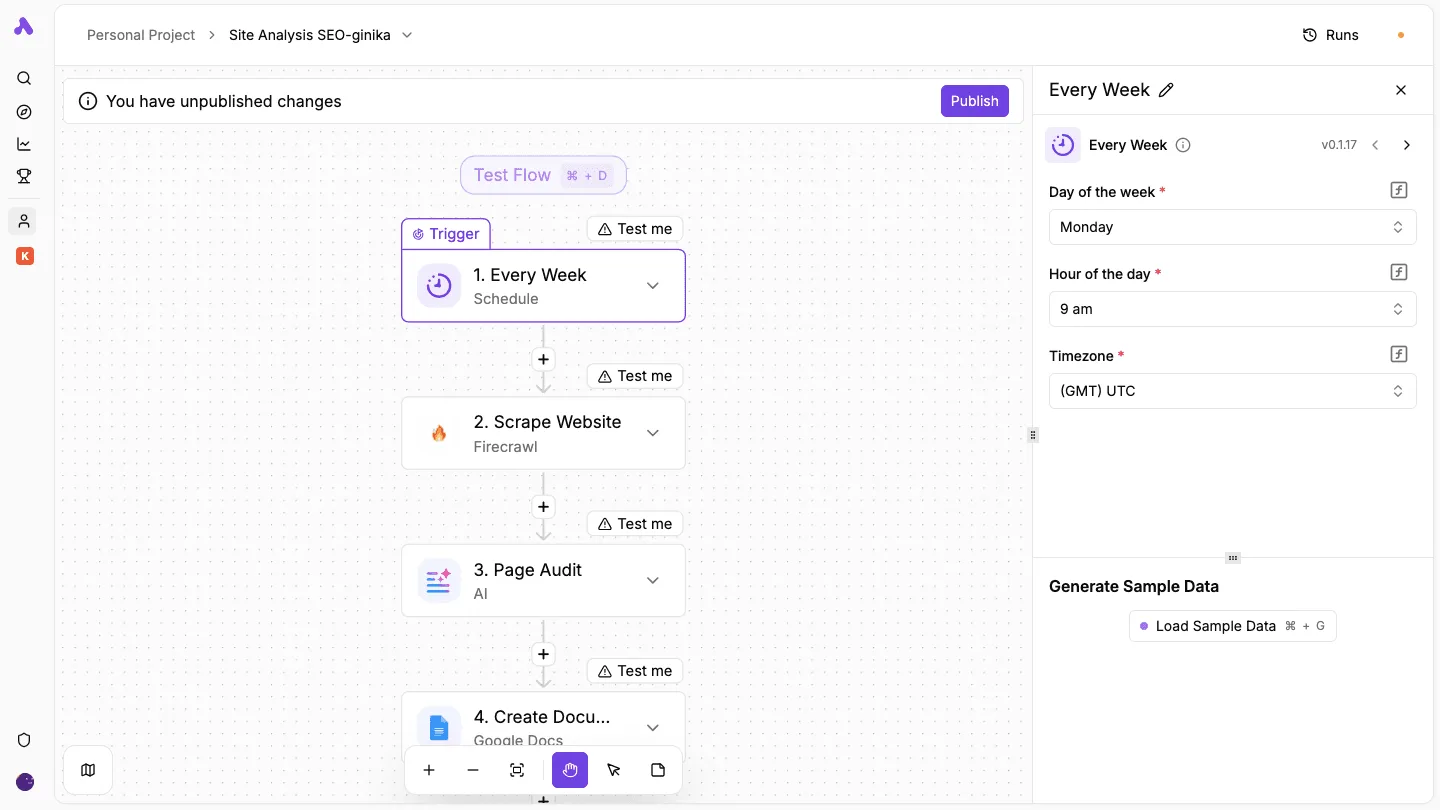
You can prompt the system to "audit my SEO performance every Monday and draft a summary," and the builder canvas will automatically sequence the necessary integrations. You can verify the logic flow before clicking publish because the builder visualizes these steps on a canvas.
Monday.com AI sentiment analysis for updates
Monday.com uses AI to categorize updates and comments based on their emotional tone and urgency to manage high-volume feedback. Near-frontier intelligence at high speeds is provided by the system leveraging Claude Haiku 4.5.
The system processes thousands of board updates in real-time without slowing down the user interface.
Monday.com pricing tiers for AI features
Availability of these generative and analytical tools is governed by the specific subscription level of your account. Monday.com restricts its AI Assistant and advanced automation capabilities to its higher-tier plans. The platform also imposes monthly usage limits on AI actions.
The system processes thousands of board updates in real-time without slowing down the user interface.
These are tracked as AI credits that don't roll over to the next billing cycle.
ClickUp Brain for instant project answers
Immediate answers are provided without manual searching because ClickUp Brain indexes every task description, document, and comment thread.
Using the AI Knowledge Manager for instant project answers
Specific data points are retrieved from disparate documents and task lists by the AI Knowledge Manager, which acts as a natural language interface for your workspace.
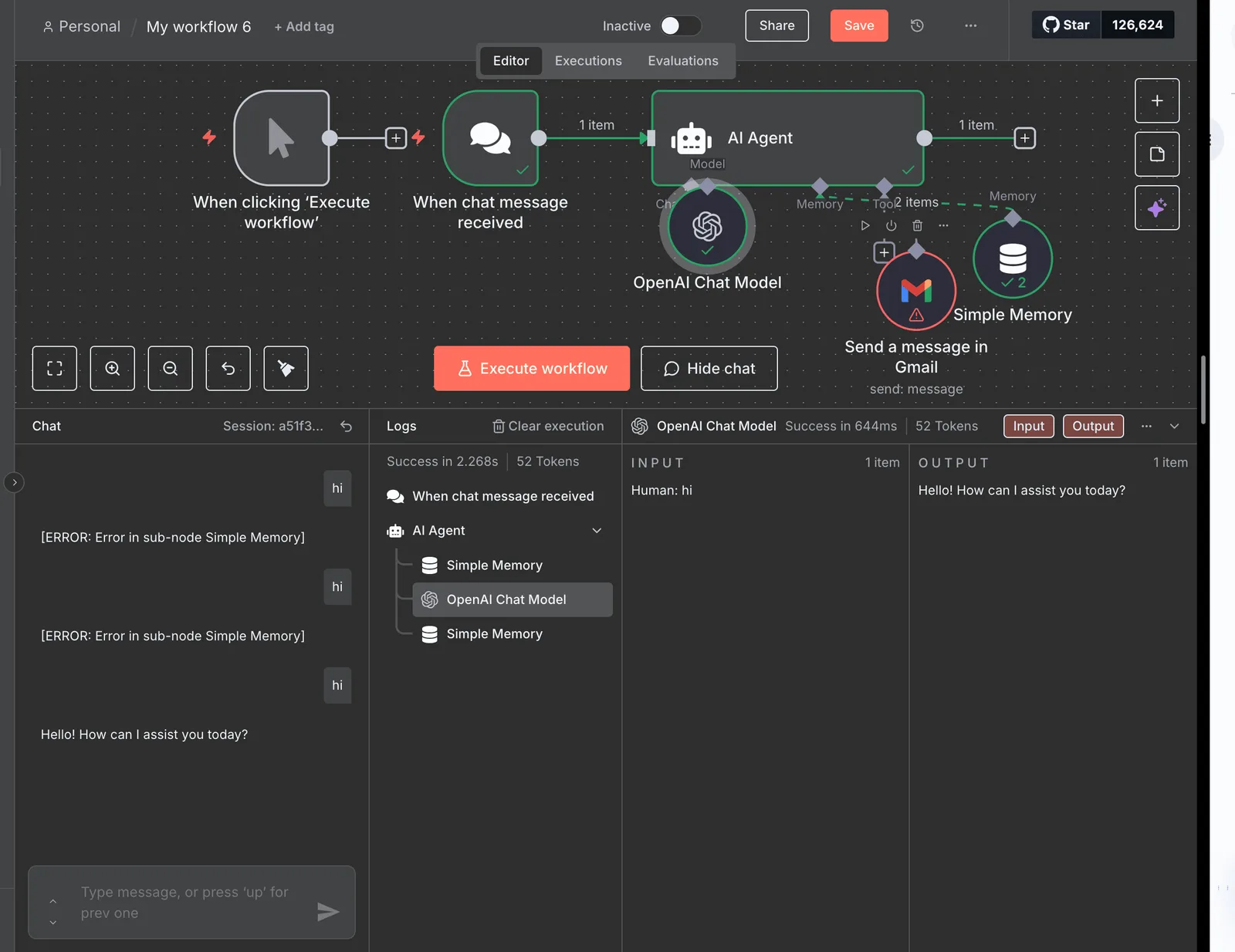
The system can resolve "Who is responsible for the API documentation?" in seconds by connecting the "When chat message received" trigger to an AI Agent step. This specific execution log demonstrates the low-latency handoff between your input and the agent's memory-backed output.
Automating subtask generation from meeting notes
By identifying commitments and deadlines within the text, the platform uses AI to transform unstructured meeting transcripts into actionable work items. Action-oriented verbs are identified and subtasks are created directly beneath the relevant header when you highlight a block of text in a ClickUp Doc.
ClickUp AI add-on pricing explained
Rather than including them in the base seat price, ClickUp treats its AI capabilities as a separate, mandatory add-on for each member of a workspace.
Even on a paid plan, such as the Business or Enterprise tiers, the AI features remain locked until the additional per-member fee is applied to every seat in the environment. Enabling AI for only a subset of users is not an option.
The cost scales linearly with the size of your team because the billing is calculated based on the total number of seats.
Easier to see it running than to read about it: set it up free, no card.
Activepieces for Custom AI Project Workflows
Activepieces provides 738 integrations to build custom AI agents that synchronize data across incompatible software stacks, with roughly 60% of these connectors contributed by the community, so users have a vast ecosystem of crowd-sourced tools to bridge their specific workflow gaps.
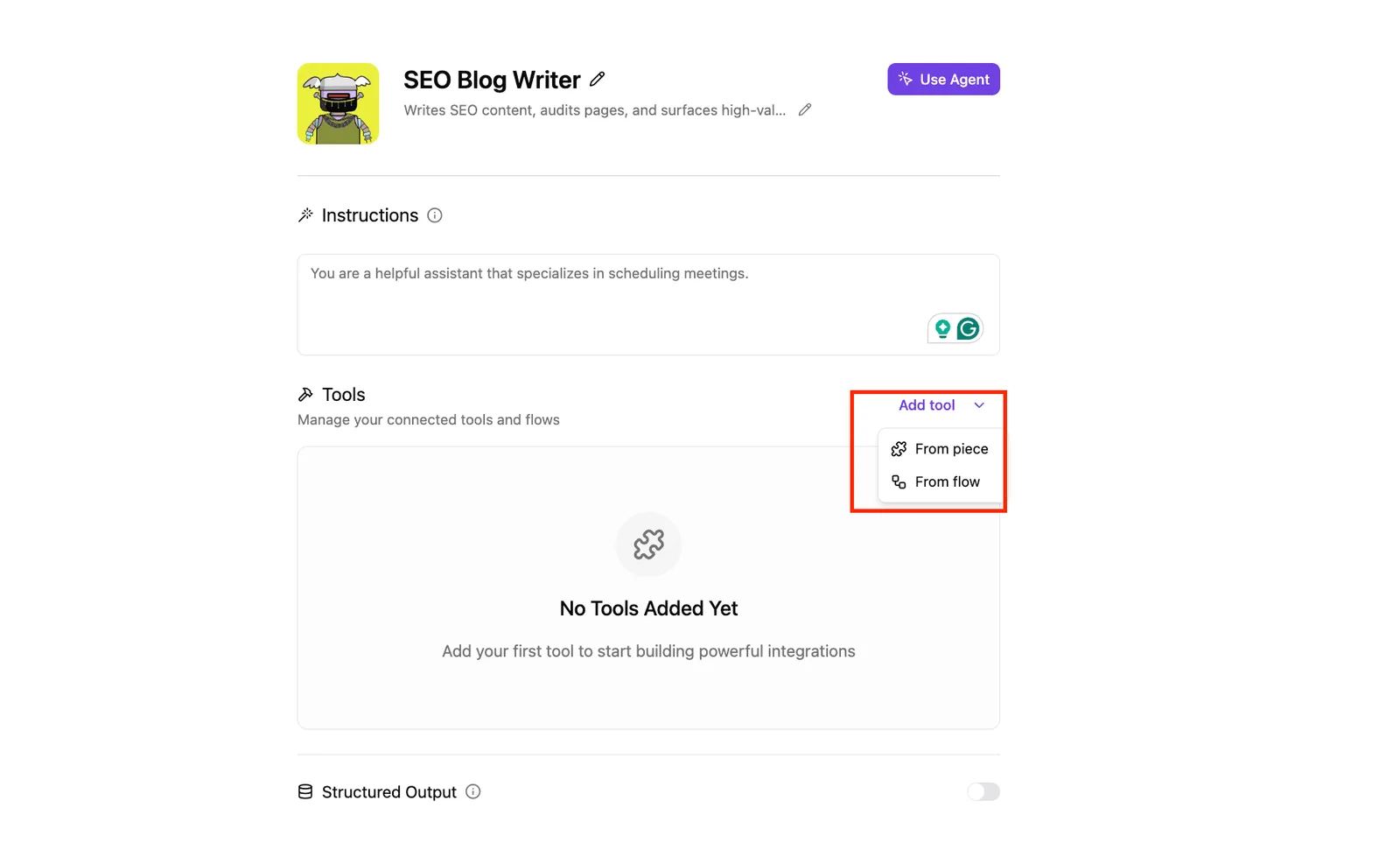
It functions as a visual logic layer, enabling you to move beyond basic triggers and create multi-step reasoning workflows that treat disparate tools as a single, unified database.
Every connector registered in Activepieces is instantly available as a tool for your agents via a per-project MCP server, meaning you never have to re-integrate the same app for a standalone agent in Claude or ChatGPT.
This unified schema ensures that any of the 738 integrations can be called by an agent or a flow without a second migration step, so developers save significant time during implementation.

You can see this mechanism in the packages/integrations directory of the open source repo, where the logic for a flow step is identical to the one exposed as an MCP tool.
Building bespoke AI agents for project reporting sprawl
Manual status updates can be eliminated by deploying specialized agents that monitor task activity and generate contextual reports.
- Connect the source, such as the issue-tracking software Jira, to monitor for new comments or status changes.
- Docs suggests inserting an AI 'Integration', utilizing a reasoning model like Claude Fable 5.1, to summarize technical updates into executive-level summaries.
- Define the logic branch to determine if the update requires immediate escalation based on sentiment or keyword triggers.
- Update the destination, such as a shared Slack channel or a project spreadsheet, with the processed information.
Activepieces allows you to place an Agent step alongside fixed automation steps in one flow definition, which you can track through a single unified run trace.
This architectural choice is why companies like MoneyGram and FundingSocieties run the platform in production to manage complex environments where reliability is critical.
Native connectors for cross-platform automation
Functional bridges between project management tools, communication apps, and AI inference engines are provided by a library of pre-built integrations, or Integrations. Because these connectors are modular, you can swap out an underlying LLM without rebuilding the entire automation logic.
Self-hosted vs Cloud pricing options
Activepieces offers two distinct deployment models, including a self-hosted edition that allows teams to run the platform on their own infrastructure under an MIT-licensed core. The Cloud version is a managed service where the vendor handles infrastructure and updates.
Installing the software on your own private cloud or local hardware is allowed by the self-hosted edition. For the self-hosted edition, this is the only way to ensure that sensitive project data never leaves your controlled network environment.

By unifying the logic between automated flows and agentic tools, this platform eliminates the need for redundant integration work. Activepieces is the better choice for developers who require a vast library of community-contributed connectors that function natively as MCP tools.
Because every piece action is instantly exposed to an agent without a second migration step, it provides a more efficient framework for building complex, multi-step reasoning workflows.
How to Implement AI Project Management on Monday Morning
You must identify where human intervention is currently high and where data is siloed before deploying agentic models like Gemini 3.8 Flash for enterprise workflows.
Audit your current manual status reporting time
Measuring how much time you spend aggregating data from disparate sources to create weekly updates is the first step toward automation. A lack of automated triggers prevents models like GPT-6 Astra from providing real-time oversight.

Define your 'source of truth' for AI training
Conflicting data from multiple platforms prevents AI models from providing accurate predictive insights. Selecting a single Source of Truth ensures that when an agent like Claude Opus 5.5 analyzes project health, it draws from a verified dataset.
| Phase | Action | Goal |
|---|---|---|
| Data Hygiene | Standardizing naming conventions across all platforms | Ensures the AI recognizes Phase 1 and Initial Milestone as the same entity |
| Tool Consolidation | Removing redundant applications | Prevents the AI from indexing duplicate, conflicting project timelines |
| Credit Allocation | Determining if you use pooled enterprise tokens or per-user limits | Dictates how many autonomous agents can run simultaneously |
Start with one high-friction workflow
Calibration of models like Mistral Medium 3.5 is possible without disrupting the entire project lifecycle if you focus on a single, repetitive task. Once a specific workflow is successfully managed by an AI layer, you can scale the implementation to broader portfolio management.
Frequently asked questions about AI project tools?
Will AI project managers replace human PMs?
Rather than strategic replacements for human oversight, AI project managers function as high-velocity execution layers.
While a model like Gemini 3.8 Flash can automate the technical overhead of mapping dependencies and updating Gantt charts, it lacks the social context required to negotiate resource conflicts between department heads.
The human role is shifting from manual data entry to the verification of agentic outputs. This ensures that the automated path aligns with broader business objectives.
How do these tools handle sensitive company data?
Based on the vendor’s underlying infrastructure and the specific API agreements they maintain with model providers, data handling varies significantly. Zero Data Retention (ZDR) policies are typically utilized by enterprise-grade tools.
These ensure that inputs sent to models like GPT-6 Astra aren't used to train the provider's global weights.
VPC deployment is the primary safeguard if you have strict compliance requirements. In this setup, the AI processing occurs within your own cloud perimeter to prevent data from ever reaching the public internet.
Do I need a separate LLM subscription for these tools?
Built-in access to specific models is provided by most modern project management platforms, though the level of intelligence is often tied to the software’s own pricing tiers.
- Bundled Access: The vendor pays for the API tokens, usually limiting you to a specific model like Claude Haiku 4.5 to manage their internal margins.
- Bring Your Own Key (BYOK): You input your own API credentials, allowing you to swap in more powerful models such as Gemini 3.1 Pro for complex reasoning tasks.
- Hybrid Credits: The platform provides a monthly quota of AI credits that replenish each billing cycle, which means you don't need to manage external billing for your LLM usage.