AI Software for Insurance Brokers: A 2026 Guide

Oct 20, 202612 min read
At 9:00 AM, a broker begins the day facing a graveyard of open browser tabs, manually re-keying data from an ACORD form into a rigid State Farm portal.
Smbscaler reports that this repetitive task can take up to 90 minutes per submission, which means a broker can lose over an hour of billable time on a single document.
This forces the agent to act as a data-entry clerk for billions of dollars in premiums across Progressive, Liberty Mutual, and Allstate interfaces. AI app access tools function as the unified software layer that decouples a broker’s primary workspace from this fragmented landscape.
Modernize insurance brokerage with access tools
The bridge between legacy portals and modern AI
The sheer scale of disparate systems creates a massive cognitive load for agents:
- State Farm manages $93,787,274 in direct premiums written, meaning an agent must navigate a portal designed for the industry's largest, often most rigid, legacy infrastructure.
- Progressive accounts for $62,711,707 in premiums, requiring mastery of a different underwriting interface, which extends onboarding time for new staff.
- Berkshire Hathaway handles $58,628,800, adding a third layer of distinct documentation requirements, increasing the risk of human error.
- Allstate represents $50,041,693, forcing agents to duplicate data entry to ensure competitive benchmarking, cutting time available for client consultation.
- Liberty Mutual rounds out the top tier with $44,410,968, ensuring that without an abstraction layer, an agent spends 60% of their day on clerical labor.

By positioning a central Broker Workspace hub that communicates through an AI Orchestration Layer, the AI App Access Layer architecture solves the integration problem.
Activepieces provides the underlying Integrations Framework where every connector is instantly available as an agent tool via its per-project MCP server.
This allows a broker to register a custom carrier integration once and have it reachable from Claude or a custom agent without a second migration step, a mechanism visible in the packages/integrations directory of the open source repo.
Core capabilities of broker-focused AI agents
To be effective, an AI agent must execute cross-platform workflows. These tools specialize in headless navigation, where the AI logs into a portal, extracts a quote, and pushes it into a CRM like Salesforce.
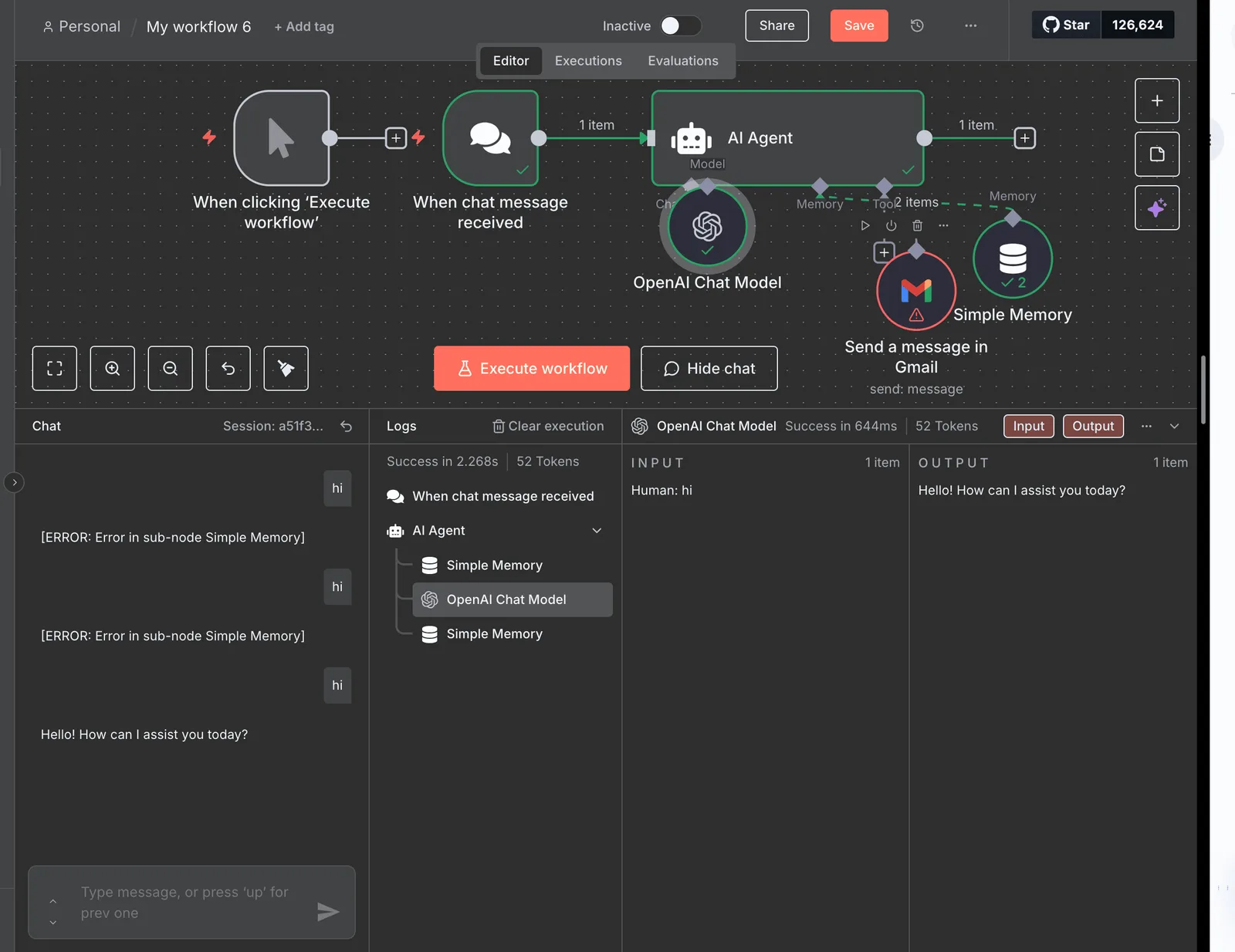
15-20% of a firm's net margin is currently eroded by administrative bloat through the "copy-paste tax"; eliminating this allows agencies to reinvest those funds into growth.
Technical execution of portal interaction
The mechanism for this interaction relies on browser automation frameworks like Playwright or Puppeteer to programmatically control the web browser. These tools allow the AI to perform DOM manipulation, identifying specific HTML elements such as input fields and buttons to simulate human clicks and keystrokes.
15-20% of a firm's net margin is currently eroded by administrative bloat through the "copy-paste tax"; eliminating this allows agencies to reinvest those funds into growth.
Registering carrier connectors through libraries
Brokers do not need to build these complex browser scripts from scratch for every new carrier they represent. A robust ecosystem of pre-built carrier connectors exists within the integration marketplace, allowing firms to simply register their credentials to a pre-configured script.
These libraries provide standardized templates for major players like Progressive or Travelers, handling the underlying DOM selectors automatically. When a carrier updates their portal layout, the library maintainers push an update to the connector, sparing the broker from maintaining custom code.
How tool calling connects AI to carrier portals
The connection between the reasoning engine and the browser is facilitated through a process known as tool calling or function calling.
When an LLM like Claude Sonnet 5.5 identifies a task, such as entering a policy number, it does not just output text; it generates a structured JSON object that matches a pre-defined schema for the automation framework.

This structured output acts as a precise instruction set that the underlying code interprets to trigger specific Playwright actions. By translating the broker's natural language intent into these machine-readable commands, the system ensures the AI can interact with the carrier portal with deterministic accuracy.
By utilizing computer vision alongside these frameworks, the agent can navigate complex UI layouts that lack standard metadata. This ensures the AI can reliably locate the "Submit" button or "Premium" field even when a carrier updates their portal's visual design.
Why generic LLMs fail the insurance compliance test
Because they cannot see the live state-filed forms within a carrier's secure environment, a standard chatbot might hallucinate a policy limit. Generic large language models (LLMs) lack the "app access" required to verify data against real-time carrier underwriting guidelines.
Specialized app access tools maintain a secure session state. This ensures that every piece of data retrieved is anchored in the carrier’s actual production environment.
Every decision an agent makes within these environments is captured in Activepieces alongside the deterministic workflow steps, providing a unified trace in the Run Details UI.
Companies like MoneyGram and Moneypenny run this in production to ensure that agent tool calls and the data they act on are exported as audit logs into existing security monitoring systems.
This takes minutes, not a project: automate it in Activepieces free.
The structural risk of manual portal navigation
Manual portal navigation is no longer viable because the volume of unstructured data has outpaced human processing speeds. This creates a bottleneck that costs mid-size brokers millions in lost premiums.
The cost of manual data entry in insurance
Every minute spent re-keying data from an ACORD form into a carrier portal is a minute stolen from high-value risk analysis:
- Manual re-keying for a single submission can take between 45 and 90 minutes, which limits a broker's daily output to a handful of quotes.
- According to Smbscaler, AI-assisted intake reduces this task to just 1 minute, effectively removing the administrative ceiling that prevents small teams from competing for complex accounts.
Data latency in multi-carrier quote comparisons
When firms rely on human "swivel-chair" processes, they introduce a dangerous lag:
- Carrier appetite updates: Changes to underwriting guidelines often live behind login walls; brokers relying on memory pitch products carriers no longer want to write.
- Rate volatility: Insurance premiums fluctuate based on real-time actuarial adjustments; a 48-hour delay results in expired quotes.
- Submission aging: Carriers often prioritize the first complete file received; manual workflows put firms at the back of the queue.

Reducing human error in policy renewal data entry
The structural risk of manual entry is visible in compounding errors. A single transposed digit in a property valuation creates a coverage gap that E&O policies may not subsidize.
AI app access tools eliminate this by mapping data directly from the source document to the carrier’s portal fields.
The economic shift toward automated brokerage roles
The labor market is shifting capital away from traditional relationship management toward technical orchestration. This transition forces a choice: evolve the workforce or continue paying a premium for manual entry.

Insurance automation developer salaries vs account managers
According to data from Indeed, the average base salary for an Insurance Account Manager in North Carolina is $64,671.
In contrast, an entry-level automation developer starts at $58,670, per Salary.com.
This means the market places a 20% premium on the ability to build systems over the ability to fill out forms. One developer can optimize the workflows of ten brokers, while one account manager can only process their own stack of applications.

| Role | Entry Salary | Mid-Level Salary | Source |
|---|---|---|---|
| Account Manager | $48,980 | $72,669 | Indeed |
| Automation Developer | $58,670 | $80,107 | Salary.com |
While the ceiling for senior account managers can reach $96,358 due to bonuses, the technical floor remains more resilient. Mid-level automation roles comfortably hit $80,107 without a legacy client list.
The evolving role of the technical broker
Modern brokers are transitioning to systems architects. Instead of spending hours re-keying risk profiles, the technical broker uses AI tools to map a single source of truth across all endpoints. This reduces the "error tax" and allows focus on coverage analysis.
Closing the automation talent gap with low-code AI
By deploying low-code AI tools, brokers can allow traditional staff to automate workflows without a computer science degree. This strategy prevents the "Excel Debt" trap where business logic is buried in brittle spreadsheets. Firms can:
- Standardize data ingestion from client PDFs.
- Synchronize updates across multiple carrier portals.
- Audit data flows in real-time for compliance.
You can follow the rest of this with the builder open. Start free, no card.
How AI agents solve the multi-carrier fragmentation problem
AI agents resolve fragmentation by acting as an orchestration layer. While a standard LLM can draft an email, an orchestration agent utilizes Retrieval-Augmented Generation (RAG) to pull specific data from external sources to map client needs against carrier appetites in real-time.
Automating carrier submissions and quote requests
Agentic workflows eliminate the manual entry required to move risk profiles into individual carrier portals. By using browser-based automation to navigate these portals, the agent populates fields without human intervention, ensuring submissions reach the market in minutes.
Cross-carrier policy analysis and comparison engines
Orchestration tools use RAG to extract clauses from hundreds of pages of diverse PDF policy forms, creating a standardized comparison. This process identifies coverage gaps (such as differing definitions of "occurrence") that a human broker might overlook during a rushed renewal cycle.

Standardizing unstructured data for the agency CRM
AI agents function as a translation layer that converts messy carrier responses into clean data for the agency’s central Customer Relationship Management (CRM) system.
When a carrier sends a quote via email, the agent parses the relevant terms and pushes them into the CRM, preventing the "garbage in, garbage out" cycle.
Orchestrate multi-carrier workflows with Activepieces
Activepieces provides an MIT-licensed AI automation platform that enables brokers to link fragmented carrier portals to large language models. This ensures that data moves between systems without manual copy-pasting.
Connecting carrier portals to AI analysis steps
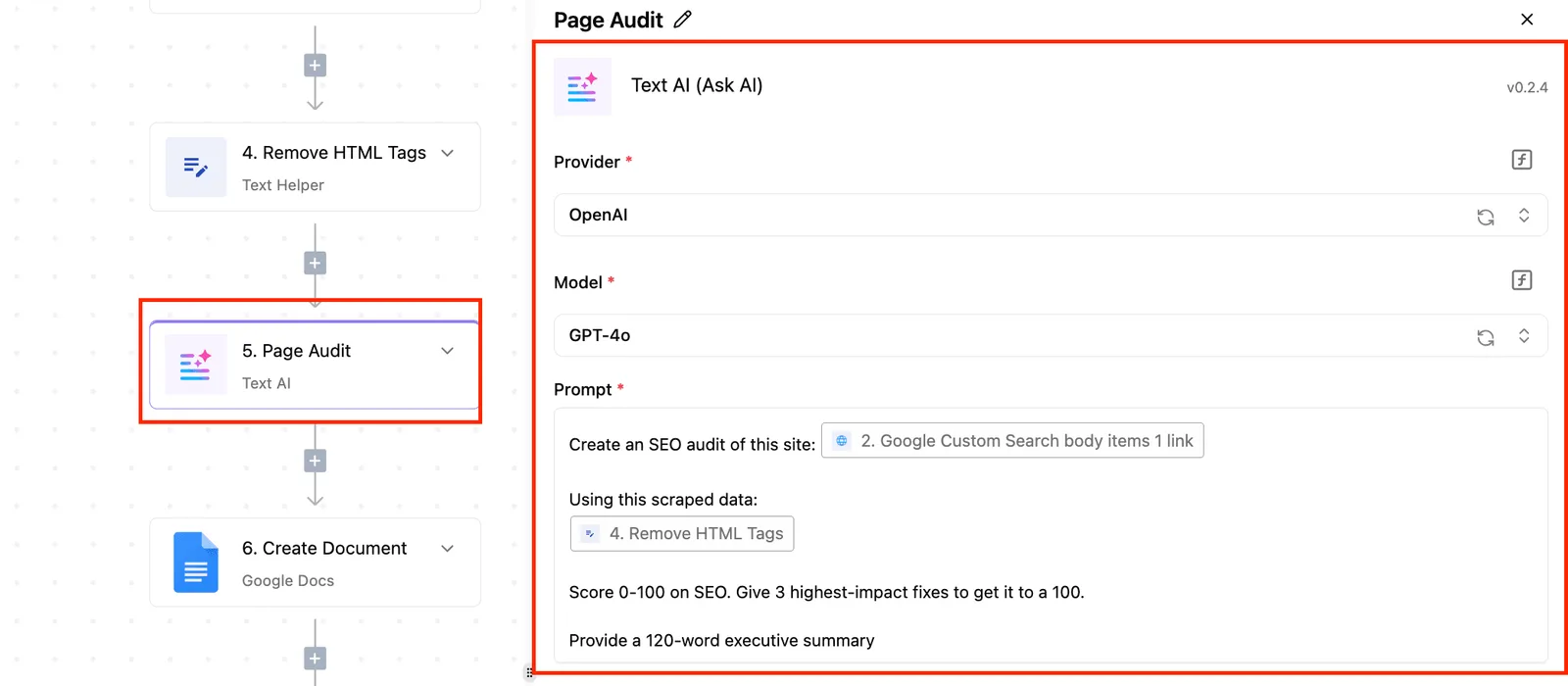
Brokers can bridge the gap between unstructured policy documents and actionable insights by routing portal exports directly into a Retrieval-Augmented Generation (RAG) pipeline.
"The RAG workflow allows a broker to query policy data using natural language, instantly extracting specific clauses from a 100-page document."
This automation removes the need for a human to manually skim pages for exclusions, reducing the likelihood of missing a sub-limit. Once the AI identifies the coverage detail, Activepieces can push that answer into the agency’s client-facing summary tool.
Setting up automated policy renewal triggers
Automation logic allows agencies to move away from reactive "firefighting." Instead of a broker manually checking a spreadsheet, Activepieces can monitor the CRM database and initiate a sequence:
- Identify a renewal date approaching the 90-day threshold.
- Pull the current year’s claims history from the carrier portal.
- Generate a pre-filled renewal application for the client.
Maintaining data sovereignty in automated workflows
Activepieces allows an agency to keep sensitive PII (Personally Identifiable Information) within their own infrastructure through its self-hosted, MIT-licensed core. Because the agency retains full control over execution logs and data residency, they can automate carrier interactions while meeting strict compliance requirements.
A step-by-step AI implementation plan for brokers
Transitioning to an AI-augmented workflow begins with isolating the specific portal interactions that force staff to act as manual data-entry bridges.
Audit your highest-friction carrier portals
Rank your carrier portals by the volume of manual clicks required to move a lead from your database to their submission form. This audit reveals where margin is leaking into administrative overhead.
Low-risk AI automation quick wins for brokers
Before attempting to automate complex policy writes, deploy AI tools to handle "read-only" tasks such as extracting policy numbers and premium amounts. This allows you to test accuracy without risking the integrity of the carrier’s live environment.
Adding human-in-the-loop review for AI accuracy
Every automated data transfer must terminate at a validation screen where a human broker reviews the AI’s work. This gate ensures that final liability rests with a licensed professional.
- Identify your highest-volume carrier portal.
- Map the 10 most frequent data fields required.
- Connect your CRM to a workflow automation tool.
Frequently asked questions about insurance AI tools
Do AI tools violate carrier Terms of Service?
When they function as an interface layer rather than a bypass of the carrier’s security infrastructure, AI tools comply with carrier terms. Because these tools act as an authenticated browser extension or a programmatic user, they respect the carrier’s rate-limiting protocols.
How do these tools handle HIPAA and PII data?
Enterprise AI tools manage sensitive data by utilizing local processing or private cloud instances where data is encrypted at rest and in transit. By isolating Protected Health Information (PHI) within a SOC2-compliant environment, the broker ensures that sensitive client identifiers never enter public training sets.
Can AI agents handle complex commercial lines?
By utilizing Retrieval-Augmented Generation to cross-reference specific policy endorsements against carrier appetites, AI agents manage complex commercial lines. Instead of a broker manually auditing a fifty-page schedule of values, the AI identifies coverage gaps based on pre-defined logic.
What is the typical ROI for a 20-person brokerage?
The return on investment for a mid-sized brokerage is realized through the immediate compression of the "submission-to-quote" lifecycle. By automating the extraction of data from Accord forms and injecting it directly into carrier portals, the firm reclaims hundreds of hours of account manager time.
Related reading
Build it
Set this up in minutes.
No code required. Connect your accounts, and Activepieces runs it from there.
Start free Talk to sales