
Webhook Retry Strategies: Why API Vendors Differ (2026)

Oct 20, 202615 min read
Webhook reliability remains a cornerstone of modern distributed systems, yet the retry logic implemented by various API vendors is far from standardized.
When a destination server fails to return a 200 OK status, the source system must decide how frequently to attempt redelivery before permanently discarding the event.
While some platforms favor a linear approach, others implement complex exponential backoff strategies, or even rely on automation tools like Activepieces to bridge the gap between disparate delivery requirements.
These differences are rarely arbitrary; they are typically dictated by the vendor's specific infrastructure constraints, the sensitivity of the data being transmitted, and the anticipated traffic volume of their user base.
Understanding these underlying architectural choices is essential for developers who need to build resilient er
A webhook retry schedule is the predefined sequence of automated attempts an API provider makes to redeliver a failed event notification to a client's server over a specific period.
Define reliability through webhook retry schedules
When a clinical system remains disconnected, webhook retry schedules function as automated resuscitation protocols to dictate exactly how long it takes before an event is permanently lost.
Acting as the primary safeguard against permanent data gaps during server outages or network congestion, these pre-programmed sequences determine the frequency of delivery attempts when a receiving server fails to acknowledge a request.
The anatomy of a retry attempt
To preserve data integrity when the initial transmission fails, the system initiates a three-stage event cycle.
When a source system, such as the payment processor Stripe, sends a POST request to your server and receives a 503 Service Unavailable error, it immediately shifts the event into a 'Retry Queue' for later processing.
A momentary server flicker does not have to result in a missing patient record because of this shift. Once an event enters this queue, it follows a strict temporal path to re-entry.
Why 200 OK is the only signal that stops the clock
Unless it receives an explicit HTTP 200 OK status, the source system assumes a failure occurred. Even a successful database write on your end will trigger a retry if the confirmation signal arrives late.
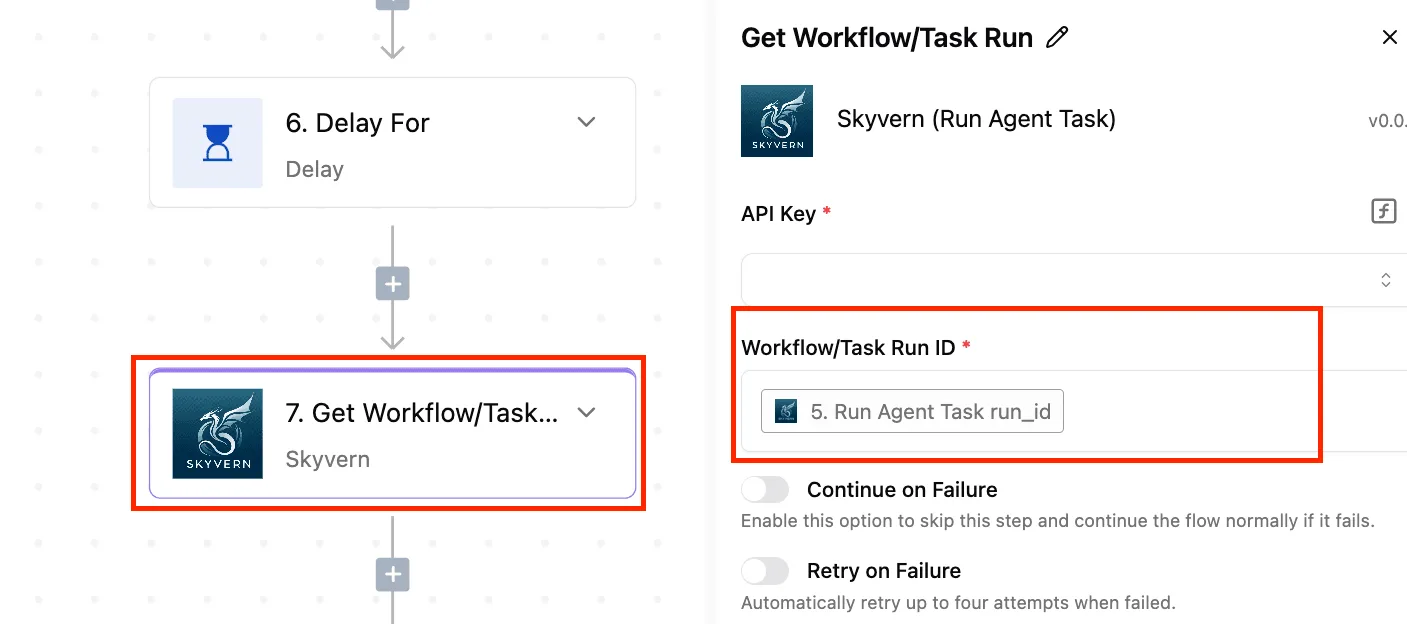
Vendors prioritize their own outbound queue stability. Instead of interpreting a 503 or 504 error as a request to wait, they treat it as a trigger to execute internal backoff logic.
These repeated attempts can act like a self-inflicted Distributed Denial of Service (DDoS) attack on an overwhelmed destination server, compounding the initial downtime.
The difference between fixed and exponential backoff
While fixed backoff attempts delivery at set intervals, exponential backoff doubles the wait time between each failure to allow a struggling system time to recover. The charging infrastructure provider eDRV utilizes this strategy to prevent cascading failures.
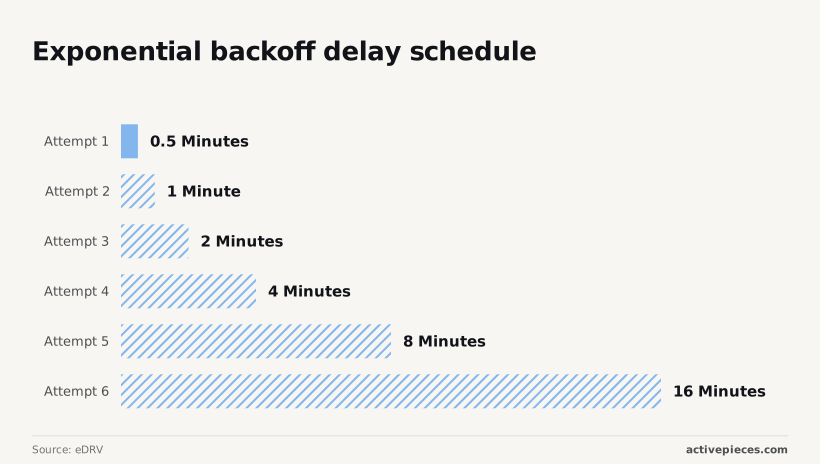
Backoff sequence timeline attempt by attempt
0.5 Minutes is when Attempt 1 occurs; this rapid re-fire catches transient network blips within seconds.
1 Minute is when Attempt 2 occurs; the doubling wait time signals the start of a sustained outage investigation, which means the system has officially transitioned from a transient glitch to a persistent failure.
2 Minutes is when Attempt 3 occurs; by this stage, automated recovery scripts on the receiver side should have triggered, so the lack of resolution now points to a deeper infrastructure blockage.
4 Minutes is when Attempt 4 occurs; the delay is now long enough for a human operator to acknowledge a high-priority alert, meaning the incident has escalated from an automated process to an active manual intervention.
8 Minutes is when Attempt 5 occurs; this gap doubles the previous interval, further reducing the load on the destination server, effectively prioritizing system stability over immediate throughput, which means the system sacrifices speed to prevent a crash.
16 Minutes is when Attempt 6 occurs; this final stage provides a wide window for manual server restarts before the event is potentially purged, so administrators have a significant buffer to intervene before data loss becomes permanent. No further recovery attempts occur after this point.
A security review often stalls when a vendor asks for total trust in their black-box architecture. Activepieces provides an MIT-licensed core that allows a team to clone the repository and inspect the queue and worker architecture directly.
Being able to load-test and run the system self-hosted or fully air-gapped provides the technical evidence required to close a review that a vendor's word only reopens.
Everything below works on Activepieces' free plan. Start without code or a credit card.
How exponential backoff spaces out delivery attempts
By progressively increasing the pause between retries, exponential backoff protects clinical system availability. This prevents a recovering server from being crushed by a wall of accumulated data.
How exponential delay math extends recovery time
Because the delay between delivery attempts grows at a non-linear rate, each successive failure significantly extends the time the receiving system has to clear its internal backlogs.
Since each wait period is a multiple of the previous one, a sequence of just a few failures can move a retry window from seconds to hours.
When this rapid expansion of time occurs, the sending platform stops hammering a non-responsive endpoint. This preserves its own outbound processing capacity for other critical patient alerts.
Why vendors add jitter to prevent synchronized spikes
To prevent thousands of failed webhooks from retrying at the exact same millisecond, jitter introduces intentional randomness into the retry schedule. Without this randomized offset, a fleet of sensors recovering from a shared network blip would synchronize their retry cycles.
"Thundering herd" spikes are created this way, potentially crashing a database the moment it comes back online. By staggering these attempts, the vendor ensures the traffic arrives as a manageable stream rather than a destructive wave.
Balancing recovery time against data freshness
Significant increases in data latency are the trade-off for system stability, which can delay the appearance of vital patient information in downstream applications.
When a webhook enters a long backoff cycle, the information it carries remains trapped in the sender’s queue even after the receiving server is back online.
Real-time updates are prioritized by early retries, but they risk overwhelming a fragile service. Late-stage retries guarantee system uptime but result in clinicians viewing hours-old data.
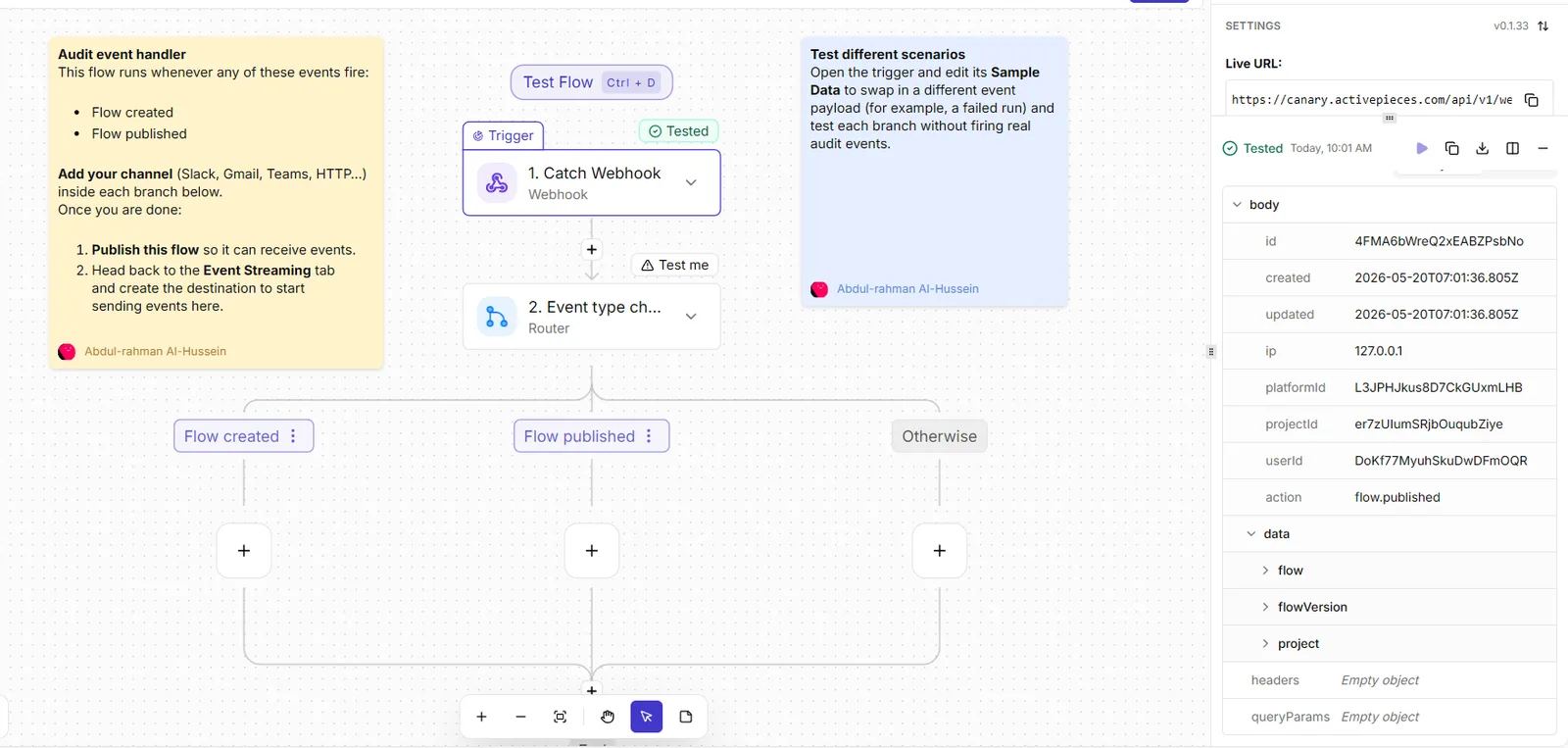
A webhook flow that exists only in a vendor's UI is difficult to audit or version. Activepieces allows teams to sync flows to git and promote them through Release Management, moving logic from test environments to production with the same rigor as software code.
By using separate projects and environments, this promotion becomes a deliberate, reviewed step rather than an accidental click in a private history.
Manage vendor infrastructure constraints for delivery
To prevent their own outbound queues from becoming a bottleneck during widespread internet outages, providers set retry schedules.
While a clinical administrator might expect a system to keep trying until a lab result is successfully delivered, the vendor views every failed delivery as a technical debt that threatens their system's performance.
High-volume providers prioritize queue clearance over delivery success
To ensure their infrastructure does not become congested, providers handling massive streams of non-critical telemetry often drop failed requests quickly.
When a service like the communications platform Twilio or the e-commerce engine Shopify encounters a series of 500-level errors, they truncate the retry window to a matter of hours.
If your server is down for a single shift, your internal records will remain permanently desynchronized. This aggressive pruning protects their global throughput but shifts the entire burden of data reconciliation onto your IT staff.
If your server is down for a single shift, your internal records will remain permanently desynchronized.
The following table illustrates how drastically these windows vary, forcing you to maintain different manual recovery protocols for every integration in your stack:
| Vendor | Max Retry Window | Consequence for Data Integrity |
|---|---|---|
| Stripe | 72 hours | Provides a three-day buffer to fix local server issues before data is lost. |
| Twilio Event Streams | 4 hours | Requires immediate intervention to avoid losing communication logs. |
| Shopify | 4 hours | Limits recovery time to half a business day before webhooks are disabled. |
| Square | 2 retries / 2 minutes | Offers almost no protection against transient network instability. |
Financial APIs favor persistence to maintain transactional integrity
Because the cost of a missed event is a direct financial discrepancy, payment processors and billing engines typically offer longer retry windows. The payment gateway Stripe maintains attempts for several days.
Hundreds of missing invoices would otherwise require a forensic accounting review if not for this extended window during a weekend server crash.
By extending this window, they reduce their own support tickets related to missing data, though they still stop eventually to prevent their database from swelling with dead requests.
The hidden cost of managing millions of pending retries
Every retry attempt consumes compute resources and database IOPS, leading vendors to implement "circuit breakers" that stop all attempts if your failure rate hits a certain threshold.
If a vendor like the point-of-sale system Square detects a high volume of failures, they may disable your webhook subscription entirely.
Until a developer manually re-enables the connection, you lose all subsequent patient billing updates. This safety mechanism protects the vendor's stability but creates a "silent failure" state where your clinical dashboard appears functional while the underlying data has stopped flowing.

Easier to see it running than to read about it: set it up free, no card.
Why aggressive retry timeouts fail production environments
By prioritizing the vendor’s outgoing queue management over the restoration of your clinical services, short retry windows often expire before a standard system recovery can complete.
When a vendor caps their retry attempt period at a few hours, they are effectively deciding that their infrastructure efficiency is more important than the integrity of your patient records during a localized outage.
Thundering herd failures after server restarts
By flooding a recovering system with a massive backlog of delayed requests the moment it comes back online, aggressive retry schedules frequently cause secondary outages. Because many webhook providers do not use jitter, they send every failed message simultaneously as soon as your endpoint responds.
This surge often exceeds the connection limits of a newly rebooted database. A successful server restart is then immediately met with a new crash caused by the very data you were trying to recover.
Maintenance windows that outlast the retry schedule
Standard infrastructure updates often exceed the narrow retry windows provided by modern SaaS platforms, leading to permanent data loss during routine care.
While a vendor might stop attempting deliveries after four hours, a typical hospital system migration or deep database integrity check may require a longer window of downtime.
While your staff is still performing the scheduled maintenance, the vendor marks these messages as "failed" and discards them. This leaves no automated way to recover the clinical data sent during the gap.
Data gaps created by silent permanent failures
Without active clinical alerts, the transition from a temporary retry state to a permanent failure status creates invisible holes in a patient’s longitudinal record.
Unlike a system crash that triggers an immediate page to the IT department, a webhook that has exhausted its retries simply stops existing in the vendor’s queue.
- Incomplete medication lists where the latest update was discarded by the sender.
- Missing lab results that appear "pending" in the EHR despite being completed by the diagnostic tool.
- Desynchronized scheduling blocks that allow double-booking because the cancellation hook expired during a network flicker.
Unlike a system crash that triggers an immediate page to the IT department, a webhook that has exhausted its retries simply stops existing in the vendor’s queue.
Managing webhook delivery failures with Activepieces automation
By enforcing a uniform retry policy that acts as a buffer between unstable third-party vendors and your internal clinical records, Activepieces mitigates the risk of fragmented webhook delivery.
This centralized automation layer maintains a predictable recovery schedule for the patient data pipeline, even if a specialized laboratory platform lacks its own retry mechanism.
Standardizing backoff across inconsistent third-party APIs
To prevent a single failing endpoint from overwhelming your integration workflow, Activepieces applies a consistent exponential backoff strategy to all incoming triggers. By standardizing the interval between retry attempts, the system ensures that transient network outages do not lead to immediate data abandonment.

Technical staff can expect the same recovery behavior from a legacy scheduling tool as they do from a modern electronic health record system because of this uniformity.
Spotting failure patterns in webhook execution logs
Administrators can distinguish between isolated flickers and systemic vendor outages through the centralized execution interface, which provides a granular view of every webhook attempt.
Because every failure is logged with its specific error payload, IT teams can identify if a pharmacy integration is failing due to a malformed data packet or a total server collapse.
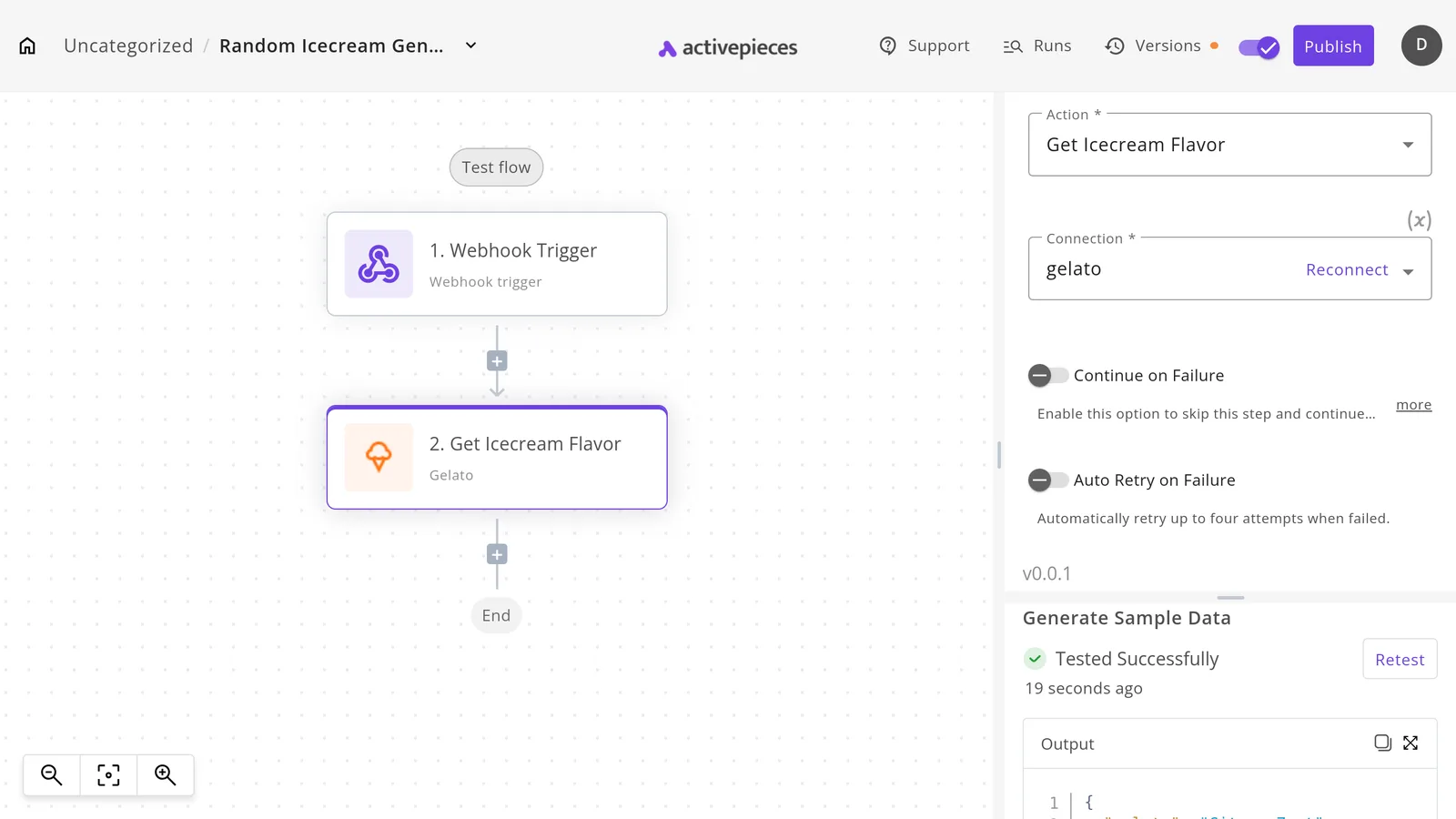
Actionable insights are transformed from opaque vendor errors through this visibility. It allows IT teams to escalate recurring issues to the provider before they impact patient care cycles.
Manual replay for mission-critical data recovery
When a vendor’s automated retry window expires, Activepieces allows for manual re-execution of specific payloads to prevent permanent data loss. This capability is essential for high-stakes workflows, such as processing urgent diagnostic results that arrived during a scheduled maintenance window.
Administrative staff can manually force the completion of a task by using a "replay" function for failed executions. This guarantees that no critical update is left sitting in a dead-letter queue.

Monday morning audit of mission-critical webhooks
Manual intervention through replay functions is the final clinical safeguard when a vendor’s automated retry logic reaches its expiration and silently abandons your patient data.
Because third-party platforms prioritize their own API throughput over your database consistency, they will eventually stop trying to deliver a webhook.
Before they impact patient care, your internal systems must proactively hunt for these "silent" failures.
To maintain a reliable audit trail, your technical staff should execute a formal review process at the start of every week to bridge the gap between vendor logs and actual system state.
The Monday Morning Webhook Audit Checklist: Verify idempotency keys are handled. Check for 'Dead Letter' alerts in the last 48 hours, which means you must investigate any failed messages that have been sitting in the queue for two full days.
Match vendor 'Sent' logs against internal 'Received' records. Reconcile any discrepancies manually to ensure the medical record remains the single source of truth.
Finding ghost failures during webhook audits
Technical teams compare the outbound logs of a payment processor like Stripe against internal accounting entries. This catches the specific instances where a retry cycle timed out during a weekend server maintenance window.
For verifying vendor dashboard status, this verification step is the only way to confirm that the "success" status actually translates to a completed transaction in your clinical workflow.
When a cloud service provider marks a packet as sent but your local firewall drops it, this routine identifies the resulting "ghost failures." This prevents a situation where a clinician makes a treatment decision based on a record that was never updated.
Once these discrepancies are identified, the team can initiate a bulk replay or manual sync to restore data parity across all integrated medical systems.
Frequently asked questions about webhook retries
What is the standard retry interval for most SaaS products?
There is no industry-wide standard for retry intervals. Every vendor optimizes its back-off algorithm to protect its own server availability rather than your clinical data continuity.
While many cloud providers utilize exponential back-off, the specific delays are often undocumented. This means your staff cannot predict when a missing patient record will finally sync without manual intervention.
How do I prevent duplicate data when a retry succeeds after a timeout?
Idempotency through unique transaction IDs in the webhook header is the only reliable way to prevent a single event from creating multiple conflicting entries in a patient’s electronic health record.
When a listener receives a retried payload, it must check the event ID against a database of processed logs.
If the ID exists, the system should discard the data to prevent medication errors or duplicate billing entries caused by redundant processing.
Can I manually trigger a webhook retry from a vendor's dashboard?
Manual retry capabilities are restricted to specific administrative tiers in most enterprise platforms, leaving frontline clinical IT staff unable to resolve sync failures during urgent care windows.
If a vendor does not provide a "replay" button, your team is forced to perform a manual data export and import. This increases the risk of human error and violates the principle of automated audit trails.
Does a 404 error trigger the same retry schedule as a 500 error?
Most platforms distinguish between "hard" and "soft" failures, often silencing retries for 404 errors because they assume the endpoint is permanently gone.
This logic assumes your infrastructure is static. If a temporary network misconfiguration causes a 404, the vendor may drop the patient data entirely without further attempts, requiring your team to build external monitoring to catch these silent failures.