
Designing Webhook Payloads: A 2026 Guide

Sep 30, 202611 min read
Defining the modern webhook payload contract
The shift from 'everything' to 'enough' payloads
Engineering teams in 2026 are abandoning the legacy practice of embedding entire database records into a single POST request to avoid leaking sensitive PII.
Modern webhook design refers to the practice of using thin notifications that transmit minimal event metadata, requiring the consumer to fetch detailed data via a secure API to ensure idempotency and data privacy.
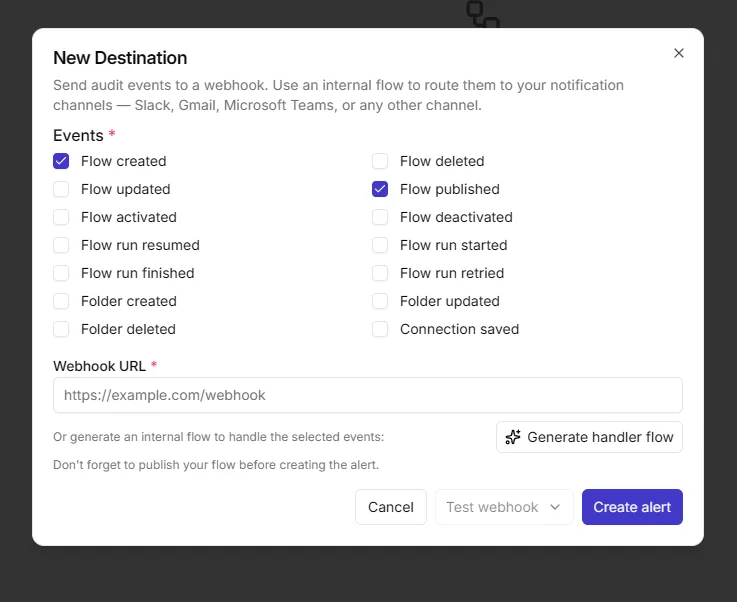
Activepieces mitigates the risk of data exposure by orchestrating these exchanges through a "thin" notification model, ensuring that even when stitching together multiple services, the payload surface area is limited to a resource ID and an event type.
Modern design now treats the webhook as a signal rather than a transport layer. It uses a "thin" notification model that limits the surface area to just a resource ID and an event type.
Modern design now treats the webhook as a signal rather than a transport layer.
Why 2026 standards favor thin notifications over heavy data
By decoupling the event trigger from the data transfer, thin notifications solve the reliability and performance bottlenecks inherent in high-volume event architectures. When payloads grow, the computational overhead for cryptographic signing increases, creating a measurable drag on the originating system’s throughput.
An application sending thousands of events per second will experience significant CPU contention if it attempts to sign heavy payloads.
Beyond raw speed, thin payloads ensure idempotency by providing a stable reference point for the consumer to verify the current state of a resource.
This approach mitigates the risk of race conditions where multiple updates arrive out of order, as the receiver always fetches the most recent "source of truth" via the API.
This takes minutes, not a project: automate it in Activepieces free.
Step 1: Structuring the core JSON object
Effective payload design relies on a minimal schema that forces the consumer to treat the webhook as a signal rather than a data transfer mechanism.
Standardizing the 'event_type' and 'timestamp' keys
Every payload must begin with a predictable event_type string and an ISO 8601 timestamp to ensure the receiver can route the logic and discard late-arriving packets.
Including a high-precision timestamp allows the receiving system to implement a "last-write-wins" policy. This means if a 'user.updated' event arrives after a 'user.deleted' event due to network jitter, the system knows to ignore the update rather than resurrecting a deleted record.
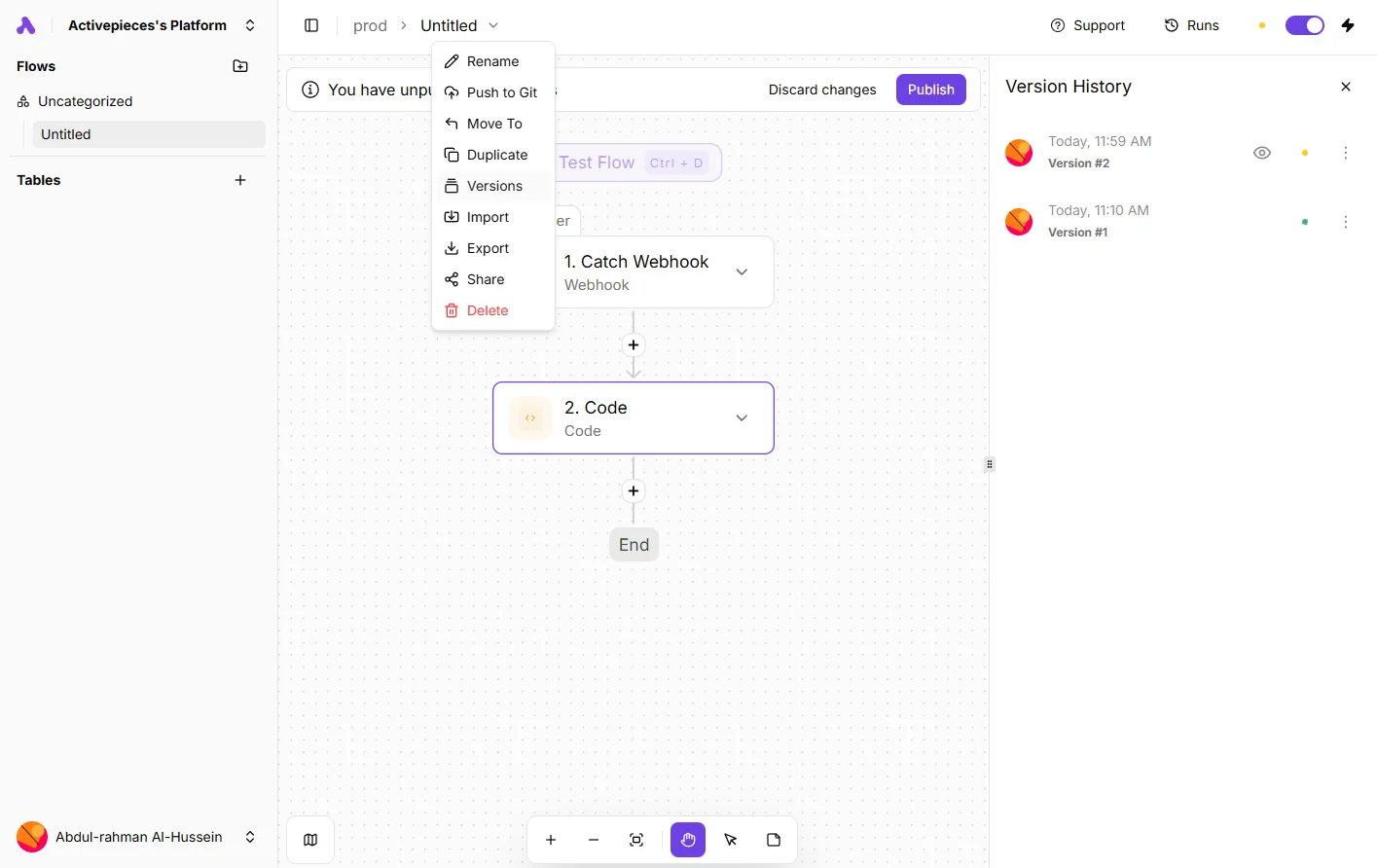
Implementing semantic versioning in the header
Placing a version identifier like X-Webhook-Version in the HTTP header allows the platform to evolve the schema without breaking existing integrations.
If we change a field name or nesting structure, a versioned header ensures the subscriber only receives the format their parser expects. The platform lead can support multiple concurrent versions until the telemetry shows the old version has zero traffic.
Adding the 'resource_url' for lazy-loading data
The resource_url acts as a secure pointer to the full object, ensuring the consumer only accesses data they are currently authorized to see.
[Illustration: Comparison of 'Fat' vs 'Thin' (Link-back) architectures: 'Fat' shows a large JSON object containing full user profiles and history; 'Thin' shows a minimal object with an event type, timestamp, and a resource_url.]

By requiring a GET request to this URL, we enforce a "least privilege" model. The webhook itself carries no sensitive data, so an intercepted packet reveals nothing to an attacker.
This pull-based approach also ensures the consumer always retrieves the most recent attributes, rather than relying on the snapshot of data as it existed when the system triggered the event.
Constructing the request from the resource pointer
The receiver must determine the destination for the link-back request by parsing the resource_url provided in the payload. This field should be a fully qualified URI that includes the base domain and the specific resource path, such as https://api.provider.com/v1/orders/123.
Using a full URL instead of a raw ID prevents the receiver from having to hardcode environment-specific base paths. This allows the same integration logic to work across staging and production environments seamlessly.
The receiver simply extracts the URL from the JSON and passes it directly to their HTTP client.
Managing credentials for the link-back request
To perform the follow-up GET request securely, the receiver must store the sender's API keys or OAuth tokens in a secure environment variable or a dedicated secrets manager.
The application logic retrieves these credentials once the webhook is validated, injecting them into the Authorization header of the outgoing call.
Storing these keys outside of the application code ensures that the link-back process remains isolated and protected. This setup prevents the receiver from making unauthorized requests to the resource URL, as the API will reject any call that lacks the correct, pre-provisioned token.
Step 2: Securing the payload against common exploits
Securing the payload requires cryptographically verifying the sender and ensuring the receiver can safely ignore duplicate transmissions.
Calculating the HMAC-SHA256 signature for the body
An HMAC-SHA256 signature allows the receiver to confirm that the message was not altered in transit and originated from the expected source.
By hashing the raw request body with a shared secret, the consumer can recreate the signature and compare it to the one provided in the header.
Any mismatch indicates the payload is untrustworthy and the system should drop it immediately. This method prevents man-in-the-middle attacks without requiring the overhead of a full Mutual TLS (mTLS) handshake.
Including an idempotency-key for guaranteed delivery safety
Every webhook must include a unique idempotency key to prevent the system from processing the same event twice during network retries.
Reliability varies significantly across the industry: the developer platform GitHub provides only 1 attempt, meaning a single 500 error results in a permanently missed event. Shopify retries up to 8 times over 48 hours.
Because of this, a consumer might receive a "stale" retry long after the original event was handled, making a persistent idempotency log the only defense against double-counting transactions.
Setting the User-Agent and content-type headers
Standardizing the User-Agent and application/json content-type headers ensures the receiving firewall does not flag the request as a generic bot attack.
A specific User-Agent allows the platform lead to write granular WAF rules that permit webhook traffic while still blocking anonymous scrapers.
You can follow the rest of this with the builder open. Start free, no card.
Step 3: Designing for reliability and timeouts
Reliability in modern webhook architecture depends on keeping the receiver's execution time well below the hard limits of serverless environments to prevent dropped events.
Why thin payloads prevent cloud function timeouts
Thin payloads ensure that the initial handshake between the sender and the receiver completes in milliseconds. This allows the receiver to acknowledge receipt before the connection is severed by a gateway timeout.
By contrast, a notification containing only an ID and a resource type uses negligible memory, so your infrastructure can handle sudden spikes in traffic without hitting the concurrency limits of your cloud provider.
Comparing execution windows across major cloud providers
Standardizing on a thin-payload architecture is the only way to ensure portability across different cloud environments that impose varying constraints.
| Cloud Provider | Minimum Timeout | Maximum Timeout |
|---|---|---|
| AWS Lambda | 3 seconds | 900 seconds |
| Google Cloud Functions | 60 seconds | 540 seconds |
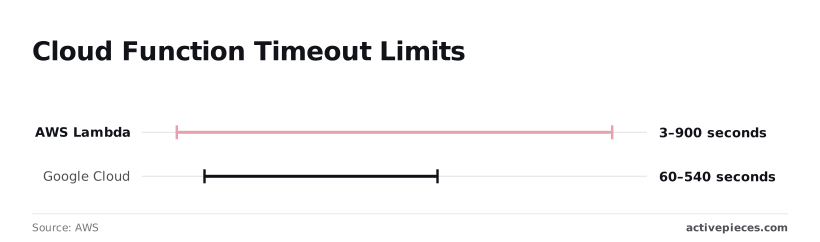
Short defaults mean a cold-start combined with a heavy payload will likely time out before the code even executes.
Implementing a 'link-back' pattern for heavy data processing
The link-back pattern moves the heavy lifting of data retrieval out of the webhook's immediate execution context and into a controlled, authenticated fetch.
Instead of the sender pushing data blindly, the receiver uses the provided resource ID to call back into the API at its own pace.
The link-back pattern moves the heavy lifting of data retrieval out of the webhook's immediate execution context and into a controlled, authenticated fetch.
This ensures that the system only pulls data after the webhook is validated.
This architecture naturally leads to better security, as the receiver must now possess valid credentials to see the data, rather than trusting whatever was sent to a public URL.
Step 4: Validating your design with Activepieces
A codebase you can read closes reviews faster than a vendor's word. Activepieces ships an MIT-licensed core: clone it, trace the queue and worker architecture, load-test it, then run it self-hosted or fully air-gapped. Evidence closes a review. A vendor's word only reopens it.
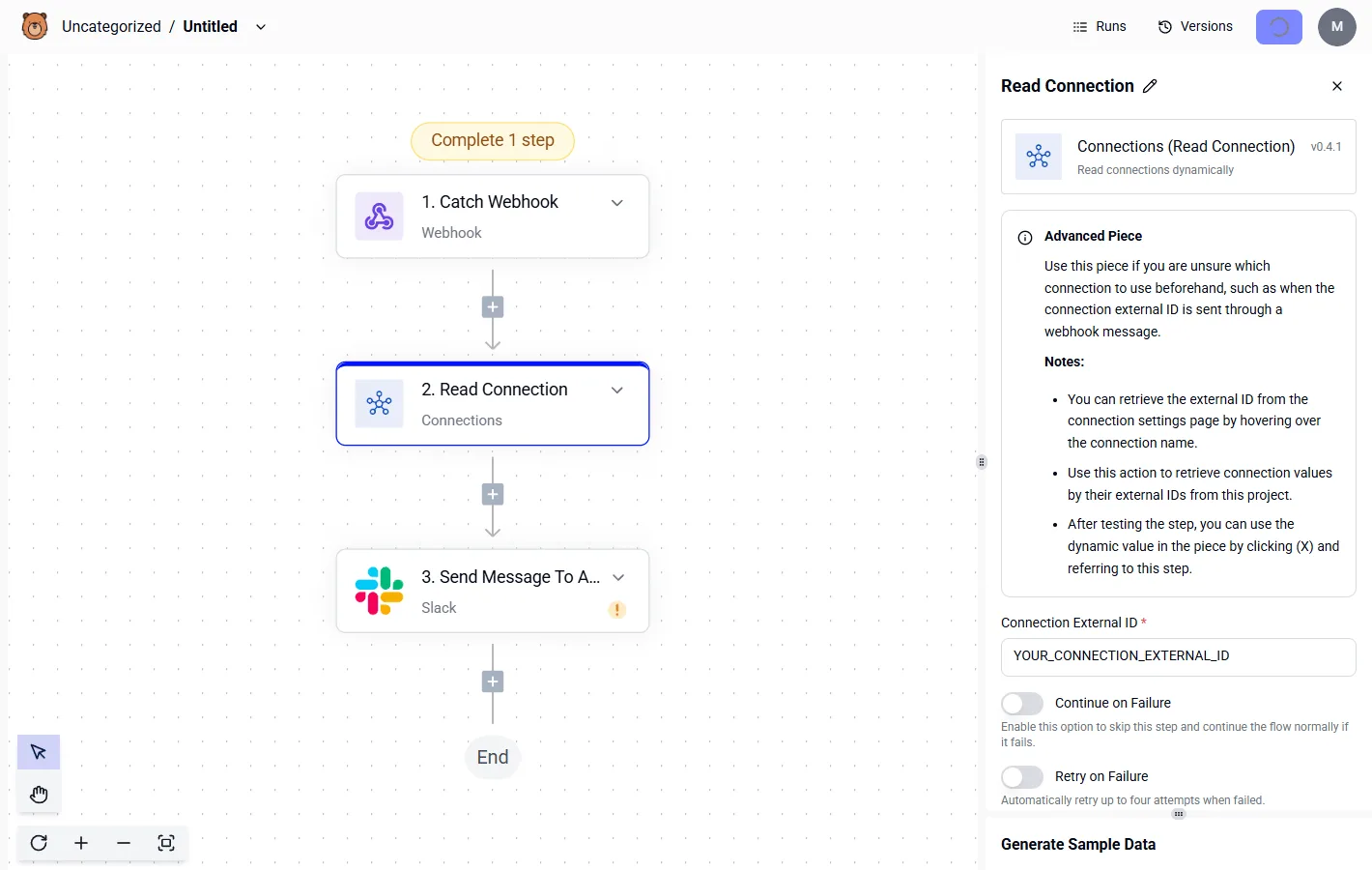
Creating a permanent webhook entry point
The Webhook trigger in Activepieces creates a permanent URL that serves as the entry point for testing how your source system handles the initial handshake.
Because this URL is static for the life of the flow, you can configure your source system once and perform repeated tests without updating the destination address every time a session expires.
Inspecting the 'Raw Body' and 'Headers' in the execution log
The execution log in Activepieces displays the full HTTP request, allowing you to verify that the payload contains only the resource ID and not sensitive PII.
By examining the 'Headers' tab, you can confirm that the signature sent by the provider matches your expected security protocol. If the 'Raw Body' shows more than the minimal required fields, you have immediate visual proof that your source system is over-sharing data.
Using the 'Code' integration for schema validation tests
The 'Code' integration in Activepieces allows you to run a Node.js script against the incoming payload to enforce strict schema validation before any downstream action occurs.
This ensures that the payload structure adheres to your internal contract. It also ensures the resource ID follows the correct alphanumeric format, which stops invalid database queries before they reach your internal API.
Documenting your webhook schema for external developers
Effective webhook documentation reduces integration friction by treating the event stream as a first-class API contract rather than a background side effect.
Providing an OpenAPI specification for payloads
A machine-readable schema ensures that external consumers can generate type-safe clients and validation logic without manual data entry.
By defining the webhook within an OpenAPI document (specifically using the callbacks object) you provide a formal contract that tools like Swagger or Redoc can render into interactive documentation.
To ensure a developer can build a production-ready receiver on the first try, the documentation must include:
- The JSON Schema definition to establish the data types and required fields.
- A realistic Example Request Body to show the payload in a lived-in state.
- A comprehensive List of Event Types to define the available triggers.
- Security and Signature verification code snippets to standardize the authentication handshake.
Creating a 'Test Event' button in your developer portal
A manual trigger for mock events allows developers to verify their endpoint's connectivity and logic before they have the means to trigger a real-world business process.
By providing a way to fire specific payloads on demand, you enable an iterative "code-and-check" workflow that doesn't rely on complex state manipulation in a sandbox environment.
Publishing a list of IP addresses for allowlisting
Publicly documenting the source IP ranges for your webhook egress allows security-conscious teams to restrict their firewall rules to only trust traffic from your infrastructure.
While cryptographic signatures provide payload integrity, IP allowlisting serves as the first line of defense against volumetric denial-of-service attacks.
Frequently asked questions
How many retry attempts should a provider offer?
A provider should offer enough retry attempts to span a typical engineering response cycle. This prevents transient network blips from escalating into permanent data loss.
If a service goes down at 2:00 AM, a retry schedule that exhausts itself within an hour forces a manual reconciliation process the next morning.
Conversely, an exponential backoff that persists for twenty-four hours allows the automated system to recover once the on-call engineer resolves the underlying infrastructure issue.
How should I handle webhooks that fail to deliver?
Handling failed deliveries requires a Dead Letter Queue (DLQ) paired with a programmatic "replay" API, which shifts the burden of recovery from manual database patches to a controlled, auditable workflow.
When a message fails after all retries, moving it to a DLQ prevents the ingestion pipeline from clogging.
Providing a GET endpoint to fetch missed events ensures the consumer can synchronize their state without requiring the provider to bypass standard security throttles.
Should I use JSON or Protobuf for webhook payloads in 2026?
JSON remains the standard for external-facing webhooks because it maximizes developer ergonomics and compatibility across diverse tech stacks, whereas Protobuf is better suited for high-throughput internal microservices.
Choosing JSON means a customer using a low-code tool like Zapier or a legacy script can parse the notification without installing specialized compilers.
Opting for Protobuf requires every consumer to maintain up-to-date schema definitions, which introduces a significant integration tax that often outweighs the marginal gains in payload compression.
Related reading
Build it
Set this up in minutes.
No code required. Connect your accounts, and Activepieces runs it from there.
Start free Talk to sales