
What Is a Webhook? A Beginner's Guide
Understanding what is webhook technology allows your team to automate data transfers between software tools without manual input.

Covers debugging agent tool-calls in fintech batch pipelines: real log payloads, span IDs, and why an agent picked that tool.
ContributorSeptember 27, 202613 min read
This article was researched and fact-checked by an advanced research system.
When an event trigger occurs, webhooks function as a reverse API where the server pushes data to a client URL immediately.
This architectural shift moves the responsibility of data delivery from the consumer to the provider. Downstream systems react to state changes the moment the provider records them.
How webhooks automate application data exchange
The push versus pull difference
The fundamental distinction lies in which party initiates the network request. In a traditional polling model, the client must repeatedly query an endpoint to check for updates, which consumes bandwidth and compute cycles even when no new data exists.
By having the source system transmit an HTTP POST request to a pre-configured listener, a webhook reverses the traditional flow. This listener might be a workflow managed via Activepieces, an MIT-licensed automation platform that provides a self-hostable alternative to cloud-only vendors.
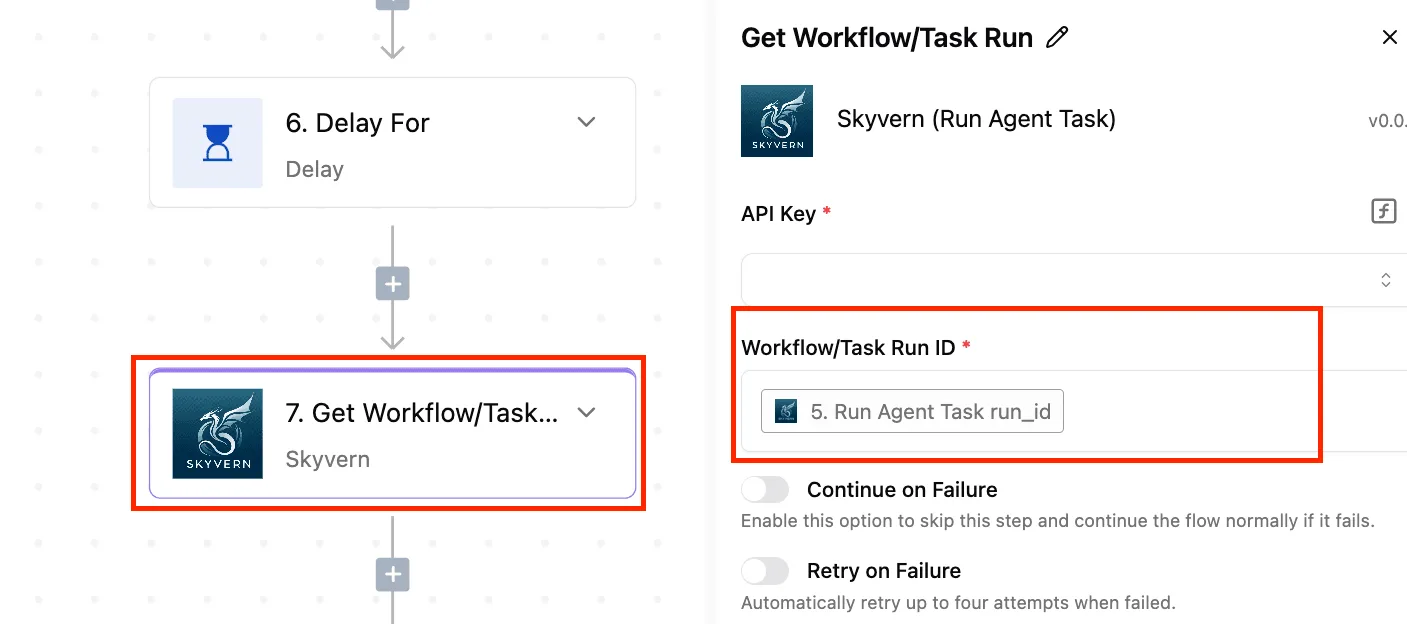
The transmission only occurs when a specific action happens. This eliminates the latency inherent in waiting for the next scheduled check and removes the overhead of empty requests.
The anatomy of a webhook payload
A standard HTTP request containing specific metadata and event-driven content makes up a webhook transmission. The structure typically includes HTTP Headers, the Verb, and the Body.
The headers contain the Content-Type and often a cryptographic signature used to verify the sender. Almost every webhook uses the POST method to submit data to the destination.
The body is a JSON or XML object containing the event type and the specific resource data that changed.
Webhooks for real-time vs batch processing
Actions happen in serial within event-driven architectures, whereas batch processing relies on accumulated data stores.
When a developer integrates a flagship reasoning model like Gemini 3.8 Flash to analyze incoming support tickets, a webhook ensures the analysis starts as soon as the system creates the ticket.
The system must wait until a threshold is met or a time interval passes in batch processing, which delays the time-to-insight. By using webhooks, the system treats every event as a discrete signal for immediate execution.
This takes minutes, not a project: automate it in Activepieces free.
Why real-time needs demand webhooks over polling
The structural delay of request-response cycles disappears when webhooks push data the instant an event occurs. This shift ensures that downstream services act on live state rather than stale snapshots.
The structural delay of request-response cycles disappears when webhooks push data the instant an event occurs.
Webhook delivery speed vs polling delays
2 seconds is all it takes for a standard webhook delivery to complete, according to data from StackForPros, ensuring that information reaches the end user almost instantaneously, which means applications can trigger downstream workflows with minimal latency.
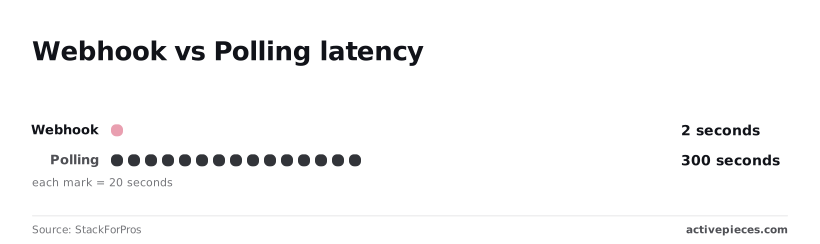
Operating on data that is five minutes old is the reality for systems relying on traditional polling, which averages 300 seconds per update, meaning that critical decisions are consistently being made based on outdated information.

Significant bandwidth and processing power are wasted on redundant queries in the polling method. The former wastes cycles on silence, while the latter guarantees the payload arrives while it is still actionable.
Cutting server overhead with webhooks
Thousands of empty HTTP 200 responses are stripped away when moving to webhooks, freeing up CPU cycles for actual processing.
When a high-throughput model like Gemini 3.8 Flash (the flagship Flash model for coding and agentic workflows) awaits a trigger, a webhook prevents the orchestration layer from burning tokens on repetitive status checks.
Systems lacking a public endpoint or those requiring strict internal pacing still use polling as a fallback. Legacy banking mainframes often lack outbound HTTP capabilities, forcing an external scraper to pull data.
If a service only allows 100 calls an hour, polling at fixed intervals prevents accidental 429 errors.
How webhooks function in integration workflows
A source system initiates a one-way communication to a listener’s URL immediately following a state change.
Four stages define the logic of this interaction: 1. Event Trigger (e.g., a customer pays), 2. HTTP POST Request (the source sends data), 3. Listener Reception (the receiver catches the data), 4. 200 OK.
This handshake ensures the source knows the message reached the destination safely. Failure to return that final status code usually prompts the source to retry.
Webhook 200 OK success signal
The final stage, 200 OK, is a specific HTTP status code that serves as a digital receipt. It is the standard signal sent back to the source to confirm the data was received successfully.
Without this confirmation, the sending system assumes the delivery failed. This simple message prevents the source from repeatedly sending the same data and clogging the network.
Webhook event sources explained
The transaction begins at the source, which is the system of record (such as the Stripe payment gateway or the GitHub version control platform) that monitors for specific internal triggers.
When a defined action occurs, the source assembles a packet of information and looks up the pre-configured destination URL.
The payload: what data is being carried
Typically formatted as JSON or XML, the payload is the actual data packet containing the details of the event.
JSON is the industry standard for most modern APIs because its lightweight syntax reduces bandwidth. XML is the legacy alternative often found in enterprise SOAP environments, requiring more verbose tagging.
The listener: where the data lands
A publicly accessible web server or cloud function acts as the listener, designed to receive and process the incoming POST request. Once the listener parses the body, it must immediately return an HTTP 200 status.
Activepieces provides the infrastructure to handle these incoming payloads without exposing sensitive connection secrets to a third-party database. By configuring a self-hosted instance against an external secret manager, you can inspect the database to confirm that credentials for your connected apps are never stored there.
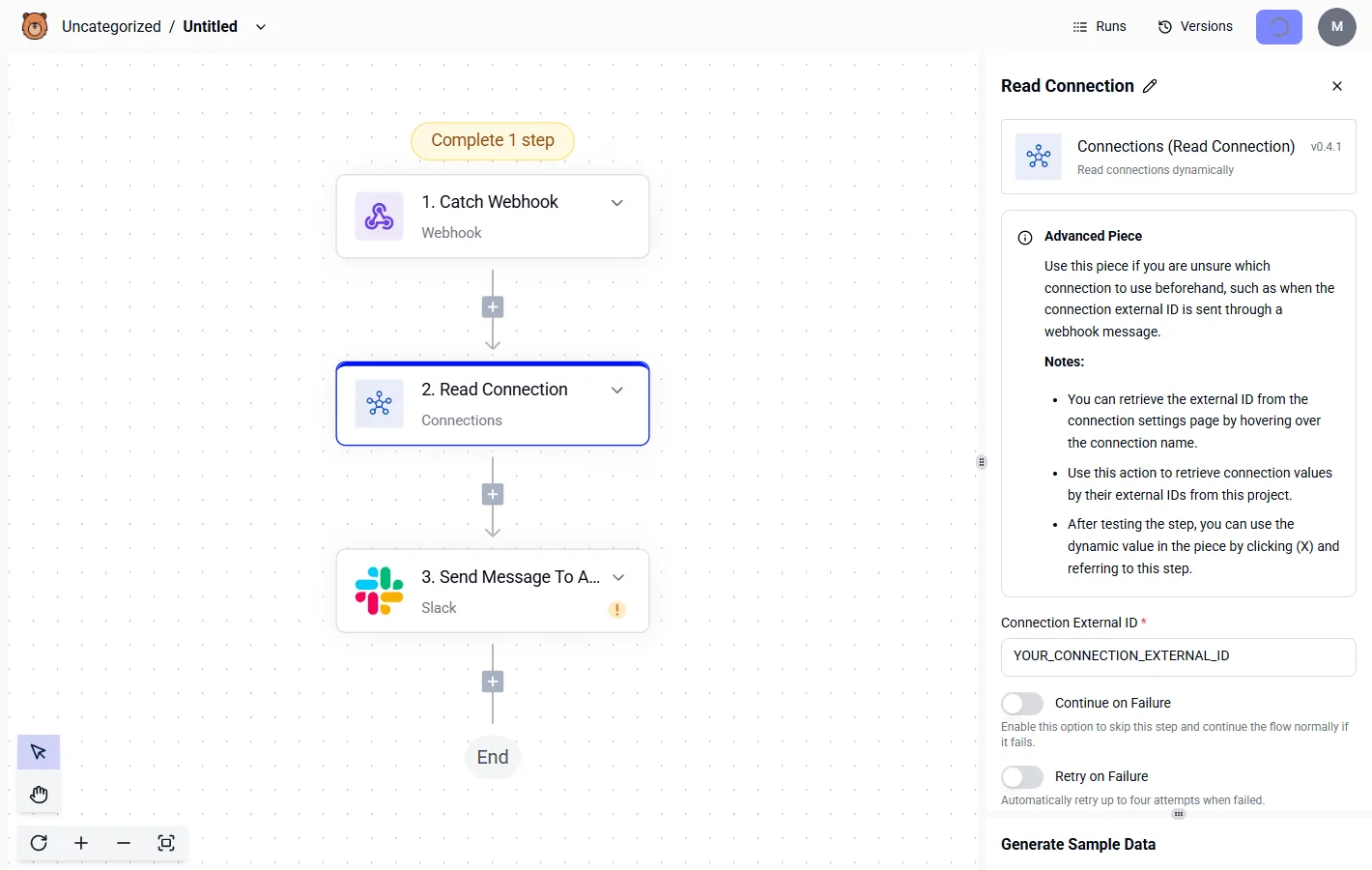
This capability is listed alongside SSO/SAML and audit logs in the enterprise governance feature set, ensuring that the listener remains a secure pass-through for business data.
Common use cases for webhook-driven automation
Webhooks serve as the connective tissue for event-driven architectures by instantly notifying downstream services when a specific state change occurs.
The following table highlights how standard triggers translate into immediate business actions across common platforms.
| Provider | Event Trigger | Business Result |
|---|---|---|
| Stripe | payment_intent.succeeded | Order marked as paid |
| GitHub | push | Production site deployment |
| Typeform | form_response | New lead created in CRM |
Processing e-commerce payments via Stripe
Stripe, a global payment infrastructure provider, uses webhooks to inform your backend that a customer’s money has actually moved.
Because asynchronous payment methods like ACH transfers do not resolve during the initial browser session, the payment_intent.succeeded event is the only reliable signal to fulfill an order.
Syncing CRM leads from Typeform or Webflow
Typeform and Webflow utilize webhooks to bridge the gap between a marketing site and a sales pipeline.
When a visitor submits a contact form, the platform pushes the raw JSON payload to a listener that parses the fields and populates a lead record. Manual data entry is no longer needed with this automation.

Triggering CI/CD pipelines from GitHub commits
GitHub triggers automated build and deployment cycles via its push event. When a developer merges code into a protected branch, GitHub sends a POST request to a CI/CD runner, which then initiates the testing and deployment sequence.
You can follow the rest of this with the builder open. Start free, no card.
Webhook failure modes and timeout limits
Webhook integration risks center on the precarious nature of one-way communication. A single slow response or a brief server outage results in permanent data gaps if your infrastructure lacks idempotent retries.
Webhook integration risks center on the precarious nature of one-way communication.
The risk of silent data loss during outages
The source platform may eventually stop trying if your endpoint returns a 5xx error or fails to respond.
A 10-minute server reboot could permanently erase customer orders from your local database. Unlike polling, webhooks are ephemeral; once the retry limit is reached, that specific payload is often purged.
Understanding platform response timeouts
Platforms enforce strict windows for a 200 OK response to prevent their own outbound queues from backing up.
The following data shows the maximum duration a sender will wait for your server to respond before marking the attempt as a failure:
- Braintree, a payment gateway, allows 60 seconds, giving you the most breathing room for synchronous database writes.
- Make.com, an automation platform, grants 40 seconds, so complex multi-step workflows must be highly optimized.
- Stripe, the financial infrastructure provider, cuts the window to 20 seconds, meaning long-running API calls to third parties during the request will likely trigger a timeout.
- Adyen, a global payment processor, permits only 10 seconds, which requires you to move heavy logic to a background worker.
- Shopify, the e-commerce platform, enforces a strict 5-second limit, so your listener must do nothing more than ingest the JSON and return a status code immediately.

A listener designed for Braintree will systematically fail when moved to Shopify due to these variations.
Webhook provider timeout standards
These specific limits represent standard industry examples where providers prioritize their own system stability over the processing time of the receiver. While PayPal's IPN documentation is often cited for general timeout concepts, each vendor maintains its own distinct technical threshold.
Developers must consult the specific developer portal of their chosen provider to confirm these constraints. If a provider is not listed, a 5-second response time is the safest architectural target to ensure compatibility across the widest range of modern web services.
Handling webhook traffic spikes
A sudden spike in event volume can overwhelm your listener with concurrent requests that exhaust your database connection pool. If your server cannot scale instantly, the resulting latency will breach the platform timeouts listed above.
Requirements for a production-ready webhook receiver
Reliable webhook receivers must treat every incoming POST request as potentially malicious, redundant, or transient.
Verifying webhooks with HMAC signatures
For requests using a shared secret key, verification via Hash-based Message Authentication Code (HMAC) is the only way to prove a payload originated from your provider.
You must compute a SHA-256 hash using the raw request body and a shared secret key, then compare it to the signature header provided by the sender.
Preventing duplicate webhook events
Idempotency ensures that processing the same event multiple times results in the same outcome as the first successful execution.
Because providers often trade "exactly-once" delivery for "at-least-once" reliability, your database will eventually receive the same event ID twice. You must log every processed event ID in a persistent store.
Webhook retry logic and dead-letter queues
A production receiver requires a buffer to capture events when your downstream services are offline.
The following table outlines the maximum duration each provider will attempt to redeliver a failed event:
| Provider | Retry Window (Hours) |
|---|---|
| Stripe | 72 |
| Shopify | 4 |
| GitHub | 0 |
When a provider exhausts these retries, you must route the event to a dead-letter queue for manual inspection and replay.
Managing webhooks at scale with Activepieces
Activepieces automates the infrastructure required to listen for, parse, and route incoming HTTP POST requests across 735+ integrations.
Instead of provisioning a dedicated virtual machine, you deploy a persistent listener URL that remains dormant until a payload hits the endpoint.
When a request arrives, the platform automatically extracts the headers and body, presenting them as structured variables. If your workflow requires complex evaluation, you can route the webhook data directly into an agentic step.
This step, powered by Gemini 3.8 Flash, categorizes the urgency of the event.
To ensure these flows are treated as production software, Activepieces allows you to sync flows to git and promote them through Release Management, a feature set that companies like MoneyGram and FundingSocieties use to manage their automation environments.
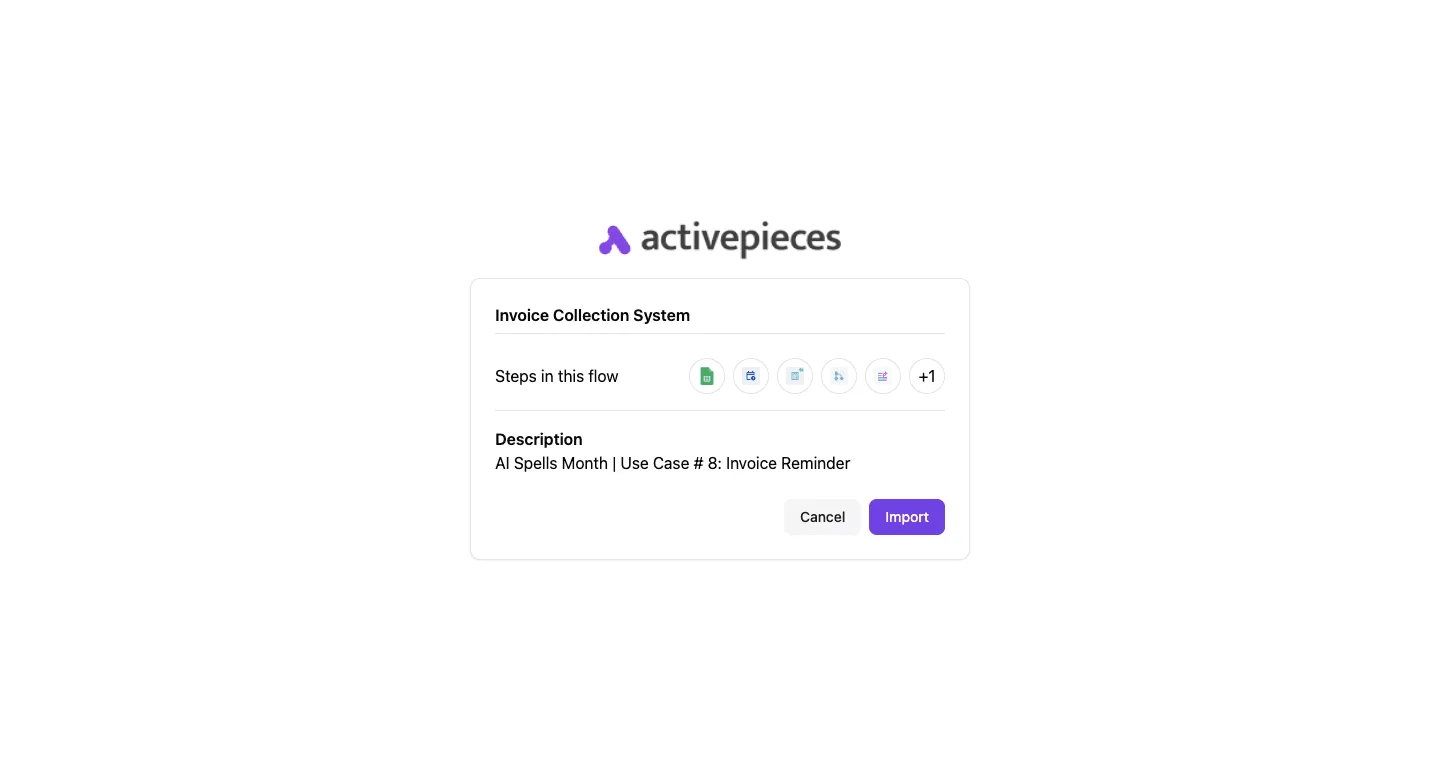
By checking the documentation for Git Sync, you can see how changes are moved from test environments to production as a deliberate versioned step, ensuring that critical webhook logic is reviewed and audited rather than just saved in a private UI.
Audit checklist for current webhooks
Audit your integrations by verifying that every endpoint requires cryptographic signature validation.
- Review the header documentation for GitHub and Stripe to ensure your middleware explicitly compares the
X-Hub-Signature-256orStripe-Signatureagainst your stored secret. - Check that your listener returns a
200 OKstatus code immediately upon receiving the payload. - Verify that your logic uses an idempotency key, such as a unique event ID, to discard duplicate deliveries.
Establish an endpoint monitor using a tool like Gemini 3.8 Flash, the flagship model for agentic workflows, to parse your incoming logs for unexpected 5xx errors. Finally, rotate any webhook secrets that are currently stored in plaintext within your environment variables.
Frequently asked questions about webhooks
Are webhooks more secure than standard APIs?
Webhooks are not inherently more secure than standard APIs because they shift the burden of authentication from the sender to the receiver.
In a standard API call, your application proves its identity to a provider like GitHub, the version control platform, using a private token; with webhooks, the provider hits your public endpoint, meaning you must verify the X-Hub-Signature-256 header to ensure the payload actually originated from them.
Failing to validate these signatures allows any actor to spoof events, potentially triggering unauthorized deployments or database deletions in your environment.
How do I test a webhook without a live server?
You can use a request-bin service to capture and inspect payloads without maintaining a persistent backend.
Webhook.site provides a unique URL to view raw HTTP headers and JSON bodies, which allows you to debug the exact structure of a payload before writing a single line of handler code.
The ngrok tunneling service exposes your local localhost port to the public internet, so you can set breakpoints in your IDE while receiving real-time events from an external provider.
Do webhooks cost money to use?
Webhooks generally reduce operational costs by eliminating the wasted compute cycles associated with frequent polling.
While most SaaS platforms include webhooks in their standard tiers, high-volume egress can incur costs if you exceed the rate limits of a serverless platform like AWS Lambda, the event-driven compute service, or a specialized processing engine like Gemini 3.8 Flash, the flagship model for high-throughput agentic workflows.
Monitoring your ingestion rate is essential so that a spike in upstream events does not result in an unexpected infrastructure bill.
Related reading
References
Build it
Set this up in minutes.
No code required. Connect your accounts, and Activepieces runs it from there.
Start free Talk to sales