
Applied Epic AI Integration: A 2026 Guide for Agencies

Sep 8, 202614 min read
Applied Epic AI integration refers to the strategic deployment of artificial intelligence within the Applied Epic management system to automate insurance workflows while maintaining human oversight and data auditability.
The economic stakes of manual policy management
At 15 days before a policy deadline, an agency’s financial health rests on whether a producer catches a looming lapse or lets an overlooked checkbox trigger a 42,000 USD loss.
Industry analysis notes that while paying a data entry keyer a 19.29 USD hourly rate suggests low overhead, a single administrative failure negates two years of that employee's wages.
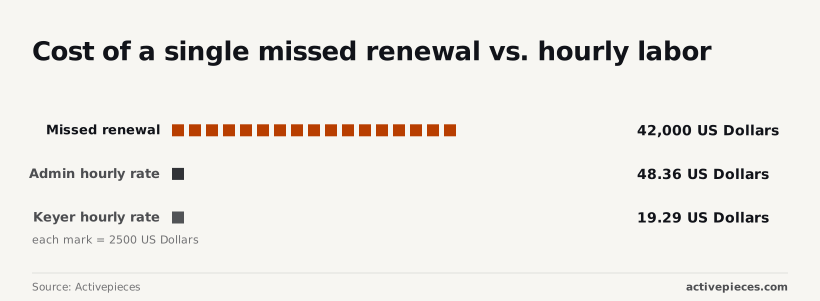
Manual policy management creates a structural deficit. Concentrated financial risk outweighs any benefit of low-cost labor.
Why hourly rates are a deceptive metric for automation ROI
Focusing on the 48.36 USD hourly rate of a skilled administrator ignores the opportunity cost of their technical debt.
Manual policy management creates a structural deficit. Concentrated financial risk outweighs any benefit of low-cost labor.
When these high-value employees spend 30 hours per month on manual commission reconciliation, the agency loses nearly a full work week of revenue-generating activity to basic arithmetic.
N90 reports that by shifting to automated processing with exception review, that monthly burden drops to 3 hours, so staff can reallocate their time toward high-value client advisory services. This allows the administrator to focus on complex account audits rather than data entry.

30 hours are required for monthly reconciliation when processed manually, but that figure drops to 3 hours when automated with a review step, effectively reclaiming nearly an entire work week of productivity each month, so staff can pivot toward high-value client advisory tasks.
This shift reduces the estimated annual labor cost from 17,409 USD to 1,741 USD.
This reduction in hours represents a tenfold increase in operational efficiency. The staff member moves from a reactive data processor to a proactive risk manager.
The hidden cost of E&O exposure in manual workflows
Errors and Omissions (E&O) exposure scales with every manual touchpoint because humans lack the systematic persistence to verify data across disconnected silos.
Modern orchestration platforms run the agent's judgment and the deterministic rules of the policy in one flow on a single engine, rather than bridging two products with a webhook.
Errors and Omissions (E&O) exposure scales with every manual touchpoint because humans lack the systematic persistence to verify data across disconnected silos.
By placing an Agent step alongside fixed automation steps in the same run trace, an agency can verify a record against lead source rules before it hits the ledger.
When a typo in a coverage limit or a missed effective date occurs without this automated gatekeeper, it becomes a ticking liability. No amount of cheap labor can offset it.
Calculating the true value of automated renewal triggers
Automated renewal triggers function as a hedge against the 42,000 USD loss incurred when a policy lapses due to oversight. By moving the renewal notification out of a static spreadsheet and into a dynamic orchestration layer, the agency ensures specific safeguards.
- Multi-channel alerts reach the producer 90 days prior to expiration to ensure there's ample time to resolve potential coverage gaps before the policy lapses, thereby preventing the risk of client attrition due to administrative failure, which secures long-term revenue stability.
- Automated data pulls from the carrier portal refresh the policy status weekly.
- The system generates escalation tickets if the renewal isn't bound 15 days before the deadline.
This signal indicates that immediate intervention is required to prevent a lapse in service. This shift moves the agency from a model of "hope-based" compliance to a deterministic workflow where the prevention of a single catastrophic lapse justifies the cost of the software.
This takes minutes, not a project: automate it in Activepieces free.
Avoid common insurance automation failures
Reliability in Applied Epic integrations fails when developers treat the platform as a generic database rather than a rigid compliance engine.
Moving from "hope-based" compliance to deterministic workflows requires accounting for the specific friction points where automated logic collapses under the weight of insurance industry scale.
Mapping unstructured PDF data to structured Epic fields
Automation breaks most frequently during the translation of carrier-generated policy documents into the fixed schema of the Applied Epic database.
Because every carrier uses a different layout for their Accord forms and dec pages, a minor shift in a PDF margin can cause a parser to misidentify a "Total Premium" figure as a "Policy Fee."
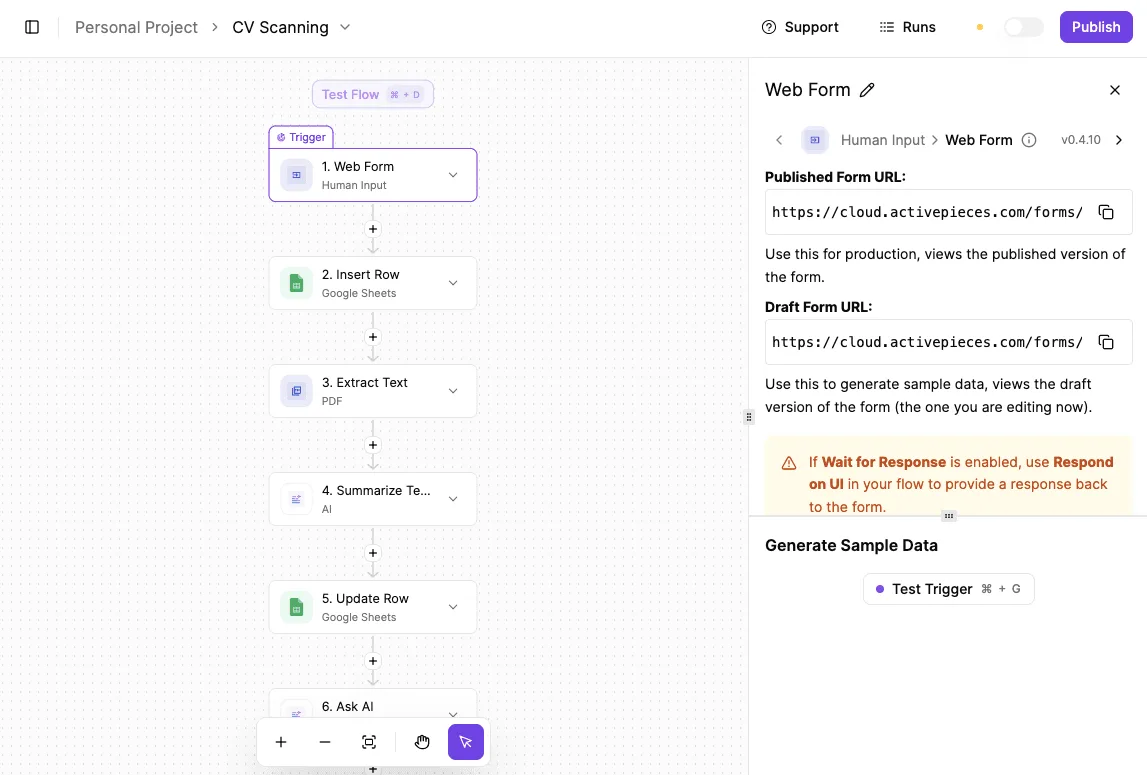
To prevent these silent data corruptions, agencies must implement a validation layer that compares extracted values against historical averages before the system commits the record.
Handling API rate limits during peak renewal seasons
Applied Epic enforces strict thresholds on how many data requests an external application can make per minute. This creates a bottleneck during the high-volume renewal periods at the start of each quarter.
The API will return a 429 "Too Many Requests" error if an automation script attempts to sync a thousand policies simultaneously without a queuing system. This causes the sync to stop midway and leaves the agency with a fragmented ledger.
Engineers avoid this by building an asynchronous buffer that holds outgoing data in a staging area. This ensures that updates flow into the system at a pace the API allows without crashing the workflow.
The 'Black Box' risk: When AI makes the wrong coverage call
The most dangerous failure occurs when an AI model suggests a coverage change or a policy exclusion without providing a visible audit trail for the licensed agent to review.
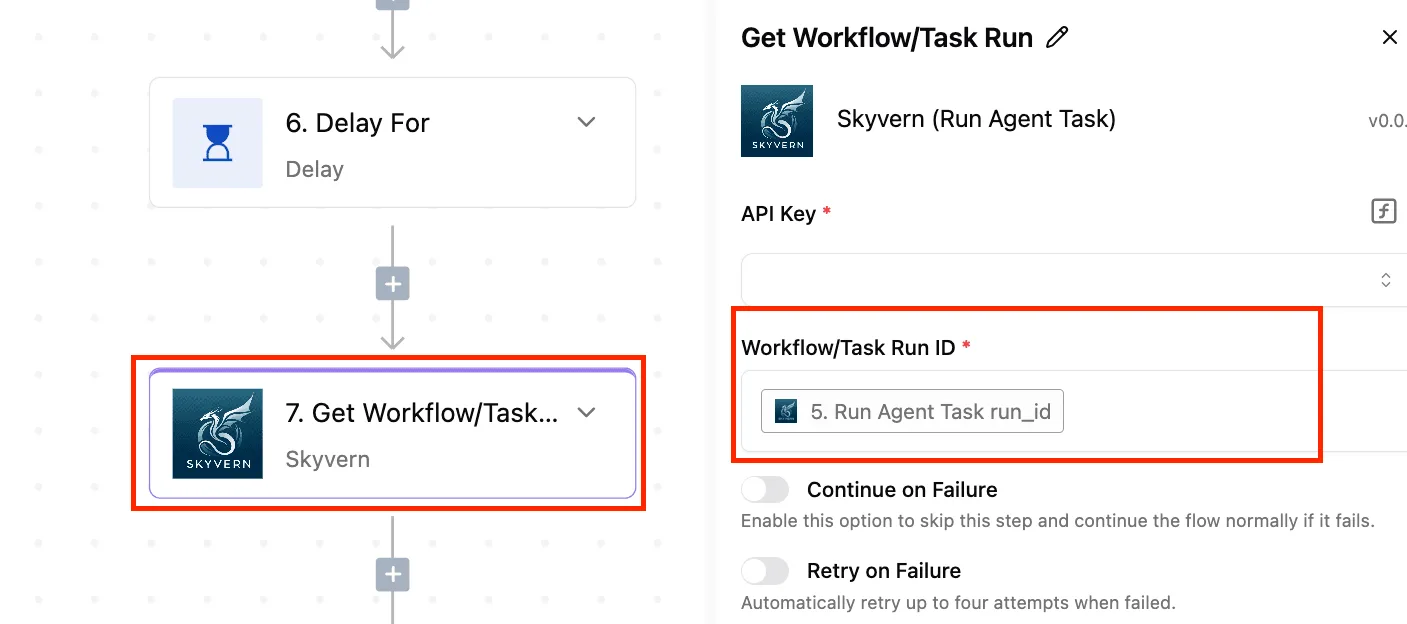
Instead of gluing an agent framework to a workflow tool with a callback, unified orchestration engines run both on a single engine.
You can place an Agent step alongside a deterministic automation step in one flow definition, ensuring that judgment and fixed rules share a single run trace.
This allows an agency to verify an AI's reasoning against specific policy rules before the record is committed, rather than bridging two separate products with a webhook.
To mitigate this risk, agencies must adopt a "human-in-the-loop" architecture. The AI provides a recommendation and a source citation, but the final update to the Epic record requires a manual sign-off from a human professional.
Choose your Applied Epic architecture
Agencies must choose an integration architecture that balances the rigid security of the Applied Epic environment with the fluid requirements of modern LLMs.
Native Epic automation for simple internal tasks
Applied Epic’s built-in automation tools provide the most secure method for managing data, limiting AI interaction to predefined fields and internal triggers.
Because these tools operate within the Applied ecosystem, they bypass the need for external API credentials. This reduces the attack surface for credential theft.
However, this native approach lacks the ability to call external AI models directly. It can only handle basic routing or templating rather than complex document analysis.
Low-code orchestration for multi-app workflows
Low-code middleware acts as a translator between Epic’s SDK and third-party AI services. This allows agencies to build complex logic without maintaining a private server.
These platforms use visual builders to map data between systems, which lowers the barrier for non-technical staff to audit how an AI arrived at a specific conclusion.
By shifting the integration logic to a dedicated orchestration layer, the agency avoids hard-coding dependencies into their primary database, making it easier to swap AI providers when a newer model offers better accuracy.

| Connection Path | Setup Time (Weeks) | Maintenance Effort | Flexibility for Non-Epic Apps |
|---|---|---|---|
| Native Automation | Lowest | Low | Minimal |
| iPaaS | Moderate | Moderate | High |
| Custom API | Highest | High | Total |
As flexibility increases, so does the long-term cost of keeping the connection alive.
Custom middleware for high-volume proprietary models
A custom API build is the only viable path for agencies running proprietary models that require specific data residency or high-throughput processing. Building a bespoke bridge allows for fine-grained control over the "human-in-the-loop" interface.
This setup ensures that the verification screen matches the agency's specific underwriting or claims workflow.
This control comes at the cost of permanent engineering overhead. Any update to the Applied Epic SDK will require a manual rewrite of the custom integration code to prevent data sync failures.
You can follow the rest of this with the builder open. Start free, no card.
Solving the insurance AI governance gap
Auditability is the primary barrier to scaling insurance AI because most current deployments lack the logging infrastructure required to prove why a specific decision was made during a policy lifecycle.
Identifying unaudited exposure in automated workflows
43% of insurance organizations currently operate with unaudited AI exposure according to Peridot, meaning nearly half of the industry is unknowingly vulnerable to significant regulatory and security risks.
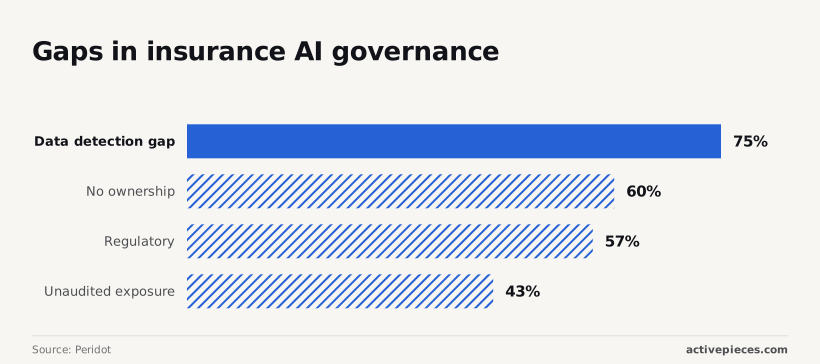
This means nearly half of all automated agency actions occur without a record that would hold up in a professional liability audit.
A 75% data detection gap was identified by Peridot, which signifies that three-quarters of firms can't identify when sensitive PII is processed by an external LLM, leaving them blind to potential data breaches and compliance violations.
These gaps are active compliance violations waiting for a trigger event.
Establishing ownership of AI-driven decisions
The absence of a clear accountability chain is the root cause of deployment paralysis, as 60% of firms have no formal ownership framework for AI-driven outcomes.
This lack of oversight means that when an automated renewal process fails to apply a necessary coverage rider, there's no designated officer responsible for the remediation or the underlying logic error.
To fix this, agencies must move away from "set and forget" automations. They should implement a human-in-the-loop model where a licensed agent approves every AI output before it writes back to the client record.
Regulatory requirements for automated insurance processing
Current industry readiness is low, with 57% of firms reporting regulatory unpreparedness for upcoming AI transparency mandates, meaning a majority of the sector faces significant exposure to legal penalties and reputational damage.
To maintain compliance, an orchestration layer must meet three specific criteria. It requires immutable logging of the exact prompt and model version used for every transaction.
Every agent decision and the fixed workflow steps running beside it sit in the same run trace in Activepieces, rather than in separate systems with disconnected records.
This trace exports to the SIEM an agency already runs, so MoneyGram and Moneypenny can audit an agent's choices the same way they review a standard workflow.
Managing complex insurance logic with Activepieces workflows
Activepieces provides an MIT-licensed core that records every step of a transaction to ensure that automated insurance workflows remain auditable and recoverable rather than becoming black-box failures.
Building resilient error-handling for failed API calls
Resilience in Applied Epic integrations requires a branching logic that accounts for the frequent rate-limiting and downtime of legacy insurance gateways.
Activepieces allows developers to define specific retry policies and "on-failure" paths for every step in a flow.
When a temporary timeout occurs during a certificate of insurance (COI) generation, it results in a queued retry rather than a corrupted client record.
Visualizing the flow of PII data for compliance audits
The platform provides a node-based visual interface that maps exactly how Personally Identifiable Information (PII) moves from an intake form to the agency management system.
Because every piece of data is visible as it passes through the canvas, auditors can verify that sensitive fields, such as Social Security numbers or health histories, are encrypted or filtered before hitting third-party AI logs.
This transparency transforms compliance from a theoretical policy into a verifiable map. It allows a Data Protection Officer to point to a specific step in the workflow and prove where data is stored and who has access to it.
Connecting specialized insurance AI models to the Epic API
Activepieces connects Applied Epic to specialized large language models (LLMs) through 732+ integrations, allowing agencies to run policy analysis while maintaining a single audit trail.
You can't build an orchestration layer if your credentials lack the scope to see the specific objects you intend to update.
Before writing code, ensure your developer account has explicit "Read/Write" permissions for the SDK. This acts as the translator between your custom tools and the Epic database.
Without these granular permissions, your integration will fail silently when it attempts to commit a change. This leads to a backlog of unprocessed "ghost" transactions that exist in your AI engine but not in your management system.
Applied Epic integration project checklist
Successful integration begins by identifying where manual labor creates the highest risk of data decay. By focusing on the intersection of high-volume entry and human verification, you ensure the system of record remains the single source of truth.
Audit your most frequent manual data entry points
Mapping the flow of unstructured data into Applied Epic reveals exactly where your staff is most likely to introduce "fat-finger" errors or skip fields to save time.
These tasks include:
- Policy renewals where premium and commission splits are manually updated.
- New business intake forms where prospect data moves from a website lead to a lead record.
- Certificate of Insurance requests that require verifying active coverage dates.
- Endorsement processing where mid-term changes must be reflected in the current term.
Verify your Applied Epic API access and permissions
Choosing a pilot that impacts a non-financial field allows you to test your human-in-the-loop validation without risking the agency’s general ledger.
The "Event-Driven Agency" loop illustrates this safeguard: a policy document arriving in a shared inbox triggers an extraction engine to pull the data.
This data then sits in a human review queue for approval before the final update is pushed to the Applied Epic record.
This loop ensures that even if the extraction engine misinterprets a digit, a licensed professional catches the error before it becomes a permanent part of the client history.
Select one high-volume, low-risk pilot workflow
Data security remains intact only if the Large Language Model (LLM) is accessed through a private instance that prohibits the provider from using your inputs for model training.
Standard consumer-grade AI interfaces lack these privacy toggles, meaning sensitive Protected Health Information (PHI) could be leaked into a public dataset used to train future iterations of the model.
To maintain compliance, you must utilize an enterprise-tier API, such as Azure OpenAI Service or Amazon Bedrock, which provides a legally binding Data Processing Addendum (DPA) to ensure data stays within your controlled environment.
Frequently asked questions about Applied Epic AI integration
Does AI integration compromise SOC2 or HIPAA compliance?
Integration does not inherently compromise compliance, provided the orchestration layer uses encrypted transit and private AI instances. A self-hosted orchestration solution keeps the data flow within an agency's own security perimeter, ensuring that PII is never used to train public models.
Can I automate Applied Epic without the developer SDK?
Automating the platform without the official SDK requires Robotic Process Automation (RPA) tools like UiPath to interact with the user interface. This introduces significant fragility because a single UI update can break the entire integration.

Unlike the SDK, which communicates directly with the database layer, RPA relies on screen scraping and mouse clicks.
This method often results in "ghost entries" where a bot confirms a task as finished even if the underlying record failed to save, creating a reconciliation nightmare for your audit team.
How does AI handle handwritten notes on scanned applications?
AI models process handwritten text by passing the image through an Optical Character Recognition (OCR) engine, but the accuracy drops significantly when notes overlap printed text or utilize non-standard abbreviations.
This lack of precision means the "human-in-the-loop" model is mandatory for scanned documents to prevent incorrect coverage limits or policy effective dates from entering the system.
Related reading
References
Build it
Set this up in minutes.
No code required. Connect your accounts, and Activepieces runs it from there.
Start free Talk to sales