
Botpress Alternatives: Best Options Compared (2026)

Oct 17, 202614 min read
If you need a better chatbot builder, pick another conversation tool; if you need an agent that doesn't work inside your business apps, pick a platform built for action, such as Activepieces.
A Botpress alternative is a different AI agent or chatbot platform that replaces Botpress for building, deploying, and pricing automated agents, whether the job is holding conversations or taking actions inside business apps with human approval.
Why alternative choice depends on agent function
What Botpress is and what it is built for
Ask what Botpress is for and the answer is conversation. Botpress is a platform for building conversational AI agents: assistants that talk with customers or staff on a website, in a messaging app or over a support channel.

That's the right design when the job is answering questions, qualifying a visitor or deflecting routine support. It fits less well when the job is to update a record, send an invoice or open a ticket, and a manager has to approve the step first.
The four criteria that decide an agent platform
Once the work moves from talking to doing, four questions separate one platform from another, and the right answer to each depends on your job.
- Apps the agent can reach: whether it can read from and act in the tools your team already uses, such as your CRM, helpdesk, spreadsheets and email, without custom code for each one.
- Human approval before action: whether a person can review and sign off on a step, such as a refund or an outgoing message, before the agent carries it out.
- Self-hosting option: whether you can run the platform on your own servers, which matters when customer data can't leave your control. Cost per run or per resolution as volume grows: whether the bill tracks the work done, and what happens to it when you move from a pilot to thousands of runs a month, so you can't budget for production scale.
I checked every vendor fact in this article on 17 October 2026, and only against the vendors' own pages. I didn't rely on reviews, forum threads or third-party comparison sites.
The fastest way to settle a shortlist is to try one. Activepieces is free to try, no credit card.
Why teams leave Botpress for something else
Mostly it comes down to three things: a bill that grows with usage, a design built around chat rather than action, and limited control over where the software runs.
Pricing that moves with usage
You can now see the prices: Botpress lists the Plus plan at $150 per month, billed annually, and the Team plan at $750 per month, billed annually.

Both plans cost more than the same plans did in April 2025, which means customers on these plans will face higher renewal bills.
Read the range on each plan carefully: the lower number is what you pay at the entry point, and the higher one is where you land as usage climbs.
A Team plan is listed at $750 per month, billed annually, so budget for that.
In the screenshot below, a different vendor lays out four tiers, from free to custom pricing, with limits listed on each, meaning you know your costs upfront.
What to take from it is the habit, not the numbers: check what each tier caps, such as runs, users and AI usage, before you check the monthly price.
Conversation-first design versus action-first work
When the job becomes action, like updating a record in your accounting software, creating a ticket, or sending a refund, trouble starts. Those tasks live in other apps and often need a person to approve them first.

Bend a chatbot-first tool toward that work and you end up building the approval step and the app connections yourself, and that effort is the hidden cost of staying.
Botpress self-hosting and data control limits
Where a team needs the software on its own servers, or needs to say exactly where customer data sits, Botpress has limited self-hosting, so a company with strict data rules can find the door mostly closed.

If your lawyers or auditors ask where the data lives, get the answer before you build, because moving an agent later means rebuilding it. If nobody's asking, this reason doesn't apply to you.
Why platform pricing and strength determine fit
The comparison table
It shows, for each one, what you pay and per what, where it's strong and where it stops.
Read the approval and hosting columns first, because a gap there is the expensive one to discover after you have built something.
Chatbot builders: Voiceflow, Rasa and similar
If the product's the conversation itself, whether a support bot, a booking assistant or a voice line, Voiceflow and Rasa suit you.
Voiceflow gives your non-technical staff a visual canvas to design dialogue. Rasa gives your engineers full control and self-hosting, at the price of needing engineers.
Neither was built mainly to carry out work inside your business apps with someone signing off. If that's your need, you'll end up wiring the actions yourself.
Agent and workflow platforms: Zapier, n8n, Dify and similar
Start from the work rather than the chat and you land on Zapier Agents, n8n, Dify, Flowise and Copilot Studio. Reach is the first thing to check.
Zapier's help center lists Make at a minimum of 3,500 apps and n8n at a minimum of 1,000.
On hosting, the group splits. n8n, Dify and Flowise can run on your own servers, which matters if customer data can't leave your network.
Zapier Agents and Copilot Studio are hosted services, which saves you the upkeep but means you accept their terms on where data lives.
The approval test is hardest when an agent framework is joined to a workflow tool by a webhook, because the agent's judgment and the fixed rules then run in two places.
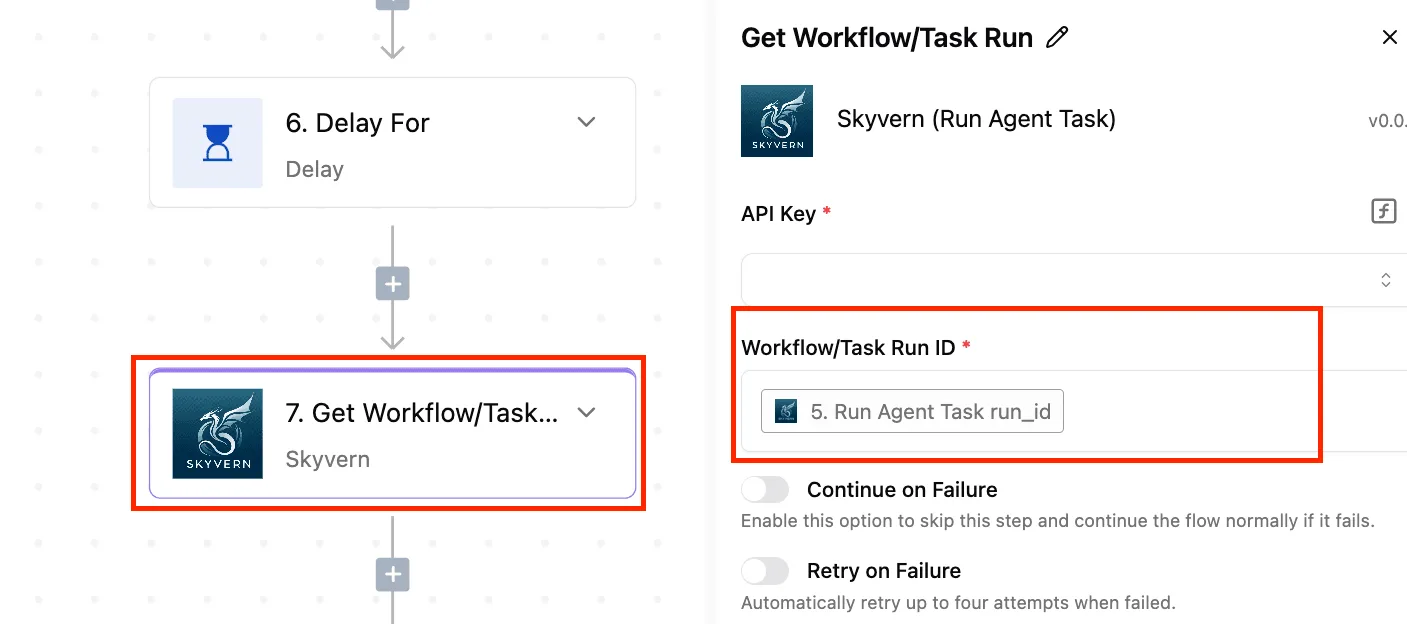
Activepieces avoids that by placing an Agent step beside the ordinary automation steps in one flow definition, so its run trace logs a single execution from start to finish rather than two systems bridged by a callback.
MoneyGram, Moneypenny, Alan and FundingSocieties run it in production.
Before you commit, run one real task that needs a human approval step, because platforms differ most there.
The strongest case for staying on Botpress
Stay on Botpress if your real task is a conversation rather than an approval. It was built for customers talking to a bot, and that's where leaving costs you the most.
Where Botpress is genuinely stronger
Out of the box, Botpress ships the plumbing a chat agent needs. It connects to channels such as website chat and messaging apps, runs the agent on its own hosted servers, and lets the bot answer from your documents through built-in knowledge bases.
A free tier lets you prove the bot works before anyone signs a contract.
Move to a general workflow tool and you rebuild all of that yourself: how the bot remembers the thread, how it hands off, and how it pulls answers from your help pages.
What Botpress reviews show about its ratings
On rating, Botpress sits level with Voiceflow, but far more reviews stand behind it, so its score rests on a much larger group of real users.
The count shows Botpress is well established for chat. It says nothing about whether it suits agents that act inside business apps.
When Botpress falls short for action agents
Once the bot stops talking and starts doing, the case for staying weakens. Suppose it must update a customer record, issue a refund, or send an invoice, and a person has to approve each step first.
You can make Botpress do this, but you're bending a chat tool toward work it wasn't shaped for, and every extra run adds to a usage-based bill.
If the conversation is only the front door to a job that ends in a business app, price that job separately.
Reading a table only gets you so far. Build the same workflow in Activepieces and compare it yourself.
Key criteria for Botpress alternatives that act
For an agent that acts in customer records, tickets and email, four things decide: app reach, human approval before it acts, self-hosting, and cost per run.
Chat jobs versus action jobs
When the customer gets an answer, a chat job is over. An action job ends only when a record changes: a deal updated in your sales database, a support ticket reassigned, an email sent.
To do an action job, the agent has to reach the apps where your work lives. Zapier connects to more than 9,000 apps and Make to more than 3,500.
When the customer gets an answer, a chat job is over. An action job ends only when a record changes: a deal updated in your sales database, a support ticket reassigned, an email sent.
Roughly two and a half times: that is how far Zapier's reach exceeds Make's, but you may only use a dozen apps, not thousands. Check your own list before paying for breadth you won't use.
Approval before the agent acts
Let an agent write to a customer record without anyone looking and you are placing a bet. A human sign-off step holds the action until a named person clicks approve.
Chat-first tools often treat that as an add-on. Workflow tools tend to build it into the flow, so ask each vendor to show you the approval step before you sign anything.
Botpress alternatives compared by cost per 1,000 tasks
Because action work is repetitive, price per run decides the bill. Lobstr priced 1,000 tasks on four platforms, which means you can directly compare their costs. The cheapest costs $1.
At $1.20, Make comes next, so a team running 100,000 tasks a month pays about $120 there. n8n Cloud costs $2.88, nearly three times the cheapest.
Zapier costs $7.30, so the same 100,000 tasks run about $730.
- If the job is conversation, pick on answer quality.
- If the job is action, pick on app reach, approval and self-hosting first.
- Use price per 1,000 tasks to break ties, which means the cheaper option wins when specifications are otherwise equal.
Where Activepieces fits among Botpress alternatives
The comparison above sorts platforms by whether the job is conversation or action.
Activepieces belongs only in the action half, where its 741 integrations and MIT-licensed core are the draw, and it is not a like-for-like chatbot replacement for Botpress, so don't consider it if you need a chatbot.
What the AI agent step can act in
In Activepieces, automations are built as flows, and an AI agent is one step in a flow. That step can use the same integrations the rest of the flow does.
These integrations are called pieces, there are 741 of them counted from the open source monorepo, roughly 60% are community-contributed, and the full list is at activepieces.com/pieces.
In practice, the agent can read a customer record in your CRM (the system where sales contacts and deals live) and draft a reply. It then hands off to the ordinary steps that update the record or send the email.
That matters because the agent isn't a separate thing bolted onto your tools. It sits in the same flow as your CRM, your email, and your spreadsheets, so you can see each step it took and fix the one that went wrong.
Approval and self-hosting
Before anything changes, a flow can pause at an approval step until a person clicks approve. Only then does it continue to the steps that change something.
If you skip this, you are trusting the agent's draft to be right every time, and the one time it isn't, a wrong email is already in a customer's inbox.
The CRM update and the email send then happen, all inside a box labelled self-hosted.
Take from it that the person's click sits before every action that touches the outside world, and that the whole run stays on infrastructure you control.
With self-hosting, your customer data and your credentials never leave your own servers, and the core is MIT-licensed.
If you'd rather not run servers, there is a hosted version too, and its free plan costs $0 with 1,000 credits a month, unlimited flows and up to 5 users; you can try it at cloud.activepieces.com/sign-up.
What it does not replace
If your main need is a support bot living on a website, WhatsApp, or Messenger, with conversation design, handoff to a live agent, and a chat window to embed, Botpress was built for that.
Activepieces is not a chat-channel builder and won't replace it. Its 741 integrations reach your business apps, not a chat window, so you would be rebuilding the conversation layer yourself.
The next section turns that split into a plain test you can run against your own list of jobs.
Why questions about alternatives matter most
Once your jobs are sorted into conversation and action, four questions come up most often, and each has a short answer.
Is there a free open source alternative to Botpress?
Yes, open source alternatives exist, but free software is not free to run. You still pay for the servers, the model calls behind the agent, and someone's time to keep it updated.

Check first whether the tool can act inside your business apps and ask a person for approval, because a free chatbot that cannot do either leaves you where you started.
Can I self-host a Botpress alternative?
Yes, some alternatives let you run the software on your own servers, and that matters if customer data cannot leave your network.
The cost of doing nothing here is real: self-hosting makes you responsible for security patches, backups and uptime. If nobody on your team wants that job, a hosted plan with clear data terms is usually the safer choice.
Which Botpress alternative is cheapest at high volume?
It depends on how the tool charges, and a pricing page will not settle it. Some tools bill per message, some per run of a workflow, and some per seat, and the model provider's fee comes on top of all three.
For your own job, measure the cost per run; that is the only reliable answer, and the pilot below gives it to you.
Do I need to rebuild my bot to switch?
Partly. Your written content, such as answers, documents and tone instructions, carries over as plain text.
The logic, the connections to your apps and the approval steps usually have to be rebuilt, because each tool wires them differently. That is why you test one job first rather than moving everything.
Here is what to do Monday, in order. Following it gives you your own cost and approval results to decide on, rather than a vendor's claims:
- Pick the one job you want an agent to do, and write down what "done" looks like.
- Shortlist two tools, one chosen for conversation and one for action if you are unsure which your job is.
- Build the same workflow in each, with the same apps and the same approval step.
- Run a 50-run pilot in each tool, using real cases.
- Compare cost per run and how each tool handles approvals: whether a person can review, edit or reject before the agent acts.
- Decide, and write down why, so you can revisit it when volume changes.
Related reading
References
Still comparing
The fastest way to settle it is to build something.
Open source under MIT, so you can self-host the same thing later.
Start free Talk to sales